The Go-To-Network Playbook: Webinar Replay
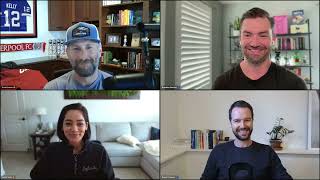
David Connors, Scott Lease, Lolita from Ganas Ventures, and Brandon from Outworks discuss building a go-to-network: warm introductions through trusted relationships instead of cold outreach. Founders should map existing networks, add connections daily, and embed community into company DNA. Investors win by offering expertise and introductions, not just capital.
Chapters
All right, I think we're live.
How are we doing everybody?
Appreciate you all joining today. We'll kick off quick round of intros. So for myself, I'm co founder and CEO of the Swarm. My last startup was acquired by Sequoia Capital where I was then acquired a founder in residence building them other custom tools and had a great time doing it and then launched Swarm a couple of years ago and we're now up and running and just closed our seed round late last year. We've also got Scott Lease with us, six time sales leader, four time founder, three time author and I think you've got was it go to market advisor with 11 exits under your belt. Scott yeah, it's impressive stats. Lolita is general partner at Ganas Ventures and she's investing in community driven companies and really changing the face of the startup and VC tech world with all the community led growth initiatives. So thanks again for joining us Lolita. And then Brandon, co founder at Outworks, he's a serial entrepreneur himself. He's got an exit under his belt, growth marketer and also an engineer by Trade now helping B2B founders to grow and monetize their audience and a close partner of ours here as well. So let's kick off, you know, maybe a quick framing before we sort of jump into some of the questions that were prepared and I think the you know, importance of the GOTA network model, especially in 2024, coming off the back of this 10 to 15 year run of growth at all costs, the zero interest rate policy ZURP era where money was free, there's a lot of cash flowing into businesses and didn't really matter as much the efficiency of that spend. We're now moving into this post zerp world where money is expensive. Again, you've got to prove efficiency but also the importance of human relationships and the advent of the rise of generative AI. Thinking through what's going to happen over the coming years, what is the new playbook, how do sales teams, how do investors, how do recruiters operate in this new world? And that's what we're here to talk about today. That's what we're here to jam on. So maybe I want to kick it over to you Scott first, what's your definition of the GOTO network? What does that mean to you?
It's just utilizing known relationships, trusted relationships that are already established in order to break into and or influence opportunities in your account base, in your pipeline. So real simple example is let's say that I am trying to get in touch With Lolita, who I don't know at all. Maybe. I've tried to call her, I've tried to email her. She's ghosted, ignored me on every channel that there is. I don't know what to do, right? So what I do is I try to figure out, well, who does. Who does she know? And I see that she knows Brandon. And Brandon and I have been buddies for 20 years. You know, we go on vacation together. I'm like, holy crap, this is too good. So I reach out to Brandon and I say, hey, man, I'm trying to get a hold of Lolita at XYZ Company. Here's what we do, what problem we solve. I don't know if they have this problem, but, you know, if. If she does have that problem, I'd love to talk to her. And so Brandon knows me, trust me, knows Lolita. So he makes a little introduction or a little sends a little note to Lolita that just says, hey, my buddy Scott wants to talk to you. Here's what he does. If you want to take the meeting, great. I promise it's not a waste of your time. And Lolita will say, okay, I trust Brandon. Brandon's telling me that this guy Scott is not going to waste my time. I actually do kind of have this problem. Yeah, I'll take the meeting. And then Brandon sets the meeting up. Lolita and I have a good conversation in theory. We close a deal, and then everybody's happy. I didn't, you know, have to interrupt Lolita in the middle of her day or do this painful, cold calling, cold emailing exercise. I got a deal. Lolita got her problem solved. Brandon was able to help two people out. And in a perfect world, what should happen is Brandon should get compensated by making that introduction. He should get a piece of the closed business. So that's my simplest explanation and example that I can provide.
Love it. Brandon, anything else to add on top of that?
I think one thing that I would say is, Scott, I love your example. Let's close some deals together. But outside of that, there are. There are scenarios and parts of our community that do not have the Brandons in their network and have to really build up from the ground up. So when you're thinking about you're a founder or even an aspiring investor, you've really got to get creative and tap into who is part of the community in your community. So values alignment, mission alignment, and start making friends that way so that eventually you do have a Brandon type of person where you can ask them for an introduction to someone else. But more, more likely than not, we, so many of us do not have the option but to cold call, but to make that a warm call as opposed to just flat out cold is being part of a community, participating, giving and taking. I think those, those are some elements that, that we need to consider especially if we don't have that solid foundation network that, that some very privileged folks do have.
Nice. I'm just happy I could connect scout with Lolita. Seems like I'm the connector here, so.
Super connected.
Super connected.
Brandon, like following up from Melita's point, like if you're just getting started, you don't have a big network already. Like any sort of advice for some folks who are just getting started, how to build that community, how to build those relationships?
Yeah, I mean so the aspect of like physical locations, like Lydia was saying, like how do you just go find groups like people who share your interest, actually make friends? The number one thing I would say is like just provide value. Lolita said, but like just provide value. But like I don't know if I can iterate that more like just keep providing value to people because it'll come around. And the more you become actual like friends, you know, like acquaintances, the easier it is to start getting introductions, to like feeling comfortable to ask for introductions. And then I'm assuming we're going to get into a little bit. But then you know, at some point you want to figure out how do you somewhat manufacture that aspect of a system to be able to consistently ask like grow your network and then consistently like ask for referrals, ask for introductions and that's where it can. As you know, we'll work with a lot of people who are trying to sell $100,000 deals, $2,000 deals, that those things don't happen overnight. So it's what systems do you have in place to be able to make sure you're consistently adding people to your network and then consistently asking those people to continue to grow that network.
Makes sense. Yeah. Leader from your side, from an investor's perspective, how are you thinking about sort of starting and managing and nurturing this network and what's any kind of best practices you can share for other investors out there?
Sure. I think first off that this is a very individual approach that you will have in building a community and leveraging your network based on your personality, maybe even your neuro spiciness level. Some of us, most of us actually in the startup VC world are adhd. So being familiar with who you are I think is number One so that you can authentically then connect with people when you're reaching out or even building spaces for community where you can interact with others and others can interact with others. And that's really where you have this, you know, this is where we get Adana's or thesis on community driven companies. And they could be funds or, or our founders with their startups that are just thinking about how do we identify these people? Because there's always these people in our communities that are so excited to bring value, to help us build a product, to help us sell, to help us scale. So how do we enable them to help us and how do we continue to help them by providing solutions to their problems, which is what initially should have brought him to the table. So that would be a couple of things that I would say again, really understanding who you are, what your approach is, authentically reaching out to folks and what Brandon said, right, like value. How can you create this alignment where there is that connection between hey, I'm here, here's what I offer. And for investors, it's not just money, it should be other things. If you think about it from that perspective, all investors have same product, right money. So what else do we have to offer and what can we kind of like exchange so that there's this balance and the symbiosis of creating this. Like yeah, I want to work with you because I can see that it's give first and exchanging of value.
Yeah, it makes so much sense. I love that sort of point around the authentic relationships as well. And I think we're seeing this Scott, in the sales world as well, where people are moving from maybe more like transactional kind of sales. It's a short term thinking, just the next few weeks or months trying to squeeze as many dollars as you can to these longer term relationships and those more authentic relationships. What are you sort of seeing and how the go to market industries evolving and in particular around harnessing your relationships and networks?
Well, this is not a new motion, by the way. Enterprise sellers and venture capital folks have been doing this forever. All that's happening is you're seeing those strategies go down market and the reason they're moving down market is because the phone and email and even social channels simply do not work the way that they used to work five, 10, 15, 20 years ago. I'm not out here saying cold calling is dead and you shouldn't do it or anything like that. But it's an undeniable fact that people don't answer the phone as much as they used to and pickup rates are lower. Same thing with email. It's undeniable that open rates, click rates, response rates are lower than they've ever been. All of our inboxes are flooded with these things. It's also undeniable that human behavior has changed. When I was a kid and the phone rang in my house, my brother and I would sprint to the phone because each of us thought it was our girlfriend calling and we were trying to box the other one out. It was like an event. My mom wouldn't leave the house because she was expecting a phone call from so and so. Now there's 40 people on this webinar. I bet all 40 of us have our ringer off. My ringer is off 24 7. You cannot call me if you get my voicemail. My voicemail literally says text me. I never check my voicemail. So human behavior has changed. And, and I'm a 46 year old man. If you extrapolate that out a few decades to my teenage sons right now, do you think that my teenage sons who by the way never speak on the phone, never use email, you think you're going to cold email them and sell them something in 10 years? There's no way that's not going to happen. So we have evolved out of necessity. We're not stopping cold calling or cold emailing. What we're doing is we're incorporating big enterprise sales strategies of utilizing your network and relationships and we're pulling those into mid market and SMB and even local selling.
Scott, I have to like just double click on that and just say yes, yes, yes. Because my background's actually I started 15, 16 years ago in big tech, so IBM, Cisco, enterprise selling and what you are saying is exactly part of that evolution to getting to our thesis of being community driven. So at first it was hey, just let's sell to the C suite, then department leaders, then now the employees, right? And, and then this massive shift and Salesforce was huge with, with it, right? And hey, we can actually sell to these individuals and they will propagate the sell of a product. And so how do you tap into the power of this community and community being defined as like it could be people on the sales team. Back in the day when I was making million dollar plus sales in software, hardware services, it was always a team of people. So how are you able to leverage that power? But to begin with, just to back up into it is establishing those relationships and that's why I mentioned that incentive alignment. So similar in sales where you have to Figure out, okay, so if I'm a salesperson, I'm trying to sell to someone, what is it that's going to make them win too? Outside of just even the solution? And oftentimes with B2B sales, it would be if they manage a reduction in expenses or they hit this goal, they'll get a bonus or whatever. So tapping into how do we make this a win, win, win situation on the investor side, one other thing I'd just like to mention is for so many of us, it's sharing our deal flow, right? It's sharing our deal flow, sharing our expertise and sharing our learnings. Because as we're going, we're like, okay, so where is the market going? We're in this unprecedented time, if you will, for so many of us that to your point, David, started with interest rates that were not prohibitive of, you know, and didn't bring about this expensive capital that we see here today. So, Scott, I'm, I'm right there with you.
I've got a, got a question for you, Brandon. If I'm an early stage founder, right? And I'm just, you know, I'm hearing this and I'm like, yeah, this is great. Like, I don't have a network, I don't have a community. Like, how do I get started? And you know, maybe what's the best way, you know, you're working with a ton of early stage founders, like, what's the best way that they should be using LinkedIn or Twitter or some of these other tools that are out there?
Yeah, LinkedIn is definitely, you know, it's the hot one right now for sure. You know, I feel like we all continue to get the emails of, hey, we'll, you know, grow your LinkedIn following. And there's, it was similar to what Scott was saying with emails. LinkedIn for a moment had its, you know, the DMs. You actually kind of saw them and responded and it was great. Now it's kind of blown up at some point. So, you know, there's a few things. One, do what Scott's doing and have a, you know, start growing, you know, start posting great content. David doing the same thing, you know, like build that, like just share, like share good content. Don't pitch, just like share good content. Some people have 100 followers that gets it trickier. So then there are some actual, like, tactics that, you know, how do you continue to grow that network? And I, and it really goes back to like, where are the groups that you're a part of that you can get people to start seeing that you're posting good content, have a focus on kind of the problem that you're trying to solve. Like the one problem that you're trying to solve and the one content. So, like, I know I'm going to go to Scott for great sales content and go to Lolita for great investment. Like, I know exactly who, like who, what they do and the thing that I want to learn from them. And it's one, it takes time for sure. But again, if you want to manufacture a lot of that, it's what tactics do you have in place on not being scared to ask for introductions, not being scared to ask for people to follow you, not being scared to get out there and send the messages. And there's obviously a lot of tactics to say, yes, send connect requests on LinkedIn. It still works. Again, it's one of many motions, I think. And the goal is building up that base because once you start getting that base and leading, authentic, I think is the true word, really make it authentic. Care about these people, care about your community and your audience. And the more they're going to end up wanting to help and follow you and share and comment on your stuff and grow LinkedIn and Twitter and any of the other communities. And obviously if you grow and you get a budget, there's ads and all these other things you can get to funnel people into your community. But the idea is you constantly want to just be able to keep creating value so people stay around. At that point, it can't just be a take, take, take and like, hey, here's a pitch, here's a pitch, here's a pitch. It's just give, give, give, give, and people will end up kind of following it just because they love your content.
Yeah.
I think one thing I'll add here is we work with a bunch of early stage companies and what I think people especially like founders kind of don't appreciate is how many networks they do have access to it. They're like, oh, I've only got a couple of people on my team, so we've only got three networks. It's like, well, how about all your investors? How many investors have you got? And how many angel investors? And it's like, okay, maybe we've actually got a dozen more. And then how many advisors have you got? How many customers do you have? What about partners of yours? How many vendors and suppliers are you working with? And then as you start to mapping out all these different folks that are in your surrounding ecosystem, it's actually dozens and Dozens, if not hundreds for any kind of small to medium sized company. So it's really just sort of expanding that definition of like what is a network. And the company's total network is way bigger than anyone I think is going to initially sort of thinks when they start a company.
And I think the thing that people miss, and I absolutely miss too, is actually taking the time to write that out. Like it's easy to kind of say it. And then if you start actually making lists of like, who are my investors? Let me go look at their connections on LinkedIn. Who are my advisors, Let me go look at their connections on LinkedIn. Making lists of people that they are connected with. Making lists of people who would fit within your, like, who you'd want to meet and who do you want to get into your community. But actually taking the time and not sort of just hoping it happens and like, you know, hey, David, do you know anybody who does X, Y and Z but really have a specific problem? And it would be better if I came to David and said, hey, here's five people that I think would be perfect for the thing. I'm sure the people I'm trying to meet, the thing I'm trying to build. Would you mind making an intro or sharing the stuff that I'm working on?
Yeah, definitely. I mean, maybe Lolita, can you expand on that from an investor? What are some of the best founders that you work with and do they have any habits or tactics that you seem to be really effective?
Yeah. So in terms of building community and the network, I mean newsletters I am constantly sharing, like, hey, keep top of mind, right? Because it is true people don't like to be spammed, but if you are sharing knowledge that wants to be absorbed, people really like that. I always encourage founders, hey look, you're going to have some sort of update anyway. So those warm leads that you may have from an investor perspective, just keep sending it to them and then check in because maybe they were a no at the beginning, but they can continue. You, you know, and then the same thing happens for investors because we're also fundraising. Right. So keep people in the know. And so it's not transactional. Right. So you're, you're giving, giving. You can share information that is helpful to you. On the investor side it could be like, this is what I'm finding in this market and how to fundraise on the, on the founder side, it could be like, oh, this is what we've discovered in the market. And ideally the people that they're targeting the audience of their newsletter or whatever, or even their content wherever it may be. LinkedIn or WhatsApp or whatever is is resonating. So you're building a relationship without actually doing one on one, which is one of the hardest things to do. Like, how do you scale a network? But I like what Brandon was talking about in terms of like how do you tap into this network that you have? Which a lot of the time I think the biggest problem is we don't actually know how, how big it is because we forget of the people that we met and, and we just have this growing community. And so when people just, you know, right off the bat say like, hey Lolita, can you help me with this? Whether it's our portfolio or in the community, I'm like, let me check my connections. And one thing I've loved about the Swarm is that you can see the level of warmth you have, like the strength in relationships and then being able to even filter on expertise and things like that. So you more like quickly even me, who I'm connected to these people first, first degree, I mean. Oh yeah, that's right. David is an expert in this, Brandon is an expert in that. Scott. And now that is so important because having that knowledge of even how to leverage your community, because that's like the next step, right? You have a community, how do you leverage it? We are a solo GP fund, but we have hundreds of people in our community as investors, as mentors, we have our portfolio companies, we have speakers from our events, all sorts of different people that it's hard to remember. But it's easier when you have a system and a platform like this forum to be able to tap into the expertise and be able to do that matching and even share your network so that the founders can tap into it and say, oh, can you introduce me to this person? It's just easier.
Love it.
Yeah, makes, makes total sense. Scott, from your side, you've got 11 exits under the belt. What's the, what's the through line? What are you seeing is like the patterns and the trends aside from you being involved, obviously.
Oh goodness.
Maybe just like narrow the scope, you know.
Related own webinar entirely. You know it. To me it's a combination of having the best in class product married to the best in class go to market team. And if you've got those two things aligned or even decently aligned, you're in good shape. There's a lot of brilliant products that have been built that had fuck all on the go to market side. And therefore failed. That had really good go to market teams and they, they survived off of that. Right? So when you marry those two things, you're in good shape and then you surround yourself with experienced people in each particular discipline and kind of get out of their way a little bit. You know, if I hire Brandon to run CS and Lolita to run sales and David to run marketing, that none of those three disciplines are mine. Core discipline, I should probably mostly stay out of their way rather than involve myself and micromanage the situation. So, you know, like I said, you could write and have a million of these conversations about that common thread, if you will, but those are sort of an obvious one or two that come to mind. Right?
Scott, I have a question for you because this is something that's been on my mind from a go to market perspective. SEO is drastically changing thanks to all of the Google updates. And I know we're going to be talking about AI in a bit, but curious to hear what kind of advice you're giving those folks that you are working with, because they're like, wait, hold on, you have to scroll all the way through maybe the equivalent of page three on Google to see organic hits. So curious to hear your thoughts on that.
My answer might surprise you. It's basically don't worry about it and ignore it and don't spend any money on it because I don't know anybody that is like digging in, looking for different tools and finding things anymore through Google search. We're talking about the power of community, right? I'll try to tell you all the story real quick. I don't know where anybody here lives, but let's say that somebody lives in New York, right? And I'm gonna go to New York and I don't know where to go eat. Twenty years ago, I'd look at Yelp and I'd figure out where to go eat because of Yelp. And I'd look at these reviews and all this kind of stuff. Now I don't trust Yelp as far as I could throw it because the reviews are fake. You gotta pay to play all this kind of stuff. And I don't trust strangers appeal. Instead, what I'll do is I'll go to my network and think, who do I know in New York? Oh, Lolita lives in New York. Lolita. I'm going to be in town. Give me your top three, like best restaurants, where should I go? That's how we make decisions about like where to eat, where to stay, where to travel to, all this kind of Stuff. Well, guess what, now we make buying decisions about software the same way. So if I want to buy a enablement software or a conversational intelligence piece of software or a security piece of software, not going to Google to go look for this stuff. I'm not, I'm asking my community. I'm going into, I'm an LP in a couple funds. So I might go in there and be like, hey, who is using XYZ Competitors? Tell me what you like, what you don't like. I'm literally leveraging my community and my relationships to make this decision. So what I basically tell them is save your money at an early stage company. Save your money because nobody is finding you that way. They're finding you through other various ways. Brandon's talking about adding value through creating content. Yes, all early stage founders right now should be spending a good amount of time building their own brand and encouraging people to build their own brand who work for them. I know dozens and dozens of companies whose brand is less known than the employees who work for them. But that company is now leveraging the employees brand to get visibility for themselves. So it's all sort of like flipped on its end in my opinion. And again, I'm speaking specifically for like very early stage companies, people who've raised seed money to like series B type of thing. The game changes once you get beyond that point, I think. But if you've only raised 500k in a seed round and you're thinking about spending God knows how much money on SEO, I'm sitting here telling you I would not do that.
I think the only thing to add Scott, would be how do we get, how do you get people to end up getting them to your content? Not like, I completely agree, it's like what motions are in place then and not getting them necessarily to download your ebook or download, you know, some type of lead magnet which, you know, that might work but then it's, it's, you know, this is kind of what we preach. How are you getting them into your, your own kind of owned network? Either newsletter the lead it like your newsletter, your content. Because then you're using those motions rather than to like, hey, go do a demo, it's a demo. Like demos are great for SaaS, all that. But if I get them following David or Scott or like if they end up following David and are obsessed with his content, he's always busy, they're there for the long run. A lot of people aren't making just build on. A lot of people aren't making those Decisions right away, they might stumble upon David and not necessarily be ready to buy at that moment, but after, over time, like David's content, they realize that the thing he's selling is the thing that they need. They might go ask their community. But it all kind of started with filtering people versus filtering them right now to the demo page, which probably still works, but, like, get them all to, like, the demo page and the site. It's like, how do you get them to follow Scott? Like a person, a human who's posting great content, or David or Lita, because then they. They build those authentic connections and then they end up filtering down to like, well, okay, I'll try David's product. Like, it seems, he keeps talking. It seems like it's providing value.
Well, I actually think it's a mistake for founders to immediately start focusing on creating content. There's no point in creating amazing content if you don't have an online network. So actually, my advice would be add 15 new connections a day. That's the limit on LinkedIn before you get sort of put in LinkedIn jail for spamming and using some, you know, widget or whatever. So if you're adding a hundred new people a week, 5,200 over the course of a year, it's not an instantaneous play, but 5200 over the course of the year, by the way, that will compound. The faster you're adding people, people will start to come your way as well. So that's number one. I don't know what anybody's network is here, but if you add 5,200 people onto your LinkedIn network by the end of the year, I promise you, your life will change. I have 110,000 followers on LinkedIn. I should know, right? That's number one. Number two, you don't have to create original content for yourself if you don't want to just start commenting on everybody else's content. You can leave five to ten different comments on other people's content per day and specifically target people's content. You already have big followings, right? And then as you get more comfortable and have a more sizable network now, you start to create content on your own, get active in micro communities. Covid and the pandemic saw the massive rise and spike in micro communities. There's dozens upon dozens of different ones. I think I'm in like eight right now, right? I don't live there all day long, but I pop in and I pop out. I see if anybody wrote something interesting that I can comment on, you know, If I have open jobs in my portfolio, like, I'll share those over here. And I'm checking on these things all the time, right? So if you're an early stage founder, you should be doing that. Here's a great way to add value. Somebody asks a question about something that you have knowledge on, just drop your answer in there. Don't talk about what you do at all or try to sell anything about what you do. But now your name becomes a little bit familiar, your picture becomes a little bit familiar. At some point, people look at your company page and whatnot. And when they're ready, they come your way and they fill out this requested demo thing. Or what happens more often is we finally reach out to them and they're like, oh, I know Brent, I know this, this guy. I know that company. There's familiarity there, right? There's a longer tail kind of strategy. And people have to be thinking that way. They can't be thinking this transactional type of way where it's like, how do I close the deal in the next five minutes? This motion doesn't work if you're trying to close the deal in the next five minutes, most likely. Nor does it work if you don't have a network. You all have networks way more than you think, and it's way easier than you think to get access to other people's networks. Here's another easy trick. Just go grab somebody who has a big network already, offer them a couple hundred or a couple thousand shares and have them help out. Have them talk about your product, have them post about your product, have them get on webinars and podcasts talking about it. This is a play that lots of people use, right? I'm in Slack channels where I'm one of the like, you know, advisors, and they're like 50 versions of me who are all talking about a company's products on LinkedIn at different times because the company didn't want to wait to build this massive network up themselves. This is available to everybody. Everybody with a cap table can spare 500 shares for somebody who can help get the word out there through hundreds of thousands of impressions.
Yeah, I love that. You know, this, this is all great. So, you know, this is the playbook of the future that's kind of emerging, right? Is building trust at scale, you know, through content, having these relationships directly with the founders or the execs rather than with the company itself.
Right.
You have this human to human relationships and, you know, not only is it more authentic, but I think it's just More fun as a human. You actually are playing these long term games with long term people. You're not having to worry about this short term transactional, end of quarter quotas as much, but at the end of the day, the rubber's going to hit the road. Salespeople have quotas, revenue leaders and founders have targets they're going to try to hit. How do we change the, the paradigm of the zeitgeist? Is it start with the CEOs? Does it start with the board? Does it start with the investors? What do you guys think?
I mean, to me it starts with the sellers implementing the motion. I mean, go ahead and fire me or cancel me, but if I'm a sales rep, I'm not waiting for my VP to okay something. I'm doing what I need to do in order to hit my number and I'm asking for forgiveness if I've done something wrong. I'm not waiting for permission. So if I'm a salesperson right now, I can use the phone, that will yield some success. I can email, that will yield success. I can use social, that will yield success. I could try video prospecting, I can try snail mail prospecting, I can try all these things. This is just another play to add into your arsenal. It's how do I leverage my network. And it is as simple as I could right now, take a hundred prospects I'm trying to get a hold of, dump their names into a spreadsheet name company, LinkedIn profile, and I could send that to all three of you and just say, hey, if y' all know any of these people good enough to make an intro, let me know. If you tell me, no, no big deal. What am I gonna do? Stop do? Am I going to think that that motion doesn't work? If you made 50 cold calls and didn't have anybody pick up or close the deal, would you stop cold calling? No, you would find a new batch of 100 to send to these three people or you'd send that original batch of 100 to three other people. You just keep trying and you never know. I have, I have a client who sent me a list they're trying to sell to universities. I don't have a network in universities. I look at the list, I'm like, I don't know anybody. So I asked a friend of mine, I'm like, hey, do you know any of these people? And my friend, no. Shit goes. I went to college with two of those guys. They were in my fraternity. I can make an intro immediately. Today, $900,000 in pipeline added just from that. That's how it works. So I would. Where does it start? To me it starts with the sellers.
For us looking at pre seed very early on startups, it starts with the kind of culture and approach that the founders have and there is definitely a DNA to those that are very community driven. Oftentimes they have already in one way or another been those leaders and proven that they can enable others in the community to achieve goals. And when you turn that into a business DNA, a business's DNA, then it becomes a lot easier for people. If they're sellers or wherever they are in their journey, anyone in the company will feel a lot more comfortable about being able to build a brand. So these kinds of founders will always be thinking, whether it's the customers, whether it's their employees, how do we enable, make it easy and make it okay to start these brands internally to help us expand the community and to think from a go to market strategy, how do we get the wheels in motion? So it's not a one to many, it's a many to many approach in terms of the community which then can help kick off that marketing sales flywheel. In particular when you're doing like a plt, you know, just clear software kind of sale that doesn't require as much of that account executive requirement, especially not at the beginning of a startup's journey and early angel precede stages.
And think about the difference between having the culture just add to it the culture. We're seeing companies now with someone mentioned before, we're seeing companies now who their VP of products has a bigger following than the company their VP of. It's just like these people like their customer service leads have bigger followings and those are all part of the network and it's great, it's win win because they built their personal brand, obviously more opportunities for them in the long run. It also pushes them back to the company and they can all use those networks together. So it's like getting that culture and truly having the future of enabling your team and your employees to be able to build those communities and giving them tools to do that is even more powerful.
Powerful.
Yep, absolutely.
And I actually think that maybe giving some examples could be really helpful for the audience. So at Carta, I think we probably all follow, you know, their, their marketing lead and he's constantly posting data, right? And now so many people have the, their eyes on Carta because he's constantly posting data and everyone's like, well this is actually really relevant to everything we're doing. So let's follow him. And by way of that, now Carta has a bigger top funnel, right? Another company that's really great, a great example is Notion. One that so many folks know, right? They literally have a community of people who are making six figures, teaching people how to use Notion or selling templates and just speaking with the CRO at Notion and like she basically she's like, this is our go to market like community. It is part of how we are differentiated, how, how we're growing so quickly. And so you start to see this and it could be B2B, but it could also be B2C. All kinds of business models. And I think that's something else that we need to step back and just acknowledge that it's all business models that can be leveraging this and there's good use cases in all of them. So. So if you're a founder out there thinking how do I leverage the power of community? Definitely look at existing examples.
Notion is a great example. I mean they deploy influencers all the time. You know, they asked me to build templates that they can use, so I built them templates. They've asked me to do posts on their behalf for cash. So I've done that before. Like, you know, you might not have cash if you're an early stage company, but you have equity, you have something to offer, right?
I'm conscious of the time. We've got a couple of minutes left. So when we wrap up was just rapid fire. Just maybe whip around. Kind of one tactical piece of advice for folks out there that you'd recommend either getting started in their sort of journey in leveraging their network, or for folks who are trying to adopt this go to network playbook, what's kind of one thing that they can start doing today?
From a founder perspective, what we usually talk about is community roi. So how can the community help with revenue in terms of operations? How can a community help you with recruiting? And then for insights, it's how can your community help you actually create the product? So depending on where you are on the journey of building your company, it's literally thinking what can I leverage the community for and also be helpful to the community on? That would be my tactical know your target, know your goal for the community, get focused and then always make sure there's, there's win wins in, in the scenarios.
I'll just, I'll add to it because I mean mine was definitely like be purposeful for it. Like literally go make a list of these people and put a schedule together. On when you want to reach out. How many connect like who you who you need. Like be purposeful on the person you want to meet. You know Lolita, super busy. So if you want to ask her for an intro, like make it as easy as possible for her but like write the stuff down. Be purposeful. Have goals each week to like what you want to who you want, reach out to who you want to ask and just like use that to build your network and then, and then, you know, provide value. But like be purposeful. Like actually write it down, make lists and attack it weekly.
I'll go even simpler. Make Daily Network Growth a KPI that you measure and track every single day across your for yourself, for your team, everything you know. Otherwise you won't do it.
Yeah, once you find a way to.
Prioritize, you'll find a way to prioritize something else. And it takes no time flat. You can send a simple note to people that says, hey, looking to connect with other founders and sellers out there. Let me know if I can ever be helpful to you. That's all you have to say in the note. You'll probably get a 70% acceptance rate at least from a note like that. And off you go. Your network starts expanding.
Awesome.
Simple. I love it.
Well, thanks again Scott Brandon the leader. Appreciate you taking the time and sharing the wisdom. For any folks out there who want to a bit of help in combining their networks and to leverage their relationships a little bit easier, feel free to try out the Swarm for free for a month. You can try it out. Happy to chat with anyone directly who wants to learn more. But thank you again and hope you have a great rest of the day. Thanks everyone.
Thanks everyone everybody.