Ask the Therapist: Conversations About Psychosis and Hope (Ep. 133)
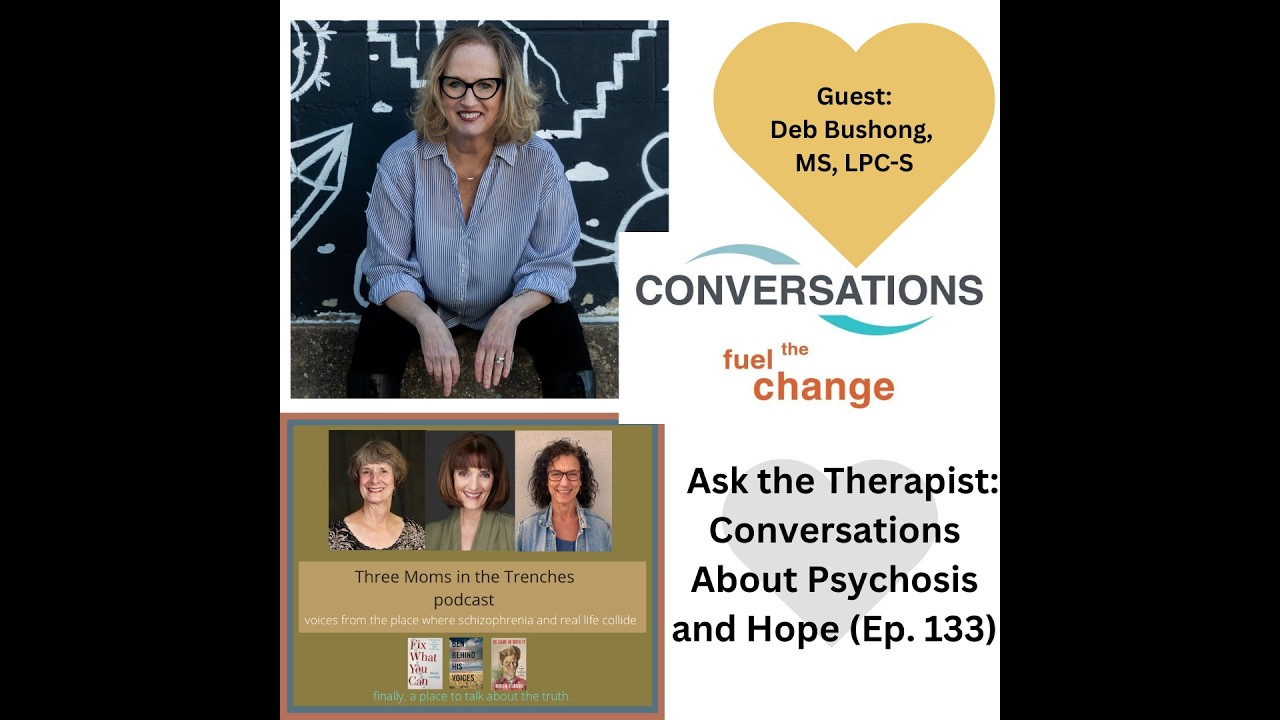
In this episode of the "Schizophrenia: Three Moms in the Trenches" podcast, hosts Randi Kaye, Mindy Greiling, and Miriam Feldman interview licensed therapist Deb Bushong‑S, who has over 20 years of experience working with psychosis. The conversation begins with Deb’s background and why she was drawn to serious mental illness, noting that graduate training barely touches psychosis. She describes her therapeutic stance as a balanced view: psychosis can feel like a "gift" in the sense of altered perception, but it is also a serious health condition that requires empathy, realistic safety planning, and appropriate treatment. Deb outlines her use of a LEAP‑style approach (Listen, Empathize, Agree, Partner) and emphasizes meeting clients where their experiences feel real, building trust, and collaborating with prescribers. The hosts raise numerous listener questions, prompting Deb to discuss practical strategies: how to engage with delusions and hallucinations without reinforcing them, how to help families when the loved one is distant or dangerous, legal obligations (Tarasoff), the role of shared decision‑making, and ways to support remote clients through telehealth, daily‑life structuring, and virtual home tours. She recommends group‑based psychoeducation in inpatient settings, especially social‑skills and executive‑function groups, and shares therapeutic metaphors such as the ACT “passengers on the bus” to help clients compartmentalize voices. The episode also touches on medication attitudes, the importance of early treatment, and the scarcity of psychosis education in professional curricula. Deb provides contact information and encourages listeners to view psychosis as a talkable, manageable condition.
Chapters
That's the hard part, is that it's so real to them. And I try to be on their side very much with how real it feels to them, because if they don't feel like I'm working with them and teaming with them, then they won't trust me.
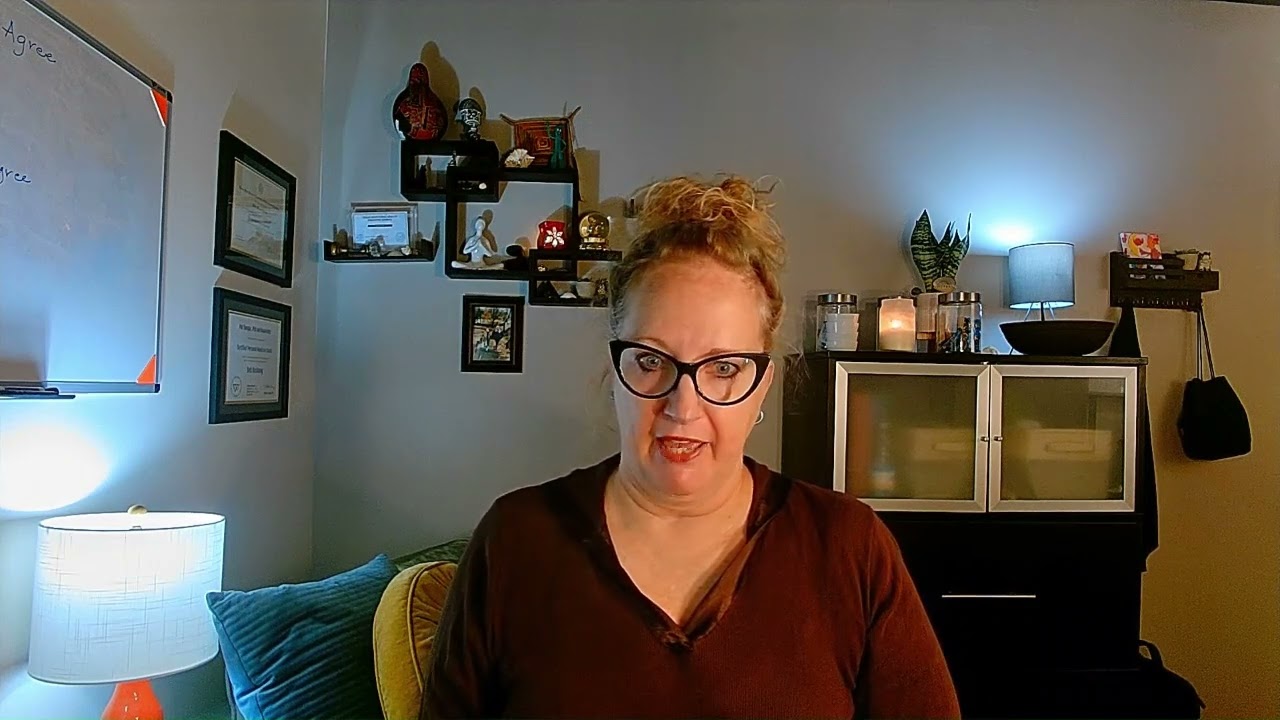
That's Deb Bushong-Song, a licensed therapist who's fascinated by and works with psychosis and has been doing so for over 20 years. What she knows can help family members communicate better with our loved ones with psychosis and maybe get a little help ourselves. Welcome to our podcast, Schizophrenia: Three Moms in the Trenches, from the place where schizophrenia and real life collide— East Coast, West Coast, Middle America— with Miriam Feldman, Mindy Greiling, and Randi Kaye. We've been wanting to do this episode for a long time. Actually, a few weeks ago, I got an email from a young man named Spencer and said, "Hey, my mom's a therapist, and she specializes in psychosis. You should have her on the podcast." So I figure anybody whose son recommends her can't be bad. Anyway, I wasn't really sure what the situation was, but you don't know if you don't try. Deb and I had a lovely conversation on Zoom, and I said, "Yes, please." please come on. So tonight's episode on schizophrenia, 3 moms in the trenches, we're just calling it Ask the Therapist. And her website is conversationstherapy.org. So we're calling it Conversations About Psychosis and Hope. I will introduce Deb Bushong-Song in a moment. Just wanna mention who we are. We're 3 moms, Randi Kaye, author of "Ben Behind His Voices," Mindy Greiling from Minnesota, author of "Fix What You Can," Mimi Feldman, who travels all over the place, but she's our West Coaster, author of He Came In With It. We each have grown sons with schizophrenia, and we're here to help. We're here to bring in the experts because we are not experts except in mothering sons with schizophrenia, right guys?
That we know.
That we know. Absolutely.
Or maybe than we want to know.
Yeah, exactly. So I just wanna mention two quick things. If you are listening, well, actually this can be accessed after the fact. The date we are recording is February 17th. It's a Tuesday and you probably, we usually get it up the next day, but on Thursday, the 19th of February, we are going to be on a NAMI webinar along with Judith R. Smith, who is a former guest on our podcast. And I just called it up. It's "AXE: Ask the Expert, Roles in Recovery Part 2: Parents." It's a panel with Judith, who is an amazing resource for everybody, author of "Mothering Difficult Children." So this panel will present the lived experience of us and also wonderful advice from Judith. And these webinars, I believe, are free. Am I correct about that? Yes.
Yep.
Yep, they are free. You can listen, and if you're listening to this after we have recorded this webinar, it is available for you to listen any time. It does take place Thursday, the 19th of February at 4:00 PM Eastern Time. We'll be on for about 90 minutes and we hope you'll enjoy it whether you're in live or listening to it afterwards. You can find more information. You have to go to the NAMI.org website and then click, I think, on Resources, and then it's Podcasts and Webinars. So you'll find it, but you also, if you Google NAMI webinar parents, ask the expert, it'll pop up. You'll find the link. Also, the link is on our Facebook page, and so we welcome you to that. We're excited to do it. I want to mention one more thing, and that is that Um, I believe since our last recording, RFK Jr. came out. Did we address this last time?
We talked about it with Dr. Laitman, but that was before RFK made his statement, right?
So, you know, just basically, again, I know we're accused at times of being political, but it's not political, it's personal. When it has to do with mental illness, we know what we need, and it doesn't mean any particular party. We just know what we need. And for RFK Jr. to come out and talk about, um, touting something that some people find helpful— and we are going to do an episode on it when we find a balanced set of experts— but for RFK Jr. to just blithely say this is a cure for schizophrenia— I wrote an open letter to him, and I invite you, dear listeners, to read it either on my website randikay.com, or if I would be honored if you would subscribe to me on Substack. I have a blog on there where everything that goes on my website, I put it there as well. You can subscribe for free. You can be a paid subscriber and be able to connect, to comment if you want. But I write about situations with mental illness and my son, and I also write just other things like living a perfectly imperfect life. And I write about my podcast, Good at Heart, which is conversations with people quietly making the world better, including my two lovely friends, Mimi Feldman and Mindy Greiling. I should probably have you on Good at Heart. But anyway, on my Substack, you'll see that open letter to RFK Jr. And he hasn't responded to me. I don't know why. Anyway.
Such a surprise.
Such a surprise. But I'm not the only one who wrote. There's plenty in there, in The New York Times and other reputable journalistic places about just making a blanket claim like that, whether or not keto might be helpful for people. It might be, but a cure it is not. All right. End of the commercial. I would like to bring on Spencer's mother, Deb Bushong-Spencer. Deb, if you can, you can turn your camera on. Deb is a licensed therapist for 20 years. And I'll just read this bit, which I stole from LinkedIn. Conversations therapy is focused on therapeutic work that helps to develop youth and young adults who are in the early parts of their journey of living with psychosis. Deb, you're aware that our sons are past youth, but many of our listeners are dealing with the early phases. And, you know, Deb offers all kinds of support for the clients, but this is what drew me to you, also support and psychoeducation for the parents and the family members and support systems. You know, your goal is to move these young people toward living a recovery-oriented, fulfilling life, which, Is wonderful. So, um, we— I put this on Facebook yesterday and said, what would you like me to ask? And we, we have many questions. So some people just wanting to share their story, which we get, but anything in the form of a question we have for you. But, um, and of course Mimi and Mindy might have questions as well. But first, can you just tell me a bit about you and how you got into this field of work and why you're focusing on psychosis?
Of course. And I would just like to say, I know you guys say you're not experts, but my gosh, you've been moms of someone with psychosis for so long. I think you're absolutely experts by now. Like, yeah, your journey makes you experts.
Thank you.
Your sons are experts. You're experts. Um, yeah. Um, how did I get into this? It was in graduate school, and this is just something they don't teach you much about. Like, they really kind of breeze over this in graduate school because I think they kind of approach it like, this is probably something that most of you are not going to deal with. And they teach very little about it. And the minute we started learning about it, I was like, this is amazing. Like, this is fascinating. And I just thought, why are we not learning more about this? Like, the brain is an amazing organ. And these people deal with some amazing things. And the more I started, like, getting into it and learning more about it, I just thought, well, this is like— these people have a gift, in a sense.
These people, meaning people who are experiencing psychosis, have a gift?
Yes.
Say more about that, because I find my— that gets my hackles up, I gotta say.
Okay, because I was just like, why are we approaching this so much like— and I understand, like, it is It is a lot. Like, they— people with psychosis deal with a lot. But I also think we approach psychosis in such a negative way. But I also think the brain is capable of such amazing things. Like, they also see the world in such a different way, you know, like that it can be negative and they do deal with such unbelievably hard things, and the families deal with such unbelievably hard things. But it's also like sometimes their mind is opened up to seeing things in unbelievable ways that the rest of us may never get to see.
I have to say, um, I agree with Randy on this one. My son doesn't feel lucky, lucky at all, and, and neither do I. But I'm sure there— I have heard people with, um, that have had psychosis or have had mental illnesses that have said it's a gift, and they feel exactly what you said. So I know you're, you know, saying what is the reality for some, but in our family, that is not the case. And Jim asks probably, I would almost twice or three times a week, even at his age of 48, Why me? Why do I have to be the one that is suffering like this? Um, so, so I, I definitely don't consider it a gift, but I think it's good for— you're dealing with people who are new to the illness, so to give them hope and have put a positive spin on it perhaps is, is something. Jim, when he was young, used to kind of have that viewpoint because he thought he was like a shaman. Or in the Hmong community, it's considered a blessing to be— to have schizophrenia, and the family all takes care of them. So there is that, that line of thought. But we've been working on this for almost 30 years, and the longer we go, the less we don't mention that at all because none of us think that.
I can totally see that. I absolutely see that. And I understand that aspect of it as well, that the longer you're in it and the longer you are in it for the long haul, it feels less and less like a gift. And I get that aspect, especially from the family perspective of like, okay, we also have to approach this like a health concern. You know, that like it is like dealing with hypertension or diabetes or high cholesterol where you have to approach it like Okay, we are in this for the long-term picture of how to deal with this. And, you know, I think we have to approach it from all sides. And I try not to be overly euphemistic about it and see it just as like this beautiful gift. But I want— because I deal with people, not— I deal with not just young people. I deal with people who are like your sons, who have had it for a while and are seeing it from the whole picture of like, they've been in and out of hospitals, they've been on and off medications, their families have seen it from all sides, you know. So I absolutely see that whole picture aspect of it as well. But I can't go into it, even for people who've had it for a while, and not come at them with the approach of like, seeing it how some other cultures see it, like trying to approach it from like a whole world approach of, you know, not just the way the United States sees psychosis.
Okay. So I, I, I hear that. And I've got to say, this didn't come up in our pre-interview. So I'm, I'm trying to be open-minded here. And I think this may spark some interesting discussion among our listeners. And to try to be fair, I will say this. I have always said if we were living in tribal Aborigine culture, perhaps my son would be the revered medicine man of the tribe. But we don't. And so, you know, when your child has psychosis that says you're a demon and he needs to shoot you, I don't see that as a gift. And I want— and I wholeheartedly agree.
I wholeheartedly agree with you there.
So I would make sure— are you anti-medication?
No, by no means. I'm not. I'm not anti-medication. No, because I've, I've worked in the first episode program and seen the benefits of medication and early treatment. You know, so I've, I've come at it for years. I worked for 20 years in a hospital setting. So I've seen early treatment and how effective that can be and how it can heal, you know, and the difference it makes to approach it early with medication. So I do appreciate that wholeheartedly.
Okay. So I'm hoping to see this as you look, you know, Dr. Amador, who I'm sure you've heard of, has, you know, LEAP, Listen, Empathize, Agree, Partner, and I'm hoping to see this through the lens of knowing that whatever it is they're imagining is real to them. So you need to be on their side and say, "It must be scary to think the mafia is coming after you." Like, I get all that. Yes. But— and I know they're— and we've done episodes on the Hearing Voices Network, and you know, they're— look, There's an element of everything in here. However, what many of our listeners—
That's my approach.
Yeah.
So it's a very well-rounded picture. I don't come at it with just one side or the other. I very much see the whole thing. Yeah.
So my 43-year-old son walks into you and says, I don't want to be on meds anymore. My mother's not my mother. She's somebody who just thinks she's my mother. And I think she's been my enemy all along. And I'm going to call her by her first name. Do you tell him this is a gift?
No, we don't talk about it like a gift right then. We talk about— I ask him to tell me more about that, and I want to hear what he has to say. And I want to hear about what he's feeling and thinking and why he thinks those things. And I'm not going to tell him, okay, let's quickly discontinue your medication. That's a— because that's a bad thing. Um, and I tell him that I want to hear what he has to say and why he thinks those things. And I will partner with his provider to keep him on medications, most likely.
Okay.
Um, because I, I really do like to work hand in hand with their providers.
Okay.
So now by provider, you mean their, their prescriber, their psychiatrist.
Yeah. If it's a nurse practitioner or a PA or a psychiatrist, whoever it is.
All right. So you're someone that they can perceive as on their side. I think the main question is what if the psychosis is dangerous or not real? That is where I think most of our listeners need your help.
And the psychosis is never real. It's psychosis.
You know, I mean, it's so real to them. That's the hard part, is that it's so real to them, you know. And I try to be on their side very much with how real it feels to them, because if they don't feel like I'm working with them and teaming with them, then they won't trust me.
Well, that's reminding a little bit of what Amador also says, which is— and what we hear across the board— which is don't challenge fixed false beliefs. And that if your loved one comes to you and gives you, you know, this obviously psychosis-derived story of, you know, their origin or who you are or what's going on in the world, that it's pointless to say to them, no, no, no, that's not real, it's all in your mind. That what you need to do is sort of acknowledge that and then move on and address things that can be addressed and changed and fixed. But, um, I think it feels very dangerous to go along with it.
Yeah, I think there's a certain point that you can like ask questions and inquire and like engage in a little bit of conversation with them about it without feeling like you're going along with it too much. You know, because I think you do reach that certain point that it feels like you're engaging with the fixed false beliefs with them, which you don't want to do. I agree. Like, you don't want to do that.
Okay. So you have to kind of ride the same fence that we do as parents to empathize. All right. So I think we got off on a little bit of the wrong foot with that gift thing.
I'm so sorry.
Okay. So just, you know, but we are nothing if not honest here. So, no, I think that's good. Yeah. Okay, and you know, listen, you said you counsel families as well. So I have compiled a list of the questions from some of our listeners, and I think Mimi and Mindy have the list as well. So I think we're just going to go down them and see. This is not to test your skills as a therapist. You've been doing it for 20 years, so obviously you know what you're doing. But our listeners— and I'm avoiding any questions of people going, give me advice, because you can't give advice. Here, but you can give out information. And that's what we, you know, in your years of therapy and dealing with psychosis, um, for instance, um, and, uh, I'm just going to give initials for people who have asked this on Facebook. So Facebook initials KC, she says, I have a question for the therapist. My daughter thinks we're not her parents, just friends. Is this considered psychosis?
You know, that's really hard. Like, that's a really, like, on-the-line kind of question because it could be—
I don't—
I feel like I would inquire more about that. Like, why? Because sometimes, like, young adults do kind of cross that line into feeling like your parents are just friends, and it's not psychosis. It can be kind of a normal thing. Some people just do that. Some young adults do that and kind of, like, test those waters to see what that's like. But then sometimes it is like, is, is this going to a point of being abnormal where you would want to know like, well, why do you think we're just your friends? Like, is, is that like, do you think we're like the rest of your friends? Do we— do you think we're any different than your other friends? Do you think we're like your other friends' parents? Like, I would want to know more about why, why, why, why she thinks you're just friends, you know? Like, do you think of us as like aliens? Like, does that go further into something a little more bizarre, a little more peculiar? Or is it like she just wants to call you by first names?
You know, like the question infers that the daughter thinks that they're just her— that they're not her parents. I mean, don't you guys— okay, yeah, okay.
Did I, did I just like skip over that part?
Sorry, just because, you know, I mean, I've been through that with some of my kids too, where it's like they want a distance from you. But I mean, that's all within the realm of normal. I think what— I think what happens and what probably this listener is referring to is— I mean, because we've all been through that I think the three of us here, where our sons have thought that we weren't their real mothers or that we were, you know, acting on behalf of someone else, and that's been a very dangerous sort of a thing.
Yeah, because that can really quickly go to a bad place.
Yeah, yeah, right.
It's really scary. So that situation that Randi was mentioning at the beginning, unless she's had it with her son too, was definitely what I had with my son. He wanted to shoot me in the face. I wrote about it in my book. And he thought I was the devil. And then because I did not have the training that you have, um, I, I argued with him. I didn't know what to do with somebody with psychosis. I had always been taught tough love. And so I could have really used, as a mother, some counseling to, um, not to explore whether or not what he was thinking about me was real. I knew that answer, and I was afraid of him, but I didn't have anybody to help me know what I should do. So one of our listeners said, what should you say or not say? So let's take that situation where the mother is afraid, her son wants to shoot her in the face. I spent a year or more thinking that he might kill me, and I didn't get a lock for my bedroom like a lot of people, but I was terrified most of that time. And I think I still have PTSD from that period. He's doing wonderfully now. But how do you work with the parents if, if you're counseling the young person? Do you have to get their permission? Do you have separate classes for them? How do you do that? And then what would you say or not say to a mother that was dealing with someone with— thinking they weren't their parents, they were something very scary and needed to be killed?
I mean, Mindy, I'm so sorry. First of all, like, that's incredibly difficult. Um, and I, I've run into that so infrequently because, you know, for them to be dangerous, it is uncommon. Um, they're more likely to be hurt than to hurt somebody.
So knowing—
yes, like, for one thing, when they are over 18, you do have to get their permission to talk to parents. Except like in certain states, there are the laws that say if, if you find out that they are in danger of hurting someone, you can notify authorities, or you can— in certain states, you can notify, um, the person that's in danger. So you have to know the laws, like the Tarasoff laws.
Oh right, I got that call from Gemma's psychologist, so I know that law very well.
Let me ask you guys something. Does that law say you can or you must?
You must, you must, right? Mandatory reporting. It's the same thing like a teacher that notices abuse or something, right?
I, I thought it was important to clarify.
Yeah, very.
Yeah, right. So you are—
but to go back to Mindy's question, so yes, we— and we have talked a lot about the podcast about, you know, are they dangerous or more likely to be victims, but of course Unmedicated is very different from medicated. So, you know, there is—
and using street drugs is, or marijuana, which is legal, is very different than being sober.
Right.
And put those two together and then they, then they, there is plenty of evidence that they can be very dangerous.
Right. So I think the question here is if a family, cuz you said you counsel families, so a family comes to you and says, my son or daughter not only thinks we're not her parents, but they think, you know, they're saying I'm the devil and they have to harm me for my own good. Like, what will you say to the parents if you're counseling families about how they should— they should they just ask more questions? Or, I mean, well, let's say it's more on the fence. They say they're not my parents, refusing to call me by the first name. You would counsel the family to dig deeper for more answers, I'm guessing, right?
I would counsel them to, to do, to ask more questions. I would also very strongly recommend like a family session where I could, I could be like the intermediary where it's not just the parents asking it themselves. I would wanna do that like in a safe space where all of us together and I could kind of gauge what the individual was like. That way I could gauge too, like, does this person need to be hospitalized? Like, are we at that level? Because it's, it's really important to kind of figure out. And then I would try to talk the person into hospitalizing themselves. Because if we can take the parents out of the equation and, and if we can talk the person into hospitalizing themselves, like, that is the ideal situation. Now I say—
I wonder what your success rate is with convincing them to hospitalize themselves?
Actually pretty good.
Yeah.
Um, yeah. So, um, because I like very much for it to be a team effort and I like to take, um, external people out of the situation and I like very much to have that conversation with the person of like, you know, explaining like why we're making this decision together. Like, shared decision-making, very much so, of like, I want this to be a decision that we're all informed about, that this is not like, this is not something that I'm deciding for you, that your parents are not deciding for you, but that you are very involved in. Like, because are you feeling okay with this kind of thinking? Does that seem okay to you? Like, you know, that you— are you afraid that these people are not your parents? And that— does it feel okay to you that you're feeling like hurting people? Like, that doesn't seem like something that you might want to do, because normally people had success with them.
That's something that I don't know. Jim, we had a group session with his psychologist at one time And the doc, the psychologist, was just trying to encourage him to take meds, which he flatly refused. And that's— and then I was told if he got worse to call the police. You know, that's what advice we got from Jim's psychologist, and that's what I did. And then the police said there was nothing they could do. So, you know, I was not educated well. So what you're doing is, um, is definitely manna from heaven for the families you are working with. But my one concern would be though, um, not including the families. I always think— and Jim's doctor, for instance, is a big person with this— that we're all on the same team. You know, mental illness is a big deal, and it takes everyone to, to try to work on it. So it seems to me that, um, that everybody should be— should be involved, especially if you're dealing with with younger people rather than isolating the sick person from their family. That's one of my— Randy's on her high horse early on, and she heard about that it's a gift, but one of my high horses is the family must be involved. And, and Jim's doctor, you know, just insists that there be a family member at every single meeting with him, and it works so well because then we all know we're on the same page. And, but I think psychologists are different though, you know. Jim And I have, we've never jointly talked with a psychologist. So I think that's different than a doctor. So I will give you that. But when Jim was really first sick, he never would do anything for anyone else, but not just us parents. So if you could have convinced him to go, I would have blessed you for the rest of my life.
So Deb, let's take you off.
I very much like the conference room idea though, with families and the client. You know, like everybody together and like that joint conversation. I am all about that for sure.
Yeah. And that is such a wonderful ideal. And but this isn't about the system. This is about your methods so that maybe other psychologists can hear them and adapt them as well. So let me take you off the hot seat for a minute and ask you some more informational questions that people have. For instance, RLJ from Facebook said, wants to know, what's the difference between psychosis and delusions? How long— because you've studied this, right? You find it fascinating. How long can they last? Because it seems to be a major obstacle to getting treatment, delusions. So is there a difference between psychosis and delusions? And then she adds, thank you, moms, you're amazing. So thank you. Okay.
And thank you, moms, you're amazing.
Thank you.
You do super hard work. Um, your job is harder than mine. You live this. Um, delusions are part of psychosis. So delusions make up psychosis. Um, delusions, hallucinations, negative symptoms, cognitive symptoms, they make up psychosis. So psychosis is kind of this bubble. And delusions are like one of the pieces of psychosis. Delusions are sometimes the hardest, one of the hardest pieces to crack, you know, sometimes because like, like Miriam said, they're fixed false beliefs. So the fact that they're fixed makes them very difficult to crack a lot of times. And like, there is one type of psychosis called delusional disorder that is really basically just delusions. And it can have like a little bit of hallucinatory behavior, but it's primarily like delusions. And they are like a lot of times those people have a lot of their— they won't have the negative symptoms. They won't have a lot of the cognitive symptoms that like schizophrenia or schizoaffective disorder has. But they have 2 or 3, like, primary delusions, and the rest of their functioning is pretty much intact. But those delusions are so strong and so intense, they're like really intense and difficult to crack. And it's really, really, really interesting because the rest of their functioning is pretty much intact, and they just have these really strong delusions.
Can delusions, like, come and go? I mean, do they wax and wane or are they fixed?
You know, they're pretty fixed, but they can wane. And then sometimes they're still the same thoughts, but they just kind of like pop in. I have somebody with delusional disorder right now, and we will have the most normal conversations at times, and then the delusions will just kind of like sporadically pop in. Of like this huge magnitude and the rest of this person's functioning is pretty normal.
Hmm. You know, it's interesting. We had a very early episode early on, guys, and we talked about movies and the way they depict schizophrenia. Do you remember? This was like 5 years ago when we started the podcast. And so there's a scene that sticks with me from A Beautiful Mind, which obviously is a very poetic description of what John Nash went through. But when he is on medication at the end of the movie, which they kind of go, "Mm, I'm on medication," like barely mentions it, but you know he's on medication. And then he sees his delusions, his— in the way in the movie, it's a hallucination of a little girl. And he's able to go, because he's in treatment, he's able to say, "Oh yeah, that's just my hallucination." and he'd started asking people, do you see that? Is that real? Like, do you find with treatment that people with psychosis can go, oh, I recognize that, that's just my psychosis? Is that something that happens as part of the healing?
Or no, I do find that sometimes, which is really when they reach that point where they're able to go, oh wait, I recognize that, that Oh, that car backfire sound is not really happening. That's my psychosis. Oh, okay, good. So I need to know, like, that's not really happening. Or when that happens, that's my psychosis, like, flaring up, like, kicking in.
Yeah, because they need insight, insight to their illness to know that they have psychosis. Mimi, did you have a question?
Yeah, I do. One of our listeners has asked this too, which is, how do you help a loved one who is suffering from psychosis and dealing with that, but they live far away? So you're not with them in their day-to-day life. How do you help them?
It's really hard. Like, it's really challenging. I know. I mean, I think we're really fortunate to have things like this where you can virtually see people and see how they're doing. You can see, like, I like Mimi, I can see your background right now. So I could see like if things were terribly disorganized or things like that, you could have somebody give you a virtual tour of the house to see like, are they able to keep the house up right now? Like, or are things terribly disorganized? You know, you could help them keep like, I help, I like to help people structure their days so they have like a schedule, you know, on the wall. To help them follow what they're supposed to be doing during the day. So I could be like, okay, you know, Bob, can you go to your schedule and let's see like what you've got planned out for the day? You know, like, can you show me where you hang your schedule? You know, I would do things like that with people, kind of like walking through their activities of daily life and helping them map out what they need to be doing during the day. Can you show me what your kitchen looks like right now? Do you have like piles of dirty dishes everywhere or Are you maintaining things pretty well?
Like, so that's assuming that they are cooperative and they want your help and they're coming to the Zoom call and everything.
Exactly. Exactly.
Yeah. And obviously, Deb, these are the people that come to you. You know, the people who come to you are the families that know you need help and their loved one is willing to. And that's why we're, we're very, you know, glad to have you here. Um, I don't know anything more about this question than, uh, But let's say someone, and then you may have no answer for this, and this is fine too. Someone has psychosis and they don't wanna talk to their mother and they don't wanna talk to a therapist. And every once in a while they call home and go, you know, "The psychic vampires are sucking my blood." Like, I used to hear that from my son when he was younger. And, you know, is there any, like, let's say, does the family ever come to you without their loved one there and say, my loved one doesn't need help, but we need help. So what would you say to a family whose loved one is refusing their help? Like, I know what I do sometimes. Like, my son right now is spinning out again because of cannabis. It is negating the effects of his treatment and he's about to lose his housing. I have told him I'm not willing to talk to him. I mean, I know how to set boundaries. That's how I'm doing it. However, I'm in touch with the policeman who was so nice to me last time, and I'm in touch with his social worker, and I'm just going to keep an eye out. What do you think you can tell him to do? Like, I'm pulling strings behind the scenes, but I'm also aware that it may do nothing. I'm just doing what I can do, you know, the serenity prayer. But so if a family comes to you and says, my loved one lives in San Francisco, He's calling me twice a day telling me about the psychic vampires. He doesn't want to see a therapist. What can I do? And maybe they can't do anything for them, but they can do something for themselves. Is there— I know it's a big question, but is there—
It is. Yeah, it is a big question. And I do have people come to me like that, and it doesn't mean that person doesn't need support because, like, just because your son is spinning out doesn't mean you don't need someone to talk to. Like, and you need someone that understands psychosis because not every therapist understands what it's like to go through that. You know, that you are going through an unbelievable amount of stress pulling strings behind the scenes. And maybe you need someone to like troubleshoot with you, problem solve with you. Like, like, are you setting enough boundaries? Are you doing too much? Are you— are there other things that you could possibly be doing? Can we troubleshoot together? Can we do shared decision-making together? Can— are there other things, other ideas that I have that you haven't thought of? Not that you haven't been doing this for long enough to probably have all the ideas yourself. But like, or do you just need someone to air stuff out to, you know, that understands psychosis?
So are you saying sometimes you can't help your loved one, but you can help yourself?
Absolutely. Absolutely.
One thing I've been—
You can't help your loved one if you're not taking care of yourself.
One thing that a listener asked, and I think would be a good question for you because I have a lot of conversations with Jim about his delusions and hallucinations. And I think Randy and Mimi don't as much. So I'm wondering, with your patients, because one of the listeners asks about her son laughing, and then they ask, "What's so funny?" The parents do, and then he or she says nothing, and they know something's going on in his head, but he's not sharing it with them. So the question is, does— do they, you know, the patient, I guess they're talking about, ever share their delusions? And I still learn things. I learned something just this week about Jim, because I always ask him and his doctor asks him about the quantity and how often do you hear voices and that sort of thing. And Jim usually denies it and said they're intrusive thoughts. He doesn't hear voices, but he actually does hear voices. But, but I asked about visual, visual hallucinations and hadn't asked about that. And he said all the time, he sees them all the time. And I don't think, I don't think he is psychotic, but he has to sort out every day things that he sees. And it could be a person, like in A Beautiful Mind that Randy talked about, or it could be a sign that says something. He said those are easy, he knows that's not there. But anyway, the question of the listener that I will ask you is, how many of your patients actually discuss their delusions or hallucinations with you? And then what How do you handle that when you do have those kind of confidences?
Most of them discuss it with me because I'm willing to talk really openly with them about it. And they know that I'm not going to just escort them to the hospital because they're talking about psychosis with me. Like, I have a— I'll just share a story. I have a fairly new client right now. Who's been experiencing a lot of psychotic symptoms for the past year, and he's been secluding himself in his room, totally experiencing, um, auditory and visual hallucinations the entire time and making friendships basically in his room and not sharing it with anybody. And he opened up the first session to me because I asked him about it. And so we just been talking about it, and he's been telling me all about it, and he seems happy to be sharing it with somebody, you know. And I'm super proud of it.
Do you question, uh, when you— when your clients tell you these things, do you just sort of— do you give them the impression that You're, you believe what they're saying. I don't know exactly how to say this. You believe what they're saying? I mean, because you don't challenge it because that's not a good thing to do. But would just saying, oh yeah, that's right, the bloodsuckers or whatever Randy said. Oh yeah, I know about those. Those are really annoying. Wouldn't that be reinforcing a non-reality in a bad way or a dangerous way? Or no, right?
No, I, I don't think I talk to them in a way that reinforces it. I'm basically just asking them about their experiences and then trusting them. Like, yeah, I'm like letting them know that I'm grateful that they're trusting me with their experiences. So you become sort of a confidant, somebody that they can come to and just talk about the stuff without Yeah, and letting them know that they can, that they can trust me with that information and that I'm not going to treat them like a crazy person, which is what most of them fear, you know, is like that, because most of, most of them are on some sort of medication already or have been, you know, and, um, you know, or some of them have not been hospitalized before, but, you know, they are afraid of like getting thrown into the hospital. And I let them know like, that is not how I work, but not that I'm afraid of hospitals. You know, I think there is a time and a place for a hospital, and then I want that to be a joint decision that we make together and let them understand why that decision would be made.
And I think that's good.
And when I'm listening to Jim, I also throw in sometimes, that must be really scary because his delusions are really scary. And they continue whenever he's not on his meds or, and/or using drugs. And then he gets psychotic again. It's the same delusion every time. And then he's back in that same story. And he's terrified the things he's supposed to do are. So he's very relieved when I sympathize with what he's going through and how scary that is when he's in that world. And if he's totally gone, I can't have any conversation. But if he's, you know, kind of going back and forth—
in between place. Yeah.
Yeah. And I think that's where it, you know, they can be reached in that in-between place. We have about 10 minutes left. And this is, this has really become a very helpful conversation. I was a little nervous at the beginning. I'm like, what?
I'm so sorry, Randy. I did not mean to scare you.
Okay, well, you know, I'm just, but I have a couple more for you that are really practical in nature. The first one is going in line with what you're just talking about. Again, an anonymous Facebooker with the initials KG wrote in to say that, and you deal a lot with younger, early cases and so on. So her son is, her loved one is 23, Um, prior to the diagnosis was an avid runner, and then the voices told him to stop running. So now, um, he is— his voices are low to zero, his meds are balanced, he's slowly entering society again. He wants to begin running again, but he's afraid the voices— I think you can just imagine this kid sitting in your office, okay? He's afraid the voices "will get loud and tell him to stop. Do you have any advice to give him the courage to try the one thing he absolutely loved doing?" That's a hypothetical, but it comes from a listener, so—
Yeah. Like, I think that's a great question though, because that is such a real thing. Like, because the power of those voices to get him to stop doing something he loved so much, you know, and that utter fear of them coming back and being like, No, you know, you, you don't need to do this. You can't do this. You shouldn't do this. And just like for some of us, like those, that negative self-talk, you know, can be so strong and so powerful sometimes, you know, just the fear of that thing telling us not to do it. Um, but kind of like the same information coming from like the Hearing Voices Movement, you know, would be, um, I don't know if you guys have ever seen this video, but there's a video called Passengers on the Bus, and it's available on YouTube. And I would recommend any parent to watch it and have their loved one watch it, um, if they're willing. If they're willing. If they're willing. If they're willing.
I tried the YouTube thing and he's like, nope.
Okay.
Yeah.
Oh, and I recommend YouTube stuff all the time. My clients are like, sure, whatever.
Yeah.
Okay, so passengers on the bus.
Passengers on the bus. Um, and it basically is like, you know, you're gonna hear this, the voices, sometimes really loud and sometimes like background noise. Um, but regardless of what they're saying, you can always be the driver of the bus saying, okay, I need you to go to the back of the bus right now and just have a seat. Right now I'm driving. You know, and like right now I'm running, you know, and I need you to go to the back of the bus and have a seat while I take a run.
I love that.
And I'm going to enjoy this run right now. You can be back there griping all you want, but right now I'm going to enjoy this run.
All right, thank you.
That is a great, great way to think.
You know, I just looked that up, you guys, and it says passengers in the bus is a central metaphor in acceptance and commitment ACT therapy. More than one ACT than the one we know. But representing how internal experiences, thoughts, emotions, memories act as passengers on the bus of life where you are the driver. The goal is not to eliminate the negative passengers, but to drive towards your values despite their noise.
Oh, that's lovely. And actually, I love the way that you— because my son is always saying to me, well, I You always walk around going, "Where are my car keys? Where are my car keys?" You talk to yourself. Why can't I talk to myself? You know? And so, it's always that degree of, is it interfering with your capacity to live a productive life? That's my, you know, 'cause I find my car keys, and then I don't scare people on the street corner by talking to myself. So, you know, and like, we all have our superstitions, but I don't have to go back and check my house 10 times to make sure I've locked the door. Like, so there's that, there's all that fine line. A lot of what— You know, it's that balance. It's the percentage of how it interferes with your ability to live a productive life, especially in this society that we live in and how we define a productive life. So with that in mind, in the work I do in growth mindset, you know, we all have that Negative Nelly or whatever you want to name it on your shoulder that goes, don't try that, you'll never get that part, or your dates never work out or whatever, you know, the neg. And you go, oh, I know you're looking after my best interests, Negative Nelly, or we're going to I'm gonna do it anyway, and well, we'll check in later. Like, so it's talking, you know, even in the self-confidence movement, talking to your negative voices is kind of similar to the passengers on the bus. And I imagine if you have your mental illness in some sort of balance, usually with medication, not necessarily always, but in our son, it's definitely, it's easier to, to send those passengers to the back of the bus. So that's a good one. Um, uh, a recreational therapist in a state hospital had a question, which was, what are the best groups and topics to offer to patients to prevent readmission? Isn't that a good question?
Yeah, that's a great question. And rec therapy, what a tough job in a state hospital, no less.
And that's good. TM from Facebook, thank you. Yeah. So are there particular topics or groups that you think would be helpful to run, I guess, while people are in the hospital?
Absolutely. Like, one of my, one of my favorite groups, and one of the ones I got like some of the best response to, was a social skills group. Because like, that is one of the things that becomes this huge deficit really quickly is social skills. Just how to have a conversation, how to do a job interview, how to do any of that stuff that kind of goes by the wayside. And things that people don't think about, like how to have a phone conversation, how to, like, how to reply calmly to a text message, you know, how to, how to be in a group chat, you know, things like that we don't think about that you kind of lose those fine skills in communication and social interaction.
Anything, anything else Oh, that, that, that I believe is a great idea. Also involves a certain amount of cognitive function that many of our loved ones don't have while they're in the hospital. Because I remember my son going to a group and he's going, well, that woman who talked to us about her illness was crazy. I'm not crazy, you know? And here she was in recovery. And, you know, so there's, you know, we all have that, the pushback. But so social skills, any other things off the top of your head?
Um, and that, like what you just said, cognitive functioning, like anything that's going to improve executive function, because that's also something that kind of goes offline, you know. So anything that you can do to improve executive functioning, um, you know, task management, activities of daily living, getting that stuff back going in line, because that stuff all goes by the wayside when you're trying to manage psychosis. You know, that stuff becomes all secondary. And, you know, just having to get back in the swing of like how to manage that stuff.
Okay, thank you. We've actually covered all the questions. I want to mention that we did get a comment from a colleague of ours in Canada named Susan Inman. She wrote a book called After Her Brain Broke about her daughter's illness. And she says she just has this comment that that an under-researched approach is having professionally facilitated group-based psychoeducation about psychotic disorders. And that her daughter, who I believe does have schizophrenia, had a program and the program no longer exists. Part of that power was when they saw others in the group who were clearly psychotic, not understand that they were ill, that they were able to see themselves in other people. I believe there's the same problem with resources that no longer exist. I know Susan also and I had a conversation years ago similar to what you said at the beginning. She said, "I went to therapy school," or, you know, so many people who are trained to be counselors, school counselors, guidance counselors, learning about severe mental illness and psychosis is an elective.
Mm-hmm. Yeah. Like, it was really just a blip in one class that I took where we learned about the DSM. It's like, here's a section we have to go over because you're learning about the DSM. Um, here's, you know, part of one class about it.
Wow.
And I was like, wait, wait, there was so much there. You guys really just went over it really fast.
That's why I really appreciate very much the work that you do and that you're— you have come on this program, because so many psychologists take that training to heart and don't deal with people at all with psychosis. They want to deal with marital problems or, uh, you know, family problems. And but to me, those are simple compared to the work you are doing. So thank you very much, and you are very knowledgeable about psychosis, and the way you're talking to people, I think, is non-threatening to have relationships. I think that's just exemplary. So thank you very much for your work.
I, I honestly love what I did. And when I went to graduate school, honestly, I was like, I'm going to do marriage and family therapy. And the minute I learned about serious mental illness, I was like, marriage and family, whatever. That's like bad hair day therapy. I was like, go get a mindfulness app on your phone and see me later. Like, I'll take psychosis any day.
Your son Spencer was right about having you on our show, so tell Spencer thank you as well.
So the website is, um, conversationstherapy.org, and in the show notes I'll have a link to your Linktree. Uh, you have lot of social media presence. What would you most like our listeners to know right now about how to find you?
Oh, I, I think, like, I'm, I'm on Instagram, I'm on TikTok, I'm on LinkedIn. The Linktree has all my stuff together. And I think just don't be scared of psychosis. It's okay, and it's okay to talk about it. It's okay to talk with your loved ones. It's okay to talk with your friends. Um, yeah, like, let's just make it a more talkable situation.
I love that. Thank you so much, Deb Bushong-Song from conversationstherapy.org. Thank you for joining us. Thanks, you guys. Thank you so much for tuning into this episode of Schizophrenia: Three Moms in the Trenches. You can help out the podcast and help others by sharing the podcast and by subscribing wherever you get your podcasts and/or on YouTube. And remember, you can reach us at mindygreiling.com, randyk.com, or miriam-feldman.com.