Brendon Burchard and Dara demo Delphi, a platform that lets creators build AI clones of themselves for coaching and customer engagement. They walk through voice cloning, content integration, and how the AI handles real conversations with your audience.
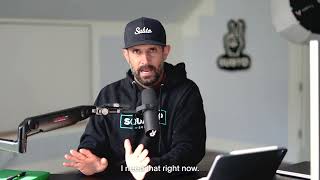
This is a call about how to use Delphi AI. It's a call about the future of AI and how I think the creator economy is going to be so significantly impacted by it, specifically. But also the bigger picture of where we're all going, what our customers expect, how we're going to build audiences in the future, how we're going to deliver customer service in the future, how we're going to build courses and content in the future. This is a big conversation. I know some of you are just here for the walkthrough, but let me start with the bigger why? Why should you immediately start getting all of your content into deli AI? Well, first, I think it's going to serve you to have a forcing mechanism to organize your content. Anyone know what I'm talking about? You all kind of needed this to come. Who's in Google and in dropboxes? And you're in 55 crazy places. You don't know where your books and your PDFs are. And now you have an opportunity to resurrect your past content. I think that's what I got excited about as soon as AI came around. I started this journey four years ago, and four years ago, I decided I was going to build an AI. I had the opportunity at first to start that conversation with Google and decided not to go with them because I wanted control, and they weren't going to give me any control. They just wanted my content to build an unbelievable coaching AI. Then I had the opportunity of working with three or four other teams. Then I decided I was going to hire it and build it out myself. Then I blew a ton of money. Then I met Dara from Delphi, and I reached out to them. I'm like, wait, you guys have cracked this code. He was easily two or three years ahead of me, and I couldn't believe what he had been building. And so I reached out and said, I'd love to do it. I'd love to put my content on Delphi. And we had this awesome conversation. I got to meet the team and invest in the company and honestly learn so much. And as some of you have seen, my AI is sick. It is so good. I cannot. It's actually. I'm fake this. I am the AI. Okay, So I get. I'm overly enthusiastic because I know what this will do for you. So here's what I believe all of our futures look like. First and foremost, we always begin with the heart of service. We begin with the clients. Your audience and your customers want easier access to your content. Period. Your customers and your clients, your audience wants easier access to your content. They're not going to go dig through everything you've ever published behind your paywall. They're tired sometimes. Have you ever noticed some of them will listen to your podcast or read your blog or watch your YouTube on the front end, where it's free, even though they paid for this stuff on the back end. Why? They can't find it. It's just a thing. Your audience can't find your stuff. They don't know where it's at. Second, they want more connection with you, but you're just one person. You need to multiply yourself. And so this idea of cloning yourself and your content is the future. Even though I know there's those people who just hate this idea, I don't, because it makes you more valuable. Time with you, in person, experiences with you is going to skyrocket. You're all going to get to charge more money in the next couple years than you ever imagined. I think that is a huge benefit to all of us who coach, who teach, who do events, who serve people with content. It's. It's phenomenal, the number of people who will now pay more, because there is AI. They want the real deal. They want the real thing. They want the real connection. They want the sloppy you. They want the messy you. I told my team today I was joking. I said, you know, I'm going to start all my webinars now. I'm going. I'm going to. I don't know if you guys have this pro tip. I'm sure you guys all have this. Y' all got this thing. You don't. This is the stuff. These are. That. That rice paper, okay? You take it like this, you put it on your forehead, and it eats all the oil so you're not too shiny in your lights. You know what this is? Now, listen, an AI would never do what I'm doing right now. So, see, you get to be. Matthew gets it. You get to be a little messy and have a little fun and be, I don't know, a little bit human with people. So don't be fearful of it. It's just another tool, another technology that makes you more valuable. Here's the hidden effect. When your customers can actually search and have conversation with your content, more, they consume it more. And when they consume it more, they. When they consume it more, they get what? More value now. They have more value association with you now. They're actually more likely to recognize your uniqueness, recognize your content, recognize your value and pay your higher fees. This is the underappreciated reality of the future. Everyone's so scared of technology. I'm like, oh, my gosh, I'm going to earn more than any time in my life because first, my AI can be talking to thousands of people simultaneously right now, all over the world, delivering value. Second, it's going to make my work more expensive, more highly valued. Third, I think this is really important. It's going to keep. It's going to make your audiences or your customers more effective, because instead of sending them a, you know, a course where maybe they just watch the course, now they're going to have the course, but they're going to have the ability to have your AI coaching them through a process. And when your AI can coach them through the process, they get better results. They get better results. They become your ambassadors. Some of you have customers, but you've never had ambassadors because you didn't have the capability of providing enough support to your customers. By the way, I've been in that category. But now, as your AI can provide more support, they get better results. They become better ambassadors and better promoters for you, too. So I always start with that positive outlook because I think people are missing that. They're just worried. The number one concern, I know many of you have it, and Dar and I will approach it. Many. Number one concern, I hear, is like, but. But won't AI steal my content? I'm like, first, AI content will eventually be better than any of our content. You ever go into a library, though? I mean, how many. How many book authors do we have here? So Dara can see how many authors we have. It's a big category, right? Isn't that amazing? So. So many of you are authors. Now, imagine if you said in your own mindset, well, I walked into a library, Brendan, and there were books in there, and many of them were better than mine. Would that have stopped you from writing your book? But we live in a world where everyone's like, oh, my gosh, AI, there's gonna be AI better than mine. Well, there's books better than mine. Hemingway is literally two shelf aisles away from mine, but I still sell mine. You're not going to lose your ability to sell your uniqueness and your personality just because AI is there and there's more content proliferation. How many of you have grown up in an age of content proliferation? You're already competing against everything else. Competing against AI is not going to be any different. What you're competing against is not AI. My friends you're competing against noise. You're competing against attention. And if any of you have ever made any money on the Internet, congratulations. In that moment, your inbox went kaching. You beat Facebook. You beat TikTok. You took attention from some crazy thing out in the world that has a huge algorithm to steal attention. You got the attention, you got the sale. No different with AI. AI is not a threat. It's another technology. A lot of it's going to be noise. And you're still going to stand out because you're going to do a lot of the marketing and the teaching and the coaching and the adding value. Just like I've always taught and I know many of you deeply believe in your heart you're here for a mission and a reason. The reason you would even get Delphi is because you believe that's important, that your content affects people's lives. And now, instead of you always having to read your content a million times over to hundreds of your or thousands of your customers, raise your hand if you're ever gotten tired of saying the same thing to your customers. Okay, can we just pay the damn bot to do that for us? Can we just accept that that is a nice thing, that now in your course, your AI clone can answer that question 500 times. This is a wonderful thing. Now you've got something answering your questions. You can be charging for it. And as you're going to see today, not only can you really tune it to your voice and to your purpose and to your specifications, but you can also use it to be generative for your own content to. I don't know if you know this, but I have one of the Dara and I have one of the biggest pastors in the country using Delphi. He doesn't put it out there publicly. He uses it for his team. So instead of his team asking him to record something or, hey, how would you introduce this thing? He's loaded all his content. His team asks his clone. Copy paste uses that. So his team is using his clone to write the introductions or the descriptions of his videos or his podcast in his voice versus him having to do it all the time. And I think that that's a huge unlock many people have not yet appreciated. I know I'm preaching the choir a little bit, but I'm literally doing this with Dara because I want to record it so you have it. I want to capture this for posterity reasons because I think so much of our industry doesn't realize all the benefits I just shared. It's going to save you time, it's going to make you more effective, it's going to make your clients get better results, and it's going to get you paid more in the long term. Holy. There's a story we should use. Dara. Okay, I get it. I'm trying to look at you in the chat and get ready for this presentation at the same time with Dar because I want to do a, a kind of a screen by screen walkthrough. We have the benefit of having Dari here today, who not only is one of the great, I think, leaders in AI right now, but he's kind of a little bit like many of us, where he actually has his hands on the dial. He's actually the one doing the work. You know what I mean? He's got an amazing team, but like you and I, he's giving demos, he's talking to customers, he's talking to clients. So he's given about, I don't know, five, four, I think, bajillion demos. So he's much better at it than I am. And my job is to add some commentary about where you might monetize and how you might use it. I'll give an example. I used mine. I actually used a clients of mine to do an audio ad for their podcast recently where we just typed in the few sentences we wanted and hit export the MP3 and the clone. Read it. There's some things that you might not know that Delphi even does because we don't even advertise it.
It's just cool.
So you can use it for generative purposes of your own content, of your own voice, which I think is rad. Here's the other thing I've used it for recently and I'll get off my horse here. I'm writing a new book and I've been teaching so long. Have you ever taught a framework and you didn't even know where it was? Anyone? I just, I've been doing this for so long, I didn't know where the. I don't know where it was. But we fed so much into my Delphi, into my clone, that I just asked it a question and it answered it. And as it answers the questions, it cites the material and I found a framework that I literally could have never found. I would have had to watch thousands of hours of my own video, which I recognize is painful. People. I appreciate you're even still watching me. I would have had to watch hours of my. Hours of my stuff to find this one thing. But I just asked the Clone and it cited it. Bam. Oh, it's in that video. Great. Went right to it. Found it and was in motion. And so it took something that would have taken me or my team literally probably weeks to find. I found it in like five seconds. So finding your old stuff, let alone allowing your customers to search and talk with it, game changing. Okay with that. If it's true that we will be more effective and our customers will be more effective, this means it's a net positive. Now, the fact that you can also charge money and have a paid membership is incredibly powerful. The fact that your customers can choose to engage with your clone on their phone, SMS, or they can engage with your clone in WhatsApp, or you can embed the clone in your WordPress or blog. These are truly game changing additions to your website, to your social media. And it does absolutely stretch my imagination of how people will talk with us in the future. And so I'm really excited about that. My friend called me this morning and she said, I just talked to you for seven minutes and I kind of forgot what she was talking about. I said, oh, I'm sorry, what? What are we talking about? I thought she's asking to talk to me seven minutes. She goes, no, I just talked to your clone for seven minutes. And I was like, you did? She goes, it was so helpful. I was like, that's amazing. So even my friend wanted not just to try it out, but she was asking it something specific to relationships. And I just thought that that was rad. One of the most important things, and I'm excited about that, Dara can show too, is that you can learn in the Delphi Dashboard what your customers are asking the clone that you can see what are the topics they're asking about. But you can also enable specific views so that you can see like literally specific conversations as we go through here, which is mind blowing. So that you can learn more about your customers too. That data of knowing more about your customers and what they're actually asking. Guess what that one feature just gave you Every one of your social media post content ideas for the week. What are people asking my clone? Oh, that's my next reel. What are people asking my clone? Oh, that's my next YouTube video. What do people ask my clone? Oh, that's my next podcast. It's like the best user engagement research at speed and scale that I've ever seen. So all of that, there's some hidden gems that you're going to find out in Delphi that I didn't even advertise. And talk about. So with that, we're going to bring on Dara. He is going to share a little about his journey founding and building Delphi with his team and co founders and also just walk us through some of the great screens to show you exactly what you can do in here. Everyone, let's give it up for Dara Brandon.
Thank you for having me. It's been so awesome to see all of you guys sign up for Delphi in the past week. Some of you guys have some really niche expertise and that's been awesome. Before I go and walk through the product that I'd tell you kind of the story of why I started this company and how I even came up with the idea. A couple of years ago, I was reading a book about my grandfather who was a legendary entrepreneur in Iran before the revolution, and I was working on my first startup and I was a solo founder, didn't know what I was doing, didn't really have any mentors. And so I thought, oh, it'd be great if I could get advice from this guy who I've been looking up to like my entire life. So I created a clone of him using his book and kind of treated it as my own personal mentor. And that kind of brought me down the idea maze of letting people who are very busy, either because they're no longer around or because they create a lot of content. People ask them a lot of questions, how can I allow them to scale themselves? And something that Brandon said that I really wanted to emphasize. Having a clone isn't really about automation or replacement, it's about augmentation, it's about reaching more people. And when people talk to your clone, they build trust with you. And that trust leads to subscriptions, following your email newsletter, actually wanting to get to the in person talk, because in person will always be better than AI. You can just feel it, it's never going to replace that. So this is all about expanding access. And on that note, I'm going to share my screen and walk through every screen of Clone Studio.
This is the stuff that gets me so excited, y'. All.
All right, so for this demo, I'm going to pretend like I'm Socrates and I am creating a clone of myself. So here in Clone Studio, the first thing we want to look at is the train page. This is where you can add content to your clone. And how do you actually add content to your clone? So we have integrations with websites. You can upload a single website or you can scrape your entire blog or you can upload links from a CSV. We also have YouTube where you can upload a channel or a playlist. And I want to quickly talk about these additional settings because they're very, very important. This content is written by or about me. You would check this off if, let's say, you recently read a book that you really find informs your worldview, but you didn't write about it, it's not written about you, but you want your clone to know about it. This is where you would uncheck that and this is how your clone knows. This is a part of my knowledge, but it's not my own experience. It's not about me. So I. For example, one of my favorite startup books is Build by Tony Fadell, and I put that in my clone and I uncheck this so that my clone knows the principles of this book. The second thing is, I know a lot of you have Maybe podcasts or YouTube videos with multiple speakers in it, and you want to make sure that your clone knows which parts you're speaking in and which part someone else is speaking in. And you can choose to include or exclude those sections that someone else is speaking. Oh, man, we have extra people going to.
They're going to upload these videos of me and their interviews. They're like, cut out, Burchard, that guy's too loud.
Yeah. Or they can include you and put your name in. So the clone is like, oh, yeah, I remember my conversation with Brandon. So next is extract questions. Basically, this will extract questions that your end user can ask your clone. So it kind of pre populates the suggested questions. Definitely not required. Just if you want to make it easier for you when deciding what questions you want to display to the end user. And lastly, analyze tone. Not everything you write is indicative of how you speak, so we wanted to give you the chance to actually choose. Hey, use this for my tone and not anything else. So those are the main options. We'll quickly go through everything else. Socials, we've automated Twitter. Unfortunately, the APIs for TikTok, Instagram and LinkedIn are not publicly available. So if you'd like to upload those sources, we have instructions here on how you can request it from those platforms and upload it directly. Here you can upload MP3s, MP4s, images, books, Google Drive, your podcast, you can upload data manually. You can connect your Notion and your Evernote. So these are all the different sources and. And we have more coming now. Once you upload a document, you can change the importance score, let's say a Certain document is more important than others. We usually recommend keeping it at 5. But let's say something really, really important in your expertise. You can set that here. You can also choose to hide specific citations because as some of you have realized, the clone cites everything it says and maybe you don't want some documents being brought up. So we give you that option. The next and probably the most important thing actually is the purpose. So the purpose is how the clone knows what its objective is. If you want to use the clone for content creation, this is where you'd specify this. If you want to use the clone for coaching or teaching or customer support, this is where you'll specify this. And this will affect your readiness score. So you'll notice this score up here at the top. It is fully based on the purpose and the description of your clone. And you want to get that score to at least 60, 70% before you should feel comfortable sharing it out.
Yeah, I love that. My clone actually the purpose was pre populated. It read all my content and it actually described my purpose better than maybe I had done before, which I thought was amazing. We have a question about that. Uploading videos earlier. Can I upload unlisted videos?
Yep, you just have to put in the YouTube link and you should be good.
That's awesome.
So you'll notice here if you want to actually enable speaker identification, you first have to upload your voice. And this is one of the fun parts because this also allows people to call your phone or you to call yourself if you're planning to use this for maybe self therapy and reflection. So you can upload voice files here. It's really, really important that when you upload a voice file you it is only you speaking. Even like a second or two of background noise or of someone else speaking is going to mess up the audio quality. So the best thing you could do honestly is to get a voice note on your phone speaking directly into your microphone and uploading that straight in. We've seen that do very, very well. And like I said, our non English voice models are not the best right now. But we are working on it, especially accents. So that should be out hopefully within the next month. Another option, if you actually want to train your own custom voice, you can train your own custom voice. It's a one time cost of $6,000 and we don't make any money off of that. It's just very, very expensive to create a custom voice model. But that is an option that you can request at any time.
And let me give some learnings on that one, y', all, this was so good. When you upload these voice samples, use your best audio. As he shared, many are authors, so uploading one chapter from your audiobook is sufficient. Right? Some of you just sit down with your best podcast mic and read several chapters of something you've written. Read your blog post, read something, make sure it's really clear. Great audio. And here's something that I learned that was huge, that depending on your voice, AI is going to sound better or worse straight out of the box. So when he. When Dara said you might have to spend money to tune it, that's only if you want to go to another level. If yours doesn't sound great already. After you've played with all the dials here that he'll show you in a second. I'll give an example. We did Ed Mylett's voice here. We just uploaded a couple things from Ed and the AI got Ed so spot on. It's unbelievable how good it is. Now we uploaded mine. Same audio content, same quality, everything. But because I sound like a clown and he's got this deep, even baritone type voice, his sounds amazing. I spent extra to make mine even better. Mine was already good, but I wanted it to be the best of the best. So I did spend the upgrade with Dara. I said, can you guys super tune this? And it was worth it already. But also, don't do that right away until you've played with the settings. Can you show me the settings? This makes a huge difference.
Playing around with the settings makes a huge difference. And like Brendan said, it's definitely not required to do the advanced voice cloning. Certain people have harder voices to clone, which apparently Brendan is one of those people. But I would definitely try uploading samples here, playing around with the settings. And we have some people using this to download scripts for, you know, advertisements. So this is used for voice calling. You can also use it to just generate scripts in your voice. And you can download those audio files.
Yeah, I want to. Can we show them example, can you. Can you print.
Can I go to yours?
You actually, I want you to do the settings here. So if you hit play so they can hear the quick brown box. Listen this, guys.
Can you guys hear that? I don't think they can hear across zoom.
Oh, they can't hear it. Okay.
No.
Oh, weird. Okay. They can usually hear it on mine. Maybe I have to.
Maybe I have to share my audio.
Maybe something. Yeah, I think you have to share your sound on your computer. It might be a zoom setting. Yeah, Use the share. Okay, let's see.
Yeah, I don't. I don't see audio in advanced share settings here, but let's see.
It's in a zoom setting, so if you go to zoom.
Got it.
Upper left. Probably zoom settings. It might be a share audio up there. Thank you, guys. I'm actually looking the chat. You guys are helping us figure this out, so thank you.
Mute audio.
I could also share mine, maybe. Let me see if I can.
Yeah, you want to. You want to share yours for the audio and then we can get back to it?
Sure. I think that'd be cool because it's such a rat. Let me go over to my voice. One second, guys. Okay, I'm gonna take over screen real fast, all right. And pop into mine. So I'm in the back office of mine, y'.
All.
Okay. I literally see you, so I'm just gonna. Karen, can you see my. My clone studio? Catherine, Shiny. Carlos, thumbs up. Ed. Okay, great. Now listen. I'm gonna press mine. The quick brown fox jumps over the lazy dog. Did you hear it? Okay. Yes. Now, that's not my full. I don't know if I should mess mine up, but a couple things. One, I could type in. Hey, it's. I love this zoom call. Okay. And I can press this play. Hey, it's Brendan. I love this zoom call. Not bad, right? Watch this, though. Now. Think about it. I guess. Why don't you say, I love Range Rover, my favorite car by far. You should take test drive. Hey, it's Brendan. I love Range Rover, my favorite car by far. You should take test drive. Okay, but now that sounds funny because remember this voice. Playground is the playground. It's not the final clone. So if I ask the final clone, the audio is better. This is a playground. But what I want you to see, it's a playground. Because as you saw him click this settings button, I want you to see that I have dialed mine in with the clone to sound its best. You can change the stability, the clarity, and the exaggeration. Why does this matter? It matters because when you first upload your voice, it's not going to sound exactly like you. You have to play with these, and you'll get it closer and closer. Like, I got ads perfect out of the box. Didn't have to change a thing. I had to play with mine for, like a day to get it exactly where I wanted mine. And then I. Which was fine and totally fine for commerce. Then, because I have corporate clients, I was like, I. I want to spend a little lecture to make sure mine's exact. So if you haven't been to mine, let's see. Watch how crazy this is. So I'll go to my trial. I think I have it pulled up. Or maybe I'm on the different page. Here we go. Now, here's my favorite setting of all. If you guys didn't know this is possible. This bottom right button is my favorite button. I. I would. I would have bought it just for this button. Because watch, I'm going to press this little phone button. It's going to pull up my. I don't know if I can do it with Zoom at the same time. I apologize. I don't know. Hey, it's Brendan Burchart.
AI.
What's on your mind today? What do you want to improve or learn? Okay. Hey, Brendan. I'm trying to find my confidence in public speaking, but I feel fearful. What should I do? Hello? Are you still there?
It's just you today.
I don't think it's not hearing me because my mic, so it's not.
It's funny that he said, hello. Still there. I didn't even know that.
Yeah. Do you know that? Okay, I'm sorry. I'm totally derailing the whole conversation, y'. All. Um, I want you to play with that on my clone because you'll be able to do it. It can't hear me through my mic into my computer because it's. I'm on Zoom. I want you to play with it, but here's why I'm sharing this with you, specifically this voice playground. You can dial it to sound more and more like you. And as Dara said, then you press download and listen, everybody. It will download the MP3 of whatever you type in this box of you reading it. This is how I have two podcaster friends who stopped reading ads. Their team comes in, types in the ad, hits play to check it, and dial it, then downloads it. That blows my mind. I think it's just important to realize that's possible that you can be doing this type of stuff. I think this is one of the most important pieces. And your voice will get better and better again on your clone, like mine. A lot of people won't even, you know, they just want to text it here in this field. But you can charge money for people to text it here in this field or also call it. And I really want you to enable the calling, which she's going to show, because when people can call it, their. Their mind is blown that they can call you. It's really, really high. Quality. Okay, sorry. I'm going to give you that. Pass it right back to you, buddy.
All right.
Okay.
Casey's geeking with me.
Joe's geeking with me. Shiny's geeking with me. Okay, great. I'm feeling good.
So you saw Voice. In a month, we'll have a new tab called Video, and I'll let you guys kind of figure out what that could be. But you can imagine that one day, the Brendan that you see on this Zoom may not be Brendan, but he won't do the same things that Brendan does. But it'll look like him and it'll sound like him.
It's incredible. So Video Avatars is coming to Delphi end of May.
Coming to Delphi end of May. You'll be able to send your clone to Zooms or Google Meets, or people will be able to video call your clone within the Delphi app.
Wow. Does it. Will it lip sync? Like, make the lip match the words fully generated?
It's not even lip sync. It's you're being fully generated in real time, and it looks like you.
Lip sync. Like, make the lip match the words fully generated.
It's not even lip sync. It's you're being fully generated in real time, and it looks like you and it sounds like you. And we want to give it the chance to be able to see the user it's talking to, too, so that it can react appropriately. You know, if someone looks sad or happy or is laughing, can we capture that? Can we make it feel real?
That's amazing. Hey, Jim, in the. In the chat just said he beta tester, please. I'm a beta. I want a beta test, too. Anyone else? Put it in the chat so we can find some beta testers on us. This is going to be hot. You're getting that?
That's coming soon. We're hard at work on it, but in the meantime, I'll finish with the rest of the training page. Custom instructions. A lot of you guys maybe have rules that you want your clone to abide by. The clone already avoids. Not safe for work topics. Inappropriate things not going to make you look bad. We have some people who are dating coaches who actually want the clone to be able to talk about these things. So, you know, you could set specific examples. You know, avoid talking about politics. Answer every question with a question back to the user. This is where you'd kind of define custom instructions that you want the clone to abide by, y'.
All. This is how I made mine a coach. I said, you know, as Dara just said, I just want to make sure you didn't miss that. I say I type in there reply with a follow up Socratic question. So the clone keeps people talking. Because see here, this is huge. And maybe you already say this, Dara. Oh, I'm not video, sorry. Hopefully you guys can see me. Here's why this is big everybody. Because your custom instructions, the difference between an AI clone and an AI chatbot or Chat GPT or Gemini. Let me share something that's really important of how I'm thinking about this. My custom instructions. I ask it to ask questions back and I give it more instructions than you see here. So it keeps the conversation going. Now let that sink in because if you've used Chat GPT, it doesn't want to keep the conversation going. If you use Gemini, it doesn't want to keep the conversation going. What it tries to do is give you the most short and succinct answer and clip it. Because every one of those conversations back and forth is tokenized, is messages, is called usage fees and they don't want that. But in our world, I want people to keep talking with this thing all day. I want them to have lots of conversations and breakthroughs and AHAs. Because as Dara said, that creates the trust. As I said, it shows the value. And we create that trust. We show value now. Everything else we offer converts better. Raise your hand if you get this. This is huge. See, you can so. And that's why this section is really important. And again, I'm going to give you guys this replay. This custom instructions is where you can teach your clone to keep the conversation going. You can teach it here to ask specific questions. You know, every third message, ask this question type of things right? So this can become something you can really tune in to do what you do right. You know, you might teach it. Please make sure in every reply you use a metaphor of nature. Think about that. And now it's like describing success. And now it has a description of climbing the mountain or something. So I know that's a generic metaphor, but you guys get the idea. You can really play with this. And I love it. It's super cool. I know many of you are like, but what if it says something I don't like? Or the customer, you know, can't get their question answered. Well, as Dar will show you, not only can you see these conversations, but you can get notified if your clone can't answer a question. So I get emails every day, clone can't answer this question because maybe it's you know, they're asking, you know, which president I would vote for something that I just don't do. I think that's really powerful for you to realize. Okay, I'm going to shut up. Sorry. I'm probably going over. I get too excited. Dara. No, I love it.
I love it. The excitement is why we do it. To add on to what Brendan said, when the clone asks questions back, some of you will notice if you're logged in, the conversation actually becomes more personalized to you over time because the clone remembers things about the user. So the benefit of having this question nature and conversation is that the clone learns more about the user and it provides more personalized experience. And this will definitely be handy when we eventually release the ability for the clone to initiate the conversation, send a text to someone, follow up, hey, how did that meeting go? Or did you follow the advice that I gave you? That's not what we have now, but that is coming this summer. The next thing is suggested questions. So on your clone page, you have a bunch of questions that you can choose to suggest the end user. So this is where you would manage those questions. And lastly, on this train page, you have feeds. So if you have a blog or a podcast or a YouTube channel or Twitter, where there's constantly new content and you don't want to have to update your clone every other day, you would just add your feeds here and we would. We will automatically update your clone for you. And that is the train page onto the next. We have audience. This is where you can see who's talking to your clone.
I think on that last one. Oh, sorry, buddy. On that last piece with feeds, I think this is really important to realize what that is. So you can have your clone automatically suck in your YouTube post, your podcast, your blog posts, you know, some social media. And you want to do this based on are you posting value on those things? Right. Because whatever pulls in, it's pulling it in. So you don't want to put some.
Random things in here.
Yeah, it's like, kind of like if you're using Twitter for just a bunch of memes. Unless you want a meme clone, I probably wouldn't do that. But if you're on Twitter, know LinkedIn, and you're posting really great quality articles for your HR clients, maybe you want to pull that in. So far, I. I'm manually doing mine because I like to know everything that I'm. I'm putting in there. And, you know, some YouTube videos might be more adventurous, or I'm interviewing People. And I don't want the interviews to come in. I just want the solo episodes to come in. So you're just discerning like what do you want to be in this? If you do a feed. And that's why I like that he didn't default feed it into all your socials. You can choose and that should be a strategic choice.
Yeah, I definitely don't my Instagram in here just, just block. All right, so audience, this is where you can see who's talking to your clone. You can see specific user information, which is if your clone asks the user a personal question and they give an answer, this is where you would see those answers. And, and you can also pre populate this information. So if you want conversations with your end users to start personalized, you can actually upload data about the end user and the clone will know that when the conversation has started from here.
If I knew they were a buyer of, if they were a Mastermind member of mine, I could just go tell it, hey, this is a Mastermind member. They joined on this date. You know, they have access to these programs. Wow.
Yep.
Wow, y'. All. I didn't even know that.
So. And this will be great because if you want to have your clone do. Do mass surveys, for example, or ask people questions, this is where you can kind of get that information at scale and use it to personalize marketing or personalize outreach. And the, the users of the clone will feel kind of special. You already know this about them. They don't need to tell you again. So that's the benefit of doing that. Obviously, you know, maybe you want to pipe these users into another platform. We only accept CRMs that are HubSpot and Salesforce right now. And you can Export emails through CSV. We will be supporting new CRMs in.
The future and this is important. So let me share with those. I know we got a lot of email marketers here.
Yeah.
What happens? Let me talk about the customer experience. When the customer goes to talk with your clone, you can have a setting that they have to log in and you can also have a setting that they have to pay. In either case, they have to enter their email or sign in with Gmail or sign in with. What else is it, Dara? I forgot.
Is it just Gmail sign in with Google or just OAuth? So they just put in their email and they get a one time code.
Okay, so what's happening is they're signing in to talk with your clone when they sign in with Google or that OAuth email, it drops it right here. This is really powerful when you think about this. So your clone is like your opt in page. Your clone is collecting your newsletter subscriber and, and the conversation with the clone is something that you can look at, see, or sort. And these users, you can export these folks's emails into your newsletter, assuming you have that as a checkbox somewhere and you want to do that with them. And you can set all of that as well. I want to make sure everyone is clear. You can reveal to your customer, which I recommend you do on the clone page. You can say how this clone works. Hey, conversations with this clone, you know, we can search this data. Or hey, when you have a conversation with this clone, you'll be added to my newsletter list. You can put all this on the front piece as he'll show you later on. But this is really powerful. Do you all see how this becomes like, almost like a CRM? I mean, it's collecting an opt in. You can add customer information also as he's going to show you, you can talk with them, you can email them, you can text them. This.
Yeah, so I'll start with Mass Message. So with Mass Message, you can send out a mass message to anyone using your clone, either through text or through email. And then your clone can take over from there. So you can say, hey, like ask me about this topic. Or you can ask them a question or let them know when you have a new content update. And then if they start talking back, you don't have to handle all the responses. Your clone will handle the responses for you. And if at any time you want to hop into conversation, you can do so here. And this is where you'll also be notified when someone asks your clone a question that it can't answer. And when that happens, you can actually just answer it here once and it'll improve it for all future questions. This is how your clone gets better over time. You get a question that it can't answer, you answer the question, it knows it forever.
This is so huge. So think about conversations, another language you and I might use. Everybody here is. This is your inbox, right? This is your DMs, if you will. This is where you can see what the customers or clients are talking with with your clone. If your clone can't answer it, it puts it unanswered. So you can answer it like he said. And now it's forever in the clone. And you're also able to go back and really identify themes that your customers are talking about. I think it's fascinating to learn the questions that people are asking about. I also learned in looking at mine, how many people can't spell my name? I was like, wow, Brendan must be the hardest word to spell in the English language. Okay, I'm sorry. I got excited. Okay, go ahead.
One other thing about the audience page that I know is important to maybe some of you is you have the option to fully anonymize chat transcripts or de anonymize them. I know for most cases you'll want to know who's talking to your clone, but in the case that maybe you're like a therapist or a doctor and client confidentiality is very important, you do have the option to do that.
That's huge.
The last thing on audience page, which is personally my favorite, is you can actually create alerts to be notified whenever certain topics are mentioned. So for me, like with my clone in Delphi, I get notified whenever someone says, this is not working, or there's an error or there's a bug. And I'm like, okay, I got to talk to them right now. So you can create alerts so that you can be notified as soon as something is mentioned in conversation that you think you need to be there for.
That's good. For those who are solopreneurs here, which I know many of you are, who you do your own customer service, this is a great place to add an alert so that if someone types in customer service, you get pinged with an alert right away so that you know someone's trying to talk to a real person. If you've not yet set up, you know, some other separate system or some keywords, like if someone types in, how do I join your mastermind? I want that notification now. That person's a hot prospect. So you can set up keywords so that you get alerts as well. That's huge.
Yep, it's a. It's a good one. It's a good one I use a lot. Lastly, we have analytics. You know, basic information about messages, popular topics, popular questions. And like Brendan said, these can be kind of used to create future content. What are the things people really care about? What are the topics they're confused about? What are the things they want more of? And in addition, what are the sources in your clone that are cited the most in conversation? That gives you a sense of which, what. What content of yours is resonating the most? What content of yours is the most valuable and that it comes up in conversation 241 times. Wow.
I didn't know about that part.
There's a lot. There's a lot in here. All right, last thing before we go to Settings is monetization. So there's a couple ways to monetize. One, you can include your clone as an upsell to your current products. You have an online course, you can include your clone. There we go. You can include your clone in your app. We have someone publishing a book who's going to include a QR code of their clone at the end of every chapter in the book. That leads to a pre filled question with the clone. That could turn the book into a monthly subscription. Something that's continuous, where the clone actually teaches you the contents of the book. And so that there's the upsell option. Then here in Delphi, you can actually create memberships around your clone with a monthly and yearly cost. You can select what mediums the person has access to. Messaging, texting, telegram, calling, soon, video calling. And you can set the allowed messages per month with the price per additional message if they want to go over, and the allowed minutes per month with the price per additional minute if they want to go over. And then you can customize the look of the paywall, maybe include something else like a free audiobook, but that would be the membership in Delphi. And from there you can also enable a free tier so people can try it out and see what it's like before committing.
Yeah, and when you do a free tier, how does that work? I gotta ask that they. When you do a free tier, they still have to give their email to talk with it. They have to log in and then, and then you just kind of say, hey, after 10 messages, show them the paywall.
Yep. To enable free tier, 10 messages, certain amount of minutes, this is what a user gets. And it's month and it's monthly. So at a certain point we can make it one time. But the free tier maybe can wait a month and have five more messages with you.
You know what I've learned, y', all I think is helpful is that when you're trying to figure out like, okay, I'm going to monetize this, what, what do I set here in terms of my membership settings? Like, how much should they be able to talk to me? The best way to think about that is just daily, in my opinion, like, do you want them to talk with you every day? How many times each day? 2 times, 3 times, 10 messages. And then also, same thing with calling. When I was thinking through calling, I was really stuck on that one for a minute. I said, you know what? I won't ever be able to talk with my clone for five minutes a day. So I just set five minutes on the calling setting. Do you want to show them where that is in the membership? Again, I know you were there, but I think this is so important, calling. So when calling's on, I just went down, I said, okay, well, per month, there's 30 days. I want them to talk with it for five minutes. That's 150 minutes. Anything over that, I want them to just pay me some money. Because that's a long conversation, right? So that's how I want you to think about these settings. It was the most popular question I got with monetization. Dara was like, how, how much do I charge for how long? And so I just, you know, I think in general think of, hey, let them message with it maybe five times a day. Hey, let them talk with it maybe five minutes. And then just keep ratcheting it up over that. I'm not trying to set the price for everybody here. I'm just trying to suggest, think about it in a daily time frame of how much you really want your people to interact and talk with it.
If you're charging, and I just sent a clone monetization guide in the, in the chat. Just you guys want to dig deeper. The last way of monetization is, is products. So you can add products, whether they're your own products or someone else's products that you get affiliate revenue on that your clone can mention in conversation whenever specific keywords are brought up. So you can control the frequency of when these products are mentioned as well. And you'll be notified when someone clicks and converts on them.
So, guys, if you haven't had the experience on my clone yet, if you mention habits, so mentioned the word habits, which is the keyword, my clone goes. They drops in a link to High performance habits for sale on Amazon. I'm not even there and my clone is hyping my book on Amazon with this ad affiliate product. By the way, Dar, something interesting that happened. I got to report I was talking with my own clone and it recommended my book. You should get High performance habits. And then the voice read, just go to HTTP A M O Z A URL. And it was this long URL and I was laughing so hard my voice is reading this long URL.
Noted. Noted. Yeah, I've seen that happen before. We gotta figure that one out.
I thought it was awesome. Anyway, I just think you all should notice for those who. By the way, I think everyone listening you should do this. Think about what does your clone talk about, what questions they have. Add a product that you can monetize even if you didn't create it. Just refer them to a book that's similar. So if they type in the word motivation, send them to the Amazon link for Motivation Manifesto, please. Oh, please do it for me. Thank you. Thank you. Okay. Yeah.
You can also import products from a CSV and we'll be releasing a Shopify integration next week. If some of you guys have a Shopify store with specific products.
Wow.
Products. There we go. We got a couple more things we're getting through. One of them is sharing your clone. Now, I'm going to talk about integrations in a bit, but if you want to publish your clone, people can access it through this URL. You can do that here. But if you want your clone to be private, what you can do is in the audience tab, you can invite users directly and this will send them a notification. Hey, so and so wants you to use their clone. And this way you can control. Maybe there's a specific group of users you want access to your clone before making it public.
Mm.
All right, let's walk through settings, because there's a lot of settings here. I'm just going to run through them. But Brendan, feel free to stop me if you think there's anything I should double down on. But we have your clone name, your clone handle. We have your headline and your description. The description is used in training and the headline is just what people will see when they use your clone. Topics will be used if you decide to be on the Delphi browse page. And that's how we kind of allow people to find you if they're looking for different topics of expertise. Socials. This is where people can find you elsewhere. This doesn't affect training. This just allows people to find your other social handles if they ask your clone for them. And then we have instances. So what is an instance? The mental model of an instance is the way I am with employees or customers is. Is different than the way I am with investors, and that's different than the way I am with my family and my close friends. Each of those instances of Dara is a version of me with a different objective and maybe a version of me that talks about different things. So with an instance, you can create, let's say, a public facing, free version of your clone that only has access to a specific set of information. And then your main clone that has access to all the proprietary information you have that can be for A more premium and exclusive community. You can create an instance for customer support. You can create an instance for coaching and teaching. You can create an instance just for your book that you're about to release that's just trained on your book. So I think instance is a very powerful tool that allows you to use your clone for many different purposes, including content creation. You can create an instance for just content creation.
Let me give you so many of you all know my story and, and how I do my business. So I'll break it down how I am thinking about instances. One, I'll reference what Dara just said. It's important. You might have a free clone with a limited data set and then your main clone, that's the one you charge a lot of money for, where it has all the stuff, but also you guys can do it by topic. You all know I teach personal development and high performance. That's one Brendan. But I also teach online marketing. So my online marketing clone is going to be trained on completely different stuff like that. My main clone doesn't need that. So I've got the, my main clone, which is my personal development Brendan, and I've got my marketing Brendan. And those two things are called instances. Right? So you can separate it. You can also give an instant, as he mentioned, to your customer service team where you just load up on all your FAQs with all the links to your products and with all the links to your products and all the FAQs. Now you've got an instant, that's your customer service clone when they click the support tab on your website. Bam. Now, of course you can upload all that into one main clone and, and charge or keep it open free. But this is very powerful for different pricing and different topics and as he said, roles.
The purpose is a big one again, you know, content creation versus teaching.
It's good.
So next we have integrations. You know, you don't want to have your clone on the Delphi link. You want it in more places. So first we have a website integration. You can embed it straight in your website like this. Or as some of you guys have seen who have been using Delphi thus far, you can embed it down here in the bottom right corner for people to talk to and ask questions of. You can style it yourself. And we also have a specific guide if you're embedding it on WIX or Kajabi.
Yep, it's so powerful. I had it on a WordPress site that just showed up on the bottom like, kind of like the old you know, the old chatbots. But it showed up and people clicked on and started corresponding like, this is amazing. They were so hyped about it. And guess what? Here, I want you to hear all this. I know not everyone cares about these little details, but that WordPress site was one of my web pages that captures a newsletter, right? Captures their name and email for our newsletter. On that page, more people interacted with with the AI clone in the bottom right, then gave me their email in the free newsletter box. But guess what? I got their email anyway because they interacted with the clone. So I really want you to be thinking about embedding this into your website for the email capture purpose, let alone adding the value. It blew my mind.
Yeah, it's a big one. And you can choose. You would return this on if you want to require user email. You don't have to require user email, but like Brendan said, you'd miss out on the opportunity of capturing who's talking to your clone on your website. And next we have collaborators. You know, if you want to invite people to work on your clone with you, you can do that here. We have notifications so you want to be notified whenever your clone can't answer a question. And maybe you want a daily activity report with information like alerts, insights, conversations weekly or daily. So we'll be adding more notifications there soon.
Real quick on collaborators, for those of you who have an assistant who has all of your content and you're like, brennan, I'm not, I'm not going to go and find all my content and upload it. Collaborators is the same as like team. So you can come here and give your assistant access to come in and upload all your stuff. So some of my clients and friends on Delphi, they gave their assistant access and their content person is coming and doing it. They're not even doing it. So for those who have team, that might be helpful for you.
Definitely. And I realized I didn't go over the rest of the integrations. So you can add a phone number to your clone. We'll be adding WhatsApp soon. You can add your clone to any Slack workspace. You can add your clone to any Discord server. You can make a telegram bot out of your clone. We also have an API and we have a Zapier connector so you can create a zap for whenever someone uses your clone for the first time or subscribes and cancels, which we'll be adding later this week.
Wow. The clone API is unbelievable for if you don't know What API is, don't worry. But if you're wondering how did Brennan get his clone in growth day, like, how did I get it into an app? Like, literally on your phone, into a native Apple, you know, mobile app? We did it with the API, which is kind of rad. And thank you, Dara, for that. I think that we were the first one to.
Now we got you. Yeah, API is definitely not necessary. It would be really. If you wanted to really customize the experience. But yeah, those are all the integrations. Some integrations we have coming soon. Like I said, WhatsApp and also an Instagram and LinkedIn autoresponder should be coming this summer.
Wow. Amazing.
Yeah. All right. Some quick settings. You can customize the initial message of the clone. You can customize the message the clone sends when it can't answer a question like, hey, sorry, I can't answer that. Please email supportelphi AI. You can customize how many messages you want to allow before the login modal pops up. And lastly, you can enable or disable voice calling and image sending so clones can understand visual cues. You can send the clone an image. Let's say you're talking to a clone of a tennis coach. Say, hey, check out my forehand. What do you think about this? That would be a great use case for sending images or allowing images.
Hey, Dar, we got a great question from Casey.
Yeah.
In. In the thing, she says, my twin sister and I build our brand together. We do most of our video content together. We're leaders in network marketing and also teach mindset and marketing. Should we have one or two Delphi accounts? Is it possible to have two people on account? So I think this is an instance question, but you, you taught me that, you know, instances are still pulling from the main data and. Or a portion of it that you select. What do you recommend to people like that who are, like, should, you know, for example, someone might go, hey, I'm on Delphi and maybe my kid wants to be on Delphi. Should my kid just have an instance? Is this a family plan?
Yeah.
How do you think? Great question.
So an instance is a version of you. It's not meant to be another person. A clone is its own identity. And, you know, it has one voice, it has one tone, and. And the instances are just a version of you with different purpose, a version of you with prioritizing different data. So if you want to have another person, that would be an entirely separate clone.
Makes sense. Separate account and Delphi, because separate account each account. Way to think about this everyone, each account is learning your voice, your personality and so each person you want a separate account for, even though Casey, I see that your twin sister, you're still different. Okay, go ahead, buddy.
All right, next, on response settings, you know you can change the language here and with the instances as well, you can change the language. You want a version of yourself in French, a version of yourself in English. You would do that? Crazy. We just got to improve the accents. I know, I know we do. I know you do. Recency biased. If you have a lot of content from like the last 20 years and maybe your opinions have changed over time, you would check through on this so that it prioritizes more recent information and doesn't treat them all equally favor new content, you would check this if you want your users to get a different answer for the same question. Now if you want the same answer for the same questions, do that. But if you want to have a more dynamic experience for your end user so that you know, maybe they get different points of view from you for the same question, you would check this. Now, creativity, this might be one of the most important settings. And what is creativity? It's pretty much the strictness of the clone. If you only want the clone to say things it is trained on, I would recommend a creativity of 0 to 2. But the benefit of having it over 2 is if you expect your users to be asking for personalized advice, not just questions about you. But hey, how would you think about my situation? Having a higher creativity, maybe up to six will allow it to try to reason and provide personalized advice to that user. So those are the trade offs between having a lower creativity and a higher creativity.
That's cool. Dara, is that kind of like if I. So the more I want it to be pulling exactly or more precisely from my content, the lower the number and the more I want it to bring in like you know, chat GPT, like knowledge and wisdom. Like wisdom or conversation even beyond. So you know, if I want it to be more generalized AI conversation, I would slide that more to the right.
Yes, exactly. Okay, great point. And then response length, average number of words in a reply. We don't. You, you shouldn't have it too low. Like 150 is usually pretty good. Yeah, unless you want it to respond. Unless you have the content creation use case, then you probably want it larger.
Right, I was just going to say that. So if you want to go to your own clone and say, hey, write me a chapter, this is where you'd come and you'd slide that thing much far to the right, so you get more content for sure. But recognize it does change that length in every conversation dynamically.
Yeah, this isn't a hard number. This is just an average.
Okay, that's great.
All right. Privacy. Some of you guys may be in the financial or health world, and you want to have a disclaimer to make sure, you know, don't follow medical advice. You can put a disclaimer right here. You can choose to hide citations, you can choose to not personalize responses. And if you just want the clone living on your website and you don't want to use the Delphi link, you can disable that page so no one can access it. Lastly, we have your plan, your usage, which you can track here. Training words, minutes, messages, information about your paywall and the free tier. And of course, referrals. You can refer your friends, get 30% of the revenue that they bring to Delphi. And lastly, transfer ownership.
Hold on. I don't want to skim that a little bit for everybody, A. Because I. I want Deli to earn as much money as humanly possible as investor. And listen, this all. What other AI product do you know giving 30% commissions? Think of all the things you just got, you just learned. You literally just come in here, click this, it gives you a referral link, and you tell people, hey, do you want to build your clone here? And then they take it from there and you're getting 30%. It's. It's a. I. I'm so pumped he did this. Not because of just the referrals, but for us as creators. I know A, how many creators do you know who are going to just drool over everything we just showed? So I hope you'll use that because I think it can be an awesome revenue for you. But also, you know, many of you who are here, you have to understand, you're so early on the AI conversation that I really believe this is kind of the time to get involved in it and to refer it and get commissions on it. That's why I'm involved as well, because I'm like, this is amazing right now. I'm pumped about this.
Yeah, I was about to say what you said. You guys are early. So I think there's a large opportunity for this to expand to all the creators and all the authors.
So good. I think two questions that. Oh, no, this is good. Is there anything else you wanted to show?
I guess the last thing is to run through the actual Delphi link.
Yeah, it's great.
So this is my Clone. I have these suggested questions here and the topics. I can receive a text message from me or a WhatsApp message or a telegram message. I can share my clone. I can view socials. So this is where else I live. And then if I wanted to have a conversation, this is what it kind of looks like. Here's actually a great thing. If you're a clone owner, you can come and talk to your clone, and if you don't like the response that you get, you can click Revise Response and it actually improves it and it gets better over time. The end users don't see this just. You just see this. Secondly, you can revisit past conversations. You can share your conversations, even say, hey, this is a really interesting conversation. What did you think about it? And I don't think I have citations on. So let me see if there's another clone that has citations on. Maybe I can show you guys what it looks like. Here we go. So if there's a citation, you can open it up and this is what it's going to look like. They can see your podcast. It'll link directly to the minute or message in the video that the content comes from.
This is big because this is what shows that your clone is not chatgpt. It shows that your clone is pulling from your data, your content. That's what builds the trust, that's what builds uniqueness of the AI, and it makes your content searchable. Because now they can come here, it delivers a great sentence, puts a little citation, they click the citation and they can go down deeper into that topic, which is amazing, and find the original sources. So it's like, it's funny because there are services that charge as much as you do for Delphi just for search capabilities, and you've done that as just a feature.
It's unreal. So I think a really important thing here that we've seen with a lot of our users is, is if you wanted to upload a book to your clone as a file, yet you want the clone to point to your Amazon page as a citation, you can do that by adding a custom citation URL. So let's say you link to the Amazon page and then whenever the book content is mentioned in conversation, it'll just link to the Amazon page. So that way, like, oh, that was a really interesting point. Clicks on the citation, goes to your Amazon page.
Wow, that's so sick. I didn't know that either. Oh, my gosh. Do you all see how this is going to monetize your content in such Automated incredible ways. I love it. The question we got, Dar, is when you are my friend who's watching this right now, just chatting me when you mass message people through the audience. So when I go to send them a email or an SMS on here, like, how does it come from. Does it say from deli? From Brendan Burchard's deli is the number that the SMS goes out to with a hit reply? Is it to mine? Is it to yours? The. The mass message question was something I got.
Yeah, good question. So if it's through text, it'll be. It'll be out through the Delphi phone number that you set up with your clone with the SMS integration. So it's your clone's phone number. And again, in the audience tab, you can always hop into a conversation and take it over from there in that.
Okay, so that conversations tab is also like, it brings in the conversations people are having on the web or on mobile.
But all mediums.
All mediums. Awesome.
So you can filter by API, Slack, sms, voice call, and you can see exactly the mediums that you want to kind of partake in. The second thing you said is if you send out a mass message through email, the reply will be to your email, but in the email it'll be your mass message and it'll be like, click here to respond and it takes them to your clone page, but if they reply to the email, it goes directly to you.
Unbelievable. Wow. Okay. Awesome. This was an unbelievable walkthrough. Dara, I know we're over time and you've just been so generous with it. Is there anything that's coming up this year with Delphi? Obviously you mentioned video avatar, which boggles my mind. Is there anything coming up this year in AI, both within Delphi or the bigger landscape that you feel like since you have some early adopters here, you should, you know, maybe this like tease the future to us of what we should anticipate in this industry too.
Yeah. So I'll talk first about a few things that's coming on the Delphi roadmap. One, like I said, is video cloning. And I think that's just going to be a game changer, is people are visual learners, they like to see and I think that's going to be great for both the consumer and the creator. Another is audio and visual understanding for the clone. So when the clone talks to you, it's understanding what you're saying, but it also maybe wants to understand how you're saying it too. And being able to get your tone and how you look, I think is just going to make it more engaging. The thing I'm most excited about. And Brendan, we've talked about this. It's something that I'm calling Delphi Journeys. And what is a Delphi Journey? Well, right now users have to actually come and talk to your clones to initiate the conversation. But I want the clones to initiate the conversation. I want the clones to be proactive. And for example, if you have a clone in a course or in a book, you want the end user to actually be learning. You want them to be growing. The idea of a journey is that you can actually have your clone following up with a user, checking in on them, making sure that they are learning, asking them about if they applied certain advice. And it becomes more of a proactive and dynamic learning experience versus just passively reading a book or passively watching a course. That's something I'm very, very excited about.
So kind of like if I wanted to say, hey, clone, go on Mondays, email everybody this question and then they click the link about the question, they come back and talk with the clone or hey, for the next five weeks, send this type of content to them. That. Is that what we mean?
Yes, yes. You can do scheduling, like send a morning motivational text every morning. Or you can send homework. Send homework and ask them questions to make sure they learned or even freaked out.
Pumped excited right now I'm like, oh.
My gosh, even crazier, which I think would be great, is an interactive audiobook where they're actually listening to you. But they can be like, hold up one second, I have a question. They answer the question and then continues the audiobook. Same thing with a course. You're watching the video of them teaching the course and you can interrupt them and ask a question. So those are all things that are in our roadmap. Content creation. Brendan, you said that people can use Delphi for content creation, but we will be adding a content creation module to specific for content creation. Tweets, blog posts, scripts. That way you know, you can have a clone that's for interaction and one for, you know, creating things for you. And I think those are the big things I'm excited about this year for Delphi.
How many of you are blown away that we're already here? This is already like you just saw, you can do it now. So many of these things and then just this future. He's not saying that's our three year roadmap. He's like, that's what we're doing this year. Give dar a round of applause, everybody. So good, buddy.
Guys, as you know, Andrew and I are very, very responsive to any customer issues. So if you guys ever have any questions, feel free to send them over.
I just love it. I'm so grateful for you. Grateful for the entire team. Give them my love, Give my appreciation, Give my cheering on.
Will do. Thank you, Brendan. And thank you, everyone.
So cool, right, guys? I mean, wow. Just unbelievable that we're here. And as I said at the beginning, this is adding so much more value and effectiveness to all of your conversations with your customers and.
More from Delphi
How Hadar Shemesh Is Helping Thousands Speak English—with Clarity, Confidence, and Connection