How Health Experts Are Using Delphi to Engage 24/7
Dr. Elisa Song and Delphi CEO Dara Lajavardian show how health experts use digital clones to engage patients and customers around the clock. The technology scales expertise, personalizes interactions, and handles 24/7 engagement without the expert's constant presence.
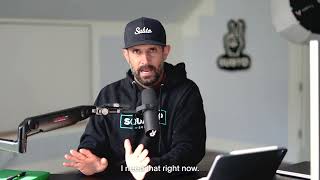
It's great to see you guys. Hope you guys had a good lunch. I see a lot of familiar faces and some new faces. So looking forward to meeting everyone this weekend. I am Dr. Elisa Song. I'm an integrated pediatrician. I have a brick and mortar in San Francisco, and I'm the founder of my online platform, Healthy Kids, Happy Kids, where I teach parents and kids and practitioners how to help kids thrive in our modern world. I am honored to be here. Introducing Dara. Um, I will be in the same room, guys, if anyone is interested in writing a book, want to elevate their book, I'm going to be giving a workshop here on how to launch a national best selling book without a PR firm and without a big marketing budget. But we are here now to introduce Dara Lardvejian.
Right?
I said that right? Oh, no, I said it right the first time. Dara Lajavardian. Okay, well, let me ask you guys, how many of you guys in your programs, your memberships, your brick and mortar online, you know, online courses have wished that you could have a clone of yourself that could comb through every single bit of presentations, data, podcast, interviews, articles, blogs that you've written and answer questions for you, Right? Anyone?
Right?
Without you having to be there.
Right?
With you. Trusting that it's your knowledge and it's pulling from every single thing that you could imagine that you've created.
Right?
Because sometimes we've created some awesome things, but we forget, like, eight years later, you look at this presentation like, wow, that was good. Right? But you forget, you forgot that you wrote it, right? So, so I'm really excited to share Dara and Delphi, and Andrew is in the back there. Super, super great, folks. I'm going to read you. I actually went on to Dara's clone, okay? Because now with Delphi, you can have a clone of yourself and you can have multiple variations of your clone to speak with your practitioner audience, to speak with your parent audience, to speak with, you know, a brand new audience to you. So you can have different clones of you and decide which of your information you want that instance of your clone to share. So the possibilities are fascinating, right? So I went out to Dara's clone and I asked Dara to give me a very interesting, compelling bio to present to health entrepreneurs. Okay? This is what it said. I'm Dara Lajavardian, the CEO and co founder of Delphi, a pioneering digital cloning platform. Born in Houston, Texas, to immigrant parents from Iran, I've always been driven by a passion for technology. And its potential to transform lives. After studying physics and computer science at Georgetown, I worked at C3AI, then launched and sold my first startup Friday before founding Delphi in San Francisco, which is awesome. At Delphi, we're pushing the boundaries of AI to create personalized digital clones that preserve and share human knowledge and experiences, aiming to revolutionize how we interact with technology. That's pretty good. And. And those are Dara's words, right? You could have said that.
Right?
So I can. I can know. So this is amazing. Whatever you guys create, I mean, think broadly. This is not just your customer service chatbot, right? Think about, and I'm thinking about, you know, all the things that I've been able to create. Being part of the Mastermind now for, I think, my seventh year, something like that.
Right?
Your online courses, your online store with your white label supplement line.
Right.
Your memberships for practitioners or parents, your book launches, your funnels.
Right.
I'm now working on creating a custom children's supplement. It's literally, if you guys were here last year and heard the Shark Tank, it's literally the AG one for kids. So it's coming soon. But my clone is going to be in there educating parents on it, right? Not me, my clone. But I trust every word that my clone says because I've said it before.
Right?
So thank you, Dara, for being here and sharing Delphi with us.
Thank you so much for that intro. And thank you to my clone. I don't think he can hear me, but he did a good job. So before I get started, I know that there is a lot of fear and confusion around AI, which is why at the end of this, I'm going to do a Q and A session. So as those questions come to mind, keep those for the end. But right now, I'm going to talk to you about how to scale your expertise with a clone. Not a physical clone, not yet, at least a digital clone. The most unique asset that everyone here has is their mind. It's the collective sum of their studies, their experiences, their relationships. And up until now, the way you express that mind has been capped by time. We can all only be in one place at one time, and therefore, the people we impact are limited. There are ways to scale yourself. You can write blog posts, write books, create YouTube videos. But these static forms of content don't adapt to your ever changing audience. They're not personalized. You can hire a team, but hiring a team can be expensive. And managing is not always the funnest activity. And then you can sell your time. But that goes back to our first problem where that business model is capped. On the other side, you have customers and consumers who learn from you by reading your content, maybe reaching out to you, but they're not getting that immediate feedback that leads to a real difference. Those of you who are familiar with education may know of Bloom's two sigma problem that talks about those who have one on one access are able to learn more by two standard deviations. So that's not something that's available to the masses. But with Delphi, you can scale one on one in a way that's uniquely you across time zones, across language barriers. And this isn't just a generic chatbot. It's a digital representation of that unique thing we talked about, which is your mind. Now, my clone already did most of my bio, but. But I want to talk about why I'm even here. How did I even get here? So when I started my first company in 2021, I was a solo founder and I know everyone here knows the feeling of isolation that you get when you start a company for the first time. You don't know what you're doing. You don't have the Mindshare collaborative to help you initially. And I was reading a book about my grandfather, who was a very successful businessman in Iran before the revolution. And I really wanted to get his advice. Not just ask him what was the first business you started, but ask him, hey, what would you do in my situation? How would you think about these problems? And he had had a stroke two years prior, so I couldn't really talk to him. So leveraging the technology that I'd been studying for the past eight years, I created a clone of my grandpa so that I could learn from him and talk to him. And that kind of led me down the path of thinking about how the only ways we can learn from someone else are passive and how impactful that interaction was for me and how can we do that for other people? And now we have Delphi and now we support coaches, experts, doctors, CEOs, influencers who use Delphi to scale their expertise. Some of these people may be familiar to you and we may be talking to some of their clones later on. So let's talk about use cases and benefits. We all know that there's a lot of gimmicky AI tools out there that don't actually do anything. We tried to make this something very useful. So the first one is multiplying your one on one business. So when thinking about one on one selling your time, it can be A profitable business, but there's obviously a cap. But with a clone, there is no cap. And we have customers raising money to scale their clone, like software scales. An example, Matthew Hussey just launched his clone as a personalized dating service two weeks ago, and he made $40k in two weeks from people paying to talk to his clone. And it's not just the money that's interesting. People are talking to his clone for four hours at a time. Four hours. And it sounds crazy, but you sat down on your bed and read a book for four hours. This is an interactive book that changes with your circumstances. Does the customer know they're talking to a clone? Yes. Yes, and I'll get into that. Number two, reducing costs. Instead of hiring overseas teams and training them in your way of thinking, your clone can handle customer support 247 so that you can focus on what actually matters. Your clone can capture leads, can qualify leads. It can let you know who's actually worth talking to. And it's at work. So while you're on vacation, your clone can be answering questions for you. Number three is increasing value and trust. So like I said, a clone is a representation of your mind. And when you make something like that public, people appreciate that. They get to know you, and you start to build trust with your audience in a way that makes them trust more of you. Product recommendations, personalized advice, your community. And every response is cited based on where it came from. So that's how you know it's not a black box like you see on ChatGPT responses. It's actually coming from somewhere. Number four, mass personalization. So every single person around you, whether it's customers, employees, your audience, they all have their nuanced situations. So a clone can ask people questions to learn more about them, and it becomes more personalized to them. And that data can be used to enrich your CRM. So we have a direct integration with HubSpot, Salesforce, Go High level. Coming soon based on a lot of requests. And this allows you to scale personalization in a way that just wasn't possible with static content. And last one is, internally, we have many people using their clone to make their team more effective. They may not always be around to sign off on certain decisions or create content, but. But the clone can help them think like the CEO would, and the clone can help them create content like the CEO would. So how do you actually create a clone? First thing is define your goals, whether you want to use your clone for customer support, talking to yourself, monetizing your clone, that's very important to know getting started. Then you want to upload data from any different source and I'll be walking through the product in a bit so you'll see what this actually looks like. The face and the voice are the money maker for many people. So you want to make sure that what you upload in terms of your voice and face is very high quality. The technology is improving incredibly fast. So there may be a point where you can upload a low quality video and it just can make it high quality. You know yourself the best. So once your clone is created, you'll want to test it, maybe send it to friends and family, send it to your team. You can make improvements. You can add instructions that it follows. Where it gets to the point where you're like this sounds like me, I'm fine letting it off into the world, sharing and integrating. So you can add your clone as a QR code on your book. You can add it to your course, add it as a customer support widget on your website. You can add it to SMS, WhatsApp, Slack Discord so it can live wherever your audience is, manage engagement. So you will actually be notified whenever someone asks your clone a question that it doesn't know how to answer. And this is how you can hop into conversation, reach out to that person and your clone actually gets better over time. Last thing driving revenue. So Matthew Hussey monetizes the clone on its own. You have some people including the clone as an upsell to their clients24.7 access to me or you have people having their clone promote products in conversation. So we have several people with e commerce stores. People want to learn more about what they have to offer and the clone can make those recommendations and unlocking insights. So your clone is having hundreds, thousands, millions of conversations. How do you make sense of it all? We don't want another inbox. So with our analytics you could ask things like who should I pay attention to? What topics are most resonating with people? What should I focus on in my business based on the feedback of my audience? And that way you don't have to think about an inbox. The clone will help you not just scale your communications but but also scale your understanding of all of those communications. So let's talk about the fears because I know there is a lot. What if my clone hallucinates the biggest fear? Well, we have a clone quality score that will tell you how ready your clone is to represent you and so you can add more data until that quality score gets pretty high. We also have a strictness score. So on the highest strictness setting, your clone will only say things it is trained on. And some of you may be thinking, why wouldn't.
More from Delphi
How Hadar Shemesh Is Helping Thousands Speak English—with Clarity, Confidence, and Connection