13 Digital Marketing Weaknesses you can turn into Strengths - Community Education Series
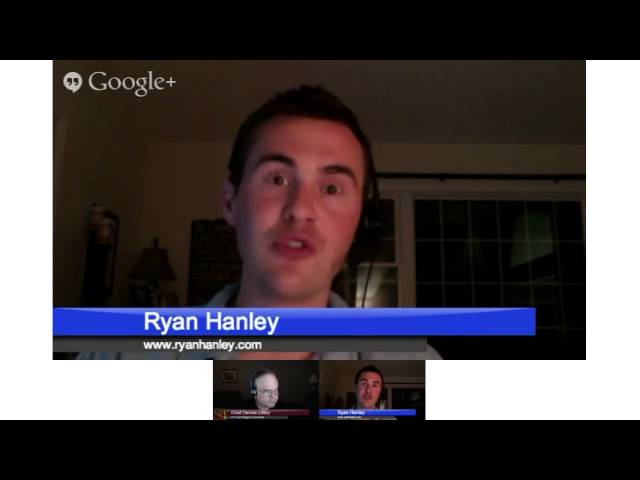
In this community‑education interview, Chef Dennis Littley hosts digital‑marketing specialist Ryan Hanley, who walks the audience through the 13 most common digital‑marketing weaknesses he identified from a Facebook poll and shows how each can be transformed into a strength. The conversation covers practical tactics for handling information overload with tools like Evernote and Gmail filters, organizing content by topic, and scheduling dedicated reading blocks. It stresses the value of consuming content outside one’s niche to generate original ideas, and demonstrates a YouTube‑SEO strategy that leveraged a 100‑day video series to dominate local search results, creating a “Google tool triangle” of YouTube, Google+ and a blog. Ryan explains the importance of a diversified content mix—videos, podcasts, SlideShare slideshows, infographics—and how longer‑form formats keep audience attention and increase perceived value. He discusses engagement, arguing that true engagement depends on industry relevance, personality, honesty, and transparency, and recommends one‑to‑one outreach to turn active followers into evangelists. The interview also touches on research habits, advocating continuous collection of information via Evernote, RSS feeds, and Google Reader to avoid deep‑dive bottlenecks. Throughout, Ryan uses real‑world examples from his insurance‑agency blog, podcast metrics, and personal anecdotes (e.g., a golf lesson) to illustrate how everyday observations can fuel creative content. The session ends with a call for transparency and showing the “engine under the hood” of content creation to build trust with audiences.
Chapters
Hi, I'm Chef Dennis Littley, and tonight we're here with the G+ Food Bloggers Community for our community education series, and tonight's guest is Ryan Hanley, and He's going to do 13 digital marketing weaknesses that you can turn into strengths. So it's really going to be some interesting stuff for you and things for you to think about in your marketing approach to not only Google+ but other social media. So I'm going to turn it over to Ryan and we'll take it from there. Here you go, Ryan, it's all yours.
Well, thanks so much for having me. It's a pleasure to be here and I'm excited to kind of talk to a brand new community. I don't know many chefs out there, but I love the fact that there's an entire community dedicated to sharing this information on Google+ and in social media. So, you know, this kind of conversation that we're having tonight all spurred around a podcast that I did a few weeks ago, which you had listened to, called 13 Digital Marketing Weaknesses Turned into Strengths. And I got those 13 digital marketing weaknesses from my Facebook page. So I have a blog that's dedicated to content marketing, helping small businesses and specifically my kind of niche industry which is insurance agencies and insurance carriers, but all small business really. And I have a Facebook fan page like many blogs do and I asked that community what, you know, very simple question, what is your biggest 'What's your digital marketing weakness from your own opinion, from your own view?' And I probably got about 20 of them, and some of them were kind of similar and could be packaged together, and I ultimately pulled off 13. Plus, for some reason, odd numbers tend to do better whenever you're creating a list as far as people actually reading them. So I pulled off these weaknesses, and it's funny, you know, you would think that everyone has their own unique problems, but really we all face the same struggles no matter what kind of level of blogging that we're at. And it really ended up being a very powerful piece because it's things that, you know, probably you yourself struggled with when you first got started. And, you know, I struggled with, and a lot of them I even still struggle with today. So, is there any particular spot that you wanted me to kind of start? Was there any of the concepts that you found particularly interesting and you wanted to kind of tee it off with?
But what— let you take what you think is most appropriate for us. But I mean, because your information overload is one that really struck me.
Yeah, so we actually had 3 people, 3 of the 20 respondents had the same response or had the same weakness, which was getting overloaded with information. And how exactly do we consume all this information that's out there and actually turn it around into productive process in our own business or in our own digital space? And my response to that question was not overly complex. I use— I sign up any blogs that I find that are very— are going to be very useful for myself. I tend to either subscribe via email and I use a tool called Evernote, and I send those inside of my Gmail account. I send those newsletters to a specific separate folder so they don't come into my main mail section. They actually go into a specific folder which you can direct based on the, uh, the web address. So I have a specific folder in my Gmail that's, that's pulled off for newsletter— or not newsletter, uh, blog posts. I get them by email, and then I use Evernote, which a lot of people may be familiar with. It's a, it's a kind of robust tool. I mostly use it for collecting information and, and notating that and making my own notes. So blog articles that I think will be useful at a later time, instead of trying to read them as soon as they come into my inbox, I pull off very specific periods of time and you know, first thing in the morning, maybe lunchtime, maybe late at evening, you know, after my wife goes to bed, and use those periods of time to run through them, pull the interesting ones off to Evernote, and then when I'm ready to— when I have time to implement something, I'll go back to them into that system and try to break it down. And I found that by only trying to consume information in certain given periods of time, it actually allows us to process it versus, you know, I think it's very easy, like you get an email from, from a blog that you enjoy and you wanna like read it right away. And now all of a sudden you're trying to blow through some article that could have value, you know, while you're in the middle of doing something else. And then, you know, you're gonna get another one and another one, and it's throughout your day is broken up into these little tiny pieces where you're never actually digesting any of the information and putting any of it into use. So the tip that I had for people and what I actually do is separate it out: SEO articles, content marketing articles, articles on social media, specific social media. Podcasting is really big for me, so I tend to read, tend to try to get a lot of podcasting tips, how to improve my own space and that kind of stuff. I separate them out, and then if I'm going to work on my podcast one weekend, I open up my Evernote, pull out all the articles I've clipped for the last period of time about podcasting, and then I try to implement some of that information. And I found that that has been a fairly useful strategy.
So do you find that by, by doing it this way, that you really, you really do get to spend more time reading what you want to read, but also putting it into, into the, into the right category so it's not just coming in one ear and out the other when you're reading it?
Yeah, because I think the reason that we get overloaded is that we feel like we're consuming tons of information and actually not putting any of it into practice, right? When you actually take an article and pull a piece of information off and use it on your blog or in your social media space or what have you, then it doesn't feel like you're overloaded. It feels like you're achieving something. It only feels like overload when you're consuming information and nothing's coming out the other end. What I try to do is separate that information as best I can so that when I, when I tell myself, okay, I have a 2-hour block of time here where I can look at these articles on SEO and then, and then go into the backend of my website and maybe try to make a few adjustments based on maybe say what, like an SEOmoz.org, you know, there's a very reputable SEO site. Maybe there's 2 or 3 articles in a week that I think have some some value. Well, if I have an hour or two on a Saturday morning to actually implement some of that stuff, that's when I'm— I'm gonna wait to read the articles in full until I have that time to put them into practice. And then that way I feel like I'm getting something on the other end of it, and I, and I don't feel overloaded. And I don't mind just hitting delete. You know, we don't have to read every article that comes into our inbox. We can, you know, it's okay once in a while to just hit delete or, or not read it, you know, just pass it off. There will always be another article written. So tools like Evernote, there's, there's a lot of them out there. I like Evernote because it has a little web clipper extension that I can put right into my Chrome browser, and if I see an article, whether it's an email or an article online, I can click that web clipper and it takes the article and shoves it right into my Evernote. It's not me copying and pasting or having to email myself a link or something. So that's a really useful tool.
How important do you think it is for us to really get out there and read other, other blog articles or other information about what we do? I know as a blogger, a lot of times we get— as a food blogger, we get stuck in that rut where we go to just other food blogs to read our friends' posts and see what they do. And we may glean something from it that we're not doing or we can use, but it's not something on a whole that we can really use to help us to grow or to be— or to move to the next level. By information that we really need?
Yeah, that's a really great question because it actually, if you are reading the, I'm going to do air quotes here, but like the upper echelon, like the royalty of kind of internet marketing right now, blogs, they're talking about, a lot of people have been talking about this exact topic and my opinion is, it's, if you really want to be successful, one, It's okay to read other people's blogs, but what we don't want to do is end up regurgitating the same information. And what I found for myself is reading blogs from people in other industries really helps me produce valuable, unique content in my own industry, in my own niche, because I'm taking, you know, I like Fortune magazine, and what's the other one I really like? I want to say Forbes, but I don't know what it is, but I get their email updates and they have a lot of really great articles. Fast Company, that's the one I was thinking of, not Forbes. And, you know, talks a lot about startup businesses, a lot about just being creative, being entrepreneurial, and it's not blogs about blogging. It's blogs about businesses, and, and you can take a lot from that and apply it to your own space. If you're only reading articles in your own niche, then all you're gonna know is what these other people inside your industry are already saying, versus looking outside your industry, finding inspiration in other industries, and trying to, to kind of transpose that on your own. Well, now you become an original thought leader inside your niche because you're coming up with new ideas, new concepts that no one has ever heard of before because they're not reading these other spaces. And I find that to be a really great way to bring fresh ideas into the conversation, you know, using thoughts and concepts and stuff that people are talking about in other spaces because so many of these business concepts are transferable. We just only look in our little box, you know, we never want to step out of our own little box. So my recommendation there is yes, read other blogs. Absolutely try to have a healthy mix of articles and thought leaders that aren't in your industry. And I think that that will help with content creation and coming up with some unique ideas. Because when you try to apply them to what you do, it's going to be this whole new mix of ideas, and I think there's a lot of power there.
Absolutely. That's a real good food for thought, and I think that's one of the reasons that Google+ really stands out in, in social media because we have such a mix of people, such a wide variety of topics. And basically we are doing the same thing. We're, we're sending out a message to people depending on what topic it is, but I mean, getting that message is still the same whether we're talking about cars or we're talking about SEO or we're talking about food. It still has to be delivered. And learning ways to deliver that message is what we really need to start focusing on, I think.
Yeah, and, and when you mix cars and food and startup tech businesses and you take all those ideas and you mash them together, that's when you get the truly unique inspirational concepts that, that can really take you from maybe kind of floundering to being on top because you were willing to to stir and mix all these great ingredients. And that was a food pun that I made there.
Good job.
That was the only one, I promise.
Not a problem. Okay, well good. Let's move on to another topic then, another issue. You talked about YouTube for SEO.
So this was how I kind of got started in the content marketing game was Back in January of 2012, I, you know, long story short, became the owner of the website for our independent insurance agency. So, you know, it was my job to make sure that this thing started to produce results, and we had never published a blog post. We had zero blog posts December 31st, and January 1st we wanted to get this thing going. It was actually January 2nd because that was a Monday. And what I did was knowing that this was coming, the month of December, I polled all of our Facebook fans, people who walked in our office, I called friends, I emailed friends, and I asked them, "If you could have one question answered about your insurance, what would that question be? Just one question. No question is stupid, no question is too simple. So just whatever it is you don't know, ask me." And I got 147 responses. I paired those down to 100 responses, and then from January 2nd till whatever 100 days is, Saturday and Sunday included, I answered every single one of those questions in a YouTube video, 2 minutes or less, um, every single day. So 100 questions answered in 100 days, and I used YouTube because it's a Google product, and I used Google+ because it was a Google product. And what I did was I uploaded the video to YouTube, I then added the YouTube link in a Google+ post, which I also linked to my website, and then I embedded the YouTube video on our blog on the actual post, and I linked that to the YouTube video as well. So I created kind of a Google tool triangle, if you could, you know, connecting YouTube, Google+, and and our blog, and what happened was we were having 3 search results on the same page for a given keyword phrase that we were going after. So say it was something like at-fault liability on your auto insurance, we would have on the first page of Google all 3 in our local market: the YouTube video, the Google+ post, and our web— and our web and our website, the blog post, would be all on the first page. So if you have 10 results and 3 of them are paid, we would have 3 of the 7 unpaid search results would be on, would be our properties. And that's not, it doesn't necessarily work the same anymore because Google+ posts aren't, links put in Google+ posts aren't instantly indexed like they were at that time. Now it takes about 4 or 5 hours before they are., in some cases a little longer, but you gotta fit, you know, 4 to 10 hours, but you can still have similar results. And, uh, so in my opinion, after having done that, one, produce so much consistent content— we talked about consistency a little bit before we went live— and two, uh, worked inside the framework of Google and the tools that it provides, understanding that to a certain extent Google does play favorites to its own tools. We were able to essentially box out the mark— our local market for our independent insurance agency, and our traffic numbers went through the roof. We increased our traffic 467% year over year by using this strategy, and, and we've used it not 100 days in a row, but we have continued to use it over time using video and Google+. And our blog as a kind of triangle, you know, connecting the two through linking, and I've just found it to be an absolutely fantastic strategy and something that I recommend to everybody is using those tools. And I apologize, my dog just heard a car go by.
That's alright, not a problem. I have two big ones here too. So yeah, we have been talking more about that, and we're actually going to be doing a session on YouTube videos because I think it's really important now for, for bloggers, especially food bloggers. And it's like you said, we have to think about that time limit though, because we were talking before we went on, 3 to 5 minutes. After 5 minutes you kind of lose everybody. Yeah, but so that's something to think about and something to move forward to. And it's actually a great way to improve your SEO and actually to reach, I think, another— maybe another market, people that want to see some kind of a demo, a quick demo. Yeah, if you cut the video down just to the highlights of it. So, you know That's another good point.
Yeah, you know, it's interesting. We were talking about something beforehand, a theory on how we rank ourselves as value creators that I personally have and talk about a lot is I feel from my own experience and people I've talked to that the value we have in our audience's mind is based on the amount of time that they spend with us. So I'm a huge podcaster, um, the name of my podcast is the Content Warfare Podcast. It's all about content marketing, getting found online. So I bring on guests, I have solo shows, and I know from my analytics that the average visitor to my website spends 2 minutes and 3 seconds on my website. Average visitor spends 2 minutes and 3 seconds. I know that the average listener of my podcast spends 27 minutes with me. So that tells me that I have to write 14 blog posts to equate the same amount of value in an audience member's mind as one podcast. So, and this is a complete corollary to when I start to poll the various audiences. Now my podcast audience is smaller than my blog audience, mostly because of the amount of time someone needs to spend with me, but the people who listen to my podcast listen— I have 28 episodes. I would say that the vast majority— not the vast— I would say close to 50% of the people that I polled have listened to every single episode that I've ever done. So I polled about— oh geez, the number was in the low 30s, 33, 34 people. Informal poll and, you know, just random people that I saw leaving iTunes reviews, leaving comments on posts, and over 50% of them had listened to every single episode. And I know that probably no one has read every single post on my blog. So in talking about video, this kind of ties us back into what we were originally talking about. If you say the average person comes to your blog, spends 2 minutes and 3 seconds, and you know that the average YouTube, uh, from YouTube Analytics, you do 5-minute videos and the average person stays for 4.5 minutes. Well, now one video is capturing the same amount of attention and value in that consumer's mind as them reading 2 blog posts. So now you have to work twice as hard. You have to get them to come back to your website twice to get the same as one video. And it's a I— when you're considering your content mix, you know, I call like videos and slideshows, podcasting, I call that long-form content marketing because the whole concept is keep people's attention for longer periods of time and they'll apply more value to you as an expert. So, you know, same concept applies to slideshows, obviously podcasts, and then each one of these communities YouTube, SlideShare, and podcasting has groups of people who would never otherwise come to your blog. They just love those frameworks and consuming content in those forms so much that they, they don't go out and search blogs. They stay inside of SlideShare and just consume people's content in SlideShare, or the same thing with YouTube, same thing with podcasting. So When we're looking at our business and how we want to market it online, it's really important to take into consideration our content mix and how much, you know, straight image text content we're creating with slideshows, YouTube videos, and podcasts, and, you know, infographics are another form. You know, there's a lot of different forms of long-form content marketing, but— all things that need to be considered when trying to determine how we're going to get our message out there.
Now I know this wasn't part of it, but you mentioned something that I have not heard of before, and that's the slideshows. Can you touch on that just a little bit for me?
So slideshows are really, for the most part, either PDFs or PowerPoint or Keynote, you know, if you have a Mac, it's Keynote presentations, and there's a tool, and I'll type it into the chat box here, SlideShare.net, really robust community, and they are essentially slideshows that you can slip, you can key through like, like you would use if you were giving a live presentation to an audience. So what I'll do a lot of times is if I have someone ask me to give a keynote presentation, or come in and speak to them on a really interesting topic, and I create a slide deck that I think tells a really nice story, I will update— upload that to SlideShare, and there is a robust community there of people. I mean, there are slideshows that get, you know, 100,000, 200,000 views. You know, I have one slideshow that I put up about the— it's called the 7 Basic Principles of Content Marketing and SEO. And it's been up for a little over a month and it has like 2,600 views. So that's an entire audience that I captured. I know that 2,600 people didn't look at it through my blog. I know only a couple hundred did. If I didn't take that content and upload it to SlideShare, I would have lost 2,300 eyeballs on my content. So it's a really nice community and something that I encourage people to do. It works well for visual creators, so a large portion of your audience would probably do well here because you can literally, you know, if your blog is set up to help people with certain dishes, if that's what you're talking about, you know, you could walk people through step by step how they create, you know, XYZ dish or whatever process you're trying to to teach them or just concepts. It's really interesting way of delivering information and it keeps people's attention for longer and it's its own community.
Can you upload pictures to it? On the—
you can upload it, you can upload, uh, I'm not sure the format is images. You could— what you would do is take that image and put it into a PowerPoint presentation and then upload the PowerPoint presentation. I think PowerPoint, Keynote, PDFs, and there's one other format that you can upload, and then you can flick through them. But basically what a lot of people's strategy is, is take a simple story or basic concept, pull off 15 to 20 images that tell that story, add text to the images, put them in a PowerPoint presentation, and upload that. And that's how they deliver their message on Slideshow— or SlideShare, sorry. Great. Yeah, it's pretty cool.
Thanks for touching on that for me.
Yeah, no problem.
Alright, so we talked about— I guess you talked about some content marketing there in SEO when we were talking about YouTube and the SEO, and that was one of your points before on the 13. You also mentioned about engaging the audience. You want to touch on that?
So, so again, this was another one of the weaknesses that actually, I think 2 or maybe 3, there were a couple doubles on this one. People who said that they have no problem producing content, or at least in their mind they don't have a problem producing content, so the barrier to entry isn't actually putting the content together. What they found is they're putting the content out into their Facebook community, Google+ community, whatever, and they're not getting any I'm engagement back, no one's commenting or sharing or liking or, you know, tweeting, whatever, whatever they're looking for. And my advice to them was the very first thing is look at, look at what your business is, right? If I'm an insurance, I'm the director of marketing for an independent insurance agency, if I gauged my success by how many people click the like button on an article about insurance, I would feel really, really bad about myself because no one, no one likes insurance, right? So even if it's a really interesting article, you know, well-written and gives people the solution to whatever problem brought them to my blog, no one's clicking the like button because no one wants to tell their friends that they just read an article about uninsured motorist coverage on an auto policy. It's just never going to happen. So for me, that type of engagement isn't what I'm looking for. So, you know, so my first piece of advice is always take a step back and think about what you're— when you say engagement, are you in an industry and are you producing content that warrants the type of engagement that you're expecting to get back? So I actually do not have comments enabled on our blog. Not because I'm scared of comments at all, only because no one leaves them. Because again, you know, if you read an article about uninsured motorist coverage on auto policy, what are you gonna have to say about it? You know, nothing. So comments are disabled and I have social sharing buttons, but I put no regard into whether articles get shared or not. So that being said, we are a local business And we found that Facebook, and I know we're on Google Plus and Facebook is kind of a taboo topic, but Facebook for us in our local community is where a lot of conversations happen because every little league and every small charity and every retail store on Main Street has a Facebook page. So it does have, so we can connect with people in that space. So we actually only care from an engagement standpoint from people taking action on our content inside of Facebook and we're starting to grow Google Plus so that's coming along, we just haven't found as much local support, you know, people to connect with in that space yet but, so we're asking questions, sharing images. Mostly, I'd say 80% of the time, it's people that we do business with. It has nothing to do with our business, and we actually garner more engagement by essentially advertising the people that we do business with in a, you know, non-salesy way. Just, hey, look at what these people are doing, what these guys are doing, and then they reciprocate, and that's how we generate a lot of engagement for what is otherwise a business that does not necessarily warrant any engagement. I mean, you could be in a business that all that matters to you is getting found in search, and that engagement means nothing. I mean, insurance is, is as close a business as you're probably going to get. You know, if you're selling, you know, you're a hardware manufacturer and you're selling screws, you know, who Does engagement matter to your business? Absolutely not. So it's important to understand if you even need engagement. If you do, then what I found is it all comes down to personality, honesty, and transparency. And if you show those 3 characteristics in the content you create, engagement will never be a problem because people will understand that they're connecting with a human being and will want to engage. And, you know, asking questions and content— I mean, we could spend 4 hours talking about content marketing strategies and how to get engagement, but in the time that we are allotted, I would say that personality, honesty, and transparency at a 10,000-foot view are what are going to immediately get you engagement. You know, simple things like, I have a Wheaten Terrier. I love the breed, it's fantastic. I love my dog, I take pictures of it., and I share pictures of my dog. I mean, I'm not ashamed to say that. And what I find is that my clients, especially clients that have dogs, that are dog lovers, really engage with me on that topic because it's part of who I am. You know, our wife— my wife and I don't have any kids yet. We have a dog. We love the dog. That's something that we make part of our content mix because it's who we are as people. It's part of our agency is that Actually, my wife has a twin sister and she has the same dog, so we love the breed. You know, we have two Wheaten Terriers in our family. So that will be a sure path to more engagement is putting the human being into the business.
Well, that's especially true, I think, for food bloggers too. And a lot of them forget that you need to put some human interaction in there because they have to connect with you as a person. Person. Yeah. And the big thing is brands and brands, and people are always talking about branding. Branding is very important, but I think when it comes down to making a choice on who someone's going to talk to, they're not really going to want to talk to the brand as much as they're going to talk to the person. And by being that person, even if you represent the brand, you know, being that person and divulging some part of your, your, your human life to them, whether it be your dog, your cat, the kind of music you listen to, or something that you did during the day, to connect with them, to engage with them, to find a common bond that you can connect on a level with, you know, that's going to get you the different levels of engagement that you're talking about. It's very important.
I'm going to share a tactic that really isn't a tactic, it's just being a real person, but it is kind of a tactic at the same time. And it doesn't sound scalable, and it doesn't necessarily have to be, but If you have a blog of any sort, any type of online space, if you find someone who is overly engaged in your content, so someone who does comment on a fairly regular basis, someone who does hit the +1 button or the like button or the tweet button, and you see that, take that conversation to a one-on-one basis. Gchat them. Send them an email, send them a private message through, through G+, connect with them on a one-on-one basis. If for no other reason than just say, hey, I see what you're doing and I appreciate it. It means something to me that you're willing to come to every one of my Google+ Hangouts and share it and bring 2 or 3 people with you. That means something to me. If you take the time to do that and show, hey, I'm a human being and I am watching what's going on out here, You will turn that person into an immediate evangelist for your brand, and now that person isn't bringing 2 or 3 people to your blog or to your whatever you have going on. They're bringing everybody they know, and they're gonna tell them every single time, because now they're gonna say, hey, Chef Dennis Littley is a great guy. I mean, he sent me this message, and we connected, and we talked about this thing we have in common, and Man, I just think he's doing great work. And that type of activity, I mean, I don't want that to sound insincere because it's not. You should be doing it to connect with people on a deeper level. But I think a lot of people, a lot of online content creators forget that we are still in this human being world. We're just using different tools to communicate. And that by taking that conversation to a one-to-one basis, you are building that connection at a much deeper level. Replying to someone's comment on your blog is great, but then sending that person— going back to that person's website and then commenting on their blog and showing them, hey, I'm willing to take a moment of my time and follow back to your online presence and help you out, leave you a comment and tweet your thing. I mean, that's how you create evangelists to the human being. And now they're not just talking about your brand, they're talking about who you are as a person. And that connection is so much deeper and so much more powerful. And if you do that with 100 people, you don't have to do it with every single person. I mean, you're not gonna need to, but if you can do that with 10 people or 25 or even 100 people, you have people who are out there marketing for you every single day as if they owned your business. And there is absolutely no value that you can put on that. It's just— that is how you move the mountain.
Absolutely. I know a friend of mine, David Leite, has a comment that he makes about comments— or not a comment, but what he likes, what he has enforced, is that there's no comment left behind. Someone leaves a comment on his blog, they get an answer. No matter what the comment was, they get an answer. You know, and I try to do that, and I try to do it most of the time, but things get busy, sometimes you forget. But I think one thing that I do take the time to do is— it's not when another blogger so much leave me a comment, but if someone I'll send me a message about something they've made or they have a question about one of the recipes or something in general from just a regular person. I always take the time to send them a message back and answer any concerns they have. And that's like you said, then you get those evangelists that start digging into more of your blog posts, more of your recipes, and looking to see you. And then they start telling their friends. Yep. You know, and it just really, it helps, it really makes things grow.
Yeah. I mean, that is— it's one of the most important things we can do is make the people who we feel— the people who enjoy our work, if we can make them feel special in some way, which they are. I mean, they're taking the time to embrace what we're doing as content creators. If we can make them feel special, I think, one, it's— I think intrinsically it's our obligation to do so if we are in it to help people and not just to not just monetarily, but monetarily you are turning them into something more than just a follower. You're turning them into someone who truly believes what you're doing and will spread your message.
Which is going to in turn affect your monetary— yes— side of it too. But I mean, if you're— when you talk about transparency, if it's so transparent that all you're doing is running a business that— and you don't care about anything or anybody except, you know, how many hits you're gonna get know, after a while it starts to show through and people are gonna— or they might jump on the wagon for a while, but you're gonna start losing people. So you need that human touch. I think it's a very important aspect of it.
Yeah, yeah, it's it. And, and it's a slippery slope. I mean, we all gotta pay the bills, we all want to be successful, I get that. But in this game, the people who put solid, you know, the concrete bricks down, who put the foundation in are the ones that build the tallest buildings. I firmly believe that.
Great. Alright, and another of your topics on year 13 was research. You wanna touch on that for a while?
Yeah, someone said they have a hard time with researching topics, and, you know, I want— this takes me back to another tool I use all the time, Evernote. I've mentioned it a lot. And, and that it really has a ton of functions. So her weakness revolves around she likes to write very deep posts on things. So she may only post once a week or once every other week, but when she does, it's a really deep dive, and that's what people come to her for. That's, that's why people enjoy her, is they enjoy deep dives on topics. And she said, you know, one of the things that she sometimes struggles with is researching, is that it will take so long for her to research that, you know, the process of putting together this deep dive, you know, instead of getting 4 posts out a month or 5 posts, she's only getting 2 or 3. So what I— my advice to her was find a tool like Evernote if you can, and again, collect information constantly. I was listening to a podcast with Michael Port, who is the author of Book Yourself Solid. It's a pretty popular book. And he was talking about how in order to be successful in the publishing content creation game, whatever niche we're in, we have to be constant learners. So we can never feel like we've reached the top of the mountain and then we no longer need to learn any more about what we're doing. And The advice was, if we're constantly learning, constantly collecting, then we'll, you know, we're literally doing research every single day. So, uh, so it all fits into my strategy, you know, without becoming, you know, information overload is also for the same purposes. You know, I create 2 to 3 posts a week, uh, you know, and a lot of times I have a podcast as well. And there's research that goes into that. And the only way, based on the fact that I have a full-time job that I need to be producing content for as well, the only way I'm able to do that is, is by continually— like, the research never turns off. You're always doing it, you're always collecting information so that when it is time to produce something, it's right on your fingertips, it's right on the tip of your tongue, and bam, you can go, okay, I have an hour and a half to get my blog post done. I'm gonna get this done right now, uh, versus I'm gonna wait and now I want to write something and it's gonna take 6 hours for me to research the topic and then, uh, and then get that blog post out. So my advice to her was try to— and this is hard, you know, we all have our habits— uh, try to readjust your pattern of content consumption and just the way you view what you do on a daily basis to be almost a life of constant learning and research. And then when it's time to produce that deep dive, boom, it just, it's there. You almost have it written in your head already because you've read over the course of last month the posts and the books and watched whatever you needed to do to reproduce that. So, um, there are many different tools. Evernote is the one I use. I still use Google Reader I'm praying that on the 12th hour here, whatever, that they're gonna not shut it down or just be able to give us a new tool. But I still use Google Reader a lot too for RSS because I've always found— I mean, I know people complain about it. I've always found Google Reader to be a great tool for consumption and, you know, and collecting information.
That's a very good point about research though too. I think as a food blogger, we go about it exactly the same way, and we just need to be aware of what's around us and see food. We see posts that other people do. We see cookbooks. We see things on TV. We see pictures of food. We see just an ingredient, and that's the research you have to get your mind around. To start putting those things away so you might want to take another look at something or another, try and make it a different way. And that's what you're talking about, is instead of sitting there and going, well, what am I gonna make today? Now you need to have that constant flow of research coming into you. So that's, that's very good. Yeah, thought process.
You know, it's funny, if you— when you start to— I'm really geeky about this stuff, so I read a lot of books on it. But I was reading a book by— I'm gonna butcher it— it's The Artist's Way, and I think it's Julia Cameron, I think is her name. And it's an absolutely fantastic book, and it's mostly about how writers or creatives in general can become unblocked, going from being blocked to unblocked. That's not the purpose of what I'm trying to say here, but one of her points that she makes in her book is that when we open our eyes to the world and we allow every experience that we have to potentially impact our creative influence, then what we're actually creating becomes— there's a lot more zest, a lot more life to it because it's not just this— it's not I create in this little bubble, it's my whole life is part of my creative process. And there's a story behind this, I do have a point where I'm going here, and that is I had a golf lesson in late April, so it was cold, I'm in upstate New York, it was very cold, but I want to get a good start on the season, so I took a golf lesson. And I stand, I go out there and I hit 5 golf balls to kind of— I'd never worked with this golf pro before and and I wanted to give him, you know, he said, give me an idea of what you're working on. So I stand over the 6th shot, I've hit 5 balls, I stand over the 6th shot, and I said, well, you know, what should I be working on? Like, what do I need to be thinking about? Where should my hands be? And he looks at me and he goes, how about you just think about where you want the ball to go and you put it there? And I looked at him and I was like, he goes, your body, he goes, when you think about the mechanics of what you're doing every day, the— your body gets all messed up. But if your brain is focused on where you want the golf ball to go, your body has to do the things necessary to make the ball go there. Now, oversimplified, right? But he said, you know, his point was, was Tiger Woods looks at the game differently. Pro golfers look at the game differently. They think I want this result, so I need to figure out what I'm gonna do to get there. Amateurs think, I'm gonna do all these little things and hopefully it gets me somewhere. You know, very different way of looking at what we do. And this is a golf pro telling me, you know, I mean, 65 years old, he lives in upstate New York, he's taught a million people, you know, scratch golf or whatever, you know, but not necessarily a guy that you would expect to drop some money. So I, I'm thinking about this and I said, geez, how does this apply to content marketing? It's almost completely the same, you know, marketing our businesses. It's like, we, we think so much about, okay, if I tweet 4 times a day and I post 3 pictures to Facebook and I, and I do a YouTube video of 3 minutes and 25 seconds, because at 3 minutes and 45 seconds The average video loses, you know, and we start to think about all these tactics and it's like, well, where are you really trying to go? So to tie this whole story together is that if I wasn't, if I didn't have my ears open to what this golf pro was teaching me on the course, if I was just thinking about golf in that moment, I would never have been able to apply that lesson that he gave me to what I truly care about, which is, you know, how I grow my business. Content marketing. So my advice to people who struggle to create content is keep your ears open in everyday life, and you will find that it is so much easier to create great content for your business because you, you're adding all these new ingredients, these new elements to what you're doing that weren't there before, and you come up with completely original ideas and concepts that people will want to read.
Excellent advice. You never know where, where that next great idea is going to come from. And if you just poo-poo it and don't want to listen to people or are blind, you know, that's what you're saying, that focus, you know. Yeah, just— it is, I think, a simple message, and it's, it's to just decide what you want and, and get there. And instead of all these little things And if you hadn't listened to that person, you would have never known it. And, and I think people tell us things all day long, and we just don't take the time to listen to them because whatever we're doing at the time is just too important. So we need to just take a breath and listen. So that's great. Well, we're gonna pretty much wrap it up, but if you want to leave us with any, any one thing you could tell us, I know to help us grow our content, or for this content warfare as you call it— I like that because that's what it is, we're in battle trying to gain these people— what would you tell us to do? What is the one strategy?
If I had, you know, take what you've been doing and pull the curtain, you know, everybody wants to see Oz. And when you show them Oz, they'll pay for all the rest. You know, they want to see how the engine cooks. They still want to buy the car, but everybody's got to see under the hood. So I think that particularly to food bloggers, you know, if I was, you know, thinking about this before we came on, maybe a lot of you do this, maybe you don't, but it seems to me some of the the kind of food blogs that I've been on and that kind of stuff, it's very much about the recipe and not about where the recipe came from. So how did you create this recipe? What was it? Was it the fall leaves coming across made you think pumpkins and that's why you added pumpkin which turned the dish into something spectacular? And it's the same thing with every business, you know, so it's show— I try to really show how the engine runs 'cause I know people, if they understand how the engine runs, will buy the car. And that sounds like an obscure example, but it really just— I think transparency in today's world is an underappreciated asset, and those of us who are willing to show transparency in our business build that personal relationship and then reap the ultimate rewards.
Good advice. We're gonna end it on that then. Alright, thank you very much. I mean, uh, doesn't get any better than that.
Well, it's been an absolute pleasure.
It's been my pleasure too, Ryan. And, uh, I'm Chef Dennis, and this was the G+ Food Bloggers Community Education Series. And tonight, my guest, Ryan Hanley, and he left us with a lot of things to think about, I think. And hopefully we'll see him again sometime and we can talk more about podcasting too.
Be my pleasure too, as well. Love podcasting.
Okay. All right. Well, everyone, thanks for coming. Have a great night, and we will see you next Tuesday for our next community event.









