Around The Kitchen Table - Fettuccine Alfredo
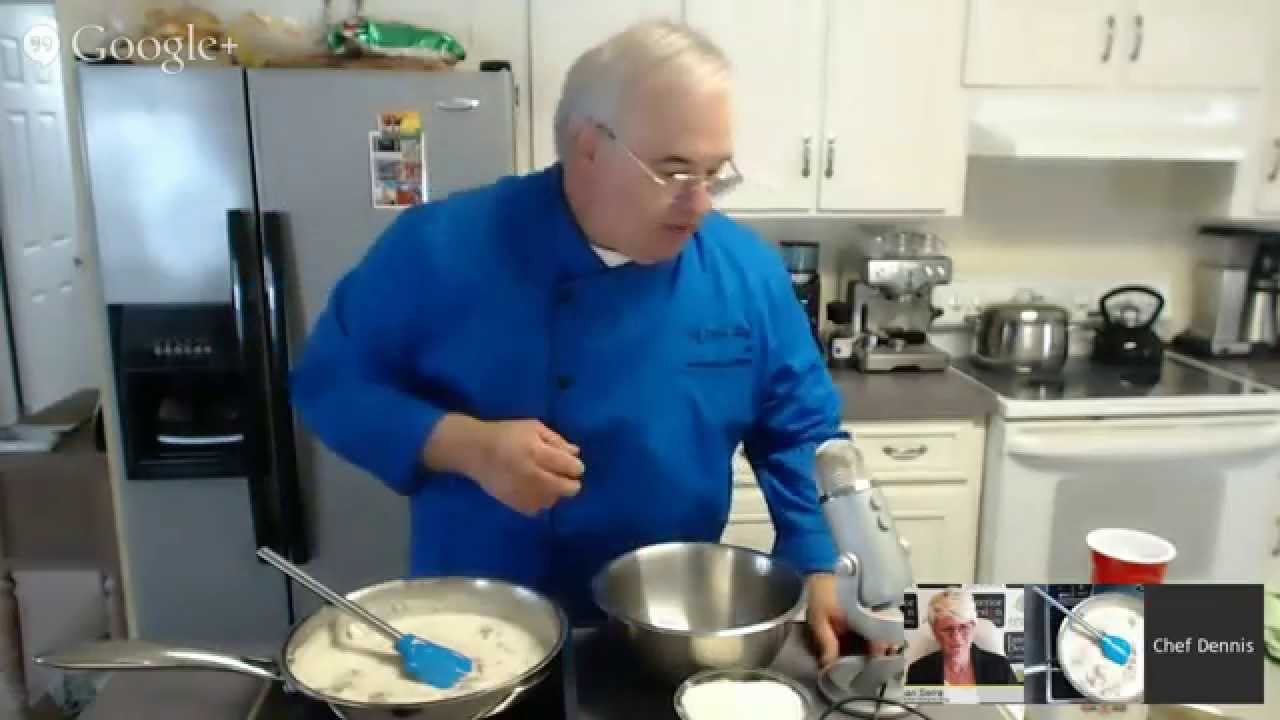
In this episode of Around The Kitchen Table, Chef Dennis Littley returns after a brief health hiatus and, alongside co‑host Susan, demonstrates how to make fettuccine Alfredo while weaving in the dish’s history, technique, and modern adaptations. Dennis recounts the original Roman recipe—just butter and cheese—explaining why heavy cream was later added. He walks through a step‑by‑step cooking process: melting butter, sautéing mushrooms (optional), deglazing with a splash of white wine, adding cream (or lighter alternatives like Greek yogurt), reducing the sauce, and finishing with Parmesan. He shares tips for controlling temperature (favoring induction over gas), avoiding scorching, and achieving the right consistency. The conversation also covers serving ideas (as a side, with chicken, shrimp, or vegetables) and health‑conscious tweaks (reducing fat, using low‑fat yogurt, omitting egg). A substantial portion of the episode is devoted to plating aesthetics, with Susan presenting a slideshow of white, black, and colored dinnerware, emphasizing how plate color influences visual appeal. Viewer questions are answered, notably about omitting mushrooms and how much to reduce the sauce. The episode blends culinary instruction, historical context, design insight, and audience interaction in an informal, enthusiastic tone.
Chapters
Hey everyone, I'm Chef Dennis Littley, and yes, I am back from the dead, sort of, so to speak. Last week I was not feeling too good when, when showtime was coming around. So thank you for all the well wishes and thank you for hanging in there with me. And but I'm back and we're ready to make you some fettuccine Alfredo. And Susan is there in New York. How you doing, Susan?
Hi, I'm good. Well, listen, I mean, you know, keeping us waiting on this for for 2 weeks. Really a little bit disturbing, but we're glad you're back because we just can't do without all your delicious food. And you know, I had an idea. I was wondering, what do you think about doing a— this is a little shop talk, but I think maybe we'll get some comments on it. What would you think about doing a show on the fundamentals? Again, like chopping that onion and— Sure. Just a whole lot of fundamentals.
It's always a good idea because you need to start with basics. And I mean, and what I take for granted, a lot of people just don't think about, you know, things that are second nature to me aren't. And you know, it really is a good way to begin. That's how I always taught my girls, you know, in school is I would start with the fundamentals. I'd like make them work with a knife until I knew I could trust them with the knife and then move forward.
So, you know, it might be fun. And this is— and, and I think for our viewers, we have not discussed this at all, this is just coming off the top of my head, we can have viewers, our viewers, kind of share with us what they'd like some real professional tips on.
Sure.
How do you like that?
That's a good idea.
So go ahead and give us those tips. How was your weekend?
Well, I was in Los Angeles, so it was pretty good there. It was a little warm. Luckily, when we arrived on Wednesday, I was still not feeling real good, and the weather could not have been better. So that kind of revived me a little, and we went down to Manhattan Beach, and we got a seat that was outside on the second floor overlooking the beach and the pier. So it was really kind of nice, except that the hill down was great, but I knew the hill back up was not good.
Oh, you mean you walked down?
We walked, well, where they let us off, but then it was just a long— it was only one long block, thank God, but it was like really pitched.
Yeah.
And you know, going down is wonderful, but then we had to stop halfway up because my breathing was still not real, real good.
Oh, I know. That reminds me of when I went to Spain with Silestone, you know, the countertops, and we visited this little tiny Spanish hillside way up in the hill, and You know, looking at it from where we were, it looked tremendous. It wasn't so terrible, but it was, it was pretty bad. But it was up those hills and, you know, those little villages. And so this sounds like, like a similar thing, but worth it, right?
Oh yeah, well, but this was a short one because you want to talk about some hills when we went to Positano and we're walking up and up and up these little streets and there's houses, I mean, there's doorways and we're walking up and we come to other couples who were bent over breathing, trying to get— it was hot. So this is when I was in decent shape too, so it wasn't— and we're moving, we finally get to the top and I'm dripping sweat. Lisa's even sweating, I think. And we get to the top and we see this young couple that we had met on the bus and they were over there already. We didn't pass them. Says, how'd you get up here? Goes, oh, we took the bus.
Wow, I think I would stop at every gelato place on the way up.
Well, there was none. It was, it was just these little narrow stairs and there just happened to be houses. It was almost like it was cut into the side of the mountain, and as you went, there happened to be a house here or a house there, but there were no shops on the way up, trust me.
Wow, I love these stories, love these stories. So I mean, look what we have here. Oh, you're frozen for a bit, okay.
Yeah, today we have an Italian dish, and you know, I'll tell you a little story about this dish before we get it made, but fettuccine Alfredo and how we think of it is nowhere near what the dish originated at, and it comes to be that It was named— the guy that invented it, he had a pregnant wife, and it was in the middle of the night, and she was hungry, and he went down to the kitchen, and all he had was butter, cheese, and some cream. Or no, he didn't even have cream in it. It was butter and cheese. It was butter and cheese and the pasta, and he whipped up this concoction, and that was fettuccine Alfredo. It has no heavy cream in it traditionally. That was added in later when we started making it.
Wow, what a story!
I did go to the original Alfredos in Rome, and there is a trick to making it that way because you have to cream it just right to get that blend, to get the butter and the cheese to blend together and not clump up. It will make a smooth kind of creamy sauce. It won't be gritty or anything, but there is a little trick to that, and you have to do it very carefully, and the noodles have to be really hot There's a lot to it. I've never seen it made that way in the States.
That's very true. Don't you think that— I remember quite a while ago, fettuccine Alfredo, it was so popular. Everyone had it. Every restaurant had it. It was really so big. Then I think when all this health kick came along, what, 15 years ago, 20 years ago, everyone went running away from it among other foods justifiably, but running a little too far. Certainly, like they say, in moderation. Once in a while, indulge.
I'm losing you.
Did you hear me?
I heard part of it, then I lost you.
I'm wondering, can you have fettuccine Alfredo as a side dish?
Absolutely. Absolutely, and you can put vegetables in it. I've got recipes that I like to roast vegetables or grill vegetables and mix it into them. I mean, you can cut the portion of it down and serve it with some grilled chicken or some grilled shrimp. I mean, there's a lot of different ways that you don't have to make it the entree.
That's exactly what I was wondering.
Yeah, sure. And there's ways to cut it down. Now, we're not necessarily going to do it today because I'm going to show you how I used to make it in the restaurant, how we would serve it. And in fact, the way— the new way we made it in the restaurant, because the old way we used to make it was we would add an egg to the sauce to make the sauce even richer. So we're not doing that today, but This is a classical interpretation, and you'll find a lot of classical recipes based on this way. If this is what you want to make it, you know, just— it's always easier to adjust it if you know what the recipe was supposed to be in the first place. You know, if you take an adjusted recipe and then you try to adjust it some more, you might— it might not make as much sense to you. You might not take it in the right direction. But if you see how the recipe was created then you know where you can trim, then you know where you can remove some fat and add some other items to it. So we're going to start off, and it's pretty simple. And I have butter, and I actually have quite a bit of butter in here, but— turn this— and I'm going to start the pan up and let it melt, and then I'm going to add some mushrooms into it. Now mushrooms can go either way, you know, if you don't like them they can stay out. I like to use mushrooms in a dish like this because they add volume. They add absolutely no calories at all. It's a way to cut down on it and add some flavor to the dish as well.
This is similar. I like the mix of the beige colors. Designer that I am, I like the colors.
You like the colors. This doesn't have to be with fettuccine. You can do this with penne. You can do this with pappardelle. You can do this with linguine, whatever pasta. Traditionally, it went with a broad noodle. We're melting this down. We're going to let this melt really well. I put the butter in in the beginning rather than when I put the cream in and everything because I want to sauté the mushrooms in it. It can also be done if you don't want to use butter, you can leave it out. It's not an essential ingredient. You can use a little olive oil. I know they tell you, you know, there's certain traditional ways to cook Italian. One is not to mix olive oil with dairy. But I mean, you can still do it.
Oh, yeah. I mean, I mix olive oil and dairy all the time, but that's for different things. That's not for something like this.
But traditionally, you know, like even with seafood sauces and stuff, anything that was started in olive oil, they never give you cheese for it. They never give you— you know, they wouldn't add the dairy to it. So, but you know, times are a-changin'. You can have white wine with meat. You know, it's a matter of what you like and what you want now, I suppose.
Yeah, and you know what I'll tell you, speaking of that, sometimes in the summer I just want a Sauvignon Blanc. Because it's chilled and it's light and it's fresh. So, you know, so there you go.
Yep, yep. So this is yours, but I mean, traditionally this is how it started. You could add— you could either do other vegetables. I used to do a seafood dish with an Alfredo sauce, and I would start with some— a few veggies in it and also do some shrimp. Scallops and crab meat in it. That was wonderful.
Oh, yeah.
One of the favorite dishes in the restaurant was always chicken Alfredo. At which point, you can either grill it if you want to, or you could sauté a piece of chicken in the pan right here with the mushrooms and then build your Alfredo sauce on top of it. You have a lot of options. I kind of like having grilled chicken with this because You get to season that chicken up really well and you get to keep the flavors of that chicken really well.
You know, I was wondering about seasoning. I was wondering about that and I think that's a great addition.
You get some contrast in the flavors that way. This way, if it's in here with the sauce, it kind of just soaks up that sauce flavor.
Now, is that something you would add white wine to? Somehow? To that dish right there, to the pan?
You could right here, and this would be the time to do it when you want to stop the cooking. As soon as the mushrooms are sautéed or the protein was sautéed, that is the time you would hit it with the white wine. You wouldn't use a lot, but you would use a little. A lot of times we talk about wine as a deglazing agent and to stop the heat, just to slow it up. In the days of egg, that was a very important step because you didn't want the egg to cook. I would hit it with a little white wine. I don't cook too much with wines. I really don't. It's not as necessary a step as people used to think it was. If you enjoy it, there's nothing wrong with it. Now, after this is cooked, I'm going to add in some cream. This is heavy cream. Be. It could be light cream, or you could use half cream, and then when we start to make the sauce, when we finish it, you could add in some nonfat Greek yogurt, which is very nice.
Oh, so then if you use light cream, and then are you saying use light cream and then add in the nonfat Greek yogurt as well?
But not into the pan, not into the heat.
Okay.
Yogurt turns to water water. Ah, aha. So I mean, you could make it with— I have a recipe that I made with grilled roasted vegetables and all Greek yogurt. And the whole— and the trick, and it took me a couple tries to realize that yogurt turns to water. And after a few attempts, I realized that you just get the noodles really, really hot out of the water, and you mix them in a bowl with your— with room temperature plain Greek yogurt. At this point, I like it to have a little bit of fat in it. You don't necessarily want to get 0% because, all right, we're getting rid of the cream completely, or we're cutting back on the cream. Let's put just 2% fat in there. That's not an ungodly amount of fat.
Plus, don't you think it'll feel more substantial?
Yes, absolutely, and add just a little bit more flavor. That's exactly why I'm going. Once the cream starts cooking, we're going to let it stay on. You don't want to put the cheese in now because it will cook to the bottom of the pan and won't really— you have to tend it too much to make sure it doesn't do that. I'm just going to let it bubble a little bit and let it reduce. Once it reduces, then we can finish adding everything to it.
Okay. I have a slideshow of how I was inspired I was inspired. Should we go to the slideshow?
Absolutely.
Okay, so I was inspired by, by this dish just aesthetically. A lot of times they talk about function in the kitchen and how to design the kitchen for certain uses, and this is just pure aesthetics. How I've had different ways to see bunny on the dinner table and some dos and don'ts and just different options. So I'm going to go over to the screen share and here we go. Okay, do we see that?
Well, right now I got a black screen.
Oh, okay.
Here we go.
You see it? Okay. So this is— I have— I took all of these images that I'm going to show you. This is a— I mean, look at this beautiful, you know, architecture of this dish. Of course, of course it's on a white dish. And most restaurant dishes, I would say the vast majority seem to be white. And that's great, you know, because as we know, and I'm sure you'll agree, Chef, that white showcases the food beautifully.
Absolutely.
Now, I'm going to give you another option in a little bit. But here, my point in showing this is, you know, you see the colors pop, but also see that blue that blue dish beside. You know, mix things up and get different colors, either bowls or salad dishes, you know, that type of thing. And maybe you don't have to have a few different sets, complete sets, but you know, get 6 dishes here and there or the other thing. Here's a table. This is in a furniture store in Copenhagen, and it's a red, sort of reddish wood, wood dining table with these beautiful dark charcoal chairs, and I think what you have here, like many foods, you have sort of a mix of a warm modern sort of look, a beautiful background for food. Here, now this is interesting, you have dark chairs on the back and white dishes and lime green, I mean how interesting, just to really add a a spark of color, you know, it's unexpected. And there's also almost like a blue-gray sort of dish on top of the white dish as well, so just kind of interesting. And here we go, dark, very dark table, white dishes, and bright green chairs. I mean, it's stylish. To me, this is stylish. So there's So much you can do and think about. Now, this is interesting because look at the pattern, busy, busy, busy on the walls, but a beautiful busy. I mean, it's beautiful. It's a beautiful pattern. Everything else is quiet. So, be careful with your kitchen decor. If you have too much pattern, you know, you have a pattern table, you have a pattern floor, you have pattern wallpaper, everything is— you have a busy granite countertop, you know, it becomes visually very busy, so keep that in mind. And here's another shot of beautiful turquoise, gorgeous, simple, simple clean elements, neutrals with a shot of color. This is a restaurant that I dined in, in a little island off the coast of Denmark, and just organic sort of neutrals. And of course, what's the texture here? It's the view. It's the beautiful view. So you need such— you need only a little bit of very simple elements because you have a beautiful view. Now here, now this is the secret weapon I want to tell you about today, and that is the color black or a very, very dark gray. Which I mean, I think it almost makes the food pop more than a white plate. And here we see it on a white table. So I'll be showing you some of that. Another black bowl. This is potatoes with— I forget what that is on top, but that's a wonderful meal that I had in a wonderful, wonderful restaurant. Take a look at the butter on a black stone. Rich, it's just rich visually, and that butter, it makes that butter pop. Another beautiful handcrafted bowl on the dark side and a light food within. I could see this, I could see the fettuccine on a dark dish. Absolutely, it would just make it pop. We're seeing black a lot. I am seeing it a lot in interiors. Here's a coffee shop. And you'll see it has a black, very dark floors and black countertops and so on. And look at the colors of the food. I just think it's lovely. You could also do a table a little more neutral, a little more gray, and a good surface for that would be something like a silestone, Dekton silestone, that type of thing. Another neutral gray with dark chairs, simple, very simple to showcase simple elements in the food. Here's an— for the food, kitchen countertops, dark gray, lighter gray, and white. And again, you see the lemons or the oranges, I forget what they are, at the far end. It just makes it pop. Now here is clutter. If you're going to do clutter, if you— I mean, if you If you love a lot of things, do it like this. I think this is so— I actually think this is so beautifully done. It's so warm and cozy. It's that sort of colonial, you know, singular theme that we love so much. So that's all OK. I'm all for that. Another dark, beautiful— now here's a chopping block that's black, and how great does food look on that dark black table? And again, these are contemporary warm, for the most part, warm images that I'm showing you. And then of course here, I mean, a gold plate, simple, it upgrades the food, it makes your food look so wonderful. And here, take a look at this, the gold plate and sort of the beiges and whites, I mean, regardless of what's on the plate, it just makes it look so elegant. And here another— everything else is white, and then we have this little black pot with food in it. Here's a table set, very simple neutrals. You have glass and tan and white, but then you have a big burst of color in the flowers. So easy to do. And another interesting platter with beautiful colors, simplicity. Good, take out your good china and use your good silver on an everyday basis, and that will really give you a lot of pleasure. Again, the black background. Now here we have again neutrals, black accents, black table. So these are all images that I found inspiring. This is actually a store that was just opening, but what I like about it is I like, even though it's a lot of clutter, I like the simplicity of the elements, I like the black, the back wall, and, you know, it's a very organic kind of feeling. And this is new, this dinnerware from Royal Copenhagen, which is black, just out now. And here we have the texture, the main texture is what? It's the chairs. Simple elements on the wall, very, very simple, no big ornamentation, but imagine if you had a big heavy wallpaper with a lot of pattern. Whole different look. And again, of course, we like the white, white with— and here's a more modern, modern warm take, black take on today's design. Wood, white, dark textured, beautiful textured dishes, and another black one, just lovely. This I just took last week. Oh, and then the big thing, last but not least, Do you know what just is coming out? A new refrigerator from Jenn-Air called Obsidian. It has a black interior. So this is what I'm talking about. They, the people at Jenn-Air, have realized that black makes your food look beautiful. So think of how— where you can play with it. Get placemats, get a few dishes. Play with black or very, very dark gray, and I think it'll really, you know, make you feel kind of excited about putting food on the table. And that's my little slideshow. What'd you think?
Very good. Thank you. Excellent. And I like how the black plates really did make the food pop. I'm traditionally a white plate kind of guy when I plate stuff up.. But some things that are white really need more either a clear plate or a black plate to make them— give them some contrast and give them some view. And the black is looking really good.
So thank you.
We had a couple questions, and Cheryl Deuce had a couple questions. One was, can you leave the mushrooms out? Yes, you can, Cheryl. If you don't like mushrooms, leave them out. They do add some flavor and they do add some volume, but if you're opposed to mushrooms, that's fine. And then she also wants to know how something is reduced enough. Well, generally it will start to thicken up a little, and you'll be able to see as it thickens a little. It won't probably thicken as much as you think it will when it's still hot. As it cools, it will start to look a little more thick or have more volume to it, more thickness to it.. But you pretty much just want to try and take it down maybe about 25%. So if you start with 2 cups, you want to end up with 1.5 cups. So you just want to bring it down a little bit in volume. And it's not just for thickening, but it's for flavor. Because when you take 2 cups of flavor and you reduce them down to 1.5 cups, it still has 2 cups of flavor in a smaller amount. So you're going to get more flavor out of the dish. That way too.
That's great, that's looking good.
This is pretty much, you know, it's really nice and hot. I turned it down low. You notice I didn't scorch the cream, and that's really important to watch. I love these induction cookers for that. They really do a nice job with it. It's one up on gas a little bit. I mean, because gas, sometimes we do overcook it just a little. So this is nice and hot. Now traditionally, you would mix it together in a bowl and then serve it because that's how you're going to make sure that you get everything blended correctly. So I'm going to show you just a little bit.
Switch. Now, what did you do to those To the pasta, did you put oil in it to keep it loose?
I actually just— I didn't cook it that long ago, and I did not oil it because I didn't want any extra oil on it. I just rinsed it.
Okay.
Kept an eye on it.
Good job.
So I'm just gonna mix this.
Oh man. All right. Ah. Oh man, that looks so great.
Okay, and then we're gonna hit it with some cheese.
Oh. This one is really killing me. This is really killing me. I wish I were there with a plate.
Now see, now sometimes people don't want to put enough cheese in it. And again, if you're not a real heavy cheese fan, don't add that much in. Add enough so it tastes good to you because you are the important one. This is basically how you would do it. You could do it all in the pan as well. Serve as a side dish.
I mean, that is the perfect consistency. I'm really and truly, you know, it's It's just the perfect— it's not too thick, it's not too thin, and you just make it look effortless.
Okay, so that was all a matter of just reducing it just a little bit so the cream has a thicker consistency. And let's see.
Yep, perfect right there. Oh man, that's just beautiful. That is killer.
The sauce isn't too heavy. I don't have it swimming in sauce.
No, you don't.
The noodles are cooked. You can put everything together right in the pan. I could have taken the noodles and put them into the pan, coated them with cream, and then dumped my cheese on top of that. That would have worked. It takes just a little a little bit of skill so you don't get the cheese to burn and you don't get everything, you know, all screwed up. But if you want to avoid the bowl method, you can take your hot noodles out of the water, you know, while this is— while your cream is simmering, cook your noodles and take your noodles out of the hot water, strain them real, real, real good so you're not getting any water in it, then put them into the pan with the cream, coat them, put your cheese in I forgot a little black pepper.
I was wondering about black pepper.
I forgot I have it here, but I didn't add it in. So I would add a little black pepper into the sauce, or if you have a grinder, just grind some on the dish and, you know, that adds a little extra something to it just when you do that right then when you serve it. But that's really all I put in it. Now you'll see some traditional recipes calling for nutmeg. You know, I never— I'm not a real big nutmeg fan. I just never like having that lingering on the back of my throat when I'm eating something like this.
Don't you think it'll take away from the butter and the cream, which is the purpose of the dish?
I mean, like I said, Italians would put some in. They also put some in bolognese. I've never been a fan of either. I know it's there, and because I don't like it that much, it kind of just ruins the whole experience. It's just like putting vodka rosa sauce. I get that taste in the back of my throat that I really don't like in a rosa sauce, and for me, it's a waste of really good vodka, too, so I'd rather drink it.
That's true. There you go. Well, this is a beautiful, beautiful, beautiful dish. I am jealous and I'm resentful.
But again, if you want to lighten this dish, you can take instead of all cream, like I said, and put the noodles— you want the noodles to be really, really hot. You want to let them just be coming out of the water and mix in some— try it with some Greek yogurt and still use the cheese. Now you're going to have to use the cheese because the cheese is where you're going to get the rest of the flavor, but the Greek yogurt gives it a really nice tang. And, you know, I think you'll be happy with it, surprised at the flavor that it does give, and that'll cut your calories a lot. Serve it as a side dish with your grilled chicken or grilled shrimp, or it would probably be fine with a nice grilled piece of beef too, flank steak, you know, let the juices commingle a little bit, make it look pretty.
And that belongs on a black plate.
Yes, you're absolutely right.
Unless you're doing a whole beige-y thing with beige-y colors, that's okay. So thank you so much, Chef. This is— Amazing. This is really— you just make everything so effortless.
Well, you know, it is, and that's the whole secret to cooking is just learning how to make it effortless. This is. It's not a difficult dish to make. Again, think about it, too. I know a lot of people want to cut calories, and I'm with you on that, but think of it as a splurge. Think of it as a splurge sometimes and eat it really nice once.. It's not something you're going to have once a week because it is really rich. Another good point is if you like Rosa sauce, what we just made was half a Rosa sauce. If you took that Alfredo sauce and you mix it in with your favorite marinara, now you're going to have a really nice Rosa sauce.
No, I don't— I'm not familiar with the term Rosa sauce.
Well, Rosa is a blush. It's Okay, it's a pink sauce. And it was probably one of those like peanut butter and chocolate. Hey, you got peanut butter, my chocolate goes, hey, you got marinara and my Alfredo. And they taste okay.
So it's kind of that pink, almost like a vodka sauce look, how it looks. Got it.
Okay, same thing. But like I said, you know, I've used the vodka and it, you know, vodka is tasteless. But I still get that little vodka taste in the back of my throat when I use it in the sauce. I don't see any reason to really use it. It's not adding to the sauce. You know what it was? It was a sales point. It was a way to make it sound special, a vodka blush sauce. You just call it a blush sauce, it was like, "Oh, okay." Throwing vodka into it made it sound fun.
Yeah, I think you're right. I don't know. I think I like it just like you made it.
Thank you.
Yeah.
All right, well, that's it for today. We came right to a close, nice timing on that. And hopefully, like I said, if you have suggestions for what you'd like to see, please do put them in and we'll try and make that happen. And Susan, thank you so much for being here as always.
Yeah, my pleasure, my pleasure. Thanks for cooking up another wonderful meal.
And we'll see you all around the kitchen table next week.
Yep, see you then.
Ciao.
Bye.









