Around the Kitchen Table - How to make Clams with Spaghetti
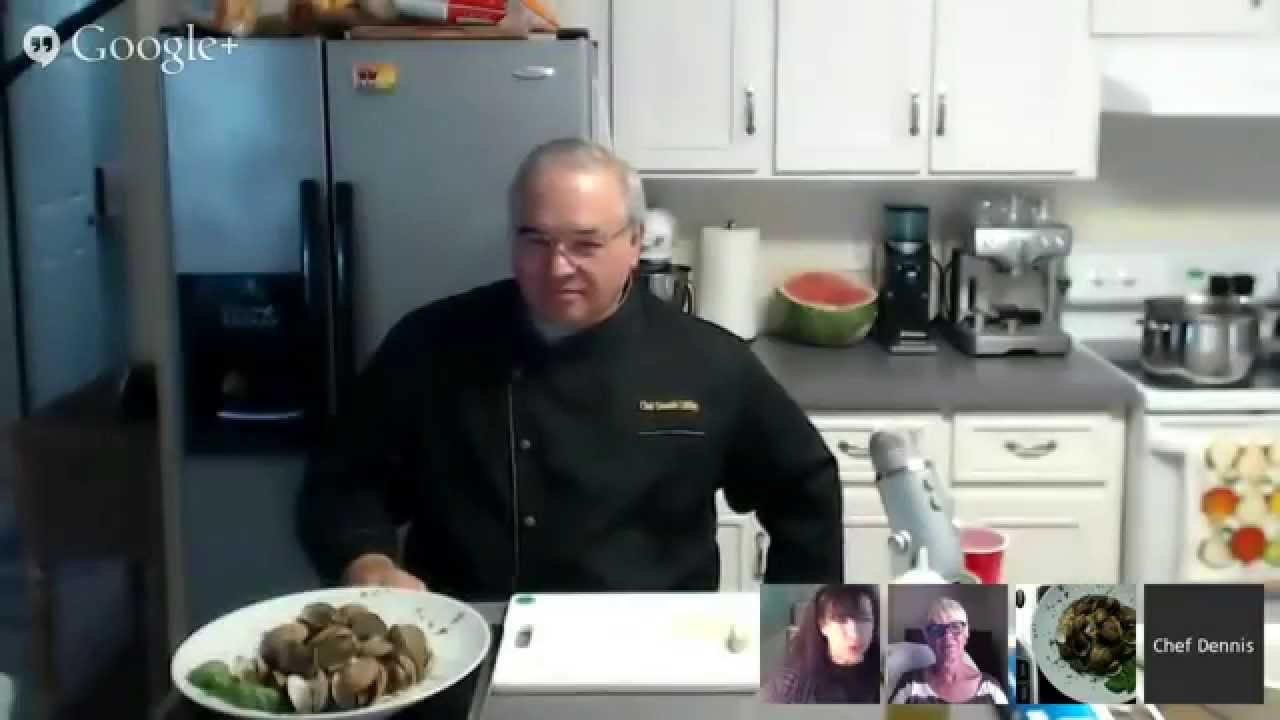
In this episode of Around the Kitchen Table, Chef Dennis Littley welcomes co‑host Susan Sarah and guest Cindy Bogart (field editor for Meredith Publications and founder of The Daily Basics). The show opens with a Memorial Day tribute, then moves into a live cooking demonstration of a quick sautéed littleneck‑clam and spaghetti (or linguine) dish. Dennis shares detailed tips on selecting, inspecting, and storing clams, the importance of using only live, closed shells, and how to clean them. He walks through the sauté: olive oil, generous garlic, basil chiffonade, crushed red pepper, and optional white wine, emphasizing the use of high‑quality extra‑virgin olive oil and the timing of butter versus oil. He discusses pasta choices (long‑strand al dente pasta), serving size, garnish with parsley, and possible variations (mussels, white beans, broccoli rabe, tomatoes, tarragon). Audience questions are answered about substituting mussels, using canned clam juice, and equipment like a strainer/cheesecloth. The conversation then shifts to Italian/Tuscan kitchen design. Cindy draws on her editorial experience to describe authentic Tuscan kitchens—stone walls, terracotta floors, rustic beams, rich wood finishes, layered textures, starched linens, and the balance between vintage and modern elements. Susan and Dennis add perspectives on olive‑oil‑centric cooking, the cultural significance of meals, and practical design advice: functional accessories, proportion, avoiding clutter, and using items you actually use. The episode closes with a cost comparison of home‑cooked clams versus restaurant prices and a reminder of the sensory enjoyment of a well‑styled kitchen and meal.
Chapters
Hola everyone, I'm Chef Dennis Littley and welcome to Around the Kitchen Table with my co-host Susan Sarah. And we have a special guest today, and I'm going to let Susan introduce her in just a little bit. But first, I want to thank you for coming on this Memorial Day, and I hope you are aware of why we celebrate this holiday and what it means to us in the United States for the sacrifices that men and women have given over the years to protect our country and to keep us free. So, you know, it's a very important holiday. Both my parents served, and both my parents served overseas, so I'm very proud of that fact. But today we're also going to make one of my wife's favorite dinners and one of the simplest dinners you will ever see made, and it's clams and linguine. Well, actually we're doing spaghetti today, but it's a sautéed clam dish, steamed them open with very simple ingredients, and on your table within 15 minutes of you starting the pasta. Right now I'm going to just say hi to Susan. How you doing, Susan?
Hi, Jeff, how's it going? I'm pretty good. You can see it's the unofficial start of summer here on Long Island, and you know, I'm ready for it. And I've been doing the whole summer thing this past weekend, and you know, so things are pretty good. I do want to say Briefly, and to follow up on what you mentioned a little seriously, we do very much want to honor those who have given the ultimate sacrifice on this Memorial Day, and keep them in our hearts and our minds more than just one day. And to that end, this weekend I attended an air show, in which the Blue Angels were flying. And I don't know if you've ever done that. Chef, have you ever gone to an air show?
I have not gone to an air show, but I have been fortunate enough to see the Blue Angels fly. It is just so impressive to see them.
It is. You know, I didn't expect to get this big overwhelming feeling that I did get. In fact, we put 2 days into it. The first day we went to see the pre-show preparations before they flew. Before they flew out. That was one very interesting sort of thing to see. And then the next day we went to the actual show and it was just inspiring. And to have the show on Memorial Day weekend was really great.
Yeah, good timing.
It was great. And yet today we have Cindy Bogart with us and I know Cindy for quite a while. Let me tell you about Cindy. She is a woman of many, many talents. She has been a field editor for many years for Meredith Publications, and we'll be talking— not only do we have a delectable spaghetti and clam sauce, but we'll be talking about Italian design. So it's a pretty good reason to renovate your kitchen and then have it coordinate with what you're serving for dinner.
Sounds good. So how you doing, Cindy?
I'm great. Thanks for having me. I'm so excited to be here.
We're thrilled you could join us. It's really nice to have someone in with us and chat about kitchens and food and just life in general. So you want to tell us a little bit about what you've been doing to keep busy?
Well, I've worked for Meredith Publications, as Sue said, for 18 years, and that's Better Homes and Gardens and Traditional Home and Kitchen and Bath Ideas, which is how Susan and I met. And I have seen her design many, an incredible kitchen, several Tuscan style ones, and what I love about Susan's work is that she really designs it for the cooking person and not just for the beauty, although that always is extraordinary. So what I ended up doing 4 years ago is I started a website called The Daily Basics, and what we do on that is a little bit of everything that you would you basically see in any of the BH&G magazines, but we focus on really pulling from more of the traditional values and updating them and making them a little bit more easy to incorporate into your life. So that's where I'm at right now.
Sounds good.
Yes, Cindy has so much real-life experience over so many, so many years, and you know Chef, you and I have talked before about how it's often the little touches, little simple touches that make such a difference. And even just to do something new and different, it just lifts your spirits and it's visually beautiful and fun. And, you know, Cindy knows so many of those secrets, and that's also what we find, you know, at her web destination, The Daily Basics. So You know, this will be such a great show filled with food and everything else.
Sounds like we got it covered today then. So let me get started. And what I did was, when I start to prep, prep is really not very much for this dish because it's such a simple dish. And I really didn't prep anything ahead of time because there's not much to prep. It's some simple chopping. But what I did do was I washed the clams. And let me bring them up here. One thing about clams that you want to know is that when you go to the supermarket, if you're looking for clams, you're going to find a lot of small clams. These are called— they call them little necks or steamers. Down here we actually have some pasta clams, they call them, that are even along the smaller side of these. But the one thing you want to do when buying clams and inspecting clams is make sure they're closed. If they are open, and I mean just a little bit, you can tap them, sometimes they'll close, or you can put them down for a minute and tap them, and they'll close. But if they won't close and they stay open, they're dead. If they're dead, don't eat them. Throw them away. You don't want to ever eat dead seafood like this, like any kind of mussels, clams, anything that's expired before you cooked it. That's just one word of warning.
The little clams, are they the New Zealand clams?
No, these are farm clams.
Aren't they called cockles or something?
They're even smaller. Cockles are even smaller. These are just farm— basically these are farm— we used to call these mahogany in the old days, like when people would get regular clams, sometimes a clammer would get a bag of a thinner shell clam that were great for steaming, but the shell wasn't as heavy. Now these farm clams have actually— the shell has gotten much heavier than they were on the mahoganies. They're almost as thick as just regular clams. Not quite. Regular clam is still going to be a lot heavier than this. It's going to have a little bit of a wilder flavor. It's going to be a little more flavorful. If you're used to eating these, these are wonderful. This is a great alternative to buying canned clams and using chopped clams, which is something you should never do. These are so simple. This is the little plant. I see you put a comment up, Susan.
Yes, oh, I did. Okay, I meant to pin it.
That's okay.
Christopher Goldman wants to know, can we substitute mussels into this? You most certainly can, Christopher, and mussels are wonderful. Mussels are usually so much less expensive than clams. This is going to be white. I make them exactly the same way, but if you wanted them red, you would just add some marinara to it. When it was pretty much done, let them simmer in that a little bit. Same thing with the mussels though. And the mussels, like, I wash these, I put them in cold water and I just run water over them because sometimes they will burrow and they get some sand in them. And every now and then you will get a little grit in your meal, and that's because they opened up and expelled some of the sand. You know, there's some tricks people say, put them in water with a little cornmeal in the water and they'll open up to eat the cornmeal, and then that rinses them out. That's one way to go about it. Farmed clams don't ever seem to be as dirty as regular clams that are harvested from the water, naturally made. With this, you don't have as much to worry about. Mussels, sometimes you get those little beards they have, and you have to clean those off. If they're really dirty, you want to make sure you wash them off really well. Sometimes you get a clam too that after it's cooked, it seal shut. And some of them will just open right up, they just weren't quite popped open by themselves, and other times they're full of mud. Okay, so word of warning, if you're going to open it up, don't open it up over your plate. Okay, open it up off to the side in case it is full of mud, you can just throw it away.
Oh, good idea. You know what another good idea might be? I mean, if you really want to be fastidious about it, to get a strainer and cheesecloth after you have steamed them to pour out the juice in a strainer with cheesecloth.
You could do that. I've never found— we used to eat these once a week when we were up in Jersey because Wegmans had these little bags of them in their grocery store, and they were like $16 for about 60 of them. I would just get those because it was a really quick, fast tasty meal to make, and Lisa loves clams, so it was simple to do. Every now and then, certain times of the year, you'd find that they were a little dirtier, a little grittier, but for the most part, you know, they were fine. But you know, you could do that if you were— if it bothered you a lot. Like some people— I know poor Lisa, she always tends to get the bones, and no matter what piece of fish I serve her, and I'll look at it and go, I'm gonna give her this one, I'm gonna give her this one. I'm going to give her this one and go, "Ah, fooled myself. I'm giving her this one." That piece will have the bones. It doesn't matter. Whichever one I give her has the bones still in it and I get one with nothing. Every now and then she'll get some sand or something. It doesn't bother me quite as much. Anyway, here we are with our clams, our littlenecks. Like I said, in Florida we have pasta clams. They're a little bit smaller. Very simple to cook. Same thing with mussels. You wash them and wash them and wash them. Then in a pan, you're going to heat up your pan. We're going to put a little oil in it. While that oil is getting hot, I'm just going to move these off the side for a minute, and I'm going to chop up a little piece of garlic. This is way too much garlic. Like, these were those monster cloves that I had gotten before. Smash it down a little bit, and it doesn't have to be really small diced. It can just be sliced. Nice little slice. Some garlic in there. And depending on how much garlic you like— one thing I did learn when I was in Italy was Italians didn't use anywhere near as much garlic as we did in the States. It was a lot more subtle. You knew it was there, but it wasn't as overpowering. And then to cut basil, I have all the leaves sitting on top of each other. I just stack them, and then I'm gonna roll them and then slice them. And this would be called a chiffonade if I left it just like this.
Hey, Dennis, my connection stopped, but I'm back.
Okay, yeah, we're having thunder here, so I could lose a connection at any time too. But anyway, that's the chiffonade, and then I'm gonna just You could chop it up a little more, but I'm actually going to leave it as a chiffonade. All right, so the garlic is cooking. You should smell it, it's just magnificent.
Yum! Oh, so what did you do? So you sliced the garlic?
I just sliced a clove of garlic, and now I'm going to put the clams in. I'm going to put my basil in. I'm going to put a pinch of red pepper in, crushed red pepper, and I'm going to close it. And that's it. It's done. All right, so now all it's going to do is that they're going to steam open in the natural juices. And you could add a little white wine to it if you wanted to. When it's done, you put just a little in and let it finish cooking, and that would be all you had to do. Now, hopefully my pasta water's close. I'm going to check that real quick.
Okay, now, uh, Chef, that was a chiffonade of What? I missed that.
Basil.
That was a chiffonade of basil.
I was wondering about basil in clams because I haven't— I'm not so sure I usually see that. I think I usually see parsley.
Well, we're going to decorate it with a little parsley, but I always put basil in my clam sauce when I serve it. Mussels as well.
That's your— That's your creation, basil. Love it.
That's how I was taught to do it. Basil always seemed to go in there, you know, but again, it's a matter of taste. If you don't like basil, you don't have to use it. You know, you could use some other spices too, make it more of a Mediterranean flavor. That would be like—
okay, okay, back in action here. Now, I have always made linguine and clam sauce. I'm sure you have too, Cindy.
Say that again?
Yeah, I'm sure you've made linguine and clam sauce a lot over the years.
I have not.
Oh, you haven't? Oh, well then this will be good for you.
This is why I'm so excited about seeing this.
Yeah, now Chef, one recipe that I use way back, believe it or not, included a whole stick of butter. Oh, maybe he stepped away. Did you step away?
No, I had muted. I was trying to talk with it muted.
Oh, okay.
Well, that must have been really flavorful.
I'll tell you, it was so good. It really, really was great, but I felt so guilty, you know, having it, so I I didn't really, you know, I kind of stopped making it that way. This is a much better way to do it.
Well, do you put olive oil and butter in, Chef, or just the olive oil?
I just use olive oil. I generally don't use butter in a dish until the very end. When we first, when I first started cooking, we used to melt down butter and mix it half and half with oil to use for sauté. Then over the years, I just started going just to plain olive oil. It was healthier. It just seemed to work better for most things. If you're going to finish a dish, then I finish it in butter, because that's when you want to taste the butter, is at the end. With a whole stick of butter, you're going to taste it no matter when. Other than that, you would come and put the butter in just as you were serving it, maybe, or just as the sauce was finished. You get that richness from it then.
You know, I have that— I have this quite frequently, whether it's at a restaurant, I'm frequently ordering because it's one of my favorite dishes of all time. And I'm always trying to decide, do I like the watery version of linguine and clams, or many times there's a more dry version. So it looks like yours will be more Have more liquid to it.
It should be a little. There should be some liquid in it. There should be enough left over. That's if the clams are new. If the clams have been sitting around— clams will last quite a while in refrigeration before they start to go bad. It's the ones that open up or die on you that will make the whole thing smell. For the most part, clams will hold up really, really well under refrigeration. They'll start to dry out. They won't provide as much liquid when you steam. So that's when you, you know, that's when you get a drier sort of mix. But I never add any other kind of stock to them. I never put anything else in them. It's just whatever liquid they make when they're steaming open. You saw how much olive oil I put in, a little bit of olive oil.
Okay, so you don't go out and get the bottles of clam juice?
No, you don't need them. Don't need them. In fact, when I get those bags of 300 clams at Restaurant Depot, I— we eat clams for as long as we can, and then I just steam what's left and take the clams out, the juices from them, and I make clam chowder with it. I'll freeze it to make clam chowder. I don't even need any kind of base in it with that. The flavor from fresh clams is just so strong and so beautiful. That, you know, that alone really gives it the flavor.
Yeah, and you know, the trick too is to have the clams be tender.
Yes, well, that's why you want to get the little ones and you don't want to overcook them. Like right now they're opening up pretty good.
Yeah, I can see that. Cindy, do you see the other camera with the—
Yes, they're all good.
I call it the pan cam.
Yeah, I like that.
I actually shut it down and let it sit and finish steaming like this because they're open. Once they're open, they're done and they're ready to eat. With mussels, I like to let them cook just a little bit past when they open. They don't always seem quite done. But with clams, once they start to open, you're ready to go. If you could smell the aroma in this house, it's just wonderful.
Wow.
What about pasta types? Would you just stick to linguine and spaghetti, or can you use other pasta types?
Personally, I would stick to something long. I mean, it can be fettuccine, it can be capellini, it could be, you know, a thin spaghetti or linguine, but I would stay with a strand pasta for this just because of how it presents and kind of how you eat. Tubes and shapes are meant for a sauce that's gonna be a little thicker or richer for the most part, usually, like a meat sauce or something like that that's gonna cling to it or it's gonna fill in the grooves with it. And this really isn't gonna be enough of anything to fill it in, so I would stay with a long shape. And fettuccine would be just a little too thick for it, I think, but if you like it, you know, it's fine. And I would say somewhere in the thinner end. Linguine is about as thick as I go with it.
What else would you serve with linguine and clam sauces? What about something like broccoli rabe? Is that too flavorful?
Oh, that would be wonderful. No, it really— you would be fighting some flavors against each other. You could throw some broccoli rabe in these clams if you like. I have done that before. I have thrown white beans in the clams. I have thrown white beans and broccoli rabe in together, and that is just really, really good. You don't have to go just straight clams. You can embellish them. You can put tomatoes in here. You could put some other spices in there if you like. If you want to have a little hint of tarragon. I might not like it because I don't like tarragon, but if you do, it might be something that you want to try. From time to time, I'll throw some little cherry tomatoes in there. The broccoli rabe would be cooked already.. I would have steamed it, got it tender, done it in some olive oil and garlic, and then I would have added it in as they're cooking or towards the end. The beans I would have added in as they're cooking, you know, some cannellini beans. Now you serve that not over pasta necessarily, but as an appetizer with some crusty bread, and people are just going to be in heaven.
Oh, you need the bread. You need enough liquid to soak it up.
Oh, dunking. The dunking is the thing.
Yeah, and there will be— usually there's plenty of liquid for that. My wife always wants to save it to make soup out of, and I say, no, no, we can't. Just either drink it or throw it out.
Definitely. Well, you know, we also want to talk about— we want to talk about Italian— I mean, let's, let's do the whole route. We want to talk about Italian kitchen design and Tuscan that's sort of— this is a rustic dish, so a sort of rustic Italian kitchen design. And Cindy has been a stylist and produced many, many, many— you know, Cindy, in the '90s and the 2000s, how many Tuscan kitchens did you style?
I don't know. I mean, there was a time period that it was really such a popular thing, and it wasn't so— it was about Tuscan-style kitchens, but also about really getting into doing more farm-to-table, and of course if you're an Italian food lover, you're going to really want to cook more Italian. So that would go back to you, Sue, on how you designed your kitchens for people who like to cook Italian food, you know, with the spigots above the stove to fill the pots. I always call them prison spigots. What were they called? The pot fillers.
Oh yeah, right, right, yeah. But don't you think that You know, the air quotes Tuscan kitchen design was the Americanized version, American version. I mean, I don't think you would have found many of that type of kitchen in Italy.
Well, Italy has a whole different way of cooking. I mean, Europe does. They, as you well know, do more of an unfitted kitchen. So they'll have a big table in the middle, they'll have Their stove in one place with tables around it or pull-up carts. They don't have kitchens like we have here, and if they do, it's because of our influence. Italian kitchen design now is so modern and so beautiful, and the cities are doing many different things. But in Tuscany, and I was there last summer in a Relais Châteaux 5-star hotel, Il Facchignieri, and their working kitchen was Everything you would think a Tuscan kitchen should be with the wonderful terracotta floors and all kinds of different tables people worked at, and it was really a treat to have a cooking lesson there. And they do cook and work in their kitchens very different than we do.
So was this a type of villa that you were at?
This was a hotel. It was a Relais. Absolutely beautiful hotel that Silvia and Riccardo Baraci, who also have the Baraci Vineyards, have taken from a little farmhouse complex into this wonderful hotel. And they— you walk in and they treat you like you're one of their family, and so you're invited to the kitchens and everything else, but I have some pictures I'll show you a little bit later on of exactly how they, you know, live and set the table and all that, but it is truly a treat to go to Tuscany and eat.
I think it's so well loved, the feeling of Tuscany is so well loved in America that it has been a leading style for kitchen design. And even if it doesn't follow precisely, it has followed closely. There has been a heavy emphasis on texture over the years, you know, rich wood finishes, rich browns, lots of ornamentation and moldings and heavily glazed tiles and patterned tiles. And it was almost like layer upon layer upon layer that we saw. And these kitchens, many of these Tuscan kitchens, they were, you know, so beautiful. I think where the idea of a Tuscan kitchen, American style, I think it's changing now. I think it's changing a little bit in Italy too. I was just in Milan a few weeks ago, and what I saw there was You know, Italy has such warmth in their interior design, they can't get away from it. They also, they also are very sleek and very modern. But if we're talking about how to bring warmth in and have a Tuscan sort of feeling in your kitchen design, it may not be— my point is, it may not be— you may not do the same things that you would do in the '90s and 2000s.
Right.
Right. So I have some thoughts on, on what you might do. How about you? How would you accessorize a modern Tuscan? What elements would you consider for it?
You're so right about Italy produces some of the most amazing architecture and design for modern today. They've got some really great materials and they're using that in the city, but to accessorize and work with a Tuscan kitchen that we think of is really a country farmhouse kitchen. When you're in Italy, that's what it basically is. And I think that the whole essence of being able to relate to a Tuscan kitchen is not so much the kitchen as what it represents. And Italians represent, you know, a lot of laughter and warmth and fun and taking 4 hours to have a meal with the family, the family dinner. I'm Italian, and when I was a little girl, we used to have to go to Brooklyn— we were from New York— and have dinner every Sunday night with my grandparents. There were about 40 of us.
Wow.
I kept on saying to my mother, "All we ever do is eat. All we ever do is eat." Cindy, how are we doing, Chef?
Are you ready with the big presentation? We're ready. Anytime you are, I can put it up. We'll pick up after, so let's switch there.
Alright, so one thing I want to mention is when you're doing your pasta, remember you have teeth and it doesn't have to be really soft that you can just gum it. So make it al dente, look at the box directions and try and follow them. I use De Cecco because it's really a great dry pasta and you almost can't hurt it. I've cooked it a little too much and still you can't hurt it. So I have a nice little amount of pasta here. In the center. Then I'll take my clams and, ah, the aroma.
Mm-hmm.
It looks great. And you know, just the texture, the visual texture of these clams, you know, the white, the warm gray, it's just beautiful.
Depending upon how much you like clams, and how much of a glutton for clams you want to be. Usually this is going to serve 2 of us, but a good portion— this would probably do at least 3 nicely because you don't want it to be— if you're serving this and you're going to serve something else, you don't want it to be overstated.
And so how many pounds of clams is that, or how many clams per person, or how would you—
it was 4 dozen clams.
Okay.
So, you know, and again, the same thing with the liquid. You don't want to overdo it. You don't want them swimming in it, but you want to have enough. Now, if you have a really good— I've mentioned this before, but if you have a really good olive oil that you love and you want to use, this is a good time. Just a drizzle, just a little bit of really good expensive olive oil. If you have something really, really tasty, because this is when you're going to taste it. And then a little sprinkle of parsley, of Italian parsley. So we have some color and just, you know, there's not a lot of flavor, but there's just a little something just so the dish looks nice and it's presented because people eat with their eyes. And if you like a little more heat, you know, you can always put a little bit more of crushed red pepper in it and you're done.
Wow, that looks great. And I love the herbs around. I love the white dish. I love the herbs around it. Okay. Wafting smells. Oh, yum! That looks great.
We're done. You saw that was really quick. The whole idea behind this is you're going to get home with those clams, wash them, put your water on, start it getting to boil. By the time it's ready to boil, you start cooking, sautéing this dish. It's on the table in under half an hour, easy, from getting home. And if you went out to get this, what are they going to charge you for pasta and clams? And that's if they give you— some places still give you those little chopped up rubbery pieces that they call clams.
Yes, yes, and you know what kills me? They usually give you like this much, like, you know, so little, so few. Makes me crazy. That looks really great. Let's take a few comments, Chef.
Sounds good.
Here's one from our friend Christopher Vogelman. I have visited both Tuscany and Umbria. Frankly, Umbria is more rustic and more authentic. I call Tuscany Tusca-fornia. Interesting. Now I don't know, I can't comment on that because I don't know Umbria. I don't know the characteristics of each area. Maybe Nazim can step in and tell us what he thinks. And Nazim is saying, we use much more olive oil than butter in Italy. Of course we know that. Yeah. And that's—
yeah, in the central and southern areas because they don't have the dairy.
Yeah, olive oil. I know even Italy's neighbor Spain, I know for breakfast, I don't know if they do this in Italy, but I know people may have a piece of toast and put olive oil on it for breakfast. Olive oil is definitely where it's at.
First time I went to Paris, or to Italy, whichever one it was first, and we had butter. We thought it was because it didn't taste anything like the butter we had here. That's right.
Yeah, and we have one from Elena Bellometti. Yes, the natural water inside the clams is the secret that adds the flavor to the linguine. So that's— I guess there really is no substitute. I mean, I know I've certainly made this dish with the clam juice in the bottle, but You can't substitute for the real thing.
You really don't need any other enhancement. Years ago, when we were making it, we were making it with canned clams. When I— first trip I did to Italy is when I came back, I said, "Oh, we're going to get rid of those babies. We're not using them for anything. There is absolutely no reason to." I was blown away by how they serve us, the amount of garlic garlic that they use, where like I said, we were used to being Fugazi Italians and dumping loads of garlic in there. This was actually probably a little bit more than I would have used normally, but these garlic cloves were so big that I just kind of got lost in it.
Oh, yeah. I'm a garlic lover. I can't have too much garlic. That's for sure. We have another comment from Carmen Mandich. "Are different kinds of oil better for better for cooking and others better for— I don't see the rest of— I just see—
I suppose that's for salads.
Oh, okay. That word is missing.
Yeah, for cooking, you can use both, either oil for cooking, and it's not really going to matter. I like to use extra virgin olive oil for everything except salad dressings. It depends on what salad dressing. If I'm just making an oil vinaigrette, then I'll use olive oil. If I'm making a different kind of a salad dressing, and I don't want it to be overpowered, then I'll use a vegetable oil for it so that the flavors that I'm adding in are the stars, and the flavor of the olive oil doesn't kill it. For the most part, like I said, I have two oils in the house. I have extra virgin olive oil, I buy that by— what used to be a gallon, but everything keeps getting smaller— by a 3-liter bottle. I have a quart of vegetable oil for everything else that I might need it for. For cooking, I pretty much sauté everything or start everything in olive oil anymore, even if it's going to get finished in butter. In the old days, I'd start some things in butter. I don't even do that anymore.
Hmm.
Interesting. Yeah, I use both a lot. I use both together a Cindy, you're a foodie. How about you?
I do the same thing.
You start with olive oil?
I start with olive oil, and I finish with butter if necessary.
Interesting.
Yeah. It's just a cleaner flavor, and I think it's healthier.
You won't taste the butter if you start with the butter. You really won't taste it. It's when it goes in the end. Whatever oil you're putting at the end is what you're really going to taste.
That's funny. I never thought of that. That's such an important point.
Yeah. Using the really good olive oil to cook in is crazy because you're not going to taste it. Just like I just drizzled it over the top before serving, that's when you bring out the really craft, handcrafted olive oils that have these amazing different flavors. Somebody was asking me about tasting olive oils. The first time I went into an olive oil tasting, I didn't have a clue. The guy says, "All right." He poured it in a little cup. He says, "Now, hold hold it in your palm, cover it, and let's warm it up a little bit. It's got to be warm. He goes, "Now you slurp it in like a wine. You let it sit there and let the different flavors come in." I couldn't believe the vast difference in flavors of olive oils, how some went from peppery to sweet to just— it really blew my mind.
Dr. Pompa: Some even have a little bit of an orange flavor to it. My son bought me me a sampling of olive oils, and they had very different types of flavors, so that was interesting. So I want to touch back with Cindy and talk about— I'm not sure how far we got, and we'll take some more comments in a little bit, but Cindy, if you were styling a modern Tuscan sort of theme kitchen, designing it, what elements do you think you would put into it?
You know, I think today I think we're going very, very simple. Yeah. Obviously the colors of Tuscany are just so beautiful. They use a lot of purples, a lot of reds, a lot of umbers, oranges. If you want to style a kitchen, I always always love big, big bowls of fruits and vegetables. For entertaining, the one thing I've noticed about the way they serve in Tuscany is if you're outside or inside, the big thing is— and don't anybody get upset about this— starched linens. The linens are really key. The Italians love their linens, and When you have your starched linens on that table, it makes you look like you have gone to the trouble, and it's elegant, and it's also very, very comfortable and homey. So that, that's very key. They also really love their china and their glasses, and they use them for everything. So if you're going to set your table, use your china and your silver and your glassware every day, unless of course the kids are there and they're going to be throwing it around. But you know, when you're having your family over, use what you have, enjoy it. That's why you have it. Don't keep it in that closet.
I love that. Now tell me about proportions. You know, some people, if they're styling or accessorizing their kitchen, I mean, you don't have to be starting a new kitchen from scratch. You could be rethinking your existing kitchen and absolutely change. Tell me about proportions.
Just put, you know, bring those baskets out, you know, have, you know, load them up with, with, you know, fresh ingredients, breads. Use your colorful linens. If you're going to be accessorizing and you really want it to be an Italian kitchen, go to an Italian kitchen store and get some of that great pottery that they have and use those elements. If your kitchen's all white, you could still make it feel very Italian and very Tuscan, or whatever part of Italy you want to be from. Those are the wonderful colors of Italy, bright, happy, and just use all those accessory platters and again those linens.
And what about sizes, proportions?
Big.
For balance, small versus larger?
Big. Italians are big. We like big things, a big bowl, Big platters, you know, if you're going to serve, use your big platters. There's nothing wrong with having them out there on your countertops. Don't clutter yourself up so it looks like a mess. I use my olive oil bottles, but they have those wonderful olive oil spouts that you can put on them.
Yes.
And, you know, utilize everything that you put out there. It shouldn't be just for decor. And that also gets you into that whole feeling of living Italian and living warm. And also, when you do dine, take your time. You know, the chef made that gorgeous pasta. Take your time. Serve the wine. Enjoy it. One glass of wine. Don't keep on pouring that bottle because you're not going to be sober enough to enjoy your food. So just, you know, enjoy it.
That's— everything you're saying is so amazing, and that brings to mind some of the design elements that are, you know, that give that sort of feeling, such as, you know, maybe stone walls, or you can even do the slim stone walls. You can do one featured wall that's stone that has texture, beams, beams that have, you know, those rustic beautiful beams. And so much of the authentic Tuscan kitchen is about texture, and it's also about, I think, in a more modern way, it's a more quiet, simple design. There may not be as many layers, decorative layers, but you should think about the layers as decorative, and each thing builds upon the next, and each item, it will nudge the design in one direction or another, whether more traditional, more modern, or a mix.
I mean, I've seen some of these great kitchens that have got those wonderful rustic beams And then, you know, simple white cabinets, and that, you know, is modern, and it just really works, and it's still very warm.
Yeah, and that's— I'll tell you, that's— I saw a lot of that in Milan a few weeks ago, and even with a tiny bit of an industrial feeling. And on our Pinterest board for the modern kitchen, I have pinned some items, and maybe you can too if you have some ideas, Cindy. Some ideas on Italian kitchen design and sort of the rustic feeling. Some things that I saw in Milan I pinned there. But you know, Cindy, you'll appreciate that when you're accessorizing your kitchen, you want to think in terms of editing. I would even recommend take everything out from your countertops and your display items, your decorative items, and put back little by little and understand that everything influences the next item and the overall, the global feeling of the space, don't you think?
I think so. And what I've always liked about what the way you've designed kitchens, Susan, is you have thought about, you know, the use and the design hand in hand. And if my biggest point in doing a design for, you know, for for a kitchen would be don't put things that you're not going to use in that kitchen. You don't need any more tchotchkes. You really, really don't. You need items that you're going to use, and if you have them out there and you're seeing them and you're using them decoratively, you're going to be using them in your everyday life. You're going to feel that your kitchen is so much more part of your cooking experience if you do that.
That is such You know, that's such great advice. That's really great advice. And of course, like you said before, you can— what's happening now in Italian kitchen design is that mix of vintage and modern together. And the balance of that, how much vintage, how much modern, will be your personal expression. It will be your personal expression, and that's fine. But yes, like Cindy says, and like I recommend, Editing, be careful with your editing when you're building your decorative layers. So I think that's— what else do you have to say?
You know, it's the same thing if you have an American country kitchen. Tuscany is the same kind of thing, it's your Italian country farmhouse kitchen. You know, bring some of those elements in that you would bring in your American kitchen. Straw mats for the entrance into your floor, stools instead of chairs, benches. Benches are great because you can sit a lot of people at benches and it doesn't take up a lot of space. You can put 3 or 4 people on a long Pottery Barn bench. And so get rid of those chairs, they're not cluttering up your space. That's another way to streamline your kitchen but still make it feel actually warmer and more cozy.
And the goal, the goal is to have the environment, the aura, the feeling that when you put down the dishes to dine and you have your friends and family around, that it's an emotional warm feeling and it all works together.
And I think what we don't— I shouldn't say we don't do it in this country, but I think we're learning how to do a little bit more of it. And in Europe, and especially Italy, they really do take their time. And as I was saying before, you know, we go to Grandma's house and all we did was eat, but we visited and we bonded, and it was over breaking bread, and we connected for the week. Having that meal is such an important thing in today's very fast and busy lifestyle. So when you do that with your family in the kitchen, you should enjoy it as much. It will make your meal, believe it or not, more special, but it will taste better because all of a sudden it's decorated. And, you know, Chef, you just said it, you eat with your eyes first, and that's how you sit down. If you're gonna sit on your kitchen counter and slurp away at the pasta, it's not going to taste as good as if you're sitting down with your family and you've got a nice tablecloth down or placemat and nice glass of white wine.
It's all the senses.
It's the senses.
And Cindy, I'm dying for your reaction to this because Christopher Vogelman in the comments stream says, "What? No Hummel figures in the kitchen?" Get the Hummels out of there.
Go put them someplace else. You don't need them in the kitchen. You're going to break them.
And the series of NASCAR plates, get them out of the kitchen.
Oh, chef. Sorry, Chris. Chef, yeah, they need to work on you. You know, you of anyone need an Italian feeling kitchen because you love Italian, you're all about Italian food.
Absolutely, absolutely. Yeah, we need this, this kitchen is from Hungary and we have to get that looking more Italian for me. Yeah, yeah, we have some nice comments in here too. I don't know if you saw Kristen Drysdale, it's almost like editing Susan Sarah. I think you may have used the magic word that will bridge the gap for me. I can kitchen now.
Oh, that's great, thanks.
And Nazim did chime in on, I agree with Christopher Vogelman, Umbria and Marche are more authentic. Tuscany has changed so much. I guess that's from the movies and people romanticizing it as much more tourists are going there. Also, where is it? Kristen Drysdale asked also if I used a high heat olive oil. Kristen, I just buy regular extra virgin olive oil. I try to get the best variety that I can that isn't going to break the bank for just cooking and everyday use. I don't overspend on that thing, but then we'll buy some boutique olive oils just for tasting and drizzling on things. All right, and what else?
Tasting, drizzling, bread, crusty bread.
Dunking, dunking.
Absolutely, yeah, making dunking sauces.
Oh, they're lovely.
Christopher Vogelman also asked for tips when purchasing clams. They were given earlier. Scott Selkroff had asked about that evidently. Yeah, you want to look, and if you're in the market and you see them, a lot of times supermarkets will lay them out, so that means they're coming out of a bag and they have to save the tags that come on these bags by law. I forget how long they have to save them now, if it's 30 days or 60 days, but you have to save those tags to make sure you know what waters the clams came out of. Now, if you're able to buy these little bags at the store, it should come with a tag attached that tells you what day it was harvested and what waters it came out of. That's a necessary item. God forbid you get sick from it. I never throw them out until a couple days later, just in case something was to happen and they needed to trace it back. Another thing to remember when you're buying clams— when I bought these today, where I got them, not my usual source because they didn't have them, they actually wrapped them up in paper, and I almost had a heart attack because you never want to close clams or mussels up so they can't breathe. They come usually in little bags that are those mesh bags for a reason, because they need to get air. And one supermarket I used to buy them at, I would put them in a plastic, like a produce bag, but I'd leave it open. To carry them home. Oh, and the cashiers would give me hell for it. "Are you going right home? You're gonna kill these!" You know, so they had really schooled them into understanding the problems you can have by closing up your clams.
I had no idea of that.
They'll die. They'll die, and when they start to die, then you can't eat them. So yeah, they need to breathe. So when you bring them home, if you put them in the refrigerator, you know, open them up and put them in a bowl. Like, I actually put them in the colander that I was going to wash them in and just stuck it in there because I was going to use them right away. If I wasn't going to use them right away, they go in a stainless steel bowl and they are open so they can get air and they can breathe.
Interesting. And you know, Nazim, if you're listening and you hear me, please give us your tips. You're right there in Italy and tell us what you see in Italian kitchens in the countryside and elsewhere because you do a fair amount of traveling. So we'd love your tips as well. So Chef, I think that about covers life in an Italian kitchen. What do you think?
I think so. We offered a lot today. We showed you how to make a really— could be a staple meal in your home if you can find a good source of farm clams. And again, they're usually at a fairly reasonable price. I guess today I bought 4 dozen from a source I usually don't get them at, but they were all closed, they didn't have any odor, and they looked good. And 4 dozen was still $16. So, you know, that's— that and a pound, $2 for a pound of pasta, $18. If I had gone out, one plate would have more than likely at least been that much. So, you know, you can now buy a bottle of wine, a loaf of bread, and no tip involved. You just have to clean up after yourself, and you've eaten as well as you would have eaten out in the comfort of your own home where you can really enjoy the meal too and not feel rushed, put the music on you want to hear, drink the wine you want to drink without having to pay 4 times the list price for it. So, you know, it's a great way to to eat well at home.
And if you can also put up a stone wall and put up some beams, send us a picture.
Absolutely. Absolutely.
Just get those baskets, you know, just add color to your life.
That's right. Cindy, thank you so much for being with us. And Cindy can be— Cindy's work can be seen at the web destination Great web destination, The Daily Basics. And where else are you socially, Cindy?
Everywhere. I'm on G+, I'm on Twitter, Pinterest, you name it, I'm there. So reach out, love to chat with you and connect with you and follow you. And hope to see you then, but thank you so much for having me on. I hope You all had a little something, but this was fun.
Yeah, we'd love you back. Yeah, we'd love you back. Yeah, you're coming back. So okay, Chef, you have a good— enjoy your clams. I'm, you know, what can I say?
Yeah, hungry over here now.
Yeah.
Just saying.
Definitely.
I'm going to have to go out and find some or something.
I don't know.
All right, so we'll see you all next week.
Have a great week, everyone. Bye-bye.









