Around the Kitchen Table - How to Make a Root Vegetable Paella
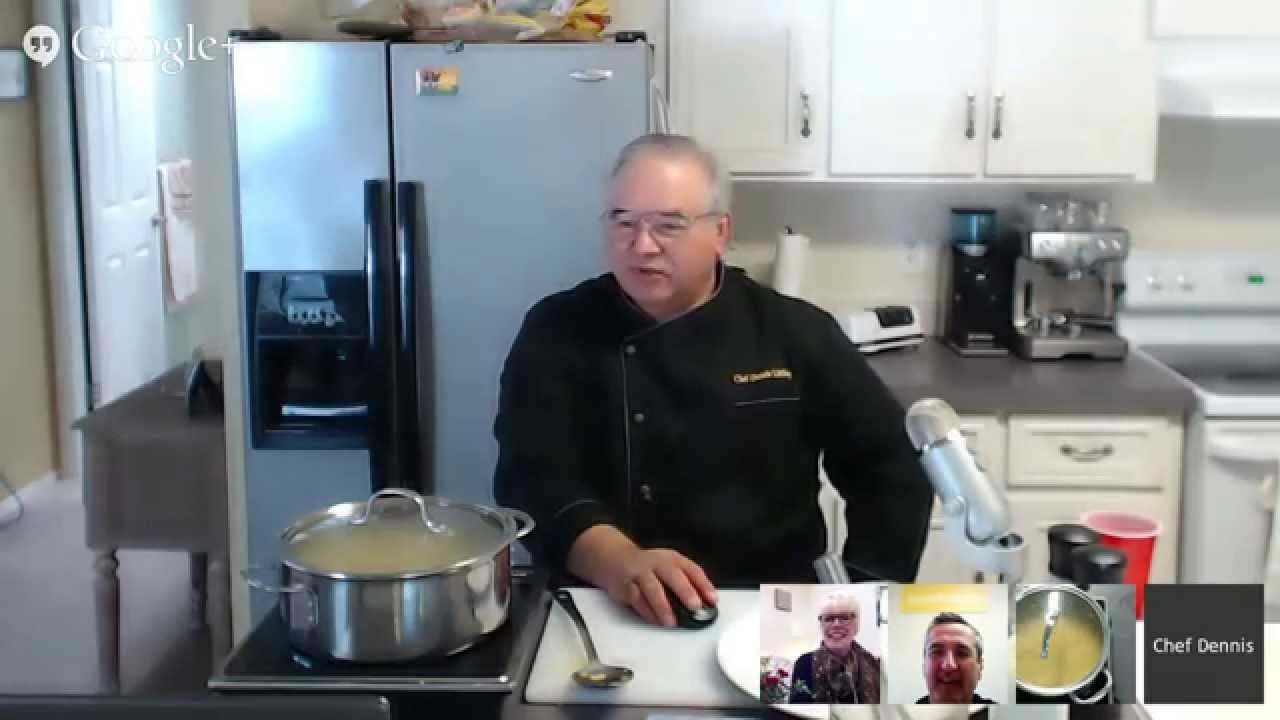
Chef Dennis Littley, Susan Sarah, and Miguel Morita make a vegetarian saffron paella with roasted root vegetables. They toast the rice for nuttiness, caramelize turnips, parsnips, potatoes, and carrots to preserve individual flavors, and discuss how to season tofu and build Spanish sofrito foundations.
Chapters
¡Hey everyone! I'm Chef Dennis Littley and welcome to Around the Kitchen Table. We're going to do some fun things today with vegetable paella. It's not a traditional paella by any sense of the mean, but it's going to be a really nice dish. Something especially for Meatless Monday or just a great side dish if you want to serve it with anything else, with chicken or shrimp or any kind of seafood. But today it's going to be all about the vegetables and a nice rice base. And we've got a special guest with us today too, and I'm going to wait to introduce him for a minute because I have to see my co-host Susan Sarah. Susan, how you doing today?
I am good, Dennis. I'm really looking forward to your dish today, and I'm ready. I have my scarf that I bought in Spain several years ago. Maybe you can see the— can you see the fringe?
I see the fringe, and it's quite nice.
Do you see the glitter?
Oh, yeah.
I mean, is this beautiful or what?
Yes, you're happy.
Yeah, so I am ready for this. And we have with us Miguel Morita, who is a dear friend and one of the founders of AutoKitchen, which is a fantastic rendering software company based in Spain and also all— actually all over the world. So, hi Miguel.
Hi, very glad to be here.
Glad to have you. So I was busy last week. I did a bunch of things. I went to the city, to New York for a few days. Actually, I think I ended up spending about 4 nights in the city.
I saw they sent a car for you for something, didn't they?
They sent a car, as well they should. Yes, it was a beautiful big black car. And I mean, what's better than sitting in the back with your laptop? And, you know, so I mean, I should live like that every day, but it was fun. It was fun. And I want to tell you what I ate. I want to tell you what I ate in the city. So I went around the world. The first night I actually ate alone. I didn't go out with a group because I was too tired. It was a long day. So just two doors down from my hotel was the Palm Restaurant. You know the Palm?
I've heard of it. I've never eaten there, though.
It was wonderful. And I actually didn't have steak or any kind of beef because which is what they're known for. I had— and you'll love this— linguine with clams. So I had that and a classic Caesar salad. They're such a classic restaurant, you know, the classic New York restaurant. So I enjoyed that. And then the next night I think I had Mexican, wonderful, wonderful Mexican food. And it was a big group and the margaritas and everything. And then I went to my favorite one of my favorite restaurants in the city the next day with my husband, and it's called The Copenhagen. So it's a Danish restaurant, and one of these days I'm going to introduce you into Danish food. Do you think you'd be up for it?
I'll give it a try. I only learned one thing when I ate one time at a buffet, and that was never eat brown cheese. So that was my only foray into Scandinavian cooking.
Okay.
So you can educate me a little bit more.
I will, I will. And then of course the other restaurant I ate in, it was actually in the hotel, but I would just categorize it as a general city hipster healthy, you know, dinner type of place. So I thought I would share with you, you know, my dining outings, which is, which is fun.
Sounds good.
Yeah, so then we went to the nursery yesterday and we got some herbs, got some fresh herbs, because, you know, unlike you, we can't really— it's not so easy to have herbs over the winter.
Yeah, we can have them now. Granted, I didn't put mine in until probably about 2 months ago, and I had to take my mint out over the weekend because it had gone I've never seen something grow like that in my life. The roots were everywhere, and it was killing the rest of the herbs. I'd harvest this mint bush that had kind of become a monster. Then I read later, it says, "Oh, yeah. Mint grows like crazy." I took that out. I took my basil out and put some purple basil in and some regular basil. I actually put some chocolate mint in.
Oh, I haven't heard of that.
It smells like chocolate. It's really cool. It's got a little brown tinge to the leaves, but it smells like chocolate. I got it also because it's like ivy more. I saw the plants, and the plants were hanging and growing down, so I said, "That's much better," because this thing got like a bush. Between that and my Italian parsley, it was all I could see. My lavender and my fennel— I mean, not my fennel, my dill and rosemary were just barely hanging on. Although, the rosemary's doing really well.
Yeah, I don't know. I'm going back to that chocolate mint. I'm thinking of a cocktail of some type.
Oh yeah, yeah, absolutely. I, you know, I hate to say I never knew there were that many kinds of mint. You know, I just went for mint, and you know, and then I see spearmint, there was sweet mint, there was the chocolate mint, there was peppermint, and I forget what else I saw. I was looking for double mint. I couldn't find that.
No, I haven't seen that before. I've chewed it, but I haven't seen it. That's right. But you know what? It's true. And when you say that, I think of basil. There are so many kinds of basil, and I don't know which one to get. So I just got something called Mammoth Basil. It has really big leaves, but I thought sometimes these bigger varieties don't have such a great taste. Or smell, but this one does. This one did, so I figured bigger is better. I don't know if it is or not.
We don't even want to go there. I'm going to leave that one.
No, leave that alone. And tarragon, I got tarragon, which I love fresh tarragon. But the only thing I know how to use tarragon with is with chicken, like my bistro chicken and my chicken salad. So what else would you use tarragon for?
The first thing that comes to mind is a béarnaise sauce, but no one makes hollandaise anymore, I don't think. But you could just do a wine reduction with some tarragon in it, do a white wine tarragon sauce with a little bit of butter. It would just about go over anything, or you could make a tarragon compound butter if you wanted to for some beef.
Oh, that— yeah, I mean, you could use that for a whole lot of I mean, you can— would you put a compound butter with tarragon on like a sautéed steak, or would that be a little too—
I would put it— I mean, you might even want to put something else in it for a little color too, to make it pretty, and just use a nice little compound butter like that, cut it up into slices, and put the slices right on the steak right as you go to serve it so that they're melting as you serve the steak. You can do that with fish, you can do it with chicken, you can do it with just about anything. It's a great way to use herbs, too, to do that. You could make— I'm not a real big fan of that herb, but there's a lot of other things. Tarragon is just so potent and so— you know it's tarragon when you get it.
Yes. Yeah. It almost has like a— I would almost call it almost like a licorice sort of flavor. Flavor.
You can make pesto out of anything too, so you could always do— of course I wouldn't do all tarragon, but I would cut it with maybe some Italian parsley and make a little bit of a pesto with it.
Okay, pesto is, I think, my and probably so many other all-time favorites, so I demand that you do pesto in the near future.
Absolutely. You know, it's really great for this time of the year because one of Lisa's favorite dishes is for me to just make pesto real quick I throw some pasta in a pot, get it cooked, and as soon as it comes out, I mix the pesto in with it and serve it. We just eat that with cheese. If you want to serve some roasted vegetables with it or a piece of chicken, you can. It's just a really summery kind of dish that takes no time at all to make. My favorite pesto, I love a basil pesto, regular Genovese, but my favorite has to be a sun-dried tomato pesto. I really love that.
I'm not sure if I've had that before.
That's just wonderful. You know, most of the time you make things out of green leaves, and anything that's green you can make into a pesto if you can put it in your blender and it's going to chop up. The sun-dried tomato is just a little bit different, and I just love that kind of flavor. And you know, you make it the same way. You're just throwing in some pine nuts and olive oil and cheese, and it just makes exactly the same type of the way you do it. I think one of my favorite pestos that I did make too was I did an arugula pesto.
I think I've seen that before. I don't think I've had it before.
It had a nice taste, and I used pistachios in it. I didn't put the cheese in it, and I sprinkled it with some gorgonzola. Instead of mixing it into it, I sprinkled some gorgonzola on. What I did was I stuffed chicken with it, and I rolled it, and I just put those sprinkles in. It was really good.
Okay, so we're going to do a tasting of pestos.
Different pestos, we'll do that.
We're going to do a few pestos. So we have paella on the menu today, and I think I see some colorful plates in front of me. Do I see a color— oh no, maybe that's it.
No, just one.
Oh, okay.
I wanted to pull up a comment real quick though. As Lynn Bloor, Lynn said, tarragon is great for flavoring vinegar. Yeah, and I forgot that one too, and she's not a big fan either.
Okay. I love it in chicken salad. I think it's perfect in— I don't know, there's something about chicken and tarragon, I think.
Excellent.
But that's just more—
thanks for talking about herbs and the use. David Leopold's in the house. We're cooking in Cincinnati. Who else is here? Oh, Coach, you're in Texas. I didn't know you were in Texas. I'm from Texas, Coach. I don't know if we ever talked about that. I'm from San Antonio. Okay.
Wow, what a nice place to be from, huh?
Yeah, I need to go back. I haven't been there for quite a while. I don't know if you guys can see that I'm doing things without moving and reaching. I had an epiphany and decided I could use a wireless mouse to make all my changes with, so now I don't have to kill myself reaching across the computer. You know, I've been doing these for 3 years, and it finally came to me that I could use that.
The marvels of technology, Chef.
Yeah, yeah, and your brain working every now and then. Well, anyway, let me get this started and then we'll come back to Miguel and talk. But, you know, we're going to start this just like any— let me change over since I can do that to the pan. We're going to start this like any really rice dish I would start. The exception is I'm not really going to add anything else to it because I want this to be saffron and I want to taste the saffron and I don't want it to confused with a lot of other flavors. Traditionally, in a paella, if I was going to make it, I may at this point add some onion or garlic in with the rice too. You don't have to, but just to give it a little bit more flavor. But because there's going to be just vegetables and rice, I want to make sure the saffron taste really is very prominent. I've added a little extra virgin olive oil. I always use my squeeze bottle. Bottle so I can control it. I love that. I'm just going to let it heat up just a little bit, and then I'm going to throw my rice in. We're going to just cook the rice, sauté the rice, just for a couple minutes. You start to get a little bit of a nutty taste or flavor to it— scent to it, I'm sorry. That helps it cook a little quicker. It also, to my mind, enhances the flavor. It's just like when you roast nuts. Or you put them in the oven for a little bit before you do things with it, it just really brings some of the flavors out. So to me, and it could be just my imagination, but I think it does the same thing with rice. So I'm going to add that in there, and I have a couple cups of rice. I always make enough rice because we love rice, and it'll sit for the next day, and I can always use it in a soup at night. So I'm just going to coat it really well and then just let cook a little bit.
So then it will get a little bit— it'll have an additional layer of flavoring by just sort of sitting in the pan and—
Well, I think it adds a little more nuttiness to the rice because rice is pretty bland by itself, and I just think it really helps it out just a little bit, and it seems to really help a little bit in the cooking process as well.
Let me ask you, would you use a premium type of olive oil?
I only buy one kind of olive oil because I don't want to be switching back and forth. I buy a very good— not an excellent, but a very good extra virgin olive oil, and that's what I use for every bit of cooking that I do, unless the baking requires no olive oil because of the flavor. And then I have some vegetable oil in the house for that, but I really don't go around buying too many different kinds of oils. If I was serious into tasting, I would get a bottle of something really, really good and use that just to drizzle onto something when I'm getting ready to eat it. If I'm having a plate of pasta, I might take a little oil and then just drizzle it over right before I eat it, but I wouldn't cook with it, and I wouldn't mix it in, you know, while things are cooking because the flavor is going to get lost.
Yeah, and you know, Dennis Littley, Miguel, I bet you are agreeing because your brother-in-law is a connoisseur of Spanish olive oils.
Yes, he is. He's a big, you know, enthusiast, and he recommends always, you know, the latest and greatest.
And he's very serious about it, and he has a lot of opinions, right?
Yes, he does.
As well he probably should. We were just talking about olive oils and worried about things that are organic and not organic. One of the things we talked about was that most of the olive oils are coming from Italy and Spain for the most part. We really don't have to worry quite about as much how they're being sprayed and the evils of the different pesticides because these people are so intense about their olives, and they really take really excellent care.
They're just—
there's so much workmanship and pride in what they do that they would never let something foul up their olive oil.
Exactly.
I'm sure you've heard— I'm sure you've heard the whole process of making olive oil over and over again, Miguel.
Yeah, yeah, it's, it's very common, you know, particularly in Southern Spain.
Um, it's everywhere. Okay, I'm going to add in some stock in here. Let's get this stirred around a little bit. You usually use about 2 cups to every cup of rice depending upon how it cooks. I'm not going to quite put it all in, leave some of it as a reserve. Let this cook for a while. And now I'm also going to add in some saffron because I want the color to really start to build.
Oh, that looks like some high-end saffron in that case.
Yeah, I know. When I said I wanted to buy an ounce of saffron, I thought I was in the old days buying an ounce of something else. It was so cheap.
Yeah, it looks like that.
This was about— this pack of saffron was about $90.
No!
Yeah, this 1 ounce. Wow. So I like saffron. I'm probably using a little bit more because I have so much of it, and I can. Otherwise, I might be a little stingy with it. You know, some people use turmeric instead for the color, but this, you know, if you have saffron, if you've ever had saffron, there is no difference. I mean, there is no comparison to using something other just for color.
How long— I mean, once you invest $90 in a high-end spice like that, how long should that last? Is it months or up to a year?
It's going to last a year, a year and a half probably. It'll start losing some of its potency after a while, but these are dried, the pistils of the flower, so they'll last a little bit longer. They still smell pretty good. They're not quite as potent as they were when I got them, but They hang in there. I'll have to start baking with them because I have done some cakes with saffron in them. Try to find other uses for them too. They are interesting, and they add a distinct flavor. It's not something that everyone likes in baked goods when you use it for that, but it's kind of neat to play with sometimes for different things. It's great for savory. Sweet, it kind of takes a little getting used to. Uh-huh.
Okay.
All right, so I got that started. All I have to do is put my veggies in. I already have some in, so it's not going to be that difficult. We won't have to wait quite as long, but once I get them in, you know, we can chat a little bit more. So for my vegetables, now this is kind of a root vegetable-based paella, but it can be any kind of vegetables really that you like. We're making— honestly, this is a saffron rice with roasted vegetables. You know, in all intents and terms, we fancied it up by calling it a paella just because we can. You could cook the vegetables just like you would a traditional paella by putting them in with the rice and letting them steam and letting the flavors of the vegetables come down into the rice. I don't think the vegetables will benefit from that, and I don't think get the flavors that you could have by roasting them or grilling them and getting those vegetables to caramelize a little bit. It's all about flavor and it's all about presentation. By doing it this way, I think we're going to get a much better product. That's why it's not going in here with that as well. Not a root vegetable, but one of our favorites, mushrooms. Not many calories in mushrooms. It's a great filler for anything. And they're delicious roasted. So I have some— trying to remember which is which. This is the turnip.
This is parsnip. Put them all together.
Potatoes, and these are a different kind of potato, and I don't remember which one they were right now. Carrots, and I don't have a whole lot of carrots because Lisa doesn't like carrots, and she'll just pick them out.
So— Oh, I'm glad someone else— I hate carrots.
She will eat them raw, but she won't eat them cooked.
You know what?
That's me too. I bet you I know why, because my mother made me eat carrots all the time cooked when I was a kid. So no.
I've learned to cut back. Same thing with onion. I mean, I'm the only one that's going to eat the onion, so I don't put quite as much in. I have some garlic, and this is strangest garlic. It's from Mexico, and it wasn't elephant garlic. These cloves are huge. So I have a few cloves of garlic. I have, of course, because we love it and I like to put it in anything that I roast, is some fennel.
Oh, I didn't use fennel. I should do that. Is that sort of a licorice flavor?
It is, but I do not like licorice. I do not like licorice flavoring. Took me a long a long time to get to eat fennel for those very reasons, and it is just wonderful, and I love it.
It is.
It's great. It's a big Scandinavian thing, and I can't get enough of it. I love it. I mean, the liquorice, not necessarily fennel.
I also have some grape tomatoes, and honestly, they're just for color. They're going in there to add some color and to add a little bit of difference to it. Not a deal breaker if you don't like them in there. Then we're going to use a little oil. Little extra virgin olive oil. I just picked these up, and I can't remember where I got them, but they're kind of neat. Sea salt. Makes you kind of feel like a chef doing it, you know.
Oh, that's true.
Or a waiter, I guess. And some fresh ground pepper.
So you may not then want any other herbs to compete with the saffron? Is that correct? Okay.
Someone had left a comment about how it sounded nice, but there weren't enough seasonings. And well, you know, that's not the dish we're making. If you wanted to have more seasonings, by all means add more seasonings into it. Okay, that's not where we're going with this dish, so I'm not going to add them in, but that doesn't mean that you can't. Just like, you know, I had a bag of Brussels sprouts in the in the fridge. I was going to put it in this, but you know, it's not really. I also had a small squash, a winter squash, but I actually had too many vegetables and I was running out of room. So I said, you know, this is what I put in the recipe, let me just go with that. But that's just showing you that you really can do anything you like in it. And this is the best way to eat vegetables, as is roasted too. This is actually a little deep for these, but I have one on my sheet pan in the oven already. So I'm going to pop these in and I'm just going to put them in like this, uncovered for a little while and let them roast.
Now, when you let them roast, is it part of the browning of the roast— of the roasting that will add the flavor?
Yeah, that's the caramelizing of the natural sugars in all these vegetables that's really adding the flavor to it as they roast. We have this fight all the time. She'll say, "What does it taste like? Don't tell me it's sweet because I'll smack you." I said, "It is. The onion is sweet. The carrot is sweet." I asked one of her friends one time, "How would you describe those roasted carrots?" She goes, "Sweet." That's really what it does. It's bringing out the natural sugars in a lot of these vegetables. For the most part, they're carbohydrates.
That's funny. That's exactly what I was going to ask you. That aren't these vegetables, these root vegetables, somewhat sweet? And does the garlic and the tomatoes, do they add some sort of acidic property to them?
Because the garlic is going to get kind of sweet too. Roasted garlic is just insanely delicious. Oh, it is. And it really has that kind of sweet flavor to it. So no, it's not really going to add that much acidity. The tomatoes, those are sweet little grape tomatoes, and they're not quite as acidic as some of the other ones. You don't really have a lot of acid going on in any of these items that we're cooking.
What do you think— I don't know, you're the expert, but I don't know, lemon popped into my head.
For what?
I'm not so sure lemon and root vegetables go together?
I would think not. That's not something I would use on it. To me, when I think of lemon, I think more of a protein for using that with it as a complement. Of course, you can use a squish of— a squeeze of fresh lemon. I combined squeeze and fresh together. That's that's a new one— together on it. It's not going to ruin it. I just don't think it's the direction. I don't think you'll be as impressed with what you did with it. Now, if they're raw, I think a raw vegetable could take lemon a whole lot better than a cooked one would.
Okay, okay, that makes sense. Now, what about— I've been thinking about this dish. I'm wondering about tofu. What about adding— say it's not a meat, we don't want to add meat or fish, but what about tofu? I'm wondering if the vegetables are too dense and heavy for tofu.
Not at all. If you like tofu and you wanted to serve that as your protein with it, by all means. I used to roast tofu for our salad bar for the school. I worked one place, they were just slicing it up and putting it out there. I said, "Oh, no, no, no, no. That's not going to work." It's because I hate tofu. I said, "We've got to add some flavor to it." I would put a little olive oil on it and rub it in, and then use a variety of different spices. Now, that's where I might use your lemon pepper. I would always season it the way I would season meat, which I don't know if was the right way because I'm not a vegetarian. I don't eat tofu, but to me, I wanted to have flavors resembling something that I was familiar with. So I would always treat it just like I would meat when I cooked it and season it that way. And it had a little more flavor. I had a couple of purists like, you know, yelling at me for doing that to their tofu. I'm like, oh well, bring it from home then, you know, if you don't like my tofu. But you could easily do that or blacken it. I was on a strange diet years ago when I could eat tofu, and the only way I would eat it would be to get it crisp on one side, blacken it up a little bit.
Oh, I didn't know you could do that.
Well, I don't know if you're supposed to. You can blacken just about anything. Usually I don't burn anything on purpose. That's what I kind of think of blackening sometimes. Or you could just say that was That's the way she wants to make it. I've never breaded tofu. That's something I should probably try someday.
Yeah, we should try that.
Make like a tofu parm.
Or maybe flour it. What about flour? What about seasoned flour?
You can flour it, and it'll get a little bit of a crust on it that way. You just want to do something to it to give it some more life and flavor without drying it out too much. I'm sure there's people out there that know vegetarian stuff much better than I can offer a lot more suggestions. We have a few more comments here. Let me pull one up. Lynn said she loves roasting her vegetables first in many things she cooks, something her granny taught. It is the best way to eat vegetables. Elena's in the house. She says, "Hi." Sunny Kadwalader is in, and she says she does enjoy her onions, too. Our oldest son hates onions but loves it in salsa. Go figure. And you know, my wife will eat black beans and cilantro and onions in salsa, and she won't eat them in any other thing else. So go figure.
Oh, that's funny. That is funny.
And Aslan Flores says, "I love onions in everything." Oh, you know, I think people love the smell of onions smells of cooking more than anything else. That really gets you thinking about food when you smell cooking onions, to me anyway. So we got everything going together, so let's talk about Spain a bit. Let's talk to Miguel.
Yeah, so Miguel and I and his wife and a couple of other people went to Spain in— excuse me. In 2010, and I have been back 3 times. I've been to Spain 4 times since 2010. Can you believe it, Miguel?
Unbelievable, yeah.
I know, it's so great. So tell me about your, your paella. What's— you were telling us before that everyone in your family who is in the Málaga region— is your family in the Málaga region, all of them?
Most of them, yeah. Most of them are in Málaga, yeah.
Okay, and so how— is paella something frequent when you go back home? Do you eat that regularly, or is it a special occasion sort of meal?
No, it's something that is something fairly common, you know. Some people like to obviously do it at home, but it's also a common plate to order if you go out, particularly in the summer months and such. It's one of the typical plates to order when you have a group, you know. And I think the minimum is typically 2 or 3 people. And it's relatively fast. It takes maybe half an hour, 40 minutes to put together.
Oh, it is? Okay. And is it usually— it's usually with both meat and fish typically, isn't it? Or is it—
Yes, typically, yeah. Typically you put a little chicken and some fish as well. It depends. You know, there's even people who do an all-rice. And a big component in the Spanish recipes, at least the ones that I've tried, includes what is called a sofrito, which is similar to what Dennis is doing. It's basically a dish of vegetables that you fry in olive oil. Typically includes peppers, tomatoes, onions, garlic, and that becomes the base of the paella, right? And then you put the caldo, which is the juice, so to speak, which is what Dennis also did a moment ago. And even the ratios that you are using, Dennis, are correct. It's typically 2 to 1. 2 cups of caldo, let's say, for 1 cup of rice, right? That's the theory anyway. And so the only difference that I can tell here is that typically the actual pot or the paella pot is different, right? And I'm sure Dennis Littley knows that. It's more flat. It's supposed to be maybe like an inch and a half, 2 inches tops.
Yeah.
But other than that, I don't have one that goes on my induction cooker. So I use what I have.
Exactly.
Correct.
And I'm sure it's going to taste just as good. It looks phenomenal, for sure.
You know, I love having fun when I do make— Lisa loves paella, and, you know, we've had it out a few places. The best, I think I mentioned, the best I ever had was in Nice at a little market when we were there. That was just outrageous. But I tend to just have fun with it like any other dish. I know people yell at me sometimes, oh, that's not Classical. That's not how you make it. I said, well, that's how I like it. That's the thing I try to always impress everyone about food. Make it the way you like it. Make it your own. You'll enjoy it more if you do it that way. I put sausage in mine. I'll start with chicken, and I'll start in the pan I'm going to do the rice in, and I brown the chicken. I brown the sausage. I pull it out of the pan, and then when it's cooked a little a little bit, seared around the edges, then I start my rice. Then as the rice starts to cook a little bit so it's not floating and it starts to firm up, then I start adding the chicken back in, the sausage back in. Then I put clams, mussels, shrimp in mine. It depends whatever you like. I don't like squid. I don't like octopus. I know people do put that in, but it's all a matter of what you like. If I have some lobster laying around and I want to throw that in, I might put that in. It's a rustic stew, and it should take in whatever you have available that you want to put in.
That's what we talked about a little bit last week. These rustic dishes, they are just the best. Knowing me, I would probably do something— loving Spanish food as I do, I'd probably want olives, ham, and anchovies in it. I don't know if you can do that. I don't know if you're allowed to do that. I'm not sure if you are.
I might serve the anchovies on the side. I don't think the olives would be a bad choice, and the ham would not be a bad choice at all. A little Serrano ham in there or something would be very nice. But maybe because I don't like anchovies, myself, but I might just put them on the side. Oh, decorate it, Dad, when you serve it, decorate it with the anchovies. There you go.
Yeah, yeah. And Miguel, you'll be so jealous of me. When I came, I went to Spain in February and I brought back, I was able to bring back some ham. Whoa, I know.
How do you manage that?
Well, I shouldn't say, but I will. I have the Global Entry Do you have the Global Entry card?
No, no.
Oh, you have to get it. You go so often. So they don't really check you. Really? When you go through the Global Entry way, you know, at the airport, you come back through customs, they're, you know, they're really good. I mean, I shouldn't do that, but I'm confessing. So yeah, we enjoyed that. I bought a chunk and We— oh man, brought a little bit of Spain home with me. Because it's hard to get here, isn't it?
Yeah, it's not easy to find. And then when you find it, it's very much overpriced, right?
Yes. Yeah, my local butcher has it for $100 a pound.
It's crazy. It's crazy.
Yeah, we had it— Wegmans had it, and it was $60 a pound. And I thought that was outrageous.
It's crazy.
Yeah.
It really is. We have a few comments. Or did I— what did I do with them? Oh, yes. Okay. I'm going to sound strange about this, but Sunny says, "Mmm, sofrito." Can you tell me what is sofrito? I don't know what sofrito is. I've heard of it.
Sofrito, yeah. Sofrito is the base of the paella. It's really— Most people actually start with that. They start with the, on the paella pan, you fry sliced tomatoes, some peppers, some onions, some garlic, some meat if you want, or some, you know, whatever fish you want to put in. And that makes the base of the, that's really what drives the flavor of the paella. They call it sofrito.
Okay. It's sort of like, I know in New Orleans cooking, Chef, you have— what do you have? There's like 3 ingredients.
Well, New Orleans uses peppers, onions, and celery. It's, you know, the holy trinity for them.
The holy trinity, yes.
Just like for French cooking, it's carrots, onions, and celery, your mirepoix, you know. So it just depends on where your perspective is, what you're cooking, is on, you know, which one you start with for the most part. Cheryl Deuce is in the house. Good to see her. Hey, Cheryl. Getting here late, but better late than never. Yeah, we're happy to have you.
We have a comment from Aslan Blore. Aslan Blore says— oh, here we go. Really, however, getting hulled organic beans is the key and can be tricky for many. Hulling your own beans is a real pain. How do you hull— what's the—
She's talking about soybeans and making her own tofu. Oh, okay. Alex had asked her about making her own tofu. It's a process, but again, if it's something that you eat and you want to make sure it's pure, it's a good way to do it. Again, you have to get your soybeans, hull them, and clean them, and process them. You have to really enjoy tofu at want to do that.
Sure, sure. Now Chef, I want to talk with Miguel a little bit about Spanish kitchen design and other designs. Should we wait for a few minutes?
No, let's do it.
Okay, so you know, like I said, I've been to Spain several times, about 4 times in the past 4 years, and there's such beautiful classic design. And you know, one thing I've I've done every time I've gone is I've taken pictures of flooring. So, you know, we go through trends in the United States, and in the '80s we went through a big trend of terracotta flooring. And I went to Sevisama, which is in February, Miguel, which is the Italian— Italian, I'm sorry, the Spanish, the Spanish tile show, but a lot of Europeans come there too. One thing I saw, terracotta is coming back a little bit. Yes. Yeah, I don't know, did you, are you aware?
Well, I didn't go to the show, but I know that particularly in that section of Spain in the east, right, Valencia, Castellón is where most of the tile industry from Spain is based out of. And yeah, they have many, many companies, small, medium, and large, producing exquisite, you know, tiling for both, you know, flooring or walls or what have you. I'm not particularly aware of any— whether terracotta is really coming back or not. I see it the same amount I used to see when I go to Spain, but I wouldn't be surprised if they have now new designs that are coming back stronger than before.
Yeah, I really took a good look. I went to Valencia and Madrid, and I went to the show, and it's very exciting what's happening in Spanish tile, and sort of a retro look is coming back in terms of terracotta and other glazed rich colors. And you know what else is— you know, there's such a strong Arabic influence in Spain, and that Moorish type of tile is also coming back, but completely refreshed in larger scale, and larger scale patterns, beautiful and unexpected colors like pastels and different colors used together. So it's very exciting to see that. And even metallics, you know, it's interesting because at Sevisama at the show, they also serve global markets. And when we saw lots of metallics and rich golds and other metallics, and they're serving markets such as Russia and the Middle East where you see these luxurious, luxurious, kind of like my scarf, you know, and the gold and the tassels and everything. But those are, you know, so there's a rise in metallics, but it's also for certain markets as well. And of course, the wood ceramic tiles are very, very popular. They've been for a few years. You know, I can be a snob about faux materials that that pretend to be real, but I have to say, and I don't know if you've seen them, the ceramic wood tiles, they are stunning.
They are, they are. And I've seen them actually in bathrooms, you know, and it looks, to me it looks like the real thing and it's beautiful and it's probably more affordable. But yeah, to me it looks great.
It is, yeah, and I'm seeing lighter colors and woods and sort of a little bit like a Nordic look as well. But these woods, and they're making some of them very, very distressed ceramic tiles, and, you know, so they're just beautiful. And, you know, it's funny, I will say this, Miguel, that Spain is sort of under the radar in terms of design. You know, you think of Italian design, you think of Scandinavia and others. Spain is under the radar, but my goodness, the beautiful, modern, very, very modern design, and it's just, it's surprising.
Well, thank you. Thank you very much. I hope that, you know, little by little we'll get on the map, you know.
Yeah, and of course, you know, globally there's Greys, or so I'm sure you see that in the beautiful renderings that your company does. And as I said before, Miguel, he serves kitchen and bath professionals and architectural professionals by representing software to make photorealistic renderings. I'm sure you see a lot of these modern kitchens with the grays, warm grays and whites and neutrals.
Exactly, yeah. I'm actually following a lot of the posts, many of them from from you actually, after the Italian show and some of the other shows that you guys have attended. And it's all beautiful and I love the modern design in particular. Yeah.
Yeah, and there was beautiful Spanish companies too in Milan a few weeks ago.
Some of them, a few of them, you're right. Yeah, yeah.
Yeah, yeah. So how are you doing, Chef?
I'm good.
My vegetables are just about ready, so we can keep talking for a little Okay, great, great. And another thing, what I saw was, you know, in fact, I'm going to put a lot of images up in Pinterest. So look for our Pinterest board, everyone, and I'll put some really great images from several of my trips to Spain so you can see what's happening. And white kitchens, I mean, white is such a Spanish such a neutral that is in these whitewashed Spanish villages. And I went to Almería, which is in the south of Spain, and went to, I don't know, some hillside beautiful Spanish village. And I mean, that's— is that typical for the interiors of Spanish homes? Is there a lot of white? Is it simple?
Yeah, it's a lot of— a lot of some of the things you mentioned is a lot of ceramic tile, both on the floor and also on the walls of the kitchen. It's very typical. And it's, you know, the style of the cabinetry tends to be contemporary or modern, you know, typically slab doors with often the integrated hardware, integrated knobs or pulls. And white is a very typical laminate. You know, white laminate is very often the case. Countertops, typically they are quartz, you know, or if not, some sort of laminate. Those are the most often seen color combinations, I think.
Yeah, and I don't know if everyone knows, but I've also gone to Spain with Cosentino. Cosentino is the manufacturer of Silestone. So if you've heard of Silestone countertops, they originate from Spain, they're made in Spain, and they are so precision engineered. And that's also what I want to say, seeing tile factories in Spain and seeing silestone factories, they are state of the art. Spain is so under the radar.
Beautiful.
It's really something. I mean, between the food and the culture and, you know, the state of the art design, it's It's worth looking at, it's worth looking at for sure.
I do have to get over there because I do have relatives there. I'll just have to find out where they are exactly.
Oh, do you?
Where?
Oh, you're not sure where?
No, when I was probably 17, 16 or 17, my mother wanted to send me to Spain and I didn't want to go. Crazy, you know, I just didn't want to go because I had a, it had a gran an uncle or a great uncle that had been a band leader there, and also someone made harps. And my mother had had this little harp that they had made especially for her when she was born. But I just never did go, so now I'll have to find out where they are and go visit them too and say hello.
Let me tell you, Chef, that you will just have the— you will just be blown away by the food alone.
Oh, I'm sure.
Just blown away. I mean, when I go there, I'll tell you something, I just have to say this. I've never in my life tasted olives, just regular olives. I mean, it's the first thing I have to have. It's a different taste because they're fresh and they— and you just can't— I don't think you can get them here, Miguel, like they are there.
In some smaller specialized stores, you can find just about anything. But the problem is that it's very pricey, you know, that you pay a big sticker price.
Yeah, I don't know, I just think that they taste different, they're fresh. You know, here when they're in the jars, it's totally different, completely different, and they're full of salt, and it's not the case over there. Love it.
I see what you mean.
Okay, it's just like the breads. I'm still trying to find a decent loaf of bread in Florida.
I don't know, you'll have to make it yourself.
I'm gonna have to, I guess. I've been saying that, but you know, I see people buying stuff in Publix and I'm just, you know, and I love Publix. Publix is a wonderful store, but you know, you just, you can get some, you know, you know, it's all frozen. It's coming into them in boxes that they're just baking. So there are a few different things that you can get that almost seem like bread, but you know, it's just not— it's not the same.
No, it's not the same.
You know, being in Philly, just like in New York, you know, and working in Italian restaurants, you know, I had this one boss that really told me the true nature of how bread should be. And we were getting semolina bread, and at that time I had never really eaten it on any kind of a regular basis or knew much about semolina bread, but he's telling me, and he's banging his fist while he's telling me, he's being real. He goes, "The bread, the crust has got to be so hard that it's going to cut your gums, but the inside's so soft." I'm like, "Okay, I kind of get the picture." Yeah, a little bit of passion there.
A couple of good comments, a couple of great comments. Of course, this is a whole other show. Elena says one word, tapas.
Oh, absolutely. You know, and it's so funny, Lisa will eat Spanish food, but she will not eat Mexican food. So, oh no, there is a difference. There is quite a difference.
So yeah, there is.
She does love tapas. So, and here's Aslan also said, Lynn said she, she loves tapas. When I come to London, will go for a tapas lunch or dinner. So that's another reason that I need to get to London too, to visit everybody and go out and eat. You can show me the good places to eat in London. So I think we're doing pretty good. My vegetables should be pretty close, so I'm gonna pull them out, and the rice is done. I've just been letting it sit here and simmer a bit. So let me make a spot.
Hey Miguel, have you heard about patata negra? Elena, you know, Pata Negra, Elena's asking about Pata Negra.
Yes, Pata Negra is the highest quality of Jamón Serrano. Apparently the name came because the animal is actually running in the wild as opposed to being in some sort of cage or what have you. So then their paws become black from walking through the woods and all that. So that's the best ham that you can buy. Jamón serrano pata negra is like top-notch, well-fed, you know, pigs.
I wrote that down. Oh, those vegetables look great, Chef.
Yes, they do.
Well, good. Let me get this, and we will start. Okay, to be careful where I put things. I have so many hot things right now. Yeah, so I have my saffron rice and we're going to start a base.
You know, half the beauty of paella is the presentation. It has such a wonderful presentation, doesn't it?
Alright, so this is going to be a small— now this is a fairly good-sized dish too, so it's, you know, you would serve this, it wouldn't necessarily be for 2 people, it would be more or less along the lines of 4 people maybe. And I am going to fire up some shrimp on the grill to go with this. Since we are a little bit of a carnivore too. Mm-hmm. Come on, mushroom. And it'll just be putting this together while we're talking, so if you guys want to talk about anything while I put it together, feel free.
Sure, sure. Yeah, I love the yellow hue of the rice. I mean, I guess that's because of the saffron too, right? Absolutely. What'd you say?
Yeah, I mean, it can be a little deeper. This is a very nice color though.
It is, it's great. So do you ever make it at home, or does, does your wife ever make it at home, Miguel?
Well, yeah, so I don't, I don't, don't make it.
No, you don't do it, yeah.
But my wife does, and some of my brothers and sisters, they also do.
Tell me something, because I'd love to know, are there any Spanish restaurants in the New York metro area that you know of, or anywhere else?
You know, I'm sure there are. I just don't know off the top of my head what to recommend. You know, I was recently at a restaurant called Mogador. This is not from Spain.
It's from—
it's a Moroccan restaurant. On the East Village, but it blew me away. And the flavors are very much like the flavors of some of the Spanish dishes. So I recommend it. But, I mean, there are small tapas bars, you know, there's now a new chain, I forget the name, that is opening up in downtown where they sell Andalusian tapas. And I'm sure there are probably a few that I'm not even aware of.
Okay, so you don't have one particular destination if you have to have authentic Spanish food?
Not really, no. When we go out, you know, we typically go out, you know, other types of food. You know, we try to eat Spanish food maybe at home more so than when we go out.
Yeah. Now Elaine is asking, Miguel, she's asking Zafferano. Do you know about Zafferano?
Well, it's probably a saffron, right?
Oh, is that a restaurant? Oh, it's not a restaurant.
I don't know if it's— let's see. Can you see it on the screen, how it's spelled?
Yeah, Zafferano.
Zafferano.
The Spanish spelling is azafrán. I think the English is close to, maybe exactly the way that she spelled it. It's a spice that Dennis Littley is using to color the rice, right?
Oh, okay, okay, interesting. Yeah, no, I didn't know that. I guess it is. She says some people feed hens with saffron so the eggs, so the yolks are more orange.
Oh wow.
Yeah, yeah.
Interesting, okay.
Well, that's an awful expensive thing to be feeding the hens.
True. Maybe they feed them tapas too, who knows.
Giving them massages, I guess, too. All right, here's the finished product. All right, and there is your vegetarian vegetable.
That's beautiful, beautiful, beautiful. Oh yes, look at that. You know, I like the color?
Well, you know, again, that's why I threw the tomatoes in. You need to have some color in it, and it really does help brighten it up. The carrots would do it, you know, you could have more carrots. And you just want to try and find something to make the dish as visibly appealing as you can, because the old saying, people eat with their eyes, you know, is very true. So, you know, you want it to look really appealing to them.
I love it. I love the potatoes in there. I think that's an interesting touch. I love the mushrooms. I'm a mushroom lover. I mean, that just adds to the savory. Yeah.
When you dig into this, you know, you really want to get full and you want to eat enough flavor. So, you know, you have all the different flavors going along. And roasting them really helps. You know, like, if you put these in a pan and sauté them, the flavors start to mingle. Same thing with if you're cooking them in a pot, the flavors start to mingle. They all, you know, you open up, it's like open up a can of something, how everything kind of tastes the same. They lose their identity. So by roasting them on a flat pan, which is what these were on, you know, the other ones in a little bit of a deeper dish, and the flavors will mingle a little bit in that. But when you can do them separately. I mean, I go as far as to oil them and season them separately sometimes, depending on what I'm making, so each one has its own row and they cook together and not mingle, so that you can taste exactly what every one of those vegetables is. It keeps its identity. Roasting is a good way to do that. They keep their identity. They keep their flavor, their profile, so you can really taste every everything that you're eating.
That's such a great point. And you know what I'm wondering, Chef? I'm wondering— somehow I'm seeing that that could— could that be served room temperature?
It could. It could. The rice is going to get a little, you know, it will not be quite as appetizing. The vegetables could definitely be served room temperature. You know, most of the time when I roast vegetables or grill them, they get served room temperature, so that's not a big deal. The rice, I just wouldn't let that get too cool because it does have some vegetable stock in it, and it will gum up or firm up a little bit as it sits.
Okay.
It will congeal a little bit. You could use chicken stock if you didn't want it to be all vegetarian, too. I just tried to keep it completely vegetarian today. Actually, I'm looking, it's vegan.
I think it's not so easy, at least for me, to be filled up for any length of time on a vegetarian type of dish, but this looks so satisfying. It looks like it will hold you over.
That's one of the reasons for all the rice, too. Because all that starch will help fill you up. Now, I would serve this with some bread as well. I have a nice loaf of bread to go with it. If you have a glass of wine— it's getting hot out, too. It's getting warm out. The weather's changing. When it gets warm out, you don't want to quite eat as heavily either. This is perfect for this time of year. Here in Florida, we can just sit outside and have this with a glass of wine and some bread. Just really feel a little more satisfied. Where if it was the winter and you have that mentality where you got to pack the food in because you got to stay warm, you know, add that layer of fat. This is a very healthy way to eat, too.
I think it looks absolutely wonderful. What do you think, Miguel?
I love it. It looks great.
Yes. Yeah, it really does. You know what? I mean, I'm in. 3 carbs, I'm in. Rice, potatoes, and bread, I'm in. Then you have the good Spanish olive oil, the premium Spanish olive oil on the side.
This would be where if you had a good oil and you wanted to get that nuttiness and that flavor, now you take a drizzle of a really good oil when you're serving, because then you can taste it. If you're cooking it out, you lose it, but now you can inhale it, so when You go to eat it, you'll smell the aroma of that good olive oil. You'll taste it on your— you'll feel it on your tongue. That's when a really good olive oil comes into play, and that's when you want to get out the bottle that you had to almost mortgage the house for to buy because it was that expensive. Just like a good, really good vinegar. It's going to be really expensive, but it's not something you're going to make a salad dressing out of. That you're just going to really, you know, eat in great amounts. It's that little drizzle that you're going to put on the things, just going to change, you know, all the flavors and go crazy in your mouth when you eat it.
Oh, nice.
Great.
Thanks a lot. You have it right in front of you. Thanks a lot. Well, what a wonderful dish. Thank you so much, and thank you, Miguel. You just gave us so much insight on, you know, Spanish culture and food and Happy to, Chef.
Thank you so much. Thank you for inviting me.
We're very happy. I just want to pop this up real quick, too, one last comment. Dave Williams, "I'm surprised how simple that was. I easily roast veggies but have never placed them on a bed of rice and then some shrimp. I'll do this." Again, Dave, shrimp, chicken, and if you don't want to use rice, you could do this on pasta just as well, too. You could make yourself a nice pasta pasta dish with it. So whatever you like. Dinner should be quick, it should be delicious, and it should be kind of fun to make. So this is where we're catching everything right here in one fell swoop. So, alright, well, thank you all for coming. Susan, any parting words?
Yeah, no, just we'll be ready for next week again, another great show.
I think we talked about it. I'm going to try to head over to Restaurant Depot and pick up some clams. So hopefully I can do that, and, you know, barring any issues this week, I'll head up. It's on the other side of Orlando, so it takes me almost an hour to get there, but it's well worth the trip because I need a few other things too from my supplier up there. And I'll get some clams, and we'll do a linguine with clam sauce next week and really blow you away with how simple it is.
Nice, nice. Love it.
Alright, so we're going to sign off for today. Susan, Miguel, thank you so much for being here, and have a wonderful week, everyone, and we'll see you all soon.
You're welcome. Take care.









