Around the Kitchen Table - How to make Tiramisu
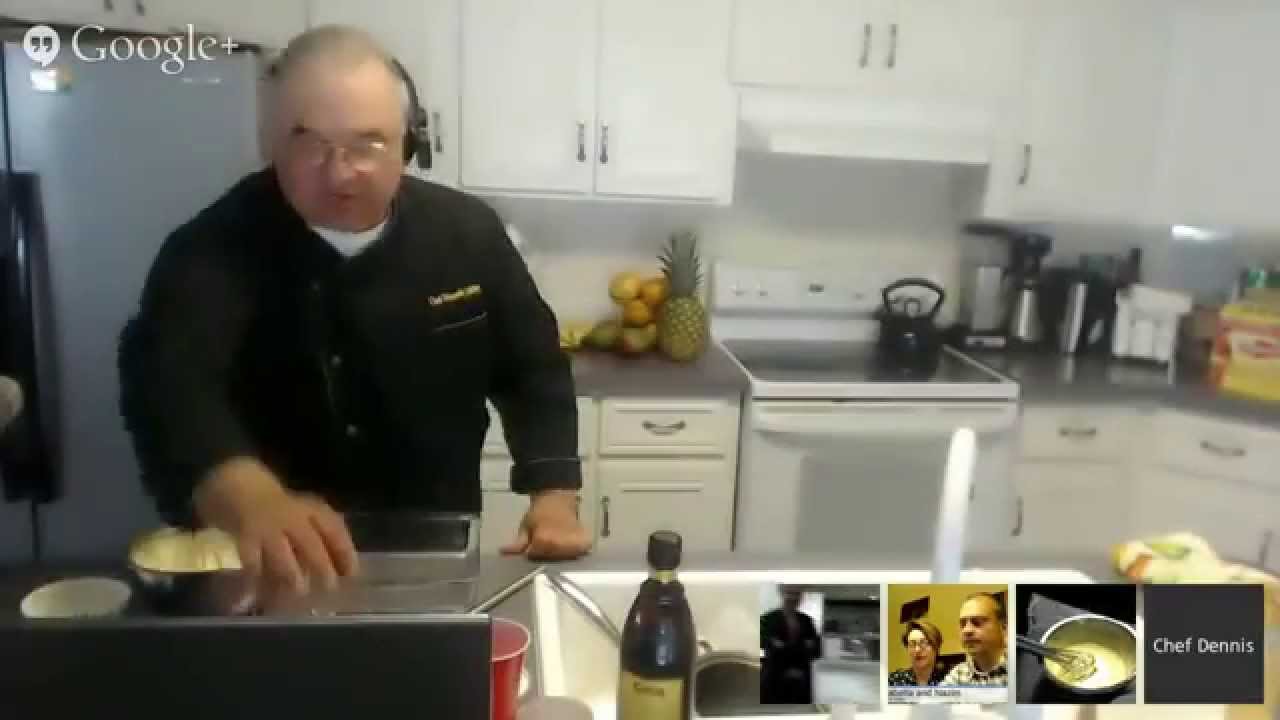
Chef Dennis Littley makes tiramisu live while Susan Sarah tours an Italian kitchen showroom from Milan. The recipe uses a sabayon base, mascarpone cream, and ladyfingers soaked in coffee liqueur, while guests discuss cooking traditions and Effetti's 40-year design heritage.
Chapters
Hi there, I'm Chef Dennis Littley, and today we're here with Around the Kitchen Table, and it's a special edition because my co-host Susan Sarah is in Milano, and she's also got some special guests with her today. She is in a kitchen showroom, and my friend Nazim Beltran is here. I think his wife's going to be making an appearance, Elisabetta. Did I say that right? I hope so.
That's correct, that's correct. You did say the name right. She just walked in the door, so she'll be showing up soon.
Great, so we're just gonna say hello for a few minutes. Susan, how you doing there? I heard you had a little trouble with your phone, but ah.
Yeah, well, you know, it's extremes. It's fabulous and then the phone, ah, you know, but who cares about the phone, that can be replaced. You know, but I am here at this, maybe you can see behind me and I'm going to take you on an exclusive tour of this beautiful showroom. It's the Effetti Italian Kitchens. Beautiful, you know, I mean Armani and all this Italian fashion. I had to get my hair done very short and very stylish, otherwise they wouldn't let me into Milan.
That's a typical rule over here.
I know, so I got that done yesterday and I said to Ernesto, I said, you have to make it— I'm going to Milan, so do whatever you want to do. So, you know, we got it very short and You know, but it's a wonderful— it's just beautiful. I look forward to a week of going to the Kitchen Show and eating whatever I can eat every day. How about you, Chef? How are you doing? How was your weekend?
Weekend was great. The weather here in Florida has been perfect, maybe just a little hot, but other than that, you know, I can't complain, that's for sure. Beautiful sunny day and just relaxing, nothing very much planned. I think we went to the parks one day and honestly— oh yeah, Friday night we went to the parks to see Paul Revere and the Raiders. Man, I'm so jealous about that. Well, let me tell you, don't be too jealous because Paul Revere is 74 and Mark Lindsay was not there, so it was not quite the show we had anticipated. But this week the Village People are coming to Disney.
The Village People! Oh my goodness.
So I'm looking forward to that one. I figure it doesn't matter who's out there yelling YMCA, it'll still be good.
Oh yeah, yeah. And you have a great dish for us today. Now what was the inspiration to think about tiramisu?
Well, you know, we were trying to come up with something Italian, and you know, I cook a lot of Italian dishes that I've adapted, but this was taught to me by an old friend many years ago, and she was half Italian, half French, and a Cajun to boot. So it was her grandmother had taught her this many, many years ago. Her grandmother had been from Italy. And, you know, I of course adapt everything just a little bit to make it mine. Nazim saw the Kahlúa bottle and started hyperventilating that I was going to adapt my tiramisu with a little coffee liqueur. I can see his wife back there gasping. But again, it's still better than most of the American tiramisùs you'll ever find in this country and pretty comparable to what you'll find in Italy. It is really an excellent recipe. It's an old-time recipe. So I thought that would be good to make. And it is my favorite dessert, so.
Yeah, yeah. I mean, I have it from time to time too. And I mean, how much food is there for me to sample, Nazim? I mean, what should I try?
Yeah, tomorrow we'll get started. Tomorrow we'll get started.
Okay.
The party starts tomorrow, the food and the wine and everything. It's going to be a great week.
Oh yes.
You brought the sunshine with you, which is great.
Oh, oh, it was not sunny last week?
Oh, it's typically, it always rains during the furniture fair.
Okay.
It's typical.
Okay, and hello Elizabeth. Hello Elizabeth, you just joined us, you weren't here before. I'm Susan, good to see you. I'm glad you could come. I just arrived, I just stepped in. Oh, okay, okay. Yeah, and Nazim, you're right here in Milan, so I don't know if people realize that. And you're not so far from— your office is not so far from where I am.
No, I'm close by. And the reason I moved to Milan was because of this precious woman here.
Yeah.
And can she cook? Oh!
We were in the States, you get the normal, well, is the Pope Catholic?
Oh yeah. So what else is going on with you, Chef?
Just about, you know, not a whole lot here, but Elisabetta, you have a cookbook, don't you?
Yes, yes, it's a very nice little jewel. I did it with a lot of passion, so I'm happy about the results.
Very good.
You know, we're going to have to get you on our show cooking sometime too.
I will, I will. Can you get it from Amazon?
Pardon me?
I was wondering, can you get it from Amazon?
No, it's on the iPad. We did the electronic version on the iPad, and it's on blurb.com. And I'll put in the event, I'll put the link to where you can get it. Please do. Yeah.
Absolutely. My wife has an iPad.
We do have to get her cooking one of the recipes from the book. That would be a lot of fun.
Oh, excellent. We'll have a special edition show for that, for sure. Okay, well—
You ready to go, chef?
I think so. You know, I'm going to start my end here. Mia Voss is in the house. Elena Bellamonte is in the house. They're all saying hi.
Hi, Mia.
Wait Harm is here. Some of mine are blocked, but we've got a nice viewership. I'm going to start on the sabayon, which is the French version of this I'm making, because I always forget how to say it in Italian. What am I making in Italian? What's a sabayon? It is a—
Sabayon, eh?
Sabayon.
That's correct. The pronunciation is perfect.
Okay.
All right. So this is what I'm going to be making to start my tiramisu, and this is the big difference in most American tiramisus that you'll find. Or, as I like to say, bastardizations of them. Those are not the very good ones. It's not that difficult to make, but it just does take a little bit of time and it takes a little bit of effort, and you'll have one of the best tiramisus you could ever hope for. So I have a double boiler method here. I don't use a regular double boiler because if I do that, the pot has too many edges that I can't get into. So by doing a bowl over a pot. I can whip it a lot easier and I can get into all the corners and I don't have anything really stopping me. So I'm going to whip these eggs for about 7 to 10, and Susan, why don't you take over and talk to our guests?
I sure will. I have such a nice surprise for everyone because we were able to get into the The shop is closed now, this beautiful Effetti showroom, and Luca Vivanti, who is the marketing director, the export marketing director, he's going to show us around. And I hope you don't get a little bit seasick because I'm actually going to take my computer and stand to the side of it, my laptop, and try to show you this beautiful showroom and describe some of what you're seeing, and maybe you can get some ideas and inspiration for your existing kitchen or for a new remodel. So here I go, I'm going to get up from my chair, and I hope I don't get you seasick. So I think what I will do first is I will— first let me introduce you to Luca Vivanti. Where are you? Yes, okay, this is Luca Vivanti. Luca's saying hello.
Hello!
Ciao Luca!
Ciao Luca!
Yes, so Luca, first tell us about Effetti. Effetti is a new brand for the United States, I mean for the United States it's new, no?
Not completely.
And speak a little bit closer. Yeah.
FAD, it's an old brand in Italy, born 40 years ago. This year is the anniversary, the 40th birthday. In the USA, it's present, especially in New York, from some year, more or less 5, 6 year. From some year, we have a showroom in Manhattan, 27th Street, and from there we are starting to introduce F&D around all the market in the States.
Oh!
We have a showroom also, a presence in LA. We are opening a showroom in Miami in Design District.
Oh, good!
And next The next will be a showroom in New Jersey and one another in Westchester County in New York State. Okay.
So do you, will you, what if other parts of the country wanted your kitchens? Could they work with a design firm from Manhattan if they live in California or somewhere?
We work with interior designers, architects, and directly with private people that love special kitchens.
Okay, so you don't have to go through a showroom, private designers can work with a showroom for their clients. I see. Okay, so tell me more about Effetti. You have a modern design, it seems to me that it's a warm, modern feeling. How would you talk about it, Betsy?
Maybe because F&B, it's a company from Tuscany. Tuscany, it's a region where food is something special for us. We love a lot use hot effect, warm effect, with wood, with soft colors.
Yes, okay.
Yeah, a house very comfortable.
Okay, so do you see many kitchens that like the open, what we call the open floor plan, and the kitchen is part of the dining room and part of the family room.
Actually, this is the trend, but with our programs we can do everything because flexibility and customization are for us the best and the first.
But as far as trends, what do you see for kitchens as for trends?
For trends, Kitchen is probably the space more interesting in a house to create relationship. The chef that prepare the food with the friends, all in the same room speaking and talking.
So you're seeing social trends?
Yes.
You're seeing a big social part of the kitchen.
Probably it's a turn back. If you think that immediately after the Second World War, especially in USA, born the idea of living kitchen. The actual trend is to turn back at that time, to try again the same—
and gather together. Shared with friends and family and everyone cooks. I know in the US we have multi-generations that are cooking. Okay, what about trends in colors? Do you see whites or woods or gray or what's popular?
Actually, soft color, not exactly white, but light beige, light green, more soft, not ice color, like a total white, total cold.
Yeah, so soft colors.
Soft colors mixed with warm woods, like in this case, for example, we are seeing a table in elm, natural elm. Ah, we love a lot to use natural And I see matte finishes as well.
I don't see many glossy finishes. I see matte, soft.
This is depending from the country.
Okay.
For example, in Europe, the trend is more matte. In other parts of the world, glossy.
Okay. And what about grays? Grays have been so popular the past few years. Are you seeing more gray? I see some gray over across the way.
Yes, that is a warm.
It's a warm. I agree with that. I want to now take you for a little bit, try to show you here some views, and I hope I don't get these I really do. So here is a long shot of a beautiful wall, and if you go this way, maybe you can see it a little bit better. We have some green plants here. Oh, I think the other way. Here we go. Yeah, you can get a good look at this. It's— so what it is, is yes, The lines are clean. They are clean, they are straight, but you can see a mixture of— we have marble, we have wood, we have glass, some stainless steel, and the soft, soft grays. And sometimes you will see a mixture of gray, soft gray and wood, which we see here. And maybe you can see what Luca is Yeah, now look at that.
That is—
that can be multifunctional. It is a table, it can be a prep space, it can be anything. And then also a popular trend I have seen is concealed storage. I've seen that quite a bit. So that's very exciting. And when you have an open plan, you may want to conceal the kitchen so it looks— it doesn't look so utilitarian. That's the message there. And of course we have a beautiful sink and faucet here, very sexy. I mean, let me tell you, these sinks and faucets today, they are so sexy. Here is another type of pantry which is glass, and it's— what this is, it's an architectural sort of point of view, an architectural statement. It's a feature in the kitchen, a focal point with revolving shelves, and I think it's cool. It's, you know, it's sleek, yet it's just kind of organic in its shape. So over here, yes, tell me now, what's new in your collection?
This is a new model, more than a model, it's a concept of kitchen.
It's a concept!
So the, the hand-painted doors can be chosen from all our collection. The concept is to be an element to separate the part of the kitchen from the living area with a functional element with all the necessity in only one block.
Aha. So it is, it's almost like, you know, in clothing you have color blocks. Here you have, it seems like you have functional blocks, and it's a visual piece too. So you have different Yeah, different blocks. Is that what you call it?
And all blocks has a function— cooking, column for container things. And on the other side, we can put also screen for TV. We can put everything.
I see, I see, and this is a beautiful wood. What is this, also elm?
Elm, natural elm.
Okay, okay, this is just beautiful. Now can you open up the— I mean, this is where the fun is when you open up the doors in these Italian kitchens. This is so much where the fun is, the rolling shelves. And yeah, and here, okay. Oh, and you have a drawer liner in here. What's, what's behind here? Okay, that's just a cabinet. How about over here? Then we have this beautiful display, like that gray again. Gray is popular, I can tell you that, popular in the States. Oh, look at this. Look at this. Okay, now, and then you close the top. So what happened, what you just saw here is you have a drawer within a drawer. But the point is for, so that you don't have the visual of numerous drawers. And so all across you have simple, simple front elements. So actually, for a small kitchen, your kitchen can look larger because you don't have a million cabinets next to each other. This is the way the Italians do it with beautiful modern design. They, you know, they think it through and have simple, simple larger components often. And then we see shelves. Anything you want to tell us about this?
The function of this element is to have all the things near to your hand when you prepare food. So we have thought a space open with all the elements ready to use.
I see. You know, that, I'll tell you, that is very interesting to me because it looks like these open shelves are about a few inches off of the counter, which is very unusual, very unusual. But it also means you can hide some things in that space underneath.
Every time we study a model of kitchen or something about a new way of use the kitchen, we test a lot before present the things. To control that two things are always present in our collection: resistance, so we offer a longer warranty to our clients, economic, and practical.
I see.
If all three of these elements are present, we introduce. Without one of these, we stop the project and we start again.
Interesting, but very, very— it must take you a long time to come out with each concept.
If you think that we have a client that come back to try F&B kitchen after 20, 25 years, we've old our kitchen after 25 years, just a little old.
Yes.
And they want Reply, the new kitchen but with the same long—
Yes, I see that. And you know, I want to show you this wall treatment here. I don't know if you can fully appreciate it, but it is a beautiful, beautiful texture. I will stand back a little bit and I will tell you something too. Oftentimes less is more. I will tell you that from a design standpoint. I wouldn't be surprised if that's true from a culinary point of view also. But in this case, the wall, it's its own simple element. It's its own design. It doesn't need a million things or a million upper cabinets on it. And I will tell you this too, sometimes you have to to sacrifice a little bit of storage for aesthetics. So, so far so good. How are you doing, Chef?
Sounds good. I'm about ready to move on with the next step.
Okay, let's do it. I'll walk back and you take it from here.
Okay.
Thank you. Thank you very much, Luca Vivanti. Thank you.
Thanks a lot. All right. I whipped up the eggs and I did put some sugar in them. I started the whipping first before I did add the sugar in. I streamed some sugar in and I put it in. You want to whip them enough— well, this is cooking the eggs first of all over the double boiler. Then it's also getting them fuller and thicker so the tiramisu will hold together really well. This is what's making the base. Now I'm going to add in some mascarpone. And then I'm going to whip this into the eggs, and the eggs are relatively cool right now. So now I'm just going to mix this in, and the one important thing you do want to make sure when you're doing your eggs is that the sugar is dissolved all the way. This by itself is just wonderful. This cream, this can be used— you can make individual tiramisus, you can make the big pan like I'm gonna make. And it is just a lovely, thick, rich cream. You just want to get all that mascarpone incorporated well. And I know some people have problems with this step and it comes out too thin, and that's because they didn't get their eggs quite thick enough. And you'd have to be very careful when you're doing the eggs also that you don't end up with scrambled eggs, because that would not make a very good tiramisu.
No, no, no, no.
Very good.
Okay, so now I'm going to add—
can you send us some so we can taste it over here?
I wish I could. Though with the tiramisu judges there, I might be afraid.
I mean, cheese and sugar and eggs, I mean, what could be better?
Well, now we're going to add some whipped cream in too.
Okay, that's better.
Okay, so this will finish it off. I'm actually going to fold this in. Sprinkle that. Put in part at a time. I'm just going to fold this into it. And I didn't have any sugar in the whipped cream. And one of the few comments I do get is sometimes that they think it's a little sweet, the tiramisu. So you can always add a little less sugar to it if you want to, but we think it's just right with the contrast. Between the coffee.
Chef, what kind of sugar are you— what kind of sugar do you like to use? I know that now there's all these gourmet types of sugar.
For this, it was just white sugar, but I try to find bar sugar because it dissolves better. It's not as heavy, which is a superfine sugar. That's always my choice, and I didn't have any today, so I had to use regular sugar. You can also take the regular sugar and you can pulse it a few times in a food processor. You just don't want to pulse it too much so it doesn't start to become 10x sugar. That'll help it— it dissolves a little faster. I usually have it. I've had a hard time finding it down here in Florida. You think with all the bars there, we'd have it, but I have not been able to find it yet. So I put the whipped cream in a couple 2, 3 portions, not all at one time, and folded it in, trying to keep some of the body of the tiramisu, the cream. This has been a lot of whipping for me. My carpal tunnel is kicking in big time here.
Oh, I hear you.
It's good you got the muscle, Chef.
Yeah.
Chef used to have the muscle back in the day. All right, so this is just about done. I'm just trying to fold it in so it's really all blended together. You don't want to see any real splotches of whipped cream. And it should be a nice pale yellow. I still do have a little I have to mix in here.
Now, can you mix it too much? Will bad things happen?
Well, I think you can mix anything too much. If you start to whip this too much, you know, you could— the cream could get whipped a little too much in here. Everything could get whipped a little too much. That's why we kind of fold it in, because you want to maintain some of the airiness, and we've already whipped the cream to its full extent.
Can I make a comment that might get me in trouble? Can you do this in the blender?
I would not.
Okay.
Doesn't mean you can't.
But it's better to do it by hand.
Yeah, well, yeah. I mean, you could put it in a mixer at very slow., and you'd probably be okay.
Hey, Chef, what about adding— and I don't know, this may be the worst suggestion ever, I just thought of it— what about adding lemon zest?
You could.
Okay.
You could. It would not go, it would go. So, you know, you could put a little lemon zest in there if you wanted to. It would give it a little different flavor. Okay, so now what I'm going to do is I'm going to layer my tiramisu, and I've got Savorati ladyfingers, and they are the crunchy ones, not the soft cake ones. Okay, so let's make sure to do these. Now I have my cool coffee, and I like to add a little bit of coffee liqueur into my mixture. Again, you know, it's what I like. You don't have to, it's not a necessity. You can use something else if you like, but this is how I do it. And I put them in just enough to get them wet. You don't want to soak them too long, you don't want to float them. You want them to absorb some of the liquid, but you don't want them to be soggy. And this is like some of the worst tiramisus I've ever had was because there was so much liquid and the ladyfingers, and they were so soggy they just ruined the experience. Ah, that's not something you want because they're going to get softer as they sit. And right now, because you're not going to be able to eat this right away anyway, sorry to say, if anyone's making it. And we're just going to form a few layers here, and that'll be our bottom layer. And this is about an 8 or a 9-inch pan, somewhere in that range. And I'm going to put half the cream— pretty close to it.
And—
oh boy, spilled a little here. Julia would say nobody saw it. All right, and then we're just going to even this out a little bit. And the intensity of the coffee, if you have a strong, nice espresso coffee, the contrast between that and the cream is really amazing. And I use about a pack and a half of these ladyfingers for my tiramisu. In fact, I went to get them today and I only had a pack, and I had to run to the store real quick, and luckily they had some.
Yeah, so I wonder if there are variations of ingredients, of flavors in tiramisu. What other flavors do you think would go well? To add?
What do you think, Nazim?
Aye, aye, aye. You know, the classics, yeah, you could do variations on the theme, but I think—
Don't you use Marsala or—
Marsala in the Tzumisquil?
No, not in the Sabayon?
Yeah, you can handle a little.
Yeah, you can, yeah, but yeah, you could handle a little bit of those into I've never been real fond of it other than in chicken marsala. Yeah, well, you're the expert on chicken marsala. In the meantime, I'm looking at everybody who's visiting. There's David Leopold, there's Sonny Cat Wallader. I want to say a big shout out to everybody who's watching. Lori Saliata and Mia Voss is in the house as always, and that's great to have her here also visiting.
Yes, I've been looking at the comments. They're great, they're excited.
Big hello to Elena Bellomonti from Italy who lives in London and who I personally met on HURL when I went up to London.
Hi, Sue.
Great that everybody's tuning in to the fantastic Timmy Sue. Look how the chef likes to clean, everything's in order, everything's looking good. Nice, tidy kitchen at all.
Now we're gonna put the next last layer of cream on.
Now can I ask one question? The calorie factor here, can we bring that up here?
Oh, come on, you can't talk about that.
I don't think there are any in tiramisu.
No, it's light.
I heard that the angels touched it and removed all the calories.
They made an exception on it.
Yes, eccezione. It's like when I was in Italy, every time I was in Italy, it seemed like it was a holiday, and we get in a cab and they always told us it was a— what the heck— it was a special rate because it was always a holiday.
Yeah, well, that's why I moved here, Chef. You know, I mean, holiday-wise, this place is paradise compared to the States.
All right, so anyway, there's our tiramisu. You saw how fast it was to make. It really is that simple. It will be— it will amaze your friends, your relatives. And then I'm just going to take some cocoa and sprinkle some cocoa on the top. I don't like to overdo with cocoa because I've choked a few times on too much. And I would cut it for you to show you how nice it's going to look, but it does have to sit for about 4 to 6 hours before you can cut it. So that, my friends, is tiramisu. Wow.
Great.
Bravo.
Bravo. Bravo.
Go in the refrigerator after this?
Yeah, now it's got to go in the fridge.
Okay, how— time-wise, how long?
4 to 6 hours, let it sit up. I always like to let it sit up overnight, and that way you don't have to worry about it. And if it does last that long in the household, it will last for a week before it starts weeping. It is really an excellent— I mean, I've made tiramisu, but the second day it's all weeping and broken apart.. Then this recipe is really very, very good. Like I said, if it does last in the house, it won't weep on you, so it'll be great.
That's not our case over here. It lasts basically about 3 hours, maybe 2.
Well, we have it for breakfast. It's one of the few things my wife will eat for breakfast because she does love it too. When I make something like this kind of a dessert, she has no problem having it for breakfast.
But you know, it's perfect too, it's perfect too when you're entertaining to make it the day before.
Oh, absolutely.
Yeah, yeah.
The flavors are going to marry a little bit more too, so you know, it's going to be good.
Mm-hmm. So any— so, you know, it looks terrific, Chef, and I think everyone should have a piece of it.
Well, I am having a party here for Easter. You're more than welcome to come down. It's the Saturday before, and I will be making tiramisu again, ricotta cheesecake, chocolate flourless torte, and a whole bunch of other things too.
So, oh, that sounds great. You know, we have a few comments. We have a few comments here. Mia says— oh no, she's saying to Elena Bellometti, hi darling, I love everything it's Italian wine, design, food, cars, architecture, swear words, you name it.
Well, Mia, Mia, you better get over here to Italy soon. There's an open invitation from us Italians who live here to come on over. And the chef, the chef knows he's on the list of coming over to Milan.
Absolutely.
No excuses made.
Just do it. You just have to do it. Then Dr. Tammy Kashian says, "Please save me a piece for the after show since I will be working. Thank you, and I love your food. Have a good one, and remember, I love the lobster." Now, there must be a story behind that.
The lobster?
Yeah.
Where is— I'm sorry, which comment was that?
I didn't put it up on the screen. Let me put it up. That's from— Dr. Tammy.
Oh, I had shown her a picture of the stuffed lobster that I did for New Year's. Maybe it was that one. I had taken an 8-ounce tail and I stuffed it with Crab Imperial. So it was quite impressive.
I want to make a shout out also to George Cohen over back in Mountain View who says, "I just finished lunch, but this is still making me hungry." Let's hope so.
It's dessert, George. You got to have room for dessert.
Yeah, no, there is asking about a flat dish. I don't know if in the fact that she's saying, is it a flat dish that you need to use? I would assume so.
Yes, it is.
It's, yeah, it's about 2.5 inches deep, 2.5 inches, so that you can do it on it.
Yeah, 2 inches, 2.5 inches. Yeah, because you just have to get those 2 layers of cream in there. So, you know, 2 layers of the ladyfingers, 2 layers of cream, and that's pretty much it. Wow.
Well, maybe I can have some here. I mean, you have me now really wanting to— you know, I mean, I'm here, so it's like vacation money. When you're on vacation—
If you don't have tiramisu in Milan, we're going to be into— you're going to have to get something else.
Yeah, I mean, when you're away for food doesn't have calories and money doesn't have value. So, you know, I'm glad I'm only here for a few days.
I'm sure you're going to find some excellent tiramisu in Milano among many, many other things.
Yeah, and you know what, while we're talking, you guys go ahead. I'm going to give you another shot of a part of the showroom that you didn't see. And then I'll be looking for authentic pizza and whatever I can find. Now this is a shot, I'm not sure you can see it, I'm way— here we go. Yeah, I don't know if you can see that whole wall there. Mm-hmm. Yep, before you didn't see the whole wall. So that's a really nice shot of simple elegant, modern, and you know, just kind of what's happening in Italian kitchens and with the Betty. Oh, and here, down here too, we see some of this warm gray, some of these open shelves we talked about. So another nice look, you know, I can see all of your small appliances down here. Oh yeah. Your cookbooks.
Oh my God, what a great idea for wasted space.
Yeah, yeah. And you know, here too we have a very popular as a wall, like such as this, which is concealed, very quiet, very quiet, very similar to that block sort of concept that Luca was speaking about before. So I just thought I would stand up and show you a few other shots of this amazing showroom. One more shot, now take a look Look at this table and chairs. Can you see that?
Oh, wow.
Look at that. Isn't— is that cool or what? So now that's in a more modern black kitchen. I mean, this is Italian chic all the way. So this is— it's fun to share these, you know, images of what's happening. And to show you what's going on. And over here too, you know, these small elements sometimes make such a statement, like the lighting fixture. Look at that lighting fixture.
Wow.
And a single painting. So, you know, so those are just a couple of more little shots. So, you know, fabulous kitchen design and tiramisu. I think we have style covered on all these fronts. What do you think?
I think it's a good start.
It is. And are you going to—
let me ask you a question. What are you going to do with that tiramisu? Is it going to basically last about 3 hours, or is it going to go—
it'll probably— what time is it here? We may have some tonight for dessert. Lisa's out right now with some friends, so We have a little late dinner, 8 o'clock. If not, we'll have it for breakfast, and then I'm going to disperse some of it among my neighbors so I don't eat it all.
You must have— yeah, your neighbors— you must have very lucky neighbors because they're like, "All right, bring it on!" They have, and I really haven't been making a whole, whole lot here yet.
I'm still kind of getting my sea legs down here in Florida, but the ones I used to have in New Jersey, one was always at the fence saying, "What's he making today?" because I was blogging a lot more then, and I would be making all kinds— or they'd see the setup in the kitchen for the lights and for the camera, and she knew I was doing a show and knew I was making something. So I was always waiting to see what was coming over. Yeah, I was very popular in our end of the neighborhood. But here I haven't taken anything out yet, so we'll see.
Let me ask you also, talking about the ingredients, you mentioned before we were talking in the green room that it might be a little bit difficult to get them in Florida as opposed to up north, the mascarpone and all the other ingredients That is a problem.
Well, we can find Marscapone. It always depends on how good it is. Like I said, I get mine up north in Jersey. You could find it almost every supermarket there carried Marscapone. It was just— there's enough of Italian population. Down here, you know, I said I went out to get Savorati Ladyfingers at a quarter of 1:00 because I didn't have enough, I thought, and I was surprised to see that our Publix carried them. In fact, they were on sale, so I bought extra. They pretty much— a lot of stores are carrying it more. Again, the quality of it compared to what you can get in Italy, I'm sure it's not even close. We work with what we can get. It's sad to say. Just like in Florida, I haven't found any really, really great bread because the water's different.
My wife, when we met in 1992, she was always having problems getting the ingredients. She's like, "I can't get anything in this place." No, no.
In reality, Italian food is based on ingredients. So it's not that the recipes are so complicated like in French cuisine, and the ingredients are very important. That's the problem, you know. So it's hard to make Italian food in other countries because of this. The recipes are not that difficult to make.
No. I think you just need to stay with the simplicity of a lot of dishes and use— I cook a lot of things. I'm doing meats or seafood. It's olive oil, salt, sea salt, and pepper. I don't do some fresh herbs, but I don't do much else to them. It's the simplicity really of a lot of the Italian cooking that I love. It's just very wholesome and you taste the food.
Dennis, I love that you said that. I love that you said that. It is about less is more. It's what I was referring to before. I mean, I can't speak for the food because I'm not a chef, but in design, sometimes the simplest design elements the most loudly. I think that's what you're saying, too.
Yeah, sometimes we get carried away with ingredients, see how many different elements we can put. I mean, you watch some of these new cooking shows, and they're building things that have 14 different flavor elements. They're just too complex, and we forget to savor individual components of a dish that way. We're blending so many things. I like to blend to, but I don't want everything to be lost in such a whirlwind of flavors that you can't really enjoy them. I like each flavor to be separate and pronounced, and to be an individual component of the dish you're making. That's one of the reasons, like I said, I love Italian food is when you get down to the heart of it, a lot of it is very simple. As compared to French cooking, a lot of it's very simple. It's just delicious and well-prepared. Well-seasoned food.
Well, it's very healthy also because you have the Mediterranean diet, which is like— everybody talks about it. They constantly rave about the fact that the Mediterranean diet, and it's like the obesity levels and everything here in Italy seem to be a lot more less than other places in the world, and I think it's connected to that in general.
Absolutely. It has a lot to do with it. I think a lot of how you guys eat in Italy too and how you take time to savor a meal and how the Americans rush, rush, rush, rush and just wolf food down. You know, it's more of an event in Italy. Here it's just an inconvenience.
And you know what strikes me, Chef, and Nazim and Elisabetta, you will understand this too, it's the same concept as the American kitchens that put as much cabinetry in the kitchen as they can, just because they can. And the magnificent meals that are made in the smallest Italian kitchens, or the smallest kitchens, it— one does not have anything to do with another. So less is more, and it relates so parallel to food and kitchen design too. Because when you have a kitchen design that has, it's just cabinets for every square inch, and which is, I'm not saying there's anything wrong with that, but if your eye doesn't have room to breathe, to see some beauty, say a piece of art, art or sculpture or something else and you don't build in that beauty, then it's a clutter, it can be a lot of visual clutter. So I really see a parallel.
That's a very good point, I think you're right Susan about the connection between the simplicity of the Italian way of life and everything. I mean, yes, it's a country that has all these complex issues about, you know, oh, you know, you guys don't have this, you don't have that. But I think the way of life here, the simplicity, the way just people, you know, it's more humanistic. I mean, I miss certain things of the States, and it's true that, you know, there's a lot of convenience in the States that you don't have over here, but also the pace of life here and also the family relationships that somehow in America— I don't want to generalize, but Some families have lost that sense of like, you know, everybody around the kitchen table, everybody around, you know. I've been here for 20 years, since I moved here from Miami in 1992. To me, it's kind of like my heart gets emotional about it, and she knows it. She knows how emotional I am about Italy, that I love this place.
You know, and I will bet that You're talking about slowing down a little bit, a different pace. I will bet that if I was not so harried and my head was all in so many different places in that metro 2 hours ago, that I would not have lost my phone. I would have paid attention. I was harried. It was hectic.
I was—
and now it's gone. And so I hear, I relate to what you're saying. What you're saying on another level, that I know what my own pace is and maybe how it could be a little better.
Well, tomorrow night we're going to go to the Boffi party, and then there we're going to relax, and I'm going to introduce you to some nice people, have some wine, chill, get in the mood of—
I'm going to learn. I'm an open student for Italian living. I'm open. Just tell me what to do. Tell me what's—
The furniture fair is hectic. It doesn't mean that everything's so relaxed. You know, you run around like a maniac, but you find these pockets of place where just people relax and having a great time. Yeah. It's a unique event. I'm very happy that you made it over here. It's very special.
Yeah, yeah. So Chef, it's your turn next time to come on over.
I'm telling you, I am counting down. The days so we can get over. I told Lisa, our passports actually expired, and I told her, I said, we need to go get new passports because if the opportunity arises, you know, and I can go, I'm going. I don't want to go without her though, so we are still, you know, we have a little bit of time before we'll be able to travel. But in fact, my little 12-year-old, over 12-year-old little Bernese Mountain Dog is woofing on the side here now. She wants to go out. She's— when we got her, we thought she was going to last 9 years. That's what they told her, and now she's 12, and we're not in a hurry for her to go, but she's been a blessing every extra day.
She must be a little bit Italian. She—
I'm telling you, she— well, Bernese, Switzerland's not that far from Italy.
I know.
They were made for hauling cheese, so what better route, except she would have eaten the cheese. She would have stopped and emptied the cart out.
So what do you think, Chef? I think we had a good show today.
I think so, and I'm pretty happy with it. We made a nice dessert here. I showed everybody how quick and easy it really was to make tiramisu, and I hope people are going to be trying it in their own homes. The recipe's there. Now you got a video to help you. And thank you so much for stopping on, Nazim and Elisabetta. Thanks for the invitation. And Susan, for all you do and for coming to us from Milan on probably very little sleep, I really appreciate it.
Oh, my absolute pleasure, my pleasure, and I'm glad I could make this happen. And really, I mean, this is a big deal to show authentic, amazing Italian design, and I'm so happy to have been able to do that. So until next week.
Until next week. Ciao!
Ciao!









