Around the Kitchen Table - Let's Get Grilling Chicken, Shrimp and Vegetable Skewers
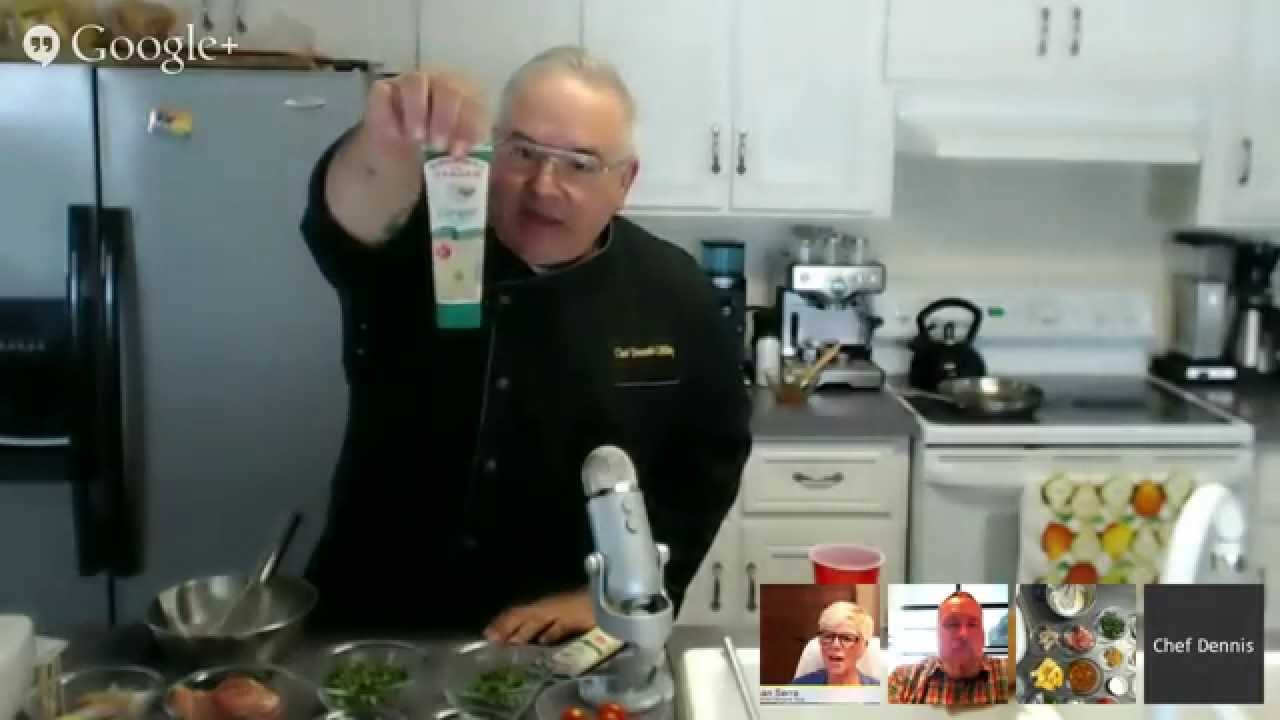
Chef Dennis Littley and Susan Herron make tandoori chicken, sweet-spicy shrimp, and marinated vegetable skewers with guest Russ Faulk. They cover grilling basics like oiling the grate, using indirect heat to prevent flare-ups, and finishing skewers in the oven.
Chapters
Hey everyone, I'm Chef Dennis Littley and welcome to Around the Kitchen Table with Susan Herron and myself. Today we've got some fun planned because we're going to do some grilling. You know, it's summertime, it's definitely summertime in Florida. We've been hitting 94 every day and I did brave the heat today and went out and cooked up some, grilled up some of these skewers for you ahead of time so you can see what they look like finished. But it is getting a bit warm out there and. It's a perfect time for grilling because, you know, you throw some food on the grill, usually later at night when the sun's gone down a little bit, so it's not as bad. Crack open a few cold ones or some lemonade or iced tea or whatever you like. You know, it's really what summer is about, enjoying time outside with your friends and family and having food on the grill. Don't you think so, Susan?
Oh, definitely. How's it going, Chef? Good to see you again.
How's it going?
Good. Yeah, no, good for me too. You know, it's funny, we had the most Wonderful weekend weather this weekend. It cooperated beautifully for my big outdoor, really important party that we had, and now it's like dark and gloomy. But the good news is that you can, you know, we're going to be talking about outdoor kitchens and grilling outdoors and weather, whatever kind of weather it is, everyone wants to grill. And you know, it's true. And you know, I know when my daughter and son-in-law had an apartment in Manhattan and they had this teeny tiny little terrace. Well, and they had this teeny tiny little hibachi, which, you know, is illegal to use. You can't use them out on the terrace. So of course they got one and, you know, people want to grill and it doesn't matter the size of the grill. People have got to grill, don't you think?
Absolutely. You know, growing up in the wooded areas of New Jersey when we moved from Texas, you know, my father built an outdoor grilling area out of cinder blocks. And you know, you always look for that refrigerator rack that you weren't using after one, because that's what went across the blocks. Everything on that, that had your marks. So you know, that kind of takes me back when you start thinking about other ways we used to grill. And you know, we grilled up some pretty good food on that little makeshift barbecue that we had, you know, used wood, didn't always have charcoal, but you know, we had all kinds of woods behind us, so you know, there was wood in the fire stoking that up and enjoyed a lot of good times out there.
Yeah, it's true, and I think my father, I think he made this big, this brick thing, and back, you know, back in the day there was a lot of these brick, you know, structures for grilling, you know, and now of course it's totally different and now we have a whole, we can have a whole kitchen outdoors and so I wanted to bring in, you know, a good friend of mine from the kitchen and bath industry which is Kalamazoo Outdoor Gourmet and if you don't know about Kalamazoo Outdoor Gourmet, you will, and they are everything outdoor, everything kitchen, not only grilling but everything else. And we have with us today Russ Faulk, who is the Vice President of Design and Marketing at Kalamazoo Outdoor Gourmet. Hi, Russ!
Hi, Susan, how you doing today?
Pretty good, pretty good. So did you grill this weekend?
Of course.
Of course, okay. And what did you grill?
Hamburgers, which is everybody's favorite pretty much when I'm at the grill. I love grilling fish and things like that, but my burgers get quite a draw.
Okay, well then we'll have to talk about that later on.
Sure.
You know, I have to get back to you, Chef, about what we're doing today, which is skewers. And so I had this big party, I had this big party on Saturday, and it was to invite the my son's in-laws. They've been dating for about, I don't know, 8 years and they're engaged and we never met the in-laws. And the thing is, the interesting thing is they are a different ethnicity. We're different ethnicities and I thought, what could we make? And we all talked about what could we make that they will feel comfortable with and, you know, easy to make and we like. So we came up with skewers and skewered, you know, simple— something simple, simple meats and simple vegetables and fresh and easy. Huge hit. So yeah, so I did my whole skewer thing, Chef, and I'm excited to see what you're doing today.
Sounds good. Well, we're going to do some different flavors today, and I tried to find some things that I've done before, you know, different ways, shapes, or form in the restaurant, appetizers It wasn't always skewers that we'd serve, but we'd make little appetizers with things. One of my favorites was always tandoori chicken. It's easy to make. It's got a lot of flavors going on.
Love it.
A lot of different spices. Yeah, and it's not that difficult to do. I was going to whip up a cucumber sauce to go with it, but time sort of got away from me here. It's quite a bit today, so we'll do that on another show. Show, but tandoori is really pretty simple, and it starts off with a yogurt base. And I just have— actually, I didn't get Greek yogurt, I got just regular plain organic yogurt, Stonyfield, so I did get some organic, but it's plain yogurt. And then you just start by adding in some ingredients, and I have lemon juice. All right. Oh, and you know something, I didn't— let me get my ginger.
Oh yes, oh yeah. So Chef, you keep your ginger in the refrigerator?
Well, I do have— I did buy some whole ginger and then I saw this and I remembered how much I loved it. I got a pack of these last year when I went to a conference. I got 15 of these, all different flavors, and when I was getting my fresh ginger, I saw this as well.
Ah, okay, so it's like crushed— it's crushed ginger.
Yeah, and it's wonderful, and it takes all the headaches and problems out of using herbs. They have a whole line of them, and I bought— I buy— I have fresh garlic cloves in there, always do, but I also bought garlic, and you know, it really makes life easier. I'm going to use some garlic oil. This is a paste. This would even be good on garlic bread or any marinades because it's a really nice, finely done paste.
My head has just exploded. I haven't seen those products. I haven't used them. I'm just blown away.
It's Gourmet Gardens, and this says this contains 23 cloves of garlic. Wow.. And this is 21 pieces of finely chopped ginger. So I mean, they're really cool. They run about, you know, depending on where you get them, $5, $6, $7 a tube. But when you think about, you know, what you buy, what you might lose, you know, in all the time you spend getting things together—
and then you forget, and then you get— yeah, and then you buy everything and you forgot the ginger.
Absolutely. So this is, you know, ginger is a pain, but this really makes life a lot easier.
Oh my God.
They sent me home with this little satchel of all these. They have lemongrass, they have basil, they have oregano, they have all different kinds of herbs, and they're really pretty cool, and they make life a lot easier when you're making things. Makes you want to cook too when you add different spices.
Excellent.
So now I have a bunch of different Absolutely. And you know, I had done earlier when I did it, I took my coriander and my cumin and I actually toasted it a little bit. And this is something you can do pretty easy, you know, in a sauté pan. And a lot of times if you're using ingredients, you want to toast seeds, nuts, anything, because it brings out more flavor, more pronounced flavor from them. And toasting is pretty easy. You get a sauté pan pretty hot You put these in and you let it cook for maybe a minute, then you take it off the fire, and then you just keep tossing it around. That is enough to toast it. It's not a lot. You're not cooking them. You're just bringing out more of the oils by doing this, and it really adds some flavor. I didn't do it to this, but this morning on the one that I cooked, I do. I'm going to tell it and see how much difference I can tell when I eat them. I have my coriander, my culantro. I have some garam masala, and I have some sea salt, and I also have some paprika. You can use any kind of paprika you like. I'm pretty much a little bit of a sissy when it comes to heat, I'm sorry to say.
Oh, come on!
I'm afraid I am, so I did not use a lot of heat in this. I used a regular sweet paprika, but if you want to change the flavor up, you can use smoked paprika, which is really nice, or you can use more of a hotter paprika. So you have that option to add as much heat into this as you want. I like the flavors more than the heat at this stage of my life. Now, I also know that sometimes you see tandoori bright red. Well, that's pretty much a coloring that they're putting into it. They even have a tandoori color you can buy to add into it. But I keep these just natural and brown. So I have everything in there. I'm just checking my list to make sure I didn't miss anything. This is about all you do. You let it mix up real well. Now the big important part about doing something with this kind of a marinade, especially with chicken, is doing it at least 4 hours ahead of time. Overnight is really the best if you can do it. You can fit quite a bit in here. Now chicken tenders will sear really, really nicely. I did not get chicken tenders because they were extremely expensive this week.. And I like thighs better. Now you can use whatever you like. You can use a breast and cut it up. But what I did was I just got these thighs and I cut them into strips. I cleaned them up. They were boneless. These are again our Aura Organic thighs. And then after they've sat in your marinade, you know, you're just going to feed them through your skewers after they've been marinated. And actually I put 2 on each one and then I cut them in half. So I got 2 off each.
You cut the skewer— you cut what in half?
Skewer.
Okay, so you do baby skewers. Okay.
The chicken, there wasn't anything else on the chicken. Tandoori is just straight chicken. The other ones have vegetables on them, so I used full-length skewers. But for the chicken tandoori, I just used one. So then once your marinade is done, all you're doing pretty much is putting your chicken in. You're going to mix it around really well.
I love that. That's one of my favorite chicken tandoori to make at home. It's so easy. And it just, it looks so good. And it looks fancy. And it's great. I love it.
Like I said, you know, if you want to— sometimes you'll get it and it's got this red coloring. You can always add that in if you like that, you know, if you're cooking to impress. And then you just want to pour this into a Ziploc bag. This is where an extra hand would have been really good.
You did good.
All right, and then once it's in the Ziploc— now, you know, I would have done a lot more. I have some done already, so I have enough, but you have enough of your marinade there to do a lot. Then you just roll the bag up, pretty simple, and then you pop it in the fridge.
Okay, so you're not putting any— now I see some herbs there. You don't put any green herbs into the marinade, any chopped up? No. Okay.
You could garnish with it, but anything you put in the marinade at this stage is going to get dark. It's going to get a little ugly. If you have herbs— I might even toast some sesame seeds. I might have some chopped scallions. I did not do them today because I wasn't thinking of those terms. I just eat them kind of plain. The only thing that would have made them really hot, which I didn't, is a cucumber Yogurt sauce is always a nice way to get rid of some of that heat if it starts to overcome you. And that's pretty simple too. Again, that's the yogurt, it's a little lemon juice, maybe a pinch of sugar, and the cucumbers in it. Just let it sit and marinate. A few other— little salt, little pepper, season it up to whatever you like. And that's pretty simple to make, a nice dipping sauce to go with your tandoori chicken. So that's tandoori, and I do have it finished. I'll bring it out later. We get everything done because I want to show everything when it's finished.
Okay, good.
So far, any questions? Any comments or questions or anything we need?
Oh, sure. We got it. We have a few. Let me put it up here. Conjure Up Food. Anna Jane, are there any additives to the prepped ginger? Good question.
Very good question. Fresh ginger, dextrose, glycerin, fructose, sea salt. Sodium ascorbate to protect flavor, citric acid, xanthan gum. It's gluten-free, but yes, there are some additives.
Okay, all right, that's— yep, good to know.
There's always a price to convenience. Doesn't look like anything outrageous.
The only thing I would worry about—
I'm gonna guess $4.99. $4.99? Yeah, they were $4.99 or $5.99, I forget.
OK. All right. So I'm always— you know, I always play this game when I'm in the supermarket of guessing either an item or the whole deal. And I come surprisingly close to it. So it's one of my great talents that I wanted to share with you. And the other thing is with chicken, I'm going to listen so intently to this because my children, my kids have these wonderful food memories. And I don't know if they're so wonderful, but their one food memory is— well, maybe not one, but is of me always burning the chicken on the grill. Only grilled chicken burnt. They bring it up once every couple of months. I don't get it. We'll talk to Russ about that later, too, how to avoid the burnt.
I think it's indirect heat, but Russ can lead us through that because mine still sears up sometimes too much, but we'll get to that.
Yeah, and then Ray Miller says, Chef Dennis Littley, you're already beyond my ability after 5 minutes into the show. I do a mean burger, chicken and ribs. I will write these ideas down and give them a try. It pays to be adventurous when grilling. I like that.
It's not really that hard. It takes more time to get all the ingredients out than it does to do anything else. You know, with the tandoori, like I said, it's really pretty simple, straightforward to make. It's just buying the spices, having them in the house.. And then, you know, knowing, getting them out to use them occasionally. And that's what it comes down to, you know, you buy spices and then you never use them again. So start finding other ways to add them into your foods that you like.
Yeah. So what do you have next up, Chef?
Okay, well, next we're going to do— I have a shrimp, and we're staying with proteins right now. Now we do have a rare one, but I have some shrimp and we're going to do a sweet and spicy shrimp. Again, it's really simple to make. You know, and it's a matter— I actually have everything that I poured in here in the bowl. It's a one-bowl mixture. It's just a matter of adding honey, crushed pineapple, some garlic. Let me get my list here so I don't forget anything. A little soy sauce, a little chili sauce, juice of a lime, some sea salt, some olive oil. So again, you know, it's a pretty simple, basic— let me grab a spoon here. All the recipes are on this post. So it comes out to be a little bit of a chunky. Now, again, this is not super hot. I bought a sweet chili sauce. It says chili paste there, but sauce, paste, pretty much the same thing for what we're going to use anyway. But you can buy something that's got a lot of heat to it if you like heat. Actually, one of these spices that I have is a red chili one, and that's quite a bit of heat. But this is pretty simple, and it's just got everything in here, all the nice flavors. And you can see, you know, it just looks like it's got— you can see some sweetness and you can see some heat.
Yeah, that looks good. I did shrimp on Saturday also, and it's just— yeah, you know, you have to be careful how long you cook it, of course, but I just love grilled shrimp on the barbie.
Right? Now the one thing you want to know about shrimp when you're marinating them is you don't want to marinate shrimp too, too long because they'll start to cook in the marinade. Especially, you know, there is lime juice in here. The lime, the acid from the lime will start to cook them. A lot of times they're not cooked the way you'll conventionally think of cooking, but it's cured a little bit.
Oh, so it'll turn into ceviche.
Pretty much, if you leave them in too long. So you get some flavor to them. But now I added it all in here. Now I would have saved about half of this and used it to brush onto them later. Okay, so I would have poured about half of this out into another container, kept it, and then when I put them all together, I would have brushed down the whole skewer. And again, let me just show you, you know, to make a skewer, you just want to start with something. And I have for the skewer I have some pineapple here, so I would start with a piece of pineapple and then a shrimp. And when I put it on, I'm gonna go through it and do it sideways.
Ah, okay.
Alright, and now I'm gonna put a piece of bell pepper on. These are all things that kind of go really good together: pineapple, bell pepper, onion. Then I'm gonna do another shrimp. And of course you're going to let these marinate a little first.
Mm-hmm. So a few hours to marinate. And Russ, I'm wondering from you if— and I think your mic is muted. Yeah, there you go. I'm wondering from you, do you have to oil the— do you have to brush the grill with a little bit of oil before you put on skewers?
A lot of people like to do that. Personally, I like to oil the food rather than oiling the grate. It can be a little bit more difficult when you're using marinades to then also incorporate oil, but typically I'm in the oil the food, not the grate camp. I work on a pretty hot grill most of the time, so that oil is gone the instant it touches the grill grates.
Yeah, that's true. It is a little logistically tricky to to oil, and then you get the smoke flare and other flare-ups, and it gets tricky.
Fair enough.
Okay, so all I would do with this is I would brush it. I have a brush, okay? And I would just take this brush after I put it together. Of course, they've marinated. And when I'm taking it off the grill, I'm going to brush the fruit down. I have peach on here. I have pineapple on there, red onion, and bell pepper. So I have some color on here. And you, again, you can use other fruit that you like. A mango would be really nice on it. You might want to put a cherry tomato on it or whatever you like to make it pretty. But then just brush it down, and then when it comes off the grill, brush it down again. It'll have a nice little glistening to it.
Okay, good idea. Now, how— tell Tell us about how long you cook that, Chef. How long is that on the grill?
They're going to be on the grill, and it depends again on how hot the grill is, and Russ can probably talk about this too. But you know, you want to get— shrimp is really delicate, so it's going to take the least amount of time of anything you have on here. So you're not going to get probably a full cook on the onion the pepper. You're going to sear it a little. You're going to get some heat into it and soften it up a bit, but it's going to still be a little crunchy. That's okay. It's still a good vegetable. It's cooked. You're going to bring out a little more of the flavor by doing it. Don't worry about it. The shrimp, you want about 3 minutes, 5 minutes tops on each side. It's not going to be as direct because it's lifted up a little bit with these other vegetables, so it's not flat, flat on it. And just turn it over and just keep an eye on it and watch it. You know, you can— what I did do was I got a little color on them and then I turned the heat way down to cook a little more slowly. So, you know, you can do that too and get a little indirect heat. The chicken cooks pretty fast too, you know, so whatever you put on the grill, you just have to watch it. Vegetables are probably the easiest to do, you know, in a little— let them stay on a little bit longer.
You know, the timing is so critical because again on Saturday when I had my— when I was entertaining, I did skewers with filet mignon and mushrooms and I don't know another vegetable, another couple of vegetables on the skewers and it was marinated. And I picked filet mignon because I figured, well, it's easy to eat. It's tender. You know, you don't have to worry about all kinds of stuff in the meat. My son had said, "Oh, I like ribeye. I want a ribeye." I said, "No." I said, "Let's just make it easy." So we did shrimp and filet mignon, and it was tricky, you know, the timing, doing more filet mignon. Oh, okay, better do the shrimp, but not too long. So the timing is so Critical.
Absolutely. You know, you have to really watch things and time them. A lot of times it's a good idea to cook them pretty much all the way, get some good color on them, and then maybe give them a quick pop in the oven before you serve them, because then you can get everything timed down well. You know, if you're going to do 3 or 4 kinds of skewers, you know, get them to where they're close to done but not entirely done. Just, you know, you want to get a nice mark on them or some kind of caramelization on it, some kind of color. And then, you know, turn your oven on, give them 5, 7, 10 minutes in the oven just to finish cooking them a little bit and to really get them hot again, and you'll have that nice grill appearance, you know, while not damaging it. Because a lot of times we try to cook everything all the way on the grill, and, you know, unless you really know what you're doing and you have the equipment and the time to do it, it can end up with not good results. So speaking of Dennis Littley—
Yeah, well, we will be speaking— more extensively with Russ from Kalamazoo Outdoor Gourmet in a few moments, and he'll tell— he'll give us all kinds of good information and tips about grilling. And also, I have a collection of gorgeous outdoor kitchens, and they are Kalamazoo Outdoor Kitchens, and I'll be screen sharing in a little while, so just wait till you see them. They are just to die for. I mean, they're not all huge suburban kitchens either, Some are very small. There's an urban one here and there. There's all different types. So I think that will be fun to see. You want to take a few questions, Chef?
Sure.
Okay. So we have from Carmen Mandic. Hi, Carmen. Color is— this is interesting. Love this quote. Color is so important in the appeal of food and shrimp. Pineapple, peppers, mmm, great. I just need to feel a sandy beach between my toes. So that's where you bring the hibachi to the beach.
There you go.
Yeah, so the color is, it just makes it fun and exciting, and I think that's part of the appeal to grilling too. And Wayne says, let's see, Wayne, Nick says, ceviche, baby! So that's a whole other show, and we should do that one time.
You do a little ceviche and some tequila, huh?
Okay, don't forget the tequila. Conjure Up Food, Anna Jane, says, "Would you suggest serving this with a big green salad and yogurt and a wedge of lemon?" I would suggest serving it with anything you like.
It's all about what you like to eat. To me, my tastes are always going to run different than your tastes. Salad sounds wonderful to me, a cucumber, like I said, the cucumber dip I was going to make. Anything you like is good. Don't be limited by what people tell you should go with things. Of course, there's always rules, some rules to follow, but I always go by the philosophy rules were made to be broken. If you like something, it's not to say you can't make it that way.
I have some saffron. I love that because I had, you know, one of the things I served is this marinade, the shrimp and the pineapple. I don't know what kind of marinade it was, but it was some kind of exotic marinade. But then I made my potato salad, which is basic American potato salad. And, you know, for me, that's a staple and everyone loves it. So that goes along with what you're saying. And we have a comment from Richard Clarkson that says, "Indirect heat. Put coals or outside burners on with a drip pan in the middle with whatever juice, etc., you want in it, and you won't have—" Okay, I didn't get the last word. You won't have flare-ups. I think that's what it is. Did you get that, Chef?
I see it. Russ, do you have anything to say on that?
Well, certainly, you know, indirect heat is whenever you have the heat away from the food, so the food's not directly over a fire, whether that fire is your gas burners or your charcoal or your wood heat. You're going to have flare-ups only when fat and drippings are dropping onto a hot surface, so The comment there of putting a pan of liquid, your favorite juice or beer or wine or even just water, allows those drippings to fall without causing flare-ups, and you get some nice moisture from the steam coming off of those juices.
That's some excellent advice then. Good to know. That's great.
And now, Chef, you have another skewer to tempt us with? Yes, I do.
Well, now we have a vegetable one because I know we always have an occasional vegetarian or vegan watching us, and I don't want them to be left out if there's something we can make for them. So this is pretty much just a vegetable skewer, your favorite vegetables. And this is something I am going to do with food processor. It's really pretty simple. We're just going to take some items and we're going to put them in the processor to make our marinade. And I'm going to put in some olive oil.
I mean, I love it. You just don't do one skewer, you do, you do 3. You just, you know, you do it all.
We need our veggies. So I was going to have some veggies with it. I figured I might as well skewer them. I got some lemon juice. All right. And then we have some garlic cloves. And I do have fresh garlic. I don't want you to think No, I'm not, and I did not peel them. So let me grab a knife and I will take care of those. They don't rely on modern technology for everything.
That's true. That's true. Yeah, you can really get some bright, exciting flavors in vegetables too, and even I would imagine even grilling certain fruits. And adding some liqueurs to that. You know, you have to pick the right fruits, I'm sure. But I like that idea.
Peaches are my favorite to grill. Me too. Okay, so we have some garlic in there, and then I have my seasonings over here. And we're just going to add all the seasonings in there.
All right.
We are going to pulse it to get that garlic nice and chopped up. I add some curry, some cumin, paprika, chili powder, sea salt, black pepper. So again, we are going a little bit towards the Middle Eastern flavor. It just seems natural for skewers for me.
You know, I have to say, Chef, I don't know if I'm the only one here, But I would not have thought of marinating vegetables. I would have thought— I would have just put them on the skewer. And, you know, everyone loves that grilled vegetable flavor. But I think this is— this just really is a creative way to serve.
Let me tell you what, I'm going to put my vegetables in, and I have some peppers. I have some different color peppers in here. I have some mushrooms. We have some zucchini circles. And we have some grape tomatoes. And I believe that's it. Okay. So here is what I made there. Those are the vegetables I'm using. And again, You can use anything.
Are you using broccoli? Because broccoli speaks, maybe. Mm-hmm.
Broccoli or cauliflower would be nice too. You could go with either one of those. I also was going to pick up some ears of corn, but they didn't have any fresh in the market. And then take your ears of corn and cut them down into small wedges, to small circles, just kind of like the zucchini, only a little thicker. Oh, cool. So then what we do is we have our mixture, and now I'm going to add in I have cilantro and I have parsley. Then I'm just gonna mix all this together. I didn't put them in because I don't want them to be a mess, you know, get all ground up and be, you know, just not pretty. So I chopped them by hand and I add them in towards the end. So now I have all my vegetables here, I have my marinade And I'm just going to coat them.
Wow, forget the proteins. I think I'm going for the veggies. My onion too.
I had some onion here. Wow. Vidalia onion. Okay, look at the colors. The colors are wonderful.
That looks— That's great.
That would be it, and then I would bag it just like I did the chicken, throw it in the refrigerator, and let it sit. Now, I would be afraid to let it sit too long because vegetables sometimes soak up and get soft, but I would let this sit for 4 to 6 hours, somewhere in that range. Not overnight so much with veggies, probably. Chicken is safe to do it. Chicken is pretty much indestructible that way, or beef if you were going to do beef, but I would not do it with veggies. But that's our veggies, and then we're just going to skewer them, get some color in them, and then you're done. So that is pretty much how to do 3 different skewers. Again, you know, you don't need to make all 3, but if you wanted to, you could. You have the ability. And you can go anywhere from vegetarian to shrimp to chicken, and if you like beef, do some beef chunks. And you can marinate them pretty much in this if you like, or another type of marinade if you like. Any other questions?
I think that— oh, we have a bunch of comments here. Susanna Cowie says, I made my chicken tandoori the other day. I marinated in yogurt, lemon juice, yellow curry. A Google+ user said that was not tandoori because the color of the chicken was not right. What did I do wrong? What color should the tandoori be?
You didn't do anything wrong, Susan.
I knew that was your answer.
You know what? If you enjoyed it, it was perfect. There has got to be— I don't know as much about about that style of cooking as I do about Italian, but I know with Italian cooking, there are more recipes for the same thing than you can even think about. I'm sure for tandooris, it's the same. I did mention that I've seen it red, which almost looks Day-Glo, and it's not natural, so I did not use that. I've seen some saffron added to some of the recipes, too, and I did not. It's however you want to make it. Tandoori, I think, is probably regional as much as anything else is. If you enjoyed yours, nothing wrong with it.
Yeah, I've even added lime to tandoori now. Oh yeah? Yeah, and it looks— and it's great. From Richard Clarkson, if you use barbecue sauce, apply it toward the end so it doesn't char too much. Don't coat the chicken itself. With it at the beginning. Interesting. What do you think, Russ?
Well, a lot of that depends on the barbecue sauce. It's the sugars that burn, so that is a common mistake in grilling, is using a sugary barbecue sauce as a marinade. That sugar can burn quite quickly on the grill. Sometimes you can use that to your advantage to get a very nice caramelization and glaze on the outside, but it's something you have to know you're working with. But if you were making your own barbecue sauce, relatively low sugar, I would say absolutely, you can use that as a marinade. It's really just the sugars that's burning. It's not the vinegar, tomato, or anything else.
Interesting. Maggie Unzueta says, "I'm thinking a Sauvignon Blanc with grilled shrimp skewers. Yum!" Now that would be right up my alley.
Maggie is the wine expert, so, you know, I'd be interested to see what else she would think with some of the other items that we made.
Yeah, I think that's such a nice, light, summery wine. I really love that myself. And Richard Clarkson says, indirect heat, put coals or outside burners on Oh, we did that already. We did that one about the flare-ups. Okay. And let's see. Okay, then we have our friend Larry who says, usually the color is a bit red leaning toward orange. Where are we? Oh, I lost— oh yeah, depends on how much paprika or red chili pepper How much curry powder to turmeric you use?
Yep. So I mean, it all depends. If you want to make it classically, then you might make it a little bit towards that color. But again, you know, it's whatever works for you. Now, I don't ever tell anyone to make excuses for something if it doesn't come out the way that they saw it in a restaurant or the way their friend made it. You know, as long as it tastes good and you enjoyed it. It was a success.
Yep, that's true. So, uh, what do you say we, uh, take a look at a few outdoor kitchens? Oh no, you know what, first let's see the finished result, Chef.
Well, you go ahead and do that while I plate everything, okay? You go ahead and show some of the kitchens and I'll get it ready.
Okay, and then we're going to talk in depth with Russ and find out some real good solid information because he knows it all. So let me get my screen share on and let's see, here we go. Okay, so we're starting here with— now Kalamazoo Rust does not only grills and appliances but stainless steel cabinetry too, is that correct?
It is. We do have basically everything you need to build the ultimate outdoor kitchen.
There you go. There you said it, everything you need. Now here's a gorgeous small kitchen. We don't have to have a big sprawling kitchen. Some people just want a little spot with a little counter space, a couple of appliances in a sheltered area, and you will see different types. There are two different types of outdoor kitchens. One may be enclosed, close proximity to the home, and another type will be a destination type of outdoor kitchen, which is further away from the home. And also, depending on the region you're in, some will have— you'll need protections against wind and the weather, heat, shade, sun. Different protections for different regions will give you different construction different ways to construct your kitchen. Here's— this is an indoor— well, it's kind of an indoor-outdoor kitchen. It's an outdoor kitchen, but also you will see that there's a hood which still must be vented to the outdoors. So that's important. Here's a full-on gorgeous outdoor kitchen. We have dining, we have lounging, we have a fire pit, and this may be a destination kitchen. Another, some nice stainless cabinetry from Kalamazoo, a fully outfitted outdoor kitchen. Love the blue accents here. And now this is— how beautiful is this? Now, this is enclosed, but my guess, I can tell from the windows that the venting is to the back the venting is to the back of the hood. So there are quite a few principles that really must be considered. Also, if you need gas, if you need water, if you need electric, that type of thing. And hey, Chef? Hey, Chef? Yes. Yeah, I just wanted to make sure I was seeing Russ on the screen. Screen. I just want to make sure that we're seeing the kitchens on the screen.
Yes, we are.
Okay, that's great. Just double-checking there. And again, even if you have lots of property, you know, you just need a little spot. You, you can go small, you can go big, and it can just be exactly what you want. Here, of course, now this is a fully designed, decked-out kitchen, and almost in a typical indoor kitchen design, which is kind of a U-shape. It looks like there are kind of— or maybe L. It looks like there are two L's here. You may— some outdoor kitchens have dining on the other side. And here, this goes beautifully with the decor. It's kind of a natural extension of the home. How about this one, Russ? This is This is kind of a galley kitchen, huh?
Yeah, that one's a full U-shape. That's on the island of Nantucket. It's a very nice kitchen at a very nice residence.
It sure is. And we have storage, and what I want to talk about later too is the pizza oven, which is, you know, I mean, that's really cool. Here's another one, and Instead of— well, we have— this is actually interesting because we have some stainless steel cabinetry, but we also have it encased in stone with stone surroundings. So, it's not— you don't have to have all storage one right next to the other. You can add some interest of stone or other materials. I'm sorry. One of my favorite materials is I love— I just can't say enough about it. I love Dekton. I don't know if you know Dekton. It's by Cosentino and Russ, and that is a material that's used for countertops, but it's a new material that's made for the outdoors, meaning it can handle— it has performance properties for every kind of weather. Any kind of heat, and it's, it's good for indoors and outdoors. So I can— for people who want an understated look in the design, that is a wonderful product to consider when you're putting something surrounding your grilling appliances. Here's a close-up look. I mean, just, you know, look at this, just lovely. So those are a few Those are a few kitchens and I have more to show you. So Chef, how about if we talk to Russ a little bit? Sure thing.
Let me just show you the finished product.
Oh yes, please. And then we'll go from there.
All right, so here's what we have.
There we go. Look at that. Look at the skewer cam. Today we'll call it the skewer cam. That is beautiful. I mean, I'm seeing spices, you know, sort of texture. That's really what it's all about. I mean, speaking as a designer, I think that's what I like about skewers. I think it's the visual texture of it.
Absolutely. We hold them up one more time for everybody. Make sure we—
that's it for me, the colors and the texture. It just is so appealing. Yep, there it is. Love those little shots of red and the tan colors, the yellows, greens. That's what's fun about skewers. Love it, love it, love it, love it.
You still have your screen share on too, Susan.
Oh, I do? Okay, let me get that off and then we will— there we go. Okay, so Russ, I have a few questions for you. Tell us, and now what's the overview? What's the, what's the overview of Kalamazoo Gourmet? What types of products do you make?
I mean, aside from a grill, we are best known for our grills. All of our products are quite distinctive for the space. We do have a very popular outdoor-rated pizza oven. We sell a lot of those. We have a full collection of weather-tight cabinetry, so you can do sinks and sink bases, lots of storage opportunities, waste and recycling. We've got a very nice warming unit. It's all part of a modular system that includes a very broad range of refrigeration, including the world's only outdoor-rated freezer. So if you want to have ice cream by the pool, it's a good way to go. And we recently launched the world's first outdoor-rated dishwasher. So when we're saying complete outdoor kitchens, we're really talking complete. Including a dishwasher.
There you go. That's amazing. Yeah, no more bringing it all— I mean, that's major, you know, bringing in the big tray after tray after tray.
Yeah, it really started with the fact that our cabinetry is weather-tight, so it's going to keep the elements out. Everything you keep inside is going to stay clean and dry. Because of that, our clients were keeping all of their dinnerware. They had a full set of dinnerware and, and cutting boards and prep materials, basically a fully stocked kitchen outside because they could just leave it out there. We really needed to bring that dishwasher to them so that they didn't have to bring it inside to clean it up.
Okay, so say I'm in northern Michigan or somewhere up where it's just freezing over the winter. Any, any problems with having these appliances, you know, out there in the elements?
When we're looking at the refrigeration line, it is pretty much impervious to the elements. It is meant to be— it's engineered to be left outside throughout the winter. To winterize your outdoor refrigerator, it's a matter of opening the door, pushing the power button to turn it off, close that door, give it a little love with stainless steel polish You just come back in the spring and turn it on, it's ready to go. The exception would be an ice machine or a keg tapper, the units that have a plumbing component to them. You do need to drain all the liquid from the lines and make sure that they are now prepared for the winter. The dishwasher that we mentioned has its own winterization cycle, so you access the winterization cycle through the control panel. It'll drain its own water lines for you. Come spring, You go back and you send it through the spring startup cycle, it gets itself ready to go. So we try and make it as easy to live with as possible. If your outdoor kitchen isn't easy to live with, you're not going to use it as much as we would like. So we try and have it always at the ready, always ready to go. You don't have to lug stuff inside for the winter. Everything's meant to stay outside year-round. Mm-hmm.
Tell me, how do you determine what's the best size grill for you? That's— there's so much choices, sometimes too many choices are tough.
Yeah, you know, most people start with how many people you're gonna cook with, cook for on a regular basis. You know, I think an ample size grill should be able to handle, you know, if you're really working it, you can feed 50 people off of it. What's more important to me when evaluating grill sizes is the indirect cooking capabilities. If you want to make— if you're serving for just a party of 8 people and you want to make 3 whole chickens, I like to butterfly those chickens and cook them in the indirect zone. A butterflied chicken takes up a fair amount of space. When you think about your grill, the entire grill is typically capable of direct heat, but now if we want to cook those chickens with indirect heat, part of that grill isn't on. So your grill is now, in terms of cooking space for those chickens, half the size, just in simplest terms. So I always encourage people not to undersize their grill because I want them to be able to use indirect cooking techniques. I want them to be able to use combination cooking techniques, and that's where the real magic comes, where you sear off a nice thick steak or a nice thick chop and then you move it to an indirect zone, close the lid of the grill, and let it coast up to the perfect internal temperature. Be 20-25 minutes in the indirect zone. If you don't have the ability to have these multiple temperature zones, multiple spaces to cook in, you run out of room and you can't do as much exciting stuff on the grill. It's not just all about hamburgers or grilled chicken breasts or shrimp all the time. You want to be able to do those indirect things.
Okay, that, that's, that's something I would not have thought of, although I I have cooked indirectly quite a bit before, but I think in the purchasing process it would not have come to mind. So I think that's valuable information. Tell me something, you have something called a Hybrid Grill. What is that?
I did mention we're best known for our grills. The reason we're best known for our grills is it's the only grill in the world that cooks with gas, charcoal, and wood, and they can do them in any combination. So you've got all the convenience of a gas grill, but you've got all those wonderful flavors and cooking experiences that are only available with a charcoal or wood fire.
I'm a charcoal girl. Well, there you go.
So what we've got is a system with our powerful burners are down below, basically a tray that is in the form of a drawer. If you want to cook with gas, you leave that empty, fire up the grill. It's the best gas grill you're ever going to use. But if you want to cook with charcoal, you load that up with charcoal. Those burners are going to start the fire for you. No muss, no fuss. If you want the pure charcoal experience, you then turn those burners off and you're good to go.
Okay, I'm also a charcoal girl with, you know, mesquite or hickory wood chips. So, and we also have a— we also just bought smoker thing, you know, from Amazon. Can you do smoking? Can you do, you know, real, real smoking in your grill?
Yes, absolutely. Wow, how do you do that? That same technique that I talked about with the charcoal. The most popular way to smoke in our grills is you let that charcoal fire die down after you've gotten it going with the gas burners, and then you add wet wood chips to the top of the charcoal, and that's going to generate a lot of smoke. You're going to need to set up an indirect zone. That's the lower temperature zone where your barbecue is going to happen, because typically barbecue, you know, real barbecue enthusiasts is going to be cooking at 220 degrees. So you've got the indirect fire. The real nice thing, and the way this hybrid drawer comes into play, is you don't have to open the hood of the grill and let all the smoke out and all the heat out to generate more smoke. You just pull open that drawer Don't touch the food, don't touch the lid of the grill, just pull open that drawer, toss in a few more wet wood chips. What I like to do is typically I use, uh, foil smoking envelopes. I take tin foil, I lay it out flat, I put down a layer of dry wood chips, on top of that I put a layer of wet wood chips, then I fold it over and seal it up, pierce it a few times on the top with a fork, and that's what I throw in the drawer on top of the charcoal fire.. It lasts longer and generates more smoke because it has less oxygen available to it in that foil smoking envelope. Once every 45 minutes or so, I throw in a new fresh envelope. So I just make a bunch ahead of time. You can do great things.
Wow, that's, that's really cool. And you know, with smoking, I mean, you have to smoke for hours and hours and hours, so you can achieve the same thing. You can smoke for as long as you want to.
Yes, we also have an offset smoker box that's available. So if you, if you're somebody who wants to smoke, you know, almost as often as you grill, that offset smoker box option is a real good choice. That takes it— if you were to watch the barbecue circuit, there's a whole class of grills out there called stick burners. They all have an offset firebox separated from the food chamber. With our offset smoker box option Your grill is your food chamber, you close everything up in there, but that firebox on the side that vents up into the grill with a chimney is your heat source, and that's where you're snuffing the wood fire, and you tend to that every once in a while to keep the heat going.
I could see people must get obsessive. Yes, yes, just a little bit. I could see they get obsessive about it. Tell me one other question. What kind of trends are you seeing in outdoor kitchens? In terms of either function or aesthetic?
Um, we're seeing them become more sophisticated and more capable year over year. They're not necessarily getting larger in terms of footprint, but the capabilities that people are designing into the kitchen are more personalized, more unique to the homeowner, and more fully capable. You know, even going so far as to putting a tandoor oven in your outdoor kitchen so you can do tandoori, the actual you know, the Middle Eastern way with a tandoor oven. We're seeing pizza ovens added a lot. So we're seeing the design of the spaces get better, more holistic, more complete, more in tune with the home. We are definitely seeing an increase in the number of outdoor kitchens that have a basically shelter from rain, a full roof of some sort, so that homeowners are able to use their kitchen rain or shine. They make this big investment, they want to do everything possible. They don't want to worry about the weather, so that is a trend we've been seeing as well. Interesting.
And we saw some of those images in the album that I shared too. Yes. Yeah, so thank you so much for joining us, and hang in there with us while we finish up here. Will do. Yeah, and Chef, what about that? Pretty interesting, huh? Very interesting.
I would I would love to see some of those kitchens. They must be amazing. And Russ, I did have a question. Your outdoor dishwasher, how long is the cycle that it washes for?
Um, one moment and I'll be able to answer that for you. But it is a longer cycle because it is an Energy Star rated dishwasher. So it has all those requirements for the amount of, not just electricity it uses, but water it uses. So it's not like your commercial kitchen dishwasher that does a load in 30 seconds.
I have seen some smaller units that do wash that fast, and I always wondered why we don't get them for home more often. With the Energy Star rating—
yeah, the Energy Star rating basically leads to a longer cycle. I believe the standard cycle is about 120 minutes, so it's a very long cycle.
Okay, so it's pretty much a normal cycle for dishwasher then. Okay, yes. But they, you know, they are amazing kitchens. And I did see— I think I saw a tabletop pizza oven you have for outside too, don't you? Or did I see that on your site?
Yes, our pizza oven is a countertop installation, so you can easily add it to any outdoor cooking environment or place it on a cart so you can relocate it. It offers all the performance of a big wood-fired oven, but it's in a relatively small footprint and zero installation. People love it because it doesn't block their view of the garden. It's just very nicely incorporated into the kitchen.
Yeah, I noticed that. I'd never seen one like that for outside. I thought that was pretty cool because usually you build one and they're massive and they're beautiful, but they're massive. So yeah, it's a little bit smaller.
Thank you.
Susan, we can't hear you.
Okay, I was— my phone was ringing, so I put it on mute. So with that 2 about a 12-inch round pizza, would you say?
The cooking deck is 18 inches by 24 inches, so you can actually fit 2 10 to 12-inch— Oh, it is so big! Yeah, it's a 30-inch by 30-inch footprint on the countertop, and it's an 18 by 24 cooking deck inside. The real key to its performance, the reason it's able to actually make those Neapolitan-style pizzas in about 2 minutes is it has a 2-burner system. There's a big open flame at the back, very powerful burner that generates a lot of heat. There's a separate burner down below the cooking deck, so we're able to balance the temperature top and bottom to your liking for making different styles of pizza. If you want to make a pizza that's like the one you get at California Pizza Kitchen, that's a different cooking temperature, different cooking time than a true Neapolitan-style pizza. Where you're going to be much higher temperature and you want that little bit of blistering to the crust. So we've given you a little bit of flexibility and we've basically accelerated the whole process with these two burners.
Dennis, are you dying with all this information, with all this incredible, this flexibility, this gourmet, gourmet, gourmet cooking abilities?
They're just amazing, you know, and I, if I would I would love to have one, but I just don't know if I have the room now. But yeah, they— God, in my younger days when I was doing more outside and we had the bigger house and the room, they are just amazing.
I'm sure you have some products for small spaces, Russ.
Well, yes, our pizza oven is a great solution if you don't have a lot of room. Our smallest size grill will fit in much tighter spaces. It is— It's got a cooking area that's about 22 inches across, so it's a smaller format. And then we have giant ones as well.
I'm sure you have giant ones. How far do you usually keep these away from the home when you're building or setting up? Are there requirements?
Yes, there are design requirements for safety. Basically, we want to see any grill at least 6 inches from any combustible surface. But beyond safety, I do like to see the grill a little bit farther from the home than that, just to help keep the side of the home clean. Unless you're going to put in a large backsplash like you saw in some of those outdoor kitchen photos. If you're cooking for a big party and you're doing a lot of hamburgers, like, like I mentioned I was doing this weekend, there's a lot of aerosolized grease and things flying through the air. It can discolor surfaces quite quickly. So it's not just heat you want to worry about, it's the grease and everything else. 6 inches is the minimum. You can never use a grill beneath an overhead combustible surface unless you use ventilation to protect it. But we like to, we like to see it a little bit different. One of the kitchens that Susan showed was an L-shaped kitchen that is against the home. There are many, many advantages to having your kitchen against against the home right outside the kitchen door so you can run back and forth and the two spaces can work together. But in that particular kitchen, the L-shaped run brought the grill out away from the home. So the sink was against the house, making it so you can tie into the water lines and everything else, both water supply and drain are easier. But then it turned a corner to move the grill away from the house so we don't have to worry about staining the cedar siding. Makes sense.
Good to know. Yep, that's good. Thank you so much for all this great information, and I, you know, I for one am ready to go play in my outdoor kitchen. So thanks a bunch. So Chef, what a great show today. Beautiful, visually beautiful, texture, color, tasty.
Absolutely. I'm gonna get ready to eat dinner now too, you know. I'm pretty far from whatever else here. I get to smell everything on top of seeing it.
I know, I know, it's not fair. It's just not fair. But anyway, good. So enjoy it, Chef, and we will see you next week. And thanks again, Russ. Thank you both.
It was a pleasure to join you today. We're happy to have you.
Well, thanks everyone for stopping by today for Around the Kitchen Table, and we hope to see you again soon. Bye-bye.









