Around the Kitchen Table - Thanksgiving Ideas - Lets Talk Turkey!
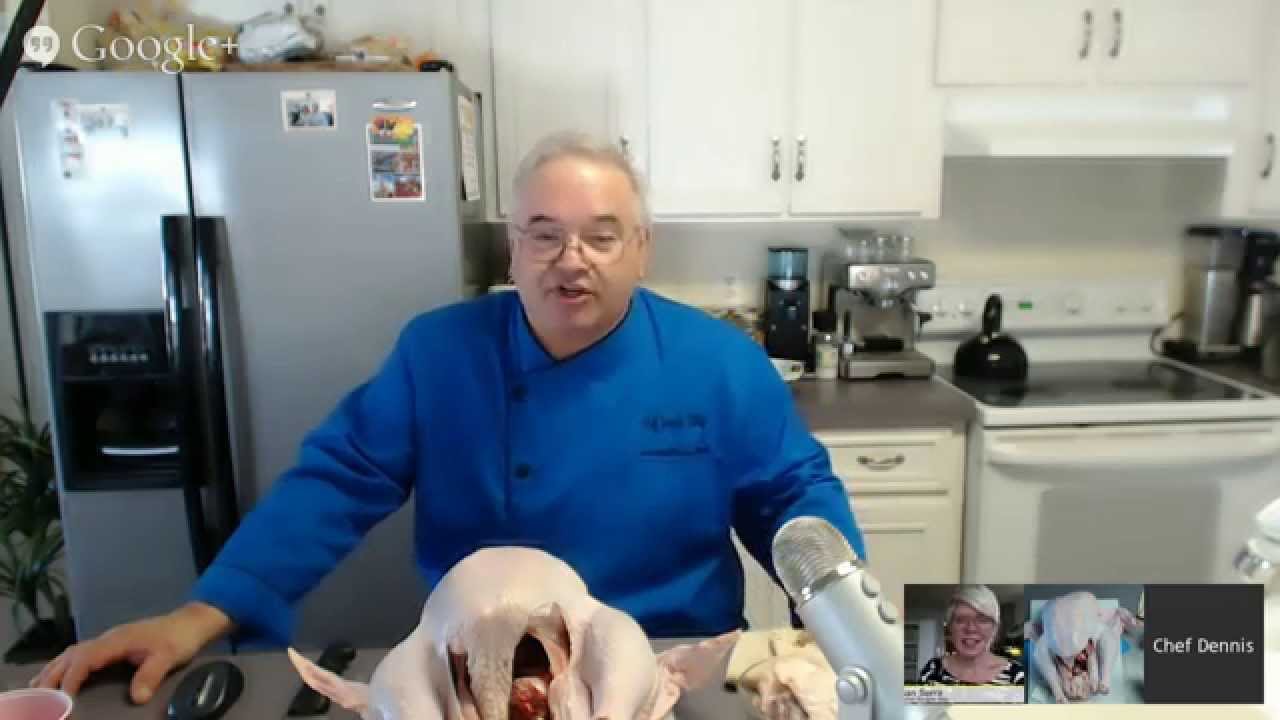
In this episode of "Around the Kitchen Table," Chef Dennis Littley and co‑host Susan Sarah walk viewers through every stage of preparing a Thanksgiving turkey, from selecting a free‑range bird to serving the finished dish. They compare free‑range versus organic turkeys, discuss the importance of animal‑welfare labels, and explain why they prefer free‑range meat. The duo outlines both wet and dry brining methods, including precise salt measurements, optional flavor additives (sugar, honey, Jack Daniel’s, coffee), and safety tips for keeping the brine below 40 °F. They describe a controversial upside‑down roasting technique (breast‑down for the first hour) to keep the breast moist, and recommend a moderate oven temperature (≈325 °F) with adjustments for convection ovens (≈300 °F) and a reduced cooking time. They cover the use of compound butter under the skin, seasoning options (citrus zest, herbs), and the benefits of letting the turkey air‑dry after brining for crisp skin. The episode also details proper temperature monitoring (thigh‑spot thermometer), the limited value of basting, and the critical resting period (20 + minutes) before carving. Carving tips include separating the breast and legs, using a sharp knife, and optional component roasting. A quick gravy recipe is provided, using pan drippings, a simple roux, and optional stock. Throughout, they share kitchen‑setup advice, recommend tools such as oven gloves, turkey lifters, and cutting gloves, and give a brief tour of Susan’s new kitchen, highlighting space constraints and design choices. The conversation is interspersed with light banter about Thanksgiving football, Florida weather, and holiday décor, but the core instructional content remains focused on achieving a flavorful, juicy turkey with practical, reproducible steps.
Chapters
Hi everyone, I'm Chef Dennis Littley and welcome to Around the Kitchen Table. And today we're here with a very special guest. Well, of course I have Susan Sarah here, my co-host, and she's in her new house and she's showing some of it off. How you doing, Susan?
I'm doing great. I'm doing great. I'm in the midst, still in the midst of some boxes and, you know, a little bit of chaos. But, you know, the holiday's here, so what do we do? We make the best of it.
That's all. You know, and there would be chaos and a mess no matter where you were because it is a holiday, especially Thanksgiving. I think sometimes that seems to be the most chaotic and unnerving holiday of them all when family gets together to be thankful, and we all get kind of crazed out though.
I know, I know, but luckily I have a small crowd today. It's just our kind of nuclear family. There's 10 of us, and, you know, the beer and the wine flows and the food flows, and we all have a good time. So, you know, I think it'll be relaxed. It might even be a little bit too much fun. Ha!
Oh, so I hate to say, you know, I was going to say you're going to watch football. It's going to probably be painful for me because Dallas doesn't play well on Thanksgiving, and we have to play the Eagles, so I'm not I'm not looking forward to too much, and we just sneaked through by the Giants last night.
So, uh, oh, we are a big football, um, family. My son-in-law, he— that's it, every TV will be on football. I don't know who's doing what, but that will be— that's a part of Thanksgiving.
Yep, there's actually 3 games on. There's, uh, Detroit and Chicago, or I think are playing for the first time on Thanksgiving, or in a long time anyway. And then Dallas playing the Eagles, so it's rivalries. And then there's the normal Thursday night game, and I honestly am not sure who's playing in that. So it'll be a fun-packed day of eating and relaxing and watching games. So we're having 3 guests over, you know, Greg, Carolyn, and Jen will be over, and they're actually bringing Hartley, their dog, with them too, since we are— this is the first Thanksgiving in a while we are dogless, so it'll be nice to have at that company.
Yeah, that's good. And you know, what happens in Florida? I mean, is it Thanksgiving with shorts? Is it like, you know, like just come as you are, shorts, t-shirt?
You know, yeah, it's not a— it's definitely not something you have to dress up for or get too warm for because right now it's 85 outside. We did have a little Arctic chill, we went down in the 40s But now it's back up. Yesterday and today's been 85, and I think it's cooling off. Thanksgiving, they're looking at around 65, somewhere in that range, which would be very comfortable.
So if—
now maybe we can sit outside with a little fire pit as it gets dark, you know, something like that, and drink some cider or something, you know, if we're not already too looped by drinking regular stuff.
Well, you know, I mean, any excuse is a good one, that's for sure. When you opened the show and you said you have a special guest, I wasn't sure if it was me or the turkey.
It's the turkey.
That's what I thought. That's what I thought. Yeah. Special guest.
Woo-hoo! I remember in my early days in restaurants, I never really let on how much I knew about food just to kind of keep myself under the radar because I was training. We had this big German chef come in. He was tight— tight— in a real tight rein on everything. He thought I was like dumb as a stump. He would ask me questions. One day, he asked me— we were doing ducks. He goes, "Dennis, you know how to clean ducks?" I grabbed a scrub brush and a bottle of Comet and said, "Of course I do, Norman. Where are they?" He's looking at me, and he didn't know what to do. Then later on, I had the ducks, and they were dancing on the sink, and I was singing with them. So he started to loosen up a little while after that.
Yeah, there you go. I know sometimes those Europeans, they don't know what to make of us. You know, they just— we're just, you know, I don't know what we are. But yes, so there you go. There's the turkey. And in a little while, I'm going to take you on a tour of my kitchen and, you know, show you what's going on here. So I'm dying to know. You know, what you gonna do with that turkey?
Well, you know, I'm— I've been thinking about what I was gonna do. And this, of course, I wanted to tell everyone, this is a free-range turkey. Now, it's not saying it's organic, and I had a choice between an organic bird that didn't say it was free-range and one that said it was free-range. And given that opportunity, I'm always gonna kinda lean towards the free-range or the pastured meat. I think if they are pastured, more times than not, the person taking care of them is gonna worry a little bit more about what they eat and is gonna be a little more conscientious. Lots of times getting that certified organic label is expensive, and, you know, with a company like this, I'm sure that was not the reason behind it, but I mean, that can cause a lot of times if you go to small— if there's small places around you that sell pastured meat. They may not certify it organic simply because it is a process for them to do, just as vegetables would be. This is a free-range turkey, and it comes from a company called Nature's Rancher. It says it right on there. It says free-range. One of the other things it says under it is no antibiotics ever administered. I think that's kind of a law, but people put it on there anyway. It's not like it's written.
Okay. I didn't know that.
I think it is. I could be wrong, but it is vegetarian-fed. And then what caught me under that is it says it's a Global Animal, uh, Step 1, no cages, no crates, no crowding. So to me, that means that it is— if it's saying it's free-range, because a lot of times they'll say cage-free, and all that means is there's a door on the henhouse where they can go out if they choose to. Which most of the times they don't choose to because they're not the brightest animals.
Right.
Right, so this is— and it's not a kosher turkey, this is just a regular turkey. And the kosher turkey will be soaked in salt, and that's really the big difference with that. So that's something like we're going to talk about brining. You're going to brine— I probably would not brine a kosher turkey just because it's already been soaked in salt, but it's minimally processed. And then on the back of just about every turkey you get there is going to be a preparation guide, and it's going to tell you how long you should cook it, and it's going to give you an idea. And in fact, I didn't even see this, but allow 1 pound of whole turkey for each adult serving, and plan to serve the turkey 30 minutes after removing it from the oven. So, you know, those are really good tips to have. And in fact, I just posted something on our page. I put a little picture up with some 9 turkey tips for us.
Yes, isn't that beautiful? It's a beautiful little guideline, beautiful little chart. That sounds great.
Yeah, so I think I'm gonna brine this though, just to see. And you may have seen some Walmart commercials on TV, and it seems like a secret that is no longer a secret has gotten out, and everybody's talking about it now. I've seen blog posts with it, is to roast the turkey upside down for the first hour.
I have not— I have not seen that. Okay.
Okay, because what happens is when you take it over and roast it for the first hour, all the juices are going to start to go to the breast. And what do we have when we cook a turkey most of the time, because we're trying to get the thighs done and the breast is getting the brunt of the heat because it's up here and it's not quite as thick, is this ends up getting dried out. Okay, so by turning it over, in theory, and I've never done this, but I've heard about it, just because I've never been that ambitious most of the time, is you want to take it over and turn it. So when you're roasting it that first hour, is to turn it over, breast down, and then very carefully— yeah, you bring it out of the oven. And this is— and I did bring some props out to show you, and I think one of the things, if I'm going to do it, I don't know if you guys have ever seen these oven gloves.
You know what, I was just doing a big kitchen order and I saw them last night. I decided not to get them because by the time something's burning or I want to put them on, it takes a little while.
But I mean, for something like this, you know, yeah, I would put a plastic glove over top of it if you can get one to fit on it. Now, because that way you're not going to get it wet or trip, you know, and I'm not taking the time to really get it on now.— and this glove may actually be too hot, but over cutting gloves we used to do this all the time. It'll go on, but then when I go to reach in the turkey and it is hot, and say I have a spoon or fork on this hand, I can pick it up actually, and it's not— the heat's not going to go through because I have this on.
That's— you know what, that— I wish we had the show Sunday because I put in a big order to Amazon and I got these turkey lifters. You know these turkey lifters? They're Yeah, they're stainless steel and they have these like tines on them, and then you put one each, and you know, so that's what I got. So we'll see how that works, but I like the idea of the gloves much better. And I'm ready for the— yeah.
If you have two roasting pans that are pretty much the same depth, you might even just put one over the top and flip it.
Oh, that's even better. Okay.
If you do have one. I only have one right now, but I mean You can do all kinds of things. I would probably, depending on what kind of mood I'm in and how much time I have, would just go in with a big spoon and go in— because I'm not going to stuff it this year— and go into the cavity with a big spoon to go into the turnip. But if not, whatever works for you. But I mean, if you want to try that, just be very, very careful when you do it. I would probably do it on the stovetop when I do it. Yeah, right on there, because it's going to be a good height. Because if you're too low, you know, you can drop it. But if you're here, it's just going to be a matter of like kind of turning it over.
Right, right. Okay, so what are you doing first with that turkey? What do you— what do you— what do you prepare? How are you preparing it? Well, there are 10 ways in my mind. I want to know what you do.
Well, if I was going to brine it, which I think I am, is I'm going to do that probably— let's see. Tomorrow. Okay, I will brine it tomorrow and I will let it sit in the brine. And a brine is really simple and it can be anything you want. And basically it's about 5.5-6 ounces of a good kosher salt. You know, if you're using granular salt, of course it'll be less. If it's rock salt, it's going to be a little more, but something about that range of a kosher salt. And you can then again put just about anything else you want into it. It's going to have water. It's going to have sugar. You can put any other seasonings you want into it to make it your own. You can add some honey into it. You could add some Jack Daniel's into it. You could add just about coffee. I've seen people coffee brine if you want to get a little different taste. The only thing to remember when you do brine is that if you're using anything that's really sweet like honey or sugar and you use a lot of it, just be careful because what's going to happen is it'll have a tendency— the sugars will make it get darker quicker. So you may need to foil tent it a little sooner than you normally would if you use a lot of sugar in it. But a brine can be any flavors that you like. It's not going to impart— you know, it will impart some flavor to it, like if you put rosemary in it or something, something heavily flavored, it will impart somewhat to it. But actually what the brine is, is it's given the meat a head start. The salt is allowing it to soak up more liquid. Okay, so they do inject this with, I think, about 6%, and that's to help keep it a little moisture too when you cook it. But that'll give it a little bit more of a fighting chance to—
Okay, I didn't know it. My daughter took the easy way out, which I usually do too. She went to Williams-Sonoma and she bought the brining ingredients in the jar, and then we'll just put it in a bucket, and then put the water in, and that's it.
That's fine, and that works well. I read something on one of the sites that said— I think it was Fine Cooking— that talked about using those cooking bags, the broiling bags, because they're big. What you can do is— because anything you brine, if you're going to brine it in a bag, you want to have the bags facing up. You don't want to be sliding them in. If you do do it, you want to make sure you turn it up because you don't want that liquid all coming out. It's going to be a big enough bag. Use a clean, thick trash bag, something that you can tie off relatively easy. It's not one of those scented trash bags. I looked at ours, and I was going to grab one. I went, "Oh, no. These have Febreze in them. I don't want to put that in the turkey." Just a clean one. Granted, it might not be the best thing, but just for overnight, it's not bad.
Dr. Pompa: Yeah, that's what we've done. That's what we usually do, too, that and a bucket. And, you know, and then, you know, a lot of times when we have— I do a lot of make-ahead things, I will put things in the garage because of course it's cold up here, right? So obviously the animals don't get it, and it serves as a supplementary refrigerator. So I put a whole lot of stuff in the garage where I need to.
And the other thing is, if you don't have the space— like, I don't have a second refrigerator, and if I didn't have room in in the refrigerator. If you have a big cooler, you can do it right in a cooler. Now remember, you're going to want to clean that cooler really, really well when you're done because you're going to have other flavors. And generally you don't put any food that's going to go right into your mouth, but you know, if you have ice in there and sodas, it might smell a little. But you can either put a bag inside the cooler first, or you can put ice in the cooler with the turkey in the bag with the brine and then just set it on top of the ice. You just want to make sure that if you're not in a cool climate that you're keeping that turkey below 40 degrees. Oh, that's important.
That's important. Okay, so we're already, believe it or not, we're already almost half the show's over. So we had the turkey in the brine.
Right. Okay, so if you don't— now the important part about this, if you're going to wet brine, is let it dry. So I'm going to brine it tomorrow, so I'm going to take it out of the brine on Wednesday, and then I'm going to put it in my roasting pan, and I'm just gonna let it sit. I'm not gonna cover it. I'm gonna let it air dry. Okay, because I want the turkey to be wet going into the oven. Not for water.
You'll take it out in the morning and then you'll— it'll sit for a few hours.
Yeah, I'll take it out. Like, if I brine it tomorrow afternoon sometime, Wednesday afternoon sometime, I'll take it out and I'll just let it sit overnight. In the refrigerator uncovered, and it'll give the skin a chance to really dry out. And what that'll do is the skin will get really nice and crisp when it cooks. Okay, it'll brown and it'll get really crisp, so when you eat it, it'll be really tasty and crackly, and it'll look really good. Great. Okay, so you can also dry brine it. You can just rub the spices into it. You can just get your flavors, salt it really well, and what the salt will do is pull the juices out of it so when it cooks, then they'll be in there and they'll redistribute. The other most important thing to do is, as we talked about, and it did say it on the bag, was when you take the turkey out of the oven, let it sit for a minimum of 20 minutes before you cut it. Because what's going to happen is if you cut it, just like with any meat, if you cut a steak right out of the oven, the blood runs all over the plate. What that does is it dries the meat out. So if you take this out of the oven and you rush it and you cut it, all these wonderful juices that haven't had a chance to redistribute themselves back into the turkey, back into the meat that's going to be dry, won't have that opportunity. You'll lose them, and the meat's going to be dry.
I think that's what— I think a lot of people forget about that. That particular part. Tell me something, do you ever put anything under the skin?
Yes, and I was going to get to that. What you want to do is you want to— if say you're not up to brining but you wanted to make this a little tastier, you want to come in here and you want to get your hand and you just want to start working it under the skin. You want to loosen it, get it nice and loose. Now you want to make a compound butter. So take your butter, let it get soft, mix it up with some of your favorite seasonings. Salt, pepper, rosemary, thyme, anything you like. Get it all mixed in well, then take that butter and put it in here nice and liberal, a whole lot of it, all in the breast area. Rub it in there, pat it in there, and then just put skin back down. So what happens when it coats— when it cooks, all that extra butter and fat is going to go into the meat that's normally very dry and doesn't have as much flavor. So that'll help flavor the meat and make it a little more moist. So that's your other idea. Other than that, I would normally just oil the whole turkey down with olive oil and sea salt and black pepper, and that's pretty much how I roast any poultry. The other thing is to untrust the legs. Get rid of this. You don't need it. You can cut this off. You can use it for stock. You can cut some of this other skin off and use it for stock. You want to rinse it out really well, but just leave it open when it roasts. You don't have to have it tied together if you're not going to stuff it. Even if you are stuffing it, you don't have to have it tied together. You want to let it roast open.
Yeah, I was wondering about that. I never took the trouble usually to tie the legs together, and I thought, "Oh, I'm doing something wrong." Let me ask you, how do you feel about putting, say, some type of citrus zest into the compound butter?
Oh, that would be wonderful.
Orange zest, something like that?
Oh yeah, absolutely. Orange or lime. Would be wonderful. Anything that you like, really, that's going to flavor it up. I love the fresh citrus with it. That would give it a flavor. You can also throw some aromatics into the cavity. I know in the old days, we'd throw a carrot or an onion or something in there. You can get a little more creative. You can throw some spices, some fresh spices in there, some rosemary. You can put some garlic in there. You can put some shallots or some onions in there. You could pour a little— I wouldn't put much in, but maybe like a little half a cup of some wine in there to let it get a little bit of a cook boost. I mean, there's a lot of things you can do to it to give it a little bit more flavor, and it's just a matter of what you have time for and what you like.
Okay, so now the compound butter is in. It's been It's ready. So now we're ready to put it in the oven. Yeah, right.
You want to— a lot of people will tell you to put it in the oven at a high temperature for a little while to give it a push. And a lot of times what that push is for is not so much doing the turkey any good. Now, with red meats, we used to do that to kind of get them to seal, and we'd actually want to turn them in oil. We're not doing this with the turkey. So it's not really sealing, but what it's doing is giving you a jump start on cooking. So a lot of times all it's doing is cutting down your cooking time a little bit. Like anything else, you want to cook it at a good temperature, but nothing too high, because it's a protein, and the protein is going to tighten up if you cook it too fast, and it's going to get tougher. So anytime you can slow cook, like I'm going to cook this at 325°F. It's 15 pounds, so I'm going to give it close to 4 hours, somewhere in that range. At that temperature, that should be fine.
I never knew that, the science behind the protein and slower cooking. I never knew that.
It's the same thing with pan cooking. You can sear something, but you just want to sear it. Once it's seared, then you want to turn the temperature down to let it slow cook. Searing will close the outside up, but this, you're really not going to sear it. In a 425-degree oven. All you're going to do is push it a little bit. Like I said, if you wanted to get oil real hot— like, we used to take prime ribs, you get oil real hot and you turn them in the oil. Well, you also burn the living crap out of you most of the time too, but that would seal it. So, you know, that's—
that's—
yeah.
Now, what about for people who have convection ovens?
Mm-hmm.
Convection. I just moved into this house And so this will be interesting, cooking a turkey, my first Thanksgiving here with a new oven. It's actually not new, but it's new to me. It's convection.
Well, you're gonna, you're gonna cut a third of your cooking time off with convection.
So should I do a lower temperature too?
That's a good question.
And I know, no, my conventional wisdom as far as me being a kitchen designer and talking appliances is that you do do 25 degrees less, but I'm curious what you think.
Yeah, well, you know, normally I cook everything at 350, but I'm knocking it down 25 degrees to slow cook the turkey. So I would think 300 might not be a bad idea. You know, in your case, you know, maybe you want to start at 325 and a half an hour into it, or if you're going to roast it upside down, then turn it down. The other thing is, you know, knowing what your temperature of your oven really is is sometimes a fun fact. And when I was baking bread, I had to buy an oven thermometer to see.
Yes!
Because most ovens can be 50 degrees off, and that'll affect what you're cooking. So, but I, you know, I might try 300 with that. It's not going to hurt it. Just give yourself, you know, that, you know, how big is the turkey you're making? You know, give it that.
It's like 22 pounds. It's about 22 pounds.
So normally that would take you 5.5 hours, you know, if you're not stuffing it, somewhere in that range. So convection oven-wise, you probably would take more like 3.5 hours, in that range, somewhere around there. So which is a good time for a bird that big. So you know, if you do give yourself adequate time, because you know, honestly, the turkey can sit out for 45 minutes to an hour before you cut it. It's not hurting it, you know, leaving it out.
Okay, hopefully I don't get it done 2 hours before. That's what I'm afraid of, either under— either, you know, miscalculating the time in one of two directions.
Yeah, that's the whole thing with an oven that you haven't really— you aren't real familiar with, and you always—
it's a crapshoot.
Yeah. So, but you know, you can always After it's cooked some, you can always raise it a little bit more if you need to. I check it, you know, see what the temp is. You'll get a feel. And this is the thermometer I'm talking about. It's just one of these stick-in thermometers. And one of the things you want to remember, and you can get these at almost every grocery store, sells these, and they read in centigrade and Fahrenheit. Just remember to have it on Fahrenheit because I panicked a few times when I had it on centigrade and saw the meat was like 40 degrees. And it's just, oh my God, it's not even close.
Oh my gosh.
But when you temp it, you want to temp the thigh. You want to temp the biggest part of the thigh. And sometimes if you're not turning the turkey— and I don't recommend opening the oven much. Like you used to always say about basting a turkey, it really isn't going to do that much for you. And all it's going to do is it's going to increase your cooking time because the oven door is open. And all the heat comes out, it's got to build back up, so it's not really a good thing. So when you do temp it, and you want to temp both sides, because if your oven is like a lot of ovens, especially conventions— convections, the— there's a cold spot in it. There's always a spot where the air just doesn't quite circulate the same. So yeah, it may be done on one side and it may not be done on the other side. Okay, so, you know, turning it might be a good thing if you, you know, somewhere in the middle of it, just spinning the pan around. Good.
Now I have a few tips to share, and I also want to do a real quick tour of my kitchen and then talk about some of the tips while we're doing that. So I'm going to unplug this, and I'm plugged in with my earbuds, and let's walk around. So We moved in, as I told you about, last Thursday, and I will show you. Here we're walking in the dining room, what will be the dining room. My husband's walking out right now. And it's a sort of a wood, kind of a wood-paneled room, lots of windows. And, you know, the wood is kind of worn, but But what we did was we cleaned the windows, we took down the drapes and kind of were making it our own and putting up some artwork and things like that. And actually I brought in— here's a garden bench. I don't know if you can see that. Can you see my garden bench?
Yes.
Yeah, so I have this beautiful garden bench and parts of the finish are— it's an antique and it's blue So I'll put some things on there, some decorative items on there. If you have some nice garden, you know, decorations and pots and benches, bring them in, bring them in because it's a really nice look. And here's the kitchen. Maybe you can see it.
Oh, wow.
So it's, it's not a big kitchen. It's narrow here. So we have the range, the professional range, which is an old Dynasty range here, and then directly across there is the— we have a fairly new refrigerator, which is a nice Samsung refrigerator. I don't know how well you can see it.
Oh, that's beautiful.
And so, and then they— there is— oh, Chef, there is a step up, which makes me crazy.
It's a little—
talk about dysfunction. Step up to the seating area, which was done supposedly for sound because the people's mother-in-law was living downstairs and there was some sound issues, so they made this step. And then I have a whole bunch of pantries over here on the side. And oh, here's some boxes and things we have to take care of. So you know what, It'll— it's not a big kitchen. We'll have a bunch of people cooking here. But you know what, somehow we have the table, we'll make it work. And that's what you do. You work with what you have, right?
And the tables, it's really nice having that table in there like that. You got a lot of light coming in. And you know, sometimes kitchens get too big. I mean, they're really neat to look at, but they're really impractical to work in. I mean, you go into a big kitchen, oh my god, I'm— this is lovely. I love it. And then put your butt behind the, behind the stove and start cooking and looking for things. And you'll be so tired because you're moving all around that big kitchen.
You can walk miles, you could walk miles around a big kitchen. It's funny to me that, well, there were other reasons why we bought this house. But it's not a big kitchen. And it's not an open kitchen. And I'm all about open kitchens. I love open kitchens. So, so this will take a little bit getting used to. But, you know, it's all, it's all good.
Oh, yeah.
It's all good. And you know what I'll do too? I talked about the garden bench. What I will do is I will go outside and I will get some greens or even some dead, you know, branches and dead, I mean, dead you know, stalks and vines and things like that and make my arrangements. Because right now I probably won't have time to go and get fresh, beautiful flowers, nor, nor would I. But I love the outdoor natural things, you know. So I would encourage people to just do that. It's amazing how nice it looks.
Oh, absolutely. And let me tell you something funny here. We're in Home Depot buying flowers yesterday., and what do they have? But they have these, you know how they sell flowers in those little packs?
Yeah.
Well, they have poinsettia like that because poinsettia grows outside this time of year and it's not too cold. So you could actually plant poinsettia down your walkway or something. I'm like cracking up going, oh, that's just— Florida is hysterical, you know.
It is. They have that. Yeah, they have ideas for everything. You know, to make it Christmas. That's really funny.
Yeah, but I mean, it actually usually— at least points that out up north, and it dies because it gets too cold. You can't grow it.
Yeah, funny. So I have a few comments here. We have some comments here. Let's see, we have Coach G Moore. He says, wow, love the gloves. Where did you get them?
The gloves were actually a gift, but you can get them any place that has those shown on TV sections in their stores. They usually have them. You can also order them on Amazon.
Yes.
So, you know, that's the easy thing. Any kitchen store will have them too. I've seen them in— I don't know if I've seen them in Williams-Sonoma, but I bet they have it. Sur La Table, I know, has them. But, you know, they're pretty easy to find if you just look for them. And then they have cutting gloves too. I don't use them here, but at work they were a must in case, you know, you're cutting a lot of things, you can actually slice through the glove a little bit and not hit your finger.
So, you know, I— this is blowing me away again. I'm getting like 10 amazing life-changing tips from this, from today's show. Cutting gloves, never heard of cutting gloves.
And then you can find them on Amazon too. And really, you know, if you're going to do a lot of cutting, again, you want to cover it with a plastic glove or wash it. You know, most people, if you haven't worked, they don't get washed that much. So we plastic glove. But that way, if you're cutting and you slip, or if you have a tendency to cut yourself, you know, it can be a good thing.
Yep. And you could be a little more reckless, right? With a cutting glove.
Yeah, I like it. Do it with the turkey.
Perfect. And Coach G Moore says again, fantastic advice on letting it dry, which is fantastic. And as in floor says, oh wow, love the kitchen and little sitting area, Susan. So yep. It's, you know, nice light in here. And, you know, who doesn't love the kitchen, whatever it is? We love our kitchens.
It is just nice. You know, we have the stools— or not stools, but chairs next to this now. And we'll sit and have meals here on the island, you know, just because we can. And, you know, we have more sitting areas now than I think for 2 people should probably have. In fact, we've been working on the outside. We finally painted our porch porch floor. We had been talking about doing that since we got here. Looks really nice. And then we're doing more outside with areas because I had laid extra concrete when we fixed the driveway. So we have all the sitting area outside now too. So that's really cool.
Oh, that's it. Who knows, maybe you'll have Thanksgiving outside.
Maybe not.
But yeah, maybe not. No, I don't think so.
It is still Florida. Lizards. There's lizards everywhere. We're really used to them now, but they're still kind of everywhere.
Yeah, yeah. So good, good work on the turkey. We've roasted it, we've prepared it, we've roasted it, and then how about slicing? Do it quick.
I'm glad you brought that up because you can do it, you can go a couple ways on that, and I'm not going to cut into this, but I will kind of simulate it a little bit. Let me switch this. Okay, there's a couple things you can do when it comes out roasted. You can take it apart, which is really kind of a good thing to do if you have the time after it's cooled. You know, if you've got a two-man team and somebody can start moving things to the table for you and start getting other things that are hot in the right serving dishes, then you can come over and you can start to take the turkey apart. You're going to follow the natural seams. You're going to take the leg off, and as it goes down, you're you're just going to try and stay next to this bone with the knife and take it all the way down and then cut. But with the breast, you could— there's a little breastbone here that runs right down the center. If you can take your knife in, and this is something you could practice with the chicken breast if you wanted to, is you just want to get your knife into this breastbone area and start cutting. And as you're cutting, I would turn it this way because I'm going to have my hand here. And I'm going to start cutting and I'm going to just start pulling the breast away and I'm going to get my knife underneath of it all the way down to the cavity. So I'm going to hit the breastbone and this whole piece of breast is going to come out. So now—
Let me just ask you, are you going to work on each side of the breastbone separately?
I would take—
First you work on— Go ahead.
One side, then the other. I'm going to take them off. If you want to, I mean, I would take it off completely, okay? I would lift the breast off, and then I would put it on the cutting board, and then I would cut the breast meat independently, and I would be able to go this way instead of having to go this way. So I'd have some nice—
Yes, that's what I do. That's what I did. Look, very elegant. I love that.
It's a much better cut to go that way. I mean, you could actually take both breasts off the turkey. In fact, you could roast it off the turkey. I mean, you could break this down into components and it would take a lot less time to cook. You could roast them independently. But then, you know, that's what I'm going to do is take them apart. That way you can cut some thigh meat out or pull some thigh meat out. Or if you just want to carve it the old-fashioned way, just start carving it, but then you're going to probably have to carve down this way. And cut some meat. So the big thing is making sure your knife is sharp. You know, if you have a steel, run the steel down and that'll remove any burrs that you have off of it. And it was funny, I tweeted something the other day. We were in a tweet chat, I said I stopped buying expensive knives. And I bought a knife sharpener instead. So this is a Dexter. It's, you know, it's funny, like the TV show name, I think. But it was a $25 knife, and I have a $100 sharpener. So whenever the $25 knife needs it, I just pull it through the sharpener. It's always sharp. It's— I can keep it as sharp as I want to all the time. When the blade starts to go down too well, I throw it out and buy a new one. And I've always got a sharp— you know, it's not weighted that bad. And granted, you know, I'm not in a kitchen cutting for 6 hours or 4 hours. So I don't need one of those meticulous, meticulously weighted knives that's perfect for my hand, because I'm not going to cut that long. So, you know, why spend—
so that's good. Yep, you're right. That's tip number 563 for today's show.
For today's show. So unless Wusthof wants to send me some knives, of course, I would love to use them in the kitchen. I just can't really afford them.
Yeah, no, that's a small fortune. So did we miss anything? Are we—
you only have to say I have it.
How do you eat the turkey?
I pull the giblets out, and if you like giblets, I would cut them up or pop them in a food processor and make them very small, and then cook them and put them in the stuffing. We didn't get to the gravy, and the gravy is probably the easiest thing to do. You're going to take all those lovely pan drippings. That you had. And I don't usually even bother straining them because I don't mind if there's a little errant piece of something from the turkey in there because it's turkey gravy. But the only thing you want to do is make a little bit of roux first. So melt some butter, add some flour to it, probably no more than about a quarter stick of flour and however much butter and however much flour you need to put into the butter to get the shine off of it. Let it cook for about 5 minutes, don't let it burn, and then pour your drippings into it. If you need some additional— if you have turkey stock like you made, Susan, you can use that for the rest. If you don't have it, you can add chicken stock into it to thin it out a little bit more. That will make the easiest gravy and a really tasty gravy, too.
Sounds great. I am going to listen. I'm going to definitely replay Well, the whole thing, but pay special attention to the gravy part again.
Yeah, I may, if I have time, I may do a little quick video of that and pop it up. We'll see how tomorrow goes for me. I have most of my shopping done.
Good. All right. All right. Well, good, good show. Good tips. Everybody have a wonderful, wonderful Thanksgiving. And you too as well, Chef. And yeah, and go ahead, what else? Any parting words?
No, we'll be back after Thanksgiving. You know, everyone have a safe holiday and try and be careful on the roads for all the other people that are out there. And we'll be back after Thanksgiving to start a little bit of a Christmas celebration, won't we, Susan? Or a winter wonderland celebration.
Yeah, maybe, maybe some— no, actually it might be too too late for Thanksgiving leftovers, for Thanksgiving leftovers show.
Well, let's see. Let's see.
That's a good— Yeah, a little bit of that maybe.
Yeah, might help too. All right, so thanks.
Okay, have a good one.
And have a happy Thanksgiving, and we'll see you all soon.









