Blackened Chicken and Fettuccine Alfredo
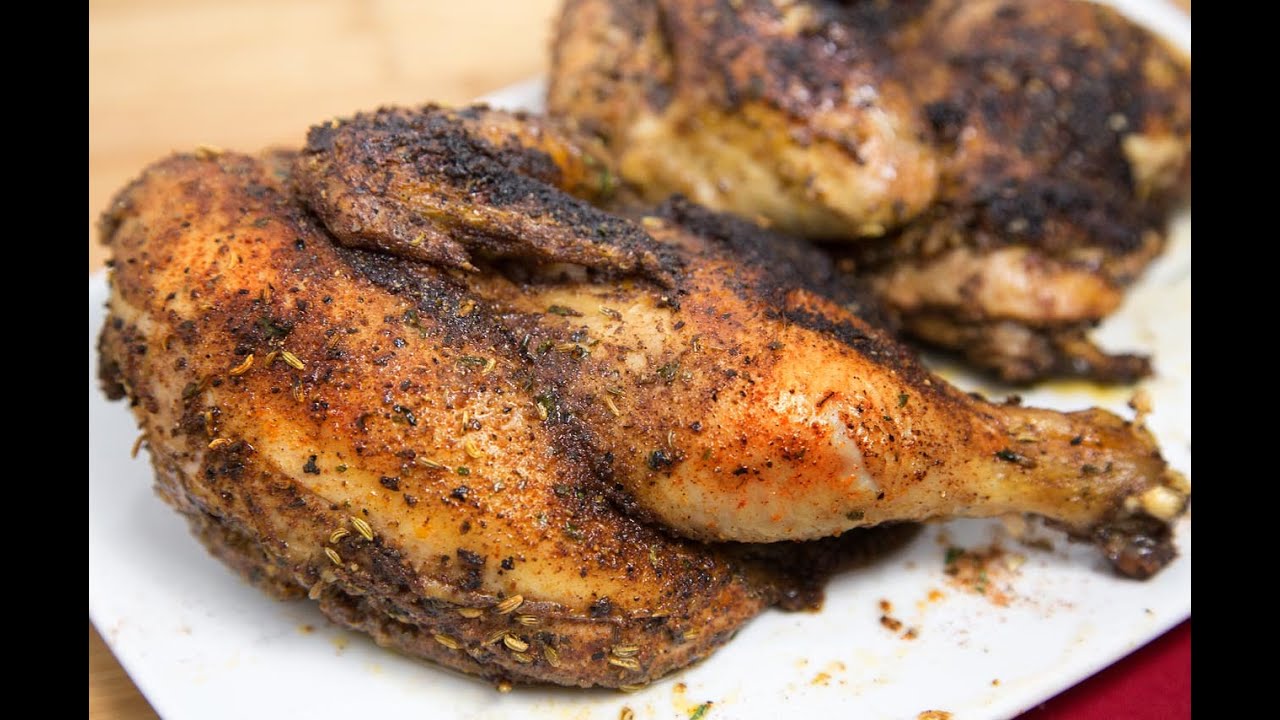
In this episode of Around the Kitchen Table, host Susan Sarah welcomes Chef Dennis Littley for a live cooking demonstration of blackened chicken paired with fettuccine Alfredo. The show opens with casual banter about weather and the hosts’ schedules, then shifts to Susan’s recent obsession with refrigerator organization and produce preservation, where she explains ethylene gas, reviews several commercial products (Berry Breeze, OXO Green Saver, freshness balls, etc.), and discusses storage strategies. The core cooking segment begins with Dennis creating a custom Italian‑Creole blackening spice blend from scratch, explaining his philosophy of dry versus fresh spices, substitution options, and the importance of balance. He then prepares a 4‑lb organic chicken, demonstrates how to split and optionally halve it, seasons it with the blend, and cooks it first in a pan (covering to retain heat) before finishing in a 400°F oven. Throughout, they discuss side‑dish ideas—root vegetables, garlic mashed potatoes, broccoli rabe, rice and beans, greens, and lemon/tarragon accents—tailoring to different eaters. The Alfredo portion covers the classic technique (butter, cream, cheese) with variations (light cream, Greek yogurt, cream cheese, mascarpone) and tips to avoid grainy sauce. Interspersed are audience questions about seasoning, freezing, air‑drying, and cheese‑sauce texture. The episode ends with promotional plugs for Dennis’s website, upcoming events, Susan’s kitchen‑design business, and a preview of the next show. The tone is conversational, instructional, and enthusiastic, with occasional humor.
Chapters
All yours.
Okay, hi everyone and welcome to Around the Kitchen Table with Chef Dennis Littley and myself, Susan Sarah. We have another fun show today. Hello, Chef Dennis.
Hi, Susan, and you told me already that it's a little gloomy up your way. I'm sorry to hear that, but—
It is, it's— but everything is great. See, what happens, as you may remember, in the winter is some days you have gray and you have brown and that's it.
The best you can hope for.
Yeah, how about you down there?
Well, it's windy outside. The wind's been kicking up and it looked like it was gonna rain. Today I think we're gonna be okay, but tomorrow the rain's supposed to come and then a little bit this weekend too. So it's not, you know, we do get some rain. Sometimes it'll say 90%, and I try to tell people that, and they mean 90% like over the course of the day, like 10% here, 10% there, 10% over there. You know, it kind of adds up. You know, somewhere in the area it's gonna be raining.
Right.
But not necessarily.
I love the rain. I like a nice cozy, you know, rain. If it's gonna rain, it should rain, you know, and have everything dark and black and gloomy, so. So I love it. So for those of you who are new, welcome, and we're happy you're here. And Chef Dennis is a very accomplished chef, chef who loves to teach everyone restaurant-style techniques that the home cook can use. And, you know, so many little pieces, you know, you'll say it so casually, this technique or this ingredient, and it's, life-changing and profound, and I don't say that lightly. You know, so, so a lot of good nuggets of information here. In 2011, he was awarded the Most Valuable Foodie at Food Buzz and is a major food influence. And as for myself, we intertwine talking about kitchen design and cooking. And I'm a certified kitchen designer for many, many years, having my own kitchen design company, and I still do that, and now I am also, go figure, importing Swedish rugs, beautiful Swedish vintage and new rugs. So that's a little bit about us. So here we go for today's new meal. Now, have you made this before?
No, and I tell you honestly, most of these things I've been making are new to me. Because it keeps me excited and it lets me think through them. And if it's going to be a blog post, if there's anything that does happen wrong along the way, I can correct it before the blog post. But, you know, you gotta think, it's something new. It's not something that I've made 100 times, I know inside and out. And those used to be the dishes I always made. So now I'm trying to find things that look interesting to me, that look like they'd be fun to make, and we're making them together for the first time. So, you know, you'll get to see fails or you'll get to see things don't quite work out sometimes.
Yeah, adjustments. I mean, a lot of times I'll make an adjustment and, you know, it's good. Hey, did you get my little note about what I am going to talk about today?
I did not see— you know, I need to start looking at your stuff in the morning, but I'm running around like a chicken with a head cut off usually in the morning, going out to buy stuff. Like, I had to make a Publix run this morning and then setting up because we have— I have Renee comes on now at 11:05 and we do her show. And then right after mine at 1:15, Christine comes on and I do a show with her. She did, but they're two vegans. I got a vegan on either side of this meat eater, which is— it's hysterical, but they're not— yeah, they're non-judgmental vegans, which are mine. You know, which is fine. They're like, "Ah, eat meat if you want to." They're thinking of themselves.
That's great.
Yeah, they're thinking of themselves.
Yeah, I mean, it's not like you're going to, you know, bring them over to the dark side, or you're going to try to bring them over to the dark side.
And I don't do that, so, but yeah.
No, you absolutely don't. So today I just have a shorter than normal little topic I want to talk about, but, you know, I get obsessed about things. I get nuts about things. I am currently, as of, I don't know, this past week, obsessed with refrigerator organization inside the refrigerator. This is a whole other world that I just never paid attention to. And so I want to talk to you about preserving fruits and vegetables. And I also want to show different ways to preserve and different accessories to put in your refrigerator. I'm like obsessed with it.
Sounds good. Yeah, and the refrigerator is a good place to start. I mean, I ended up taking out whole racks out of mine because it had too many, you know, and it was— there were too many bins and shelves, and I'm like, oh, this is making me crazy. So I did too, but one out completely, and it's been better. I don't, you know, side by side, I don't have as much room as I should have. But it's been at least a little easier for me. And I'm one of those people that shops way too much too for food. And I have—
You'll appreciate this. You will like this.
Well, let's get started. Well, first thing we're going to do is we're going to make our own blackening season for this. And it's going to be a little bit of a different kind of blackening season. It's not going to be an overly hot, spicy blackened season. It's going to be more of an interesting set of flavors. And I'm going to put this right here to start using it and we're going to build a base of spices. Now, you don't have time for this. Buy a premade seasoning. But I'm going to show you how to make one pretty easy, too. And the philosophy behind buying spices is maybe you use them for some other things. And Renee was asking me this morning if I roast my own spices. And I said, no, that's the next step. It's definitely something I want to do, but even with me, you know, you take things in steps. So first, you know, because I was never one to blend my own spices, I was always buying them because it wasn't something I really had time for when I worked because it was a lot of other stuff to do. But now I have—
hey, hey, you know our friend, um, Ali? She's a big— she is all about blending spices.
Well, she's the one that got me thinking about it. And I actually—
I thought so.
I have a spice mill and I was all set to get them and they closed my spice shop in Winter Park. So I'm still trying to find, you know, and I could order them from Amazon, order everything else from them, but it's something I've put off. But that's next on the list and that'll be something to add and even add more flavor because fresh spices are just unreal when you roast them. But anyway, we're going to get started with this and I'm going to start my mix. And I very rarely use kosher salt, but when I do rubs, when I do brines, that's when I want to use kosher salt. So I'm starting with 2 tablespoons of kosher salt and we're going to add some different flavors in here. And this is going to be like an Italian Creole blackened spice. I have 2 tablespoons of marjoram. And with a dry rub, sometimes I think the dry spices are better. You know, if you want to use fresh spices, they probably would not penetrate the same way. They wouldn't do the same thing. So, but it's up to you.
And I have— well, let me ask you something as a— not a novice, but as a, you know, a layperson. What about— would you ever mix fresh and dried?
Sure, sure, you could. Like, I mean, if I put anything in here, I would put some fresh parsley in just to have that green perk up a little bit. Yeah, you can mix it in. The difference is in a rub, you know, you want them to be kind of consistent, so you're probably going to want to use all dry. But yeah, if you're cooking and some are fresh and some are dried, that's fine. So I just put some fennel seed in. And, you know, if you wanted it to be really more pronounced, you could grind the fennel up or you could buy ground fennel for it. Now I'm putting in some nutmeg and all the ones I just started rolling have all been 2 tablespoons. So, you know, this was easy to make in terms of what I'm putting into it. So those first 4 were all 2. And then the next 4 are going to be all 1. That's kind of how you work down to, to have your flavors pronounced. So I've got some black pepper now. I've got some parsley flakes, which I didn't have on hand because I generally never use dried parsley, but in a rub— and again, it's, it's all about the color. It's not like it's adding any flavor to you, but it's going to add a little sprinkling of some color to it. I wanted to put something red into it. I didn't want to put chili powder, so I'm putting in smoked paprika. I could use regular paprika, but I thought this would give it a little bit more flavor. And I can't get it out, so hang on a second. I hate when they do that. So it's going to add some color and a little bit of smokiness to it.
You know, it's something over every time I use paprika, and maybe it's just me, I can't identify a flavor. It's almost like I put it in and like it's not there. Right. I don't know.
Well, you'll taste it. You use smoked paprika, you'll definitely taste it. And sometimes it's going to have to do with the age of it. A good Hungarian paprika is going to have a little sweetness to it and a little bit of heat to it because it's basically a pepper that you're using. Some of them will be a little spicier than others, but for the most part, we're so used to just using paprika for the color aspect of it, even shaking it on dishes. I mean, we garnish, you know, salad, egg salad, or deviled eggs or potato salad, we always hit it with a little paprika for color because it's not going to really affect the flavor.
But when you— But a smoked Hungarian would give you something. Just a smoked—
this isn't even necessarily Hungarian, it's just smoked. But if you buy, like, you try and find a good source for something that's more of a real paprika. You know, most of the paprikas we buy in the grocery store aren't going to be real flavorful. They're gonna be kind of—
Yeah, yeah, that's what I found.
Some of the Spanish ones or Hungarian ones, if you can find a source, like probably in New York, I'm sure you can, a source for some really real spices, you'll find some that'll have more flavor. Okay, so that was the last one. We put in some onion powder. Okay, now I'm gonna go to a half or 1 teaspoon, not a half but 1, and we're going to add in some allspice. And this is almost— it reminded me of— I saw the recipe and I adjusted it some, but it reminded me almost of a jerk seasoning in some of the things that were going in. And this is— they call for fenugreek. I couldn't find fenugreek anywhere.
I never even heard of it.
Well, fenugreek is usually like an herb you get, and I had not heard of it as a spice. And they refer to it as having like a burnt sugar kind of flavor is what it added, which would— sounds like it would really be good. But since I couldn't find it anywhere, we're going with some mustard seed instead. And then 1 garlic. So not as much garlic, but garlic. The last few were just 1 teaspoon instead of 2 tablespoons. So, you know, blending them and finding a good blend.. Now when you make this, you might go, oh, well, there's too much of this in it. Oh, there's not enough of this in it. All right, so the next time you make it, you add a little bit more in. Find your own blend, way to blend spices. Get a fork.
But you know, it seems with those, almost with some of those baking spices, that there would really be layers. It's kind of like a multi-dimension. I'm even wondering, thinking about cardamom. You know, I like that flavor very much, but I think you really have some, a few dimensions going on, a few layers.
And cardamom, the pods, they're good for talking about whole spices and roasting your own, and Ali's got a great recipe using cardamom in some of her spice. You know, she makes berbers and all these different ones from different parts of the country. So this is basically it, you know, and the seeds or fennel seeds are in there, so they're going to give it some flavor and they're going to give it some texture. Instead of just using ground. It's going to actually— when it blackens, it's going to have a little more body to it. So it's that simple to make, you know. And now if I wanted to make more of this at one time, if I like this, say I make it and I decide, hey, this is really good, I can make up a bigger batch of it and find— get some nice little jars to keep them in and label your own spice blends.
So that's a good idea. Do you see the question here? Davison is asking, what's the goal in making a blackening seasoning and what should be avoided?
Let's see. The goal in making a blackening season is to add some layers of flavor to it and something that will react to the heat well and darken without burning. Okay. And part of that is the whole process of cooking. But it's also going to— it's going to put— not— I don't want to say a crust on it, but it's going to put a little bit of layer of something on it. It's going to darken. So when you're deciding what goes in it, you want to have a basic foundation of flavors. And for me, that would be salt— I mean, salt, pepper, onion, and garlic, and different amounts of how pronounced you wanted it to be. And then add in some other layers of spices, like instead of the marjoram and the fennel, and that give it kind of that Italian flair. I might put curry and cumin or cumin instead of the paprika. If I wanted to have a little more hotness, I might put chili powder in. If I wanted to be Mexican, I would put the cumin, the chili powder, and maybe some dried cilantro instead of the dried parsley. So, you know, think of it in flavor profile. Start with your basics. Like I said, you always start with salt. In some instances, if you can really control the heat, like this would be— If you wanted to grill it, you could probably put some brown sugar in it too. So it's a matter of playing with it and seeing how it's going to react to heat because not all rubs would have to be blackened. We're just going to try and do this again to add, to heat the spices to the point of really activating them and adding more flavors into it and having it penetrate and then having it being like an olfactory thing too because you're going to smell smell them while they're cooking. So I hope that answered it. Okay, good. All right, so spices are done, spices are off to the side. Now we're going to do a chicken. So let's cut a whole chicken real quick. Real quick. I love how I say that sometimes, like it's a matter of fact.
Yeah, I know. I, you know, 90 years later, I still can't cut a whole chicken.
Yeah. And I think I like telling Lisa that and she would just look at me. There was something wrong.
All right.
So this is, this is an organic chicken. It's about 4 pounds. And all I'm going to do now, as the recipe said to do, would have been just to take the back out. And you could do this with scissors too, if you have a really nice pair of kitchen shears.
Oh, I love using scissors. Love using those. And I just started in the past year.
Some people, you know, I being a chef, it wasn't something I always had on hand. And if I had to go get it, my knife is always there. It was like an extension of my hand. So I always made do. But I just bought a pair of herb scissors, which were kind of cool. And I'll show you them. Actually had a conversation with the owner because I put down that they were okay. They weren't really what I expected, which was the truth, but he wanted to know why they weren't what I expected. So this piece, this backbone, if you don't go crabbing, and this time of year you wouldn't go crabbing, I would throw in a Ziploc bag and freeze it with some other odds and ends and use it to make a stock with. So don't ever throw this away. Okay, so now I've split this.
And like I said— Oh, now David says he can't buy a 4-pound organic chicken. Oh, David, go to your local butcher.
Ah, see, that's that. You got— don't you go to Kroger's? Doesn't have them. Or you know who does have them is Costco, and I think Sam's has them. You can find some free range and organic. A lot of them, Costco is carrying a lot more stuff now.
So, so what's going on now?
Okay. So now I've split it and I'm just kind of easing this middle breastbone out of here while we were talking, just breaking it out. Which it comes out. So I'm just going to take it out the rest of the way, but that bone lifts out pretty easy, but I'm just going to split this in half because we're going to cut them anyway. Now, you know, well, I'm, I'm toying with the idea, and again, this is like when I'm doing it with you guys, as we're doing it, I don't really know, but I think I'm going to take them apart. If you wanted to, you could just take them just like this too and blacken the whole quarters. And, and in my mind, I'm trying to decide whether to do that, and I think I am. I think I'm going to blacken them whole. If you want to take them apart, you'd simply just cut them right in here where it's separating. You can kind of see that natural—
I kind of like, I kind of like the look of the two halves.
I do too. And again, see, this is, you know, they had done it whole, and I can see the value of doing it whole. But I'm going to serve this, and the way I'm going to serve it, I think it's going to present— like, if I was serving more people, more than me and Lisa, say I was serving and I was going to make more than I would cut them up in pieces just so it would be simpler. But since it's just the two of us, you know, I can cut them at the table later, or she can take whatever she wants and eat what she wants of it, and I'll either make chicken salad out of it later or something else. But that's as simple as it was, just dividing up the chicken. Of course, you can buy them cut, you can have the butcher cut them for you.
I am, I am totally looking at this replay later because I have a chicken that I was gonna do my beast, my Frenchy bistro chicken, and I'm totally going to do that to see how you cut through it again.
Okay. But again, if you have the shears, the shears, you can cut that backbone out really, really easy. Good choice to do halves, especially when you live alone. Yeah. Okay, so now I've got the spices that I made. And I'm just going to kind of rub these in. We're going to use— and I'm going to have more than I need. I made— I actually doubled the batch when I was making it so I would have enough to save. And again, if it's like not really quite what I want after we eat it and I want to do more to it, I can always add some stuff to it.
One herb I always love with chicken is tarragon. And I usually try to get it fresh. I actually just bought some fresh yesterday, but either— I don't know, it has— I just love the flavor. Some kind of almost a licorice type of flavor.
Yeah, tarragon is a very unique flavor. And, you know, you might want to— and I'm going to rub the inside of these just a little bit too.
Hi, Renee. And Renee's asking, would you season and freeze Raw or cook then freeze?
Well, if I was gonna season them, I would probably season them raw and freeze them, let it penetrate. Or yeah, I think if I cooked them, I wouldn't cook them all the way through. I would cook them partially and then freeze them and finish them. But it's probably better just to like season put them in a Ziploc and throw them in the freezer. Okay, so this is good. You know, it's going to have— it's not— they're not completely coated, but they've got a nice little layer of stuff on them. I made a nice mess here too, and I can smell the spices really well. All righty, so we're going to turn our pan on, and then I'm going to let them cook for a little while in the pan. So while I'm doing that, if you want to talk about refrigerators, let me get this started, then we'll turn it over to you.
Okay, because I also want, you know, I want you to jump in because you may have— I'm sure you have more information on some of this than I do. So I will go ahead. Okay, just give me a turn.
Let's get this in the pan.
Sure. Okay.
And we will let the pan— so I'm going to put not a lot of oil, but I'm going to put enough to coat it, and I'm going to let it get hot, and then I'm going to drop them in there and cover it, and we're going to let it cook and brown for a little while. And then what I'm going to do is take it to the point where they're going to be half to 60% done, and I'm going to finish it in the pan in the oven, uh, while I prepare whatever I'm else I was going to prepare. So this is a nice dish. Like, you could do this with it and it would almost marinate it just in the dry rub a couple days ahead of time, you know, just like we did with the turkey with the dry rub.
Yes.
Yeah. So you could do this if you wanted to have it for dinner Monday or Tuesday. If you wanted to do it on the weekend, cut it up, throw it in a bag with the spices, and then maybe just put a little bit more on it before you blacken it, or just roast it. You don't even have—
let me ask you. Yeah, let me ask you a quick question. I'm sorry. What about— I've heard so much about that air drying technique in the refrigerator.
I have not done that air drying.
Yes, to make the skin crisp. Oh yeah, okay.
With the turkey. Yes.
Yeah.
Yeah. Well, then you would not cover it if you would just put it out in a pan and let it sit and dry. That's what we did with the turkey, at least for the last part of it. If you were going to do these a couple of days ahead of time— and I'm going to turn this down just a little bit with a little more oil, going to turn it down to like 3, cover it, and then let that brown really well. So if you were going to do that and you wanted to season more than a day, I would leave it out like 24 hours to let the skin dry. And then it'll get really crisp. The other thing to think about too is when you do these in the oven, put it in like a 450-degree oven to finish it and let it crisp up really nice. Okay, so that's it for now. We're going to come back and make some Alfredo when these get some color to them, but I'll let you take over, Susan.
Yes, yes, and I'll be wanting some input from you too. Okay, so let me get to my secondary camera here, which is going to be trained on— all right, let's see my little slideshow. Okay, why isn't it— oh, there we go. Okay, okay, so I'm obsessed. I've become obsessed with refrigerator organization, and you know, it, it's It's the same philosophy as so many other things in the kitchen, as kitchen design, planning your meals, things like that. When things are organized— and I am not the most organized person at all— but when I do get organized, I feel better and things are more efficient and work better. So it all started by just opening up the refrigerator the other day. And I looked at it, and it just gave me anxiety. Nothing had order, and everything was everywhere. And I said, there has to be a better way. We organize our spices. We organize our pots and pans, our lids, our utensils. You know, not virtually nothing in my industry is talked about organizing the refrigerator. So, so this is like my new obsession. Okay. So that said, I'm kind of working backwards and this is where I only know enough to bring up the subject and jump in if you have more. But it's about a store, particularly now at this moment, storing fruits and vegetables and about this ethylene gas thing. Do you know about that? Ethylene gas is a natural occurring hormone which is produced by some fruits when they ripen. And if one is damaged, for example, if an apple— the apples have a lot of ethylene gas. If one apple is damaged, then it's going to tell the others fruits and vegetables, hey, you know, it's time to ripen or something like that. And again, I know just a little bit to be dangerous here, but the point is that if that can be controlled, and it can be, then your fruits and vegetables will last a whole lot longer. So I've been doing— I need to do a lot more thinking about that. Here is another article on ethylene from The Kitchn, which tells you what to store together, what not to store together. Now, here's a product that I have, which is called Berry Breeze. And this is something you put in the back of your refrigerator. And I don't know what it does, but it's— I don't know the science behind it. But it's supposed to keep your fruits and vegetables fresher longer. I don't know if you've heard about that, but you get it on Amazon. It has a lot of good reviews. I have it in the back of my refrigerator right now. And, you know, we have too much food waste. And the food waste also comes from not being so organized in the refrigerator. So then we move on to products like this. This is something I found on Amazon. It controls humidity. It also has— it controls airflow. It tells you what you can put on it and then which fruits and vegetables need to be closed and open. It drains. And so this is the type of thing too that will keep fruits and vegetables longer. This is something I'm getting today from Amazon. Now, this little thing is a roll-out. A roll-out sort of shelf thing. So I, again, it's an organizing type of product and we'll see how that works. You know, if you've just put in a search on Amazon for even just the two words refrigerator and fresh or refrigerator organization, oh my goodness, I'm here to tell you there is a universe of products And let me tell you, I found that I'm not the only one who, who is interested in organizing and keeping things fresh. You know, things have 1,500 reviews and this, this one with 4.5 stars has 1,500 reviews. There are green bags, there are keepers, there are freshness balls. It's really funny. This thing is called the Blue Apple, these balls, and supposedly they're supposed to be terrific. You put them in the, in your crisper drawers. You can even put them outside in your onion basket, you know, that you don't refrigerate, things like that. Do you— now tell me, do you have any of these things, Chef? Do you?
I do not, and I could seriously do anything because they would be helpful and waste. And the problem with the crisper drawer that we put all our vegetables in is we don't always remember it's there. There and go back down to get things out of it. That's one of the problems I have with drawers. That's why I took one of them out. But that would be great because, you know, I try to use my onions and potatoes fast enough, but every time I go in there, you know, the one may have started to rot a little, which kind of affects the others. So that would be a nice addition.
Yeah, I mean, especially with But you know what? But I was going to say, you probably go through your fruits and vegetables quickly. But, but you know what? Like everyone, I'm sure there are some things that get lost. And, you know, so I think it's helpful. This product here that I have up on the screen, you can see it promotes airflow and it has some kind of activator thing that you put in the top of it. And, you know, it works well and keeps things organized as well. So that's what I'm excited about. It's called Green Saver and it's by OXO. So that's something I— have you?
Yeah, they're from OXO. Yeah. Yeah. You know, I think one, one big plus, I mean, I like those new refrigerators with the freezer underneath. And I think the Biggest benefit of that is, is the crisper is now higher where you put your vegetables and stuff. Those drawers are higher so you can see them.
Well, you're absolutely right. You're— and that's why that configuration is so, so much more popular than the side-by-side. You're absolutely right about that. So here's another type of bin. And oh, by the way, I brought a couple of bins down that I didn't play. Oh. I'll show you after. That's right, you can't see it. I wonder if you could see it if I put it here. Yeah, so here is a bin that I have which I will be putting in my refrigerator. I have different sizes. It looks a little creepy, doesn't it? Doesn't look all weird, me putting it right in front of the, uh, but so this is the, this is the type of thing that bin is, and you just pull it forward. So I'm I really love it. Here's another type. You can easily put it in the fridge and easily just pull it out. I have some of these. I love this, you know, kind of, you know, clasp that you just, you know, pull forward. I have those. And so that's my little thing on organization. I think, you know, you mentioned it before. I don't know if you remember or realize, but what you said which is very true, is that you may sacrifice a little space, but, you know, when you have this order, it's more easily accessible. It's, you know, you just feel better and you can find things quickly, much more efficient. So that's my— go ahead.
No, that's the truth. I mean, being able to find things in there. And sometimes we don't. So this is—
Yeah, so go ahead.
Smells wonderful. Oh my God, I'm so hungry right now. Renee, kill me.
Okay, so wait a minute. So tell me why the lid is on.
Oh, the lid is on just to keep everything, the heat in more so it roasts a little bit more than just blackening. So it's going to cook through So hopefully I'm going to let the spices permeate a little bit more by this style of cooking.
So, and then you're going to— are you— and then you're going to brown it? Are you going to brown it?
Oh, it's browning right now. I turned it down a little too much in the effort to not let it burn. So I just cranked it back up a little bit more.
Okay. Oh, so you browned it and then you turned it around and put the—
No, it's, it's still facing down like we put it in. It's still browning. So the idea is to kind of let it— leave it alone a little bit and not look at it too much. I just wanted to make sure it wasn't burning. But that's great, is we're just going to let it— and I'll let you see it when I turn it around, then it's going to go in the oven. But after this— and Renee has said not not to store your onions with your potatoes, but to store them—
Yes, that's what I just read yesterday.
Yeah, yeah. And I am guilty of storing them together, so I need to stop doing that. Thank you for that. And I'm gonna open the seat up too, if anyone wants to come in and say a quick hello. Seat is open. Yeah, Nazim is in and he's starving. Let's let Nazim in while we're working on this. Yay! Hey, Nazia!
Hi! Hello, everybody. I'm still in the office waiting for somebody to show up. It's late here, and then I'm starving, and I see this, and I'm like, ah!
Oh yeah, well, what time? God, it's late in Milan.
I know, but I have a client's coming by now, which is like, really? I'm still in the office. Great.
So what are you waiting for dinner tonight?
Tonight, tonight I have to go to a concert, so Betty decided, well, you're on your own. And I think I'm gonna have like— I'm gonna go see this group from England called the Maccabees.
Okay, they're pretty good.
Susan, great haircut, I love it.
Oh, thank you. This is just my natural— I went natural now, as they say.
I was so used to seeing you as a blonde, but now this looks so much better.
That's funny. Yeah, this is natural. I used to be a strawberry blonde, and now, you know, I'm not.
Bring on the new year, right?
What? Yes, the— it's the natural. It's like natural food, natural, natural me. What can I tell you?
That is—
so what are you eating tonight, Nazim?
Tonight I think I'm gonna go with a plain hamburger outside of the the concert venue.
Okay.
No, no Italian today. That looks great, Chef.
Wow, nice.
That looks—
I love it.
See, that's a presentation. I agree.
I love it. I love it.
I'm doing that tonight with my chicken.
A little bit over here, and I'm gonna let it sit. Now this is gonna— it's cooked and it's cooking through pretty good, you know. It's nowhere near being done. But what I'm going to do is I'm going to take this and I'm going to put it right into the oven and let it finish cooking in the oven. And I'll temp it to make sure, but I'm thinking probably about 20, 20 minutes, 25 minutes, maybe a little bit longer in a 400-degree oven. So I will let you know for sure on that. Wow. That is the chicken. And the smell is just— it's intoxicating. Oh my God. How about garlic?
How about garlic mashed potatoes with that?
Oh, well, actually, I have a bunch of root vegetables that I was going to make, but that's a good idea because Lisa won't eat the root vegetables, so I'm better off making her something.
You also mentioned that this is an Italian-Cajun combination.
Yeah, kind of Italian-Creole because we have—
Creole. So it's kind of like an Italian from New Orleans.
Yeah, that's it. That's it. We'll go with that.
It's the newest trend.
I don't know who's making it.
I love it.
You're making it.
It sounded good to me. And you know, Mama Jeanette was an Italian Cajun, so I always go back to stuff that she made. My mentor. I need my knife here.
I got a comment. Renee on the side says, I need you to tell me how my gnocchi turned out.
I know.
And you know, I have a story there. I met my wife at a party where people were cooking gnocchi. And it was the first time in South Beach, like in 1992. And everybody's like, what's this gnocchi stuff? And I'm like, it's great.
I know, I have friends that would call them yuckies.
Yuckies. Anyway, I'm going to step out and let you guys get back to work.
Thanks for saying hello.
Ciao. Bye-bye.
So I'm just going to chop up some parsley here to have it ready. Just for color more than anything else. And once we get that done and I'm just pulling my vegetables together or my parsley together and just keep chopping it, keep the tip of the knife.
So let me ask you, I don't know, I'm visualizing, like I said, garlic mashed potatoes and broccoli rabe. Would broccoli rabe compete with all those spices in a bad way?
I don't think it would compete in a bad way, but you would just be you would be blown away after that meal with all those different flavors.
Yeah, that's what I was thinking.
I may serve some simple— I just make some— might make some rice with this. And I have been trying to eat more vegetables, so I may roast the root vegetables too. I have some parsnips, some turnips. I have some multicolored carrots. I have some purple, white, and yellow carrots. So I may— and some fennel. So I may do that just to get— try and get some more healthiness in there because I am trying to eat a little better. This chicken, for all intents and purposes, is not an unhealthy chicken. So it, you know, it is pretty tasty. Ah, the heck is this?
Yeah, I think it's the red X, maybe.
I don't know. I'm looking at somebody, looks like he's speaking in Italian, but—
Yeah.
I don't particularly like that name.
Yeah.
We're gonna get rid of that.
So you're doing the— So how are you making the root vegetables?
Oh, I'm gonna roast them. I'm gonna simply roast them with garlic, or not garlic, olive oil, sea salt, and black pepper. So I'm going to cut them up in chunks, different size pieces, season them with sea salt, black pepper, and olive oil, and put them in the oven for about 45 minutes. And I may throw some— I'll probably throw some potatoes in there too, just because if Lisa won't eat the root vegetables, at least she can eat some of the potatoes.
So now let me ask you this. I love lemon. What do you think about when it's all said and done, a spritz of lemon on the chicken?
Oh, absolutely. Lemon or lime. Yeah, absolutely. And, you know, if you like lemon too, when you're making up your seasoning, you can use like even a lemon pepper instead of just regular pepper.
Like, good idea.
We're talking about you like— what was the spice?
Oh, cardamom.
Cardamom would go well with that. And your other one that you like, not dill. Where is it? Oh, I forget. But anyway, I mean, you can tailor these spices to flavors that you like, and, you know, by doing something as simple as using a lemon pepper and changing it around a little bit, you know, you can make a simple black tarragon. Thank you, Renee.
Yeah, tarragon.
That would go good with that too, tarragon, you know, in a nice lemon pepper. So you could, you could build a different kind of flavor around it, and by, by adjusting your spices and changing them and making them intense but in different flavors, that same old chicken that you have once a week isn't that same old chicken anymore. And by adjusting your side dishes to kind of go— like, if I really wanted to serve— since I'm saying this is a Creole Italian, if I really wanted to serve this a little more authentic, I'd probably make some rice and beans to go with it. And some greens.
Yeah, that makes sense. That sounds good. But you know what? Also, like you said before, just the process of cutting it that different way, it just makes it look so special.
But you know, again, I have to feed Lisa, and I know Lisa won't eat the beans. So I made rice and beans for one time, and she actually ate around the beans. Oh my God. I could not believe it. So I have to be wary of what she eats. But I mean, if you're in a normal household where people will eat everything, you can adjust it. Like, so I mean, I would serve it with the rice and beans and some okra or some collard greens. She likes okra and greens, so something like that. But if you make it with the lemon pepper and the tarragon, you know, then a nice scalloped potato or some asparagus. So, you know, adjust— don't just adjust the spices, adjust the vegetables and side dishes. Okay, so I'm going to start with a little butter because I can, and now we're going to put in some heavy cream. Now, if you want your Alfredo to not quite be as rich, that's okay. You can—
oh, I forgot about the Alfredo. Alfredo part.
You want to use light cream, okay? It doesn't have to be as heavy. You can use— I've actually made an Alfredo using Greek yogurt, but you can't heat Greek yogurt because it turns to water. So you would add it to your hot noodles and toss it in that. So your hot noodles, everything else is hot, the yogurt may be room temperature, and then toss it with your hot noodles and it'll put a coating on it with the cheese and everything. So there's ways around making it a little more healthy, but as long as this isn't something you eat all the time, every now and then it's okay. So I've got it in here, I'm going to bring it to a boil, and I'm going to season my Alfredo with some black pepper, some granulated garlic, and some granulated onion. Very simple. Uh, most of the time when I do an Alfredo, I do mushrooms in it. And I would have today, but I forgot to buy them. So this is just going to be a plain, and if I really wanted to make it a little different, I would throw some peas into it. But Lisa doesn't eat peas, so they don't go in either. Wire whip just to mix the spices in a little, and when the cheese is ready to do that And while that's boiling, I want to show you— I said I got these shears, these herb scissors.
Oh, oh, look at those!
Wow. So there, there are 5 blades, so you cut like pieces.
Yes.
In my mind, and I don't know why I thought that, I told the guy, it's not your fault, it was just my expectations where I thought they were going to be magic, you know. And that's honestly what it was. Uh, and I said I didn't know if they were sharp enough. He says, wow, usually people say they're too sharp. So I'm going to work them again. But it cuts. So what— mostly because when I'm taking pictures and decorating, or finding— serve, take your spices and just very simple, instead of having to get the cutting board out again and the knife out again and make a mess. So I thought this would be an interesting way. I got these Scissor hands. Yeah, there we go.
Great.
Yes, they sit in their own little plastic, so after they dry you can put them away so they're safe. And all right, so now that this is boiling, I'm going to add in some cheese and stir it in, and I'm going to turn the heat down a little so it doesn't stick to the bottom too much, which is probably probably going to do anyway, but give me a fighting chance here. I'm going to put about half of it in the sauce. I'm just going to let it reduce a little bit. I'm keeping it stirring just so it doesn't stick to the bottom.
A little bit more, and you should thicken up a little bit.
A little bit. Yes, it's thickening up a little. Now, in the old days when we used to make this, we used to put an egg yolk in it.
Yeah, that's what— that's like almost like carbonara, right?
Yeah, well, carbonara is more eggy than this, and technically a real carbonara wouldn't even have much cream in it. They pretty much coat the pasta with the egg. But this, we would put the egg in to make it rich, and that was in the days when we did not have utensils, and I used to stir with my fingers. The hot—
why am I not surprised?
I know, I know. I thought I'd pass it along, but I mean, old habits die hard. When I went— first place I went to that We actually had utensils. I'm like, oh my God, wow. But we will put the egg in before and we'd mix with our fingers and you'd have to mix pretty fast so it didn't cook. And I used to have a bucket with water and I would just rinse all night long.
Now Robin's asking, when you make a cheese sauce, often it gets grainy and how do you avoid that?
What with— what she said, when you make a cheese sauce.
She says it gets grainy. Graining.
Oh, it's a matter of mixing and watching your heat. And you know, I'm— this is one of the few times you see me really attentive with a pan, and I'm watching to make sure it doesn't get too bad. So I've turned my heat down. In fact, I'm going to turn it off now. That's about the best you can do because a lot of times what it is is it just gets too hot and starts to separate. So I'm just going to put in—
okay, now I need to I need to know, how is that pre— already precooked but completely separate strands?
Oil. Oil, which I would almost never do, but in this case, because of TV, I have to. Oil actually stops the sauce from clinging to it, so it's not necessarily something you want to do.. But when you're doing something like this and I have it to be separate, rinse. As soon as it comes out, rinse it in cold water and put the least amount of olive oil that you possibly can on it to get it coated and just toss it around. But when we used to cook like 40 pounds of pasta a night ahead of time because it was that busy, we'd have to oil it and we'd put it in buspans and they would just bring buspan of buspan of pasta out at night because you serve a a lot of pasta.
Yeah, I don't know. It's— I, I've done that. I've put oil in after the fact for— for— since forever. But not in the pot.
Not in the pot. After you rinse it.
Yeah, right. But maybe it compacts itself. Maybe I have to spread it out in something a little more. I don't know. I find it compacts and it's still difficult. So— or maybe I'm not getting the oil You gotta mix it in, distribute it well.
Yeah, turn down the heat, Robin, on that, especially with the sauce. Like, let almost wait till the very end then if you want it to boil longer. Like, I may have let the cream cook a little longer if we weren't doing this live. I may let it cook a little longer and thicken up a little bit more. And then actually, when you're going to serve it, you could mix it all together at one time. Like the technical, actual Alfredo did not have any cream in it. This is a northern Italian version of an Alfredo or an Americanized version of Alfredo, because the real Alfredo was butter and cheese. That was it. And the story of it was, was Alfredo of Rome his wife was pregnant and she was hungry and wanted something to eat. He went downstairs and all he had was butter, cheese, and pasta. So that's where it was. And I had Alfredo in Alfredo's in Rome, and they make it tableside and they add everything in. And it's— there's an art to getting that perfect balance. And so, you know, if you wanted to heat your cream really, really hot, get it ready to go. Mix the pasta in and the cheese at the same time and just toss it. And then it'll kind of— it'll actually have a more— not defined flavor. It'll have a more prominent flavor of the cheese because the cheese isn't integrating itself as much with the, with the cream at that time. Because you have to fight sometimes. You have to fight the cream to get the flavor. So I like to see a little green speckles in it. I would serve it with a little more parsley, but I toss it because I want to see a little green mixed in too, which you really can't see in this. And then I would serve it like that. And there—
oh wow, that looks great.
Now if you want to play with it a little bit and you want to have some fun, put some cream cheese. Like, if you want to use a little bit lighter cream, put some cream cheese in it to give it that creaminess, or some mascarpone. In it to give it some of that creaminess. You can always play with different cheeses. You could put a Gruyère in. Yeah, a third fatless cream cheese too. You know, there's a lot of other options to make your adult macaroni and cheese, you know, as a fettuccine Alfredo. So, you know, you can play with that. So now what we're going to do when we serve this is going to have that nice, soft, creamy flavor. Of the Alfredo and the cheese against that spicy chicken.
Okay.
So you're going to have a balance— not a balance of flavors. You're going to have a nice combination of different flavors and textures and spices to really excite your taste buds and to turn into a less than, you know, normal Wednesday night with— without a lot of trouble because that chicken's going to cook pretty quick, you know, once, once you get it in the oven and give you time. You know, you could do it when you got home, then go change, take a shower, get yourself rested, pour a bottle of wine while that's finishing in the oven, come back and make your side dishes, whatever they might be.
So that's it. I am starving now and it looks good. I am starving now. It looks great. I have all the ingredients for both dishes tonight, and I'm going to replay this later. Thanks, Chef.
Thank you, and thanks for coming around the kitchen table to all of us, all the people that joined. You can find me at askchefdennis.com, where you get a lot of recipes and some of my travel. This weekend I'm going to Clearwater Uncorked.
Yes, I saw that. Great, and we'll be—
have a good time. Oh yeah, I'm hoping— they're looking for a little rain on Saturday, so I'm hoping it's tented, so we should be okay. But, uh, we won't be able to hit the beach as much. We're hoping to hit the beach on Friday. Um, yo, she liked the dolphin pictures. Yeah, they were— that was amazing. Uh, and actually, I saw the copy of the Citrus County Magazine is, is almost done, and I saw myself I wrote an article for them on fishing, and it was the middle-aged man in the sea. I tried to call it the old man in the sea, but they wouldn't do it.
That's funny. I like the one— I like yours better.
Yeah, I know. But yeah, so we're going there for some fun. So you'll get food and travel and every now and then a little bit of social media thrown in there. And Susan, if they're looking for rugs, you've got Scandinavian rugs right?
I do, and for, and you know, kitchen design as well. Um, sometimes I'll do, uh, e-design now and then.
And, um, yeah, so if you're looking for a good kitchen remake, uh, or do-over kitchen, you know, Susan designs those too. So you could have her work on your kitchen, and you can do it now virtually like this too, to a degree.
Yes, I've been doing it virtually actually for years. For years. So, you know, it's, it's, it's a good deal. It's a good process. So great, great show today. Thank you for making my dinner easier.
And I'll be on at a quarter after with Christine Thomas, and she's going to be making a vegan cookie dough dip for Super Bowl Sunday. So that's going to be her contribution to today's stuff.
It's a good one to watch. Okay, so we'll see you next week.
We'll see you next week. Thanks all for coming. Bye-bye.









