Creating Engaging Posts - The Second Annual Virtual Bloggers Conference
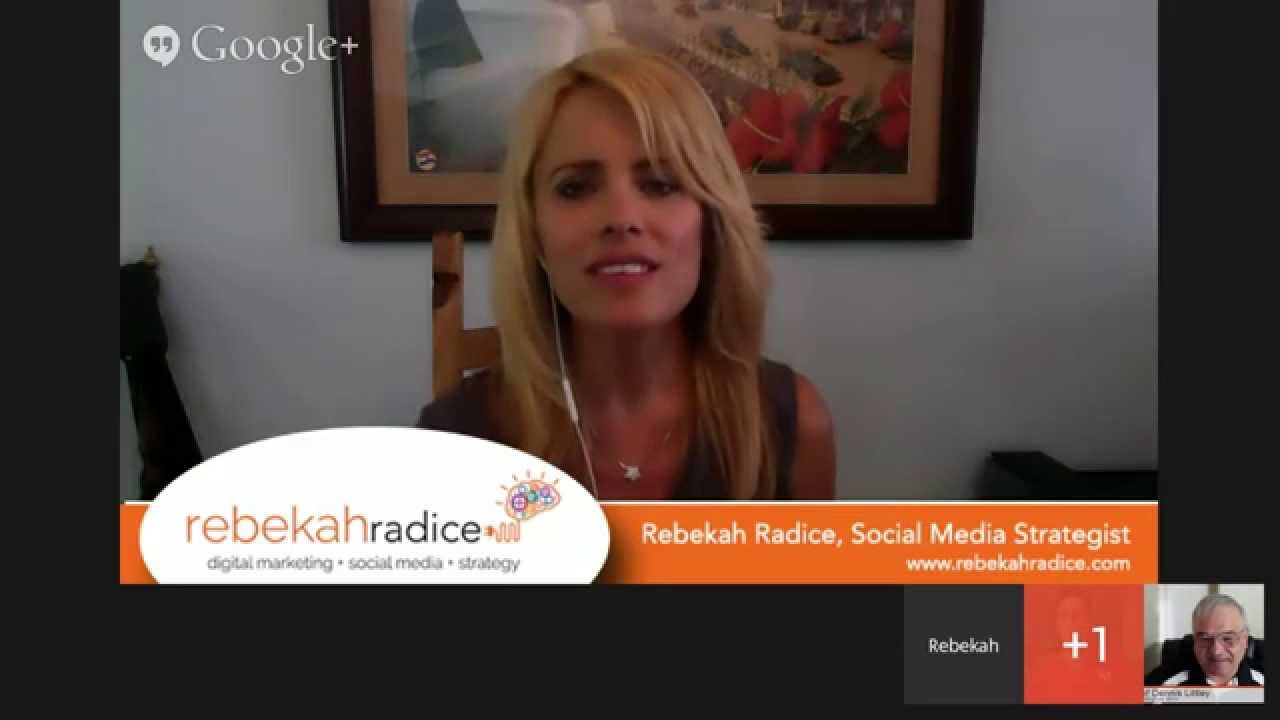
Rebecca Radice and Dustin Stout explain how to build an audience on Google+ by knowing who you're talking to, delivering value, and staying consistent with your visual brand. They cover voice, authenticity, community building, and tools like Canva and Photoshop for creating reusable templates.
Chapters
Hey everyone, I'm Chef Dennis Littley and welcome to the 2nd Annual Virtual Bloggers Conference and we're here for session 9. It's almost done, we have 2 more after this and it'll be a wrap for this year's conference. But today we're going to be talking to 2 of the most engaging plussers that I know. They do some amazing work with the designs of posts that they do on Google+. They get a ton of engagement and it's just really fun reading their posts on top of that. There is some method to their madness and how they do things and we're going to get them to share some of their tips, strategies, and tricks that they use to create such great posts on Google+. First we're going to say hi. Rebecca, so nice to see you.
Oh, always— oh no, thank you. Always fantastic to To see you and of course Dustin, I'm excited about our topic, going to be a lot of fun.
Absolutely, Dustin, and you're both coming from sunny California today. Yes, we were talking about that and it's sunny in Florida for now but we're expecting rain as we do every day between 4 and 6 o'clock and it's been almost biblical in nature the past few days.
We'll start building that ark just in case.
We have gone from—
I've got a book that has the measurements back here.
You could actually send some of that our way. We desperately need it.
We'd appreciate it.
Yeah.
I would love to package it. We saw also that the first tropical storm of the season is forming right now too. They don't think it's going to do anything, but it's there. That's the beginning of hurricane season, which officially started a while ago, but this is the first one. Let's get started with our own kind of storms. You guys have really worked up a storm on Google+ and make these posts that are just— I I look at them with post-envy every time I see them and wish I had that creativity to do that, but I don't, so that's why I brought you here today. Let's start talking about it. You guys feel free to engage with each other, swap ideas out. If the viewers have questions, leave them in the comment bar and we'll pull them up and we'll address your questions. Let's get started on this. Rebecca, we'll start with you.
Yeah, absolutely. Well, and I think Dustin and I have a lot in common in how we share, most definitely. I think one of the biggest things that I see as I follow all of Dustin's postings is we've both really identified who we're speaking to. So I think one of the key, or really the foundation of sharing engaging content is knowing what your followers, your community what your community is looking for and then giving it to them over and over and over again. A big misconception is that maybe it's just one type of post does well and you need to vary it and kind of try different methods every single day. I disagree. I think if you can find that sweet spot, if you find that type of content, if you find the kind of content and then the way you're presenting that content, if you can figure out what that sweet spot is for your community, community, then just continue. Just continue to give them exactly what they're looking for. Of course, there's always variation. Nobody just likes one simple thing, but it really does come down to understanding who is that target market, what do they like, what are they out there talking about, what kind of content are they searching for that you can become that go-to resource. How can you in your day as you're out there reading stuff, as you're out there sharing other people's content, how can you position that and share that content in a way that your community finds very interesting, that they find it unique, that they find it solves a problem or a need for them. Back to my number 1, if you want to create engaging content, you really got to understand who your target audience is.
Yeah, and I, I, that's exactly how I've approached everything that I do in social media, knowing who it is I'm talking to. And that's something that, you know, in the beginning we kind of have to struggle with, we have to like really wrestle with that because what I found for myself and for a lot of bloggers that I consult with or the business owners that I consult with, they have a really hard time locking down who exactly that audience is because they want to serve everybody. I mean, we all want to reach the widest, furthest, deepest audience we possibly can, and it's hard sometimes to say, "No, we're going to narrow it down to this niche group or even, you know, a couple of niche groups that we identify with." But, you know, in my findings, what really works for me is in my mind, I picture one person that I'm speaking to that this post will benefit. So, you know, I'll pick— if I'm explaining something, you know, like basics of social media, I'll pick, you know, my wife or, you know, a good friend of mine who's not really into social media, and I will write the post as if I'm speaking directly to them. And that's helped me to really hone the voice, and I feel like people can relate to that. They hear that in the voice. It's a real person talking to them. So that's one trick or one tip that I kind of give in honing the audience, because it really does When you speak in general and you generalize people, you'll never get— you'll never touch a person the way that you would as if you were talking directly to them. So I do my best to talk directly to a person.
Yeah, that's such a great point. That definitely comes through in everything that you do, that you have created that persona in your mind and you know exactly who that person is that you're talking to, whether it's just a social media post, whether it's a blog post, whatever the case might be. And I think—
Random person.
Right, yeah, we all want to cast a wider net, right? That's what we think social media is all about, about gaining as much visibility as possible. But the truth of the matter is, you just hit it at its core. Where social media becomes extremely powerful is when you can tap into that exact niche, that exact target market. So if you can identify who that person is, really get very clear in who do you serve. And then what problems do you solve? Just write down what are the top 3 problems you solve every single day within your business, and then start writing about them. I think you'd be amazed at how drawn that right group of people is to your content.
Right. And you touched on exactly what I— what the next part of my process is. So the first part of the process is identifying who, what person am I talking to. But nextly, what problem am I solving for them, or what value are they getting out of this? Because everybody who's consuming social media, they're in it for one reason. They're in it to get something for themselves. They're not in it to get something for you. So you have to approach everything you do with, what are they getting out of this? Are they getting entertainment value? Are they getting a laugh? Are they getting something that's super useful or helpful in what they're doing? Are they getting a pretty face? You have to figure out what's in it for them, because that's everybody's favorite radio station, WIIFM— what's in it for me? And craft your post to give them something and make it clear what they're getting out of it.
Yeah, well, and I think if you go at it from that point of view of answering the what's in it for me, that takes you into probably what would be the next piece. Which is be a valuable resource. If you go into sharing content on a daily basis from that point of view of how can I solve that problem, how can I help somebody make their life better, make it easier, solve that big issue and make it simple for them. If you come from that place of giving and just giving an enormous amount of value without ever expecting to receive anything in return, That's where you start to see those exponential results as well, because you're coming from a very different place than that person who is— and we all know them, you know, just hard sales, in your face, always selling their product, which of course there's nothing wrong with that, but there's got to be that balance. So I just love how that just so well transitions into all of the content that you share, Dustin. You've gotten just super, super clear on who you're talking to, so it's very easy for you then to answer that "what's in it for me" question and provide just awesome content that they find enormously valuable.
Yeah, it's almost like we coordinated this talk. I feel like—
I know!
Because that's exactly what I would have said next, and you said something that I would have now said, or will now say, is that when you do this consistently, when you identify the person, when you identify the value that they're going to get, the problem that you're going to solve, you do that consistently. The big thing is consistency. You become the go-to person, the source of helpful resources, and that's how you grow engagement. You're not going to, you're not going to take, you know, what we say today and instantly go out and have massive amounts of engagement and followers unless you've been building it already. It's about that forward momentum that starts to build and build and build. If you go back to my early days in Google+, you know, people don't remember we all started at the same level here on Google+. I wouldn't get much engagement at all. I had to build. I had to be consistent. I had to go through the routine and figure out and work through the nuances and refine my voice and get my audience attuned to how I communicate, because everybody communicates slightly differently. And so what I've done is create, you know, that consistency and that reputation of, hey, I'm really trying to give value and I won't waste your time. And if I am going to waste your time, I'll let you know ahead of time if it's something just completely stupid, because every now and then you need some stupid in your life.
If you did waste our time, it's always entertaining.
Right, exactly.
Yeah, well, as I always say, you know, if we're not having fun, then what's the point? You've got to enjoy what you're doing. You've got to enjoy the people that you do it with on a daily basis. So, you know, I think that goes back to the point of know who that audience is that you're trying to reach. So obviously the people, the community that you've created, they appreciate your silliness. Whatever those posts might be, they like to engage in that as well, whether it's blowing off steam, whether it's just something funny you found, whatever the case might be. Again, none of us are one-dimensional. We're not just solely what we do for a living. I think it's important that you talk about those other things that you're passionate about or you enjoy doing on the weekend or sharing pictures of your kids, which is awesome. I love that you do that. I think those are— the unique ways that we can let people gain special insight into who we are. I think you made a great point, which is don't be afraid to get in there and test the waters. Post different things. Trial and error is really where so much of that engagement comes from because you were just kind of pushing it out there and saying, hey, this is what I like, do you like it too? And you started to get a feel for What are they looking for? What is that content that's really resonating with people? So it's not just simply pushing out maybe work-related stuff all the time, but testing the waters to see, hey, if I throw something personal in there, are people going to interact and are they going to like it? And hey, yay, they do. So you can do more of that.
That's scary though, right? I mean, putting your personal life on the line a bit. But I think it really humanizes us. It gives that human feel that we all can relate to in some way. You know, because it's easy to become, you know, to want to aspire to be the next Rebecca Radice and, you know, just post amazing business content all day long. You know, you can become the next Guy Kawasaki and people just think you're a superhuman and they can't relate to you. But I love how, like, you do it and how Guy does it. Guy will come in and just give some human sides of of yourselves that just remind people, hey, I'm just like you. I'm sitting in front of a computer, I'm on my iPhone or Android, I'm just like you guys having a normal life. I'm not some robot account that only talks business, social media, and content marketing.
Yeah, yeah, no, and that's a great point too. And just to back up real quick to the scariness of that. I think everybody has to know their limitations. You have to know what you're willing to share, what you're willing to put out there, because of course that's when people get themselves into trouble, when they start interacting in conversations they have no business being involved in or sharing stuff that they never should have shared. So obviously, you know, you do need to know what you're willing to say, what you're willing to engage in. Then yeah, just start putting that content out there because it does, it makes you accessible. It allows people, I always call them coffee table conversations. They allow people to just kind of come in and start saying, oh my gosh, Dustin, you're a dad, that's awesome, I'm a dad too. So it gives you that commonality, those things that really bind us as human beings that allow us to have those meaningful conversations. And then take that relationship to a whole other level. It's really quite amazing to me when I'll share something fairly personal and I do, I am that person that holds things kind of close to the vest. So for me it's been a little bit more difficult so that not necessarily fear but that need to hang on to things totally resonates with me. As I've allowed myself to put more of me personally out there, it's always amazing to me how people connect to that. So I think it's really important that we remember that, that we're all human beings. You know, at the end of the day, we're all looking to get to know each other, just appreciate those unique things about us that make us special and allow us to connect on a different level than, say, that social media post or that content marketing —post.
Yeah, and I'll add one last cherry on the top of that, that I think really makes the engagement 100 times more valuable, is when you actually go back in when people are leaving comments and you comment back to them, or you comment on some of their posts. I'll give you a quick story that totally proves the point. Chris Brogan is one of the most well-known people in the social media space. He has a cult-like following when he goes to conferences. I can tell you firsthand, when he was at Social Media Marketing World, they had to sneak him in a back door, and he was still mobbed when he got in. But that guy, I'll tell you what, he, like nobody I've ever seen, has an ability to connect with people in a real way. So he had commented back to me a few times on either Twitter or Google+. He wrote a post one time saying, "Hey, I like this guy," and it was a post, it was me. And I thought, okay, that's cool and all, but did he really do that? Does he have like some kind of social media manager doing that for him? I was flattered, you know, I bragged about it, you know, to all my family and they were like, who's Chris Brogan? But when I met him at Social Media Marketing World, I didn't even have to introduce myself, he goes, oh hey Dustin. I was like, what? Huh? You know who I am? You're Chris Brogan? But the human element, the fact that he took the time to remember my name, to know my face, and took the time to engage with me is invaluable. I mean, I'm like a fan for life now because he did that. So when you're out there, don't forget to come back to the comments and leave a comment, you know, reply to people, thank them, be Be gracious, be generous, you know that whole golden rule thing that we kind of forget about, treat others how you would like to be treated and such. I think it makes all the difference and that's the cherry on top. You can create all the engaging posts in the world but if you're not going in there and doing the engagement, you know, following up with it, then you know, you're doing yourself a disservice I think because eventually people will go, "Oh, they're not even talking to me." That.
Yeah, no, it's such a fantastic story. It really does, I think, hit your point home, which is you can create all the beautiful engaging posts you want, but if people don't feel you're accessible, if they don't feel you're interactive, if they don't feel that you care, which that's how Chris made you feel, none of it matters. You have not created that moment, that unforgettable moment where they just walk away going, "Oh my gosh, that Dustin, he's amazing. Not only does he create this phenomenal content, but he's just a real guy. He's in here, he's talking to us, he's answering our questions, solving our problems." It really does. I love that point because I don't care what level— you mentioned guy— I don't care what level you're at, if you can't you don't still take that time to come back in and let people know that you truly appreciate them, you will not continue to grow, you will stagnate, you will not cultivate a community that cares about you.
Yeah, it's a win-win for everybody when you do that because you're showing your human side and that you do care, and they tell all their friends and relatives, and like you just said, you told them all, and they may not know who Chris Brogan is, but As they see his name, they're going to pay attention because it matters to them.
Yeah, I remember I was talking to my mom and I was like, "Mom, I met Chris Brogan at Social Media Marketing World." She goes, "Oh, that sounds fun." That's nice, dear.
Say hello to your little friend next time you see him.
Uh-huh, exactly.
He's sold millions of books. He's the man. That's great. We had our own geek moment. Another hangout with Hulk Hogan?
I'm still waiting for him to come around. You know, we don't live that far apart anymore. So Terry, if you're out there watching, you know, I want to come over to your restaurant.
Do it. I'm sure he'd be— he's such a great guy. I'm sure he'd be— just show up there one day, be like, I'm Chef, I'm here for the Hulk.
But we did engage briefly at one time, and when I sent something, he goes, asked me about being on the show, he goes, oh, what you cooking, brother? And I could just hear the tone in his voice when he— how he typed it, you know. And I said, I'm not cooking anything, it's a talk show. Too funny. We have some questions up here, so let's pop them up if you don't mind. And Jeff is in the house and he wants to know, you can always tell visually a Rebecca Radice or Dustin Stout post image. How long did it take you to come up with the templates that you use for images that you share with your posts, and when will it be time to change it up?
That's a great question. For me, it's always evolving. If you look back, you know, Dustin mentioned going back and looking at our early G+ days. It's definitely been a huge journey for me and just figuring out what works, what doesn't, what feels right to me. So from a branding perspective, It's definitely been an evolution or a process, and I'm constantly playing around with it, tweaking it. What I have found that works for me is probably something I'm going to stick with for quite a while, just in terms of my look and feel, those colors, fonts. But it is, I think it's a critical piece to allowing people to just instantly recognize your content. Especially in this day and age when everything is moving at the speed of light and stuff is just zooming by us so fast. If people can't just immediately pick out your content, it's really going to get overlooked rather quickly. I do agree, Dustin, you have totally nailed your look. I know you just did a big site redesign not very long ago and just really echoed everything that you've been doing with your images. I think that's another important piece too of creating engaging content is making sure that you're streamlined. Making sure that your look, everything that you're doing is very consistent across the board. Dustin, I think you've done a terrific job at that. I'd love to hear from you how long it took you, how you kind of came through your own process to where you are now.
I'm a professional designer. That's what I do. I mean, branding, web design, I mean, that's kind of my life. It's what I've lived and breathed for the past decade or so. I don't know, it's been too long. So I mean, for me, like, I've always been refining the process. I've always been refining the, you know, the style, my personal taste. But what I've really been focusing on is, is more of a you know, just going back to that, you know, relating to people, providing things that people love and appreciate and can interpret universally. So finding a style, a style that's both simplistic enough for everyone so that the message shines through rather than the fanciness. Sometimes, you know, I don't do a great job at that, but I think Rebecca, you've nailed down your ability to communicate through visuals And it just breathes, it radiates you every time you post one. It's Rebecca Roddy, and it's fabulous every single time. Thank you.
And I have to say, thank you, that means the world to me because I am not a designer by trade. I mean, that's obviously, that is your career, that's what you went to school for, that's what you focused on. I am totally self-taught. I don't know why one morning I woke up and said, I want to learn Photoshop. Who does that?
Yeah, well, who says that and actually can do it? I've said it and I can't do it.
Well, I happen to be fortunate. I have a son that knows it inside and out. He did go to school for that, so I've leaned on him. But yeah, my point was going to be that It's something that's doable for people whether you have training for it, whether you don't, whether you want to outsource it. However you want to get it done, it's just committing to what you feel really speaks to your brand. What you really feel is a direct representation of who you are. Gosh, Dustin, you just said it perfectly in that it becomes your message. It is the method to get your message across. Yes, it's not just about looking, making something that's pretty.
And just real quick, a lot of people think I did go to school for this. I didn't.
I've never taken a Photoshop class. Oh, sorry. See, I just assumed. Yeah, I'm completely self-taught.
I just happen to have a gift, and I say that in humility because I have nothing to do with my gifts. It's what was given to me. But back to Jeff's question, you know, the template aspect, you know, that seems like, you know, we have this template. I've been refining mine because I'm really gearing up to do a class. I want to teach people how to do this because it really is simple. You know, if you break it down to, you know, what is the message and how can I optimize it so that people interpret that message? And it's really just, you know, framing starts with framing. Visual balance, and one simple message, not trying to communicate too much in one graphic. So I've actually created some templates that I gave out to my insiders list, my email list, a couple weeks ago. Hopefully they're using them. I'm waiting to hear feedback on them to see if they actually work. But, you know, it's a process. I mean, it's something that I constantly test, Jeff. I constantly test different things, you know, what dimensions work on different social networks because every social network is different. I've been doing some extensive testing in that area, just trying to see which— what's the optimal— what's the optimal image proportion and size on each network, and I'll be releasing my results on that very soon. But it's, I mean, it's ever-evolving, but if I were to give you one solid piece of advice, it's just Just communicate one thing. Communicate one idea, one thing that will hook the reader and it will communicate something that— the main point of your message or at least the hook of the message. And avoid clutter at all costs. Great, great points.
Oh my gosh, clutter, there's nothing worse than that visual that A, they try to communicate way too many things and has so much going on. That your brain just goes into overload and you don't even know what you're looking at or what the message is supposed to be. I think that's awesome. I know I saw something you talked about that, the fact that you've been working on those templates, and I think that's exactly what everybody needs is find what works and stick with it. It's kind of like what I was saying at the beginning, do more of that so that you do create that consistency, but it also makes it easy because this shouldn't be burdensome, it shouldn't be difficult, it shouldn't be something that feels heavy to you every single time you get out there and share something. You're like, "Oh man, I got to put another graphic together." That's why I said too, there are people like Dustin that are just phenomenal at it. Give it away. If it's not something you enjoy doing but you're pretty clear on what it should look like, give it to somebody that can do that for you and allow them to take it and run with it so you can be consistent in getting those visuals out there. Because they do, they make an enormous difference. We've all tested and tested and tested, and just from not only the branding perspective we talked about, but from an engagement and an interactive perspective, you're taking up more real estate, you're using more space within every social network, and I think you're just really grabbing the attention a whole lot quicker than than say just a standard text type of post.
I have a question for both of you before we go on too. You both are very good at Photoshop and you use that, but for those Photoshop impaired people like myself, what do you guys think of something like Canva that's out now? Love it.
I love Canva. Absolutely love it for that exact reason. You don't need To be a graphic designer, you don't need to have a design background. They have just beautiful templates that their designers have already created right in there, and you just drop your information in, drop your image in. It just makes it almost effortless.
Yeah, and I'll say Canva is doing something that really needed to be done. There's a lot of tools out there. As much as I love Photoshop and Illustrator and all my professional fancy design tools I'm really pretty upset with them because they make it so inaccessible to the average person. And I mean, you know, I'm not going to rag on their business model at all, but, you know, I think they're really hindering their growth as a platform and the leader in this, you know, this industry by making it so inaccessible. I mean, somebody like me has to pay, you know, $60 a month just to have all these tools. But, you know, Canva is going out there and giving access to these tools, very intelligent tools, and nowhere near as comprehensive as the Adobe products, but Canva is giving access to average people to become more artistic, to be more expressive in their visuals, and I think, man, that is only going to do better things for the design industry, for designers like myself, and for the— just for the world in general. The internet itself is evolving to a point where visuals are very important, and I think Canva is one of the people who is leading the way. Now there are a couple other apps out there, like PicMonkey is one of them. Pixlr, P-I-X-L-R, is another one that I recommend and use. I'm actually putting a list together of some of the best ones, and I'll be blogging about it soon, as soon as I can test all of them, because I want to find the ones that really work the best. But there are tools out there. Find the ones that are the most intuitive for you. I know some people, Pixlr might be a little more intuitive than Canva for a certain type of person. But for most people's needs, I think Canva is the best out there.
Yeah, well, and for the most part, what I have found, and I think you have, you've spent more time with these other tools than I have, but. For the most part, they're apples to oranges. PicMonkey, Canva, totally different tools. Yeah, you're right, it does depend on what your needs are, what you're looking for, and then what kind of functionality and how much flexibility. Where I think for that person that just says, I am totally graphically challenged, I don't know how to put that together, Canva is such an easy drag-and-drop type of interface that it does really make it simple for people to start using graphics where they were really struggling before, you know, to be able to put that together because maybe they don't feel like they have the eye for it. Where, you know, the font, the look, everything about it is pretty much created for you. So I love it.
Here's a Lori Lazor just said, based on, on Canva, don't you think that sometimes with this dropping images in, it can look too stylized like Canva? The last thing you want when sharing the image for your brand is leave your followers thinking about another brand. Sometimes, sometimes when you use a template, you just have that, that look. Mm-hmm.
Yeah, I know exactly what she means. And one thing I want to teach about in this course that I'm creating— thank you for that note, it reinforces the fact that I do need to teach about this— is that, you know, you do have to come up with your own style. You have to come up with, you know, the thing that you like, whatever it is you're attracted to in visuals. Identify that. You know, what is it you like? Do you like the positioning? Do you like the background blur? Do you like the color tint of everything? You know, what is it that attracts you to the visuals that you see and try to recreate them instead of, you know, trying to recreate something like, you know, that's on— that you see on Canva or one of the templates on Canva, which they do have amazing templates. But I know what she means in feeling like it almost feels too templated. So play around with it, have some fun, and identify what it is you're attracted to visually and try to recreate that.. And within playing with that, when you take some time to play with it, you'll kind of find your own style. You'll refine it and over time, you know, through the experience of it all, you'll start to refine and build your own templates or your own look and style and feel.
Yeah. Yeah, yeah. And it's obviously incredibly important. That's really a big part of what we're talking about here today is creating differentiation, standing out from the crowd, allowing people to quickly and easily identify your content. But I also don't want to dissuade those people that are really struggling to put together a graphic. And so just to be able to put something together is an enormous win. So, you know, I guess there are two sides to that. Yes, I would say absolutely you should strive to create something that is unique to you. But on the other hand, if you're not putting together any graphics at all, this definitely does allow you— like that one— this definitely does allow you to at least dip your toe in the water and get started.
I know with me, I mean, I've been using them and I've been using a lot of their stock things, but I also see the advantage of you can upload your own images to it.. So you can just use the size of the templates and it still leaves you a lot of room for your own personal branding, I think. Yeah, definitely.
And you can— I haven't done this, but I know you can purchase images within there as well. So yeah, there's a lot of different ways that you can change it up and make it uniquely yours.
Lori just said she wasn't knocking Canva. Here's a question from Adam, and I don't know if we'll have an answer for for him, but no matter how great a blogger, plusher might be, getting the word out is the key to popularity. What's the secret?
Who wants to take that?
Well, everybody kind of wants to know what's the secret or what's the one thing, and it really is everything that we've talked about. It's not an overnight success story. Like I said, we all started at the same place here on Google+. We all had zero followers when it was brand new, and we all had to build that, the reputation, that engagement. And it's, it's the consistency, it's everything that we talked about. That's the secret. The hard work, the consistent day in and day out providing value. And, you know, sure, there's some, some elements of getting distributed distribution. You have to reach out to people, you have to build relationships with people, something that Wade Harmon talks about a lot, building relationships, leveraging each other's platforms. You know, on our social media hangout, for all our social media communities, we talk about other people's audiences, other people's content, other people's— you know, we utilize these relationships we have to help each other out, to, you know, build each other, one another up. So, you know, I have an audience, and, you know, Rebecca has an audience, and our audiences have similarities. They're interested in similar things. And so when we partner up and I share her content or she shares my content, you know, both our audiences benefit. It's not like we're manipulating anything at all. We're benefiting from each other's own work, and that takes reaching out. I mean, it took me reaching out to Rebecca. I can't even remember when we first met. It was probably because of Peg Fitzpatrick doing something. Probably. Yeah, but it takes time, it takes relationships. You know, reach out to people who are doing things that you're doing and connect with them. And, you know, share and share alike is kind of what I always say. Collaborate and and create together, and together you will thrive. Yeah.
Meg would have been here with us today, but she's in Australia traveling with Guy.
Yeah, well, and Dustin, I couldn't have said that better. To me, that is the biggest secret of them all, which is building relationships, just like we're doing here today. Social media is not you on a megaphone. It is not you just pushing out content. It's building those relationships, and then there's that law of reciprocity that comes along. You share somebody's content, they hopefully share yours because it is valuable to their community as well as it is to yours. And you just start to build that group of people because as we know, none of us, none of us succeed on our own. The only way we succeed is through each other's support. So if you can build that group of people, and this is where I get a lot of pushback from people. They say, "Why in the world would I want to team up with my competition?" They're not your competition. They are people that are actively within your space, actively within your industry, sharing the same content, talking to the same people. If you come at it again from that value-based mindset of there's always enough business to go around, all we can do is edify each other, support each other, and grow each other's business. There's so much more to be gained when you come at it from that point of view. I love what you said, Dustin. Yes, plus one, plus one. Plus one the heck out of that because that's exactly right. Yeah, it's just amazing. I don't know where it all began either, Dustin, but we have— just such an amazing group here within Google+ that does exactly that. We support each other in our wins. We pat each other on the back during those successful moments. We're cheerleaders. We're there for the frustrating moments of why is this not working or what's going on. So become that support to somebody and what you will what you'll see is you will start to build that community of like-minded people. People that are out there talking to the same group of people and all of a sudden it doesn't feel like it's this overwhelming undertaking to get your message out there because all of a sudden you're building this army of people that knows, likes, and trusts you. That loves your content and actively supports and shares it. Yeah, and I just wanted to—
I just want to say that Mike Alton just commented, Mia Voss did say that 2014 was the year of collaboration. So plus one to Mike and plus one to Mia for that one.
Couldn't agree more. And it's always amazing to me what starts to happen when you start to have those conversations, when you start to go a little bit deeper. Going back to what you said earlier about get involved in the conversation, start talking to people, ask people Ask questions, get to know people. You just never know what doors you're going to kick open. You never know what opportunity is going to come from that. I've heard so many stories just from listening to Mia's interviews of exactly that happening right here in the Google+ community. Getting involved I think is just key. If people don't take anything else away today, it's you want to get more engagement, you need to start to create that conversation. Boom! We get a little passionate about this, can you tell?
I had maybe a little too much coffee.
No, no. Okay, there's that too.
Alright, here's a question from Valerie Dumont, Rebecca Radice. Who do you feel equals who you are? Talk about it with image, right? But how a brand will do it is the same way. So, you know, I guess it's a personal profile.
Yeah, well, it's that same thing. You have to capture, you have to identify who the brand is. I mean, decide— that's a whole branding conversation that we can do a whole other segment on. But identify first who the brand is, what's the voice of the brand, what perspective does the brand speak from. Kind of create a character of sorts out of the brand, and you have to learn to take on that voice. It's a bit of a challenge at the beginning if you haven't really done the footwork or the handwork in creating that persona, the brand persona. But it's totally worth taking, you know, 45 minutes, an hour, sitting down, deciding what that brand voice sounds like and, you know, how it's going to connect to the audience and in what way, in what tone, and what, you know, what emotional ways it's going to, you know, allow itself to be represented. So it's tricky, but, you know, it just takes some time to sit down and say, you know, who are we as a brand? Who am I as a brand? And, you know, how are we going to relate that to the people that we're after to add value to? Yeah, yeah, definitely.
It's very similar, you're right. It's very similar to what you do for yourself. And so much of it is based in the corporate culture. So really immersing yourself in that, understanding what that corporate culture is. So what's your mission, vision, values? What are you trying to get across? And then taking that and as you just said, turning that into the voice of the brand. And I think where people really get caught up is thinking, well, this is a business, this is a brand, this is not a person. No, you need to humanize your business and brand. You need to make it relevant. To people. And how do you do that? You do that through creating those same conversations you're having in your own life. You're solving those same problems, helping people overcome their same challenges, and all of that obviously is done through content, social media, social networking. We're sharing all of this content, we're engaging in other people's lives. So it really isn't— it's no different than what you're doing. So it's figuring out What are you doing now in your own personal social media? What's working? What can you transition over into your brand or business? Because obviously if it's working here, you can figure it's going to work over here. It's just got to be in alignment, obviously, like I said, with that corporate culture. So I think Dustin is spot on. You've really got to start from the beginning and understand who you're talking to, who your target audience is. What are, what are they looking for when they get online and they're connecting with you on Google+, on Facebook, Twitter, wherever it is? What are they looking to gain? What are they looking to get out of that relationship with you? So really getting inside their head and understanding what their needs are.
Yeah, and I'll give you one quick hack, if you can call it that, of getting to that a little bit faster. One thing to do is to observe your audience. Observe those who are either using your product or are a client of yours or have used your services in the past, and see if you can dig up any of the, any of the posts or content that they've created because of your product or in response to your product or business, and figure out what that tone is. So if you have a lot of very enthusiastic people who are just in love with your content, or, you know, they raved about an experience that they had with your product. Find that tone, discover that tone, and repeat it, or take that tone and start to use it, because you found a passionate person in your audience, and that passion you can just leverage. You can use that same passion or that same tone of voice and start with that. You know, if you need somewhere to start, find, you know, find someone who's talking about your product or service online and mimic it, you know, because that's obviously your audience and that's what they're looking for, that's what they connect to. So start with that. I think, you know, there's a lot of brands out there who have really taken the tone of their audience. Some of them go back and forth, but I think Dunkin' Donuts does a great job at matching the passion of their your audience. Starbucks does a great job at matching the passion and showcasing. There's another little trick of the trade is just showcasing your audience. Showcase them and just shine the light on them because people love that. A lot of people think that we don't really like to interact with brands or people tend to shy away from brands. That's not true. Brands that we love, we get recognized by the brands that we love, we are ecstatic. I mean, I had Starbucks themselves like reach out to me once or showcase me once, and I was like, I was pumped. I was like, woo, yeah. So find your audience and find how they're engaging or how they're representing an emotional connection or experiential connection. And do that.
Start there. Yeah, speak in their language. That's a great point. I think it's perfectly acceptable, plus one, yes, to eavesdrop. As you said, pay attention. What are they talking about? Another two that quickly come to mind, one of my favorite brands to follow, and I don't even care for them, is Skittles. I just think they do a phenomenal job. Oreos, another one that does an amazing job. They have listened to what their audience is talking about. They have listened to what people are passionate about, and boy, do they just know how to deliver on that on a daily basis. So excellent point of knowing that language, because if you're not speaking their language, you're either speaking over their head or you're speaking in a way that just does not it's not capturing their attention. So to the point of engaging posts, you might want to go back and take a look at your last 5, 6 posts and figure out, is this speaking to somebody in your industry, maybe not necessarily your target market, or is it actually speaking in a language that that consumer or potential client understands? Absolutely.
And I'm so sorry, I busted up laughing. I just saw Lori's comment that says, stop Collaborate and listen.
Vanilla Ice and I, I, I.
Nice. A content marketer ahead of his time.
Well, here's another question from Lori while we're at it, and she says, how do you handle a diverse audience? Some people might follow me for social media tips and others for design-specific content.
Um, you know, Lori, in my observation of you, you're a very personal brand, it's very easy to just create a separate brand for that type of thing, create a separate Google+ page for design-only stuff. I'm the kind of guy, I liken myself to a John Saddington, or if anybody knows who John is, amazing guy. Or sort of a Guy Kawasaki. Someday I'd love to be the next Guy Kawasaki. But, you know, I have a lot of interests. I love a lot of things. I love design, I love content marketing, but I also love geeky stuff like video games, and I enjoy the occasional cat GIF. And, you know, I enjoy lots of things, but I don't really filter it. I don't really— it's not that I don't care, that sounds bad, but it's, you know, my brand as a personal— as a personal person, as a person, I have lots of interests and I really don't spend too much time worrying about, you know, is my design audience going to care about this? I just post it. You know, I just— if there are people who really want to follow me only for my design and social media stuff, they generally know they can go to my page, Dustin.tv on Google+ and that's the only content they'll get. But I think it all relates back to the human side of things. You know, we're all humans, we have various interests, and I don't think, you know, from a personal account profile that you should ever have to worry about that type of thing. I mean, you know, unless you've got really weird interests, you know, like—
I don't even want to start naming what those might be. Yeah, and I do I totally agree with you, Harrison. My Little Pony, something like that. And that only came to mind because I just saw somebody post something like that. But the '80s in me, I guess, just found that hilarious. But yeah, you know, obviously I think you have to figure out, A, are you coming from a personal profile point of view, then yeah, absolutely. I think you have the freedom to talk about whatever you want. If you're on a business page, I think you need to stick, you know, stay on target and focused on what your message is, what you're trying to get across. But it's also important, we've already talked about it, you got to inject that human side even into a business page because people do want to know that there's life out outside of what you do for 8 hours or whatever a day. They want to know what you're passionate about outside of your business. So there's always going to be that need to find that happy medium of how much is too much or how much is not enough. And I think each of us have to figure that out ourselves. It's just trial and error testing, putting that content out there again, and if it lands with a dull thud and nobody cares, well then you probably know don't I wouldn't do that again. But it just depends. It's really getting to know your audience.
Good advice.
All right, guys. We still have some time left, so if you have any other questions, please leave them in the comments section. We've had a lot of good questions so far and a lot of great tips from both of you on designing, and it's been fun.
I saw a couple comments saying that they love this +1 overlay that I created. I love it.
It works.
I got the idea yesterday. If anybody didn't see your interview with Ryan Hanley, Chef, it was a fantastic one. Ryan Hanley has this thing where he loves drawing out a +1 on a piece of paper and holding it up when he agrees. I just got my brain thinking, I'm like, how can I make that easier for him? I created this little +1 overlay. It's got a little bit of transparency so you You can see me behind it. Hi! Love it.
That's cool. So I take it we're going to start seeing that a lot more with Ryan?
In fact, you know what the heck, I'll probably just release it here after the show. I'll just put it out there. Awesome. Mika's saying hi to everybody.
Yes. I heard my dog in the background and now Mika in the background. It is a Sunday morning, I guess, at home.
It's Sunday, that's for sure. You know, I'm all alone. My wife saw my schedule for this weekend starting on Friday and said, "I'm going back to Philadelphia because you're going to be preoccupied for 4 days." Good for her. Yeah, it was good timing. So we've had a great panel today. We've had a lot of good questions, and Social Media Day is tomorrow as well too. If you guys are around you and I are hosting a social media event. We'd love to have you drop in. We're going to be on from 10:00 to 1:00 Eastern Standard Time, so 8:00— I'm not good— 7:00 to— oh my God— 10:00 Pacific Standard Time, or daylight time, whatever it is. We'll be on that tomorrow if you want to stop by. Thank you so much for being here. It's been a great panel. Rebecca, it's Always nice to see you. You too. Did a great job today. Dustin, my friend, brilliant. Always happy to have you here, and I do love your posts. They make me laugh all the time.
Good, good. If that's all you get out of them, I'm happy.
I get more than that, but it is nice to laugh. Some days a good laugh is a wonderful thing, especially when you're having those kind of days. Thanks for coming to the 2nd Annual Virtual Bloggers Conference, Session 9, and I'll be back in an hour with Session 10, and we're going to be talking about Pinterest with—
I'm looking forward to that.
This is great because I get to learn something with every session, so I'm loving it. Alright folks, thanks a lot, we'll see you soon.
Thank you.









