Good Day Google+ - Build Me Up Buttercup
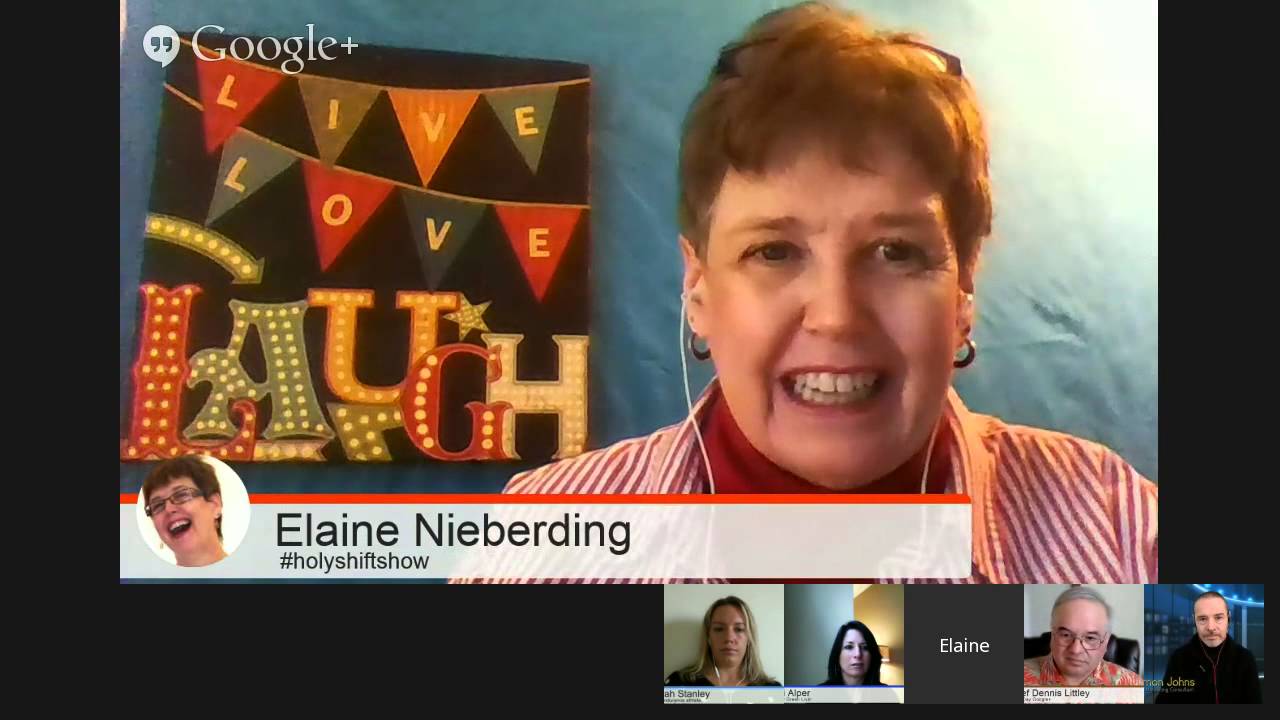
The episode of Good Day Google+ titled “Build Me Up Buttercup” is hosted by Chef Dennis Littley and features a panel of health‑focused creators: ultra‑endurance athlete and organic farmer Sarah Stanley, former lawyer turned green‑living advocate Lori, oncology‑nurse‑turned‑spiritual‑wellness guide Elaine, and internet‑marketing specialist Ammon Johns. The conversation weaves personal stories, practical tips, and philosophical viewpoints around five core strands: (1) the integration of mind, body, and spirit for optimal health; (2) the environmental and economic dimensions of organic farming and home chemical detox; (3) the role of positive mindset and spiritual identity in healing; (4) actionable steps for individuals to adopt greener lifestyles; and (5) strategies for building an online presence and community through social media, blogs, and live Hangouts. Panelists share anecdotes about ultra‑marathon training, the labor behind organic produce, detoxing bathroom cabinets, using XSplit for video production, and leveraging Google+ for authentic engagement. The show closes with each guest promoting their own platforms, resources, and upcoming events, emphasizing that small, playful, and purposeful actions can collectively “build up” personal and communal well‑being.
Chapters
Everyone, I'm Chef Dennis Littley and welcome to Good Day Google+. This is actually my second show of the day. Boy, I was really ambitious today. I came to you earlier from a parking lot of BJ's Wholesale Club where I was showing off the new Ford F-150 and having a good time out there in shirt sleeves and shorts in the beautiful Florida weather. I actually just missed the rain. It just drizzled a little bit, but now it's Nice and sunny again and not raining, so we're happy. And I got a great show for you today, and you saw the name, it was Build Me Up Buttercup, and it's because today we're gonna build you up a little bit. We're not gonna tear you down like the song says. Thanks for Elaine for pointing that out. But we're gonna help you build you up a little bit with some healthy tips. We've got some healthy food bloggers, some holistic coaches on, and Ammon is here to build you up with internet marketing. So, you know, once we get you happy and healthy, we got to put you out there in front of everyone. So thanks for coming today. If you have any questions or comments, please leave them for us and we'll do our best to get to them. And right now I'm going to introduce our panelists. And like I said, if you have questions for them, please feel free to leave them. So today, coming to us from sunny Colorado, Sarah Stanley. How you doing, Sarah?
I'm doing great. Thanks for having me.
Oh, it's my pleasure. And I'm so happy that you reached out and asked about coming on, and I got to meet you live here on Google+.
Yeah, and we met actually live at ShiftCon a few weeks ago, I guess a few months ago now.
I know, and I think about live meetings now are almost secondary to meeting live online. It's funny how that works. You know, you think about meeting people all the time that you've met online, and then when you meet them online afterwards, it's like a big deal because you get to connect with them again.
Exactly, you actually get to give them a physical hug.
I know, that was fun. I think the best response I've ever had to meeting someone had to come from Jean Layton. She was so excited that we finally got to meet, and I was too. But I think that was the best real hug I've gotten from one of my virtual friends. She was just— she was wonderful.
So that's awesome.
Yeah. And then we have Lori, and Lori is also from ShiftCon, and you were on last— a couple weeks ago with Leah, and we were talking about all the healthy good stuff. And you're also a recovering lawyer, right? Attorney.
Still recovering, always recovering, yes.
Always recovering. It's funny when you talk that lawyers can be regular people too. You have to remember that. It's just their profession.
It's like any profession, right?
Yeah, I have a really good friend down here that I met when I first moved, and she's an attorney, and we always joke about that and different things. And then also her partner, I'm trying to remember his name, I can't, they were doing a show on and we were talking one time, he goes, Dennis, you know, unfortunately, we were talking about this other attorney, he says, what really makes a good defense, or not defense, the other kind of attorney really good is that they can be a real asshole sometimes. I went, yeah, that makes sense. Oh my God, you know, the one that's really yelling at you. But he goes, sometimes it's not a show either. But he was a different story.
Right, right. And that's why I left the profession.
That's— well, you know, you gotta be happy about what we do.
Absolutely.
All right, so let's move on.
And Elaine, thank you so much for being on today, and this is our first meeting, virtual or otherwise, and I'm so happy that we got to do this.
Well, December is a good time to get together for celebration, festivating together, getting acquainted, and finding new ways to de-stress because the holidays can be a stressful time. I'm hanging out from the state of Maryland, and I spell that M-E-R-R-Y-L-A-N-D.
I was wondering if you were going to do that. I saw that on your shows. And usually I'm coming from the state of confusion, but today I'm coming from the state of Florida. I like to say that. I'm glad you could be on with us today. It's really nice to see you, and I've been enjoying your shows, and especially some of the ones you've been doing with the F-word, and we're not talking about Facebook.
So we're having a lot of fun kind of gathering a flock. There are so many wonderful build your business shows on G+. I wanted to do something a little bit different, one about health and wellness but also one that really helps showcase dumping seriousness. We get all too serious about too much stuff. Learning or relearning how to bring play into our life both for self-care and to Richer relationships with people is kind of what I'm about.
Well, that's good, and that's a good way to look at life. And, you know, I'm glad you're bringing that show to us on Google+ because there's, there's enough marketing and just straight shows like that. You know, people can have their pick of that. I like to entertain as well as provide some information. So, and now we're coming to the information part of the show too, and that's Ammon Johns coming to us from Chilly England.
It's cold here, but glad to be here. I'm already feeling warmer. And yeah, I guess I'm one of those boring marketing shows.
You know, it's, it's a good service and teaches us because we have to know. We can have all the fun we want, but if we don't know how to do anything with it, we're just sitting there having fun by ourselves.
Exactly. You know, it's a lot easier to play on a nice carpet of money, isn't it?
Oh yes, yeah, or at least to get your message out, even if you're not thinking of the money, which is always nice, but just to be able to reach more people and find that market that you're looking for. We need people to really help us to get that. And that's what you're at. Absolutely, right. And I'm in awe every time I see you. I just love your picture and that back screen. And I did buy XSplit. I haven't used it yet, but I have it. That is such a cool-looking screen.
It's just so nice being able to switch them on the fly when I want to, because for some of my shows, the ability to just instantly switch backgrounds, pull up a different screen so I can put something on the video or something like that, it's what I need to be able to do.
That's wild.
When I'm talking about websites and I need to pull up the code, it's terrible to just screen share and there's a blank screen of code. It's much easier when you can pull it up and actually point your way through it because your camera is overlaid on it.
Yeah, gotta love it. Gotta learn. We'll have to talk so I can learn how to use XSplit. Things have been so hectic though the past couple months. I'm trying, I'm hoping January calms down a little bit so we'll get together. But thank you so much for coming on today. I'm glad, I'm glad you could make it.
Very welcome.
Alright, so we're gonna get on today, and, uh, Sarah asked about replying to them. Other than what Elaine just said, like saying hi to someone like Christopher Vogelman. Amonize me, Ammon Johns, he works hard for the money. That's another song. You can reply to him that way, or if you go into this, onto our page where we have the comments, you can leave direct comments there in the comment section. I want to say hi to a few people. Coach Moore is here. How you doing, Coach? It's always nice to see you in the audience. Kristen Drysdale is here talking about Bill and Ammon's bogus hat. It's not all that Stuffy. Oh my goodness. And Virginia Parsons is here. Don't take life too seriously. Live, love, laugh. Keep shining, Elaine. Mary Youngblood Geiger, and she's one of yours, I think, too, Elaine. Thank you so much for bringing her over with us.
Yeah, I got to know her through, uh, Zara Alter. She was on one of Zara's shows recently.
Zara was on before you. Alright, so we have David Pipe is in the audience and we have a nice— I know there's more but we'll start for now. We have a nice bunch of people here anxious for us to start. So let me turn it right over to Sarah since she's next to me on the screen. And Sarah, let's talk about what you do on and off the Plus or what your passions are, anything you'd like to talk about. What's your life all about in Colorado?
I like that, what are you passionate about? Because if more people ask that, I think it would really reframe how the world lives and works. What am I passionate about? I'm passionate about probably everything, life in general, but really helping people understand that wellness is mind, body, spirit. One of the phrases I say is, "You are what you eat, drink, and think." That's pretty key to having a well life. Sorry, somebody else was calling me on Google. I just Deleted it there. I'm an ultra-endurance athlete. What does that mean? I run 100 miles through the mountains all at one time. Just had my 4th 100-miler a few months ago, the end of August.
You mean at one time. That's—
nonstop.
Not over a couple days.
Nope. It's nonstop. It could be anywhere from 24, 30+ hours. No sleep, you run through the night. That's my sport. I was sponsored for a few years and enjoyed that. Now I just do it. I still compete, but not as a sponsorship model. I also do long-distance cycling. I think two of my favorite cycling tours were from San Francisco down to San Diego. That was like 600 miles in 5 days. That was pretty aggressive. Then I also rode my bike from DC to New York City. That was about 300 miles in 3 days. I'm really passionate and really strongly believe in integrity. What I write and speak about is really what I live day to day. What you see me post on social is exactly how I live my life when nobody's watching. Integrity is an integral part of my values, of how I run my business. And how I live my life. I run on a primarily plant-based, all-organic diet because I'm really passionate about organics. I toiled on one of the first certified organic farms in the country, so I have over 30 years of organic farming experience and practice. It's really beneficial to bring that experience firsthand into speaking engagements and talks and just working one-on-one with clients and really helping them understand the importance of organics. How that, you know, it's not only good for the food aspect, but for the land, for our environment, for the air, water, and the air that we breathe. I'm passionate about a lot of different things, but mainly, you know, health and wellness, and just helping people, you know, understand that life is meant to be lived freely, and really helping them understand that when you have your health and your wellness, you are living a free life. Because a lot of people are kind of enslaved to to the desk or going to the doctor all the time. That's not really freedom. I really want people to understand that you can have freedom when you have your health and wellness. How do we get that back into their life?
I think that was one of the things that stuck with me the most at ShiftCon was when they were talking about the expense of eating organic or the expense of eating better foods. Let's face it, they are more expensive. The end of the statement was, "Well, you can pay now, or you can pay later because you're going to have more doctor's visits. You're going to have bad health, and things are just going to cost you more later in your life besides the quality of life that you're going to have because of eating all the junk and things." For me, now, I got a lot of stuff to get rid of.
Meredith: Yeah. Another thing I'm passionate about is really detoxing people's homes. Not just their kitchen, and their fridge, and their pantry, but their bathroom cabinets. I've always said that you can tell the health of a person by looking in their bathroom cabinet. That's typically where people keep their medications and all of these different lotions and potions. What you put on your skin is just as important as what you put in your skin. Your skin ingests what you put on it. Body care from toothpaste to shampoo to lotions is really critical that those are as clean as possible. A lot of the conventional products have very harmful ingredients that disrupt the endocrine hormone system, and that can cause a whole host of problems. Back to your comment about organic is expensive. I have a very unique take on that because I literally toiled on an organic farm, and I know what it takes to get a really nice tomato to somebody's plate. If people actually worked on an organic farm, 90-degree temperatures, rain, snow, 80+ hours a week, I don't think anybody would ever complain about expensive organic food ever again. I have a very deep appreciation, and I really want to share with people that it's really not that expensive when you look at how much care and time and effort I put into bringing food to your plate, to your mouth. It really is pennies. Just the whole ramifications of sustainable practices, too. Healthy air, and we're not putting toxins into the environment that are going to get into your body. Then the point you brought up, disease is very expensive. People think eating healthy is expensive. Disease is way, way higher on the money scale. Cancer is very expensive, and if we can prevent disease and switch people's thinking to eating healthy, eating organic is way, way cheaper in the front instead of the back end, we can really have a very strong revolution in that field.
Amon just put up what Christopher Vogelman said, "Food is medicine." It is.
It's either medicine or it's disease. We have a choice every time we eat. Nobody's forcing us to eat something. We have a choice if we want to eat for health or eat for disease.
That's true. When you were saying about it not being expensive when you think of how much work went into it, same goes true. Think of it as the regular fruits and vegetables that are being mass-produced and not really cared for as fast food. Look how cheap fast food is compared to going to a good restaurant where they're going to put care and put work into your food. That's a good way to think of it. I'm glad you brought that up about the work that goes into it. What do you have up there, Em, and I missed it?
Just saying, pay now or pay later.
Yep.
Gotta love it.
Okay.
Well, thank you for that. Oh, and I got to ask you one question, Sara.
Yeah?
How did you decide that you wanted to run 100 miles at one time? You didn't just wake up one morning like Forrest Gump and go out for a run.
No. So growing up on an organic farm, I've been athletic since the day I was born. I mean, lifting heavy boxes boxes and picking up rocks and doing hard physical labor. I've always been athletic. It's just always been in my blood. I started running when I was 14 and have been basically running ever since. I did a bunch of marathons and really got tired of the road racing scene, so I switched over to trails almost 100%. I'm like, "Okay, I'm running trails full-time." Trails are dirt trails through the mountains and hills, and they're pretty tough. I'm like, "Well, I might as well sign up for a 50K." I did a 50K and did really well. Then I'm like, "Okay, well, this is going well." I had a marathon 2 weeks later and actually qualified for Boston Marathon at that marathon. I was like, "My training is going really well." Then 2 weeks later, I got invited to go do a 50-miler and did really well on that. Then my 30th birthday was coming up, and I'm like, "I need to celebrate this in style." Sarah Stanley style. I'm like, "What better way to do it than by running 100 miles on my birthday?" That was my first 100-miler.
How do you train for that? You don't go out and run 100 miles.
No. It's funny because I work with a lot of runners, and they run their first marathon, and then 2 months later they want to go out and do a 100-miler. I just tell them, "You've got to have patience." I literally had 15 years of just running knowledge and experience in this whole 15 years of running base, whereas running 50, 60 miles a week. I had all that training backed up. I do yoga. I do Pilates. I swim. I weightlift. I do all the fitness stuff. I love having a strong, healthy body. I have all of that behind me. That's why I was pretty successful on my first 100 miler. I placed 3rd in my age group and 7th overall in the women. I finished in like 24 hours, a little over 24 hours. How do you train? At the peak of my training, I'll train 30 hours a week. It's definitely a full-time job. You have to love it. You really do. I love it. I train, right now I'm kind of in my off-season, so I'll train still 15, 20 hours a week in my off-season and just take time to recover. The success of 100-milers, 100-milers are extremely hard on the body. Recovering from them is not only physical but it's also mental. There's a whole mental, spiritual element too that comes with the ultra-endurance world, but it's a lot of fun. It's a lot of pain too. There's a really good recap of my last 100-miler on my website, sarahstanleyinspired.com, and I talk very openly about the highs and lows and how I wanted to quit and everything hurt and nothing was going right, but I somehow persevered and finished. I think what helps me during 100-milers or even 50-milers is just thinking about the cause that I'm running for.— that is living life by a positive example. I run for clean water for Africa. There's so many people that take so many things for granted, and clean water is one of them. How often do we use clean water? We flush toilets with clean water. We have clean water for our clothes. It's just something that I'm really passionate about, and bringing clean water to the communities in Africa. When the going gets tough, or if I want to give up, I always think about what is the greater cause that's bigger than me, and that helps me through some really rough times.
That's a great way to look at it. Thank you so much for sharing that. More people should think that way. It'd be a much better place to live in. Let me pop up a few comments. Elaine's got one. Sarah Stanley: I worked on my family's organic farm and once figured out what I earned to sell fresh veggies in the health food store, I made about 90 cents an hour. You do it for the love, not the profit. And Ammon got— I do believe Virginia Parsons— I calculate max €1 for an hour of the olive farming. So yes, it's not something you're gonna make a lot of money off of. It's something you're gonna do because you love it, and it's like anything else. But always good to think about when you're in there shopping. And actually, the more we buy, the less expensive it's gonna get, because more farmers will be growing and they'll be getting some maybe something from the government instead of giving the money to all the bad farmers.
Yeah, if we could support local businesses— there's a chocolate company, Fearless Chocolate. I don't know, Laura, you might know Fearless Chocolate. They just went out of business, and I forget what state they're in, but gosh, it just breaks my heart every time I hear of a local farm closing, of a local business closing, and we've got to do everything that we can to support local organic farmers and local businesses. We can change the world with the choices and the purchases we make. I always remind people, if you want to change the world, where are you buying your products? Are you buying from Big Food that really doesn't care about ethics, or are you buying from somebody that actually cares about the ethical value of air, land, water, labor, all those different important things? We can change We can change the world just with what we purchase. When you think about that, it's a very powerful statement. You kind of have to wrap your mind around it a little bit to kind of understand that.
Good way of thinking. Yeah. Alright, Lori, let's turn it over to you now. This is following a lot of what you do with your Groovy Group Living.
Sarah, we have to meet, definitely. I was sitting here, I think my head hurts from nodding it so much in agreement. Agreement with everything that you were saying. So we are definitely on the same page. You know, Groovy Green Livin' takes a little bit— I think my approach is a bit different in that I really like to help people who are kind of starting from different places dig into this green lifestyle and, you know, from really wherever you are. So I always say there are all different shades of green. You know, everybody comes from this journey really from a different place. It's really important to sort of embrace that, and wherever you are is fine. It's absolutely fine. You have to jump in. My site, Groovy Green Livin', is all about taking very small steps because that's what I've done over the years. I've educated myself and really wanted to find a way to share that with a larger audience. Created this really wonderful community of people who are again diving into this journey and path from many different places. And I also focus a lot on advocating for children and people who may not have a voice in this process. And you know, that's kind of where my legal background really comes in handy. I'm able to work with a lot of nonprofits that are absolutely phenomenal and help them. I'm all about, you know, Sarah said this, we all have a voice and we can all do amazing things with that voice. I started a petition asking Tide to remove a cancer-causing chemical from their Tide Free and Gentle detergents. And I think it was 78,000 people came forward and signed that petition. And ultimately with the help of a lot of nonprofits out there and a lot of people who are extremely vocal, we were able to make change. And Tide agreed to reduce the amount and I think ultimately remove that toxin from all of their laundry detergents. So, you know, prime example, we can all make change whether it's through our choices we make at the supermarket, our choices we make, you know, when we're buying clothing, supporting local, supporting organic, supporting farmers markets, you know, it really does make a difference. And That's kind of what my whole site is about, just empowering people to know that they can and will make a difference.
Well, for my— in my case, and I think a lot of people think, it's okay to take those little steps. It's okay to do what you can. You know, you want to ultimately get to the end of the journey, but you know, you can't be expected, like Leah was saying, eating the whole gorilla in one fell swoop. It's all right. I started with chemicals in the house. Leah and I were having a discussion, and that was where I started. I came home with all these green chemicals, and my wife's looking at me like, "What the hell is going on?" I said, "You got to open the window every day for at least half an hour or two." It's like, "This is what Leah said." At least you're in Florida.
I know.
In the summer, it's too hot. You got to open it early in the day. It's little steps, and then as you go along, making more changes that you can live with and more changes you can live with. For me, I think one of the most important is then organics, organic vegetables, and doing what you can. Then we talked about pastured meats, too, and trying just to find a balance that you can live with in your life and just keep getting better and better. There is a lot to think about. Sarah, like you said, I don't think everybody thinks about the impact on the air, the land, the water. They just think about the impact on your body. That's going to impact it even more again, and we don't think about that part of it.
Absolutely, and that's why I really— it's all together. It's the environmental standpoint of how many millions of pounds of toxic pesticides are in our air. I think you probably heard this at ShiftCon when Gary from Stonyfield Organics Dennis Littley said 90% of rain in Iowa is chemicals, and we're breathing that. It's in the air. If somebody is not eating healthy and their body can't naturally detox all those chemicals, then that's when disease occurs and cancer cells wake up. It's a real problem. That's why I'm so passionate about getting people aware about organics, and it's just not for our health, but it's for 5 to 6 generations. What healthy legacy are we giving them? Are we leaving them? They're not going to have a very sustainable earth if we continue to poison land, air, and water.
I think a caveat to that is also I think it's 1 in 8 children right now are suffering from asthma. The numbers keep rising. Food allergies, you know, we all talk about how when we were young, the kids didn't have food allergies, or we didn't hear about them, but now it's, you know, how many kids in a classroom have food allergies? So these are real concerns.
Absolutely. Let me pop this— uh, Ammon just posted, "Over the past 27 years of practice, I've had patients who have eaten 100% organic but poisoned their lives with negative thoughts. In contrast, I had patients with tremendously positive emotional disposition not eating the best, and I'm looking for the rest of that.
Yeah, but were—
who were actually healthier than the granola crowd. I just thought this was absolutely playing towards Elaine's specialty, where, you know, spiritual health is part of the core of physical health.
Absolutely. And that's what I— I'm a serial entrepreneur, and I've just developed a whole software platform that really helps people understand that you are what you eat, drink, and think. People's headspace is so messed up, and negative thoughts, negative attitude, it can destroy a person. It affects your health. Really helping people understand that the control tower controls everything down below, and you've got to live a positive life. It doesn't mean to be not realistic. You can't wake up with a negative attitude and just that everything's doom and gloom. Yes, tough things happen in our life. That's just part of it, but you've got to stay positive and stay— you just got to stay away from the negativity that can pull you down because healthy thoughts are crucial to living a really healthy life. That helps other people, too. Nobody wants be around a negative person. So a healthy mind is just as important as a healthy body. Absolutely.
Absolutely. Let's, let's let Elaine take it at that point. The healthy mind.
Hmm. I believe that the picture frames that we put on any of our experience can determine how we experience our life. And a lot of what I do is encouraging people to look at what is their sense of self-identity. I think we're in a paradigm shift time right now where more and more people are beginning to closely look at their sense of identity more as spiritual self than physical self than they used to. And to the extent that we define ourselves— and this is a controversial outlook to some people— but to the extent that we define ourselves as these physical bodies which can be defiled, which is part of a dualistic kind of thinking, you know, living, dying. When we consistently more identify with an inviolable spiritual self, then our— we can begin to shift the way we experience our relationship with everything and stop thinking about things in terms of this is the enemy, and this is me, but instead it's all me. So, and once again, some of the things I'm bringing up are maybe a little bit too way out there for some people, but I, I've had experiences with cancer patients. I, I'm an oncology nurse and, uh, left working at, uh, bedside hospital nursing last December part of my journey. But I saw some people who decided they would make friends with the idea of having chemotherapy. In other words, they would look at the elements in chemo— you know, the individual elements in chemotherapy— as just neutral atoms formed in molecules, and they decided to assign a healing meaning to it. And they might have even said, my spiritual self is part of this dance. And I'm willing to hope that I go through this experience as gracefully as possible. I can't say all the people I've known that have had that thought form had that experience, but I have known some who have. And I've also met some people who were clear because of their own relationship with their spiritual self. They knew chemotherapy wasn't for them, conventional medicine wasn't for them, and, and, and they did a mental dance of What is this cancer anyway? What are these cells in my body screaming out to get attention and maybe, maybe be greeted and loved so much that they transform? And then the cancer disappears and the tumor disappears. So there's all kinds of ways to look at all of these subjects, and everybody when they listen to their own heart, they'll take their own next best step. So for plenty of people, shifting their diet, going green, that's the perfect step for them. And for some, as Christopher Vogelman might say, you know, they might be so in touch with the core of their soul stuff that's here on this planet for its own, you know, perfect purpose at this interesting time in Earth and human history. They won't have any of those experiences where they're looking at some things as poison. They might just say, my world is benign. Let me find my own perfect way here. So This is kind of radical for some people, but it's the place I'm coming from.
That's awesome.
It is one of those things that always strikes me is when people are talking about the toxins and poisons we're putting into our body. Most medicines started off as poisons, you know. The whole thing of many medications is that, you know, these things are toxic in not registered doses. You know, you have to be very careful with them, but there's a lot of times when things that are technically toxic— and you can't get much more toxic than radiation— are things that really are there to help us as well. Yeah, I believe in a benign world, all things in balance.
Yeah, I have another thought, and that's about resonance. At the beginning of 2014, I came across this book by bestselling author Danielle Laporte called The Desire Map. And the book was a series of self-inquiry exercises about really getting people to examine, how do I want to feel every day? And she challenged people to think, you know, let me not just set my goals based on something that I want to have come into form and then You know, like, I'll feel really good when that comes into form. Instead, she said, get clear how you want to feel every day and let your journey feel the way you want your destination to feel. And so I think there's a similar thing kind of aligned with that when it comes to having a circumstance where you find some diagnosis of you know, illness, you could say, hmm, but how do I really want to feel? What resonance do I want to reclaim? And using active imagination, sometimes you can shift into that point of resonance. And then you find, you look around in your world, everything comes to greet you to support that resonance. That resonance, that health, that vitality, that joy. So that, that's a part of it.
I exactly agree with that. And like you said, looking for other answers.
I—
we all look for a quick fix. No, it's just because we— that's who we are. It's what we do. We want the easiest route. And sometimes the easiest route is not the best route. I went to the doctors because my psoriasis had blown, full-scale biblical proportions. I said, "I don't care what you give me right now. Just get rid of it." Then as it subsided and I calmed down, I went, "None of the stuff they're giving me is working. It's time to change my plan, so find a naturopathic physician and start going another route and look for the causes of what's causing it." You have to get to that point sometimes. And it's not— some people never reach that point. Some people reach it periodically, but it's a good way to think. And you have to think about yourself. How am I doing on this journey? What kind of a journey am I taking?
You know, I was just thinking about being in— working in the hospital. I met so many patients with rich stories And on more than one occasion, I, I had an experience where someone felt like they had their illness, and then they opened up a rich dialogue with a clinician that helped the clinician come to view something about life in a different way. And then they might have come to terms with accepting even their difficulty or pain or suffering. But they realize something about the dance of human relationships was perfect for them to be in that place at that time, and experience some connections that were just so amazing, and so wonderful. And then they get back to realizing my true me is this soul of me, it's this spirit of me, you know, and it's, it's going to have lots of experiences for meanings that go beyond even my own human understanding. And so life is a gift for us, and we live in dynamic times. So I encourage everybody, get curious to find the holiness going on, even when it looks when it looks like illness and when it looks like toxic things, get curious and listen and see what you are moved to do and follow your own inclination for what you are moved to do.
I think our instincts are our best guides. Our best guides at that point because we know. Our body knows what it wants and knows what we need to do. We just don't always follow it.
Yeah.
I'll jump in. When we get sick or when we have some kind of skin disorder or what's going on, even cancer, that's our body telling us. Our body's wonderfully made. That's our body saying, "Help! Something's going on. I want to live well." God didn't create us to live sick. Sick, diseased lives. He made us to thrive, to love, to live, to live in health. When we get sick, instead of looking for that quick fix, if we can actually get connected to our sickness and figure out what was the cause of it, then we can begin to have that whole harmony, back in tune, connected life. That's really powerful. Instead of looking at sickness as a curse, we can almost We can look at it as a blessing to figure out what's going on. We can get invested in our health and be educated, wise consumers and advocates of our own health.
I think— I'm going to jump in here, too. I think something that Elaine said is so important, and that is that we all really have to find what works for us. What works for me may not work for you, Dennis Littley. What cured your for psoriasis may not work for someone else with psoriasis. It's really important to listen to yourself and to really figure out what truly resonates with your being.
Absolutely. That comes back to treating the whole body and so much treating it in different ways. I think every person is different, but again, the body runs so well, like Sarah said, it's It's made to run well. We're the ones that screw it up. We're learning to be healthy. We're learning to live better. We're learning to have positive thoughts. We like to get these messages out to people. We all have websites. We all have journeys. We all want to share. Finding people to read our blogs or to listen to our messages is not always easy. This is where Emma Johns comes in. Emma, I'm going to turn it over over to you because you're going to help us share our message. And how do we get that message out?
Well, yeah, and I think one of the things to understand is that, you know, everyone has a message, everyone has a voice. And in this generation more than ever, it's all about, you know, we each have a voice. And I think sometimes people forget to also remember we also have two ears. We need to actually spend a lot more time listening than talking. I know we've all got something really interesting to tell everyone, but if everyone's shouting, nobody's hearing. One of the very first things we do with any kind of business is say, "Right, what do the market want? What are people screaming out for?" That's what you should do for a business. Don't start with a business and then try and drum up demand for it. Start with what people already want, what they're asking for, and work out a new, better way of delivering it to people.
So what is the best way to— I mean, what ways can we use, or where do we go to find ways to get our message out?
Well, I always say to start with a website, but Google+ is a platform that doesn't require any outlay, doesn't require any particular skills other than the ability to be social. And any social media channel, for that matter, can work the same way. I think Google+ is more interesting because it's a bit more of a collaborative platform. It's built as a communication tool for Google itself, an organization that spans the world needing to get things done. This was their communication tool. And when they opened it to the public, it gave us a very, very powerful tool, which I think, for me personally, certainly beats all the the other networks. So you don't have to have a website. We've seen some famous people prove that a website can be secondary, that you can just use Google+ to have a meaningful dialogue with a very wide audience. But personally, I say get a website. Yeah, you can start with a WordPress blog, but honestly, Most of the time when you're first starting out, just a few pages of your own that explain what you're about and how to get in touch with you. And then use the social media for your blogging and direct people back to that website as your central point of contact. That's often the best place to start. I think too many people get talked into, oh, you've got to start with a blog. And that then means, right, in addition to all of these things that you're trying to do in your business Now you've got to write 3 really interesting blog posts a week. I'm a professional, I struggle to write 3 really interesting blog posts a week. It took me years to work out a way of being able to produce an article on demand for any kind of client, and it still takes hours and hours of work.
So do you think just using social media then as our tool to get our voice out and to send our message out is enough? Than writing a blog post?
I do. I think that it depends on how big an audience you're trying to reach and where that audience are. If people are traditionally going straight to a search engine to look for answers, then having a website that's got those answers on can be stronger than hoping it will connect with your G+ profile or your Facebook profile. But it's a viable means to start, and it's a very good way of Building in dialogue with your market, with your customers, right from the very start.
So, I mean, I use all social medias. I'm on pretty much everything that's ever been around. I have my favorites. Google+ is one of them, but I do use the others to get a message out. And I think sometimes it's a good way just to get known, to get seen. Like Twitter, I don't really understand. But I use it. But people will find me that I would not have found otherwise because of that. And then sometimes I start dialogues with them, or they go to my website. You know, I'm a blogger, so I do blog. I don't blog like I used to, so they're lucky to get one a week from me. And then it's a variety of things. But to get the message out, sometimes you have a very strong message you want to get out, and it's it's good to have that social media connection where the companies know that your voice is being heard, your message is being seen, because that's the only way we can reach them sometimes, because otherwise they're pretty much quiet. You know, they don't really care. I know I had an issue with Publix. I love Publix, it's a great place to shop, but they were selling tomatoes that are picked by almost slave labor, and I was questioning them on it, and they they just pretty much just shut it down. They didn't want to have any more conversations. It was over.
Yeah, a lot of companies really struggle to understand social media and to embrace it. They do tend to think, oh, I can hit this and close this conversation and think that that's ended it. Of course it hasn't. That person that you were able to listen to, hear, and maybe persuade is now telling thousands of people where you can't hear them. And the idea that you can shut out criticism is one of those silly things that people often think about social media, that those conversations are happening. All you've got with social media is a chance to be part of the conversation, a chance to put your side. And funnily enough, even with the most biased diatribe against your company, if you reasonably and intelligently engage, yeah, you may not convert that person, but it's amazing how many other people see the criticism, understand your position, and are stronger advocates on your behalf thereafter.
Absolutely. Now, you know, on your show a lot of times you, you go over people's websites and things and tell them things that they are doing wrong or could do better. What do you think some of the most common mistakes we make are in getting our message out.
Often it's that thing of, you know, trying to tell everyone too much what you do. You know, we're great, we're this wonderful company, we're the best. And do you know what? This person is out there doing a search right now. They've just researched your competition 10 seconds ago. When did you last research all your competition? When did you last see all the offers out there? The customer reading your site knows more about your business and your market than you do right now. I don't care who you are. I've worked with companies that are spending literally millions a year in market research, and their customers still know more at that specific moment than they do. And it's important to be a little bit more humble. You know, explain what you do, fine, but most importantly, explain what you do for that customer. And let them decide. You know, if that offer's not good enough, make it better instead of just trying to tell them that it's the best. Because the thing is, you go out, you do this research, you never buy from just the very first site you see, you always shop around a bit. And if you see a better offer somewhere else, or even one that makes you question, that company who just said it was the best now looks a bit like a liar. They've just become the last company that you want to deal with.
That makes sense.
So yeah, always start with a customer perspective, and that is rule number one. After that, yeah, starts to get, you know, a bit more technical about where to go. And I think one of the things that people often do wrong is trying to broadcast on every platform, trying to be out there, Oh, right, I should be doing Facebook. That's got the most people. So they try Facebook once. That's not working so great. OK, I should be doing Twitter, because that's where all the cool people are now. Right, that's not working. OK, what now? Elo and Tsu. Now you've got all of these channels, and you keep adding instead of saying, if that's not working, let's replace it. Let's look at something else and focus there. Understand also that you've got to give some of these things time. It takes time to build an audience. It takes time to build trust and to build a following. I think too many people expect their first 20 posts to show them whether this is going to work or not. Also, when you're doing social, don't post first. Your first 20 to 30 posts should all be replies to others. You should be getting involved in conversations that are already out there, getting people interested in what you have to say so that anyone cares what you're posting.
That's a good reason to use Google+ because you can do that on Google+ and get known and get seen and get connected really by you leaving comments and you engaging on other people's posts. So that's one of the things I like about it the most is because you can engage. I think another thing sometimes you people forget is to be themselves and not try to be this persona that they want to have as their company or to promote themselves as something that they're not because most people can see right through that pretty easily, especially when you have something like this where we're talking to you face-to-face and it's hard to keep up that kind of lie if you don't. Let's see what Elaine has. Here we go. Heidi is saying, "What about the the secret wants of people, Ammons-Johns, the things, what they need but they don't yet know and they only realize it when they meet someone, somebody telling them or even an illness which makes them reflect. I think these Hangouts, let's find the rest of that, I think these Hangouts is a perfect means to inspire people to come out of fear and be inspired to get curious for a better life which is not necessarily easier, at least not at the beginning.
Yeah, there are always those things, but there you're starting from the position of the question they've got, which often isn't what's the best window cleaner, it's why my windows still streaky after using X product. And that X product may not be the one you do, but if you know why, then you know you should be having something out there, whether it's a social media post. More likely, it should be a page on your own site. If your product is better than something else, and that something else is something people often notice, have that information out there. And it's amazing the kind of questions that people ask in search. One I bring up quite often is from the early days of the web, long before the idea of search engines being as clever as they are now. Ask Jeeves. Dennis was the first one to encourage people to ask questions. And they used to have this feature called Ask Jeeves Through the Keyhole, and you could see live the last 50 searches made. There was nothing about who'd made them, but just the search phrases made in the last 50 searches. One day I'm on there and I see, where can I find a red Chevy like my Uncle Bob's? And I thought that was wonderful. They think the search engine is going to know who their Uncle Bob is. And what Chevy they had and where you can find one. But the thing is, a search engine is built to deliver results. Some site actually ranked for that. Probably just because it was talking about red Chevys, maybe because it was Uncle Bob's Red Chevy Shop, but some site actually ranked for that. And just thinking about the very diverse nature of questions that people can ask, make sure you're talking about the subjects that matter in those conversations. And that again is where social media can help guide you because it makes you aware of the kind of questions and comments people are making.
Now if they had searched "Bob's your uncle," that would have been a whole different thing, huh? I had to explain that to my wife and she still didn't believe me until I Googled it. So anyway, Bob's your uncle. Okay, well guys, this has been a really interesting show, a lot of good stuff here, and I thank you all for being on. We're going to hit the panel one last time, and if you have any calls to action, anything you're doing, anything coming up that you'd like to share with us or let everybody know where they can find you and learn more about you, now's the time to do it. So Sarah, let's start with you again.
Yeah, awesome. Thanks again for having me on, and you know, if anybody has any questions or follow-up, be sure to get in touch with me. My website is sarahstanleyinspired.com. We put together a really beautiful 2014 edition of our holiday wellness guide. If you go onto our website, sign up for our newsletter, you'll get a download link to it. It's an amazing resource. There's a fair trade gift guide in there, a bunch of recipes, how not to get sick this winter. It's really chock-full of a lot of great info to help your life. On Twitter, @SarahStanley, I do hang out there a lot. I love to interact with people. Yeah, just a lot of cool stuff, and, you know, would love to be an inspiration and encouragement on your healthy living journey.
Thanks a lot, Sarah. And Lori, anything you'd like to leave us with?
Sure.
Thank you so much for having me. It's always so much fun and interesting and so different. You can find me at groovygreenlivin.com, and I try to hit kind of all the top trending topics when it comes to green and healthy living and how families can really live a healthy and green life and start at any point by making simple small changes. I'm working on lots of really cool things right now, so come on over and check it out, including just lots of holiday thoughts and I guess I would call them gift guides but not your typical gift guides. So, and I would love to connect, there's lots of easy ways to find me, I'm on Twitter all a lot also. I'm trying to also make the transition to more time on Google+ thanks to Chef Dennis. That's it. Thanks for having me.
My pleasure. Thank you. Elaine, what do you have coming up? You have some shows coming up, don't you?
I do. My show, first of all, please remember, #HolyShiftShow. #HolyShiftShow. I'm currently airing on Tuesday afternoons at 2 PM Eastern. And the show coming up this coming Tuesday is called Go Elf Yourself. And the question is, you know, are you willing to play in self— s'— s'elf appreciation? In other words, Most people need to learn to play more, especially in response to the stresses of the holiday season. So if you'd like to put on your very horrific holiday sweater, your bad holiday necktie, your goofy Santa hat or other elf hat, we would love for you to take some pictures and put them up on the event page and come join us for fun. And I expect to be doing a lot more laughter exercise programs, laughter yoga, laughter meditation, playful things in the new year. So keep on a lookout. And other links you can find in my profile page.
Sounds good. You help put the fun in dysfunctional. Thank you. All right. And Amin, I know you've got some shows coming up. What else do you have coming up or anything you'd like to share with us?
Well, every Sunday I have the Ammonize Show to kind of kickstart your week, and this is live consulting. And unlike a lot of marketing shows, I didn't want to do that thing that we give all this general advice, and it's hard to know sometimes how that applies to us or if it should apply to us. They give this piece of advice as if one size fits all, and in business, as in life, one size never really does. Amonize is a show where I have a client each week, and we go through their case. And then the following week, we do a sort of follow-up where we expand that out into why this advice for this company, so that then people can adapt this to their own situations. Amonize is every Sunday. And I've got a complete opposite show to that every Tuesday, Bill and Amon's Bogus Hangout. And we call it bogus because it's going right back to what a Hangout's about. Casual, friendly chat. We never know who's going to turn up, and that's exactly how we like it. So those are, those are two ways people can find me.
Sounds fun. And I hear there's a new Bill and Ted movie on the market too, with the originals coming back for it, so we can look forward to that and think of your show. All right everyone, thank you so much for stopping by today. We had a wonderful discussion and a wonderful chat, and all you people that left comments and ask questions. Thank you so much for watching and have a great day on Google+ and we'll see you again soon. Bye-bye.
Thank you.
Thank you.









