Good Day Google+ (Episode 4)
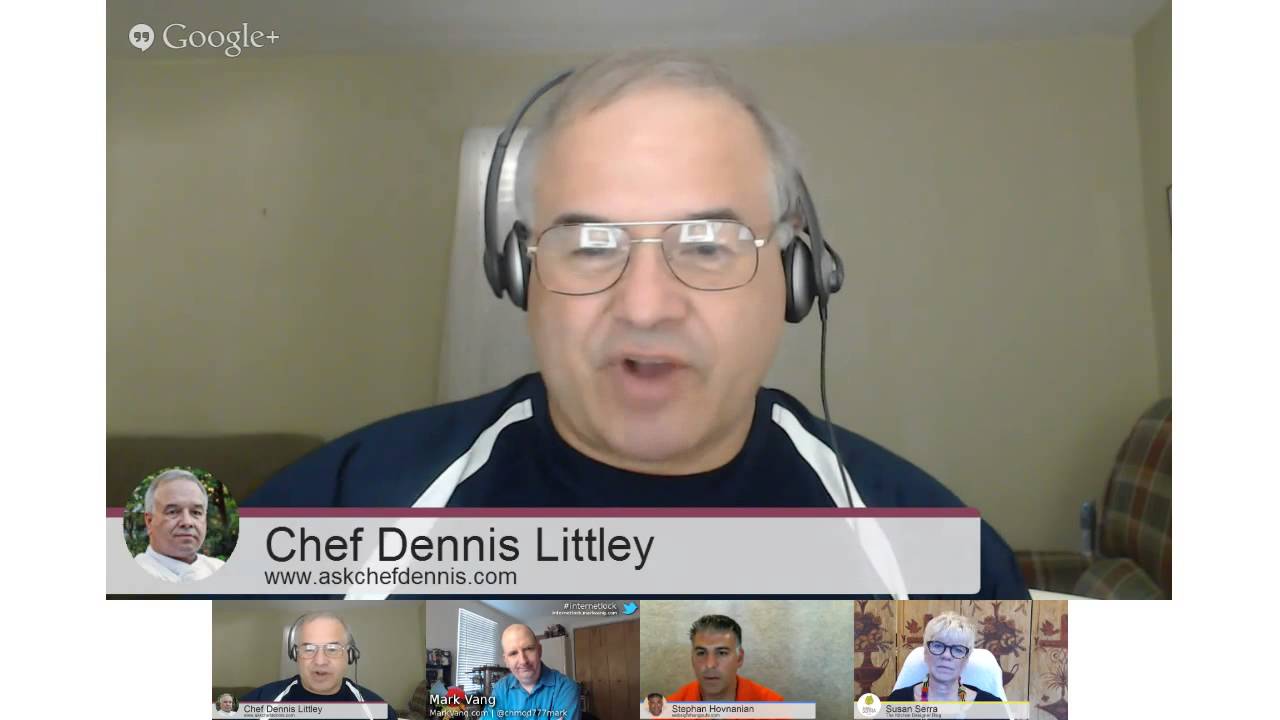
Stephan Hovnanian, Susan Sarah, and Mark Vang discuss Google+ for small business marketing, emphasizing relationship-focused strategy over checklist SEO. They cover circles for networking, manual posting challenges, visual content for design industries, and tools like Hootsuite and Buffer for scheduling.
Chapters
Hey everyone, good day Google+. Today we're here for this episode with my guests today, Stephan Hovnanian, I should have asked you that too.
It's perfect.
And Susan Sarah. Unfortunately Mark Traphagen had an emergency come up and he won't be with us today. I'm sure we'll have plenty to talk about here and we'll see if anybody else shows up. I did throw another couple invites out just in case. We're going to start off for a good day Google+ today. It's a beautiful day in the Philadelphia area, sunshine, it's a little chilly, there's a nice breeze. I am anticipating my move to Florida, which is only a couple weeks away. I'm going to turn it over to Stephan first and he's going to tell us a little bit about himself and what he does on Google+ and some of the things that might interest you. If you have questions, please leave them in the comment bar underneath this. We have the comment tracker on and we'll see them and we will answer them. Alright, so Stefan, take it away.
Thank you, Chef. I appreciate it. Thanks for the opportunity to come and, you know, be on this. I followed the show when you guys first started, and it's, it's a lot of fun. It is. It's a great, great opportunity to connect with people kind of on a real level instead of like that real technical, you know, level with the SEO ones and some of these other ones that, you know, that are, that are out and about. But anyway, yes, so I am, I've been here about a year working I have a web design and email marketing business, predominantly service the smaller, small professional firms. I do a lot of work with nonprofits as well, and I recognized Google+ as a platform where if there's one social media platform that I could encourage my clients to get involved with, it would be Google+, you know, making it a little easier because it's a little easier to crack into, you know, than Twitter and Facebook and some of the other ones which are a little more mature and just have— it's just so hard, there's so much noise and there's just so much to crack into if you don't have a huge following and stuff. So latched onto this place, haven't looked back, I've really enjoyed it. And over the last few months especially, I've begun doing a little more page management, focusing a little bit more on branding and business and some of the things, you know, the nuts and bolts now of let's help companies actually see the benefit of the things that we're all talking about, you know, great content and engagement and building relationships and semantic search and all that other stuff. So that's what my hands are into these days, but I still love getting behind, you know, getting behind a screen and chopping away at code for a couple hours or working with email marketing and talking strategy with people. It's, you know, I'm sort of all over the place, but I really love Google+ especially.
Great. Now have you found— I've had a lot of issues trying to bring brands onto here to work with it, and they still seem very resistant to bringing companies on and trying to educate them and using Google+ and how important it is. Have you seen the same resistance on your end?
Yeah, I just got off the phone today actually with somebody, and it was the same kind of thing. The people who have had their systems in place, this checklist— I know David Amerland, who you've, I believe, had on here before uses this phrase. There's this checklist approach to search engine optimization, marketing, content marketing, and on. That doesn't work anymore. It's a real holistic approach today. And, you know, all of the direction that the marketing and online marketing and web strategy is going, it's funny, it's a huge throwback to what business used to be back in the day. You know, it's, you know a guy who does a real great job and you're willing to refer him and everything's built off of trust and authority. I mean, that's what we're getting back into with respect to the online world. And that's hard for people who have their systems in place and they've automated a lot of it. I know from the brand perspective, I did a piece on MarketingProfs, their Daily Fix blog back in August, sort of a rebuttal to the fact that they put a question out on Facebook to their fans and everybody said that they hated Google+.
So I was like, hey.
Get me in on this, I want to rebuttal. It performed really well, I think we got a lot of great feedback. One of the reasons that I realized in writing that was that the API isn't available as much to let brand managers and community managers use some of the same tools that they're using for all the other stuff, all the other platforms they're using for. It's by design because we have our culture here, right? Everything is a little bit— you format your posts, we do the hat tips and the different kinds of shares and the photos and everything. We have a culture and we don't want those cross posts from Twitter popping up. It's just going to make this place horrible. It's not going to work. That's a hard thing for a brand to swallow to say, wow, there's a lot I have to do to get one post out the door where I could put the same piece of content out to like 6 different places in 5 seconds using these tools that we have. We don't see that on the solopreneur end of things or really even small companies that managing most of it ourselves, but mid-sized firms and agencies especially, I mean, this is a real problem for them. It will get better, but I think they also just have to accept the fact that, alright, we'll do all of our stuff in Hootsuite or Sprout Social and Buffer and Radiant6 and all the bigger ones, and then we're going to have to spend some time and dedicate to Google+, whether it's some saved searches or whether it's some circle management or whatever it is. We have to spend some time. We got to actually come into the account and do stuff on the account instead of doing it in this big little bubble that we do everything else in. I think that's the problem with the— not the problem, that's the challenge we have right now.
I know with Buffer you can use— brand pages can use it now. Profiles can't use it to schedule, but brand pages can. That's one plus for them. I think the biggest stumbling block that most of the brands come on is they don't know how to engage. They haven't done it. They're used to just dropping things and running. And for the ones that are agencies, you know, the agencies work hard to do what they do. And for them, do I have to add one more thing on there? Some of them are stretched so thin, to have to actually do that extra work is just mind-boggling for them. So, you know, they're having a very difficult time with it too, but they're doing their customer a disservice by not using it.
Oh yes.
That's what they have— we have to really try and get them to understand is that they really need— it's no longer just something to do for fun. They need to be here and they need to engage and they need to get that— just like you said, it's so nice to have that trust factor and that recommendation coming back.
Oh yeah.
That's what it's being built on now.
Yeah, when you get— and the listening is something that I would say if you're going to do anything as a brand just come in and listen, you know, do something so that people can, so that you can find the posts where people are talking about you. And there are a couple of really good companies out there that are doing it. I know Verizon does a pretty decent job. Huge shout out to Verizon right now for Twitter. I get faster customer service on Twitter from Verizon than I do, like I get my problem solved before I even get through the phone prompts. They're great for that. I know that they do listen on Google+. If you do shoutouts or +mentions, they'll show up. Sprout Social, Hootsuite, they're social media management tools, so they'd be a big problem if they didn't do this kind of thing. They also have done a great job. If you mention them, they'll pop in, and you know that there's a real person behind it because these things don't post themselves. They'll say, "Hey, thanks for the questions," whatever. And so I think that that builds a ton of trust for people, and that will ultimately— yeah, it's gonna ultimately down the road lead to more customers and things like that. I mean, the ones who aren't doing it, you are, you're doing a huge disservice. I mean, I have brands that I miss, legitimately miss, because I don't follow— Reader's shut down, so I don't get their RSS anymore. I don't follow them on Twitter because I really don't do much on Twitter., and they don't post on Google+.
Right.
Oh, can I give you a quick tip for everybody listening?
Sure.
If you have a brand like that and they do occasionally post on something, put them in a circle called like a subscriber circle or notification circle and put them— only those people— you can put your family members and people who don't post a lot but you want to make sure you see them, put them in a circle and turn the notifications for that circle on. Then this way, anytime they post something, you'll get a notification of it even if you weren't logged into Google+ or something like that. You'll be able to go in there and at least be able to see that content because the stream goes down all day and we don't always see that. That's a quick little tip for anybody who's interested in following a brand or even a family member that doesn't post too often.
Yeah, I agree with you. That's a great way because you do miss things too easily if they're not in your field of vision. That way, if you get a notification, as long as they're not— when they start posting 10 and 12 times a day, then you might turn it off.
Then they're out.
Yeah, then they're not posting that much. Then it's easier to keep track of them. I know with the food, a lot of the food companies that are run by PR agencies and stuff, they just haven't seen the value. I'll engage with them, engage with them, and they don't even bother responding. When I go to conferences, you know, they're all over you talking to you, and they're very nice and eager to respond, but they just haven't understood how things work here. So, you know, that's, that's that stumbling block. So I'm hoping to work more and more on getting some of these other companies to open their eyes a little and see the value. But so, Susan, let's talk to you for a little while. We don't want to leave you sitting there by yourself too long. Now, you're in a whole completely different field, except, you know, it is related because You do kitchens. Everybody's got a kitchen. Everybody eats. So I mean, you're, you're an important facet of this. So let's talk a little bit about your market, what you do.
Sure. Thank you so much for having me. This— I love your show. It's a, it's a great show. I really appreciate it. So it's lovely to be here. So I have had my own kitchen and bath design firm on Long Island, as you could probably tell from my voice. My accent. I've been here on Long Island, had my company, run my company since I guess the very early '90s. I'm a certified kitchen designer, and that's a designation given by the NKBA, which is the National Kitchen and Bath Association. It's the highest level of professional kitchen designer. They're like any other profession. There are kitchen designers, and there are kitchen designers, and there are chefs and chefs, and so on and so forth. So I'm very proud to be in that group. I'm also a certified aging-in-place specialist, and I have my fingers in a lot of things. I have two brands. I have a brand of cabinetry called— made in Pennsylvania— called Bornholm Kitchen, which is Scandinavian-inspired. And I also import Vintage and new rugs and ceramics from directly from Scandinavia. I have a direct connection there via MyHeritage. It's kind of a place in my heart. Here I am trying to get my industry really migrating over to Google+. I think it's a really great place to be. Putting a lot of my time into Google+.
Great.
We just had another guest join us. Mark Vang was nice enough to jump in here. Let's say a quick hi to Mark. Thanks for coming in. We will be with you in a minute. You're probably muted because you were the 4th person in. Susan, getting back to that now, when you're importing stuff from Scandinavia to your cabinet— we lost Mark again. Be back. When you're importing stuff from Scandinavia and you said ceramics, is any of that like tiles and flooring or backsplashes or is it—
No, it's completely different. A few may be tiles but it's more like wall art or vases. They're actually products made by the artisan themselves in Scandinavia. It's not outsourced, they're not made in Portugal or China or anything. They're made by the artisan. They're not available here and that's what gets me excited about, about the pieces.
Okay. And your cabinets, I'm really interested in those because I'm going to be putting some new cabinets in my house pretty soon too. So we need to talk about some kitchen design stuff. I know food bloggers, we're kind of crazy for our kitchen. So now anything we can do to improve them is a big thing. So if you guys have any questions about kitchens out there, now's a good time to ask. You got an expert in here.
Yeah, but you know, I have to jump on something that Stephan said in terms of getting brands over in my industry, which is of course the kitchen and bath industry. I am trying to, you know, encourage them to engage. And sometimes there are major, major brands on G+ and I will share some of their content.. And often I don't hear anything in response. I don't see anything in response. And I think it's very true what you said, that whether it's in-house or an agency, I think people are very, are spread thin. And I think, but you know what, the fact is it takes maybe a sentence or two to engage. It doesn't take much. And then, and it makes— that's all it takes to create a relationship. It doesn't take much.
Even a +1. I mean, heck, if I know a brand is listening, if I share their content, give them a +mention and then they show up and just +1 it, at least I know that you spent the time to come here and take care of the people that are caring about you. That's the important part. Also works the other way, don't forget. I mean, if you're talking trash about someone and your bad experience, these are public posts, people. You know, that's the last thing you want, especially for somebody with some influence to say, hey, listen, I don't want to ever do business with so-and-so again. And that company, sure, maybe they can do it on Twitter because they're listening for it, but if they're not listening for it on Google+, I mean, somebody searching for feedback in Google about, you know, a particular brand, and if they have, you know, if this is an influential person writing about this, that could be a huge problem. They could see that post and say, "Ugh, I don't want to.
I've decided to take my business elsewhere now." Well, you know, the big backsplash, like a kitchen backsplash, the big backlash now in the past few days is that interview that Martha Stewart just gave about bloggers. I'm seeing in my community of designers everywhere, I'm seeing lots of response, many, many responses from bloggers.
The funny thing with that is that Martha has her Martha's Circle blogging network, and she goes after food bloggers to be on her network of advertisers. I wonder what she thinks of all those people then that are making money, helping her make money, the not experts. She wasn't very nice in that. Not that she's a nice person, so you don't expect it. Expect her to be professional, and she is very, very professional. That was quite of a shock that she would say something like that. The comment about magazine editors, well, come on, guys. We see things on blogs months before the magazines put them out. Do you think they're just having an epiphany and it's coming to them to make this stuff? No, they're stealing ideas from bloggers. These professional editors, who are professional, I mean, are getting their ideas from us, and she's calling us— you know, not very nice things. So we'll let Martha go. We'll put it off to prison trauma. Okay. I don't know.
So, you know, I mean, one thing came to my mind immediately. I've had my blog since 2007 on kitchen design. Am I a journalist, a trained journalist? No. Can I write okay? Yeah, I write okay. I write pretty good. But the point is, I've spent 20+ years doing kitchen design, doing my own drawings, supervising installers, meeting the back of the truck to take off the cabinetry. It's been hands-on. So tell me, who is the expert when you talk of kitchen design? Is it someone like me and my other kitchen designer peers, or is it an editor who puts up pictures of kitchens? Mm-hmm.
So yeah, I know, and I think what was her hit— her degree is in history too, so it wasn't even in journalism or food or anything like that. So, you know, that's the pot calling the kettle black there.
So one of the, the one I think halfway valid takeaway I took from that, that because I saw that as well, um, with her, you know, I think there is a bigger challenge with, um, we'll call it attribution. And I think she, you know, she had made a, it was a subtle part, like part of one of the sentences in her remark where I picked that up. I'm like, you know what, I, I can see where she's coming from in the sense that she didn't appreciate how people are, are making a tremendous living, put, and, and I think she's speaking to the ones who are doing it in a way that are they're not professionally trained, but they're able to come off as one because they're not really doing much in terms of crediting sources and that part of it. I mean, we're all, especially on Google+, we're all very hypersensitive to sources and attribution. So I don't know, maybe I think there's a little bit of truth to that, and only for certain people. I mean, there's obviously great people out there who are doing a lot of putting out a lot of very good insightful content, but I think the ones who are out there legitimately looking to profit from swiping other people's ideas and not giving enough credit, maybe that's where she was taking issue. I don't know, that whole area is a little newer to me, but I know the attribution part of it has been a thing for a long time.
Oh, absolutely. We run into that so many times. And there are bloggers that do that and they never thank anyone for— you know, really, I mean, do we ever have an original idea? We may think we do, and it's already been done dozens of times. You know, in our mind it was original, and maybe we didn't see it, or maybe subconsciously we did and we're thinking of it. But the important thing is just to recognize the person that you saw it from. It's not a big deal, you know, and not to be making the thing the day after someone else posts it either. So, you know, and there's those that do that too. I agree with you on that part of attribution. There's a lot of good recipe testers out there. There's a lot of good bloggers out there. I wonder if she considers Ree Drummond as one of those bloggers too, the Pioneer Woman. I'd like to hear Ree's take on this if she ever hears it. Let's move on. Enough talk of Martha. Mark, thank you so much for stopping by last minute here. I appreciate that. I know we had you scheduled for later coming up on a show, but glad you could join us now. So how you doing? Why don't you tell us a little bit about yourself and what you do?
All right. Hello, Dennis Littley. First of all, thanks for inviting me. And if you hear a little screaming in the background, that's my cockatiel Prince. He's yelling every once in a while, so I'll generally keep myself muted so he's not interrupting everybody. But generally, I've been, you know, studying from actually the Mark Traphagen, who couldn't make it today, is one of the people that I follow very closely on Google+ and him and David Amerland. I study social media optimization and that's something that I'm specializing in professionally and studying how all of these— and it's interesting, we were talking, you know, I don't want to dwell on Martha too much, but when we're talking about all that, something she seems to have forgotten is that Google is telling us to write good content And Google is going to build— something David Amerland touched on was that authority is now becoming less platform dependent and more based on the individual, you know, through authorship and stuff like that. So she might not realize it, but the model like the Huffington Post and the model that she's got where you have bloggers writing for you is probably going to become obsolete here as people are able to develop their own develop their own brand and become an authority on their own. So she's going to have to get used to sharing the limelight with some other people at some point, and because Google's going to empower them to achieve their own fame outside of any other system. So I just thought I'd toss that in. Since I'm kind of filling Mark Traphagen's slot there, not filling his shoes, just his slot in the Hangout, I thought I'd toss in a little social SEO tidbit. Google+ is probably the main network that I focus on right now. I was pretty big into LinkedIn for quite a while. I focused over a year on maintaining— I managed about 15 groups, combined membership of like 700,000 people, and I just got a little frustrated with— if you're on LinkedIn, you realize stuff breaks and it doesn't get fixed right, or stuff that works gets broken. After a while I said, "I'm spending a lot of time here. What's the ROI?" I come over to Google+ and I can look at the results. I can go to Google Analytics and I can see that what I'm doing on Google+ can have not only an immediate effect but a persistent effect in attracting attention for my business and stuff. I've just shifted focus here to learn. It's got such a high learning curve. So it's very frustrating to some people when they jump on because you have to learn how circles work and Google gives you all of these fun tools and you know you got Google Drive which you can incorporate in your Hangouts or you can make slide decks like Michael does. You know all kinds of interesting ways to put all these building blocks together. So it's very intimidating. So one thing I try to do in a private community that I have is just help people who have small businesses like me, or maybe a consultant or a one-man shop, and try to help them sort out what little pieces are going to go together for them so they're not wasting time, you know, trying to learn everything. They just can start finding the building blocks and sticking them together. That's pretty much what I do, do all day here on Google.
Okay, so you've been enjoying your time on Google+ and you're doing some nice engaging and meeting new people and making a lot of friends here.
Yeah, I've been very, very active. One of the things I guess I was hearing Stefan talk about, the +1s and stuff like that, one of the things I'll do is if I interact with people, I'll also go back and look at my own posts because you've got that neat little trick where you can flip your post around and see who's been engaging with it. If I see individuals are +1ing my posts or commenting to the posts, That shows that they're interested in what I'm talking about, so I'll add them to a circle and that'll move the engagement forward. If I find they're really interested in what I'm talking about, I'll invite them to my community or show them some other content. If you take the long-term strategic networking view of Google+, you probably have a lot greater result over the course of a year here than you would on any other platform. Again, going back to LinkedIn, not meaning to beat them up today, but it is so arduous trying to connect with people and to build a network on LinkedIn. Even if you try to use groups to do that, it can be very difficult to meet the right people. But you come on Google+, you learn how Circles work, you engage with those people, you can very rapidly, over the course of a Within a few months I built a pretty solid network and have people that are interested in what I'm talking about and I'm interested in what they're talking about. It's a great place to do that.
It seems a lot easier to engage here. I'm on Twitter and I for the life of me don't really understand it as well as I should. It's too hard to engage there. People that are there love it, but I don't understand. Sometimes I can say what I want to say in 140 characters and other times I I feel just lost trying to communicate. I don't know, with Google+, I don't feel— I mean, there's so much more to do. So if someone pings me or sends me a message, I can answer it. On Twitter, you just got to sit there and watch the stream. There's nothing else to do.
The other thing that is such a natural for me personally is I've been an amateur photographer. For decades and decades. And so I, I'll put up my images of, you know, I'll go to showrooms, I'll travel, I'll go to design shows, things like that. And, you know, even just my garden, pictures of my garden. And of course, Google+ is wonderful for, you know, for images. Bringing together my industry, which is very visual, my business, kitchens, interior design, and images, I'm loving it. I'm loving it.
You've got that immediate effect like Twitter, right, Dennis? You were talking about how you can follow the stream. Google+ is kind of a combination of every single network. You have the real-time like Twitter, you can go and look at other people's profiles and see their activity, which doesn't work on LinkedIn. You can't really go look at someone and see what their activity has been. If you're not engaged immediately, you lose that opportunity. People can come and look at my profile a week later and find something that interests them and engage. They offer both real-time and persistent, which is much more effective, I think, than— I engage in a little Twitter activity sometimes. I do a little networking on Twitter, but as you point out, you jump into a conversation and you get 140 characters. You might be able to look at the previous comment, but you're like, do I really know what these people are talking about or not?
I'm losing interest. I'm kind of losing a little interest in Twitter.
Can I plug a nice little mashup? Tuesdays, 2 PM Eastern. Google+ Chat on Twitter. Most of the people you'll probably recognize a lot of us over there.
Oh, good.
All right, so 2:00 PM Eastern, I'll put it in the comments, Google+ Chat, Jesse Waddillo, myself, Michael Bennett, we've got Nicole Murphy, we've got a bunch of people that pop in. A lot of fun, and it's a way to kind of— it's actually great networking for Google+, and we can do it in a half hour. On Twitter. It's one of the only times I think during the week that I actually do stuff on Twitter as opposed to— because I'm like you, Susan, I've sort of lost interest at this point. It's just too hard, you know, but it's a way to kind of stay involved on the platform beyond just checking the mentions and the tweets of your own articles and things like that, engaging with those people.
I think Jesse also puts together questions in advance, right? So you get to come to the Twitter chat. It's a live Twitter chat Q&A format. So you actually know what everybody's talking about up front. You go to his website and he's got like 10 or 15 questions out. You can, you know, so you're engaged already. So it's a really good way to—
Or if you kind of happen to have an appointment or somewhere to go, you could maybe schedule them ahead of time at like 5 to 6 minute intervals. Not saying I've ever done that, but you could.
You might get busted doing that if it goes long and all of a sudden you keep popping answers out like Stefan.
I did it. I timed because about 2:15 every day I got to go pick up my daughter from preschool, so I actually scheduled one one time and came back and read the whole thing, and I timed them perfectly. I was so proud of myself.
I was gonna say, you do realize this is being broadcast live?
I don't care, I told everybody already.
Okay, okay, okay, the secret's out.
Okay, oh well, there goes my—
I'll have the screen share or the screen capture of all my scheduled post. I was so proud of myself.
That's like when I told everyone how I was getting my wife to eat beans and soup because I was pureeing them, and she decided to read that post. Of course, normally she doesn't read them, and after that she didn't want to eat them anymore. So you got to be careful what you say sometimes.
But I lost it.
Yeah, won't be the first time. Well, that's good. So, Mark, let me ask you a question about, you know, you were talking about SEO. "What's your take on Hummingbird? Can you talk anything about that?" I've just looked at it superficially.
I'm not as big of an SEO person as I am an SMO person, just to throw all the buzzwords out there. I'm studying Google Analytics and I don't like to render an opinion on something until I feel I've mastered it, so I'm actually taking those cool Google Analytics courses that they're offering everybody. I pretty much just follow whatever Matt Cutts comes out and says, and if he says write good stuff and don't worry don't worry about it, then that would pretty much be the entire expert opinion that I would pass on to anybody is if Matt Cutts is saying it, you know, everybody else can try to reverse engineer things. I have a background in software and stuff like that, too. You can try to reverse engineer and try to second-guess everything, but if you're trying to second-guess Google engineers, I think you're always going to come in last place on that one because, you know, anything anybody might be saying as to how to game the system So as far as how it's going to affect me personally, I use SMO tactics and I use my strategic networking tactics to promote my posts or, you know, to build SEO for my posts. You know, I use YouTube channels, so I'm not really too worried about minor— well, it's probably major— but structural changes to how Google runs their algorithms, because I also kind of have a distributed content model where even if something takes a little hit, I don't think I'm gonna vanish off the face of the earth. I'm still learning how to improve my presence, so I'm not too worried about it. I've got a couple friends who are actually SEO experts, and when they have a little time, I'm gonna say, okay, now what does this really mean? But, you know, and I read what Mark says about it.
Right, Mark and David, I mean, they really keep us informed. And Matt Cutts, you know, he says the word, we should just believe him. But I mean, when he says write good content, don't worry about it, It should be that simple. I think it really is that simple, and so many people forget about writing good content. They're just trying every trick in the book to get noticed instead of just going on what their content is.
That's something that has me a little confused because you can spend a lot of time buried in Google Analytics trying to study— and the changes to keywords recently too— you can try to study all that and try to figure out what to write. But isn't it more common sense oriented to just take the same time that you would spend nose buried in Google Analytics reports or trying to sort out and just crank out a blog post? I mean, seriously, all the time people spend analyzing data, you could probably crank out a blog post a week in that same content. I'm not saying you don't have to track what's going on. I use tracking URLs on all my posts so I know where hits are coming from in a very exact exact manner. But I think that if you become obsessed with analyzing, then you're going to lose focus on creating the content, and you're going to be burnt out from analyzing your content. You're never going to have any ideas. You've used up all that mental juice. That's a technical phrase there. I don't know if you guys tune into that, but you've burned up all your mental juice for creating your content. So I look at it, but I don't, I don't obsess over it.
You can't write content to be noticed. You have to write content because you want to write it. It's got to be coming from you, from your heart, from what you believe in, what you can do. If you start trying to write content so it looks good and gets noticed, then you're losing you in the process. I think that's not a good way to go.
Well, you also— not to interject, but there's a couple other things too, like It depends on the point, the purpose of your site too. I mean, you know, you could be a blog that relies on page views so that, you know, the page views beget ad revenue and, you know, maybe some signups to a conference you're holding. So in those cases, you might need to do some of those things to make sure that you're, you know, you're getting those page views. Whereas if you have a, like, a professional firm, for example, maybe your goal is to get leads, and so your website would be a lot more focused on conversion and, you know, the occasional blog post that answers every, you know, the perfect question for the perfect person that's going to want you to, want to hire you. I mean, you don't care as much about the analytics and you don't care as much about the search engine things and all the, all the day-to-day changes that Google's making, you know, in terms of how they rank content because you know that eventually the right person is going to find you because you're answering their question and you don't have to spend as much time with your head buried in the analytics and reports and stuff like that, but it doesn't work the same way for everybody. I think the challenge is a lot of the people writing the articles that we read are writing them from the perspective of a certain type of website, and there's that sort of disconnect, I guess you could call it, on what we're consuming and what we're reading and how that translates into the type of content we're creating and that kind of thing. So I don't know, I wanted to throw that out there as well because not I've noticed that myself. I mean, I only write maybe every once every couple of weeks I write a post, but you know, it blows up. I mean, it does a great job and maybe I get some business out of it, you know, but it also gets great rankings on search. And it's not because I'm blogging 3 times a week. It's because I write something that answers the question, you know, and that's the end of it. So I just, you know, I'm just echoing what you guys are saying really, but also throwing out that extra perspective that it's important to remember what the purpose of the person's website is, why they're writing the content, why they're focusing on these little tiny things where we don't have to.
I have a question which has to do with my industry, my designer peers, in terms of writing our blogs. With Hummingbird, which I think makes a lot of sense, I think it's a good change because You know, if you're a professional, you know your business, you know your area of expertise. My question is, would you craft the titles differently in the blog posts that sort of talk about solving, having a solution to it, having the answer almost like Jeopardy! where you come out with the answer to the question? That's actually a pretty good analogy. Is the title like Jeopardy!? Giving the answer in the title. I don't know, I just thought maybe that has something to do with the new hummingbird.
Well, I think the title has always been a key, you know, no matter what algorithm you were applying, you know, you always— that's the place where I focus the most. And I agree with everything Stefan is saying, by the way. Depending on what your site goal is, it will determine your strategy and what you focus. But yeah, the title is the one place where I sit down and I'll put a little time into, and I will try to game the system a little bit there because that's going to be the going to have the greatest impact in what shows up. I do the exact same thing if you notice there are a lot of posts saying when you do a post on Google+ apply the same methodology because Google will index those posts using a similar method. When you craft your Google+ posts think of them in the exact same way, title and bold text. I just want to point out Stephan made a post a while back about, oh he's talking about killing unicorns. Remember that one Stephan?
Yeah.
And that comes right back to what you were saying about all these blog posts that we all try to keep up with this, but they're not necessarily being written from our perspective. And people get so wrapped up in, "I've read this and it says I must do these 5 things," or, "Here are the 10 things I must do." But it's not the 10 things that really apply to your business, so always try to keep that in mind. They're so prevalent from now on, when I ever see 5 things you must do, I pretty much move on because most of the time it doesn't apply and I probably already know them if I've read 20 other blogs of the same title.
You know them and I'm going to forewarn everybody, these are going to come for Google+. They're coming, they're coming now, they're coming out every day. The honeymoon is over. Now that this is getting a little more mainstream, I own the Google+ for Small Business community. And I'm starting to see more and more of these posts coming in where it's like, oh, every blogger who calls himself a blogger now has to write a how to— 5 things you need to do with your Google+ profile. That's great. The same 5 things that if somebody Googled it, they'd see my post or a post from Mark. There's a couple of fabulous posts about communities and pages and profiles from Christy Hines, who's a fantastic blogger. Freelance writer. She's, you know, she's somebody I always look up to whenever I see any of her content. And, you know, those, those I don't mind reading those all day because they're— everybody's well written. It's, you know, like, show me something new, people. And, you know, a lot of us were here on Google+ because it's new, and I know that there's, you know, there's going to be this tendency to want to push out the ones who are not, you know, who aren't contributing anything new to the community. So, but I'm just— I noticed it the other day, I had to put it out there and say, be forewarned. Don't get upset, but maybe we can all educate them as a group and say, hey, ask questions on their articles and say, what do you think about, you know, this or that, or just try and get somebody— get them a little out of the box because the model is not going to work over here like it used to everywhere else. Sorry, that was my mini rant.
That's okay, and that's a good point. I think with some of them, you know, and I see the same thing, and you see the same thing. You've been writing for 2 years all of a sudden like it's a news flash. I think the only good thing about it is that they're reaching a different audience in a lot of cases, or they're reaching people that may never read you. Good thing, bad thing. Bad thing, it's not new stuff. Good thing, maybe they're going to bring somebody else onto Google+ and give them a chance to start. So many people, you ask them and they look at you cross-eyed when you mention Google+.— they don't even know sometimes. Like I mentioned, somebody says, "What's that?" What do you mean, what's that?
Well, first of all, those bloggers have to decouple their template which has been stamping out the Google+ is a ghost town post for the last 3 years. I almost think of the old style printing where you have the movable type. I almost think some of these guys have blogs built on that same model because they crank out the same thing over and over and over again. And now they're like retooling for, oh, Google+ is a thing now? OK, we've got to come out with the 5 things. You know, dum dum dum. Start stamping those out. So it'll take a little while because those guys can never keep up with what's really going on. So the real advice is get on Google+, find some people, circle them, and you're going to know what's going on 2 days after it happens, not 2 weeks. Or if you follow national channels, it'll be about a month after it happens.— you know, by the time the big networks pick up on what the little bloggers are writing about, like we were saying before, it's old news. So you get it here within 24 to 48 hours. You'll get it from a decent blogger in the first week, and if you follow the big ones like Huffington Post, you'll hear about it a month from now. You know, so you can decide how fast you want your content.
Make sure you use the updated logos. Because that's the other problem I've noticed is all these brand new blogs coming out about things with profiles and pages and this, that, and the other thing are using that black logo with the little colors across the top. Like, come on guys, that was like 2 years ago, you know. Get the right logos. Google image search, Google+ logo, simple. It's a red thing. Google even has a PDF file you could download with all the branding on there. Go find it if you're a blogger, if you want to do this kind of stuff. I can tell you it will resonate with people who who, who, I guess you want to get their attention. Some of us pay attention to those kinds of things, little nitpicky about it.
I'm going to be a little mean here, but I'll just point out that if you're shopping for a social media company, go look at their Google+ page, and if they have the old banner, or if they just have the big colored blob because they have no banner and they're saying, we do social media, we'll set you up on Google+, You know what, if they haven't finished their profile and they don't have any posts or they're just cranking out Hootsuite links all day on their profile, link spamming their own profile, you might want to think about that. So semi little plug for myself because I know my stuff is dialed in because Stefan has helped me out and all kinds of people have given me all kinds of great advice. So I know I'm dialed in on Google+.
I'm going to out myself too because I know that I have a picture I took of a sticker that I got with the Google+ logo. In fact, I have it right here. And it has since been updated. The G is no longer off to the side. So I'm outing myself, so nobody call me a hypocrite. But I really liked the picture, and I have to finish all my little branding stuff. So when all that's done, I'll update it. But nobody get mad at me, all right? Thanks.
Not a bad thing. All right, we did have a question earlier for Susan. On from Kim Baltman on kitchens, and she wants, what suggestions do you have for making the most of small kitchen spaces? My storage is limited to 4 drawers, half a dozen cupboards, and limited counter space. We're talking 1970s trailer. Thanks in advance for your ideas. So what can you help her with there, Susan?
Sure. Well, I happen to love designing small kitchens because maybe because it's a challenge. I really enjoy small kitchens. Plus, they're very, very efficient. Small kitchens can be a good thing. But it depends on if you're redoing from scratch. If you're redoing from scratch, you may want to think about the right size appliances. Don't get seduced by the big ranges and the big refrigerators. You know, be correct in your proportions for appliances. That's very important. Make sure you, you select an appliance that is really the right for your right size for your lifestyle. Another thing is you have to be very careful. You have to really edit your everything you're storing. See, Americans, you know, it's in our DNA to collect stuff. We just collect stuff, and a lot of the kitchens I see, they consist of as many cabinets as possible that, that can fit. So take a fresh look at what you really need and what you don't need and what can go into the closet that you may use less frequently. And, and maybe then you don't need as many cabinets, or at least your access to your cooking equipment and other things will be much more easy instead of having cabinets that are stuffed with things. So definitely take a look at your stuff. Another thing I would say is your kitchen should be very well lit, whether it is from natural light or from artificial light, under cabinet lighting, you know, task lighting, you have task lighting, you have general lighting, and you have accent lighting. So think about lighting. You can light— now we're seeing light inside drawers. We're seeing a lot of that inside drawers and doors. And, you know, really give yourself a lot of good lighting. And LEDs are very important, very good in terms of energy saving. And one last tip I would say is visually For small kitchen spaces, it— of course, light colors are good. And if everything is kind of light, monochromatic, maybe with a little texture, countertops, cabinetry, you know, you'll, you'll have an enhanced flow to the design. It'll flow rather than if you have choppy surfaces and textures and colors. Big difference between, you know, visually flowing and very, very choppy in a small space. Those are 4 tips.
Great.
I got a follow-up question for you, Susan. How about like those— I noticed they have those drawers in the cabinets that have— I mean, it's almost like, like a pantry inside of the cabinets with movable shelves and just all kinds of crazy stuff. I mean, any suggestions for looking for those kinds of things? Or if you're you know, where those types of things, you know, shelving systems, I guess, can be best applied? Because there's some neat stuff out there.
Yeah, well, I'll tell you, the best pantry storage is shallow storage, say 12 to 15 inches deep, because then you don't have to dig because some of these, they call them Chef's Pantry, some of these fancy inserts, they don't, they actually waste a lot of space. I mean, they're fun, so they move around and so on and so forth, but they're not so easy to use. But aside from that, I like the brand Hafele. Hafele has lots and lots of wonderful, really sexy pantry and cabinet inserts. I like Hafele, and I like Clever Storage. They have a lot of sexy inserts too. So, you know, you can have some fun with those.
Cool.
It's interesting to be hearing cabinet stuff being referred to as sexy. I never heard, heard that reference before.
Yeah, it is. There's a lot about kitchens that are sexy.
There you go. Well, for food bloggers, that'd be a big plus. So I hope they're all listening. Let's, let's make our kitchen sexy, guys. Come on. So great. We did have a nice comment here from Craig too, and I want to put it up here. Says the easiest way to think of hummingbird is to think about mobile Google and voice recognition for search. You ask full questions, you don't just speak keywords. So don't sweat keywords so much, focus on answering the questions you know your audience, I guess, is interested in. So that's some good advice for asking, your audience is asking. Okay. So thank you, Craig, for that. Yeah, definitely. All right, so great. So far so good. We've talked about a lot of things here. If there's any other questions you guys have, please leave them in the comments section and we will do our best to get to them. If not, we're just gonna move along and chat a little while longer. We have a few minutes left on this week's show.
I got another question for either you, Chef, or even Susan.
What—
any good lighting tips, like food lighting tips, or I guess food photography lighting tips is probably the subject of this particular question. My wife's totally into— she does Beachbody products. She's into the clean eating, healthy cooking, and stuff like that. Definitely does— takes pictures of all the stuff that she makes. We have the CFL hi-hats, and so everything's very yellow. I'm like, "I got to come up with a better way for you to take these pictures because it looks pretty ugly."— and the food isn't ugly, it's delicious.
Well, if you're going to use those hi-hats, there's a couple things you can do to correct that, and that is either with software, like with some photography software, and change the settings on the type of light you're using, or you can do that in your camera too, depending if your camera has that option. You can go in and set the white balance for that kind of lighting. So it's all coming down to the white balance.
So, you know what else I What I do, Chef, is I use a gray card often. I use a gray card. You get a photography type of gray card, you take a picture of the gray card, and then in post-processing you just bring it back to the actual white balance. Just look under photography gray card.
Good ideas. Yeah, and that's easy. I mean, there's, there's the big Photoshop, which you really don't need I mean, you can use Elements, and that's like $79. You can use Lightroom for it, and most of them will let you balance the color through the white balance. But a lot of times, depending on what kind of camera you're using, you can do it in the camera as well. And using the gray card is a good way to find that setting to set your— and then once you set it for those lights, you can put that on as one of your preferences, and you can go to that every time she shoots inside if your camera will do that. If not, it's just a matter of changing the temperature of the picture, and that's really easy to do with some software. The other thing to tell her too is if you can shoot any natural light, if you ever have the opportunity, move it towards a window. That would be the optimum thing to do. If you have a tripod— like, people always get these really nice cameras and expensive cameras— and they never get a tripod. Well, the tripod is like your most important piece of equipment too, because what the tripod does, besides keeping it steady— and then you want to get a cable release so you don't have to still touch the camera— but besides keeping it steady, it helps you frame the picture. That way you're not just moving in and out, you can frame the picture a little easier using the tripod. Then just get a piece of white foam core from staples or someplace, a big piece of foam core, and use that to bounce the light off of on the other side, and that fills the picture in. You can use that with artificial light as well. Right now, the way my light is set up, I have a light bouncing off of a whiteboard, and I have a whiteboard to the side of me to catch it and bounce it back to fill the light in. All you're doing is taking the light that you have and manipulating it a little in the moving it around. So, you know, that could solve any other issues she has with artificial lighting too.
That's a good idea. It's funny you say that because I have right here and here, you can see them, I'll show them. I have desk lamps with very bright CFL bulbs with paper taped on top of them so that they can diffuse it a little bit. And then this background will actually help make it more of a— it helps pick up these lights a lot better and make it more well, less yellow, even though all my— I have CFL hi-hats as well in my office. If I took this— but if I took this down and it didn't have anything to bounce off of, even with these, you know, these lights, it turns out that I'm very, you know, it's very yellow. So that—
thank you, that helped. I just like to mention one more thing about food photography, and Chef, I'm sure you know Nicole S. Young? Nicole Z? Nicole S. Young? Oh yes, yeah. She's a good food photographer too, and she's— you probably know her, Stephan.
Oh, I'm bad with names, but we'll find her. Nicole S. Young. Is she here on Google+?
We'll find her. Oh yeah, she is, and she's a great food photographer.
Alright, I'm putting her— I just got yesterday, spent an hour and a half with my wife, and she finally convinced convinced herself to pay attention to me when it comes to the Google+ stuff. She's like, alright, sit down with me. She's doing great. She's actually really happy with it, starting to take into it a little bit. Here's my cheap plug for, cheap shout out for Lisa Hoves Health Fitness. She's totally getting into it, but now I kind of feel like I need to step up our game a little bit because especially with the pictures. I know there's a lot of people that she could connect with that would love her recipes and some of the things she's doing, but now with the photos that she's taken on her phone.
Why don't you put her link in the comments there? All right, I'll do that. See, I did that for you so you're not promoting. I just wanted to toss in my poor man's lighting solution. Stephen, you were showing us yours. I've got a fluorescent up on the wall, and I need to replace it with a daylight fluorescent because you can see it's still a little cold. But I balance that out. I have a daylight incandescent bulb that I just turn— it doesn't even have a shade on it, but it just balances the color of the lighting. And if I turn it off, you probably even notice a difference, a little difference. It gets colder. Actually, I should turn my desk lamp off too. Oh yeah, look at that. You're breaking all my lighting rules here. I'm going to get a daylight fluorescent because the typical fluorescent is very cold white light like what you're talking about. I'm going to get a nice— maybe a 15 or 20-watt daylight fluorescent and fool around with that and see if I don't look more human. Right now, I look very shiny and cold, like maybe I came from another planet on Google. Anyway.
I had done one. I picked up one of those daylight fluorescent Hi-Hat bulbs— or no bulbs, but for some reason or another, they kept blowing. The things are supposed to last like 9 years, and it kept blowing out on me. So I was a little bummed by that, especially because it was like $15. So there's a lot of money for a light bulb. Yeah, they are expensive.
I was going to ask you if you tried that for her, for her photos either. But I mean, the easy solution is just to change the white balance.
And I like that. I will play around with that. And I also like the idea of the— of maybe getting some— something to bounce the light off to.
So thanks, They're cheap enough. The whiteboards are— I always have a couple of them around because it beats buying those reflectors. I'll take them even when I do stuff outside. I will take one and I'll put it whatever side the sun is not coming on. The shadows are good. You just don't want real harsh shadows. Sometimes just balancing that out with the light is a good thing. Cool. Great. Great. Absolutely. All right. So far so good. It's been a great show. I don't see if we have any other questions up here. Kim Baltman was talking about— she has— let me put this question up. She referred back to you, Susan. She's mindful of space, pre-imposed limitations, but she's also mindful of what she needs versus what she doesn't have. A small microwave was recently added to the budget. Thanks for your tips on the lighting and the texture.
Um, yes. So just in response, a quick response to that, because she is qualifying it as being a rental. Watch your clutter on the countertop. It's, there's like a clutter creep as the weeks and months go by. So every so often, watch out for what's on that countertop. And again, edit what's behind the doors, really be top, put things in other places. And you know, you want things easily accessible and you want to feel in control in the kitchen. Maybe that'll help.
Well, I can attest to that with clutter because with moving, we have gotten rid of more things than I ever, ever even knew I had. That's right. And when you get rid of them and you don't miss them, then you know you got problems. So we're still packing up. It's going to be a fun trip. And then the unpacking.
So, oh boy, but I'm looking forward to it.
Right, what's that?
There's a 6-month rule, right? If it's in the box after 6 months, I think you toss it.
Absolutely. Yeah, I had— go ahead, Mark.
I was going to say, you guys could do what I did. I drove a semi for 6 years, so you get used to working in it, living in a 6-foot square box, and you pretty much your entire— you can pack up in a suitcase and So now I have all this space, it's like, what do I do with all this? Anyway, I'm just going to say if you want to go extreme—
I am getting my own room when we move too, so it'll be dedicated just to my stuff so I don't have to keep tearing down and breaking, moving things around. So that'll be nice, be easier for me to do things. Well, it's been a great show today. Thanks for the questions, guys, and thank you so much for coming. Mark, thank you for filling in and coming by. We'll see you again soon. I appreciate that. Stephan, thank you so much as always. It's nice to talk to you and see you here. Susan, thank you so much for stopping by. It was great to have you on a Hangout. We'll have to have you all back again soon sometime. Guys, this is Good Day Google+ and thank you for watching. Stop by again next week. We'll see you soon. Thanks, Dennis.
Thank you.









