Good Day Google+ (Episode 6)
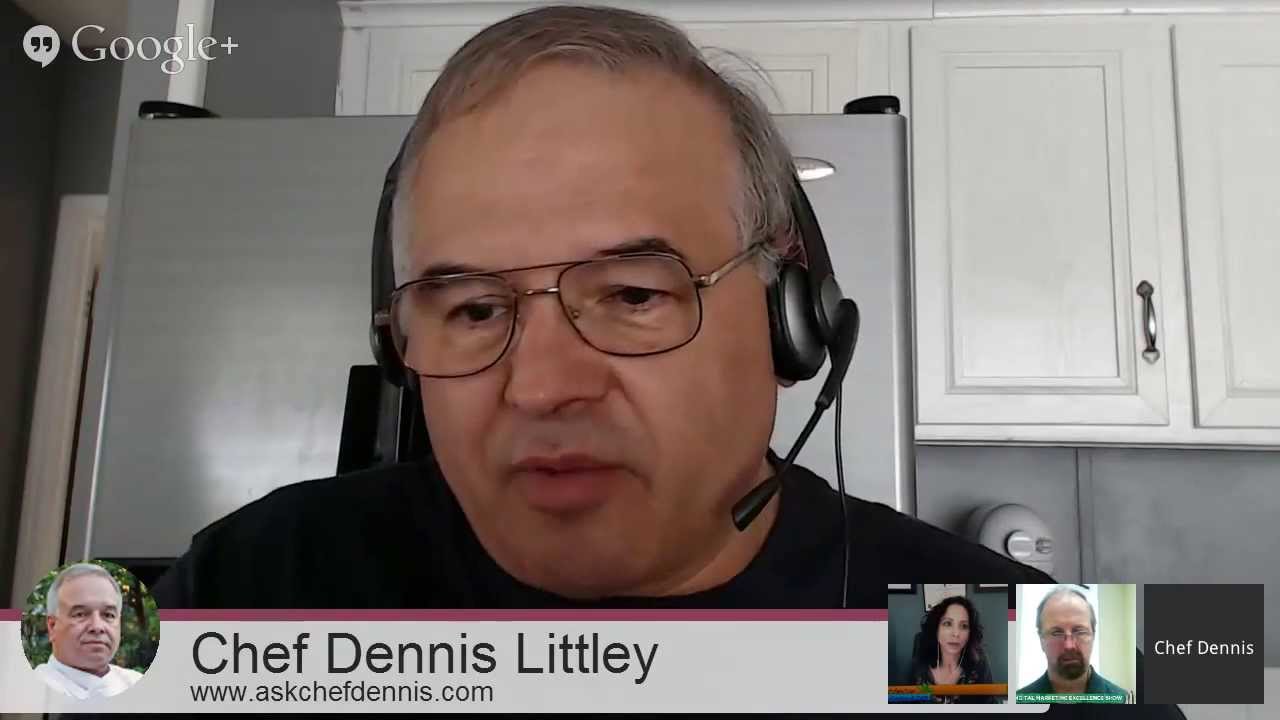
Eric Enge, CEO of Stone Temple Consulting, and Giselle Achikar, creator of EcoRico, join a live Google+ Hangout to discuss new Hangout tools like HD video and lower-thirds, Giselle's healthy chocolate cake recipe and organic sourcing, and Eric's breakdown of Google's Hummingbird algorithm and how it prioritizes content quality and semantic search.
Chapters
Joined, Mary Iannetti may join us too, she wasn't sure. Okay, we're live and it's good day Google+ and today everything's just working as Google+ does sometimes, anything can happen. I am broadcasting from my new home in Kissimmee so I'm in Florida. Life is good, you know, the house is a mess, we don't have all our furniture yet and but the weather's beautiful, the skies are blue, and it's a great day to be alive. So today we've had a little bit of change in plans. We're short a guest today. Bill was not able to come. He had a last-minute closing schedule, so of course business takes precedence. But my guest today— and we may have another possible one— but my guest today, I have Eric. Eric Eng. Eng, is that how you pronounce your last name?
I pronounce it Enga, but people pronounce it any which way imaginable.
Great, okay. And we have Giselle, and is that Akiar?
No, it's Atchakar, pronounce it phonetically. You know, you have the tough names today.
I know, I know, I'm sorry.
It's okay, it's simple, Atchakar, right? Atchakar, okay.
Alright, so we're going to get moving along and what we do here on Good Day Google+ is we talk a little bit about what we do. On Google+, what we enjoy doing and who we interact with, and then we just kinda talk to each other and have a good time on the broadcast. If you have questions, just ask your questions in the comment bar underneath and we will get to them as soon as we can. And just enjoy the show today, sit back. So I'm just gonna start and we're gonna let Eric start this one off.
Sure, so first of all, I'm CEO of Stone Temple Consulting. We are a digital marketing agency and we do that for companies, large brands mostly, but companies of varied sizes. And on Google+, gosh, I kind of just dove into Google+ the first time really in mid-July in terms of being serious about it, and I run my own Hangout on Air show, which I love doing, and that's great. Jump into various communities and interact and You know, just in general have a grand old time socializing with people and building connections.
Sounds good. Can you tell us a little bit about your show?
Sure, it's called the Digital Marketing Excellence Show. It's usually on Thursday. Yesterday we actually had Danny Sullivan on, so for those of you who know the search industry, you would know that name. And It hovers around time-wise a little bit just because sometimes I'm bringing in people from Europe and things like that. So next week I have Martin Shervington on, for example. He's over in Wales and he likes to do things a little earlier and the like. But we cover all manner of digital marketing topics and, you know, really try to help people learn how to, you know, get more traffic for their business or their website or whatever it may be.
Sounds good. You know, we can always use a little more traffic, and Martin is a great one too. He was on with us last week. Yeah, he is a good one. All right, Welshman, isn't he great? You know, I like to refer to him as the Prince of Wales.
Oh, there you go.
He's the real Prince of Wales.
You're so clever.
All right, Giselle, I'm going to turn it over to you now.
Hey, I'm Giselle Achikar. I'm the creator and host of EcoRico. You can find us on YouTube at youtube.com/ecoricotv. That's Eco Rico for those of you that don't know how to rrrr. And on Google+ we've got about, we're closing in on, I don't know, I think we've got about 350,000 followers on the Eco Rico TV Google+ page. And then I also have a show called Mami Talk, M-A-M-I-T-A-L-K, which is a show not just for moms. So we have moms, dads, we talk about all kinds of parenting and it's nuts. So it's a 10-minute HOA. We're going to have to relaunch because we had problems with the YouTube channel, but that's okay. Then I just launched a show this week called Food Talk, which is also a 10-minute live G+ Hangout livestream on YouTube. That's also on the EcoRicoTV page, so you can find us there. Hopefully, Dennis Littley, you will be a guest on that because what we do in Food Talk is I interview the hottest G+ and YouTube curators in the food and drink space. Our first guest was Larry Fournillier, whom I love and who really was my major mentor on Google+. He's fabulous and we all know him. We had quite a great show. I'm super excited for what's happening. If anybody sees all the radical weird— look how red I am. I don't know what happened. I jumped into this Hangout and I went, Wait, all of a sudden I'm red and the other day I was too pale. So I don't know.
It might be the way it looks if you look in the mirror too. You might want to check that. I'm just kidding you.
Okay, thanks so much, Eric.
You've been out in the sun a little too long.
I have not. As a matter of fact, Larry, the other day when we did Food Talk, he was like, Gisele, I've seen you in real life and you don't look like this. You look like a ghost. You look very pale. And I was like, I'm trying. I need a crew. I need my cameraman and my lighting person. Here I am with my cameras and lights in the room, but it's nuts. If I open the blinds, I'm totally blown out. If I close them, something happened today and I got red. You know.
You've got to average the two out. There you go.
Well, I noticed a whole new Hangout setup here when I clicked on. Of course, I did it a little late because, you know, moving and trying to get this house together. We were out this morning buying more stuff, and I come on all confident, plug it on, I turn around and go, oh my God, what the heck happened? So it was a nice surprise. I guess I haven't been paying attention to Ronnie Binzer's posts or I would have known.
Yeah, yeah.
The first big tip was move your mouse. That was his first big tip.
I moved my mouse, what's happening?
Well, it brings up the sidebar on the left and the top.
Oh, yes, well I found that quickly. But I like it, you know, the black.
It's kind of nice. And the picture looks good.
It's pretty radical, I'll dig it. You know, some things, the picture looks good because it's HD and I think functionality hopefully is going to be a little better because man, we went through a space there for the last 4 months that was kind of insane, right? I mean, there were all these changes and you couldn't find things and problems and beta testing and it was just nuts.
Well, that is the one good thing about Google+. It does not stand still like a lot of other social medias. They are constantly changing and I always like to refer to it as an Easter egg hunt because they make changes and they never tell you and then we just got to kind of find them.
Yeah, and some of them are good and some of them are not so good.
Well, some take more getting used to. We won't say they're not so good.
Okay, fair enough, fair enough.
We love Google, we do.
Yes, I do, I love Google+. But some cultural shifts are— some things just take longer to get used to.
Absolutely, a lot longer to get used to.
Well, one of the things you see too is that you had to update the lower third, which both of you have smart smartly done. As you can see from mine, I haven't gotten around to that yet.
Mine didn't used to be this dark. I have no idea what's happening. I feel like I'm getting darker as the show progresses. I don't know what's happening here.
It almost looks like a little Halloween theme, we're just a day late, that's all.
Over here we've got some craziness coming from a blind, you know, from my curtain. Here, no, here, it's all dark. I don't know, I don't know what's happening.
There's a Halloween theme for you.
Oh wow, that is. Oh my God, hope nobody's afraid of spiders out there.
Yeah, there you go. Yeah, I think I'm going to get rid of them because they're a little rough on me here too.
Well, we do have a question right now. Lawrence Eckert says, "Hey guys, I just joined in. I'd like to know how to get that cool block with my name in it whenever I talk in the Hangout like what's happening right now." Well, Lawrence, you have to send away for that. It's really a special deal. No, I'm only kidding. It's called Lower Thirds. That's what Eric was just talking about updating to the new Lower Thirds. It is an app that you can get. You just have to sign on to it. It's a Hangout toolbox that's part of that. That's actually, I think, all we're using in the Hangout Toolbox now. Are you using anything else from that?
Mine's custom. Mine's a custom overlay that a friend did because I really am not facile with Photoshop.
No, I'm not either.
So mine, you know, it's a Radical logo that has the feel of the brand.
It's gorgeous. I love it.
Thank you so much.
You did a great job with it.
Thank you. Now if it could be a little bit brighter because of what's going on in this room. Jeez.
There you go. Well, in my case, I'm doing an over— a total overlay, and the way you do that is you actually build a transparent image that goes over the whole picture, and then you embed in it the part where you want some graphics. That's the reason why a moment ago I was able to throw up the spiders the way I did, because I just chose to temporarily make that part not transparent. Obviously I have to adapt my overlay so that the film strip doesn't sit on top of the part that says the Digital Marketing Excellence Show there at the bottom. But my graphic guy is out today, so we're going to have to get that fixed next week.
I have absolutely no idea what you just said, Eric. I just don't.
Oh, you don't? Okay, well—
I'm still playing with color and sharpness and contrast and brightness. Poor Dennis, he's like, Gisele, what are you doing?
I'm fine. I didn't know you could do all that. I want to ask you out later.
I downloaded, there's an app called Webcam Settings and so I'm in my webcam, my C920 and I'm trying desperately to adjust what I look like but it's just not working. Hi baby. Oh look, my sous chef has entered. Wait, let's say hello. Hello, Sous Chef. Say hello to the world.
Hi.
See, she's totally blown out too. It's so weird. This is Adriana. She's on my show. Look at how crazy you look.
Hi, Adriana.
Yeah, nice to meet you.
So what do you like to cook?
Oh, hi.
What do you like to cook, Doodie? Chocolate cake. Chocolate cake, which just came out of the oven. Oh, what a surprise. Okay, you look crazy. Look at this. This is so weird. I don't know what's happening here. Oh well. Okay, I gotta go. Okay, bye, I love you. Bye.
She's too busy for us, I can see.
Well, you know what it is, my mother's in town and she's in Adriana's room right now going through all of the clothes because once we are out of this Hangout, we are going shopping.
Awesome. Hey, so Lawrence clarified his question here. I see that. Yeah, so he appears here. I'll pop it up. You can just blue box me if you want. And then, so he's not talking about the lower third. He's talking, I think, about the fact that in the film strip it now shows our names.
Yes.
When somebody's talking. So. So that's interesting.
That's just, I guess, the new update, one of the new updates. Surprise, surprise. That's what I get for being absent all week.
Yeah, so Google does that, Lawrence. It's not something that we're actually doing.
Well, I'm glad we got that straightened out then.
Where is that? Where are you guys seeing this question?
In the comment tracker. If you open that back up—
I am in the comment tracker and I'm in the stream.
They should all be coming up in the stream then.
—Okay.
You should have a bunch of them in there.
I got a whole bunch.
Yeah, so that was down a little bit further. Okay, and yeah, Craig, good to see you here. He said, "Nice tip there, Eric." And what's this? "There's a hybrid eclipse on Sunday night, Giselle. Maybe it's starting early." That's from Ken Button.
You know what? And it's true. I mean, Mercury's in retrograde right now, so I don't know what's going on. I gotta tell you, Everybody and their mother is having issues. I mean, look at this. This is bizarre. My poor child looked like a freakazoid. Yeah, it is. It's exactly what's happening. Thank you for that. There you go, Kim. Thank you. Thanks, Kim. Does anybody want to talk about food? Oh, please.
Let's talk about food a little, and then I wanted to talk about— Eric, you just did some stuff with the hummingbird update, didn't you, on your show?
I did, actually. So you want to talk food first or hummingbird first?
Let's talk food and then we'll roast a little hummingbird after that. Okay, that sounds good. So Giselle, let's talk about food. What would you like to talk about?
I don't know, I just made a chocolate cake. This chocolate cake is obscene, by the way. I'm meeting with an investor tomorrow because what, you know, I don't know if a lot of people who are on your show right now know what I'm doing, but I do healthy food and lifestyle programming in a show called Iko Iko TV, and we get about half a million views a month outside of YouTube. Right now we're really building our YouTube presence and our Google+ presence is pretty enormous. I like taking traditional recipes and making them healthier. This chocolate cake, for instance, I've reduced the butter but I've used more chocolate and everything I use is organic. For instance, the chocolate is 70% and to deepen the flavor of the cake I use a decaf Puerto Rican espresso, and I reduced the sugar. So it's a really deep, dense, yummy, moist chocolate cake that people go completely crazy over. So of course I'm meeting an investor tomorrow and I'm taking the cake.
So you're going to eat it and take the cake.
I figure I can get anywhere through people's tummies.
Absolutely. Now with using the— is the decaf espresso just to cut back so there's no extra caffeine or anything? Is that why you did that?
Yeah, yeah, I don't The only coffee I really drink is when I'm in Italy or Puerto Rico or whatever. Sometimes I'll have a mocha or something really yummy and whatever, but I always get a decaf. So I use a coffee called Caracolillo from Puerto Rico, which is where I'm from, in the mountains of PR. And if you didn't know, Puerto Rican coffee is, if not the best, but one of the best in the world. And it's all— the reason you can't buy it is because it's all bought up by the Pope. And by the Japanese. Really? Yes. The Pope? The Pope drinks Puerto Rican café.
Very smart of him, I think. Yes, absolutely. No, I love the fact that you're into the healthy eating thing, even though I'm not— I don't have a public personality online in that arena. I'm a big-time foodie, especially finding really interesting, healthy ways to eat. Twice a day I will make myself a little smoothie with some greens and some veggies and some fruit in it. I'm always finding creative ways to make something interesting and tasty. Not necessarily as fancy as what you're talking about, but just really basic stuff.
It's not fancy. Here's the thing. People constantly think— I mean, if you just go to the EcoTicoTV page, I am trained. I call myself a trained culinary professional. Then I watch Iron Chef, and I go, "Really? Should I be called a chef? I don't think so." Obviously, I am trained in what we are talking about, in traditional French techniques. I just use that and the science behind cooking to understand what I can substitute, what I can't substitute. When I make pumpkin muffins, instead of— most recipes are like a quarter cup of pumpkin or half a cup of pumpkin. I put a whole cup of pumpkin in, which allows me to reduce other things because I understand what the pumpkin can do within the recipe. You know what I'm saying? If you add a prune puree, you can take some other things out. It's really, to me, the science of cooking that is incredibly interesting. Obviously, you can't take all butter out or all sugar or whatever. I'm not really one to use agave even though I have a video about agave. If you're going to use it, get organic agave so that it's not manufactured with all the chemicals. I do talk a lot about organic foods and why we should use them. It always surprises me when people— the other night I made a very traditional Puerto Rican meal called pollo encebollado with rice and black beans and the whole thing. I did some sautéed broccolini. My mom was just like, "Ay, Dios mío, Giselle. Ay, esto está tan rico. Ay, Dios mío." She couldn't talk. She could just like, "Mmm. Oh, wow." What did you do? I was like, Mom, it's just the student becomes the teacher because I take what was and it's all about the ingredients. I just use really great ingredients. Instead of using a white vinegar, I use an apple cider vinegar, which really again deepens the flavor. It's the same thing as adding that espresso to the chocolate. It emboldens it. Really, it's about understanding the science of food, and then you can switch things around. I mean, I'm just not a butter person, so if I make a beurre blanc, I'll do it with olive oil and white wine, and I finish with a little butter or even a soy butter. I love Earth Balance. I get the same consistency of the sauce without that heavy butter flavor.
Things like that. Yeah, you enjoy playing. So that's, that's great. And I enjoy consuming. So me too.
I think we can— we're all in agreement on that one. And you know, really, I, I blog and I started it and people are always looking for things to make. And one of my biggest selling points on stuff that I make is it's that anybody can make it at home. Now I can teach you to make something that'll take half a day to make and require all these ingredients and all these special techniques, but you're not gonna do it because I'm not gonna do it. I'm a chef. So, you know, you don't have time, everybody works. So let's make something that's really good, that's easy, and you know, you're gonna enjoy. And that's, that's the whole secret to cooking, because you got to enjoy cooking. If you don't enjoy it, it's just not going to be good. That's how I learned to cook. My mother hated to cook. I love to eat. So I started cooking.
Yeah, you know, I, I use a lot of spices in Caribbean cooking. In general, we use a lot of spices. Our food is not hot like Central American food, as in pepper hot. Our food is spiced, and so we use a lot of cilantro and oregano and culantro, which is akin of cilantro but has even more flavor, and onions and garlic and peppers. Roasted peppers we use a lot, called pimientos morrones. We let things cook a while so that really the flavors can break down and and come up and come alive. So I'm with you, Dennis Littley. I don't have time. I'm a single parent, I work, my life is full-time, 24/7, and I can't— if I'm going to do something that's going to take me 4 hours, it better last me all week.
Absolutely. Right? Yeah, you're packing up food for the freezer or for the family or for something. It's a production. But yeah, dinner, I try to make things that take about half an hour, 45 minutes tops. Some things are faster. And prepping is everything.
So if you want to marinate something in the morning, it just makes everything quicker. Oh yeah.
You got to have a plan. You know, that's the whole big thing. Like when I was teaching, first thing I would teach everyone was how to say mise en place and then what it meant and how important it was no matter how small. Mise en place is everything. Its place. And as a chef, you would always make sure you had everything you're going to work with together before you start putting together, because the last thing you want to do is keep running from one cabinet to the other cabinet, then you don't have it, and then you're trying to substitute something, and then you're guessing, and then it doesn't come out, and then you hate cooking. And, you know, it's, it's just, it's not rocket science. You know, it's just, you know, cook what you like, use fresh ingredients, use local ingredients. You know, it's all about the good ingredients that you use.
We have a couple of comments here. Heather loves the science of cooking, which is very exciting. She's right. She says, "Once you get it, it makes recipes simpler to adjust." It's absolutely true. Lawrence Eckert says, "Can you guys make Chinese foods?" If you can, oh my God. How do I put this thing up on—
Click on the little eyeball. Little overlay.
Okay, look. See how freakish that is with the dark and the purple? I just don't get it. I just don't understand this. It's just not working. I don't understand. Anyway, okay, we're gonna have to figure this out later.
Yeah, because here's Kim's comment and mine came out a lot lighter.
Oi, Ben.
Sorry, love. I like that.
Oh, look what I did! Something happened!
Dear God.
Melanie Hall's got a good one here. Just as an FYI, I like to cook but hate to bake. You know, Melanie, I was the same way when I first started because baking is a science and I was afraid and I was afraid to screw something up. And I was at a restaurant and it got sold and I was kind of sold with it. And I asked the owner what we were doing for desserts. He goes, oh, chef, that's up to you. And I had never baked a thing in my life. So I went out and got the Good Housekeeping Illustrated Cookbook because it had pictures. And I could see what it was supposed to look like after I made it and just practice. And in the morning I'd bake before anyone got there, and if it didn't turn out, it never happened. I just threw it away and started again. So it's trial and error, but then you start to like it because, you know, what's not to like about baked stuff?
I really, really enjoy baking, and like I said, this chocolate cake— as you can see, I'm still playing with my camera— this chocolate cake, I just I'll tell you what I do. If I don't have a recipe for something, I will go online and I'll get like 10 of the recipes. If I'm doing a crème brûlée, I'll go— I have a video for a pumpkin crème brûlée. This pumpkin crème brûlée, I'm telling you, is phenomenal. It's 30% reduced fat. It's obscenely good. It tastes like pumpkin pie as a crème brûlée. You guys can watch that on eGoDigoTV on YouTube. It's a great, fun little video. It's really fun. It's one of my favorites. My daughter wears a pumpkin on her head. You can see how serious I take all this stuff. It is serious because I will test 3,000 times. My daughter is the one who is my sous chef, so she has to eat everything. When she says, "Oh, spectacular," I know it's ready to be shot. I forgot where I was going with that. What the hell was I saying?
About the pumpkin brulee and testing and— Yeah, whatever. I don't know.
I don't even know what I was saying. Are you guys seeing my name backwards? No, just you.
We all see ours backwards unless you pop it. I usually mirror.
I know, hang on. Here we go, let me go mirror. Anyway, I can't remember what I was saying about the pumpkin crème brûlée. Oh, so I take like 10 recipes and I'll see what the commonalities are. At this point, obviously after so many years, what I can do is I can look at a recipe and just know exactly what the problems are or what's great about it. Then I will start tweaking. With the chocolate cake recipe, it was the same thing. I went in, even when I'm in cooking classes or when I was in cooking school, I would sit here and I'd look at a recipe that my teacher gave me and I would change it in class. Unbeknownst to them. If I was taking something home to eat, I wanted to eat it. I didn't want to just make something that I knew wasn't going to be good enough. After a while, you can look at recipes. If you want to make a great chocolate cake, my suggestion is you get a whole bunch of chocolate cake recipes and take a look at them and see what the commonalities are and what you like, what you don't like, and then start playing around. Unless, of course, you get my recipe for chocolate cake, and then you don't have to do anything to it. Because I've done all that work for you.
It's important, you know, really testing recipes is a big process and some people just don't understand. I know Martha Stewart made a comment about us bloggers that we don't, you know, we don't test recipes and we just put anything out there and that's so far from the truth.
Oh my, you wouldn't last long that way, that's for sure.
Yeah, it's definitely far from the truth for me. There are some times when I look at a recipe and I go, they didn't play with this at all. 'Cause you just know, you just know by looking at it that they haven't in any way. But once people get renowned, you usually can trust what they're putting out. It's funny because when I was on Google+ and as I've become a bigger presence, I am so careful, Dennis, about who I post. If I find a picture that's gorgeous, I always go to the recipe because 9 times out of 10, I won't make that recipe. Recipe. And so I can't post it. And then sometimes I'll post something and I'll say, if I were to make this, I'd do this, this, this, and this, because I can just see the recipe and I know it's not going to come out the way it should. And it's not something that I would make anyway because it's not healthy enough or whatever.
Well, that's a good way to go about it. Question here from Lawrence again. Real quick, let me pin it. There we go. He hates any type of seafood, and he's trying to eat healthier because my health professor in my college really freaked me out with all the different types of things wrong with meat. So that was good. I'd like to know what things I can do to substitute with meats, but— the rest of it was cut off— but no fish. No fish. Well, I'm not a real big fish eater either. I enjoy some shellfish more than just fish, but I don't eat beef. I eat chicken more. I don't eat beef at all, and I eat pork almost not at all either, but I do eat chicken a lot of different ways. And then I enjoy some grains, different types of grains that have protein in them, and beans, of course, are great for protein. And cheese, you know, you can take a lot of things away from you, but not cheese. So you just— everything in moderation. And if you're buying meats, look for organic meats. Look for some really— some good meats. Don't just be buying some of these processed things. You don't know where they're coming from.
That goes for chicken or What about grass-fed, for example, if you're buying beef, right? Isn't that a much— or free-range if you're talking about chicken, right? I mean, those things actually taste—
The thing about free-range, though, is— sorry to interrupt you, Eric, but I post a lot about this because this is the thing that I'm— it's my baby here. I'm a staunch advocate of non-GMO foods and at least labeling GMO products and foods. I want to get back to the no fish. Lawrence— and then I'll talk about the grass-fed and organic and explain why. Yes, grass-fed is great, especially with meats, but with poultry, you have to be careful about what you're feeding. The organic feed is why you want to buy organic chicken, because conventional Feed contains something called Roxarsone, which is an arsenic base. That's what gets in the chicken. When you eat that chicken, and you eat a lot of chicken, and it's full of this arsenic, it becomes toxic in the body. That's one of the things that is the reason why you really need to buy organic chicken and eggs. With meats, I don't eat mammals anymore, though I love them. I grew up with people roasting a pig in the backyard, and me just completely scarfing it. I just don't eat it for moral reasons anymore, but yeah, definitely grass-fed. Then remember that natural, when you see all natural on something, that has absolutely nothing to do with whether it's organic, how it's been fed, or anything else, because it is a non-regulated term that companies like to use to convince people that their food is healthier than others. If it is not certified organic, It is not organic, and we don't really know what all natural is and that type of thing. You know what I'm saying? Now, if you know of a company like Organic Valley, which there are some things that they can't do that don't meet the requirements of being certified organic, and they put all natural products on it, that's probably true, and it is all natural. It's not going to be pesticide-ridden, and it's not going to be full of GMO products, but you just have to be very careful if you don't know the company that you're buying the product from, and it says all natural. You understand what I'm saying?
Dr. Pompa: Yeah. Now, you mentioned free-range there for a moment, but then you talk about organic when you talk about chicken. Is there a difference? Dr. Pompa: There's a total difference.
A free-range chicken just means that it is not raised inside in a cage. A free-range chicken can be anything from a chicken that's running around on the pasture to a chicken that gets to go outside for a couple of hours in a little tiny pen and then be brought back in to sit in a cage. That's the problem with a lot of these terms. Obviously, you would prefer to buy something that's free range, but the problem is that you want to understand that free range really means free range, that they actually have some pastureland as opposed to a dirt pen that they just get an hour of sunlight, and then they come back in, and on the packaging it says free range. You see what I'm saying? Right. You have to be really careful about about that. Lawrence, no fish. Post if you actually eat seafood. We need to know if you eat seafood and shellfish as Dennis was talking about because that's a whole other thing. I do duck and I love duck. If you want to do duck breast, again, you can watch my videos and see some of this stuff. Duck for me really can taste like meat. Again, you're going to have to practice how you sear it. You sear it with the skin on You never in the pan put any fat whatsoever. You sear it skin down and there's a ton of fat that's going to come out, which is great. Duck fat is a phenomenal way to flavor foods. You're going to sear it probably about 8 minutes depending on its thickness. Then you're going to flip it over. I'd turn the heat down a little bit, cook it another 8 minutes. Here's the thing. You cannot resear meat. You can't resear a steak. A lot of people do, but it toughens the meat. You really have got to understand and get the science down. I need to go look it up. Dennis, do you remember what the cook time is on duck breast per half inch?
Per half inch? No, not offhand.
I think it's about 8 minutes.
I was thinking 6.
6 to 8, but I'm not positive. 6 to 8 minutes, I'd say 8 minutes for about an inch duck breast. But you know what, Lawrence, I will get back to you on that. I will get back to you on that. So I'll post it somewhere, either find me on, on Giselle Achacar, my G+ page, or on the Eco Rico TV page, and I'll look it up and I'll get back to you on that.
We had a question here from Heather. And it was, do you think that gift you have to see and transform recipes is just a gift or something we can all do?
Oh, hell no. It's something you can do. I mean, you know, once you look at enough recipes, you're gonna get a sense. I mean, if you look at a cake recipe and it's got 2 teaspoons of salt, you know there's a problem, because usually it's going to be around a teaspoon of salt. And if you look at a cake recipe and it's got 4 teaspoons of baking soda, that's a heavy-duty amount. So you need to understand that if that leavener— that leavener is going to rise, rise, rise your cake. I always want to know, why do you need 4 teaspoons of a leavener? What type of cake are you making? That type of thing. If you're looking at spices, like anything with pumpkin since we're in the fall, I always know that something is going to be too sweet and it's not going to taste like pumpkin if it doesn't have a cup of pumpkin in the recipe. I just know it. If you're making pumpkin muffins, put a can of pumpkin in it. If you're making —just a typical recipe, put that much pumpkin in it. You want it to taste like pumpkin. Otherwise, it's just—that's why you will go sometimes to a store, and you'll buy a zucchini muffin, and you're like, "Zucchini?" It doesn't taste like anything because they haven't put enough of the actual goodness in there.
Flavor. The actual flavor. Flavor, baby. Flavor. When I was taught, too, they always told me just to really listen to the food. It's kind of a strange expression, but if you listen to the food that you're making, not necessarily it's going to talk to you, but you'll get a sense of what goes in. You'll start to feel what goes in. It's like connecting with anything that you're doing. You'll know, "I think it needs a little bit of this," or "I think it needs a little of this," or "This will help it." The more you do it, the better you're going to get at it, too. That's the whole thing. That's just practice makes perfect. We're not looking for perfect. We're looking for tasty.
Yeah, and I screw up all the time, by the way.
We all do.
I screw it up all the time. Yeah, the only reason I know about the duck breast is, of course, the first time I made duck breast, I didn't cook them enough and they were way too rare, so I had to put them back on and it was too tough, but they tasted great and they looked beautiful, but they were too tough. I love it.
The first time I had duck breast was in Paris, and I was glad it was dark because it was blue. I mean, talk about being rare. It was like, poof. But it was delicious though, so you can't complain. All right, let's— before we get into— and Lauren says he does not eat seafood at all. I've had 2 fish as dinner in my entire life, never again. So what about sheep? Do you eat any lamb or anything, Giselle?
I used to eat all of it. There was something in Puerto Rico— oh, Phil Boyer, "Honestly, organic meat is a scam." Oh, we need to read that. Hang on one second. In Puerto Rico, we have gandinga, which is a goat meat stew, and I used to love, love, love gandinga. As I said, I don't eat mammals anymore, but I loved rabbit and some venison if it wasn't too gamey. You know, it's interesting because one of the things I learned from Josie LaBalle, she's a very famous chef here in LA. I interviewed her for one of my shows and she said to me something I didn't know several years back and it was that the way you kill an animal is going to affect obviously the way it tastes. So when you scare an animal and kill it, in the prime of its fear, there's all that adrenaline and enzyme has been released in the body, and it penetrates the tissues of the meat. And that's why sometimes you'll get elk or whatever that is severely gamey. It's because these things were stressed when they were killed, as opposed to dying in a way that— more peacefully. Yeah, more peacefully.
All right, you wanted to see this message from Phil. Go ahead. You want to read it? Sure. Organic meat is a scam. It just means they give the animal organic corn and soy, which they don't eat anyway. You want pasteurized, grass-fed, finished. We also need to get away from the meat is bad. Meat and fat is good for you. Fat doesn't make you fat. That's sugar. The meat is bad thing came from a fraudulent study by Ancel Keys. Keys himself admitted to omitting critical data that skewed the results.
First of all, Phil, you've made some excellent points. Number 1, yes, you want meat like in Europe. Their cows are grass-fed. They don't pump them with corn and soy. I agree with you 100%. I will say that cheese that comes from animals that are pasture-raised has a very different enzyme base and is better for you, as in doesn't produce as much mucus in the body, as cheese that is produced from animals that are fed a corn and soy-based diet. Very true. However, I have never said meat is bad, and I have never said fat is bad, and I eat both. I don't eat mammals anymore. I do consider duck and fowl. It's meat. I mean, it is. I certainly don't criticize anybody for eating meat, but I am a complete— I preach the organic religion for many reasons, not the least of which is that study after study is coming up now that what we've done with GMOs soy, corn, canola, etc., is showing up in generations ahead in the rats that they're studying. In particular, in men, there are pancreatic problems, liver problems, fertility problems, sterility issues. We're going to find more and more that the GM products are causing problems because they're being raised in soil that is laden with toxic chemicals, and the plants soak them up. That's why we're having— it's another issue with colony collapse disorder in bees. The bees then come to pollinate. They take it over here. They're having neurotoxin problems. They lose their way. They're dying. I mean, it's just an entire— I'm way oversimplifying this, but you can see it in the food chain. We may be at the top of the food chain, but we are not immune to what's coming if we continue down this path.
We are losing bees like crazy, too. We really are.
We lose the bees, we die.
Yep, it's over. So we better do something about that. Even more than the whales, but we gotta watch those bees. Mary's talking about the same thing with immunity. She's got a question here. Okay, can you give us some advice on types of foods we can eat to prepare for winter and to boost our immune system for the holidays? I tend to get head colds when I travel during Thanksgiving and Christmas.
Any thoughts on that? Well, the only thing I can say is I don't know. Are you lactose intolerant? Are you eating a lot more dairy? What kind of foods are you putting in your body? When I want to clean out my system, I'll do a week of heavy vegetable. I don't necessarily go completely vegan, though I like to. By the way, I try not to eat white rice unless it's organic white rice. Lundberg is a great company. They have great rices. I don't know what to tell you. I don't know what your diet is. I need more information. Eat a lot of vegetables. A lot of greens. You want to boost your antioxidants and foods with zinc. You know what? Let me do a little research right now real quick because I have a bunch of stuff on this.
Dark leafy greens, orange vegetables, carrots, things with color, sweet potatoes, and things that normally are available more during the winter. The big philosophy on eating healthier and to keep your immune system is to eat local, first of all, and to eat what's grown in that season. Now, we've pushed that so far away from what we eat because we have things imported from all over the world now, but that was how you keep your immune system really strong is eating more of the local foods and things that are in season and eating that way. Yeah, go ahead. No, that's all. Go ahead.
No, I was going to say there are a lot of seeds and grains as well that help clear the body of toxins. I would think about pumpkin is great, pumpkin seeds, sesame seeds. I have my notes here. Oats are fantastic. How could I have forgotten oats, unless you have some sort of sensitivity to it. I don't know. Shrimp is high in zinc, but if you're going to eat shrimp, of course, you want to always get domestically farmed shrimp because there's something called STTP, which is sodium tripolyphosphate, which when you get shrimp from Thailand or Asia or whatever, in order to maintain color and allegedly freshness—it's not true—they dump something called STTP on the fish, and that's what they they freeze it in. It's a neurotoxin, and it's been shown to cause all kinds of problems in the body. Always remember to buy domestic seafood.
Wild-caught is always best when you can find wild-caught.
Yeah. You can go to seafoodwatch.org and download their little pocket guides. Also, the Monterey Bay Aquarium.
Monterey Bay Aquarium. Okay, let's move over to Eric before we forget him. He's getting awful lonely there. Now let's talk a little bit about— Sorry, Eric. No, it's okay. There you go. I can talk about this for hours. We can. Talk a little bit about Hummingbird now and some of the changes that you've seen because of that. Yes, indeed.
Sarah, I added one for you to my screen, so we have a little hummingbird on my shoulder. So yeah, happy to tell you about Hummingbird. For those of you who don't know what it is, it is a big algorithm change, or what Google called a platform change, that they announced on their 15th birthday party a few weeks ago. And it was a very strange announcement because they said that it impacted 90% of search queries and that it had already been live for a month. And the thing is, nobody knew, right? So how could it be having such a large impact if nobody knew? And it was actually One of those things that really stunned people. But it turns out that a lot of the changes are really subtle. And that a big part of it is that they were handling natural language queries better. And people don't usually monitor what happens if I enter this search query. How does it translate that into a different query and show some other result? Rather, they take very short-tail keyword phrases, which basically 1, 2, 3-word phrases, they punch it in the search engine and see how they rank. At that level, Google didn't change. But what did happen is at a much higher level they did. And what they've done is they've enabled themselves to handle more sophisticated queries. In fact, I could pull up a little query sequence for you. Which might be kind of cool to look at. So bear with me a second. Alright, I'm gonna share this so you can see what I mean. Okay, so I'm gonna show my sports bias here by— hummingbirds are delicious!
Somebody posted hummingbirds are delicious.
Craig Fifield, oh my gosh! Gosh, I haven't tried that one myself. Thank you. Yeah, well, it also wouldn't seem to be that filling if you just had one.
Yeah, I have to skewer a bunch of them.
There you go. Well, and maybe that's the way you do it. You do it on skewers. So what I'm going to do here— OK, so I'm going to walk you through an example sequence of something which Hummingbird has made possible. So can you see that screen share OK?
Yeah, it's great. Yeah, OK.
So you show me pictures of Tom Brady. And this is a query I did in Google. OK, and sure enough, it popped up pictures of Tom Brady. But then I followed that on with, how tall is he? I no longer mention his name, and it still knows that I'm talking about Tom Brady. So it shows that he's 6 foot 4 inches, or 1.93 meters if you prefer. And then I do it again. Who's his wife? And it comes up with his wife, and it still knows I'm talking about Tom Brady. Does he have children? And then it gets a list of the thousands— I'm sorry, the 3 children he has. Oh, by the way, I'm a Patriots fan, so I'm just teasing him honestly there, because hard for me to say bad about him. And then who's he playing this Sunday? Now there's a subtle shift here that's happened that's important to understand. When you see data like this, the one with Gisele Bündchen, that comes out of a part of Google known as the Knowledge Graph, which is actually a separate database from their main index where they have accumulated a whole set of facts and they can do specialized presentations in order to respond to your search query. So here it's understanding the search query as who is Tom Brady's wife And it understands that Tom Brady is a person and it understands that he has a relationship with, you know, which we call spouse, with another person called Gisele Bundchen, and it's able to pair those two things together and answer my query. This kind of query comes out of their knowledge graph, whereas this type of query, right, is who is he playing this Sunday? Well, they didn't actually have a knowledge graph answer for that. But they did formulate the query to make sure that the search result that came up actually contains the answer to it. And then it goes on, you know, when did he start playing football, and so forth. So it continues to maintain this understanding of what I'm talking about, which is an amazing aspect of how this algorithm worked. What is that called?
What is that type of search called? Semantic? Yeah, semantic search.
Yeah, so definitely a lot of semantic understanding. They tend to refer to it more as, let's see, tracking identities and establishing identities for both people and companies and objects, essentially, and being able to understand the relationships between between them. But it comes down to, yes, it's semantic search. That's what the rest of us call it.
That's like taking the nectar from your mouth.
Actually, what I try to do is I try to get it to fix my teeth for me.
I thought you were heading towards your nose there, you had me worried.
No, no, no, no, I'm not that— yeah, I can only take it so far. And especially when you don't brush your teeth enough, it's really Sorry. So this is the kind of thing that Hummingbird does. And in fact, I want to show you one more screenshot just to help you understand a little bit more about it. And this one— I love the way the screen share screen jumps around when you're trying to grab it in Google+. It makes it very challenging sometimes to— there you go. So this is a basic— representation and just of the way the search engine works. And by the way, this comes— this wasn't shared in the Hangout on Air I did with Danny Sullivan yesterday, but the concept is something that he expressed, which is what we call Google's search engine has always had 3 parts. And you notice I'm very careful to call it Google's product here on the slide rather than— oops. Rather than their search engine. And the reason is this, is their product has had 3 pieces. They've had the spider piece, which is the thing that crawls all around the web and finds all the web pages, and then it takes the information it finds and throws it into a database which we call the index, right? And the thing that's actually the search engine is only one of the 3 major pieces of Google's product. And the search engine is the thing that knows how to take a user's query and actually comb through the index and find out what the best answer is to the user's query. And there's a whole bunch of algorithms in the search engine, some of which you may have heard about, like people talk about the Panda algorithm and the Penguin algorithm. These are just little components of the overall search engine. Hummingbird is actually an entire rewrite of Google's search engine. So not the indexing part and not the crawling or spider part. Those are untouched in Hummingbird. But Hummingbird, as I understand it now after talking to Danny yesterday, is a rewrite of the entire search engine. And not only did it give it the capability to do a better job of handling those natural language queries, uh, that I showed you, uh, but it also is now going to enable Google to process more new types of signals. And one that I know that will be of interest to this audience, they'll be able to do a better job of, uh, taking advantage of social signals, which is something they've not historically been good at, and they've historically denied that they do. And I think that's because the original search engine didn't have the right structure, but Hummingbird now gives them the ability to start thinking about doing that. It's stunning.
I just have no idea how any of that works.
Well, you know, it's like you spent, I don't know how many years, Giselle, geeking out on the science of cooking. I have spent, you know, at least a dozen years geeking out on search engines and search engine algorithms and SEO. So it's the same thing. I'm always amazed when I talk to somebody in some other discipline, which I don't think of as being geeky at all, and I realize they're just absolutely as geeky as I am.
Total. My daughter goes, "Mom, are nerds bad?" And I'm like, "Well, no." You know, I'm a total geek. I'm a total I mean, if you like to learn, apparently that's what we're called. I'm thrilled, keep talking, I need to learn all this stuff.
Well, yeah, no, it's— let's talk about actually what it means for people who are publishers and people who are doing things on Google+. First of all, if you think about this notion of the search queries coming in, they're looking at them differently. And being able to understand semantics. If you think about it at a geeky level, you'll have some cases where they take a very complicated search query and they simplify it. And you'll have other cases where they take very simple search queries and they complicate it. And what I'm trying to get at here is that publishers who are into SEO are so used to thinking about keyword phrases and how do I In fact, I had someone ask me the other day, do I use this keyword phrase no more than 6 times, but at least 3 times on my page to make sure that I have the best chance of ranking for this keyword phrase? And my response to them is, you're in the wrong conversation. If you're going to create great content, then take someone who's an expert on the topic. Tell them what you want it to be about. And yes, you can tell them what the main phrase you want. You want to make sure the main phrase is in the title, but then just let them write good stuff. Right? Because they are—
Yeah, I understand all this, you know, the science behind SEO. I just figure if you're talking about food, then you're going to have words in there that have to do with food. You know what I mean? Although I know that you really have to be targeted about it, but the truth is what—
But that's the right idea, Giselle. What you want to do is when you let a good writer write about a topic that they're an expert in, They are naturally going to be semantically rich. You don't have to steer that. They are going to use natural synonyms. Sometimes instead of repeating the key phrase, they'll use the word "it" because the reader knows by context that you're talking about whatever the subject was. And that's actually a very powerful thing. At that level, I'm hoping that Hummingbird will encourage people to do a much better job of just focusing on writing great stuff and naturally semantically rich stuff. But to turn to Google+, because I know we don't have that much more time in the show, and I do want to talk a little bit about that. First of all, well, I mean, we're doing a Hangout On Air. I know everybody that's watching us is at least somewhat into Google+, but for people who aren't or people who haven't engaged— oh, there you go, it's just a giant recipe. There you go, nice job Craig, I like that, that was really well done.
I don't know who you are Craig, but you're cracking me up. And look at how crappy— I don't know what's going on with my lighting, I'm going to have to experiment, but Craig, you're hilarious. He's been the one who has managed to tie the recipes— look at this, now I'm I don't even know, I'm a zombie. He's managed to tie all the conversations together. He also wants to eat hummingbirds. Well, yes, he does.
But in any case, for people who aren't actively engaged in Google+, you need to understand we already have some things that work right now. One of those things is personalized search is obviously a big deal. So that already works. If somebody's searching in Google, they're going to see things from people they're connected with that +1 them or share them or whatever. A little less talked about but I think equally important, when you have an authoritative profile and you put up a Google+ post, that post by itself can rank in search. Now we're not talking about a personalized scenario.
Great question. How does verification affect that? Because seriously, I've got like 450,000 followers on Google+ and I'm not verified. I don't know how that affects when I post something if it shows up in search or not. I'm not some crazy person about that, but the truth is I need to understand how these things work in Google+.
So why aren't you verified? Hell if I know.
Talk to the people at Google.
I keep asking. You've tried to verify?
Yeah. I've asked community managers to verify me. I understand that you can't— there's no personal process to go through to get verified anymore.
So I don't have an official answer for you, but I would imagine for the average person that there's some real impact, and it really is, I think, important to try to get verified.
That's what I keep saying.
Yeah, no, I understand. But at the same time, Google does reach past the pure mechanics in many cases, right? So given the large following you have, it might actually not be impacting you, but most people don't have a large following like you do, Giselle.
So then how do you get verified? You'd think that they would verify me already. I know the paperwork went in.
Yeah, I don't know. We should— I'll be happy to look at that with you afterwards. We could connect afterwards and I'll see if I can help you get through that. Yeah, there you go. But all I want is some really good healthy duck recipes because I love duck.
I promise you I will exchange. There you go, it will be a trade. We will barter.
But the third thing and the last thing I want to add on Google+ is because of Hummingbird, we can now begin to expect that we will see some more impact from people sharing your content, especially people with authoritative profiles sharing your content, having an impact on what I'll call non-personalized search rankings. So even for people who aren't following you, they will see your particular content rank higher. If somebody is authoritative in a related space is obviously the best, and that will begin to happen. How soon that will begin to happen and how it will work is not really clear. It probably will be considered as a combination with other signals, right, such as real-world links and things like that will be part of that equation still. But I think now Hummingbird has set the stage to let that begin to happen, and that's a really, really big deal.
So that's—
yes indeed.
And he ends right as my church bells over here are chiming 11. Oh, there you go.
Well done, Eric. We're close. But, uh, so basically, if you write good content, you just keep writing good content. You don't have to worry about those keywords as much, like you said. And the personalized touch is what Google's really looking for too, is that they want to people are going to associate more with people. We've been telling them that for a long time.
Right. Build the relationships, right? Be active, share other people's stuff. If you're hosting shows, invite people onto your shows, and, you know, add value to their things they share. Get in there and comment, and, oh, did you think about this angle? Just build those relationships. It's called a social network for a reason. And the social part, you know, combined with great content, you know, comes first.
That's one of my favorite parts about this show, is usually the people that I bring on here don't know each other at all, and by the end of the show they're trading recipes for other things just like this and helping each other out. So, you know, I'm connecting my friends. That's, that's my big goal in life here, is to connect all my friends so they each learn the value that all of us have and just have a good time in this big social network. Well guys, if you have anything else, you can add it in now. If not, we've hit a little past the 2 o'clock mark and it was a fun show. Sorry Bill missed it, but we'll have him on another time later on. Thanks for stopping by Good Day Google+ today. It's my first official visit from, show from sunny Florida and I'm hoping to crank more of them out. Eric, thanks for stopping by. My pleasure. Giselle, thank you very much, and I look forward to being on your show too.
Yes, yes, we'll have to decide when you're going to be on Food Talk.
Absolutely, my pleasure. So guys, thanks for stopping, have a good day on Google+. See you soon.
Alright, thank you.









