Good Day Google+ (Episode 8)
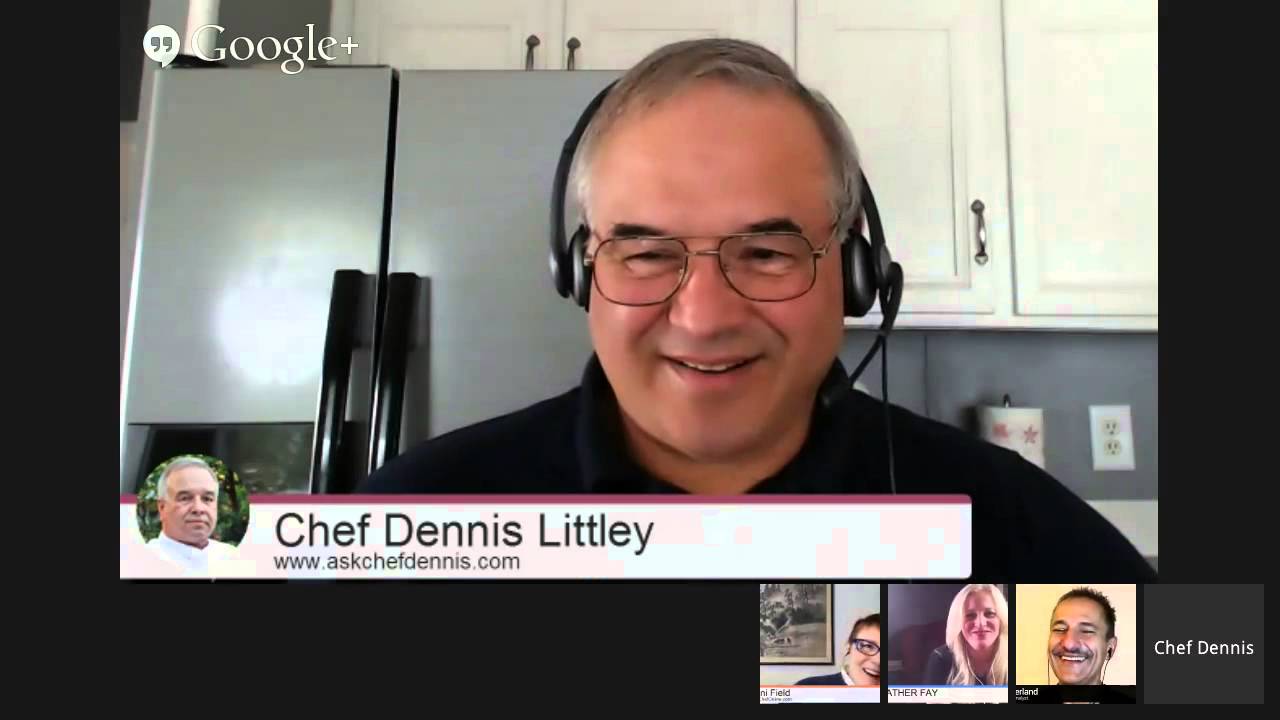
In this Hangout‑style episode of Good Day Google+, host Dennis Littley brings together semantic‑search expert David Amerland, singer‑songwriter Heather Faye, and pastry chef‑blogger Jenny Field to discuss how Google+ and related Google technologies are reshaping creative work and community building. The conversation opens with light banter about Movember before moving into a deep dive on Google’s recent legal victory that allows it to scan and index the world’s books, a development David frames as a catalyst for smarter semantic search and new opportunities for authors. Heather shares how Google+ enabled her to fund and release a second album, collaborate on artwork, and plan a Hangout‑based album release party, while also reflecting on the emotional role of music. Jenny describes her transition from special‑education teacher to pastry chef, her efforts to build an online cooking community, the philosophy behind recipes versus techniques, and her upcoming cookbook project. Throughout, the panel highlights the value of open, cross‑disciplinary collaboration on Google+, the evolving economics of digital content (crowdfunding, SoundCloud, Google Play), and broader musings on technology’s impact on daily life—from self‑driving cars to the cultural memory evoked by food and music. The episode concludes with each guest promoting their current projects and expressing enthusiasm for the continued growth of the Google+ community.
Chapters
Hello everyone, today I'm Chef Dennis and we are here with Good Day Google+ and we've got a great show for you today. Have some superstars here on the show in their fields and let me introduce them real quick. We have David Amerland, semantic search god.
I don't know about god but—
Heather Faye, singer-songwriter and internet sensation here on Google+.
Hello.
And Jenny Field, our very own pastry chef extraordinaire who will wow you with her tarts.
Gloria.
Yay!
I like to be wowed with tarts.
Who doesn't like to be wowed with tarts? That's right.
So as usual, we're here to have a good time today to talk about what we do on Google, how we enjoy Google+, and our interests on what we're here about and what communities we're in and what we really talk about. So that's the whole basis for the show. If you have questions, we do have the comment tracker on in here, and I can see your comments, and I'll highlight them if you have a good question for any of the guests or any comments you'd like to make. Go right ahead, and we will get to them as soon as we can. So I'm going to turn it right over to David since he's on my first in line. And take it away.
Tell us a little bit about that. OK, that's fine. OK, how do we start with this? I don't know. I mean, the week has been pretty hectic, actually, and I do I do a lot of business consulting and speaking, and my week has been taken up with moustache growing.
I noticed that, yeah.
Well, it's Movember, so it's for a good cause, and I've never done it before in my life, so I absolutely hate every single moment of it. I'm not going to do it ever again, like ever. I don't know what possessed me.
Moment of weakness, David.
Well, it was one of those things when everybody said, you know, it's for a good cause and it's a good idea, and I thought, well, you know, It's not costing me anything. But you know, I was so wrong. It's really costly. I mean, from a psychological point of view. Anyway, we have raised almost $2,200 as a team. Oh, actually you have? Yeah. It is pretty good. It's Martin Shervington's team, the Plustachios. Mustachios? Yeah, that's right. We're playing on the Plustachio thing for some reason.
But there you go.
Because of Pluto, moustache, sort of things amalgamated.
I like that.
That works.
Yeah, so, but yeah, I mean, it's been a hectic week generally for many reasons. I think anybody on Google+ feels that things are moving very quickly, they're moving forward in a sort of a lot faster than most people perceive them to be. And a lot of us don't really know what those changes are, but we sort of subconsciously feel them. And actually this week, after 8 years of legal battle, Google now has the ability to index all the books in the world and put them up on the web. Yay!
Actually.
Okay, why is this good, you're going to ask. Okay, jokes aside, this is going to change everything because essentially by scanning books and indexing them and putting them up on the web, Google has the ability to learn languages, expressions, phrases, words concepts, ideas the same way we do. I mean, we get smarter by reading books. Google can read all of them and it never forgets. So how much smarter is it going to get? Well, you know, we're talking about semantic search and Google Hummingbird. Things are going to accelerate from now on at an incredible pace, and that is really frightening in a sense that it's moving a lot faster than we anticipated. It's really good in terms of anybody who wants to do any kind of marketing, anybody who wants to be found on the web. The things which we do in Google+ now— being authentic, being ourselves, connecting the dots on all our activities— they work in our favor. I think that's really good news.
Very good. Now let me ask you a question. If you said they scan it in, does that mean someone physically has to scan in every page of the book?
I'm not 100% clear on that, but essentially I think, if I remember how they initially set up the service 8 years ago, Yeah, you had to send a hard copy of a book in if you wanted your book to be included, because at the time you actually had to volunteer to be part of the service, and they would put it through a machine and the machine would scan everything, so they wouldn't go page by page, but, you know, they sort of put it in and everything gets scanned. So I assume they're doing the same thing now, but having moved down the road by 8 years, they also now have the advantage that a lot of books are already in digital format because of ebooks, so their task is a little bit easier, which means it'll accelerate a lot faster.
I'm curious, can I ask a question about that?
Sure, yeah, absolutely.
As a musician and as a content creator, you know, you always have opinions and thoughts, and so do you have to opt in to get your book included, or do they just kind of take it, or do you know how that's working?
When they started the service, you actually had— 8 years ago, you had to opt in. Then the Authors Guild cried copyright content theft and copyright violation, and they went to court, they lost the first round, and they went back, and then they lost the second round, and then they sort of had a draw in the third round, and then the court decided just last week that essentially, although it may be perceived as being copyright violation, having those books available on the web actually is better for the wider community. So, and then they were still uncertain and unclear just how much authors lost out. So they decided that Google could go ahead and do it. I'm not sure if that is a carte blanche that, you know, Google can just seize everything and scan it regardless. I think it'd probably be an opt-in, some sort of opt-in phase. Right. So they never have ever— they've never actually done that where they go in and grab things. They do ask you to opt in. The question had come about on content which was out of copyright in Europe but was still covered by copyright in the US. And vice versa. And Google there had actually gone ahead and made it available on the web, obviously violating part of the copyright in one country and not the other. But as the web is global, and that's what actually kicked everything off in the beginning, I think in those cases they'll just go ahead and make it available regardless.
Next one. I could see how it would make some authors a little bit itchy.
Yeah.
I like the idea of having it be available. I was looking up something last night, I was trying to find a quote from a book, so I searched the book and it was not available yet. I was like, ugh! So I can see both sides of it, certainly.
Well, I'm an author, and you know, here's the thing, okay, yes, you want your content to be protected, but at the end of the day, when you write, you have two things to do. First of all, you need to find an audience because that's how you make a living. And second thing, you need to be read because that's how what you do acquires value. So the best book in the world read by two people in the world is of questionable value because it hasn't achieved its purpose. A book which may not be so good, if it's read by 10 million people, actually has some effect, and that helps it acquire value. So really it comes down to the question of value. How do we value an author? And if Google makes it available in a way that it helps discover new authors, it helps create audience, it helps make the connections in a much wider sense, I think it's going to lead to the point where we reevaluate how do we as readers begin to reward authors. Do we go and buy a book? Do we make a donation? Do we send them a baked pie. There's gonna be— yeah, I mean, but this is part of the discussion. This is part of moving forward from the world of scarcity of the past where a publisher, whether it was a music publisher or a book publisher, controlled the content because they made it available and they said, you know, we take all the risks, we're gonna take 90%, we're gonna give the content creator 10%, and the rest, you know, is sort of apportioned amongst all the different channels which make it possible for the work to be published. Now Google lowers the cost to the point where it's almost zero, so your audience is a lot bigger. At the same time, because the cost of getting it to the audience is so low, people are saying, well, you know, why should I pay? We need to rethink things. If you acquire something which is of great value to you, but you can't afford it, and suddenly you have it and you can use it, you can move on and better your life and do great things with it, at some point you're going to come back. And say, "Hey, you know, it wouldn't have been possible without your help, and here's how I pay you back." If we have the money, I think regardless we always make the right choice. We pay because we understand there's a cost involved. What we all object to is having to pay $100 for a book which is 30 pages thick. Okay, we think this is ridiculous. So this is again where we begin to rethink things in terms of not having scarcity to deal with and actually making our own better choices as people. It's a totally different equation. I think we're seeing the first steps in it and how we are actually approaching it, and it will evolve and evolve.
It's interesting because it is the, you know, it's the writer version of what happened in music, you know, however many years ago. There is some sort of model out there now because the music industry went through it, but it will be interesting if there will be like a Spotify, what types of things will come up, what types of services will come up to be able to help the artist, help the author still be able to do what they love and have value in doing what they love without it feeling like stolen or whatever.
And that's where, you know, I know exactly what you're saying because as a content creator, I mean, here's music for instance, it's the easiest thing in the world to be ripped off because we don't, you know, we think an MP3 file is about 3 minutes long and we just pass it around without a second thought. At the same time, those who actually it reaches, I mean, it'll reach some people who don't really care about it, they treat it as background music and they're not really your audience. It'll reach some people who would never be able to afford even giving you $2, and again, they're not your audience even though you may really have an impact in their life psychologically and emotionally. And then you will reach some people who have the money to give you, and they wouldn't have heard of you if it wasn't for all those other people.
It's true, yeah. You cast a wider net, absolutely, 100%, yeah.
So it comes down to that, it comes down to finding that audience, and I think it leads to a true connection between you as a musician and me as a writer and the audience out there. And that closeness helps us in our craft, we become more real as well. I think it's a good conversation to have.
Yeah, I agree.
You know, it's funny, I just started, uh, we were always as food bloggers, our stuff is stolen all the time and taken and used in various sources. You almost don't mind as long as the person's not making money with it, that they're just taking it for their own use and they put it up. That's okay. That's when someone uses it to draw people in and take it. On Google+, I have started posting full recipes with instructions instead of just a link to my website. Not with all of them, but with some of them because I'm hoping I reach— that was my whole thought. I'm hoping I bring in people that maybe wouldn't have bothered before because they had to click on a link.
Yeah, you know, I'm smiling because I see them when I'm working at 2:30 in the morning and I'm really hungry and everything's shut and it's too late to make something to eat because I'm going to go to bed in half an hour.
Chef Dennis's virtual café is always open.
I'm thinking, no, food on my stream, the last thing I want. And they are absolutely fantastic, I must say. When I see them, they're absolutely brilliant. I've actually stopped and read them, even though I'm doing a million things and I'm thinking the clock is ticking, I better get to I find myself stopping and looking at the recipes.
Well, I do have fun with it, that's for sure. I enjoy my food.
Well, this is it, isn't it? Because it's a passion. I mean, we stop doing— a lot of us stop doing things we don't care for. And again, that changes the value of everything. If we go back, let's go back 300, 400 years when the dominant force across Europe was Christianity. And we built those cathedrals which are absolutely massive, and if you cost them today, we can't afford them. And the people who built them worked through their lifetime, some of them dying knowing that their work, they would never see their work finished, but other people would carry on. And that's because they didn't think in terms of money, although they needed money to survive, right? They had a job, but there was more to it than that. They believed in what they were doing with a passion that went beyond the I'm getting paid for a job kind of thing. And I think we're beginning gradually to get to that stage, and that's a good thing because we all benefit from that kind of experience.
Yeah, absolutely.
I agree with that.
Good point. Alright, well let's move on. Heather Faye, it's so nice to have you here today and finally meet you face to face.
I know, me too. I'm excited. Long time being friends online.
I know. Tell us so much on some of what you've been doing online. And your new CD and everything's been going on.
Yeah, well, it's actually kind of to the point that we were— it's a nice segue into kind of my experience as a musician using Google+ and having the industry kind of change and figuring out a way to survive in it with the way things are now. I started up on Google+ about Gosh, the beginning. It was still beta, so it was a while ago. And, you know, I was at a point in my life where it was— I had to choose between being— I had two young kids at home, and I also have this dream of being this musician and reaching, casting that wide net and being able to get out there and build my audience. And I had to choose I was at a crossroads of, OK, do I try to figure out a way to go on tour? Because a lot of my friends who are single and didn't have kids, that's what they were doing, just leaving, up and leaving for, hopping in a van and going on tour and doing it that way, the old school, the old way. Or kind of just giving up, because I couldn't see how the two worlds were going to blend together in any way. So I was kind of just, maybe it'll be a hobby and I'll just do it. And no big dreams, no big expectations. And it was really heartbreaking, but I knew I wasn't going to leave my children. And then Google+ came along and it just completely flipped everything and made it possible for me to put my kids down for a nap and do a Hangout concert. I was doing open mic Hangouts in the very beginning of Google+ just to connect with other musicians around the world and share music. It was so exciting and so amazing. I didn't think it was going to be possible, but everyone was there. You guys were there. The world was there at my fingertips. I know we all had that similar experience of, oh my goodness, here it is. This is a game changer. And it really was. I just wrote a post this morning just reflecting looking on how far I've come from my first open mic Hangout to now. You know, when I first started on Google+, I really honestly, I didn't think a second album would be possible. I didn't think growing an audience would be possible. I just didn't think any of this would be possible. And, you know, it is. I have my second album because of— honestly, 95% of my funding came from Google+. My fans on Google+, my global audience, just being able to have them part of the experience and run songs by people, quickly hop in a Hangout and run a song by. The album artwork, my album artwork was done by Ashlyn Nathans, who's Scribblegraph, who's over in Australia, who I met here on Google+, and we collaborated via Hangout. Seamlessly, although I would usually be having a glass of wine when he was having his morning coffee, or vice versa. But it was just, you know, I marvel at it still because I'm so grateful for everyone who's believed in me and the world being there. It's just amazing. I mean, I literally, I just didn't think any of it would be possible. I know it feels like an old story now because we've been here a long time, but it's still is when you stop and think about where we've all kind of progressed. It is magic. It still is magic. And yeah, so I have my second album out and thinking about playing more shows. I have to do an album release Hangout. I have to schedule that. And things are good, yeah.
That's really good. Sorry, I just got really excited about what you just said because essentially it's what we've been discussing about about actually redefining what the value is to people and how they connect and appreciate it.
100%. I mean, I have chills when I think about it. It's really, you know, as a content creator, specifically a musician because we've been through the change to digital, you know, you can get caught up with Well, people just steal my music, or people are just taking it. They don't appreciate me. They don't— you know, why am I doing this? They're going to steal it anyway. They don't care. But the value in, like you said, reaching the people who do care, you know, it's worth so much. You know, the model has changed. I know a lot of musicians, particularly— it almost seems like everyone's independent these days because you can be. You don't need the middleman. But we all have day jobs, you know, or you kind of— the dream now is making a living, maybe not at music because people don't buy it, but you section those times to go on tour or go play a show, get out there, do the online thing, do the crowdsourcing, you know, Kickstarter, Indiegogo. You're going to find the people who are going to enable you, who believe in you, to make your music. And it's amazing.
It used to be like radio was the be-all and end-all, and now radio plays 4 songs over and over and over again. That's all you get. It's ridiculous.
Well, it's so funny you say that because I had a marketing company contact me like, "Oh, do you want our services for when you launch your album?" I was like, "Well, what do you do?" And they're like, "We do a radio campaign." And I was like, "No, I'm good. Thanks anyway." I'm amazed—
I'm sorry, I keep interrupting you. That's OK. Because Heather said she tries her songs out with people on Google+.
Yeah.
And funnily enough, when I wrote Google Semantic Search, which is a very complex subject to write, I spent about 18 months in academic research because the subject was new. But when I started writing, I opened up chapters and I I put a lot of content here, and the feedback I got through G+ changed the book entirely because it became a lot more accessible. And it's not the original book I wanted to write initially, but as it changed, I found the process, which for me at the time was unique because writers don't work that way. We sit in a box and we write and we send it to the publisher. But I found it even more astounding because You know, you work with songs which are arguably a lot more public as a vehicle, and you work that way. So there must be an amazing feeling because it's co-creation all the way, isn't it?
Well, that's why, yeah, this album feels like it's, you know, I keep referring to it as our album because it is. It's not— A, it would not have been possible financially. B, I've had so many people You know, the way they would react to a song, I would know that would be on the album. That one, you know, that excited people, they love that one, they love the lyrics, that one's going on the album. The artwork, just everything, it is such a collaboration. And I like working with people, and songwriting can be kind of lonely, so I enjoy the group.
Katherine, we have a question here.
Yeah.
Put it up for you. From Kim Balkman, she says she wants to know the best way to upload a recorded song. She recorded a CD in 2005 and would like to post a song now and then on her site.
It depends. Upload a song. I have questions for what exactly where she wants to post them.
She says it goes on her WordPress blog and it comes up as a WAV file and won't connect. Are there any suggestions?
SoundCloud is a great way to upload your music and share a link, and you have full control over what you share and who you share it with. So I would recommend checking out SoundCloud. You can also upload to Google Play, and you can give it— you can give your music for free, and you can manage that under the Artist Hub, which is great. And there's one— I mean, there's several more, but SoundCloud is really, really easy, and the Google Play Artist Hub is really, really easy as well. So I would say start there, and then you can share the links. Or check out the WordPress. There should be a way for you to upload probably an MP3. You probably have to— convert it to an MP3. That would be my suggestion.
Excellent.
Okay.
And let me know when you post it because I'd like to hear it.
Very good. Now let's move on to Jenny. Jenny, tell us a little bit about yourself and the things you create and what you've been doing.
Well, I started out my career as a special education teacher, and I did that for about 16 years, and then I tell people I ran away and joined the circus and went to culinary school and worked in fine dining as a pastry chef for a couple of years, helped open a restaurant, set their opening menu, and I still have— some of my dishes are actually still on that menu, which is cool. But I missed the teaching. So this, using Google+ and all kinds of social media platforms and my blog and everything, I can do both. I can teach and I can bake and I can teach people to bake and help them. My new tagline, well it's always sort of been my unwritten tagline, is Fearless in the Kitchen. I try and help people overcome fears by teaching techniques and that sort of thing as opposed to just saying you must make this recipe. I have kind of an issue with the word recipe. I think it's too limiting. That's been my goal since I've been online. I guess I I started the website back in early 2008 and the blog a few months later, and they've sort of evolved. And the Google+ piece has helped me reach people that I don't think I would have been able to otherwise. I find myself in kind of an interesting position because I started with most of my social media efforts were placed in Facebook, which has been wonderful. But I think I said on another Hangout one time, Facebook is kind of like this little island. You're kind of all just sort of stuck there on Facebook. It's a very big island, but still it's an island. You can't really get off. But Google+ just seems to have like an international airport on it. You know, and it's so easy.
You can leave whenever you want. Facebook has become the Gilligan's Island of social media. We can't patch that boat no matter how hard we try.
I love my fans there and I know that many of them aren't going to come here, so I'm always going to have a presence there. But I try and occasionally I'll say to them, I'm going to jump over on a Hangout and if you have any questions, come talk to me, that sort of thing. And the Hangout definitely makes makes a more personal relationship possible.
Absolutely. Now I remember you saying something that there might be a book coming out. Have you been working on that at all still?
Yeah, I am working on it. I have a proposal mostly done, and I've also got a blog where I've got recipe testers, and I post the— it's a private blog, and so my testers are members of the blog. I'm posting the recipes and they're testing for me and giving me feedback. So far it's going really well. I've gotten lots of really good reviews on most of what I'm posting. Again, I'm torn though because I have this whole thing about recipes. In one sense, the cookbook is a book of recipes, but in another sense it's a book really that's one basic recipe that's modified any number of ways. And so you can, depending on where you are as far as how comfortable you are as a cook or a baker, you'll see it as either one or the other. So it'll be, hopefully it'll be different things to different people and useful to everyone. That is the goal.
Well, I know in my cooking experience, you know, I like to tell people there's so many variations off one thing I think people get— they work too hard sometimes at trying to make things, and they try to make them so different. Well, in the restaurant, I had chicken, I had shrimp, I had this. Well, I found different ways to blend them together. If you give them one good basic recipe that works, and you can make 30 or 25 things off of it, oh my God. In anyone's arsenal, that's huge.
Hopefully, that's the goal. It's basically a book about a particular kind of cake. I don't want to give I don't want to give too much away because it's not actually been sold yet, but if anybody's out there and is interested, hit me up after the show. But anyway, it's a pretty exciting process. I'm enjoying it. I'm also doing a very fun thing. I have a friend who has his second book in a series of books coming out in February, I believe, and the main character is sort of a detective playboy, kind of, and he's also really into food. The stories take place in the '20s and '30s in London. And so food is a big part of his deal. And so the author, my friend Jamie Reidenauer, has named the pastry chef at this guy's favorite restaurant Pastry Chef Field, and her dessert cart is all the rage. So that's very kind of cool. Very cool. Yeah, so that's fun. And I'm actually helping him to develop a series of recipes to be used as part of the promotion for the book, having dinners in honor of the main character of this book. I'm setting the menu for that, so I'm excited about that collaboration too.
That's a great concept.
Yeah, he contacted me. I was like, absolutely, that sounds like the funnest.
Now did you meet him through Google+ or was that another—
Well, actually I knew him very briefly in college. He didn't really remember that we knew each other, but he made a big impact on me because he's a musician, an amazing guitarist, and I was babysitting somebody's guitar for the summer because I stayed there one summer. And I said, well, I guess I better get a chord book so I can at least do something with this guitar instead of just having it sit in the corner of my room. And so by the time everybody came back to school in the fall, I could do a reasonably good job. I'm never going to be one of those people who can like I put the chord book down. But I could at least strum along.
Never say never.
You never know. I think in this particular case I'm willing to let that dream die. But he's wonderful and I played with him. He played lead guitar and I strummed along behind him. I just have remembered that forever. That was probably in 1987 or something like that. So we reconnected, I guess, through social media. It's been a really fun collaboration. He's a filmmaker and he's a musician and he loves food and I love to help him promote his stuff. So yeah, we have a good time with that.
That's pretty cool.
That's what I always tell everybody to get out and mingle and meet new people, especially if you're a food blogger because everybody eats.
Everybody loves food.
So sooner or later that connection—
Yeah, absolutely. Not everybody likes the same kind of food but everybody has to eat something.
That's a common thread.
It does, definitely. Unites everybody.
Maybe we should do an album based on food, Heather.
Ooh, yeah, I like that idea. I don't know what it would be like at all, but I like the idea.
Excellent, excellent.
We had a couple comments I want to pop up too. Annalise Z was saying, "Interesting perspective on the word recipe, Janine Afail." Yeah.
I think it's a little bit different perspective than lots of people maybe tend to have about recipes, but for me, a recipe is a specific list of ingredients tied to a specific list of cooking or baking techniques. And if you can learn the techniques, you can apply them to almost any list of ingredients. So I don't see it as one, you know, thing set in stone. I find them very limiting that way.
I could see that as someone who doesn't— I have dreams of, and it will never happen because I just don't have natural talent in the kitchen.
Never say never.
Alright, you learn the guitar and I'll learn how to cook.
I see some online tutoring going on.
Yeah, exactly.
Exactly.
The old barter economy going into play.
Yeah. It's interesting, Heather, that you talk about the food and music because I've always likened a recipe to like when you record a song. That's the way it is. It's on the CD and every time you play it, it's going to sound exactly the same. I bet you money that Billy Joel wants to stab himself in the head when somebody says, "Play Piano Man!" They want him to play it just like he played it on the album in 1978.
No, that's very true. That's a good way to think about it. It's true. People like their things. Like for a recipe for someone who maybe isn't confident in the kitchen, having that go-to recipe, even if it's like mom's whatever that's been the same since generations and generations, there's something almost comforting in having that little map.
Oh, absolutely.
Branched out from— I don't have the confidence yet to take the recipe and steer away from it at all. So I just need more time, I think.
Well, I think that's it. Nobody is a great cook or baker right out of the gate. I mean, I guess there are some people who are born to it, like little Mozart composing things at the age of 3. I guess there are cooks and bakers out there who get it intuitively. It took me forever. It was definitely a journey on the way to just being able to throw things together and know that it's going to work. It's a long journey. A recipe, I think, is one step along that way.
Yeah. It's interesting.
I like to think of them— in baking, recipes are a little more critical. In just general cooking, recipe is a guideline. I think if you think of it that way and you add in foods that you like or take out foods you don't like out of them. That you can really learn how to interact with food a little bit more. Baking, I know, unless you really know the science behind it, you start pulling things out and change them. It's like people who will write and say, "Well, I made your cake, but I took out the eggs, and I took out the regular flour, and I used this instead, and it was terrible." I'm like, "Oh, okay.
Fuck. There's no bite to it." I don't know what happened.
I used Rice Krispies instead of flour, and I don't know why it's terrible.
It would be like, "I played your song but instead of G, I don't like G, I use D-flat.
And these lyrics, I don't like those lyrics at all, I'm going to re— yeah.
And it just didn't sound the same anymore. What happened?
And then it's all your fault somehow. They made all these changes, but it's your fault.
Isn't that something? You know, I'm laughing a little bit because I have a friend who used to run a restaurant and he was really passionate about his cooking, as he should be. And every time I used to go there and eat with friends, because he knew me, he'd come over to our table for a few minutes and he'd talk to us. And he would tell us how invariably he wanted to kill somebody because they came to him and he was really proud of his spaghetti recipe. And he has a restaurant by the sea in a town in Greece. And he used to get people driving, truck drivers going through the port driving to Italy, and they would stop at his place specifically. To try his pasta recipe because it's so good. And then you get somebody who would tell him, you know, I want to try your pasta recipe, but can you take this out and I don't want this? And he used to go to me, what I want to tell him is that's not my pasta recipe, go home and make it, you're not getting it here. And I could see he used to get so worked up, but I totally understand that because it's the creation, isn't it? I mean, when you create something, you put your soul into it in many ways and you're invested in it at a very personal level, and the moment somebody tampers with it, not only do they mess with your baby, but then also if they don't like it and they've tampered with it, it's your fault. It comes back to you, not them.
That happens a lot.
Yeah, I think with cooking in particular, because a lot of people think it's easy and it's not. Anybody who's tried a college level for the first time knows that it isn't. Because they've had a frying pan on fire or a pot boiling dry and things happening. So, you know, people who haven't tried to think, oh, this is so easy. So what you're doing seems somehow to glorify, put a sort of layer of complexity over something which they perceive to be simple. And I think the real difficult thing is the simple thing, which actually is what you said, where you take a recipe and you create a number of variables and they all work in different contexts. And I think that's fantastic because it shows such a deep understanding of the science and the art of cooking that most people don't even come close to grasping. And that's the beauty of it. And I think these connections we make, even this Hangout on Air, helps perhaps get out the message that cooking isn't easy. I mean, it's not necessarily rocket science. But there is an art to it and there is a science to it and there is a deep level of knowledge which makes it possible to happen at the high quality level. And the moment you're talking about quality, there's always a technical know-how involved, there's always a certain amount of experience, a certain amount of talent which goes into that. And that's what we are beginning to now understand, which I think hopefully changes the perception of everybody of how Easy it is within inverted commas.
No, it's been a great— I mean, seeing the people I've met on particularly G+ because people share their content more here than anywhere else that I've found. I do, I mean, I love seeing what everyone else is up to. I've learned so much from other people's posts and their process and their journey. I think it's so cool, you know, it's I love that. It feels not so lonely, you know, to be, you kind of got this engine behind you of people doing creative things that, you know, I don't know, it's nice.
And also people are willing to connect because in very few other social networks would you be willing to take a risk and connect to a stranger because there's all sorts of things that can go wrong. But in this environment there are also a lot of safeguards. I mean you can block somebody, you can just you just leave them and you say, okay, wrong conversation to get into. But at the same time, because you have those safeguards, you're braver and you're willing to be more open and take more risks and connect. And it becomes more rewarding because people are also more forthcoming, seeing that you went to the effort to connect. So I think it creates a kind of very, perhaps almost '60s atmosphere in terms of how people are willing to be free and open with their ideas and their thoughts. It creates a certain sense of energy which we all bounce off each other.
Yeah, definitely.
I like that '60s reference there because I definitely lived through them, I remember them. And I guess Google is our drug at this point.
Yeah, I better go get a flower for my hair really fast.
I wasn't even around.
I said that one time, it's not like the old days. I was working at a camp one summer Someone asked me to help them there, and it was a lot of fun. The kids were great. But I'm talking, and I said, it's not like the old days. And this kid turned to me and went, when were the old days? I went, the '60s. And he goes, I read about those. Oh my God, how old am I?
I was at school in the '70s, and I tell people we used to have manuals on what to do in case there was a nuclear attack, where you went under your desk. Those 4 inches of wood above your head, they were designed specifically to block out gamma rays, beta radiation, and thermal blast waves coming through walls. They would just be stopped by that. You had to get under your desk. We used to actually have drills.
Oh, we did.
Once a year. It was ridiculous. And you know, you think about it, and I tell this to people, and they go, what was that about? I say, well, nuclear war. And they go, what? So yeah, you know, things have moved on since then.
What was the famous sign on, I think it was the George Washington Bridge or one of them, that says in case of nuclear attack, drive off bridge.
Did it really say that?
Yeah, I think of course it meant drive to the end of the bridge and get off.
Oh, okay, get off bridge.
Ah!
I don't think in that case it would have mattered where you drove to, off the bridge might have been a better thing.
Yeah, in times of mortal peril, it's always good to have the direction to follow, even if it doesn't help you. You know, you've got to have some kind of a plan.
That's why you need a recipe, right?
Gotta have a plan.
Absolutely, you need a guide.
We have a visitor with us today too. I just like to— oops, I lost it. I'm sorry, I'll come back to here. I clicked on the wrong thing.
Here we go.
Jessica Northley.
Aww, I love Jessica.
I was just on a show with her.
Yeah, she's amazing. Talk about a woman that is just doing it all. She's incredible. Have you had her on this show?
No, she's going to be on though.
Oh good, yeah.
I was just on Mia Voss's show and she was on.
Yeah, and she's a doll. She's one of the nicest people you'll ever meet.
And then we had a reference to Piano Man from Annalise. I would venture to say that when Billy Joel is on tour playing Piano Man, he probably veers off and gives the song a bit of variance, right Heather Faye? Jenny Thiele, your example of likening a recipe to a song on a CD is a good one.
Yeah, I'm sure that Billy Joel is like, okay, I'm going to play my 2013 version of Piano Man, and there's going to be some people who are like, no, I want the the 1978 version, and other people who are going to be fine with it. Because you evolve as an artist. You're not caught in amber like a little fly or something.
I love when artists do different versions. And it's a whole new experience. I think that's really cool.
I think so, too. It keeps the music alive. And like cover versions— like I heard your cover of "The Way It Is," and more of a country kind of vibe to it. Just a couple days before I saw that, I saw Ricky Skaggs do a version that was of course more bluegrass.
Oh, wow.
And it's just really— yeah, it was on Yahoo Music or something. Oh, I didn't see that. I'll have to check it out. Yeah, they actually collaborated. Bruce Hornsby was on that. Oh, wow. It was very, very awesome. But so, I mean, to hear the three versions close together, I mean, it just keeps the music exciting and vibrant and part of a conversation as opposed to just like something in a little Jewel Box.
And a lot of times you hear things differently. Like when I heard, when I did that, the COVID of The Way It Is, it was for the One campaign, and they sent me, I think it was 100 songs that I could pick from to cover. And I remember that song vaguely from the, it was like the early '90s, I think, right? Or '80s? I can't remember. Anyway, the original version. And, you know, it was very, I remember it being very popular, but it was, you know, wasn't one of my favorite songs. So I had a couple, I had like 5 other songs from the list that I really thought maybe would be cool to cover. And my bass player was like, what about the Bruce Hornsby song, The Way It Is? It's got a nice little melody and stuff we could do. And I was like, I don't know, let me look at the lyrics again and see. And I just picked up my guitar and played the lyric, looked at the lyrics and kind of just started playing along. And slowing it down and just kind of rediscovering it that way, in my own way. I really honestly didn't understand what the song was about before. And reading the lyrics and kind of rediscovering it and doing it our own way, it definitely resonated on a different level with me, and I understood that it was a protest song. I never thought that was like a social song about social justice, and it very much is. So it was a cool experience for me to rediscover that song, give it a different spin.
It opens up a universe, doesn't it? Because essentially when you create a song or a recipe or anything really, you synthesize all of the elements of the moment. So you capture a little bit of its essence of what it was back then. When you decode it the way you do in your head, you almost get into the mindset of the person who created it.
Yeah.
It's like reading a book, isn't it? Because you hear the mind of the author. In that case, talking to you like one-to-one. And again, it's the same sort of experience. So it's always fascinating.
Yeah, you also have to bring a part of yourself to it to understand whatever it is that you might be doing, because it's always filtered through your experience, you know, regardless. So even if everybody's reading the same book, you're coming to it with a whole different set of experiences. People might get very different things out of the same book.
Yeah, exactly, because it's a synthesis again that takes place, isn't it? Because you say one thing and the person who reads it or hears it knows 10 more, so then it becomes 11, let's say, in their head and it's something new. But let's say somebody else hears who only knows 5 things and that becomes 6, so it's a different concept, they synthesize it to a different level, but to them individually it has an equal amount of value. It's an incredible thing, it creates epiphanies at a very personal level. And I think a lot of the things which we do today in terms of connectivity, the discussions we have, the cross-referencing or the cross-fertilization of ideas, they create the same kind of effect. It's a new, totally new way of working in a world that's changing and that's really refreshing. We become in many ways without realizing it part of the vanguard of the 21st century way of thinking which hasn't even begun to crystallize just yet. We're just beginning to understand how it's going to take shape and form and how transformative it's going to be in terms of the world around us. So I think it's powerful, it's fascinating, it's really energizing.
It's so funny you say that because I watch my daughter She's been with me since day one of my first open mic hangout and all this whole Google thing.
How old is she?
Google+ thing. She's now 7. No, she's not 7 yet. She'll be 7 in January.
OK.
I'm pushing it. She acts like she's 14, so I get it. So seeing it through her eyes, she'll never not have that experience of connecting with people through this little box on this computer. And, you know, just to her there's no limit to who she can have a conversation with. I mean, even back in the day with Skype and that sort of thing. But it really is, there's no limit. It is global for her. The world is global. There can be global conversation. It's not—
It's a different mindset for her, isn't it, to what it is for us?
Yeah.
We learned it. Yeah. She hasn't, it's instinctive.
Yeah.
It's the same thing with phones, how phones have taken over our lives. I mean, now we carry it with us. I mean, you can do your Hangout on the phone.
Yeah.
You know, when my wife and I are separated now, I finally got her using Hangouts so we can talk and see each other rather than just talk on the phone. So it's a whole new world. That wrist phone that Samsung has out too, that's pretty cool, the wristwatch phone.
It's like going back to the '80s.
The old days of Dick Tracy for me.
They've come back full circle, right?
I'm waiting for the flying cars though too. Google, if you're working on flying cars, please hurry that up.
I just need a self-driving car. That's what I'm waiting for.
So you can just take a nap in the back, get work done, do some things.
They're going to free up so much time, aren't they, really? Seriously. Yeah, I was thinking about it today because most of the times when I'm driving I use the time to just recharge mentally because I'm usually going from something which I've been doing, an intensive project or meeting, or from one meeting to another. So the time in between is my recharge time, so all I'm thinking about is the traffic. And I check the mirrors and I check the traffic in front, traffic behind, so it's a full-on job. This morning I was going to a meeting first thing, so because it was the first thing I was doing in the morning, half my mind was on the meeting. I was doing things mechanically. And when I got there, I realized that I hadn't really realized how I got there, which is scary, right? Because I'm doing speeds of about 90 miles per hour.
Wow.
So yeah, I got there and, you know, thinking, okay, I haven't got a recollection of half the journey. I mean, nothing happened, everything was safe. But how scary is that, right? How stupid from our point of view, because I was thinking ahead of the day. Now imagine actually having a machine which not just constantly looks 2, 3, 4 cars ahead of you, but also cars behind and checks the road conditions and checks the weather and checks ahead to see if there's an obstruction in traffic. I mean, the safety record of that machine is nowhere near to what you're going to do, right? And the reaction time is like perfect, okay, so it's not limited by your own distractions. So, you know, we're just not, we can't compete in that department.
They have cars now that will brake, right, automatically brake on, yeah, yeah, Mercedes, yeah, Mercedes have done.
Wow, I think that's interesting, but I also think that maybe we ought to just pay more attention while we're driving.
That's the easy solution.
Yeah, I totally agree, I mean we should, and like I said normally that's what I do, but this morning, you know, because I was thinking it was an important meeting, it was the first meeting of the day and I sort of had half prepared the day before, going there because I didn't know half the people at the table, I was sort of mentally going through things in my head and I'm still driving and the thing is I thought I was driving as carefully as ever.
But you know what, you may have been on a certain level because we drive so frequently frequently that it's something that you almost don't have to think about, you do it automatically.
I know, but the thing is if I don't have to think about it and there comes a moment in traffic when I do have to think about it, then it's a little bit too slow. I mean, it didn't come to it, but I got there and got out of the car and I was thinking as I was getting my laptop out, I thought, I haven't got recollection of half the journey, how I actually got here. I thought, this is really weird.
Is it like lost time or something?
I remember those days from my youth, but there was usually drinking involved.
You're missing sections of time?
Yeah, where you sit at a traffic light. You're multitasking, wondering how long you've actually been at that traffic light and how many times it's changed.
And why everybody is honking at you. What is wrong with you? It was interesting, we stayed at a bed and breakfast in North Georgia a couple weekends ago, and one of the guys who was there just overnight the last night we were there came in on a motorcycle from Nashville. So he drove, I don't even know how many hours that is, but a fair number, like maybe 10 hours or something on this motorcycle. And he said that it's such a rush to drive because everything falls away because you have to be totally involved with what you're doing. And so he's connected to the bike, he's connected to the road, he's looking, he's looking, he doesn't have time to think about anything but the road. And then he said something which I thought was really telling, that inexperienced bikers attend to what they want to avoid. If they see a pothole, they're like, oh God, I don't want to hit the pothole. And invariably they're going to hit it. But more experienced drivers look where they want the bike to go, not where they want the bike not to go. So keep your eye on the prize, I guess, is the bigger—
Yeah, it's fascinating.
You're right.
You're absolutely right. Because I've caught myself— Britain's motorways have an 80-mile-per-hour speed limit, but invariably creeps up to about 120, 130. So you sort of get there and you change lanes, right? And the way you change lanes— because you can't swerve. Because you swerve, you're going to crash. No return. But you sort of think about it, and then the car sort of veers across the next lane. And it's almost like you thought about it and it happened. Yeah. But it happens like your eyes are guiding it. If you have to consciously think about it, it becomes really complicated. But you don't. You think, I'm changing lanes, you indicate, and sort of drifts across. And it's fascinating because obviously there are mechanics going on in their heads which constantly calculate things and actually make it happen. But it feels like your eyes are guiding it. So I totally get what you said about the bike.
That's like riding a horse. I've ridden a horse a couple times. And you're supposed to— the horse reads where you look is where it guides the horse.
Really?
I've never heard of those things.
You have to do reins and stuff, too. But you're supposed to just— literally, they can read your body.
Body language, yeah.
That you just look, and it's supposed to be this— if you have a good horse and a good relationship, it's supposed to be this seamless— now, if I'm wrong, for horse people out there, if I'm totally wrong and the teacher was just messing with me, the instructor that I had was just like—
It's the instructor's fault.
Yeah. You can correct me. But that's my understanding, is that you're supposed to just be able to just kind of look, and that's where the— the horse will go.
So you're probably right, because I read a fact the other day which completely blew my mind. Horses can hear your heartbeat. Wow. So you know, if they know that you're scared, for instance, they know you're scared because they can hear your heartbeat.
Wow. What, that femoral artery is in your inner thigh, correct? And that's like—
it is, yeah. But I mean, they can also hear it.
Oh, really?
You know, yeah, even when you when you're near the horse rather than on it. If you're scared of them, they really know. But yeah, when you're on them, I suppose it must be really— because horses are prey animals, so they're constantly switched on. We're sort of predators, so we can afford to relax while we drive, maybe.
A little bit, within reason.
But you know, they're actually prey animals, so all their senses are switched on. So when you're on them, You're bonded with them essentially, as in almost like one. So I think what Heather said has probably quite an element of truth in it. Yeah, amazing.
Yeah, and it did work. The horse I was on did, unless it was like a, I don't know, I don't know, especially trained horse. Yeah, exactly, for really, really beginner riders.
I would need the horse who would say, oh, she doesn't really want to go where she's looking. She's completely ridiculous. She is off base, I'm going to take her where she needs to go.
My problem was a few times I've been riding is they'll look at me and they give me the biggest horse they have. It's like, oh my God, I need a step stool to get to the stirrup.
You start worrying about it when they call it El Diablo.
Oh no, this was Damien, I remember.
Oh wow, Damien.
That's not a good name either. With the flaring nostrils and the rolling eyes.
That's right.
Well, I have to put this comment up because it's kind of funny. David Amram, you have all the makings of a truck driver. And she means that with the highest amount of respect, because I know Kim. That's like a good thing.
It's a tash, isn't it?
I think that definitely helped you. Yeah. You know, we were talking about music and about food and everything, and I think those are two of the items that really bring us somewhere or remind us of things. They can remind us of places and times, both of them, so easily. And I think of a song by Trisha Yearwood, the song "Remembers When," one of my favorite. You know, this music will take you back to a specific point in your life. I know, especially with me, when I hear songs from the '60s and '70s, you know, the '80s, you know, you remember what you were doing when you heard that song.
Yep, it's so true. And the same thing with food and smells, yeah, smells of foods. Like, I don't know, just my husband is really good, he makes pumpkin pie, that's like his thing, he always makes it and it's such, whenever he makes it the house smells so good and everything. And it just, you know, brings me back to our earlier days together. But it is, it's amazing, the senses. I have, I know people who don't who don't really listen to music, you know, they just kind of listen to whatever is on the radio and aren't really active listeners, you know. And it's interesting to me because I can't imagine— I think I've— I mean, music for me was my therapy and my friend and my, you know, I mean, every— I would, you know, during a breakup or something, I would want to cry and I would like I would create the soundtrack to my breakup and just like, "Ooh-ha!" You know, just cry with the music. And it's funny because I see my daughter doing that now. She's like, "I'm in the mood for a sad song." And she would just sit there and just be kind of like filled with drama. And just what she's already emoting through this music, this music is helping her process feelings and stuff. And it's so powerful that I can't imagine not having Even if it doesn't matter what type of music, even if it's like death metal or whatever, just something, that thing that makes you feel connected to your soul.
Well, it's always there for you. It never turns its back on you. It's always ready anytime you want to play it. And sometimes it is the companion to get you through the worst times of your life. You can just unplug and you can listen, and it does soothe the savage. Beast breast, whatever it is.
I will say that's one time when the 1978 version of Billy Joel is the one that you need. Exactly.
Definitely not the Vegas version.
Or any other version since.
Right. So I mean, it's just like you were talking about comfort food earlier. You want to make it the same time every single time. So there's a time and a place for experimentation and riffing on things, and then there's a time when maybe you're feeling sad or lonely and you want that comfort of a familiar sound or a familiar taste or whatever.
Yeah, yep, so true.
Good stuff.
Awesome show ever, Dennis Littley.
I love this show and I love having all you guys on. It's really nice to talk and have fun and just enjoy ourselves. But we're coming on the 2 o'clock time, so if anybody has any anything else they'd like to say before we sign off? David, any tidbits to share or Davidisms?
I just love— or Triverisms maybe, I don't know. I absolutely love the connectivity. This kind of connection is always transformative because you get to hear things and thoughts outside your own head. And for a brief brief period of time you get to be into other people's brains. I think it's absolutely fascinating. And so many things happen like this every day now across Google+. It's all digital, it all happens on a screen, and a lot of people think, well, you know, it's just a screen, right? It has no impact at all in the real world. And it actually does, because the transformation that it actually causes inside your head then has an impact in the real world. So these connections, small as they are, by degrees are part of the process which is transforming a world that was stuck in the past to a world that is heading towards the future. And this is where it's happening. And the things we sense and we discuss today, some light and some heavy and some completely rocky, they're part of it. So it's really amazing to be here.
I think that goes also to what we've been saying. You look where I mean, you move where you look. You know what I mean? True.
Heather, where can we get your new CD? When will it be out?
It is out. It was released a couple weeks ago, and it's on iTunes and Google Play, and you can buy CDs from my website, heatherfay.com. If you want an actual physical CD, heatherfay.com. It's called Cherish the Broken. And yeah.
Are you doing anything more on Google? Any concerts or anything?
Yes, I'm going to schedule my— I have an idea for a show, like a weekly show. I'll tell you all about it. I'm still figuring it out. But I will be doing an album release party Hangout probably in December, mid-December. So I'll have that up. So I want you guys to all join me.
That's fantastic.
Very cool, very exciting. Thank you.
And Jenny, your book, we'll still look for that when it comes out, but anything else you'd like to leave us with?
Well, you know, come and I am always happy to answer baking questions or help you with almost anything that you would need. I try and make myself available. And when I say, you know, I want you to be fearless in the kitchen, I really do mean that. I want you to be fearless and take some chances, and if I need to hold your hand a little bit to help you take some chances, I'm happy to do that. So you can find me on my website.
Do you have a community?
You know what, I had a community, but it was confusing because it was called the Pastry Chef Online Community because that's the website, but pastry chefs thought it was like, oh, this is where I can come. To be online. That's great and all, but no, it's all about me. People got confused and so I said very kindly to everybody, I'm just going to bow out of the community right this very second. I still maintain my personal page and I probably will set up a page for Pastry Chef Online as well. I think communities might have been too new as well when I did it.. And people weren't quite sure about how to work it. And I obviously let it get out of control.
But we can still come to your page for stuff and go to your blog too. Great, great. Sounds good. Alright everybody, thank you so much for another wonderful show. I really had a good time today. And for everyone for tuning in today to Good Day Google+, thank you so much and I hope to see you again soon. Take care.
Thank you.
Bye-bye.
Thanks.
Thanks.
Bye-bye.









