Good Day Google+ - Let's Celebrate the New Year!
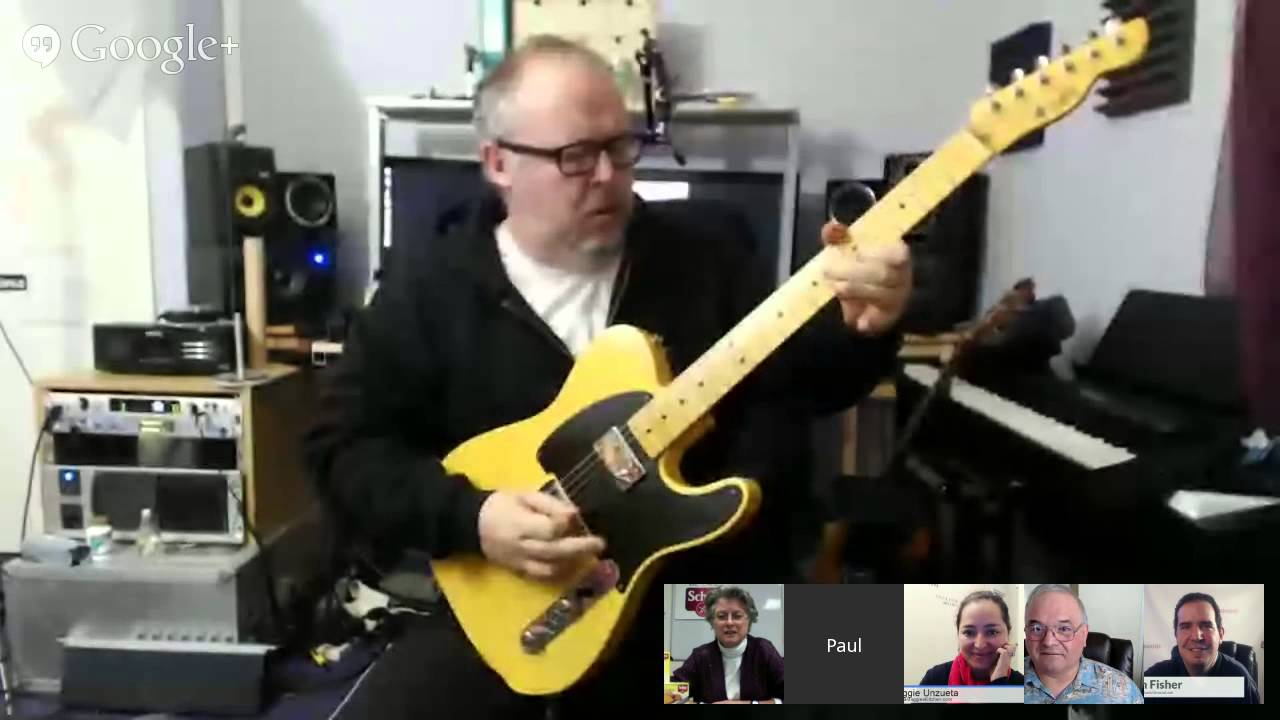
Chef Dennis Littley hosts a New Year Google+ Hangout with dietitian Ann Lee, blogger Maggie Unzueta, and others. They discuss gluten-free products from Char, including multigrain penne and ciabatta rolls, plus the history of celiac disease and why people go gluten-free.
Chapters
Hey everyone, I'm Chef Dennis Littley and welcome to Good Day Google+. It's the first show of the new year and I've got a few friends in here with me. We had, I think, a last-minute cancellation on Paul coming to us from England. He may still show up, but it's not looking good. So I actually have a few people joining us and I got Ben Fisher to jump in instead. Thank you so much for coming in on this last-minute request. I wanted an excuse to talk to you. It's been a while since we've chatted, so this is a good enough way to do it.
Right on. Thanks for having me, Seth. Yeah, it has been a long time.
Too long.
But you know what?
I love G'day Google+. So anytime I can come back and see your smiling pretty face—
You know, you've been doing a lot with steady demand, so we'll talk more about that though. You really kind of turned the corner with that, added some really great people to your entourage, and it's looking good. So good to see you today. And then we have my counterpart in Coronado Springs, Maggie Unzueta, who you see. She's a regular fixture on Good Day Google+. Good to see you here, Mags.
Hi, how are you? Happy New Year, everyone. Happy New Year. Happy New Year, Maggie. From freezing cold Coronado.
Yeah, in the frozen tundra there in Coronado. You said it's a little chilly.
It's nuts. It was nuts. We actually went around to go look at some of the snow, and we never made it. We never made it. But it was just so many people trying to go out to go see the snow, because it's such a phenomenon. Snow in San Diego just never happens, ever. Well, Ben would know. He lived here for a while.
Yeah, I lived there for about, what, gosh, 9 years, something like that.
—Do you ever see snow here? —No.
But if you remember the fire that I think was back in 2005, the sky was orange and it was definitely kind of snowing flakes.
—Yeah, we do get fires. That's the unfortunate part. —Yeah.
But I'm looking forward to seeing you again, Maggie. Are you going to Social Media Marketing World 15? I don't know, I don't know.
Kind of left me traumatized last time. I'm just kidding. I'm totally kidding, I'm totally kidding. I was just telling them in the green room our first meeting. Oh boy, the stories you could tell. But there's an HOA somewhere. I'll have to go find it. Anyways.
Yeah, that was an interesting HOA.
So when is Social Media Marketing World?
What day is that, do you know? I think it's March, like March 14th or 15th, something like that.
I don't know, I don't know, maybe, it might be. I'm sure there'll be a hurl, and if there is, I'm there.
Let's hurl. Hurl in a good way.
Will you be back from your honeymoon by then at least, right? Maggie, since you're getting married, what, the 22nd?
I'm getting married on the 22nd of February, so I don't know if I'll be on a honeymoon. I have a couple of— we're going to a couple of places after that, as we travel so much. So getting married on the 22nd of February, maybe he will be here, maybe we won't. Yeah, have a honeymoon in San Diego, I don't know.
As long as he's here for the wedding, that's important.
As long as he's here for the wedding and says "I do," I'm cool. Congratulations, Maggie. Awesome.
Let's say hi to Ann, too. She's feeling a little neglected there. Hi, Ann. Good to see you. Bonjour.
This is my first time on today Google+, and this is very exciting for us at Char. This is very neat. Thank you for having us.
It's my pleasure. Like I told you when I first met you down here in Florida, you were a godsend to me because you have gluten-free ladyfingers. Since I'm gluten-free now, that meant I could indulge in tiramisu still. That would have been a very I'd be very sad if I couldn't eat that.
You would be surprised how many people say that to us, that it's like without the ladyfingers, they just don't know what they would do being gluten-free. Glad we were your answer.
Absolutely, and I'm looking forward to working with you some more. We've got some exciting news we'll share with everyone about our plans for February and some of the Char products.
I am really excited about that.
We're kind of planning— can we divulge our plans at this time? Great. We're actually going to team up with Julie Lagasse, who is also celiac, and do some ingredient challenges and recipe challenges and just have a lot of fun cooking gluten-free.
For those of you that may not know, Jillie, that is one of Emeril's daughters, and they're both actually celiac. It'll be interesting to meet her face-to-face on a Google+ Hangout and do some cooking side-by-side with her. That should be fun.
Oh, it is. Very cool. We have some interesting ideas for those ladyfingers, so keep in touch.
Now Char makes a lot of interesting products. Would you like to tell us about some of them and the different things you have?
We do. We actually have a real extensive line of products, but I'm going to be honest, I have some favorites, just like your Ladyfingers. And I think there's a couple things that we do that are really stellar compared to the competition. We have a multigrain penne that's a combination of millet, buckwheat, pea protein, brown rice. And what's nice is that in addition to cooking up like a real pasta is that it's also very nutritious. From a food service point of view, it's one of the few pastas you can cook and serve and it still holds together and tastes and feels like a real, you know, regular pasta. It's just outstanding. So that's one of my favorites. We do graham crackers that are just like a regular graham cracker, and we do ciabatta rolls that I was thinking when you had your pork sandwich, I'm thinking, "Ah, it should have been on our roll," because it just would be perfect. We have a lot of good things. Our mission is to make the world of gluten-free taste just like a regular meal.
Dr. Pompa: I have noticed that a lot of things are— improving in the world of gluten-free. Being that I'm still new to it, I'm excited about that. All the people that really pioneered it when it was— because they had to. They didn't have a lot of choices. We're coming up with— I'm seeing a lot of options now that a lot of people didn't have. I'm enjoying becoming gluten-free later in life than if I had to go that way because of celiac. I don't have celiac. It's just— I think my sensitivity to it is what drove me to it. I do feel a lot better. Not eating it. I say that all the time when people ask me, so it's worked out well. Let me throw up here. We have a few comments out here.
Where's—
let me find it. Oh, Christopher Vogelman wrote, "Good day, Gluten Plus." Well, you never know. That could be a new show. We could go with that. Heidi is in the house, and she's wishing everyone a happy New Year. It's not going up. I just lost my comments. Anyway, I'll have to say it, but Heidi is here, so wishing her a Happy New Year too as well. Kim Armstrong is in the house. Michael Thomas is in the house and a few other people. Stop by and say hello. If you have questions for our guests, please just leave them in the comments section and we'll get to them. We may not be able to pull them up, but we'll get to them. Hi. I have a question. Sure, Max.
So both my parents are diabetics and my dad has terrible diabetes, so I see a lot of recipes that, as I start searching for diabetic recipes, and I've created some of my own, but I constantly am coming up with or coming across some of the gluten-free recipes that are out there. I guess what I'm trying to find out is what are some of the— aside from diabetes, sorry, that's originally how I got to gluten-free and some of the things I've tried, recipes I've tried have come for that reason, but why do— what are some of the things that people have said that have made that switch other than what I've heard from Chef? I mean, just normal people, people who aren't celiac like Chef are going— gluten-free. Can you tell me some of the things people have said who've made that switch? Like, what do they— why are they doing it, number one, and what kind of— how do they feel? Do they feel better, and why? I guess why is what I'm trying to figure out.
Maggie, great question, because we get this a lot, and what happens is that celiac disease has been around since apocalypse time. It's like an age ancient disease, but it wasn't until more recently like 1950 that they actually figured out what exactly the toxic agent was. Up until then, they just knew that kids got sick, people didn't do well, and— but they had no idea why. And so it was in 1950 they figured out it was gluten, which is a protein in wheat, rye, and barley. So once they figured that out, then the world started opening up. What people found, and it was a slow curve, and just recently gluten-free has become much more aware as more people have started doing it. And what we find is that for the people that, from a medical necessity point of view, those that have celiac, gluten sensitivity, and also we find it used medically for autism, migraines, and that's for a whole host of things. For that, it's a gluten-free diet for life, and people do feel amazingly better. But I think what happens is that once you start going gluten-free and you tell everyone, "I feel better. I have energy. I no longer have symptoms," all this stuff. Other people say, "Well, it's worth trying." So we do have a group of people that will follow a gluten-free diet because they do feel better eliminating a lot of the highly processed wheat-based foods from their diet. So for many reasons, just general health, people have started eliminating or limiting the amount of gluten they eat. So it's interesting. It's a fascinating field that really is growing. I think it's one of those areas where we realize we don't know a lot and are learning more and more. The one interesting thing you said, Maggie, about finding gluten-free recipes when you were looking for diabetic things is there's actually a genetic link between type 1 diabetes and celiac disease. So that's why you see a lot of crossover there.
Well, I, I find it fascinating that I could find more gluten-free stuff that I can low-carb or geared to diabetics. In fact, I was at a restaurant review a couple of months ago. I went into the restaurant and this— gosh, this baker person was just amazing. She's such a great pastry chef. Most of her pastries were gluten-free, but they didn't even announce it. It wasn't even on their menu. We were just I was sitting there talking, she was like, "Oh, well, I think like 95% of them are gluten-free. I just don't really tell anybody." And I thought, "Oh my goodness, you're missing out on a whole market," I told her. And yeah, but yeah, I could find the gluten-free stuff more than I could find the diabetics. And it's kind of tough because I can imagine people, you know, back in the day when you wanted to be gluten-free and not, finding the food that you wanted to find.
No, no. Gluten-free bread 10, 15 years ago was like you could use it for a doorstopper. It really was like that atrocious. It's really come a long way. But I can understand, even though that there is a bigger trend towards being aware of gluten-free and thinking of it as a healthier, higher quality type of food, there's also that misconception that if it's gluten-free, it can't be as good because you've taken all the wheat out of it. I understand the baker's reluctance to say, "Oh, it's all 95% gluten-free," because there is that element of the population that will say, "Well, if it's gluten-free, it can't be good." But one of my challenges when— because I'm celiac as well, besides being the dietitian for the company— is that I love having people over and making a dinner, and making it completely gluten-free and not telling anyone, and just have them enjoy a wonderful, wonderful meal. And then realized that that was all gluten-free and heart-healthy and just delicious.
So the other day, I think Pink Chef, when I was looking for recipes, something low-carb, and I made some almond flour blueberry muffins, these little itty-bitty ones, and I was just looking for something low-carb, and my son saw me, you know, he's heard blueberry muffins, and he thought, oh great, You know, so I gave him one, and he thought, blueberry muffins, my mother is giving me blueberry muffins, this is great. But he had no idea, I mean, it was completely natural. I used agave syrup, there were only 2 carbs, and then it was gluten-free. And he loved them. He thought it was the greatest thing in the world. And I, of course, played a little mind trick with him, because I'm a mom and I have to do this kind of stuff. But I said, well, you're not going to get any dessert tonight. He was like, OK.
I tell people all the time that there's a— you can create amazingly healthy, delicious things, and you just sneak it in, and it's totally fine. Ben, we've left you out a little bit. Have you— are you following any particular diets? Have you made any resolutions health-wise for the new year?
Well, no.
I mean, a long time ago, my wife actually was on gluten-free. Gluten-free diet, and it was probably the hardest thing we had to go through for about 2 years. But you see, I actually, I do kind of feel so left out here because, no, I'm complete opposite. I'm not on a gluten-free diet. I'm high on carbs kind of guy, you know, and I have a, actually, from what I'm told, a perfect weight for my body for my age. I guess I'm going against the grain, not to be punny about it.
Actually, though, you actually bring up a good point. If you don't need to be gluten-free, there's no need to it. You can certainly enjoy a lot of the grains that are naturally gluten-free just on a regular diet. Quinoa and millet and things are just delicious. If you're a high-carb kind of person, those are perfect additives to your diet. You don't have to be gluten-free. I think there's lots of choices, and we need to remember that in our cooking and preparing foods.
I'm gluten-free, but that doesn't mean that that's all I serve when I have guests over. We had Thanksgiving, and I made regular stuffing for them. I didn't want anyone to miss out on good meals, so just the fact that I am doesn't mean that you have to stop. One of the things that brought me to it was the fact when I went to the conference in Los Angeles earlier in the year, and I learned about all these things, was that no one was burning a cross on my lawn because I wasn't following their way of eating. It's a real idea of acceptance that— I tell people about it simply because I feel so much better because of it. Everybody can eat what they want and be happy. I'm happy, especially as a chef.
I would never tell someone to stop eating something. That brings up a real basic question I have about gluten-free in general. What are the health benefits for the average person that doesn't really have any health issues? What are the benefits of a gluten-free diet?
There are some real health risks. If you need to be gluten-free, that's your medical treatment. That's what you need to do. But when you take wheat and gluten out, you actually take out a lot of the vitamins. You take out fiber. You take out some of your minerals like iron, so that if you're gluten-free, you actually have to be conscious of making sure you're choosing the grains and the products that will provide those things that once you take wheat-based products out that you miss. So it's actually— the perception is that it's incredibly healthy. The reality is that if you're using a lot of manufactured and processed gluten-free foods, it's actually not as healthy as a wheat-based diet, if you're one of those people that has a choice. Now, if you do a wheat-based diet, and you're adding in all these other ancient grains and things, that's just a bonus. If you're gluten-free, you really need to make sure that you're getting those ancient grains in to make sure you're meeting your nutritional requirements.
What grains are you talking about there? If I'm eating gluten-free, and I'm not aware of that, what should I make sure I have in as well?
Your basics would be to look for a bread or pasta that is made from more than just corn and rice. You really want something that's got some buckwheat or some millet or some of those ancient grains. Your bread should be the same way. You should look for breads that have a multi-grain kind of combination. As a side dish, you can use quinoa as a substitute for rice, much higher in calcium and protein. Buckwheat is great to add as a side dish or even to cook it off into stews and things. You could also use even just using brown rice or wild rice in instead of white rice would be advantages. In baking, amaranth and sorghum are wonderful flours. And Maggie, like you said, even using your nut flours is a great way to get those nutrients in. Actually, Maggie, what are some of your favorite gluten-free findings?
Oh boy, so many. So many. I have so many different flours right now that I'm playing with. And I have a whole diabetic section on my blog, so in mommaggieskitchen.com, it's somewhere in there, but there's a diabetic section just so I think, I think the more that I play with all these different flours, the more I want to expand on this. And I'm not even diabetic, it's just, you know, I have so many family members who are. But some of the different some of the different cakes and things, cookies. It's funny thinking about it because you think gluten, you're thinking, you know, you're taking away some things, but, or the flour, but I found some really good cookies that you would never guess are gluten-free. Meringues and gosh, what am I thinking? There's just so many things I can name right now. More what stands in my head are those cookies that I had that were so good. They were almond cookies. They were so yummy. But yeah, I'm playing with a lot of the different flours right now. Trying to figure out how to play with coconut flour is a toughie. I think the more I play with it, the more I want to create something extraordinary. We'll see what comes out. Hopefully it's good.
But that brings up a good point and kind of answers your question again, Ben, is that, you know, When you think of your diet, it should be one that's really varied, but it should also be fun, and it should be tasty. I think if you don't need to be gluten-free, you don't have to, but there's no reason you can't take advantage of the benefit of all these new flours. I have never seen more coconut flour, almond flour. Just the availability of these unique blends of things is great. It's really great. It's good for everyone, really.
Excellent. And Ben, while we're talking to you too, why don't you tell us, you know, I've seen Steady Demand change over the last 6 months with a lot of the people you've added to your roster. Why don't you talk to us a little about what you're doing with Steady Demand? Because we're all here on social media, we're all on Google+, and you've got some excellent tools out there, and you've been doing a lot more with social media lately. Have you jumped on— and while we're talking to you, have you jumped over to some of the new social medias?
You know, well, I'll address the new social medias first. I guess when it comes to SU, SU, CSU, whatever, I looked at SU a little bit, you know, and I said, okay, something I'm not going to do. Christine's doing an awesome job over there, and I think there's a lot of other people that are doing a great job over there, and they're raising money for great charities, so I think that's pretty awesome. I just recently started looking at one called Plague, actually, which is a takeoff of kind of how an app called Tinder works, where you can swipe posts up and down just based on their looks, and it automatically virally spreads to 3 people that are around your area, and then it will continue to spread out from there. So I'm looking at that. Briefly to see if it has any kind of business aspects to it whatsoever. You know, actually, I'm going to ask you a question, Jeff. You're right, there have been a lot of changes with Steady Demand over the last 6, 8 months. What do you think Steady Demand does?
I think Steady Demand brings social media to more people in different ways I think they're getting out there, they're more public, they're adding more social aspects to social media. That would be my take on it. I know you've got tools, but for someone like me who's a dinosaur and doesn't really understand social media and everything as much as you might think I would, you're bringing those to— they're making them more accessible to us. And by doing— by bringing different people into the fold that you have done, you're making it easier for us to digest. That's what I think you're doing. Okay, cool.
That's a pretty awesome assessment. Thank you. So basically at its core, and it's one of my goals this year is to kind of continue to reshape our message, is really what we do is we help companies understand how they can use Google+ as part of their overall marketing strategy. And so we focus on the aspects of helping companies really build a good core quality, active, targeted following. We're using HOAs to basically, actually, really just develop content at the end of the day. It's not just about the HOA, it's not just about the engagement, you know, it's the value of the content, the replay, and then the repurposability of all that content. You know, and then we have, of course, the brand page management. And while tools is kind of where we got our start in the whole Google+ world, and it's still important to what we do. The analytics platform we have is there and it's very useful to a lot of companies. But one of the things that we're going to be doing here, very cool, hopefully before the end of Q1, is we're revamping our— the first tool that we released, which is our Brand Page Audit Tool. And we're going to be revamping that so it's something that companies that have a brand page can kind of go in and use this kind of parametric type of tool to take a look and check their brand page, make sure it's really healthy, and, you know, take a look at, you know, how their posts are doing and how their business is kind of doing eventually across all Google products.
Very neat. Do you still see Google+ as being a viable social media then? Absolutely, yeah.
I mean, just because of the fact that, you know, it does act as the spine of Google+. I mean, I'm sorry, spine of Google products. And the fact is that, you know, as a company or as a person, you're really teaching Google, in a sense, all about who you are and what you do and what your company is about.— but more importantly, it's other people's input that is also affecting how Google sees your company too. So if you've got a local page and you've got a lot of bad reviews, that obviously is a social signal that's telling Google that, "Eh, you know." And you're not in there actually replying to those people, ignoring them, that can send out a negative vibe. It sends out a negative signal to people, to us, but it also sends out a negative signal to Google. The management of brand pages I think is very important, especially if you look at other platforms where, like Facebook, your exposure on Facebook has gone down to almost nothing now. Brands, and we're seeing this, are coming into Google+ at a lot higher rate, basically. And last year was kind of all about explaining the fact that Google+ is Google. And this year, I think it's more about— my prediction is that companies are going to be like, OK, I get it. We need to be on Google+. We need to have local pages for all of our stores. Or we need to have a brand page. And they're going to be like, "Now how do I do this? How do I manage it? Don't I just post to it just like I do Facebook?" No, you don't. You know, "Can I engage with fans?" Where's the return on investment on that? And that's kind of where we're trying to step in and say, "Well, look, we've been doing this now for over 2 years. We've been working with brands, and here's some proof in the pudding.". And that if you engage in a certain way, if you get some brand advocates even from your brand side to also engage, here's where you can see a direct return on investment. You can show your CFO that you spent X amount of dollars on social media and you got X amount of dollars in return.
Well, I'm glad we talked about that then, because I'm running into more and more people that want to know that stuff, and because I don't really have the time or the tools to really do that, it's good to know that I can send them through steady demand then. That sounds like a plus for everyone.
That's a plus. You know, I'll tell you one thing that's really interesting, Dennis, is that I come from the web hosting industry, and the web hosting industry is very commoditized. It's like your water bill, it's like your electricity bill. You have to have web hosting.. And in web hosting industry, it's so ferocious and they have to look at the ROI of every single thing that they're doing because the price point is so low. And they have to acquire users at a very fast rate. So we kind of leveraged that experience and have taken a look at that and said, okay, well, if you're on Google+, what is the best what's the best way for your business to get a return on investment? And that's been kind of the elusive question. And so, yeah, so that's what we end up sharing with our customers is, okay, analyze the business, the goals, and say, okay, well, here's how we can find ROI.
Now, we had a question here from, from Christopher Fehlman about the analytics, and he wanted to know if MERS was more robust than the Google Analytics.—
and I think yours is quite different, isn't it? It's a good question, yeah. Very good question, Christopher. So we built the State of Demand Pro tool to be a parametric type of tool. What parametric means is that it looks at your data and then suggests changes based on that data. And so the analytics that are in Google+ on the pages is just baseline data. It's like, how many views have you gotten? How many calls have you gotten? I mean, that's actually awesome for local pages. How many clicks, again, for local pages? And how many post views? And it tells you, OK, images are doing great. But it doesn't tell you things like Well, based on your audience's behavior and based on the type of posts that you've been doing, which types of posts and what times of day are, are best. We've actually gotten it down accurately to tell you, okay, well, if you post at this time per day with this type of post, you are actually going to get engagement. This is based on your entire history of all of your posts, or you can take a look at a very specific timeframe. And the other thing that the tool does is we monitor all the website connections that are from your business page to your website. Most of the times what we've found is users will upgrade their WordPress theme and lose the rel="publisher" link. And they didn't even know it. When that happens, you stop sending two-way communication, the direct connection, the lost. So we go ahead and we tell you about that. Okay, well, you know, hey, you're— this has been lost. You should probably go fix it. But we have other things that we do too. It's kind of like if you haven't posted in the last 3 days, go ahead and we'll send you a little notification saying, ah, you know, probably should go ahead and do a post. Same thing with like comments. The other thing that our tool does that Google Analytics doesn't do is is we all remember how there used to be the nice +1 button on every Google+ page, right? And it used to show how many +1s had accumulated on the homepage. And of course, that was taken away with us, and we got followers— I mean, sorry, we got views instead. Our tool still tracks all of that data through the API. So, and then I guess the extra layer that we put on top of that for Parametric is basically we do a post grading system. We all know that there's some best practices in how you should post that kind of gets the best response. Well, not everybody knows that, and more importantly, is you can kind of go into our tool, we give you the basic structure of it, but then you can look at each individual post and actually see the grade of that post and then the results of what ended up happening, like how many shares, +1s, comments, and then who they were, go out to the ripples. But you can analyze that data yourself and be like, oh, wow, OK, so I was doing this kind of post. It was on this day. And it ended up getting shared X amount of times and so many comments. Maybe I should do this more often. And we kind of do that same kind of suggesting back and forth as we analyze the data.
Well, that's a lot of help to us that are trying to figure out when to post, what to post, and all that. So it does work a lot better than Google Analytics. There's a lot more to it. Excellent. I want to say hi to Paul. Paul has joined us. Hey, Paul. How you doing? I think we got you muted there.
Hi there, can you hear me now?
Yes, we can. Thanks so much for joining us. Well, thanks for inviting me, Dennis.
It's great. It's got my mind working with all kinds of possibilities of live performance on the internet outside of Skype.
I'm telling you, it's a great place for live performances, and people love music on Google+, so we're really happy to have you here. Yes, thank you. And let me introduce you to everyone real quick. We have Anne Lee is coming to us from New Jersey, and she's with Sharp Products. And then Ben was just talking, Ben Fisher from Steady Demand. And Maggie Unzueta is a food and alcohol blogger from San Diego area. So, and you are in, what part of England are you in?
I'm in a city called Newcastle. Which is most famous for brown ale and football. Um, but I don't involve myself in brown ale or football.
I'm more interested in just good old music, you know. And you're working on your 13th solo album, right?
14th, actually. 14th? Wow. The thing is now is that my dilemma is, what, should I be pressing more CDs or not? Or should I just be going the MP3 route? You know, I mean, you can sell a lot of CDs playing live, but it's getting harder and harder to find the gigs. So I'm in this sort of no man's land of should I be pressing CDs, as of the other albums that I've made, I've already sold out of many copies, you know. So yeah, but I mean, I'm always— this is the way I live, this is where I work. I'm always creating music and always thinking about videos and just being creative is my motivation, the daily motivation for creativity, you know.
Well, there's nothing wrong with that. So are you up for playing us a little something? I've got something lined up.
I'll tell you, Dennis, I don't know how the sound's going to be. I don't know how the sound's going to work, but I guess if I just Tell me if you can hear that, or does it need to be turned up?
Yep, we can hear it. Want more volume?
Okay.
That was awesome.
So, Alan, the only thing I can say is, is, um, Awesome! So drop a link in the comments, please, because I think I want to buy all of your albums.
They're all there. They're on iTunes, Amazon, they're everywhere. I mean, I'm just going through the studio speakers here, so hopefully the speakers on the laptop that I'm speaking to you through are coming through okay.
Hey, Dennis Littley, I'd like to introduce you to my friend Phil Aston. I don't know if you've heard of Phil or Sue Aston, but they're over on your side of the pond. And, uh, he— there's a studio setting for when you play live that changes things. And he does some incredible live concerts. In fact, Sue is doing— she's a violinist— she's doing a show Sunday live. But, you know, I can see you doing all kinds of things here, and people would just love your guitar work. I mean, I've been listening to you on YouTube. So I love what you do. That's kind of how I found you.
Great. Well, thank you very much for having me. I was in the US. I spent all of October in the US last year. And I'll be coming back in March, I think. I'm sort of planning to come back over in March. New York and possibly Los Angeles. I'm not sure, but definitely New York and definitely Texas. But I want to hook up with some people who know how this technology works. I mean, obviously I've got a studio and I can operate the audio, but I want to stream high-quality audio, you know, and that's the thing that I'm not 100% sure of. Once I know it, I'll do it all day, but I just need someone to tell me how do I stream high-quality audio. Do you have a mixing board? Yes, I do.
I'm assuming that you do have a mixing board. So if you have a mixing board, you're going to be able to capture the audio directly into your PC very easily, and then you'll be able to stream it through the HOA. And kind of like what Dennis Littley was saying, there's a very specific setting in the YouTube live streaming. All right. Yes. And you can actually, if you want to— there's a lot of settings in there— you can technically change things, I believe, on the fly.
With YouTube Live.
So if you start seeing a little bit of lag, basically you can easily make some adjustments and changes to it.
That's great. I'll look into that. And I can build up to some— put a concert on. Put a 30-minute concert on and promote it for a month. And maybe do some PayPal donations. Well, that's the beautiful thing.
I was talking to a client about that the other day. They want to put up a paywall type of system and then basically use Hangouts On Air as the medium to deliver the concert. And they want to sell virtual tickets. And with the technology that Google+ and YouTube Live has given us, we have that ability. So it can be done. Do a concert out of your house.
Yeah, yeah, the less I have to go out of the house, the better.
Well, we need a song for gluten-free though. That's what we can have you do, an additional challenge, do a gluten-free ballad.
Well, I'll tell you, I have problems with wheat and I have problems with sugar and I always have. I stopped drinking alcohol 20 years ago, right? I stopped smoking cigarettes 19 years ago. But sugar and high carbohydrate foods have always been an issue, and I always slipped back onto the high carb sugary food. And now it's new year 2015, I'm trying again. But I know it works. I feel better, I lose weight, I have more energy. But I just keep getting tempted to go back to the cakes or back to the sugars, you know. And then I just slide back down and start all over again. So it's very interesting that you've invited me here this evening, you know. Coincidence.
Yeah. I stopped smoking cigarettes with one of these. All right.
They certainly look good.
Yeah, it's like a cigarette and a lightsaber combined, huh? Oh my. I love it. Well, you know, Paul, there's a lot you can do. Like I said, I have friends, the Astons of course, Heather Fay has done a great job on Google+ with her music, Daria Musk, really a lot of big people, and Christine DeGraaff, who knows Ben and I all real well. She has a music series that she does, a lot of it with the School of Rock over here. So they put a lot of great concerts on. You might want to get hooked into that too.
I do.
Paul, that's a great plug there, Dennis Littley. It's called My Music Hangout. My Music Hangout.
Right. Okay, excellent.
She's a lot of fun too. I tried to get her on today, but she was going with her— I think her niece or her daughter. She was taking her daughter somewhere. I wanted her to meet you too. Let's move on for a bit if you don't mind. Maggie, I know you said you don't drink, and I drink very rarely, but Maggie's going to do a cocktail for us. Are you doing doing something with that today for us, Maggie?
I am, I'm doing a cocktail. It's a gluten-free cocktail. I'm calling this a Berry Good Tequila. So I need my handy-dandy shaker. This is this thing. So anyways, alright, so handy-dandy And I'm sticking in here some berries. We've got some little strawberries and some— ooh, look at that. Okay, hold on. Sorry, it's just they're frozen. And you can't really find very good fresh berries this time of the year, so I had to go— I had to resort to my— to the frozen section. And there's really nothing wrong with them, 'cause usually they package them up in— during the— the height of the season. So I'm going to spoon now. And in here, there you go. There are some blackberries, some blueberries, and I'll add a couple more just because I like my strawberries. Oh yeah. Okay, all right, so there's that. And I'm gonna add some ginger ale in here. And you can add all kinds of other stuff in here. You could do a Sprite, you could do a 7-Up. Lemonade, I like me my ginger ale. So, glug, glug, glug. I'm going to put a little bit more because it's a little early this morning. It's only 10:47. But for a good day of class, why not? It's 5 o'clock somewhere. It's 5 o'clock probably where Paul is. It's almost 7 PM. There you go. I'll sacrifice myself. There's limosas, there are all kinds of morning drinks. I'm just meddling this, just trying to get some of these berries to mash down. I'm not a very good cocktail person. I would suck as a bartender.
No, I'm sure you'd be a very good bartender. Guys would be lined up to get drinks from you.
Yeah, don't tell that to Christopher Volgamuth. He'd never go back to the East Coast.
I don't know, that might not be a bad thing for you.
There you go. Honey, I'm changing careers. Oh wait, let's see what he's writing. I can already hear it. Is he back on the comment stream? Because he had left. All right, oh, I'm adding some ice in here. Some yellow ice. Yellow is ice in Spanish. Alright, couple of these little guys in there. Okay, now we're going to do a little shake, shake, shake. Shake, shake, shake. Oh wait, I forgot my tequila.
That's an alcohol-free cocktail.
Oh, I forgot tequila. Now look at this, isn't this pretty? So this is Chef Marcela Valladolid, and she's on the Food Network, is a Tijuana native. And Tijuana for us is maybe a good, I don't know, 10, 15 minutes away. It's not too far away. But she lives here in San Diego, and I met her, and she gave me some tequila. I drank a little bit of it. I'm not much of a tequila drinker. Wine is my drink of choice, as you all know. In fact, someone, I think it was Kristen Dreyso, said something like, what? No wine, Maggie? No, I'm going for tequila today. We're starting light. We're starting the meeting light. OK, so a little bit of tequila. I didn't get my little tequila measuring cup. That was maybe about a shot and a half. All right, let's go back to shaking. I almost spilled my tequila. That's sacrilegious in some parts of the world. That's true. All right, so. Okay, shaking. And pouring. Okay. Make sure this is on right, because it's happened many times where I've been pouring and it just goes everywhere. Yeah, that's not good. Ooh, look how cold it is. Do you guys see it? Look. Ooh, it's cold. OK, all right. So for a— Ooh, that's pretty. It is pretty. All right, so do you guys see the little floaties? These are the good floaties. All right, taste. Oh boy, wow. Yeah, I don't know if I can drink any more than this. Don't get a match and you are near this.
Oh, come on, just chug it.
Just chug it. Yeah, we'd have a— Christopher and I would never leave the apartment today. So I'm going to go back to my coffee. I'm going to put this aside.
There he is. He's taking the tequila.
Hey, that was mine. All right, so cheers everyone. Happy New Year.
Happy New Year. Thank you, Maggie. Well, that was a nice drink to make. I don't drink too much tequila. I don't drink at all, really, but every now and then. That sounds like it would be a tasty treat for every now and then, or to make my guests. I don't mind getting my guests out.
Well, it sounds like a nice way to start the New Year, something light and fresh. Exactly.
It's very good tequila, if I could get my tequila back.
I know, vodka seems to be the drink that they're making all different kinds of, but I think tequila is going to be next. Oh yeah. After people get tired of the vodka trend.
You can find them. You can find them around here. I don't know if that's a trend out in Florida, Chef, but here in San Diego you see a lot of people who— or a lot of restaurants that will have infused alcohols. I've seen the infused tequilas, I've seen the infused vodkas. I saw a hibiscus-infused vodka not too long ago, and it was nuts. It was so, so good. I'm not much of an alcohol or hard liquor drinker. It has to be very little.
You're young, give it time.
I'm young?
Being married to Christopher might drive you to it. You never know.
Besides the infused vodkas and things, do you have any other hot trends on the horizon for us?
Hot trends. You know, I've seen a lot of— well, I'm more in the wine world. What I've been seeing are some of the— what am I thinking? Vinegar infused, like a citrusy vinegar, lemon vinegar used with liquor. And I just had never— it blew my mind when I saw that. There was another one, it was like a blueberry vinegar that they paired it. I've never seen anything like this. It was good, it was sweet. Usually you think vinegar and blah, but it wasn't like that at all. It was really, really good. So those kind of cocktails. But again, going back into the wine world, seeing some of the wine blends that are coming out. And again, blends I'm so against, just because I want it to be true. If it's Cabernet, I want to taste the Cabernet. But I've been seeing more of the blends to come out, or the blends that are coming out, to be good. Oh, I hate saying that out loud, but yes, it's true. Well, they tend to be smoother, I think.
What about food trends, any new food trends?
Food trends, you know, San Diego has an interesting food scene. A lot of the fusions are starting to come out here. We also see a lot of these farm-to-tables, that's something that's still continuing, and people like that. Making food that's affordable for people, that's quality and good, just because people are starting to make more food at home, they want to drag them back into restaurants kind of thing. So yeah, but again with the gluten-free, I see that happening more, more of those, the paleo, and that seems to be something that's coming to awareness. ShiftCon that Chef and I went to in LA, that conference. It was big, and I see the power of something, of a movement like that. I love that. I love seeing that. Yeah, you never know with food.
Food runs in stages, but I think people are going back to more natural ingredients. The masses want that. I think the masses are tired of all this prepackaged foods, especially when they won't tell us what's in them. You know, that's just crazy. And Christopher, I didn't mean you were going to drive her to drink. I was just teasing. Christopher, I think you two are going to be very good together. Thank you, thank you.
I hope so. But you know, for me, I think part of going back to Anne, some of the things that for me, or at least the reason why I've started to do more of these low-carb recipes and even just researching these different trends is because of my son. And I think people, when you start thinking about the younger, the future generations, that's really what kind of changes you and the way that you eat and see food.
I think that's very, very true. I know when my kids were little, it really does change the way you look get food, and really when you start preparing at home, you definitely focus more on things being really healthy and really kind of being that kid again.
Well, and I think the other thing, and I've written about this before, I think it's also introducing your kids to not just food but also alcohol. That's all I can give you, my child, tequila. Let me get us over there. But teaching them, look, it's okay to have a glass of wine every so often, and teaching them how to drink responsibly, especially if you're at a party. Teaching them how to control what it is that you're going to be eating or drinking is very important as a parent.
It's true. It's more like the European model where wine and spirits are part of a meal rather than something to just go and go crazy with. I think that that's an important message for kids.
Well, you know, for Christmas I showed Christopher Volgam and my family, my non-American family, it was Christmas, it could have been New Year's, but it doesn't matter. There's a picture of the kids each with wine glasses, We were toasting. It's not that it happens on a daily basis, it's just they were toasting to a special occasion. You get a little taste of wine. That's what we did.
Well, it's better to let them taste it from you and see what it's like and know that they've got some support of you being there than to have them sneaking off with their friends and drinking stuff.
Exactly.
I think that's a much better approach to it. Well, folks, I want to see if Paul will play us one more song before we head out because we're running close on time. And Paul, you also had a nice comment here from John Pine saying your latest video, Wheelchair Smoker, is a gas. Completely incorrect politically, but musically superb.
It's true. I'll tell you what I'll What I'll do, Dennis, I'll link my— I'll send you my website, Paul Rose and everything, Facebook, YouTube, everything. That's the door into the whole world. And anybody who wants to speak to me about anything else— and I'm really into this Google+ thing. This is the first time I've tried it through Hangouts, and I'm really impressed. So I am open to suggestions, advice, and offers at this point.
Great, well, I'll hook you up with my friend, some of my friends, and we'll get you on here more and have you back on our show as well.
Can I play another tune? Please do.
Paul, if you're ever in Arizona, I'm gonna have to introduce you to Tommy Dukes. He's up in Flagstaff and he's in the Blues Hall of Fame. Yeah, his music and your music perfectly aligned.
Well, you know, maybe, you know, like I say, I'm coming back to the US in the next 2 or 3 months. So I'll be on Facebook, Google. I'm available to talk to anybody who's interested.
Awesome, man.
Very cool. Well, folks, we're near the end of the show, and I do want to thank you all for coming. And Anne, it was a pleasure having you on, and I look forward to working with you soon. Hello? Are you there? We're here.
I know it. I'm looking forward to our upcoming series. I think it'll It's going to be great fun.
I really do. Absolutely.
It's going to be a blast. For those of you who didn't hear, I'll be on with Jillie Lagasse, one of Emeril's daughters, and we'll be cooking up some fun in February. We're going to have a short little 4-show or 5-show series. That's going to be a lot of fun to do.
Thanks for having us.
My pleasure. We'll do this again. Paul, thank you so much for being here. I enjoyed it and I look forward to having you back on. We'll get you hooked up with some of these Google+ people so you'll sound as good live as I know you sound in person. So we'll have you back on.
Excellent. Thanks very much for asking me, Dennis. It's been a pleasure.
Oh, my pleasure. And Maggie, as always, wonderful to have you here mixing up something nice for us to drink. And my best to Christopher in the background. Thank you.
I look forward to seeing you guys again soon.
And Ben, thank you for jumping in, and it's always good to know, and I learned more about steady demand, and I hope everyone else did too, and enjoyed talking to you today.
Thanks for having me back on the show, Chef, and Anne and Paul, very nice to meet you for the very first time, and Maggie, well, we've seen each other quite a few times, so it's always awesome to see you.
Bye, guys. Well, folks, thanks for stopping by for our first show of the new year, and I hope to see you again real soon. If you're looking for Around the Kitchen Table, we're taking a little bit of a hiatus, but we'll be back at the end of January before the Super Bowl, for American football, that is. We'll be making something up here. I think we'll be moving to Wednesdays, but I'll let everyone know about that. I'll be at the Key Lime Festival in a couple weeks. And next week we'll be doing a show, the Food and Booze Show. Me and Al will be doing a Food and Booze on Thursday, so that'll be a lot of fun. So have a happy new year, a healthy new year, and we'll see you all soon on Google+. Goodbye.









