Good Day Google+ - The Baby it's Cold Outside Edition
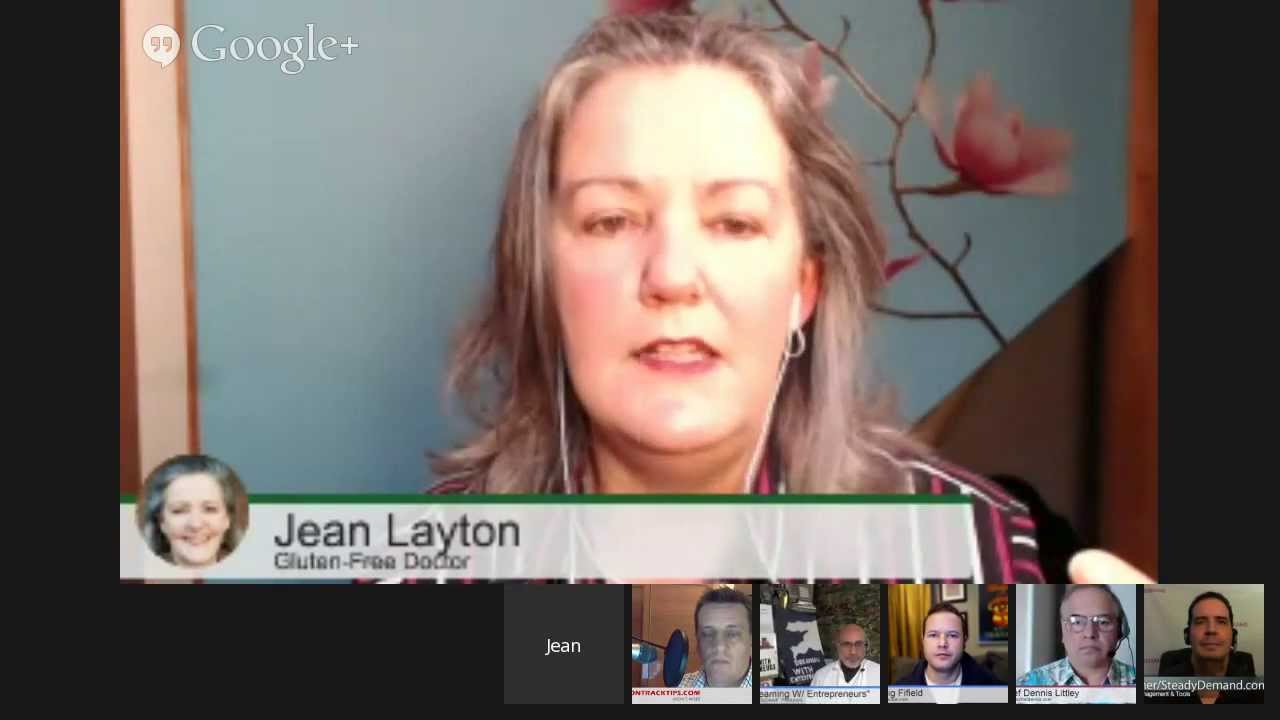
In this 2014 Hangout on Air, Chef Dennis Littley hosts a panel of Google+ power users—including Ben Fisher, Craig Fifield, David Leopold, Jason Weiser, and Dr. Gene Layton—to discuss best practices for using Google+, tools for managing circles and brand presence, and strategies for small‑business marketing. The conversation covers the CircleScope circle‑management tool, a free brand‑audit utility, and a paid analytics suite, as well as the emerging practice of repurposing Hangouts into podcasts and blog posts. Participants debate the merits of coopetition (working with competitors), compare Google Local and Facebook for local visibility, and explore the balance between SEO and social branding. A substantial portion of the show shifts to health topics when Dr. Layton shares gluten‑free and celiac‑testing advice, illustrating how community members blend personal expertise with the tech discussion. Throughout, the panel emphasizes collaboration, time‑valuation, outsourcing, and technical ideas such as blending multiple Hangouts or simulcasting shows. The session ends with each guest offering final take‑aways and promoting their own projects.
Chapters
Hey everyone, I'm Chef Dennis Littley and welcome to today's baby it's cold outside edition of Good Day Google+. And it's actually warmed up here pretty well in Florida, so I can't complain anymore. But I know in the rest of the world, or parts of the world and most of the country, it's still a little frigid. I see the temps up in Philly and I am not missing being there. I heard they had some ice this morning. There's accidents everywhere. And here I think we're gonna hit 80 today, so sorry guys, but there's a lot of room in Florida yet. So we're here for Good Day Google+ and you know the format. We're just gonna have some fun talking to everyone. And Craig Fifield joined us. He was an unexpected guest and he was nice enough to jump in. We always love having Craig here, and if you're part of Craig's army, you know, just make sure you're watching today. So let me go through my guests real quick and then we'll get back to them. So today I have joined me Ben Fisher is here from Steady Demand.
Ben, hello everybody, good morning, happy Friday.
Hey Ben, glad to have you here today. And I— my video started again, so I just go back and mute it. Alright, Craig, good to see you here and thanks for coming again. Circuloscope, I like that. Oh great, yeah, we'll have to talk about that a little bit later.
Sure.
David, thanks for coming.
David Leopold, thank you for having me, Chef. It's indeed an honor to to be here today. You know, we do a lot, we do lots of, I do lots of HOAs and it's always more fun for me to let somebody else do the work. So thank you for having me today.
My pleasure, and thanks for having me on the other day with the interview. I had a lot of fun. Jason, coming to us from the Ukraine, I love it.
I'm excited to finally get to sit at the chef's table. I posted that out a couple times, and for anybody that doesn't know what a chef's table in the restaurant industry, it's the table in the kitchen. It's reserved for the exclusive Guests, so I'm honored, Jeff.
Absolutely, and unfortunately we're not coming from my kitchen today because we're expecting the delivery and we're not sure what time it is, so I didn't want to interrupt our Hangout, so I'm in a back bedroom. I'll actually soon be going in an office pretty soon, so we'll have to see. Unless a major sponsor kicks up a new kitchen, I may be coming from the office from now on. And my co-host from The Blogger's Guide to Using Google+ Effectively and my good friend, Dr. Gene Layton. Thank you for being here.
Hi, welcome. This is going to be so much fun. I like being a guest instead of running the screen shares and information for newbies.
You just get to have fun. And for those of you that don't know too, Jeanne is a gluten-free blogger and she's a neuropathic physician.
No, naturopathic.
Naturopathic, I'm sorry.
That's okay. Everybody mixes those up.
Anyway, she's a doctor. So, as we say from Jaisi, okay, and we're gonna move on then and have some fun today. And Jean, you're the only female on today. This is a little strange.
I'm flattered. There's a lot of testosterone in this group.
As we heard early on in the green room.
Way too much testosterone.
There was a lot going on in the green room, but we'll leave it at that for now. And I'm gonna turn it over to Ben now. And Ben, if you can talk to us for a little bit and tell us what you do, what you like to do, anything that's on your mind.
Sure, yeah, well, so my company Stay Demanded, basically what we do is we help small businesses, well, small businesses to enterprise businesses, manage their Google+ presence basically, their brand pages, engagement, building communities, and we focus a lot on education. But you know, at the end of the day, we're actually doing it for them, you know, we're helping them write, we're doing their blog, and just helping answering questions and guiding strategy. And like we were talking about in the green room, you know, we also create tools. And just like Craig with CircleScope, which I love by the way, Craig, we launched— oh gosh, I don't know what it's been— about 2 and a half months ago we launched the free brand audit tool, which we actually developed because it was steps that we would go through— when we were setting up clients, we would go through these like 6-point checks and just to make sure their website was connected to their Google+ page correctly. And we had it internally and, you know, I mean, we built it for ourselves just to make our lives a little bit easier. We were like, you know what, let's just give this out to everybody for free, you know. Let's make everybody's lives easier and teach people at the same time. So we put that out there, people loved it. And then we had another tool that we had internally which was all about insights and analytics. So we could really, from almost from an engineering perspective actually, see what was doing well and what wasn't doing well for our customers. And, you know, time and post types, etc. And so we developed that into a pro tool. We launched that about a month ago. It's been going awesome so far. The feedback has just been great from the Google+ community. And by the way, hey Dennis, I really want your weather out here. It's only 75 out here, okay, in Phoenix.
Well, that's a cold snap for Phoenix, isn't it?
Yeah, it is.
And you're also, for those of you who don't know, you're also responsible for working with bringing Terry Hogan, aka the Hulkster, on. A while back, weren't you?
Did you just call Santa Bob? Hulk Hogan. Yeah, that was the Hulk Hogan and GoDaddy. We had David Amerland, Joshua Berg, Ronnie Binzer, you know, and Raj from GoDaddy. I mean, it was just an absolute— that was a fun show to produce.
That was cool.
That was really good. We have to get him back on Google+ a little more, doing some stuff.
Working on it.
I bet you are. Alright, Craig, let's move on to you. And I usually tell us all about what you've done. You've been on so many times, I think most of my guests got it down. But let's talk about CircleScope and maybe anything else you'd like to tell us.
Yeah, so I'm a new partner with CircleScope, which I believe is the first tool for Google Plus— external tool for Google Plus circle management. Allows you to do a ton of things to build your following on Google Plus. So I'm excited to be part of that team working with Christine and Essin, the developer. And we're looking forward to hopefully within the next month or two launching a revamped, more powerful version. Business-wise, that's That's all I'm up to right now. That's, that's my main focus. That's enabling me to use a lot of my background. I was a product manager at Microsoft for over 10 years, so, in building software products. So it really fits well with that. So I'm really psyched about that. And, you know, who wouldn't want to work with Christine DeGraaff?
So absolutely, I am really jealous of my buddy David Oldenburg. He's got her on as a co-host now, and They're on the same time as us, so I can't even watch them.
I know. I was totally intending to do that, and I was going to tell everyone today to definitely check that show out after this.
You know what I would love to see from Google is a way to blend shows. If we could connect two shows every now and then and do like a simultaneous broadcast, you know, with guests in each one, that would just be mind-blowing. We have to figure out how to do that.
That should not be that difficult of a thing, Chef. We might be able to do that on our own.
Well, let's talk, and while we got you here, why don't you talk to us a little bit and tell us about it?
Well, I've never tried it, but I used to blend Skype and a streaming video that I— a streaming website I was on. I don't see why you can't have your HOA going. I have my HOA going, and we put cameras. We just take a camera and put it towards yours, and you put it towards mine. I don't know, let's fool around with it. That's something you have to try. I've suggested that we— I threw that out there to Shannon and said let's do a radio HOA kind of blending type thing. I don't see why you can't. We can figure it out. We will figure it out.
Sounds good to me. So what are you up to on the Plus or in real life?
Is that a question to me?
That's a question to you.
In real life? In real life, this week I did 9 HOAs. I'm just having a lot of fun and I'm in the most interesting period of my 40+ years of being in small business. The HOA tool is the greatest marketing and sales tool that I have ever seen. We are only limited by our imagination about how we can use it. Ronnie said on New Year's Day his prediction was that the private part of the HOA tool, it's just going to absolutely explode this year.
Absolutely.
I reference 2013 Chef as being the year of discovery. It was the first full year of Hangout On Air and thousands of people started to embrace the technology. 2014 is going to be the year of the happening. It is just— it is crazy what is going to happen. It's going to cause some real challenges. For instance, we We just heard that Christine and David have a show going on, and I had to apologize that I would like to go to their show, but I'm on the chef show, so that's my choice. But it's going to happen more and more. More and more— well, at noon today there were two different HOAs I really wanted to attend. I've got two computers so I can kind of, you know, listen, but it's going to get tougher It's gonna— and that's not a bad thing because I've always been of the belief that more folks will watch a recorded version of an HOA than actually watch the live version. Obviously the live is neat because we can interact with one another, and if you got a specific question for somebody on the panel, you can do it that way. But it's gonna be crazy. We— and, and, uh, As you know, there's some private things I'm going to be doing this year, Chef, just to— we've got so much energy going. I have never seen so much energy in all my life, and there's going to be a lot of co-play, a lot of folks working together.
Absolutely.
That's going to be very important. It's all about small business collaboration.
That's what it's all about. Well, you know, David Amerland put something up the other day, and it was about competition and how competition competition really makes us stronger and getting to know your competitor and, you know, we were talking about that yesterday and competitors really can turn out to be some of your best friends if you give them an opportunity. You know, you can't be so worried all the time about stealing state secrets or sharing things but sometimes your best strengths will come and your best ideas will come from a competitor who's shared something with you.
Well, you know, not to mention on that topic, I mean, they're, you know, the word I like to use is coopetition. And working together with your competitors, I mean, you're always doing something a little bit different. So there's no problems really in working together and collaborating on projects. There's more than enough money and people and opportunity out there in the world, so why not work together? Right.
Yep.
It's often easier too because you're already of the same mindset.
Yep, you have the same thoughts, the same thought processes, and you can get a lot done, and both of you can accomplish really good things.
And, uh, Look what's happening with the Hangouts On Air, for example. I mean, there's this little group of people that are all the, you know, yourself and David and me and myself and so many others, you know, we're all helping each other, you know, scratching each other's backs and our communities are growing because we're drafting off of each other and helping each other and encouraging each other and yeah, so.
Just one really quick thing I'd like to say about what David was just saying there is, you know, last year at the end of the year I was calling that this year is going to be a super be HOA Apocalypse this year. And, you know, I want to give a big shout out to Mark Seidel and what he's doing with HOAshows.com. I mean, I think that is just— it's brilliant, it's great. I come from a publishing background, and I think what he's doing there is just awesome. It's gonna help really kind of bring everything to a good focal point for everybody to find shows. And, you know, now he's put up a thing, a call out there to if you want to be a guest. And I was like, I want to be a guest. I love being a guest, you know. So I mean, big huge props to Mark for that.
Ben, yesterday I actually did an HOA with Mark, and believe it or not, as active as he is, it was the first time that he was on an HOA. And I was so proud. Yes, yesterday was. And he announced yesterday that he is going to be launching an HOA or two of his own. So I said, "Anyway, we can help you get going." And the spirit of Mark and what he does and how he does it, it's just amazing. And he put himself, he positioned himself in the right place at the right time. I mean, he got in there, he saw a need, and he created a tool that all of us can use, and we can all benefit by that tool he's created.
Absolutely. Yeah, and it's, you know, you've been on more shows than I have this week. I thought I was on a lot. I'm on 5 this week with you being on 8. But I came up with a term for us that I want to start using for people that are on a lot of shows, and I think we should be called HOAs, but we want to pronounce it, we're going to pronounce it as hoes.
HOA hoes.
I refer to myself as a Hangout hooker.
I know you did, and I love that term, but I was thinking, you know, let's spell it the same, but let's just call us hoes.
Hoes.
That works.
Alright, we're going to turn it over to Jason now. Jason, you've got the floor. Why don't you tell us a little bit about what you're doing?
Yeah, so I'm Jason Weiser, and I'm the host of the Get On Track, Stay On Track radio podcast. We're helping your small businesses one expert at a time, where we bring in different experts every week and dive in for 30-minute firehose and just dig deep into a topic.. And the goal is to really just get as much information as we can out of our guests. And I took a couple weeks off there because we're redesigning the website. We've got a bunch of, like I said, we're— oh, I said it in pre-show— launching a podcast. Got a lot of things going on, but we're getting ready. I got some great guests coming up. Starting off with Kerry Green from Podcast Fast Track next Monday. He's going to teach us how to use podcasts, 30-minute firehose, bang it all out there, tons of information., and then we're gonna switch gears, head over to David Amerland and Mark Traphagen and talk about what's the best comment system for your blog from an SEO perspective and debunk a lot of the myths that are out there about why this one is better or why that one is. And, and then we're gonna have Damian Farnsworth is gonna come in and help us learn how to write good copy and good headlines. And I've got a couple other secret weapons coming down the line, so I'm really excited about the caliber of the guests that are coming in and the attention the show has been getting. And I want to say thanks too, because this week, if anybody saw that, there was this contest that went out, and whoever could create the most ripples won this mixing board. And I think there's many of you on the panel were part of that. Man, talk about being humbled! My goodness, that was the coolest thing to see all of these names coming across saying sharing, and I want Jason to win, and people I had never even known were watching the show or listening were like coming in and they're like going, wow, I love your show, you've got so much great information and I love it. I'm like, I don't even know you yet, this is so cool. And it was great. So thank you everybody that knows me and knows the Get On Track podcast. It's just humbling, it's so incredible.
So you actually won, right? Because I didn't hear that until later.
I did win.
That is awesome. Yeah, I did win.
What did he think when he found out he had to ship it to the Ukraine?
Well, no, he's not shipping it to Ukraine, it's going to my home office. Back in the States and then it will be there when I get back. We're going back pretty soon for a short sabbatical but we'll just pick it up then or maybe I'll have my secretary ship it over to me if I can't wait for it.
Jason, how crazy is your life in terms of living in Ukraine? We know that Google+ is 24/7 but what kind of adjustments do you have to make to your life living so far away?
Oh wow, I work on Eastern Standard Time, that's one interesting thing, but it's helped me because it helps me help my clients because I understand virtual technology. I mean, I understand the tools that it takes to run an international business and there's a lot of moving parts in that communications and whatnot. I love Google resources for that reason, Google Docs, Google Hangouts, Google, you know, just Google, Google, Google.
You know, googly.
Are you endorsing Google at this time?
I think we all are.
We've all drunk the Kool-Aid.
Yeah, right, right. Well, it's a great tool. Not only is it a lot of fun for Google+, but I could not run my business, I could not be in Ukraine and have my business growing at the rate at which it's growing if it wasn't for Google. So I mean, It's opening lots of doors, that's for sure. Bang bang, buddy, bang bang.
Bang bang. Alright, let me turn it over to Jean. Jean, you're the sole female on today. I don't know how you're going to put up with all these guys here.
Luckily enough, I had brothers, so I can deal with you guys.
There you go, the secret.
The secret, yes. That and you go through medical school and there aren't too many women in there, so yeah. Anyway, so Chef, you and I have been running this great show for the newest of new Googlers, trying to get people settled and comfortable with the idea of coming over, and I think it's working. We've got a lot of people coming back every week to move to the next stage of creation as we try and bring our blogger friends from Facebook and and all the other locations in the world. I'm having a lot of fun working through the very basics of Google. How do you get here and how do you get comfortable and where do you find all these fun people to listen to? I'm realizing that Mark is going to be an incredible source, Mark Seidel, of both being on an HOA so that people get to know who you are and how you are, but also to be able to share information and share your stories. And Jason, I'm really looking forward to your show on Monday. I got to hear what everybody's talking about in podcasting. I think that's the next stage for our videos from this whole series, moving it onto a podcast so that people can hear, okay, this is what you do next and this is what you do next. For so many people, they've got to hear it that way. They can't just see it, they can't just read it, they have to hear it. It's a lot of fun.
I want to be able to listen to all this when I'm at the gym and I can't really watch a Hangout. I don't know, it's not quite the same thing. The podcasts definitely fit right in here.
You know, the question I always had with the podcast is, you know, I'm referring to visuals as I'm talking through how to set up a profile or how to change a hovercard. And does that feel disjointed when you're just hearing it? You know, that's the part I'm not certain it'll be a great smooth transition. But since I have one of the experts on, I can ask.
I think it could feel a little disjointed, but if you practice what you're saying, maybe you could improve that or just share, just make the episodes that aren't essentially screencasts, make those into podcasts. You don't have to share every single show as a podcast.
So that's one of the big pushes for not only the OnTrack Tips, Get OnTrack, Stay OnTrack podcast, that's for branding and for visual and getting some content created, but the business behind all that is we're helping big business and small business understand how to use repurposing of content. And so our tagline this year is Reinventing Repurposing and taking it to a whole new level. And so like what I do for my show is I literally write the blog post out before I even do my interview, like all the questions that I want to cover. So I visualize listening to the podcast, like I visualize the blog post, I hear the podcast. And so I make sure that the show happens, and the whole time I'm doing my show, I'm thinking, what is this going to sound like back on the podcast? So I don't have to do a lot in post. You know, it takes— so it's— if you do a lot of preparation in the forefront, and you, you know, of course, being scripted can be kind of a handicap sometimes, and I'm trying to learn how to kind of break off of my script a little bit, but But yeah, I think that helps out a lot to make that transition from Hangout On Air and then moving it over to listening.
Jason, what's your prediction? Do you think more folks will listen to an HOA or view it on YouTube?
Yeah, I don't know. You know, there's different audiences and that's what the thing is. You know, here in Google+, we have these— you know, there's this group of people that love to go to Hangouts On Air and you see them at everybody's show. Which is great. They're just awesome and they love that format. You know, they're saying, you know, it's like Friday is the Hangout is the new must-see TV. You know, I mean, there's a lot of shows that are happening that people gravitate to and they love that interaction, they love the comment stream, they love getting involved. But there's a whole other group of people out there that is, you know, myself and I want to encourage other small businesses to reach out to and target people on Facebook and Twitter and LinkedIn, and you can do that through a podcast because not everybody— I mean, you know, sit in wherever you are and look at 5 people next to you and ask them if they're on Google+. Likely they're not. I mean, they're still not there. But then ask them, where are you? And they're somewhere. So with a podcast, I mean, you can really get to everybody somewhere. So I think that the goal is, you know, HOAs and hangouts are great for this group and this community. Then we could take this and embed it into Facebook, and we're starting to touch that Facebook group a little bit, not real effective, but Twitter of course, you can, it works great. And then the iTunes or the podcast community, and then the people that love to read your blog. So you're able to really spread out and get a much broader reach.
It helps to embed the HOAs into posts because that's what I've been doing on Wingwoman Productions. Each of the weeks that we put together are dropped into the blog posts, and because they're on YouTube, it lets people go watch, listen, do what I do, speed it up to double speed and listen to it in half the time.
Right.
You know, because we're busy, and it gives us so many more ways of having it touch back to people and have it come to them in a way that they can use. And for me, everything goes out on Friends and Me, so it's slides right down to Facebook, Facebook page, LinkedIn, Twitter. We've got such amazing tools here on Google+ that we don't have to leave our bubble if we don't want to. Although I make sure to touch back on each of those places to have the conversation there. It works to be able to send it from here. I'm definitely a Google fan.
One thing I'll say is, Jason, you just brought this up, is iTunes. I run quite a few video game publications and we do a lot of interviews, we do a podcast— well, we did podcasts every single week. And you know, it would go straight out to iTunes using Blurberry. We were talking about that in the green room. And I think the beautiful thing about it is, is that when somebody is walking, when they're running, when they're in a car, you know, basically whenever they're not in front of a screen and they're not sitting stationary somewhere, they can't watch an HOA. They can't do that because they're doing something else, you know, or like when you're cooking, for instance, you know, you pay attention to what you're doing. So I think that's the other thing that's great about it is that, you know, your attention is going to be on what you're doing, but you're going to have it audio. So I mean, I totally agree with the repurposing and yeah. That's all I got to say about that.
In fact, if I can throw in a shameless plug there— oh, too late, you can't stop me. If you go to ontracktips.com right now, the very first blog post I just released today with an interview I did with Peg Fitzpatrick, you can go there, ontracktips.com, and you'll see that whole format laid out. The video, the podcast clips, quotes from this event, people that comment and make good quotes or whatever, I bring them in. So yeah, it's kind of fun.
I think podcasts will reach a whole other audience. You know, I had some podcasters on for my conference last July, and what they had told me too was there's a lot of people that just aren't visual, that receive their information audio, and that's all they want to do. Like, even just riding to work, somebody had said on the train, it has to be under half an hour because that's how long it takes them to get to work.
So Jason, I don't know if you've hooked up with Shannon Hernandez or not, but I think Lynn Abate just mentioned him in the comments. He would be a great person to maybe even do a podcast show with.
Yeah, I, you know, it was that 4-hour New Year's event that was just out of this world, totally amazing, incredible fun. I don't know who found it or saw it. If you didn't see it, go find it, carve out 4 hours and check it out. But I met Shannon there, and that guy rocks. That's all I gotta say.
Yes, the Shannon man does rock.
Here we go, I'm gonna bring this up real quick from Morletha. Jason T. Weiser said the F-word. Gasp. Jason, do you know what F-word that was?
I do, and I don't know if anybody saw, I was on Dustin Stout's interview. He did the State of the Union address 2014, and I went on this little quick 5-minute rant about— if anybody knows me and my social media rants, I've become kind of— anyway, so the F word being Facebook, and I talked about what the future of Facebook is going to be in 2014, small business, big business, and so I encourage you to go look for Dustin Stout's interview if you're interested to hear that rant. It was a whole lot of fun to deliver, I tell you what.
How about a one-sentence comment on where Facebook is going to be this year? One sentence only.
In one sentence, Facebook is going to be there. They're not going anywhere. No matter what you think, they're not going anywhere.
It's a good way to look at it.
The communities on Facebook are still incredibly powerful places, the private communities. And for most people, I don't think they're looking at their home stream anymore. They're looking at their communities, the people they chose to be affected with or participating with. Because I know there are some groups in my area geographically, 2,000 people in a private community that talks about what's available in our— it's a mom group, but still, you want to have 2,000 women all talking about your business? You want to be in those private communities. It's amazing. But it's like the communities on Google.
Something Facebook can't control either. They can't limit what you see.
Well, they can. I mean, they're watching your keystrokes, so yeah, they can control anything they darn well please.
Sure, sure.
And next thing you know, your community post will only be seen by 10% of the people in the community.
That'll make people leave.
That's if you're lucky.
Right.
Which 10%? When I hear people get into the discussion on Google+ versus Facebook, and it's always fun dialogue to watch and listen and all, but I always say this, look, it's really not about which is the best network, it's which is the best network for my business.
Exactly.
And that's the way I approach it, you know, I mean, how I approach my clients. Because I tell you what, Google+, as much as we love it and it should be the best and it could be, there are certain business models that Facebook is still working very good for. So just ask yourself, what is your business?
Which businesses are they working for, Jason?
Yeah, so really quickly, anybody that can understand and unlock the advertising model and what they're doing with advertising and learn to leverage that Anybody that wants to get kind of dig deep into that, John Loomer is the guy to follow. He's doing right now, in fact, a free training on understanding Power Editor and advertising. So big businesses are really doing great with it because they're embracing this advertising. The same thing that so many of us are not embracing, they are embracing because they have the deep pockets, they have the know-how, the ability to hire people to manage. Where most of the mom-and-pop small local coffee houses, etc., might not be, you know, are really feeling the weight of EdgeRank right now and feeling the weight of, if you're not advertising, then, you know, it might not be so good. Internet marketers are doing amazing over there because you can import your list and then target your ads to your list. I mean, that is just unheard of. You can't do that with Google, I mean AdWords. It's just. It's insane how granular you can get with your advertising. And let's face it, even at its core, Google is an advertising agency. I mean, maybe I did say that out loud, but I mean, let's think about it. They're not making money off of Google+, they're making money off of AdWords. That's where they make their money. So the contest is really going to be and always will be who has the better— who is able to make more money off of ads. And Facebook is doing it really good, whether we as the users like it or not. It's there and it's not going anywhere.
Well, whether we like it or not, their share prices actually keep going up.
Right.
See, even though people keep on talking about how businesses are leaving Facebook, the share price keeps going up.
So Mark Zuckerberg made the largest contribution to a nonprofit last year. Yeah, just under a billion dollars he gave to charity last year.
Wow.
Do you think he's leveraging to sell Facebook?
It's too big to sell. Here, Mark, here's a check for $2 trillion.
Yeah, I—
good, good question. Is there some speculation that that's— that kind of discussion is going on? That's a great question.
Yeah, yeah, I don't know.
I don't know enough about it.
I don't think with him, I don't think it's really about money. I might be wrong. That's not to say other— well, it's about money with his investors and the shareholders, but with him personally, I don't really think it's all about money, but who knows.
What about Google Local for small people? Do you guys see Google Local as being a better platform for a small business or a mom-and-pop business?
Absolutely.
Absolutely.
Getting closer to home, getting closer to home.
You have to be, the number one thing is you have to be in Google search and so that answers it right there. If you're not showing up at the top of the search, Facebook isn't going to help you with that.
Again, are we asking the right question when we ask the question, is it better or not? Because I think exactly what Craig just said, you have to be on Google Local. Being there isn't a question of should I or shouldn't I have. You absolutely have to be there if you're a business, a nonprofit, a church, whoever. You have to be there. If you can put it— if you have a physical address, then claim your Google Local, period. Now, how you leverage that with Google Business Page, now that's a little bit different. I've seen a lot of success with churches do fantastic over on Facebook because that's where their congregation is. That's where people are hanging out and talking, and they're not doing so well on Google+ because Google+ isn't your, you know, Sunday churchgoer community. There's not a lot of folks over there, or I don't know, you know, I haven't seen as much success in that area. But for mom-and-pops, coffee houses, bookstores, your local, you know, clothing retailer, I think absolutely you can build out and doing it right. Follow guys like Michael Bennett and Michelin Metals and see how that guy is leveraging Google+ Business to market something like aerospace metals. I mean, he's got us talking about aerospace metals. Is anybody here interested? And yet probably everybody here has that guy circled, right?
Absolutely.
He does beautiful photography, come on.
I work with everything from small companies that make handmade jewelry to large tech giants. That, you know, in the hosting industry. And I think the fact that it comes down to is, is it's all about your intent and your objectives. And it's not whether Facebook is better, Pinterest is better, Google+ is better. It's like, where am I going to— basically, where am I going to find my audience? Where am I going to make money? Where am I going to make sales? Where are my customers at? So, you know, should they have a local page? Well, if they have a brick-and-mortar presence, absolutely. If they can get an affiliate who's, you know, a local representative, why not? If they're a global company, you can do that with Google Places. Should they have a local page and a business page and a Facebook business page? Absolutely. Should they sink money into Facebook? Depends on who your customers are. You know, so that's my little rant.
One step further, should you put money into it regardless of who your customers are, if you get a return on your investment, if the numbers work for you, then yes, it's incumbent upon you to use it if the numbers are working for you. So you're absolutely right, everybody's different. I have made the conscious choice because I'm not looking to conquer the world that all my resources, all my time are in Google because it does for me what I want it to do. I'm not willing to put time, resources into anything else, so that's what I'm doing. It's working for me, but you're absolutely right, Ben. You have to understand what is your marketing objective, number one, where do you find your customers, and then you gotta go out and look for your customers wherever they might be.
The hardest part I've had is I have two different businesses. I do the Wing Woman Productions because I really love Google and I'm techy savvy enough to want to play in these Hangouts and get other people to bring their message to Google. That's one side of me. The other side of me is I'm a physician. I've been writing Gluten Free Doctor for 7 years. There's a huge depth of posts, recipes, and work there that's relevant worldwide. On Facebook, I certainly can't compete with Foodies or Rudy's or any of the gluten-free brands to purchase the ad space I need to get my posts there. Bringing myself to Google+ has allowed me to repurpose all of that information and get it out there. My stats have gone beautifully in the correct direction since I moved over. And using tools to put it back into Facebook, it's totally repurposing old information.. But it's, you know, I update it, shoot a new picture, and it's great. So I think you're right, it's one of those things that each person has to interpret for themselves where their market is. But for an awful lot of the people who were Facebook's content producers, they're stuck in a quandary of, I know if I could produce enough dollars to pay for ads, I would boost my ranking.. But my content is not paying me that yet. So I think we're going to have more people coming over to Google+ and bringing their content here and starting it from here.
David, you and I both are kind of in the same niche. I mean, we cater specifically to small business, and I think Ben, maybe you do, but I think you get a little bit bigger maybe. But my point is that either you're going to be on Facebook and you have to learn a strategy there, the strategy of how to advertise, or you're going to move over to Google+ and you're going to have to learn the strategy over here of etiquette. Either place you're going, you're going to have to invest time and energy to figure this thing out. And so the real question, the question that I get all the time, David, I'm sure you hear it from your clients as well, is, look, I'm a coffee shop owner, I'm a one-man band, I've got to do my product, my invoicing, my takeoff, my stocking my shelves, I've got to run my business and my books and everything, and how could I possibly expect to learn how to run ads on Facebook, or how could I possibly expect to get into Google+. I think in that discussion, the barrier to entry to Google+ is certainly easier. You can get in, you can start feeling yourself around a little bit, but in either case, you have to— they're both hard work. You both have to figure it out. You can't just show up and just start splashing information in either case. You're going to have to take the time, and I encourage to hire a coach, hire a consultant Absolutely. And here's why, I remember, I've told this story a couple of times, I remember when I was about 15 years old and I was working for my uncle, he's a financial planner and an insurance salesman and he asked me to paint his basement. And at the time I was working for, I don't know, $6, $7 an hour and he was willing to give me $12, $14 an hour to paint his basement, we'll say $15. I'm like, $15 an hour, that's like It's twice the amount of money I make. I'm like, sure, I'll paint your basement. And so I quickly get it done before he changes his mind. Near the end, I asked him, I said, Uncle, why did you let me paint that? Why didn't you paint that for yourself? And you know, that's $15 an hour. My perspective was $6 to $15. His perspective was, I make $50 an hour, and if I would have painted my basement, I would have lost $35 an hour. So what the reason— when you're thinking as a small business owner and you're looking at what am I going to do, am I going to invest my time and energy to learn how to leverage Facebook and go through John Loomer's course, which is fantastic, but it's still— that's your time. So how much do you make an hour? Do you make $100 an hour? Do you make $60 an hour? Whatever that is, find a consultant that makes a comparable amount of money, and instead of you paying yourself $60 an hour to learn this stuff, hire somebody that already knows the stuff at $40, $60 an hour. Have them do it for you. You see what I mean?
I couldn't agree more. And when you're talking about valuing your time I think your personal time is worth more than what you get paid at the job, you know, at your workplace. So I value my time 5 to 10 times more, you know, 100 times more than what I get paid, you know, in my salary. And I think a lot of people that jump in and try and do all this work on their own tend to forget that. They think their time is free. Well, it's not. You know, you don't want to spend the best minutes of your life struggling with Facebook or Google+ if you don't have to.
Yeah, and on that note, Jason, just really quickly, and by the way, I do work with small businesses, I work with— and large companies, but I also work with small businesses too. We have a fantastic team. But anyway, regardless of that, I've been working with SMBs trying to get them and help them understand online since 1994, and it's always come down to exactly what you said, and that is they don't have the time or the resources. And really, when it comes down to it, is they do need to outsource it if they don't have somebody in-house with the expertise. The beautiful thing, and this is why, and I'm just gonna say this, this is why I love Google+ and why I steer all of my clients to Google+, and that's all we do, is because while there is an overarching strategy that you need to have, you know, if you're doing something that's great for Pinterest, you need to do that. But why Google+ makes so much sense Google+ is like we all say, and Google has even come out and said this, Google+ is Google. And the fact of the matter is, is the time and the investment, the energy that you put into Google is going to help you from a marketing standpoint, a PR standpoint, a search ranking standpoint. It's going to generate traffic to your blog, it's going to generate traffic to any other social media activity activities that you're doing. I think I've gone through 6 things there so far. Maybe it'll help you fly to the moon, I don't know, we'll see about that sooner or later. But the dollars spent in Google+ are so much more valuable than just say, I just want to do Facebook and be inside this closed wall garden.
Good point.
Before we get any further, I want to pop up this comment from Leah, or question from Leah said, Sajidi, I keep hearing that SEO is going the way of the dinosaur but social is the way to go. Thoughts from the panel on how this meshes out with Google+?
Absolutely not. You have to do both. There's just no way around it. You want to have— you just can't ignore the basics of SEO, I guess. It should be an equal split or an 80/20 split, however you want to cut it, but you have to do both for sure. Everything is based off of search. If you pick up your mobile phone or if you go to Google search directly, search is the easiest way, at least for the foreseeable future, for us to access information. So you want to make sure your content is optimized for that. Now then you can look at the social media channels as a way to highlight that and enhance your search results.
You should be in touch with David Amerland in looking at semantic Yes. Because that's the bridge between the search and where it's moving.
Absolutely.
Yeah, what you'll hear Mark Traphagen and Joshua Berg talk about is the SMO of SEO, which is the social media optimization of SEO. So I think that's probably where some of the cross-tuning is going to come in.
Right. And I think a lot of people are still stuck. So I've been in the SEO space since 1995. That's where I started my career. My career. And pretty soon after that, everyone fell in love with links when Google popped onto the scene. And I think a lot of people's head is still in that space. I wouldn't sweat backlinks like I used to. That part of SEO is where you should really start looking at integrating all the social signals. So instead of running around trying to build backlinks, run around and try and build real engagement with your true audience around your content. And that's where you really find things will take off.
Yeah, I can't agree more with what Craig just said. But one thing I will say is— and I'm sorry, Jason— is that I've done a lot of experiments where just doing the old school, like the 1990s tactics of just a good title tag, not stuffing, but just a good title tag, a little bit of content, and a good description. And just using social signals from Google+ has actually helped pages rank very easily. So I wouldn't say SEO is dead at all, or even that links are all dead. But social, SEO, SMO, I agree completely. Sorry, Jason.
The way I look at it now in terms of links is build the human links and you'll get the SEO links.
Right.
There was a fantastic article in Forbes where some research put out by the Ryan Partnership who hopefully— anyway, Ryan Partnership, they were talking about the same thing. They were looking at how many— asked a bunch of small businesses and see how did you— what caused the greatest conversions. And so when you're looking at these, of course, are two of the biggest topics. You know, we could add in email marketing, I think would be the other big one. But social traffic conversions, email marketing conversions, and organic search conversions. And unquestionably across the board, search engine traffic converts the best to ultimate sales. And the reason why is because this: social media is not for selling, social media is for branding. Search is for selling. That's the bottom line. What do I mean by that? If you come into Google+ and you start blasting your ads and saying, here's my call to action, here's my product, here's my wares, people are going to tune you out instantly. But if you come in and you start engaging and being awesome, people are going to fall in love with you, and then they will find their way to your site. So you're not going to track that direct channel or that direct conversion often from social media action directly to whatever it is, your ultimate call to action or your conversion. Or, uh, so that's my answer to the debate between which is better, social media or SEO. Craig, you nailed it. SEO, there's no question about it. You have to get in search. Now you can leverage your social media to help you get into search and there's a lot of ripples that you can create around you and a buzz, but bottom line, SEO is for sales, social is for branding, period.
Thank you, Jason.
I agree. Very good.
Alright, let me put up a little comment here from Lynn. Craig Fifield preach it. Don't worry about getting fancy building backlinks for SEO. Focus on ROR, return on relationships. That's an excellent quote. Ted Rubin wrote an amazing book on this and it's required reading for my clients. Understand this one distinction and you will rule the world in a good way with plenty of time in your life and business to focus on what really matters.
Excellent.
Thanks, Lynn. Okay, let me do that.
Hey, we've been spending a lot of time on this stuff. Can we jump over to gluten-free for just a minute? I had something I wanted to ask Jean. Do we have time? Absolutely.
Cool.
Yeah, so Jean, so my son was diagnosed with very mild, mild spectrum Asperger's. We went through seeing, "Okay, is it ADD or ODD or this DD or that RL?" There's so many crazy acronyms they start to throw out there. As parents, we knew there was something that was happening. We couldn't figure it out. Somebody had said, "Go ahead and try. Just try cutting out dairy and try cutting out gluten." Can I tell you, we have a new child. Praise the Lord. Lots of prayer, lots of other things that we focused in and discipline, but I'm confident, my wife and I are both confident. Can you talk just a minute and help some other parents that might be listening or happen across this thing, say there's hope for you if you try this?
There's so much hope. The hard part is people forget that food is one of the most basic ways to change change our human physiology. We just somehow have forgotten that food is the first medicine. When you have a child that's showing reactivity, fill in the acronym, it really doesn't matter. If you have a child that's not able to focus, not able to be in their own body, the first thing you've got to look at is what are the inputs? Is your water pure? I'm the physician on Leah Sedujji's Momivation group. We're going to be talking about the environmental toxins that come at us on a daily basis. It's one of the first things I talk about with any new patient is, "Is your water pure? Is it filtered? Is it full of chlorine? Is it full of fluoride?" You've got to make sure that you've got it to a minimal. And then look at what's around the child. Are they exposed to any sort of chemicals from what they have in the world around them? Flame retardants, BPA, all the endocrine disruptors. And then what do they get every day for food? So I bring people to a very basic recipe of lots of vegetables, lots of fruit, minimal amount of grains and only organically grown meats and see what happens for most people. I've kind of moved— yes, I can talk gluten-free. I wrote the book Gluten-Free Baking for Dummies, co-authored it. Yeah, I can talk the book, but you have to look at every input. I'm actually working with my third hat. I'm working on an elimination diet. Called Clean Thrive, where people will be able to take everything out and then put it back in to see what works with their individual physiology. It's a lot of fun to do. With kids, I just take them to a fruit and vegetable diet for about 2 weeks with just organic meat and a smattering of grains, and then add things back in until you start to see those reactions. For an awful lot of kids, you just got to take out the crap. You got to take out the sugar. You've got to take out the artificial flavors, the artificial colors, and get it back to non-genetically modified foods, and they're better. It is day and night, and it's beautiful to watch with children. The nice thing is, if you get a kid feeling good before they're about 12, they stay with it. I've got a pair of 15-year-olds. They went gluten-free when they were 7, and they are two of the most most amazing advocates for gluten-free living in high school. That's a tough place to be gluten-free because everything is pizza parties. The cross-country team has a waffle feed once a week. Yeah, you can't participate unless, of course, you have a mother who walks in and goes, "Yeah, and here's the gluten-free waffle," which is what I do.
We've talked about gluten-free a little bit before, Jean. What surprised me was that stat of how little it takes to kind of affect you. Was it like 1 in 20 million or something like that?
20 parts per million is enough to set off somebody who will have a reaction. So 20 parts per million, as a visual, is like a teaspoon in a swimming pool. It's not much. It's crumbs. It's flour dusting on a counter. It gets picked up by your hands as you're preparing the chicken breast. It is very, very small. For a lot of people, they don't know how to cook to begin with, and so they try to make the leap to gluten-free, and they're dealing with gluten-free— Craig! I've seriously thought of doing a series of no-cook recipes as Hangouts, like grab this jar, this jar, this jar, and poof! Dinner! I need somebody to run the camera while I'm cooking. I keep trying to convince my daughters to have a job with me, but they're just like bored. So yeah, lots of people don't cook, and if you don't cook, it's really hard to say, "Well, just make your own chicken tenders." They're super simple to make, but everybody buys the box because they don't know how to cook to begin with.
So, you know, you were asking me, David, about one of the things about living here in Ukraine. And it's interesting because when you go to look for a recipe online, like spaghetti, I've been looking for like a really great down-home spaghetti recipe. And everyone I find, it says take 1 jar of ragu, 3 jars of Campbell's whatever. And it's like, whatever, you know, I mean, there's all these, every recipe out there involves other pre-made products or ingredients, you know, prepackaged products. First of all, if anybody out there has just an amazing old-school grandma's Italian spaghetti sauce recipe, I need it because I cannot find good spaghetti. All right, Chef.
Chef Dennis. Yes, got it.
Send it over. The other thing I want to say about that is what that's forced us to do, and I'll segue into our conversation here about healthy eating and gluten-free diet. My wife has been forced— we don't have a lot of these products on the shelves. We don't have GNC. We don't have a lot of places where— so we had to really go and figure out how to do this. She has come up with some amazing recipes. She makes these little coconut cookies that are phenomenal and this cornmeal cake with walnuts and hazelnuts that's just absolutely It's amazing how some of the stuff that she's found— cornmeal pancakes she's been able to make for him. She's been able to duplicate a lot of his favorite foods with just little slight changes to the recipe. Some things don't work very well. I mean, there's buckwheat flour doesn't rise, so it just crumbles.
If she uses it raw, it does a whole different set of— If you use raw buckwheat, it's a great binder, and it will actually hold the air bubbles. That's the biggest problem. You got to have an air bubble to make things rise.
Don't you have something called Pixie Dust too, or what is that you use?
My husband reacts to xanthan gum and guar gum, which are the gums used in a lot of gluten-free food to create the structure. Well, my husband reacts to them with the same downstream results that he does for gluten. I created Pixie Dust, which is flaxseed, golden flaxseed, chia seeds, and psyllium husk. It's a blend of the seeds that you just grind up, and you use it in place. There's a recipe on my GlutenFreeDoctor blog. It just works beautifully to recreate the structure of the gluten protein. That's what allows the air bubbles of yeast or the air bubbles of baking powder to be held and allow something to rise. It's chemistry.
This whole diet discussion, ADD, autism, all of this, Asperger's certainly, it's all new over here in Ukraine. Children aren't getting diagnosed with this. Children are getting diagnosed with bad parenting. That's their problem. They have bad parents. That's not the truth. That's just not the case. The case is exactly what we're talking about. It's a physical condition that with proper care can be corrected, can be healed. My wife, in all of her studies, has been a wonderful kind of island of support for a lot of her friends here in the community and through different blogs that are Russian blogs or Ukrainian blogs, taking this information there. Can I tell you how many moms in the area are like, "Wow!" I can't believe you're bringing this to us. This is so exciting. I'm confident that she'll be signing up for Your Gluten-Free Doctor and getting some of those recipes, translating them into Ukrainian and Russian, and sharing them to the community here. I think that's just amazing.
She starts translating them, let me know. I hereby give her permission. Translate the whole thing to Russian, and then let me make a link to it. I think spreading the information is great. It's not out on the— I hate it when people steal my recipes, but I'm thrilled when people use my recipes to support another community because that's why I put them out there to begin with. It's because people don't have access to this in a lot of places.
Let me pull this one comment up here, Chef, if I can, from Dawn Swick. Maybe you can blue box me, or maybe if I just keep talking, it will hold it up there for me so I don't have to— okay, good. All right.
Autistic. Yeah.
Don Sway, praise the Lord, my son's also borderline autistic and I must try this. Thanks. You know, that's what's exciting to me is when we hear this like, aha, this little spark that went off. So Don, please circle me and please tell me, share your journey, and I'm here to help. And I'm sure that Jeanne, of course, I want to hear your struggles.
The one thing I will caution This is from the physician side of me. It drives celiac doctors absolutely insane when they hear, "Go gluten-free, and everything will get better." The problem is that if you are actually celiac, which means that you have a diagnosable condition based on villous atrophy, the little absorptive surface inside your digestive tract is breaking down or is gone. The only way to know you have that is to have testing done before you go gluten-free. If you don't have the testing done before you go gluten-free, you have to go back on gluten to get the test run. Do yourself a favor. Go to your physician. Say, "I'm suspecting that this is the situation going on." Ask for the blood at least get the blood results before you go gluten-free. Personally, I never did the biopsy. Neither did my husband. Neither did our daughters. We didn't have insurance that was going to cover that cost. At roughly $2,000 a person, we kind of went with the, "Gee, go gluten-free or don't go gluten-free. One way we'll have information and one way we won't." We did the work We did the blood work, and we went gluten-free. That's the way to have it done. Don't just leap into a gluten-free diet and never have the information, especially with children. I counsel the whole family dynamic, and I have had more than one family go through the situation of a divorce, and then parent who doesn't house the child most of the time doesn't believe parent who who does, and the kid gets glutened every time they go home to the non-custodial parent. And if they know, if they have the diagnostic criteria, then the situation can be balanced better, that the child gets what the child needs with both parents.
Real quickly, Jeanne, where can you get that? From any of your local doctors?
Any doctor should be able. Any doctor should be able to order. It's a panel of 4 tests that's the current standard. It's an IgA, IgG, tissue transglutaminase, and anti-endomysial antibody.
Can you throw that in the comments for us?
I will. I use LabCorp, which is one of the biggest labs in the United States, and they call it a celiac panel. Wherever you are, it's available. They may not call it a celiac panel. If you are near a LabCorp draw site and your doctor says, "I'm sorry. I can't order that because there's no clinically relevant reason to"— the wonders of our insurance situation is you have to have a clinically needed relevance in order to order the test. There is a place you can actually order your own labs. It's called DirectLabs.com. You have to have a draw site in your area, but you can actually say, "I want to order this set of labs," and go and have the blood drawn at the LabCorp site and get the results yourself. I encourage people to do that because it's your health. If you can't convince your doctor to order your tests, do it yourself.
One of my favorite sayings that you gave when we did our conference in July was you said that we catch celiac disease from our children sometimes.
Well, so many times it's the child that manifests it most rapidly, and then you have to look at the genetics because this is a genetic disease. If it's outright celiac, it is a genetic disease, and it means that the parents, one of them at least, is a carrier. It goes backwards in time. The support group leader here in Bellingham, her mother finally went and got tested about 5 years after the workgroup leader and discovered she was celiac. Then she insisted on testing the rest of the family in the first generation, and 3 more people showed up. It's one of those things that if you've had any sort of autoimmune disease, if you've had any sort of mental concerns in the bipolar manic You should get tested. There's 200 different disease entities that are all correlated to a gluten response before you get to celiac disease. It's incredible. Yeah, most of that information is up on my blog. I've talked about it. I've talked about it. There's a search box. Go play with the search box until you get the information you need. If anybody really needs gluten-free information, circle me. Ask me a question, I'm happy to talk to you. And if it starts to blend into a visit, I encourage you to go find a physician in your area.
Excellent information. Well guys, we've run just a little bit over the hour, so we're going to walk through the panel one more time and then we're going to call it a day for today's session of Good Day Google+. So Ben, any last words you'd like to leave us with?
No, just everybody have a really great weekend. Enjoy Google+.
Gotta love it.
Craig?
Yeah, I actually forgot earlier, I'm co-host all this month on Christine and Mia every Wednesday at 2:30 PM Eastern, so check me out over there.
Absolutely, thanks for letting us know. David?
Thank you, Sheff, for creating an opportunity where I met some new folks today. That's what it's all about, and thank you very much for that opportunity.
Well, you know, that's always the favorite part of my show, is connecting my friends together and getting guys to meet each other and, you know, just broaden our network to help each other and really just support each other. It's a, it's a good thing.
The chef rocks!
No, David, absolutely, we do need to schedule our cooking session and we'll do it live. We'll see when we can do that.
How much fun are we going to have with that?
Do you like Anything like chicken marsala?
Yeah, we have to do something gluten-free, don't we? I don't know.
You can make chicken marsala gluten-free.
We can do that. Yeah, that's pretty easy. Sounds great. You just get a different flour.
All right. Sweet rice flour.
We'll make sure that Jason gets the recipe for the sauce. He's looking for something.
Absolutely.
Yeah, I have a sauce recipe for him, no gluten involved. All right, Jason, anything like you'd like to leave us with?
Yeah, head on over to ontracktips.com and look for the big red button and push it and see what happens.
Uh-oh.
I love that. I love that. Push the big red button.
Is that a good weekend activity, Jason? Good weekend activity?
What's that?
Is that a good weekend activity?
Oh, it's a lot of fun. Try it out.
Okay.
Great. And Gene, thanks again for being here. Anything you'd like to leave us with?
Well, I'd love everybody who's new on Google to come join us on Monday at the Blogger's Guide to Using Google Effectively. And, you know, if you have questions about gluten-free living, please let me know. I have a great little community here on Google+ called Gluten Free Thriving that we hold to people who are talking about it in a positive way, and recipes are getting shared. And, you know, anybody wants to join that little community Shoot me a note, I will get you in there.
Sounds good. And Jeanne, I don't know if you noticed, I have a new banner up for our shows on Monday.
I did notice. I'm thrilled.
And they're all in different colors too. I had 5 colors made. Yay! We're pretty.
We're pretty now.
Alright everyone, thanks so much for stopping by today for Good Day Google+, the Baby It's Cold Outside edition. And I want to brrr when I say that in reference to my friends up in the north. I'm wearing my colorful Hawaiian shirt today again, and I'm just loving every minute of being down in Florida. So have a great day, have a wonderful weekend, and I'll see you all real soon. Thanks a lot.
Thanks for having us, Chef.
Bye.









