How to Stuff Chicken Breasts - Around the Kitchen Table
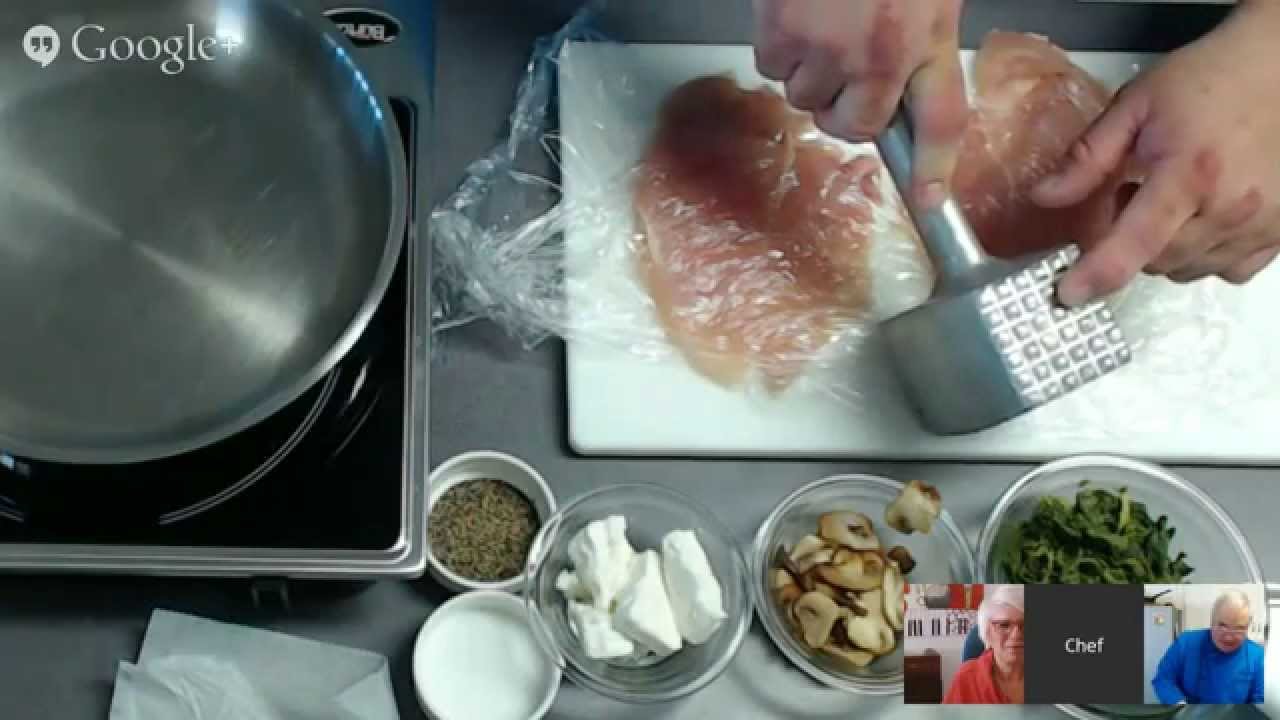
In this live‑style episode of Around the Kitchen Table, Chef Dennis Littley and co‑host Susan Sarah walk viewers through a complete workflow for stuffing chicken breasts, from selecting and preparing the meat to assembling a versatile filling, cooking, and serving. They demonstrate flattening chicken with a plastic‑wrapped meat hammer, butterflying thick cuts, and controlling moisture by squeezing greens and using cheese as a binder instead of eggs. The duo shows how to roll the breasts into rollantines, coat them with gluten‑free breadcrumbs, and finish them by sautéing, roasting, or refrigerating ahead for later cooking. Throughout, they discuss dietary adaptations (cow‑milk casein allergy, gluten‑free, dairy‑free options) and suggest flavor variations such as herbs, different cheeses, cured meats, and sauces. The segment transitions to a showcase of Bosch kitchen appliances, highlighting design features like flush‑installed cooktops, Flex Induction technology, side‑opening ovens, compact 24‑inch lines for urban kitchens, quiet dishwashers, and storage innovations (VitaFresh, HydroFresh). The hosts share personal anecdotes, audience interaction, and practical tips, positioning the episode as both a cooking tutorial and a product overview for home cooks seeking affordable, adaptable meals and modern kitchen equipment.
Chapters
Hey everyone, I'm Chef Dennis Littley and welcome to Around the Kitchen Table. And woohoo, my co-host Susan Sarah is here today. She's not on an airplane flying somewhere.
I am here. How are you doing?
I'm good. You know, it's back to being Florida down here. We're in the 80s and it's a little, little warm after having the cold snap that we did. But you know, we're Life is good, what can I say?
Good, good. And how was your weekend? Oh, well, actually it's not a Monday, is it?
No, it's Wednesday, it's the middle of the week. Weekend was good, and so far so good on the week. You know, I actually like this format because I don't feel as rushed going into Monday, and it gives me time to think about things. And Wednesday's working out pretty good for me on this aspect of the time. So, plus it's a daily, so always work, so it works out. Well, for that.
Yeah, no, this is great. I enjoy it. And what happened last week, which I said briefly, was I figured I'd get in LA at noon and find 3 o'clock local LA time, which would be 12 o'clock Eastern time. Perfect. No problem. I'm there. Problem was it really was 9 AM LA time, and then I was on the plane. So I just, you know, Reversed it, but you know.
I always have trouble with time zones. I tend to go the wrong way. And speaking of time zones, I think it's daylight savings time this weekend. Did you remember that?
No, because I'm expecting 4 to 6, 4 to 8 inches of snow tonight.
Oh, you'll have it.
I'll believe it when I see it, maybe in June.
Well, anyway, yeah, because they kick up, I think they start daylight savings earlier and end it later. It was one of those energy things that we did.
I loved it, I thought it was a great idea.
I don't think the rest of the world does that, do they? They don't go daylight savings, so that'll change our time zones with Europe then.
Right, that's right, yes, yeah, that's right. But you know what, last week going, being in California, first of all it was amazing, and second of all it was a sort of a partner event between Dwell magazine and Bosch appliances at the headquarters of Bosch appliances in right around, I think, Newport Beach. So I got really energized, and what I'm going to talk about today, you tell me when, is, you know, what's happening in appliances and function and beauty and technology and, oh my goodness, cool stuff.
Yeah, I see a lot of changes in appliances these days. Not so much that I'm aware of with dishwashers, but refrigerators are reshaping and they're reinventing them a little bit with space. And then ranges, of course, are going in different directions. A lot of people are— if you have gas, have the professional type range with the gas burners and the dual ovens and convection ovens, and then the dual fuel ranges are really great too, because, you know, electric cooks better in the oven. But who doesn't want gas on the stovetop if they can get it?
Yeah, well, there's a few other technologies too that I'll talk about. So we'll just kind of catch up, catch up on appliances.
Excellent. And Aslan Bloor is in the house. How you doing, Aslan? Susan, Sarah, your hair's grown.
It has. Yes, my hair. Yeah, I'm doing— I'm trying this out, although I watched House of Cards last night. And I think I'm liking Claire's hair. She has it long and then she has it short over here. So I don't know, I'll think about that.
You guys didn't say anything about my hair growing. I wish.
Oh, no, no. And I want to say hi to Nazim. You're working on the new Bafi site. I can't wait to see it. Can't wait to see it. I know it's going to be awesome.
Okay, and yeah, there he is. There we go, that's the one, Balthi. And Coach Moore is in the house. How you doing, Coach?
Hi, Coach.
Candy, I think, is here somewhere. I don't see her, but I think she's here. And then Bruno is here. So we've got kind of an international crowd today.
Sure.
Kitchen Shaman is here. How you doing, Johnna? It's nice to have you here. Well, let's get started. And actually, what I want to talk about today is is stuffing chicken breasts and the simplicity of it and how easy it is to do something for parties, something for dinner, just to make things, to change things up a little bit. I mean, chicken is still kind of an inexpensive cut of meat, although, you know, prices have gone up. And if you're buying organic, you know, prices are a little bit higher, but still, you know, it's more affordable. You can debone your own chicken if you want to save money. Personally, you know, time and energy and scraps people tend to buy bone chicken breasts. Sometimes you can find those family packs, and they're cheaper. I buy free-range or organic 99% of the time. I do look for that. This is something, if you're having a dinner party, you can make it a little different. You can make it a little special by changing the ingredients. It's open as much as your imagination. What you want to stuff it with.
I think it's a good go-to recipe. Like you said, if you give us some fundamentals, some foundation, and then we can go from there, right?
Really, it is. I mean, because you can stuff it from lump crab meat in an Imperial to a classic cordon bleu, which is cheese and ham. I mean, the sky's the limit. Vegetables, anything you really like. There's just a few simple rules that will help make it— not even rules, but tips that will help make it easy. Easier for you. Let's start with the chicken breast and with how you're going to prepare it. Basically what I like to do when I prepare the chicken breast is I put them between— I'm going to change cameras, remember to do that, you guys can't see— is I put them between two pieces of plastic wrap. I have them on a cutting board. I have my little towel underneath to keep the cutting board from moving so it's stable. And I use a regular meat hammer. It has some ends on it that are good for tenderizing beef or pork if it's a thick cut. But for chicken, I use the flat end because I don't want to damage the breast. They're fairly delicate, and if I start pounding them to death with the other ends, it'll get sloppy and pieces will fly, which is why I cover the top with plastic too, to keep bits of chicken from—
Can I ask you? I have a question. What if you didn't buy the thin ones and you only have the thick ones? I would think there's one of two— I would think they would be too thick to pound, or would you slice them across the center, or what do you think?
I would slice them. When you get the really thick ones, and you know, I started to buy them to show it, and it was such a heavy pack of chicken. It was twice the amount of money. It was insanely expensive. So I bought with the thin ones. But the same thing when you have them, just take a sharp knife and go straight through the middle of them and just kind of butterfly it. Think of it in that terms of butterflying, like when you would butterfly a steak or just cut something down the middle. Try and make it as even as possible to cut the pieces in half. Basically when you're stuffing something, I think you're looking for about a 5 or 6 ounce piece tops. Somewhere in that range. And these were 3 of these, and it was almost a pound, so that's just about right, 5 ounces. So in that range is a good size to stuff. You know, it can be bigger, of course, but really there's no reason for it. Go with the smaller size. So let's go back to this. Alright, so I've got it here, and like I said, you don't have a meat hammer, you can use a regular hammer, wrap the hammer in plastic, and then use the flat side of the hammer when you're pounding out.. And one thing you want to do when you pound out is you don't want to just smash the meat. You're not like hammering straight down. You're pounding it, but as you're pounding it, you almost want to pull it out, hit outwards or in or backwards. You want to hit it away from the center of the meat as you're hammering, just to kind of pull the meat with you as you're flattening.
I can't believe you're doing it that way. That is another— I'm serious, that's another life-changing tip for me. I mean, you know, you have these hammers and they have both ends that are, you know, purposeful. Whoever thinks of putting it on its side?
But it makes a nice heavy hammer too. You know, we used to call these our equalizers, you know, in case we needed something in the back alley.
But I don't know how many times I have poked holes in my chicken breasts or veal filets or whatever, the thin filets. I mean, it's taken me this many decades to get this life-changing little tip.
Well, with veal, you can use— I would, a lot of times, would use this side for veal. But it's again how tender you do it, how lightly you do it, and it's not just a smash down. Okay, it's always like you're working it, almost like you're cutting. Think of it in those terms that you're pushing, pushing, or, you know, if you turn the meat, pull. Now you're almost trying to take it out like that because you're spreading the meat to the side, right?
And how— I mean, isn't it just satisfying to hammer something? I mean, you can get, you know, you can get aggressions out.
Well, you know, it's funny. When I would teach class, the girls would take turns at doing the meat, hammering out the meat, and some of them were just a little too— enjoyed it just a little too much.
Hahaha, I believe it.
So, but they were funny, and I would tell them, you know, get out your aggressions, teacher gave you a bad grade. Now, pounding it out is not a big deal on which side you pound it out on. You should probably always start with the shiny side up, but I didn't in case of one of these. But here I have the meat laid out. So it's— I still have it on the plastic, so it's ready to go. But what I'm going to do now is I'm just going to throw a little bit of stuffing together. I'll show you what I'm doing before we do actually stuff them. And for this, I have some broccoli rabe that's cooked and squeezed. And I squeezed a lot of the water out. Now, any kind of a green that you use, you do want to squeeze it out, spinach especially, and get as much of the moisture out of it as you can. Because what happens is that gets really wet in the stuffing and it will make the inside of it kind of messy and maybe not make it hold together as well as it should be. So you want to take something, either squeeze it out with your hand. If you don't think you're getting enough out, you have a cloth napkin put it in the center of a cloth napkin and use it and just squeeze it out. That will help you get a lot of liquid out. Now today I'm using feta cheese for my stuffing, but you know, you could use just about anything— gorgonzola, ricotta, any other kind of cheese that you like, goat cheese. I'm just going to add a little bit of feta. I don't know if I told you, Susan, but I am on a cow dairy, soy, and now gluten-free diet.
Wow! Wow! Talk about a trifecta.
Yeah, I know. Luckily, for now, we think I can eat sheep cheese. Sheep casein isn't bothering me. Interesting fact about feta that I didn't know was if it comes from Greece, it's got to be sheep cheese.
Oh, interesting. Who makes a distinction between— I mean, it's both protein whether it's cow or sheep. What's the distinction?
It's the casein in it, and it's the milk casein.
Okay.
I'm allergic to cow milk casein.
Okay.
We're still— the jury's out a little bit on it. We're still talking about it, and people seem to think that if I eat grass-fed cheese or butter, It may not affect me the same way because we go back a lot of times to all the additives, the pollutants, the way we have changed how our food is, and the grass-fed tends to be a little more nurtured, and even some of the European items seem to be a little less altered than some of our things in the United States. Mm-hmm. Right now, I'm staying away from it completely. I even bought some vegan cheese. I haven't tried it yet. Wow. Anyway—
Good.
Yeah, this is a very simple way to mix up. I've got, like I said, I've got some broccoli rabe. You could use spinach. You could use dandelion greens. You could use kale. You could use any other bitter green that you like. The sky's the limit on what you put in. Normally I would put in some roasted red peppers for color, not for a whole lot else other than to brighten it up, but I didn't have any, so I decided to throw some mushrooms in.
Okay.
Okay, just because I had some and just to make it a little more flavorful.
So many things are coming to mind. I mean, I'm thinking pine nuts, I'm thinking sun-dried tomatoes, you know, so many savory or, or texture Items come to mind.
I'm gonna add a little salt and pepper to it. And that's basically going to be it. You're done mixing it up and you can season it however you like. And even thinking about something very simple. I'm going to do is take a smaller breast here that I have.
So you don't have— I don't see breadcrumbs or eggs.
No, not in the stuffing. The cheese is going to help bind it. I squeezed a lot of the water out of the broccoli rabe, so the necessity for putting an egg in, really, you know, you really don't have to do it. The cheese is going to help to hold together, and there's not a lot of other moisture. I actually squeezed out the mushrooms as well so that they would not have as much liquid in it, because it's always the liquids that you're putting in whatever you're putting in the stuffing that will be your undoing in too many liquids. Now you can always hit it with a sauce, you can always do something else with it afterwards, but you want to keep the stuffing as light as possible.
Mm-hmm, okay.
But like I was saying, with something like chicken, say this was even a smaller piece of chicken and you wanted to serve an appetizer size, something as simple as parsley There's parsley, a little salt, a little pepper, maybe some pine nuts you were talking about.
Yeah.
Or maybe just a little sprinkling of goat cheese.
Now, could you put them on skewers?
You could, but I put a little olive oil in there too, just for moisture., but then you roll them up like this, and it's a little roulade, a little rollantine.
Mm-hmm. Yes.
And then this is where the breadcrumbs come in, and this would be like a little chicken rollantine, and then you would just fry it. So this is— you might want to give 2 or 3, and you could put all kinds of fresh herbs inside. You could put a little different type of green inside, so you can take that in a lot of different directions. Okay, what I'm doing with this— now think about your chicken, all right? Think about what you're putting in. You can just use the stuffing that we just made, or you can go a little bit further with it, and you could take a piece of ham, you could take a piece of prosciutto, salami, pepperoni, any kind of flavorful meat that might add a little bit more to it, and you can start your layer with that. You could also start it with a layer of cheese, like if you want to put a layer of provolone in there or something of that nature. And then put your stuffing in here. We're just going to actually kind of roll these up. And when I roll them up, I want to kind of tuck a little one end to it, and then I'm going to form it a little bit with my hand, form like a little football. If you can, you want to seal the ends. Just so that the product doesn't ooze out as much.
With string? A little bit of string?
No, I don't ever really like to use that. If I really am worried that it's going to come out a lot, I mean, you could put a toothpick in it if you wanted to. And you don't even have to sauté these, you could just roast these. You could dredge them with a little— you could just put a little olive oil on them, season them up, pop them in the oven. The other option is— and I'm not gonna bread these because I'm not gonna bread anything really heavy with a breading station. And normally with a breading station, I would have an egg wash, the flour, and then the breadcrumbs. And these are gluten-free breadcrumbs, by the way, too. So I just put a little parsley into my breadcrumb mix because I'm just gonna roll these in the breadcrumbs just like I did the little rollantine. Just to give it some texture, just to give it some color. When it sautés up with the parsley in there, you're going to be able to see it. If you ever do a Parmesan, like a veal parm or chicken parm or anything like that, when you put the cheese on it, after the cheese, if you sprinkle some fresh cut parsley on top of the cheese before or it melts. It melts into it and makes it look really pretty, too. So parsley is like a nice way just to pep up the look of the dish.
That just looks great, and it's just such an easy weeknight dinner, you know, just something different, something a little bit special. You can do that for guests or for weeknight.
Oh, absolutely.
It's such a great— this is such a good Reminder of how easy it is to just roll it up. That's it. Put whatever you want to put in it.
Now here's the important part of cooking it. The seam side, wherever the bottom is, goes down first. Okay, because that's going to give us a fighting chance. So find your bottom. Like, mine was at the side, so I almost lost it. That will give us a fighting chance of it not separating. So the seam side cooks first, and then when we turn it over, we have more, more of a chance of it not coming apart.
Yes, yeah, it brings back memories of Christmas dinner when I made— I actually made brajole and put the seam side down, and it just all opened up. But it could be because it wasn't— they were not long enough. Maybe that was it.
Well, you know, another Another way to keep, another little tip or trick to keep that from happening too is if you refrigerate it after you stuff it before you cook it. If you get some time, put it in the refrigerator and let it firm up. Let it sit. Okay. Let it get more solid. As you're mixing the stuffing, it gets loose. That's why I always talk about keeping it light, you know, with not as much liquid in But anything like this, say I wanted to prep these, I have people coming over tonight, do it a couple of ways. I can make them all the day before, have them stuffed, have a whole sheet pan of them in my refrigerator ready to go. I can get up in the morning and I can sauté them on either side just to get some color, chill them down again, and then when my guests come, pop them in the oven and just let them heat for about 20 minutes. Minutes and they're done.
Oh, that's great.
So right now all we're really doing is we're cooking for color.
Okay, do you want to take a look at some appliances, or should we come back to that?
Absolutely. Let's let these finish up and let's look at some appliances.
Okay, let me screen share. I'm excited to show you some new New things. OK, here we go. Share. OK, so Jeff, take a look at this. Here is an image that I took the first night I was, I was in California. Beautiful. For this event, out on a deck having dinner. So it was just, you know, just wonderful. And here's another. Here's another look at that same dinner. Now, here, this is the next morning when we had a beautiful, bountiful breakfast made with all the Bosch appliances all ready for us. And, you know, Bosch is a really wonderful brand. You know, you hear about German engineering, and I don't know, I'm a believer in it. I think it's really true. The fit and the finish, the technology, uh, it's authentic materials, they're really— it's just beautiful and it really shines, um, you know, throughout the brand. Uh, here, uh, Bosch actually likes to, or let me say European trend is to have ovens side by side in a horizontal way, and it just adds a little bit of, um, symmetry. When you have them all across, it adds some easy access. And so this is something I thought I would show. And, you know, I'll tell you, the interiors, they look small, but they're really not, because you can hold many multiple racks. And it's like those small washing machines, they really perform so much so that you don't need it. This is actually a picture of a cooktop in the countertop, a Bosch cooktop, and their appliances are so flush, and you'll hear that word a little more and more. They're tight and they're flush, they're tightly designed into surrounding cabinetry or countertops. What's coming out soon, and this is not the greatest picture, but it's called Flex Induction. Induction is playing such a big role in our cooking these days, and the Flex Induction is is a special cooktop where you can have different sizes of cooking vessels that will— and the cooktop will accommodate different sizes on one whole side of the cooktop and so forth. I don't have all the information here, but it's really something to look at. It's a new technology and it's new. It's really about flexible flexible cooking. Another way of looking at, again, flush installed ovens. In this case, they're side opening. Now, they go left or right hinged, and one of the benefits is that you open it to the side and you have full access. You don't have to kind of awkwardly go over a door. So, that was interesting. That is— available now. Their appliances, their refrigerators, beautiful lighting, very clear lighting. They have a VitaFresh and they have a HydroFresh drawer. So they have a lot of technology into how to store, really how to store foods. For people who want handles, you know, knobs, they have the knobs. They have touch control. And they also have knobs for both ovens and cooktops. Another beautiful— again, look at that super flush installation. And, you know, that's— and Bosch actually is quite affordable compared to some other brands. They are on the affordable side, so worth looking at. This is a new look for Bosch. It's glass. It's actually glass doors. And it's also a small 24-inch refrigerator. Here you have aluminum— I mean stainless steel. You have white glass and you have black glass. So I think that's something different than the typical stainless steel. Maybe it's a little bit of a softer look or it's not as a utilitarian sort of look. Now what's coming out soon in April is Bosch's new 24-inch line. 24-inch line has the refrigerator, the oven, and that cabinet there, the cooktop, that cabinet there is an 18-inch dishwasher. You know, between singles, between city dwellers and, you know, single households, smaller homes, empty nesters, things like that, there— Bosch feels that there's a demand for these smaller appliances, and I certainly agree. A lot of people are moving back to cities, and, you know, cities certainly deserve beautiful, affordable appliances, particularly that are flush installed and very tight. You know, when you have all this air room around the freestanding range and the refrigerator, you're losing a lot of precious inches. So it's a really beautiful new line they're coming out with. Again, look at that flush. I mean, this, you know, it's affordable, it's gorgeous, it's terrific. Now here's part of the class when we were doing a cooking, we were cooking for our lunch Bosch. And here are a lot of people, a lot of people here from Bosch, plus a few of us. There are about 6 of us, 5 or 6 of us, I guess, that went to this event. Beautiful big kitchen that they have, huge kitchen for cooking, beautiful ingredients, top, top shelf ingredients that would be used in every formation. You know, they have— here they have a grill on the cooktop and, you know, the steam convection is really, you know, something that they believe a lot in. It's a healthy way to cook. Here's our lunch. I mean, look at that. We all did something special. Steam convection gives you the best of both worlds, and you can cook one way or the other way or both combined, and the oven will figure it out for you if that's what you need. Absolutely figure it out. Another few beautiful things we cooked. The dishwashers— Bosch is known for their dishwashers. They have 4 different kinds of handles. They have this recessed, they have this other type of recessed without the controls, they have the handle, professional handle, and then they have the kind that you can put a wood panel on. Now, I'll tell you briefly what's great about these 3 is that say you're in a corner and you know this comes out a good inch and a half, maybe 2 inches, and say you're in a tight little kitchen in a corner, you have it in the corner and then you have the adjacent corner, you don't want the drawer to come out and hit it, perfect, perfect, perfect for that type of installation. So also again, it has a flush look. And there we go. So yeah, just one or two other notes. That, you know, they really focus on performance, they focus on beauty, sort of aesthetics and function really being equal partners in the design of the appliances. You know, I'm not— let me just say I'm not pitching Bosch for any particular reason other than I know the brand for many, many, many years and it helpful to have gone there and see the real beautiful engineering that they're doing these days. And so I hope that's been a little, you know, fun to see.
Very nice. Yes, thank you, Susan. And you know, I had a Bosch dishwasher before we moved, and it had lasted— it was like, it was probably 10 years old, still running like a charm. And the one thing I remember about it was Why I picked it out was inside the dishwasher, they didn't have exposed elements. It was completely sealed, and that just seemed like— it was stainless steel inside, I believe, too, in the bottom. It just seemed like a much better way to go, and it was quiet. It was really a lot quieter than what I have here.
Oh, it's so quiet. In fact, they have one dishwasher that is only 38 decibels and is the quietest in North America. Yeah, that's pretty cool.
Dishwasher is good when it's not running too, too loud, you can't hear anything. And here's our finished— it's not really finished, but it's sautéed. You can see the chicken. So you can easily do this all ahead of time. You see, it did hold up pretty well. It didn't open, it stayed kind of sealed even without an egg. And there's actually the seal there, so I should turn it that way. So it didn't open up. It's browned a little bit for color. And again, these are gluten-free breadcrumbs, so they don't quite work the same as regular breadcrumbs in terms of browning. But this is a very light coating. I don't have the extra flour on it. I don't have the egg on it. It's just going to be simple to do. If you want to really seal them up, then you do the flour and you make like little footballs and tighten everything, egg it, and then breadcrumb it, and you'll have a much better seal., but this is nice. This is light. This is like going towards a more— I don't want to say natural because it's not natural, but just an easier method of cooking. And like I said, if you let things set up for a little while before you cook them, even with the breadcrumbs on it, it'll tend to hold together a little bit better for you.
But you didn't put egg beat in, you just put the breadcrumbs on.
No, put the breadcrumbs right on. Mix some parsley in them and you see how the parsley helps break it up a little bit. You could put some cheese if you want, Romano cheese in the breadcrumbs. You could season the breadcrumbs up a little bit more with other spices or fresh herbs. It just makes it look a little prettier. When it cooks, it comes out a little more than just flat brown. It looks a little more festive. These can go in the refrigerator now and cool until you're ready to cook, or they can go in the oven. Now and be done in 20 minutes, 15-20 minutes. If they're cold, they'll probably take a little bit longer, or you might want to let them warm up to room temperature just a little bit before you pop them in the oven. But great for dinner or for parties.
Great. Excellent. They look great. They're easy. They're— you know, it spices up the weeknight. You know, when you just— you're looking at the freezer and you're just looking at these plain meats and you say, what am I going to do? You know, and okay, so you can broil a steak or grill a steak or whatever. But you know what, this is such a good tool— food to have in the toolbox. This is really good.
If you wanted to make up a little bit of a sauce with it, some kind of just fresh tomatoes or cheese sauce or—
I was going to ask you about that. So what do you think? I was just going to ask, what do you think you'd do?
With something like this, I might take some nice fresh chopped tomatoes and sauté them up with a little bit of basil and/or another seasoning, garlic, just a light sauce. If you wanted to take the sauce to a little bit of another degree, you could serve this over pasta and put this on top of it, or you could serve it over rice. A Dijon, a light Dijon mustard sauce is tasty with something like this or some fresh tarragon or dill in it. Just anything. You do have broccoli rabe, so you have a little bit of strong flavor, but if you're going with spinach or something lighter, then you could make the sauce a little bit more robust.
Okay, so let me ask you. I love Dijon with chicken dishes. I just love it. What would— okay, this is Stump the Chef. What would you do if you did Dijon on the inside with stuffing. What do you think?
That's easy, and that's a good, very good point. I'm glad you said that, because like I put the ham down before, you could take— and what I did with the other light chicken breast that I had not stuffed that much, okay, you can take it at this point and you could spread the Dijon on now, a light layer of Dijon on there. You could take pesto and put a light layer of pesto or some other kind of pesto on the chicken. There we go, on the chicken right there. So you could put your different types of seasoning that you want here before you stuff it with the main ingredient, or again, leave it as simple as this little rollantine and then just roll it up when you're done. So I mean, if you want to add a little light layer of Dijon to it prior, that'll work as well.
Sweet.
Okay, so the sky's the limit. Think outside the box. Think what you like. If you want to make them like a Mexican stuffed chicken and serve it with some salsa, maybe you want to put some pepper jack inside of it. Think about it. You could stuff it with rice. You can stuff it with anything that you can really hold together in there. It's a very simple, easy dish to make and changes up how you're eating, not just chicken again.
Love it, love it, love it, love it. Just life-changing. So good show.
Thanks so much for everyone that came. We had a nice audience today. Nazim, Carmen, Candy, Bruno, Michael Thomas, Aslan Blore, so many people. Coach Moore coming in to say hi and watching.
All our friends.
And those of you that are being quiet because you're more than that watching today, I can see. So all the lurkers and watchers, we appreciate you and thank you so much. And we hope to see you around our kitchen table again soon.
Yes, we do.
Bye-bye.
See you soon. Bye-bye.









