Kelapo Coconut Oil Demo - Community Education Series
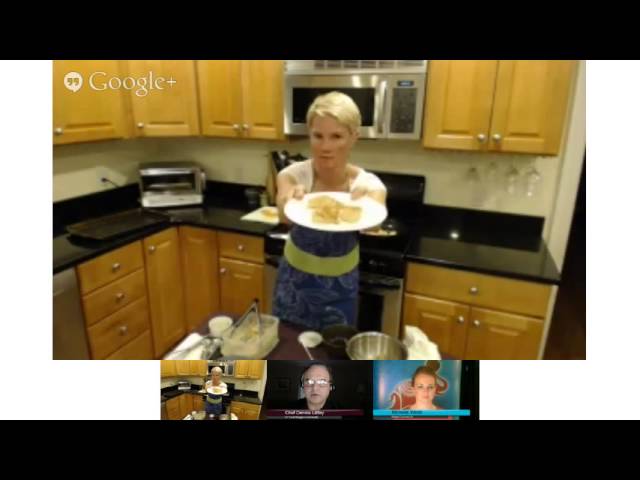
In this Community Education Series episode, Chef Dennis Littley hosts a live cooking demo featuring Kalipo (spelled Kelapo in the video) coconut oil and food blogger Carolyn Ketchum. Michelle from Kalipo introduces the brand, highlighting its founding in 2009, fair‑trade, organic, vegan, and kosher certifications, and product formats (jars, pre‑measured baking sticks, soy‑free spray, soft‑gel capsules). She positions virgin coconut oil as a long‑term kitchen staple, comparable to olive oil. Carolyn then demonstrates a "fish nuggets" recipe using mahi‑mahi, employing a "Tupperware shake" method to keep hands clean while breading. She discusses the oil’s culinary versatility (frying, baking, stir‑frying, grilling, sauces) and its stability at high heat, noting that it does not oxidize like many vegetable oils. The segment delves into health claims: saturated fat composition, lauric acid (also in breast milk), potential heart, weight‑loss, diabetes, antimicrobial, antiviral, and skin‑care benefits. Throughout, they address practical questions about coconut oil’s consistency (solid vs liquid), storage (refrigeration optional), melting point, and the difference between refined and unrefined (virgin) oil. The conversation also touches on gluten‑free baking advantages, favorite uses (muffins, buttercream, buffalo sauce, pie crust), and where consumers can purchase the product.
Chapters
Hi, I'm Chef Dennis Littley, and tonight we're here for another community education series. And we're here with Kalippo Coconut Oil and Carolyn Ketchum. We have Michelle from Kalippo, and she is going to talk a little bit about the product. And then Carolyn from All Day Long I Dream About Food, you know her, she's gonna prepare some of her fish nuggets. Cod nuggets, it is, Carolyn? Is that what it is?
Mahi-mahi.
Mahi-mahi. I'm sorry, I knew I should have known that. The fish so nice they named it twice. Mahi-mahi. Alright, I'm going to turn this over to Michelle and you're going to tell us a little bit about your company and the product.
Yes, hi, thank you everyone for joining us. Kalapo Coconut Oil was founded in 2009 as a means to provide a higher quality coconut oil to the market. We are one of the very first fair trade coconut oils available. We are also organic. Vegan certified, and now kosher certified. So we try to cover all of our bases to make sure that we're providing the highest quality products while also providing cool innovative ways to use coconut oil. We not only sell it in jars, but then we have some pre-measured baking sticks and, uh, soy-free spray and vegetarian soft gels. So we try to stay above trends in coconut oil because we know that this isn't just a fad in the cooking world. It is something that is going to be like olive oil. It's going to be a kitchen staple for a very long time. And kaluppo will be a kitchen staple for a very long time. So I really appreciate y'all joining us, and I know this dish is amazing. It was a big favorite among our followers on our blog and our Pinterest. I think in the first, like, 5 minutes, this recipe got repinned 30, 50 times. I mean, it was ridiculous. So I'm really excited to see the Tupperware shake happen.
I'm excited about that too.
Okay, am I going ahead?
Yes, you are. Take it away, Carolyn.
Hello everybody, I'm Carolyn Ketchum from All Day I Dream About Food. If you don't know my blog, I'm mostly low-carb and gluten-free, trying to get my kids eating healthier items. And so what I'm gonna make for you tonight is something that is my answer to the Fish McNuggets. So coconut oil, I've been using coconut oil for a while and I've been working with Kalipho for a while too. It's good stuff. This is a nice new jar. Mmm, it smells so good. If you've never used coconut oil, I highly suggest it. It's great stuff. If you like the flavor of coconut, you can really play it up in foods.. But if you don't like the flavor of coconut, you can also hide it with things. So it's a wonderful product. It's mostly saturated fat. I'm going to talk a little bit about the health aspects of it. Most people balk at the idea of saturated fats, but it's a plant fat, and I've come around to the idea that saturated fats are not so bad for us. It's very stable. It doesn't oxidize easily, and it's actually a lot of the saturated fat in coconut oil is lauric acid, which is actually something that's found in human breast milk, which we all know is supposed to be good for us. So, um, it's actually got lots of different properties in terms of, um, let's see, there's a lot of health things out there about it being good for the heart, about it helping people lose weight, um, about it even being helpful for diabetes, which I happen to have. I haven't really tested that so much on myself, but, um, It has a lot of things. It's antimicrobial, antifungal, anti— it's a lot of anti things— antiviral, and antibacterial, so it's good for infections. And it's actually really nice on your skin as well. I happen to make skin cream with it myself, so, and I use it all the time, and my skin hasn't been this soft since I was probably very young. So, in terms of cooking, I use it a lot in baking, and it's gonna make your baked goods so much more tender than butter, which I love butter too, but it's going to make them almost fall apart tender, and that's really wonderful, particularly in gluten-free baking, which has a tendency for things to be dry. Coconut oil will change that completely. So I use it a lot in baked goods, and I use it for frying, stir-frying, roasting, and even putting it on the grill. So I use it for pretty much everything. And one thing that's great about coconut oil is that it is very, very stable when it's put to heat, so it doesn't oxidize easily like some of the vegetable oils that you might use. So there's not a lot of free radicals flying around with coconut oil. So, um, and this recipe, like I said, is my answer to Fish McNuggets., and my kids loved them, I loved them, so let's get started. That's my little blurb about coconut oil. Okay, so first thing you're gonna take an egg. I've got my mahi-mahi here. I do buy the bits and pieces, I think they call them, or the ends and pieces at Trader Joe's because they're already cut up nicely for me, but you can get some odd shapes that way, so you will have to cook them all a little bit differently. You'll have to watch for the smaller ones for cooking faster. So you're just gonna whisk an egg. Try to do this neatly without making a huge mess. And with this recipe, I actually developed my little Tupperware shake method because previous to this, whenever I was breading chicken or fish, I was always getting my hands basically covered in both the egg and then the breading. So this way, my little Tupperware shake method, you're gonna see me keep my hands clean, relatively, anyway. So it's about a cup of almond flour and 2/3 cup, I use shredded coconut. Again, if you didn't want the coconut flavor, you could do more almond flour because the coconut in this recipe will play up the coconut flavor a little bit more. So this is about 2/3 of a cup. And then just some salt and pepper. Let's see, I used about half a teaspoon salt. You can— and some pepper. And you can, if you wanted to play up the other flavors with it, you could spice it up a little. Today I think I will put a little bit of chili powder in it, but you can put garlic powder. Oh, I have a shaker, not a thing I can get my spoon into.
That's a great way to change that flavor a little. I hadn't thought of that, adding different seasonings like lemon pepper or—
Yeah, lemon pepper would be great.
Cajun seasoning, any of the ready-made spices would really change, would really be a nice change.
Yeah, and garlic powder I find with coconut things, garlic powder actually really goes well with them, so does onion powder. So, okay, so then I just toss my fish into the egg and get them nicely mixed around. I'm only gonna do, I should actually get my coconut oil going on the heat. So I do about 2 tablespoons, you're only gonna be able to get about half your fish in, it's about a pound and a quarter for the full recipe. See, I'm not keeping my hands fully clean, but I'm trying. This is why I'm wearing an apron today. It's just on medium heat. And then just mixing, getting all the fish well covered in egg.
Carolyn, did you let the fish warm up to room temperature a little before?
Yeah, I did have it at room temperature. That's a good point. I did have it at room temperature. This is my little Tupperware. I'm gonna shake my breading. Little shake here. Then I do want to tap off the extra egg. I don't want to get too much egg into the breading because it will have a tendency to gum up. So just kind of shake them off a little with a fork or a spoon. You're only going to be able to get about half the fish if you have a 12-inch skillet because you want to give them plenty of room to fry a little. Come on, guys. Yes, I do talk to my food while I'm cooking. I do that quite frequently. I talk to my ingredients.
As long as they don't answer you back, you're fine.
That would be trouble, right? Well, sometimes they do. What was that, Michelle?
That I'm glad I'm not the only one.
I've been talking to my fish when I'm shopping. Yeah, I do talk, I talk to when I'm shopping, I talk when I'm driving. Okay, so this is my little Tupperware shake. And this is really not something you could probably do with softer fish. If you're thinking of tilapia, something that's not a firm white fish like cod or mahi-mahi, might fall apart when you're doing the little shake because this helps keep my hands clean so much when I made them last time. Otherwise I would end up with it in my fingernails, all over my hands. I'd be washing my hands about 3 or 4 times during the whole process. So, let's see, get my coconut oil nice and hot. Probably need it a little bit hotter. And then these guys are ready to go and they're nicely coated. And then I don't have it all in my fingers. Let's do that a little bit more actually. Get it all in place. And then it's easier to just do this with my fingers, so I will. Now, I do find that coconut oil soaks up a lot when you're frying with it, which is not bad. It means there's lots of the good coconut oil in your meal. But you will find that the breading will soak in a good amount of it. Lots of these in. So coconut oil spread around. I really like working with— I personally love the flavor of coconut, so I am— ooh, and you can hear it frying now. I don't know if you guys can hear it, but I can.
Sounds good!
And yeah, I love the flavor of coconut, so I think that playing it up is really nice. But I do think you can really, if you're not a fan of coconut, the flavor of coconut, but you want the health benefits and you want to try coconut oil and cooking with it, I use it for omelets, I use it for stir-fries, I don't really taste it in the stir-fries, it's very easy again to hide if you don't want the flavor, and I use it, gosh, I can't think of anything that I cook that I don't really use it in. I've even made fudge and things with it too, so yeah, it's really a useful, useful ingredient, especially for gluten-free, like I said. So these are gonna cook for about 2 minutes each side, the smaller pieces. I cut them into, I guess, 2.5, 2-inch chunks maybe, but there's some smaller pieces that come with this, but you could easily just get a fillet, cut it up nicely into even chunks and cook it. And it cooks quickly too, so this is a nice easy recipe to show you here today. Let's see how we're doing. Take one in the middle. Not quite done there, so we'll give it a little bit more time. Um, I don't know. Is there anything else I want to say while I'm cooking this? Any suggestions?
No, that's great. I'm happy to hear your kids like eating that. It's hard to get kids to eat fish.
We did serve it with coconut. It's been a bit of a tough sell with them until recently. I also made a coconut cake when I worked with Calipo, and they loved that. And so it was the first time that they all said, "I really like coconut." So I thought I'd try them on this, but we did serve it with some homemade tartar sauce because they do, you know, they can be, it can be a little bit of a tough sell with them. So, but they really enjoyed this and they ate all of it. That's a good compliment. And I have 3 kids, so if you get all 3 kids to like something—
Is that counting your husband too, or is that counting your husband as one of them, or is that the 4th kid?
Oh no, no, my husband is fully adult, thank goodness. Okay. And he's actually sitting behind me, so I better say that. Okay. So they're cooking up nicely. You can see that they're getting nice and brown. I can't really tilt the pan too much to you, or I'm gonna lose my coconut oil. You have to be careful with gluten-free things when you're flipping them. The breading can come off pretty easily because there's no gluten to kind of hold it together. But oh, they're getting nicely browned. They're gonna be cooked in about a minute. And then I'm gonna eat them because I haven't had dinner yet. Oh, that one's gorgeous. See that? Nice little— I don't know if I can show them close up enough on here.
You can probably bring it up to the camera when you're getting ready.
I will bring it up to the camera after. Good, they're cooking really nicely. It doesn't take very long. And then I like to serve them with a little lime, and it's perfect. Just a little squeeze of lime, and they kind of have a little tropical flavor to them. Excellent. So I got my little plate, and I will give myself some right now.
They don't take long to cook at all. That's, that's really a nice—
No, they don't take— so it's an easy weeknight meal too.
Yeah.
So I'm going to show you some of the nice brown ones. Over here. And I'm going to eat them with my fingers because that is the best way to eat nuggets. There's no point. So you can see how nicely browned they are. Can I show them? Is that showing?
Yeah.
See my pretty brown fish?
Looks good.
And I'm going to put a little squeeze of lime. Tartar sauce is really nice with them too. And we just do that with a little— what do we do? Mayonnaise, cumin, and some pickle relish. It's very easy. And then I'm going to eat one. So cheers! Mmm, perfectly cooked.
Excellent. Boy, now we're jealous because you're having some wonderful tasty mahi-mahi nuggets.
And that's really it. It's so simple to cook with coconut oil. And like I said, baking with it, if you just sub in the same amount of coconut oil for butter, you have a great tender, almost melt-in-your-mouth kind of quality to the baked goods.
Now that's really interesting. I'm glad you brought that up about how— what it does to gluten-free products, because I know that's a lot of— some people say that it's dry or it's tough. If it helps that much, that would be like a godsend then to gluten-free people, I would think.
Yeah, it can— some ingredients can be really dry when you're baking with them. And I find that coconut oil— I mean, cookies made with coconut oil just almost fall apart, which is fabulous because they just taste delicious. And cakes in particular, cakes and muffins are really tender.
What is your favorite thing to make with coconut oil now, with Kalpa?
I'd say muffins. I made quite a while ago, I made raspberry coconut muffins. And I played up the coconut flavor by adding a little bit coconut extract and a little bit of the shredded coconut. And by the way, the shredded coconut I used tonight is unsweetened, so that can be harder to find, but it's worth it if you're trying to keep, you know, the extra sugar. Yeah, healthy aspect to the meal.
So absolutely. We just had a question from Michelle Palin, and she wants to know, do you always have to melt the coconut oil completely to use it. Can it be used as a solid like butter in baking? When I bought it before, it was so hard to scoop any out, but that wasn't this brand.
I have seen people do it where they basically beat it like you would butter, so they beat it into the cake. I have seen that. You want it probably at this— like you can see, the consistency here is perfect. It's kind of like butter. In the winter, it definitely gets harder. It's a little harder to scoop, and you might want to sort of partially melt it in the microwave, quick zap, to get it to that quality. But yeah, it's definitely— and I always use, when I scoop it out, I always use a firm metal spoon because it can be, especially in the winter here in New England, it can be a lot harder. But I usually use it melted, and it makes— I have used it for— I have a good recipe, which I think I did for Calippo. Quite a couple years ago, actually, where I used it for a buttercream, and it worked out beautifully for like a creamy middle for cookies, sandwich cookies.
Well, I did use it for pie crust once, and I know I wanted it really cold and in chunks, so I— the time I did it that way, it worked out well. So I think it all depends on the recipe and what you're looking for and the methods you're doing it. I used I did it for buffalo sauce. I was telling you before, it makes an excellent buffalo sauce for either shrimp or chicken, and you can't even taste a hint of it at all in there. It's a great product for that.
One question that we get a lot is— we get people calling and asking, "My coconut oil is completely liquid now, and I bought it when it was a solid. Is that normal?" This is along the lines of what we're talking about.
°.
That's the melting point of coconut oil. So, I mean, it'll literally melt in your hands. I've used it for like a raw icing. It turned out more of a glaze because obviously being in Florida, everything is 90 and above, even in the wintertime. But we do have a product of pre-measured baking sticks which are scored like butter, and we— that's one of the only times we kind of encourage people to put it in the refrigerator so you can and easily measure it out because a lot of times you are scooping and it may be a liquid and it may be a solid and you're still gonna get the same amount, but it just makes it a little bit easier for you to ensure that, you know, the 1-to-1 ratio that you're using in those recipes is easily attained.
Okay, Gerald Chernikov just asked a question. He says his remains liquid in the bottle. Should he refrigerate it? —then?
You don't have to, because especially with our brand, we have the amber jars, and that protects the light from getting to the coconut oil. Yes. And that also prolongs the shelf life. Shelf life of coconut oil just naturally is at least 2 years. It's one of the longest of any oils. So you really don't have to worry about it. Even if it fluctuates a little between a liquid and a solid state, it's not a problem. It's really more of a preference, really, if you want to keep it in the refrigerator or if you want to keep it in your pantry.
It wouldn't hurt it to refrigerate it.
Correct. It's not going to do anything. It's not going to change the, uh, the structure of it. It's not going to make it more rancid. The only thing that really makes coconut oil go bad is when it's mixed with— if you put like a watery spoon or something in there, and then the moisture will collect and that's what will really make the coconut oil, um, rancid. So you want to make sure that your spoon is dry when you scoop it out, just to prevent any of that kind of cross-contamination, per se. Mm-hmm.
Good to know. Okay, uh, Michelle Palin just said that that looks a lot softer than what she's used to seeing, and she thanked you for holding it up, Carolyn.
Yeah, yeah, it's nice and soft. One thing that I wanted to mention was that the health benefits that people are talking about these days a lot with coconut oil, it's not any coconut oil. You really don't go to the store and just grab coconut oil. It has to be virgin coconut oil, and I would say that Kalipoe is one of the best that I've tried. Like I said, I opened it tonight and I couldn't help but stick my nose into it because it smells so good. It smells like real coconut. So yeah, we're talking virgin coconut oil, but there's lots of coconut oils. Coconut oil has gotten a bad rap for a long time. Because it was highly processed stuff that was put on, I don't know, popcorn in movie theaters and things like that that was really, you know, trans fats and not very good for you. This is the good stuff.
I know one thing with baking with mine, I always refrigerate the products because until I can give some of it away, and I found that that did— you wanted to take it out of the refrigerator because it did stiffen things up a bit more in the refrigeration after you've made baked products as a it was always good to let it sit to room temperature, and it came right back to a really nice consistency. The cakes were wonderful when I used that.
Yeah, something to go off on what Caroline was just talking about, the unrefined versus refined. And for those of you who are new to coconut oil, there is a big difference in the refined and unrefined. Refers to the process in which the oil is extracted from the coconut meat itself. Unrefined coconut oil has no heating or bleaching process, and refined coconut oil has a heating and bleaching process. And you'll find that some, as Caroline said, you know, they can be hydrogenated, and the heating process can actually damage some of the medium-chain triglycerides in the coconut oil, which is where you get that lauric acid and the health benefits that we're now talking about in coconut oil because we're finding more unrefined coconut oils coming to the market.
Good to know. We have another question here from Michelle Palin. She wants to know where she can get it. Is it just available through your site, or is it sold in any chains?
We are actually available in over 1,500 stores nationwide. Depending on where you live— She's out west. Out west. Okay, we are getting into some of the stores out there. We have a store locator on our website. That's the easiest way to find us right now.









