Lemon Basil Shrimp with Zucchini Noodles
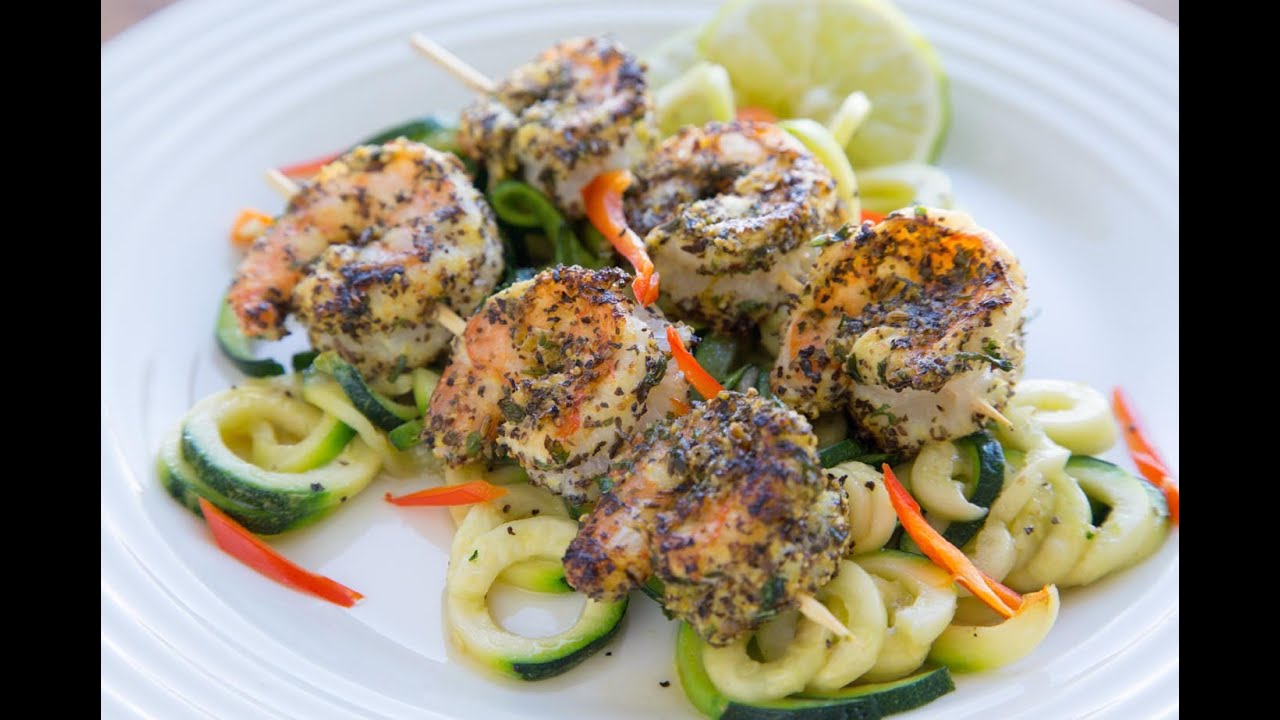
In this episode of Around the Kitchen Table, host Susan Sarah and chef Dennis Littley demonstrate how to make a quick, restaurant‑style Lemon Basil Shrimp served over zucchini noodles. The show blends cooking instruction with broader kitchen philosophy. Susan shares a fresh‑herb storage hack, while Dennis walks through shrimp cleaning, a homemade lemon‑basil rub, and best‑practice sourcing for shrimp. They then use a spiralizer to turn zucchini (and discuss other vegetables) into noodles, sauté them, and plate the dish with skewers and colorful pepper garnish. Throughout, they sprinkle practical tips on oil selection, avoiding overcooked shrimp, equipment choices, and how to adapt the recipe for gifts or variations. The episode ends with a preview of next week’s menu.
Chapters
Now we're, now we're ready. Welcome to Around the Kitchen Table with Chef Dennis Littley and myself, Susan Sarah. We have another great show today, and Chef Dennis and I, we take a holistic approach to the kitchen. It's a similar philosophy where we guide, we teach, and we try to inspire, but without too many dos and don'ts. So it's really surprising how the two disciplines are intertwined. Chef Dennis is an accomplished chef, and part of the point here is to give some of the insider tips from professionals, from Chef Dennis Littleyy, who teaches restaurant-style techniques that any of us can do from home. And my cooking has definitely been upgraded quite a bit. And myself, I'm a certified kitchen designer for many, many years from my own kitchen design firm, and I also have another firm called what's it called, Scandinavian Made, where I import Swedish rugs. Go figure. So here we go. So we're ready. So how are you today?
Well, I'm actually a little under the weather, but I'm feeling much better today. Had a not great— had a beautiful weekend in Clearwater Beach. I went for a function that was there right on the beach. Oh my God, the place was just—
I saw— did I see some feet up on a lounge chair photograph.
That was Lisa. You don't want to see my feet. No, no, no, that was hers. Um, but yeah, no, we, we had a wonderful weekend, but we cut just a little short because I wasn't feeling as good as I should have. But now I'm on the rebound. I feel better today. And other than that, it's, it's a little chilly. We actually hit freezing in Florida.
You did? Yeah.
It was in the 30s. It's not warming up considerably today. It's going up to like 55.
Uh-huh.
We're in our winter for sure right now.
Yeah, I'm not going to Florida anytime soon. I may as well stay here.
Yeah, yeah, because you've been having some better weather than normal too. It's been a little warmer up there from time to time.
Yeah, now and then. So, and you know what, I have— and plus I've been doing— I've been cooking a lot. And I told you last time, this is going to be my one tip. I just want to get in before you start, and then I'm just going to see what we have going on there. But last week I talked about that I was obsessed with organizing my refrigerator. And in fact, I have been, and I've been cooking so much more. I mean, I cook anyway, but I've been using my fresher things, my fresh foods more, and it's so great. I've been reading. So my point is I've been reading about storing foods and how to store food so they last longer. So I have, you know, I love tarragon, fresh tarragon. So one way, so I will give this tip and then we'll go. Herbs that are soft, that are not woody, like rosemary is woody, tarragon and parsley are not. You can put those in a little a little cup of water, put an open plastic bag over the top, put them in the refrigerator, and they'll last forever. I did that a week ago. They're like new.
Yeah.
They're like new.
Dehydrated.
Yes, I'm learning a lot. I'm learning a lot about preserving foods. And, you know, food waste is an issue too, which is, which is not good. So I'm excited.
All right, and those of you here, I see Michael just shared us out. If you can tweet this, tell a little bird, we appreciate it. We like to get people coming in here and asking questions. And if you have questions along the way, please feel free to put them in the comment section. And I need to get one little more bowl.
Okay, I'm excited about what we're having today. We're having, you know, shrimp and lemon, and anytime you have that combination, I love it.
It's actually very easy to make, and we're just going to start now by cleaning the shrimp. And, and I didn't clean them yet because I, I thought maybe someone might want to see exactly what I do. I did peel them down. I took the tails off. In the restaurant, a lot of times we left the tails on, and it was only for appearance. So leaving the tails on is sometimes a good thing. But what you want to make sure is, most the time, people don't want to take the time to peel it down to where the tail is. Let me get a I peeled them all, so I can't even do that. And they'll leave the shell on from here. Well, that's, that's a nice piece of wasted shrimp that you could be eating. So that's why I pretty much take them off, because I want to eat all the shrimp.
Oh, I do too. I always peel the last bit.
But they always leave that when you get them in a restaurant and they leave the tail on, which is just— yeah, they always leave that little piece of shell that's not kind of clean. So if you're gonna do it, make sure you clean them down. So it's real simple. It's just like, you know, I always hold it down in place and just kind of slice right where the back is. And depending what you're doing with them, I don't— I never really butterfly them all the way unless I'm gonna fry them.
But then now you take that vein out in the front. Is that in the front or the back? I can't remember.
That's the back.
That's okay. So you'll Cut, slice them a little bit and then remove that.
They have that little bit of vein in here. Now you can either very simply just take it out with a knife or you can rinse them. Sometimes they're a little messier or there's a little bit more in there, but you know, you do want to take this out. If you do cocktail shrimp, and this is what you do after you cook them, you wouldn't clean them prior to it, but you would make sure you tore that back off and then more than likely rinse it out before you serve them. You know, it's not going to hurt you, you can eat it, but it's just, you know, people don't want to see that in their shrimp. And shrimp are generally a little bit more expensive, so you want to take that time just to clean them out and to make them look more presentable. And then we'll throw that away.
Okay.
Oops. All right, so that's the shrimp that we're going to use for today. And then we're going to make a seasoning to go with it, and it's going to be kind of like a rub for lack of a better terminology, but it's just pretty much a seasoning mix. And this is a lemon basil. So what we're going to do for this— and I have to get my— make sure I have all my mixtures here— is a quarter cup. I just use lemon pepper.
Okay.
Again, this is a very simple rub to make. I have not used this lemon pepper in a while. You can see it's brand new. I like the flavor of lemon pepper and I use it on chicken a lot. Lisa's not as fond of it.
I think I have to get it. Am I echoing? No.
Okay. And you know what I love it for? And when I was making hummus all the time, lemon pepper makes the best hummus.
It does, because I have a bunch of chickpeas. I have a few cans of chickpeas just for that.
Instead of using just lemon juice in it, the lemon pepper gives it more of a bite. So I always like lemon— using lemon pepper instead of it. It's a very nice spice to add to it. All right, so this is 1/4 cup of lemon pepper. And then let me find my basil. We got 2 tablespoons of basil, and I'm using all dry for this because it is— or 2 teaspoons, I'm sorry, 2 teaspoons. Now 4 teaspoons of dried basil. So tablespoon, teaspoon, 2. Make sure I get this right. All right, we have, oh, some ground fennel. And I roasted this fennel a little bit and then I put it in my mill and ground it up. So we have just about 2 tablespoons of that.
You roasted the dry fennel?
Yeah, I put it, well, I got a frying pan real hot And actually I got it too hot because I burned the first batch.
Yeah.
And I, I smelled it and didn't smell bad, but then I taste it and I got this bitterness out of it and that is not what I wanted at all. So I let the pan cool down a little bit and I put some more fennel back in it and I just kind of rolled it around the hot pan a little bit until I could smell it starting. I could start to smell it and that's pretty much when it's toasting for you. And I put it on a paper plate to let it just get all out of it and then popped it into my food mill and just ground it up. Took a couple of seconds. So that's the fennel in there. All right. Now we have— what else do we got? Basil. Oh, parsley. And parsley is pretty much just for color. And you could use a fresh parsley if you wanted to. It's not like it's going to add any real value to the dish. We're going to put in a little bit of garlic.
Oh yeah. Nice. Good.
Okay.
You know, I would imagine you could even, I don't know, maybe with another mix, do some barbecue spices.
Oh, absolutely. Absolutely. I mean, this is just this one. And, you know, if something in here is not to your liking, leave it out.
Okay.
And now I'm going to put in a little bit of salt, a little bit of kosher salt. And generally with it, the only time I really use kosher salt are in these rubs because it's a bigger grain.. It's going to cling a little bit better and it's not going to be quite as salty if you're using table salt because that would be too much salt. And I just want to put in about a half a teaspoon of black pepper. All right. So this is pretty much it. And it's a lemon basil flavor.
And we're going to add— this is— this is up there. You can save that.
Oh, absolutely. And the whole thing is Make up more than you're gonna need and save it for later. And you might be wanting to use it. Like, here's from last time I made up that rub for the— okay, I saved it. I got nice little jars, and you can label them and save them. So then put them and keep them in the front of your spices.
I just thought of something. How great are those for gifts?
Oh, absolutely. Wow. And, you know, again, if you're going to make a couple of different ones and give some of your favorites, especially if you have people over. Now, I'm going to add one more little thing in this, and I'm going to add just a little bit of lime zest to this. Now, this is not something you have to add, but I was thinking, you know, this lemon and lime flavor, and I'm trying to be real careful not to get into anything but the green part because the pith is what is bitter. The white— as soon as you start going into the white, even in my cold, I can smell that. So, all right, so that is my rub for my shrimp. Now all I'm going to do at this point is I'm going to get another bowl because this one is wet that I have the shrimp in, and I don't particularly want to get that little bit of dampness in it. So I'm only doing a few because this is for lunch. I'm going to do some more later, so I'll be able to save this seasoning, and that'll be enough for tonight. So I'm putting a healthy amount on here. I'm just going to let these sit for a few minutes while we work on our next project. But that's all it is to making, you know, a spice mixture that's going to liven things up a little bit. That's going to change, you know, what you— and again, it's stuff that you had in the house, or if you didn't, get it and then start adding it in to what you make. Okay, so let's put this off to the side, put the shrimp off to the side. And now the only real adventure for today is bringing our friend the spiralizer out.
Oh yeah, I still haven't gotten one of those gadgets yet. There's— they make so many different types, so I, you know, it confuses me. There's the big, the small, they're handheld, they're like that.
Okay, so I'm going to— I'm afraid this is going to slip, and we know how I do with spiralizers as it is, so I'm just going to move this cutting board out of the way. I had that on the sink. I could just move it, right? Just slide it in.
That's right. That's what that— I'm telling you, that's what's coming. Large sinks.
There we go.
Yeah. All right. Multi-purpose.
All right. We were here. So we're just gonna place. That's good. All right. We're gonna place this in. And if you've never used a spiralizer, they're really pretty easy. You just put one end in, one end in, and the trick to it is, is not to push too hard, which we found out the first time I used it on air. Yes. And you get this lovely noodle.
Beautiful.
And some will be longer than others. You know, it does not have to be completely connected.
Oh, that's fun. I could see kids, kids doing that. Yep.
So that's all there is. And I, I do have a couple more I'm gonna spiralize. Mm-hmm. Let me cut the end off of one and I'll—
And Renee's asking, have you spiralized and then fried?
Yes, I'm going to fry these. Now, you can boil them if you so desire. I don't like boiling vegetables unless I absolutely have to. They could steam them probably very well, but I'm going to sauté these. This is how simple it is to use. Now, what I use this for more than anything are vegetables that Lisa won't eat. And, you know, Renee and I were talking about it, and it's almost like having a kid in terms of vegetables. So I have to make them interesting so she'll eat them. But beets, I love doing beets this way because they look so pretty, number one.
Yeah.
And then number two is that they are easy to cook and they taste really good, and it's just a nice way to get more vegetables into someone's diet.
You're right. I mean, that's great for kids. It's great to, you know, and the colorful— sometimes I see beets that are orange.
Oh, I love orange beets.
I haven't tried them, but I see it on my weekly CSA thing, my farm organic thing.
There's so many different kinds. There are candy cane beets that are white and red. There's really deep dark purple beets. That we're mostly familiar with. And then there's some lighter red ones. But, you know, the beets— we started screwing with vegetables when we wanted to make them all the same color. I think that's when we really started messing things up because I just bought a bag of carrots at Whole Foods and they're purple. There were only a few orange carrots in it. Most of them were all different other colors. There were orange, white, purple, yellow. So that's when it really becomes fun cooking. And this is what vegetables were meant to be. We kind of changed them up a bit. So, well, before I do that, let's go back to my shrimp. Now I'm going to do these again just for appearance. I am going to skewer these because it's going to help them keep them in place. I just want this dish to look a little nicer and different. And skewers, something as simple as just putting them on a skewer is going to do that for me because it's going to give it some different eye appeal.
I don't know, they just look— I've used skewers for many, many years. I feel that they, you know, it's a nice presentation.
Oh yeah. And it's all about presentation. And I mentioned earlier too, he says, you know, I wipe my plates before I serve them if I drip a little sauce on them. I want it to look clean and professional. And, you know, part of the fun of going to a restaurant is getting that little perfect plate when they do serve it right. So I try to make the experience at home just as pleasant as it is when you go out. So it's a simple thing like that. Now we're just gonna put a little bit of, Turn this on and get some heat in this. Then we're going to put a little oil in this, and I'm just going to sauté them very gently on both sides. It's going to be real simple to do, just because shrimp don't take very long to cook. And one of the worst things you can do with shrimp is overcook them.
Yes.
Tough and rubbery, and you just lose all that sweetness that's in a natural shrimp. And now these are Gulf shrimp, and when you're looking for shrimp Make sure it says wild-caught, and try and find shrimp that are from Gulf waters or Pacific waters, okay? Mexico really does the bulk of the shrimp fishing, the Mexican, and they have some delicious, really good shrimp. So anytime you're, you're getting something, those are safe. Even South America, because that borders on the Gulf too, in the upper countries Some of their products are good, but source what you're buying. You don't want farm shrimp. You don't want Indonesian shrimp because the waters are so dirty that they're just not healthy.
Good to know.
You got to think of where this stuff's coming from. So look for, you know, Gulf local or not local, but United States or Mexican shrimp. So we're going to put a little bit of oil in there.
And speaking of oil, Michael is asking, what's your preference? For oil for seafood?
I use olive oil for everything. It's just easier for me to use. I do have some corn oil in the house that I use for baking, and if I'm— or if I'm going to deep fry, if I'm going to deep fry, I'm not going to deep fry in olive oil. I'm going to deep fry in a vegetable oil then. So most of them, I've gotten away from using canola oil because I really don't think it's one of the best oils to use. It's, it's made out of a waste product that they change something in to so they could get rid of the waste product, you know, by selling it as oil. And, and canola is just short for Canada oil, so, you know, it's not one of my favorites. It may not be unhealthy, but I just have my doubts. So, uh, I use plain old corn oil. Soybean, I'm not supposed to I have, so I don't buy soy oil. So it's one, you know, if it gets into my diet, it's one less time for it to get in. So I'm just going to turn these over now. Oh, it would help to move the camera.
Oh, yep.
There we go. And you can see they're getting a little color and they're pretty much almost done. And if you wanted to do these ahead for a party, I would take them out of the pan right now and then I would put them on a baking sheet or in a baking pan and I would let them finish cooking in the oven, in a warm oven while I get everything else right. 'Cause this would be a knock your socks off of party dish to serve. Yeah. Here's a serving right here. These are done. Okay, here's a serving all finished. We got some color on 'em. And the nice thing about getting this pan hot, let me turn this off. And then keep burning is that we get a little bit of this crust on them and a little bit—
oh, that looks good.
Yeah, we're getting a little bit of a— not a burn, but you know, anytime it gets that color, it really looks good. Yeah, these are done. I'm going to take these off now. I'm going to move this aside, and I, I don't have another flat fryer pan. I have to get one.
So let me ask you, did you buy Do you buy those fresh or were they frozen?
Shrimp are always frozen.
Oh, they're always frozen. Okay.
If they're thawed, it means that someone defrosted them. Okay. Shrimp are pretty much frozen on the boat when they get them, when they catch them. All right. So if you see shrimp that are thawed, unless it's right on the docks where shrimpers are going out, and in Florida we do have those places. But unless they're in that situation where the boats are coming in with a fresh haul or people are shrimping locally, like in Florida, you're allowed to get, I think, a 5-gallon bucket full of fresh shrimp per person when you shrimp. So they're going to be not frozen then.
Okay, because I get shrimp from my CSA thing because I get some things beyond the region, and these come from Florida from a small person in Florida. And when I get them, they're in a bag, but there seems to be a lot of ice crystals around them. They come frozen, but I don't know, there's like a lot of ice around them. And then when I cook them in the pan, it doesn't seem— it seems to be not mushy at all, but just too much moisture. I don't know. I can't get that sear. That I'm looking for. It's hard to get that sear.
They're gonna look— they're gonna get some ice crystals on them. Okay.
Yeah. Okay.
It's just gonna happen. Now, I actually bought these at Costco, and it's a wild Gulf shrimp.
Okay.
And I usually get my shrimp at, uh, Restaurant Depot, or Sam's Club is also a good source. But these were actually— and this is, uh, from Florida. Again, that's out of Tampa. And then a lot of times you also want— it'll say wild-caught, product of USA, all right, which is important, and no preservatives or additives. Because a lot of times they'll soak them in something, a brine, to get them heavier, and then when you cook them, they turn out to these little bitty things. So you'll see there's a lot of ice in this bag too. And I think that's just how they're frozen and how they're done. One of the ways they used to freeze was block frozen. And a block frozen shrimp, they're protected more because they're frozen right in the ice block. And they used to do a lot of that. Like when I would buy shrimp, more times than not they would be block frozen. They started using less and less water with the block freezing because people just didn't trust the weights on them. You know, as weights become more critical and you're getting fined for not having the right weight in it. That happens. So now let's get this pan hot. So the shrimp are done. Very simple. You saw me spiralize the zucchini. And again, you can spiralize any vegetable that's thick enough to get on there. If you buy carrots, you want to get really thick carrots, but they spiralize really well. Turnips spiralize well. Turnips spiralize really well.
Something about carrots.
You just need to buy monster carrots, Chernobyl carrots. You know, these really thick ones, because they're too thin, they just won't go through the spiralizer right. But beets, turnips, anything that's got a little more girth to it will spiralize wonderfully. So I'm just going to put a little bit more olive oil in here, and then I'm going to drop some of my zucchini in. And I'm simply going to season it with a little bit of sea salt and black pepper.
So do you want those to get a little bit of a crust on them?
Not particularly. I just want to get them— I don't want them super soft. I don't like them mushy. So I'm gonna make these just a, you know, just— I'm just gonna get a little bit of heat on them and I'm gonna cook them just enough so they're a little bit softer. Some vegetables take longer, but, you know, zucchini is mostly water, so it really doesn't take a long time to cook. And if you wanted to add another spice to this too, like if you wanted to put some fresh cilantro in or some fresh basil in or some garlic, that would also be really good with this too. So you could see season your noodle, your zucchini, a little bit more than you could if it was just in the shrimp.
Oh, that's great. Garlic.
Yeah, a little crushed red pepper if you want to add a little heat to it. You see, these are, these are just about, these are done. I'm just getting enough heat on these to just sweat them down just a little bit. And you know, you can, if you, if you get this nice and hot, You can get a little color on them, and a little color on these would not hurt at all.
Yeah, that's what I thought. And I guess to also go beyond the raw taste of them too, just to take that away a little bit.
Well, you're caramelizing them a little bit, so you're going to bring out— when you're searing them like that, you get some color, you're bringing the sugar out of them, which is exactly what you want to do because that gives that fresh vegetable that extra flavor. But these are all they would take. Now again, if you don't want to use the oil, if you're trying to stay a little more healthier and you want to cut back on your oil, put them in a steamer. You know, I bought that steamer a couple weeks ago that I've been using. Put them in one of the steamers and just let them steam a little bit. I wouldn't necessarily put them in boiling water unless— what I would do would be put them in one of those like strainers, drop them, poach them. Or just blanch them a little bit and then pull them right back out. Just if you wanted to go that route. But it's a lot easier just to do it this way.
Okay. Let me ask you a question which may be smart or it may be stupid. I don't know what, which I'm famous for. Could you do, say, in the spiralizer, say, sweet potatoes?
Oh, absolutely.
And then how would you cook that? Say I wanted more of a carb kind of, you know, feeling with the shrimp.
You can blend your vegetables. You know, you don't have to just use one. I'm only using one. You could put something else in here.
Yeah, but if I use the sweet potato, then would I put it in the pan just like that, or does that take longer? Do you think that would take longer?
Cook. A sweet potato, you know, any potato is gonna take longer to cook. So if you wanted to do 'em in the pan, I would start the sweet potato. The only problem is the longer you cook a spiralized vegetable in a pan, the more it's gonna start to break up. Okay?
Oh.
So that is almost something I might coat them in oil, season them, and put 'em in the oven if I was gonna spiral, if I was gonna do potatoes. In a very hot oven, like maybe 400, 425, in that range, so that they're going to cook really fast. They're going to cook hard, and they're going to get a little more crunch to them. So you want them in a— anytime you want them to really get a nice finish, you want that really hot oven. Most of the times it's 350 for me for everything, but with chicken or something I want a nice crunch finish to, or a good hard finish, Almost, almost like French fries. Yeah.
Yeah.
Well, that's what you're making. So where the zucchini would not hold up quite as well in that because of the texture and all the water in it, the sweet potato would flourish, or beets would do very well in that kind of an atmosphere. But again, you know, if you don't want to sauté them, you know, you can cook them pretty much any way you feel comfortable with cooking. But that's, that's pretty much it. Now, the only thing I would do is add a little color to this plate. Maybe take a little red pepper and cut up a couple little strips of red pepper to garnish. Let's see if I have any red pepper. Oh, I do. And I love buying these. Renee had some earlier. I love buying these bags of pepper.
Oh, they have all the colors in them.
They have all the colors in them. And I can eat, you know, and they stay, they last so much longer. Than regular peppers do. They seem to. And I buy a big pepper and I never use a whole pepper because a lot of times it's just for garnish. But I've also found that these go— these are so sweet, they really go great in salads. So I'm just going to put a little eye appeal. And even with Lisa, who doesn't eat peppers, It's pretty.
It is. It really is. It looks—
Dennis Littley.
Yeah, let's see that. Oh, that looks good.
Okay. This way.
Nice. Beautiful. Wow. That is, that's really dressy. I have to do that.
How long did it take? I mean, and we've been talking and doing other things, but really it didn't. I have, you know, you can spiralize these vegetables hold up pretty well spiralized. So if you want to spiralize a couple days' worth, you can and have them. They're great on salads like this noodle done this way raw would be good in a salad. You don't even have to cook it.
Good idea. That looks so— it looks beautiful. It looks dressy. It looks elegant. Looks great. Wow.
It's a simple dish. I will probably make some rice to go with this because you're going to need a little bit more substance with it too. So when we make dinner tonight, I'll add a little bit of rice to the mixture. But you have all these fresh, fresh vegetables, leave them crunchy so they're still tasting fresh. And you know, the shrimp are nice and seasoned. They're going to have a lot of flavor. And again, adjust your seasoning mix however you like.
So tell me, okay, now I'm going to go on Amazon and get a spiralizer. So beets, say you spiralize beets, then how do you cook them in the pan?
I cook them in a pan. I like them sautéed. I like them with olive oil, salt, and pepper. And, you know, pretty much any vegetable I cook, that is my go-to way to make it. But you can add any other flavor that you think would be appropriate for the beets. I mean, you might want to add a little balsamic vinegar in when you're, when you're cooking them. You can also roast them spiralized too. So, you know, anytime you roast them and you're not handling them and you're not turning them around as much, they're going to stay whole more. They're going to stay in those spirals more. What you'll notice as you sauté a spiralized vegetable is that it's going to start to wilt a little bit more. It's going to start to break down a little bit more, and it's going to turn turn not stringy in a bad way, but they're going to start to flatten out. You're going to lose a little of the spiral, but it's still a wonderful way to eat them and to get the flavors in. And adjusting the flavors is so easy because number one, you've got all this big surface of vegetable to deal with. So I can take a really— see how nice and long it is too?
I can't see.
Oh my God. Yeah, I'm still going up with it.
Oh, that's— come on, that's fun. That's a lot of fun.
And they're not all that big, but, you know, every now and then you get one. But even this little curl is kind of cool. But you have all this surface to season. So you're going to take a bland vegetable like a zucchini. And because you have all that surface to season, you're going to get a lot more flavor packed into it because you got more edges to deal with. And Renee says apples. Apples are great for them that way. So, you know, you can do all different kinds of things on a spiralizer and have fun with it. And mine is easier to get to now, so I do use it a little more often. And again, anytime I get a vegetable that is new to Lisa or she's not gonna eat, I spiralize it.
Oh, that's so funny. Oh my gosh. I have to get one. Beautiful, beautiful.
Dish.
Beautiful presentation.
And I got mine on Amazon. I don't work for the company, but it's a Paderno.
Paderno. Okay.
You probably don't need one this exotic. I don't remember how much I paid for it. I'm sure it was under $50. You can get some real inexpensive ones. They have handheld ones that'll do it like a carrot because they're smaller. So they do make ones that'll do different vegetables. And it might not be a bad idea to have a cheaper handheld one for a carrot if you want to add them in too. And again, not just cooked, but great for salads, great for raw vegetables. We get a lot more out of almost all vegetables when they're raw. We get more, more good stuff out of them. So eating raw vegetables is a good thing. And that's it.
Yeah, good to know. Okay. Beautiful, beautiful dish. Beautiful presentation. Another, another hit.
Yeah, I like them. What's Michael say? Oh, he just put a link in.
Ah, good.
Yep. Very cool. Yeah, they do send recipe books with them. I never look at them. I should probably. I just like to get— I'm very visual. I like to look at the pictures and then I'll just get ideas from there and then take it my own direction. So this is, this is a real easy weeknight dish. Great for parties because remember you can set these all up ahead of time on skewers. You can barbecue them too. If you've got a grill outside, throw them on a grill.
Okay, quick, quick question, quick tip question. How do you really know when the shrimp are done?
You're going to feel them and they're going to start to feel firm. Okay, when you have a raw shrimp, Turn this way. I don't wanna drip this on.
Okay.
Okay. When you get a raw shrimp, it's gonna really be soft and mushy.
Yeah.
And when you open it, you can't really see, but it's gonna have this more of a cloudy, opaque, milky white to it. As it cooks, and it's, of course, it's gonna cook on the outside. Yeah, firm outside but soft inside. It's going to have a more of a white, like a real white color. This is like a skim milk white. It's going to get like a whole milk white as it cooks.
Is that another reason why if you slice it, you can better see what's happening inside?
Not particularly. And again, I wouldn't butterfly them completely. I'm just taking the back out and I I try not to cut 'em. It's just, it, sometimes you cut 'em deeper than you intend to. Shrimp is only, give it a minute and a half on each side and it's gonna be done. And if it's just a hair rare in the middle, it's not gonna hurt you. Shrimp is, it's gonna cook as it finishes sitting too. So it's better to get it really close and just a hair under than to get it over.
Uh-huh.
Dry out. But, you know, you— it's just a matter of timing and looking. As you see, both sides are done. A lot of times you'll see where you did peel it. Like, if I do have it on a skewer in the center, okay, I'm gonna— as I turn it, I'm gonna see the middle, like you said. So I'll have an idea if it's reaching— if the temperature is reaching. A lot of times, if they're just exposed to the heat, it's going to get dark all the way around, and you're really not going to know. But if it is look cooked all the way around, there's a good chance it's cooked all the way through because it is a pretty small, delicate piece of protein that's going to cook fairly fast.
Good, good to know.
All right, so there we have it for today. Lemon basil shrimp with a lemon basil seasoning that we made up, pretty easy, and zucchini noodles sautéed with a little sea salt, black pepper, and olive oil, and it makes a very tasty dinner.
That's great. It looks terrific. Looking forward to trying it.
Very cool. And thank you so much for coming around our kitchen table, and I will be back at a quarter after with Christine Thomas, and she's going to be making banana bread. So, and next week we'll be back. I don't remember what we're making next week, but sure, it'll be delicious.
Doesn't matter to me. It'll be terrific.
I think it's— I'm thinking it's a smoky chicken with Brussels sprouts, if I think. So, you know, we eat a lot of chicken in this house and I think most people do because it's—
Yeah, we do too. We eat it all the time.
It's the least expensive protein. Mine are generally always organic or free-range at this point, but it's the least expensive protein. So we'll see you all next week around our kitchen table.
See you next week. Bye.









