Lets Get Ready for Summer with Chef Bob Aungst - Around the Kitchen Table
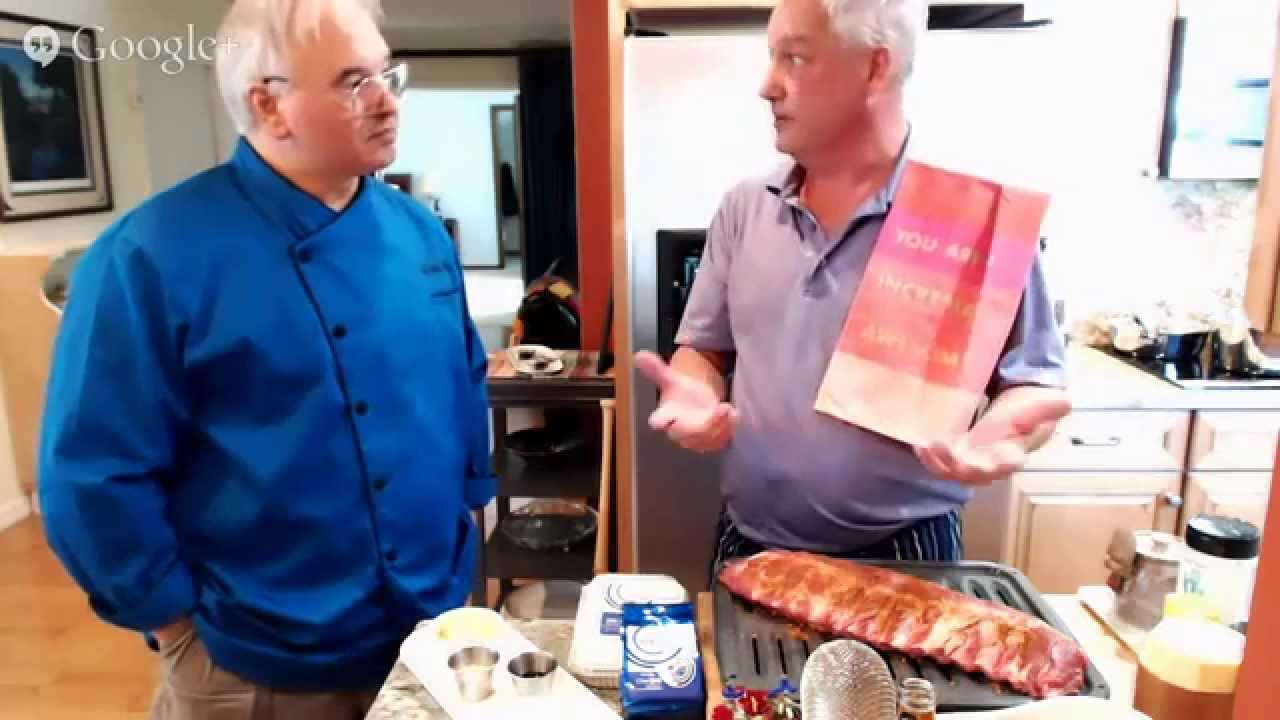
Chef Dennis Littley visits Chef Bob Aungst in Florida to cook low-and-slow baby-back ribs and gluten-free smoked Gouda mac and cheese. The ribs cook at 200°F for 6-12 hours wrapped in foil, while the mac and cheese uses a cup-for-cup gluten-free flour roux with smoked Gouda and bacon, baked at 300°F for 20-25 minutes.
Chapters
Hey everyone, I'm Chef Dennis and this is Around the Kitchen Table. And today we're a little bit on the road with Chef Dennis and we went up the highway, up Route 4 to Maitland to visit my friend, Chef Bob Hoss.
Chef, always a pleasure to have you.
Very nice to be in your kitchen. And oh my God, what a beautiful house. You are so fortunate to have found this. What great living space. You know, one thing I love about Florida is how the houses are laid out. They're such nice open designs. It's just so, it just is fresh. You walk in there and you just wanna get people in because you have the room to do it. And I love the outside kitchen idea. And we were talking about that. Doesn't everybody want their own fully stocked outside kitchen to work in? Oh yeah.
'Cause for some chefs, just one kitchen is not enough.
No, no. And then, you know, in the heat, when it's too hot to cook inside, it's like the old style Italian kitchens where the Italians always had a kitchen outside. Beautiful. You know, the first time I saw that, I was like, oh my God, you have a kitchen outside too? It was like totally new to me. He says, oh yeah, we don't cook in there when it's hot. So, well, today we have a great show for you. Unfortunately, Susan Sarah is not with us today. She had something else that came up unexpectedly, but I have someone to keep me company. So Chef Bob and I are gonna make some— well, Chef's gonna do the work and I'm actually gonna probably taste some of the food today for a change. I know you don't usually get to see me eat on this, but today I'll be an exception. So I'm going to turn it over to Chef Bob, but before I do, I just want to say hi to a few people and see who's in the audience here. And excuse me, I don't have my mouse today, but Michael Thomas, Chef Michael Thomas is here.
How you doing, Chef Michael?
Aslan Blore is here from England for us, and Aslan has her own cooking show. Awesome, Aslan. Coach Moore is coming to us from Texas. Chef Benjamin Fitcher's in the house, and as we go on, I'm sure we'll have a few other people join us. And as always, if you have a question, I have the comment tracker running. Things are working good today. We have a nice upload, so we're going to get on with the show. So awesome, Chef Bob.
Well, first of all, happy Earth Day!
Happy Earth Day!
Isn't that great?
And we were talking about that, and I remember the very first Earth Day I was at Oakcrest High School in Mays Landing, and in order to get out of class for the day, we all went on a bike ride.
So that's awesome, that's awesome. High school, and, and, uh, I was up in northern New Jersey, and we, uh May have skipped that day for a little bit to enjoy Earth Day, and we took a beautiful hike over at Silas County Park. It was wonderful. Yeah, it was really nice.
Well, I remember we went on Mays Landing, Summers Point Road, and went back up around the high school and down. I don't know how far we went.
I don't even remember coming back, actually, but I remember it's been a great time.
I know, it was a great day because we weren't in class.
Well, one of the reasons that I love to celebrate Earth Day, if you celebrate Earth Day Earth Day every year is because we get so much of everything that sustains us from the earth. And, um, as, as well as a chef, I'm a very avid gardener, and I love to grow lots of herbs, lots of plants, lots of edible flowers, lots of things that we can bring into the kitchen and help us to sustain ourselves as well as beautify our world. Yeah, I love a good garden. I love walking in the garden. Feel at peace, and it, and it, uh, on the other side of it, it's also very economical. One of the things that I always encourage people to do is if you have herbs that you're going to use in a garden, for basil, rosemary, cilantro, whatever it might be, go to the store, go to the nursery, buy a fresh plant, bring it home, use what you want to use, and put it in the ground. Next time you won't have to go to the store. You go right out to your garden, you clip what you want, you'd be using your recipe, and then so on and so on. So, um, I always encourage that with fresh herbs.
Fresh herbs are wonderful, and if you have not cooked with fresh herbs, you don't know what you're missing. I mean, the dried stuff is good in a pinch, but— or if you're making other things, but it is—
there's a place where it's, where it's appropriate. Yeah, and it makes sense.
Yeah, but if you can have them grown in your garden— now, I, I tried last year, and I grew really, really well, and my herb garden was like, wow.
Bountiful.
And all of a sudden summer hit.
Yeah.
And it all went to crap. Yeah, the only—
from the summer garden to a crap.
Yeah, the only thing I had left was rosemary because you can't—
you can't kill rosemary. No, you can't kill rosemary. But one of the things that I love about rosemary is that you can't kill it. And, uh, we have it out in the garden as you saw, a bush. Yeah, the size of the refrigerator.
Oh yeah.
And as they get like that, you can use them especially in the summer as skewers. Oh yeah, and they make beautiful skewers. You can put anything on them, and then— and all the rosemary comes right through. It's like you have the best skewers ever.
Someone at the World Food— uh, what I was just at, the World Food Championship qualifier, had done that with shrimp.
Yeah, that's what I use it with, shrimp, a lot, because the taste is wonderful. So speaking of summer—
summer, what are you making for us today?
Summer, uh, summer's right around the corner, and we've been doing a lot of summer barbecues for folks. Today we're going to do two of my favorite things in the world. We're going to do a baby back rib and we're going to do a smoked Gouda and bacon macaroni and cheese.
Yeah, I know.
Sounds horrible, doesn't it? Terrible. Yeah, we should probably skip on that. Go right to PB&J.
Yeah, well, you know, I love it. That's a good thing too. You won't get me complaining about that. People think just because I'm a chef, I'm always eating this stuff.
I get that a lot too. You know, I get that. I'm sure as you do, you know, What's your favorite thing to cook? What's your favorite thing to eat? To me, the answer is always just keep it simple. Don't get in the way of the food. Keep it fresh. Buy local if you can, or grow it yourself. And to me, some of the most comforting food is a grilled cheese sandwich.
Oh yeah.
Just a good grilled cheese sandwich just can make a lot of worries go away.
I'm telling you, you know, it's comfort food, simple comfort food, things you grew up with are just a reminder. I mean, I'll never turn a good peanut butter and jelly sandwich, of course it's gotta be on white bread.
It's got to be on white bread. Yeah.
And coming from our area, it was like Wonder Bread at that point.
Yeah.
Or Strohmans.
Yeah.
Up there.
But we drank out of the hose at that point, so that's true. You know, what did we know?
That's true. I tried drinking out of the hose down here.
It wasn't a good— it wasn't a good experience.
I went, oh my God.
Yeah, your mineral content went way up. Yeah.
So I grew up on well water, so that was a good thing. But, uh, no, it's different. Florida is different. You make some adjustments. But I posted it, I did a Twitter post before before I walked in the house and I went, "Dear Florida, have I told you lately that I love you?" Did Florida answer back? No, not yet. I haven't checked, but you never know.
I don't think it's got a Twitter account. I think it should.
Love Florida does. Sunshine, Cheryl and Sunshine does. So I always talk to them a lot. There you go.
So we're going to make some ribs today. So let's get started. The one thing that I like to talk about with ribs, let's bring some over here, is one of the things that you need to do that I take for granted as a chef. When you learn things, you just take for granted that people don't know, that people know about things. Is before you do anything to your ribs, it's got this skin on here and you need to— let's see, we'll grab one of our knives here. It's got a real thin skin, not unlike us chefs, apparently.
Yeah. Oh well.
And you want to grab a hold of this See if we can get a hold of it. Let's see where we can grab it. I thought I had it on that side.
Yeah, just like cleaning fish, you want to get that nice easy start to the hand hole so you can make—
exactly, that's exactly what we're trying to do here. It doesn't have it. Oh, there we go, there we go.
It's just a thin membrane that covers the back.
It is. But if you don't get it, your ribs will stick together. He's trying.
The one you have ready probably came right off, didn't it?
You know what, it didn't. But I've got it now. Okay.
Well, see, it's good to know. See, even chefs have a little trouble with it. I can imagine.
Well, it's— yeah, there it is. So, and once you get a hold of it, it'll pull right off. But you always want to take this off because then when you see as our finished product, that's when the bones— that's when the meat falls right off the bone.
Otherwise it doesn't.
There you go. Otherwise it doesn't. And you have that little chewy piece that you don't know why you have it. And so that's the piece that— that's one of the tips that I always like to talk about with baby back ribs.
That's an excellent— and you can actually see the meat now through that. So when you're looking at the back of a rib, you know, you'll understand why. If you want to hold that up and show them a little bit, show the back of the rib.
See, now you can see the meat right through it. It's beautiful. You can see all the marbling in there, and you can see that it's ready to be prepared for food. So great. So as I use this beautiful towel on my shoulder here, I need to Thank someone. This arrived in the mail literally 5 minutes before showtime, and it says, "You are so incredibly awesome." I have to thank Ari, Kristen and I's dear, dear friend, for sending this to me, and I'm gonna proudly display it because I am incredibly awesome. And I appreciated that she acknowledged that. I'm not as incredibly awesome as she is, but I have the talent.
I told Chef Bob he looked like a matador with this on, so if you see him waving to the crowd at any point, right now.
Throw flowers. You have to, yeah, throw flowers. Beautiful. From a garden that you grow. From a garden. There you go. Perfect. So, as we espouse a lot as chefs, keep it simple.
Yes.
Keep it fresh. The way that I make ribs, that I've always made ribs, is incredibly simple. I have a really nice spice blend mix that I have that has roasted garlic in it. It has cumin, it has turmeric, a couple of different chilies, salt, pepper, of course. And I rub that on here. I get it all nice and rubbed in. And because in the CB Kitchen, we do a lot of gluten-free cooking. I use as a liquid for this— beautiful, isn't it?
I wish you could smell the aromatics. And you know, it's so simple to make your own spice blend.
Yeah.
And it gets you to buying some more spices, gets you a little more adventurous. And you know, it can be a combination of flavors that are easy enough to make based on what you like.
Yep. And so you're gonna rub that in there. Let me wash my hands real quick. Mm-hmm.
Mm.
Yeah.
You can tell it's gonna be tasty just from the smell of the spices.
So when I cook ribs, I cook them for a very long time at a very low heat, 200 degrees, for anywhere from 6 to 12 hours.
Okay. How do you know which it is?
Watch the ribs.
Okay.
You'll see we have a TV special where ribs will come out miraculously.
Right.
And you'll see that they pull away from the bones and you'll see bones sticking out on the end. And all you really need to do is just give them a little bit of a poke and they'll start to literally fall right apart.
So that's a good way to test it. If you see the bones poking out—
see the bones poking out, you're good. But generally, 6 hours is fine for a rack about this size. 6 hours is fine. I let them go forever. They've been going forever. This particular rack that we're going to have cooked for 4.5 hours last night, about 5.5 hours today.
So it's not really going to hurt it at that low temperature? No, it's just going to get more—
it's just going to get more tender. It's not going to— you're not going to overkill it. You're not going to overcook it. Okay. If you do it this way. Okay. So what I do is I always use a double broiler like this. That way I can put a liquid in the base.
Oh, how smart is that?
Now it depends on your particular poison. Being that it's a CBG-free, gluten-free kitchen that this is, we're gonna use a cider, which is also gonna give it a really nice apple-y flavor. And what it's going to do is slow cook and steam the ribs.
Let me ask you a question. If we're doing it this way in the oven, would it— could you put in some wood chips in here too, or would it not?
I don't think that they would smoke because it's only at 200 degrees.
It's not hot enough.
It's not hot enough. It would just basically be wet wood.
That's not good.
No, no, no. We could. But we— I do have a tip for that that you're going to remind me of at the end of the show. And we'll talk about it.
Okay.
So my other favorite tip about talking about this is, and I've seen it happen because I've done it myself a number of times. So I'm telling you to put a nice liquid in here. It's 2 bottles of whatever your poison might be. And a lot of times beer is really good. You can use different kinds of beers. We'll give it another different kind of a flavor. But any, any liquid. You could use water if you wanted.
Dr Pepper.
Dr Pepper would give it a sweet flavor.
There you go.
There you go. Is to not do this. Don't fill it up, put the rack on it, wrap it in foil, and try and put it in the oven.
Yes.
Don't do that.
You'll try to help.
Bad things happen.
Yeah.
So my tip is you only got the oven at 200 degrees to begin with. It's not burning hot. So you can open up the oven door, set this in it, fill it up with your liquid, take this already wrapped in foil, put it on top and call it done.
Okay. So it's easy peasy if you do it that way.
It is. It's much easier that way and much less messy.
Yes. An accident waiting to happen if you do it the other way.
Yeah, because when you pull it, it's, it's going to go bad. So that's our ribs, and it's literally that simple. We're going to wrap this piece in foil, we're going to put this in the bottom of the oven, we're going to fill it up with liquid, we're going to set this wrapped in foil on top of it, and we're going to walk away for the day. And if you do that in the morning, which you can prep at night, right, put it in in the morning before you go to work, come back home, you've got beautiful ribs done for the day.
200 degrees.
Yeah. Yep, 200 degrees for anywhere from 6 to however many hours.
We used to have, we used to have boxes that did that. I remember those cookers. It's been so long. Yeah, yeah, because we'd do prime ribs in there.
That's right. Yeah, yeah, yep, exactly.
Same kind of Alto Shams.
Alto Shams. Yep, exactly. Come from— yeah. So those are our ribs. Easy, easy peasy. Yep. And, uh, today also we're gonna make a smoked Gouda bacon macaroni and cheese.
Quick question about that. Those were baby back ribs.
They were.
Okay. A lot of times we see St. Louis ribs. Correct. What's the big difference?
It's where the ribs come from and the texture. St. Louis are larger, meatier, less fall-apart tender.
Okay.
Because these are literally baby back, just thinking of more tender and smaller.
They're younger or smaller.
Exactly. Okay.
So if you're looking for those, it's not that the St. Louis ribs would be any worse. Maybe you need to cook them longer.
And you do need to cook them a little bit longer. And they're a little like beef ribs too. Totally different texture, totally different product. But St. Louis ribs are a meatier, gnaw-on-the-bone kind of rib.
Okay. So think of that when you're cooking too. It's not that they'd be a bad thing. Just remember to keep an eye on them on your cooking time.
And what I do with St. Louis ribs is I like to bring St. Louis ribs to a picnic. Cook them off, make sure they're nice and good, and then you can bring them to someone's house for a picnic. They can throw them on the grill for 5 or 10 minutes and they're going to be wonderful. And they serve more.
And beef spare ribs?
Beef spare ribs, same kind of a thing. It depends on— it depends on those. I like to braise. Okay. And they get— they're a little bit more tender that way. They have a lot of flavor. They have a lot of moisture to them, and also a wonderful thing for the summer.
And then finish them on the grill?
Finish them on the grill.
So that would be almost like a slow cooker or braise then. You could do them that way. So if you're thinking, so, you know, it's nice to do these things in the oven, throw them on your grill just to give it that appearance. It is, you know, sometimes I just turn the broiler on if I wanted to.
And that's what we did in this case. We finished the ribs off, we put it, we, we finished them off with a nice barbecue sauce. I don't put the sauce on in the beginning, I put it on the end. And the reason you don't put it on in the beginning is because it's gonna burn.
It's gonna burn.
It's gonna burn, and it's also gonna become bitter, which is not anything you want in a barbecue sauce. So we make a nice homemade barbecue sauce, we slather it on for, you know, the last 5 minutes, 10 minutes of broiling, and it's— and it's—
I love that word too, slather. It just makes you feel like you're gonna eat something.
No, no bad things happen when you slather something on.
It's gonna be a party.
Um, so you want to talk about— let's talk about mac and cheese.
Let's go mac and cheese.
It's the mac and cheese. We do, as we talked about, a lot of gluten-free cooking in the, uh, CBG Free Kitchen. Um, we have our, our, uh, Chef Bob, uh, gluten-free flour, which is available online. It's a boutique.
And I have some. I haven't baked anything yet because I was on this diet, but I'm looking forward. I saw it yesterday in the cabinets. I'm gonna make something soon.
So yeah, and what I love about this flour besides it's, it's ideal for baking We have a lot of local bakeries that use it, a lot of local restaurants that use it. And you can use it in equal parts, like a cup for cup.
Cup for cup flour.
Yeah. And if you want to make a macaroni and cheese as a gluten-free macaroni and cheese, all you have to do is change to a gluten-free macaroni, which is what this is, which is a wonderful macaroni. It has great flavor. This is not my own macaroni. This is a purchased macaroni.
I see it's got the ridges in it, which is always a good thing when you're putting a sauce on.
Absolutely, yeah. So all you change out is to a gluten-free pasta and use a gluten-free flour as a roux when you're making a roux for it, when you're making your cheese sauce. Now you've got a gluten-free macaroni and cheese that I know my Kristen absolutely loves, and you're eating healthier. Good. Yeah.
Sounds good.
So to do that, we will cook off our macaroni to al dente, just a little bit before al dente. And then on the stove, we're going to sauté some butter. We're going to use some gluten-free flour, make a nice little roux. We're going to use some smoked Gouda cheese, which— which one of the reasons that I love this recipe is it is because it has smoked Gouda. It is smoky. It has a lot of great flavor to it. When you're using Gouda, smoked Gouda like this, you have to make sure that you cut the rinds off. Because they will never, ever melt. No. And they go great in your compost pile for your garden.
There you go. There you go.
So you take that, cube that up, and then toss that into your roux, melt it all down, pour it all into a nice casserole with your pasta, top it with some gluten-free breadcrumbs, which we have right here, and you're going to add to it, you're going to add salt, salt, pepper, dry mustard, and some Worcestershire. And you're gonna toss it all in there together, top it with your breadcrumbs, top it with a little bit of bacon. Mm. Can't go wrong with that. Nope. Nope. And pop it in the oven. And if you pop it in there at 300, you've already got cooked pasta, you already have a warm cheese sauce. You have 20 minutes, 25 minutes. Pull it back out, and you've got a wonderful finished gluten-free macaroni and cheese.
Gluten-free mac, and if you don't want gluten-free, just use regular noodles. Just use regular noodles. Regular flour, and you're good to go.
And you get the same net result, exactly.
Are there any tricks to work in your roux for the macaroni and cheese? How do you, what is your ratio that you use?
Equal parts. Okay. And because my gluten-free flour is equal parts for it, I don't have to adjust anything. In this case, I used 4 tablespoons of butter, and 4 tablespoons of flour. And that was the correct ratio for 16 ounces of pasta.
Okay. So that's, that's enough to make you a serving of pasta of any kind, whether you're using elbows or penne or whatever pasta you like to use. Yeah.
I love corkscrews. Corkscrews are to me just a traditional— macaroni and cheese is in a corkscrew. And we were talking about it when we were purchasing products for the show. We were going to go with a penne. And I said, no, it just needs to be a corkscrew.
There's things that evoke memories. Food is a very memory-laden medium. And when you think about what you ate as a kid and things that you grew up on, or maybe the things you made for the first time, you know, you go back to those because it makes you feel good. It even makes it more comforting than just the comfort food itself.
It does.
And then sharing with your family, friends, and then you pass that along to them.
So exactly, very good thing. So that's how we are with that. Um, would you like to look at a little, uh, finished product?
Sure. You sure? I'm sure. I'm sure. Okay, I'm sure. Finished Gouda, smoked Gouda mac and cheese with bacon. I think it's ready. Gouda things are gonna happen here, folks.
All right, so here we have our finished smoked Gouda bacon macaroni and cheese. He can hear it sizzling.
I can hear it.
You smell it? Oh my gosh.
I'm gonna take a picture of that. Hold that up for me. Excellent.
There you go, folks. So got some serving bowls right here.
That's a sound I like to hear. Serving bowls and silverware.
Absolutely. Oh, look at that, it's got a nice little crunch.
Crunch.
Yeah, nice little crunch on the top.
See, these are the things you miss by not having a microphone real close and smell-o-vision. You know, we would love—
look how nice and creamy that is.
Let's hold that up to the camera too. I'm gonna pick it right under here.
Thank you.
So I can torture There it is, folks.
Oh, that one's for you.
Oh, thank you.
I'm gonna have a little taste, which is, as people who know me know, I rarely get to do.
Actually, I know we never eat our own food. People think there's something wrong with it, but it's just how we are.
It is. Cheers.
Yeah, that's it.
That's it.
That's money, as Guy Fieri likes to say.
I love Guy.
I know, I OD'd on him. I did a like a 6-hour Diner Dives marathon the other night.
You can't beat it. I know, I, I travel a lot around the, around the country as a chef, and one of my favorite things to do when I'm in different cities is look up where Triple D has been.
Yeah.
And I'll go visit it just for— just because.
Well, the shows, I mean, the food they have on those shows just makes you crazy.
It does.
And I'm watching him eat, and he loves to eat as much as we do, and it's insane. The food is so good. This is amazing, Bob.
One of my all-time favorites.
Oh, I gotta tell you, I wasn't sure about the Gouda because it's not one of my favorite cheeses, but in this, it is marvelous.
Isn't it? And not an often used cheese. I was speaking with, speaking with one of my other partners, Jane, from Jane Short and Sweet yesterday, where we did cooking classes for her foundation.
Oh, cool.
And I was talking with Jane about this particular day and what we were going to make. And she said, well, you know, I'm not too sure about that. I love Gruyère in my macaroni and cheese. You know, you have different schools of thought. It just has to be cheddar. How much has to be, you know, certain things. But one of the things that I love about macaroni and cheese is that there is no wrong way to make it. There's no wrong ingredient to put in it. You can have jalapeños in it. You can have whatever, whatever you love that goes in it. It's like wine. There is no bad wine. Do you like the wine? Yes. Then it's good wine.
That's the simple answer. If you're drinking it, it's good.
Yeah. Okay.
Now this is just really— and the pasta, you wouldn't know this was gluten-free.
Right.
If you could tell this was gluten-free, I would be amazed.
I defy you.
Yeah, I would defy you.
I would defy you.
You would eat it and at the end we'll say, "That was gluten-free, by the way." Yeah, exactly.
And one of the things that I love about the way this flour performs is we've done, as you've seen, taste tests on cupcakes. Yep. And we've had folks try 4 different cupcakes. 2 were gluten-free and 2 were not. And could not tell the difference between what was what based on taste. Or appearance.
And that's what it's all about.
That's what it's all about.
And when I visited the Culinary Institute of America a few years ago, I got tired of my students saying, oh Chef, when we're done real school, maybe we'll go to the culinary. But there's a real school, I kept telling.
It's a real school. Yeah, exactly.
I got a bus, I chartered a bus, and I took them all up there, and they got out and went, oh my God, it's a real school.
It's beautiful.
But one of the things that they did in their baking class was they had to make the same item allergy-free, gluten-free, and regular, and they all had to taste the same.
Yep.
So that was what they were challenged to do.
It's not easy. No, it's not easy.
But if you can teach someone to do that, they can cook for anyone.
Exactly. Especially in today's— yeah, today's markets. Yeah.
Wow, that was amazing.
Are you ready for ribs?
I'm ready for ribs. I was like asking the Pope if he's ready for a little sermon. Yes, there you go. I'm not Catholic, and I lost my train of thought.
The food I know, the smoked mac and cheese does that for you.
Oh, it's amazing.
All right, now Just like we talked about. You see how all the bones are poking out here on the ends? The meat is pulling away from it. That's when you know that it's ready to be eaten. I had a plate, a platter, that I was going to use. Let's see. See, now good, well-prepared ribs should fall apart just like this and have that— I wish you could smell on television.
The smell, and then you can hear too. You know, it's a very sensory, food is very sensory.
Yes.
And it's not just the smell, it's the sound food makes, it's the textures.
It is.
It's everything combined that really make food unique and amazing. There we go.
So let's pile this up here. See, it won't even stay. It's just—
That's when you know it's good.
That's when you know it's good.
You know, it makes me think of Fred Flintstone at this point and those dino ribs he used to— Exactly.
And we're, as experienced chefs, We're just gonna dive right in.
But I, I want to take a real quick picture for Instagram. Absolutely, because I do love Instagram.
He does not.
There you go. Bon appétit! Look at that meat, that is just perfect.
Mm-hmm.
So tender, so much flavor.
Welcome to summer.
Welcome to summer.
There you go.
Ribs for your household, mac and cheese. You're living, you're living a party. There's a party going on in my mouth right now.
And you know, just like we said in the beginning, so simple. So, so simple to do. And when you combine these two particular recipes together, it's wonderful. The cheese with the ribs. You take some of these ribs and you dip them in some of that cheese sauce with them.
Oh my God.
Oh my Lord. It's just— that's, that's, that's, that's summer to me. Yeah.
And this was just a little— when it was done. All right. You, if you want to serve it with your favorite sauce, you know, not trying to make your life difficult. You can make barbecue sauce pretty easy if you want to buy a store brand. You know, if that works, so be it. Yeah. I actually buy Sweet Baby Ray's. It's gluten-free and it's easy. So, you know, it's one less thing to think about.
Exactly.
I just started making—
We use that here in the house as well.
Yeah. Yeah. So, you know, it doesn't have to be rocket science. It doesn't have to be hard. Something you saw as simple as it was that you prepared the ribs, dusting it with your seasoning. And again, if you don't want to go all out and make your own, buy one, that's fine too. You can make your life easy, make your life enjoyable, but cook. Cook your own food and you'll really see a difference and it's gonna save you a lot of money too.
Yeah, and you'll be a hero at the next barbecue.
They'll love you. And you could prep this like you said, not finish it off until you get to someone's house.
Exactly.
Put a little more heat on. And you know, ribs don't have to be piping hot.
No, they do not.
Now most meats don't have to be. We always think everything's gotta be steaming hot. It doesn't, you know, just get 'em nice and warm after you come off the grill so that—
Just like a steak that— You know that other tip that a lot of folks don't know, that meat needs to rest. It has to rest. You know, this rested for, you know, 15, 20 minutes before we ate it, which gives the moisture in it the chance to get back to the center. So all moisture goes to the outside of the meat. Same thing with a steak. If you don't let a steak rest and you slap it on a plate right after it's off the grill, you cut into it, all the juices run out.
And then it's dry.
And people think that's great. They see all the juices, that means it's juicy. No, now it's not juicy. Now your plate's juicy.
Yes. So the best part of that meal then is the plate when you're soaking it up with bread.
Yeah. Now that's not bad, but—
But I'd rather have it in the meat. Yes, in the meat so that the meat's juicy and tasty because a lot of the flavor and a lot of the— it becomes dry when you do that. So, yep. And it's the same with anything.
There you go. Excellent. So the flour, if you should like to use it, is going to be available online on the website as well as my coffee line, which we've done other specials on. And another nice thing to do with ribs is to do a nice coffee rub. Oh yeah. So you can use the coffee for that and make a nice coffee rub for it. And another different wonderful way to change the recipe.
And I'm a convert to coffee rubs. I tried my first coffee rub yesterday and it was just, you know, I kept thinking, how is that going to cook into it? Because I had never used one before. I wanted to, but I hadn't. And even Lisa said, these are really good.
And then thinking on that recipe, taking that one step further, what liquid would you use underneath those ribs, Chef?
Underneath the— with a coffee rub, I might use coffee on there.
There you go. Yeah, perfect. So that same coffee flavor, it smells— it's going to come right up through the ribs. So you're having breakfast for dinner.
There you go.
Perfect.
And who doesn't love coffee?
Certainly we do.
I know, it's a good thing. Life's simple pleasures. Coffee is— and just the smell of coffee, you know, again, it's the aroma that gets you. I was grinding some up in Wegmans one day to take home and someone went by and went, ew, what's that smell?
And I went, oh my Lord.
Some other woman came up and looked at it. I said, never trust anyone that doesn't like the smell of coffee.
Exactly.
Because there's something wrong with that. For years that I didn't drink coffee, I always loved the smell of coffee grinding or brewing.
It's just something about it. So the funniest, funniest little comment this morning on social media that half of my life I spend wondering if it's too late to drink coffee and the other half I spend wondering if it's too early to have a beer. There you go.
There you go. You gotta mix, you know, no one's come up with beer coffee, coffee beer yet though.
No, not yet. Maybe we should work on that.
I don't know how that would be.
We do a lot of coffee cocktails in the CB Kitchen.
That's true. That's true. Coffee cocktails are a wonderful thing. I remember them saying, you know, it's a great way to drink with absolutely no hope of passing out.
Oh, there you go. Wonderful. Well, thanks for coming to the CB Kitchen today.
My pleasure. And thank you all for being with us today. We had a great show and I hope you enjoyed it. We have smoked Gouda macaroni and cheese with bacon that was utterly delicious. And then we had Chef Bob's famous ribs that were done, and it was a great way to start summer.
Absolutely.
So thank you.
Thank you.
Happy Earth Day.
Happy Earth Day.









