Lets Talk About Triberr - Community Education Event
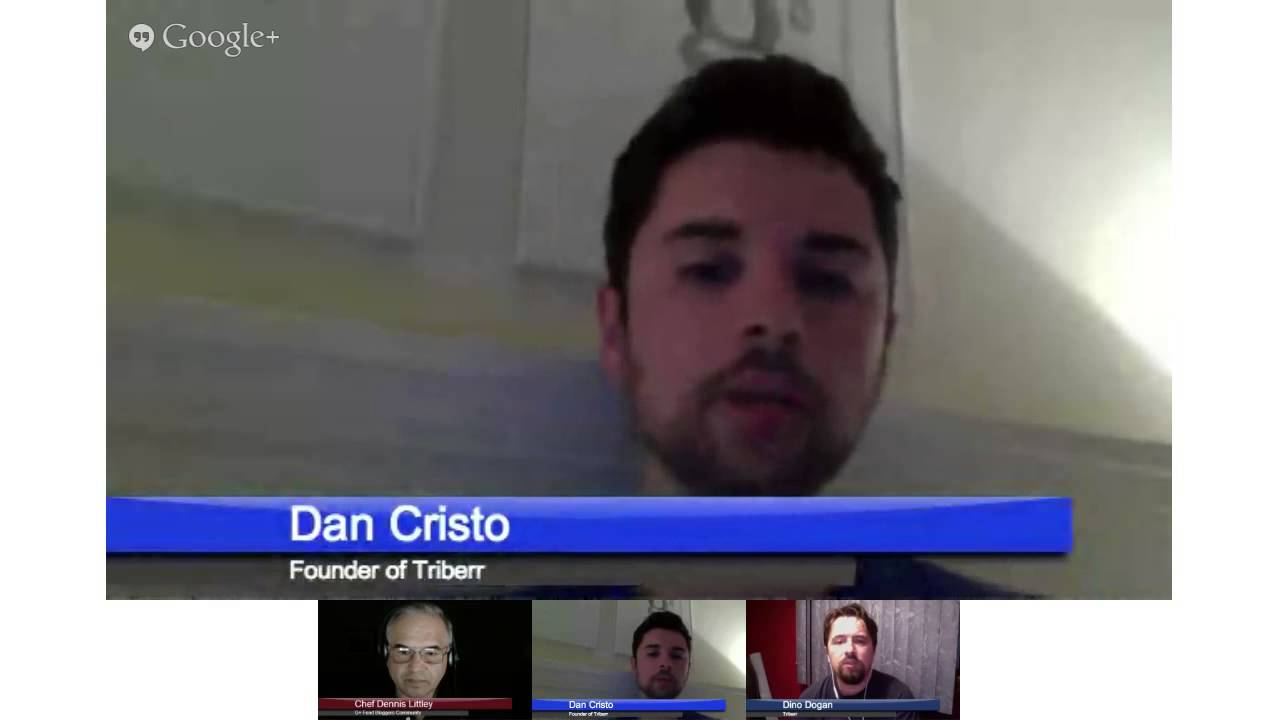
In this live community‑education session hosted by Chef Dennis Littley, Dan Cristo and Dino Dogan walk through the origins, core features, community principles, pricing, and future direction of Triberr, a platform designed to help bloggers build and manage blogging tribes. They explain how Triberr aggregates blog posts into tribal streams, lets members approve and share content to their social networks, and supports live conversations and comment syndication. The founders discuss the two guiding principles—reciprocity and quality—that drive tribe interactions, and outline various tribe‑building strategies (niche, location, event‑based, destination‑based). They introduce premium tiers that lift limits and enable “Atomic Tribes,” a one‑chief‑many‑followers model for businesses and small teams, and describe the WordPress plugin that syncs posts, comments, and reblogging, noting current limitations for Blogger and Disqus. The conversation shifts to monetization, arguing that influence marketing—leveraging shared audiences and influencer campaigns—will replace traditional ad‑driven traffic, and they share predictions about the future of social platforms. Throughout, they answer audience questions about pricing, plugin usage, reblog control, and the status of Triberr as a bootstrapped, founder‑run project.
Chapters
Hi, I'm Chef Dennis Littley, and tonight we're here with a community education event, and we're here to speak with Dan Christou from Triber and his partner Dino Dogan. Dogan, is that how you pronounce it?
Yep.
Okay, great. Is here with him, and he's gonna watch for a while, but he may have something, some input to put into as we go along. So we're gonna turn it right over to Dan. He is going to screen share some things with you. He's gonna talk about Triber and then he's gonna do a little demo. If you have questions, there's a couple ways to do it. Now there should be a question app that you can see in the Hangout, and you can type your question in there and we will see it in here, or you can put it in the comments section underneath the picture. So whatever works for you, and we will do our best to get to your questions. Alright, so let me turn it over to Dan.
Dan, thanks. Thanks, Dennis.
You're welcome.
Alright, so Dennis and I had a chance to meet for the first time at the Food and Wine Conference in Orlando, maybe a weekend or so ago. So it was great meeting a bunch of bloggers, and I did a presentation on SEO, specifically SEO for blogging. And one of the topics that kept on coming up were— was Triberr, because a lot of the bloggers that were at the conference were users of Triberr or heard about Triberr. So Dennis and I were chatting and we said, "Wouldn't it be a great idea to talk a little bit about what Triberr is in case people weren't aware, and if people did know what Triberr was, maybe answer some questions, do a demo?" So I guess we'll start with just a little bit of background and then we'll get into a demo and then we'll do some Q&A type stuff. So Triberr is a website that Dino and I started about 2.5 years ago.— the brainchild, it was Dino's brainchild. Dino, you want to tell a little bit about how you came up with the idea and then maybe how we first started out and we'll get into how it's evolved into what it is today?
Yeah, absolutely. You know, it takes a village. If you want to raise a blog, it's like raising a child, it takes a village. So a few years back, I tried a bunch of different SEO tactics and tried to get traffic and attention to my blog and I had very limited success with it. What actually worked was creating a blogging circle, blogging tribe, and there was about 15 of us in that blogging circle, all of us blogging about a similar topic, and we were commenting on each other's blog posts, we were sharing each other's blog posts, we were in effect each other's audience, and we were sharing an audience with one another, and it was a very manual, very cumbersome method of doing it. So one day Dan came to me— Dan and I used to do podcasts together about SEO and whatnot— and Dan's like, I really want to get more into this blogging thing. And I'm like, great, I'll bring you into this circle of mine But the thing is, it's— there's so much heavy lifting involved going to each blogger's blog, keeping track of who's publishing when. It was just cumbersome. So Dan and I got together and devised this idea of making it as easy as possible, bringing all the blog posts in one spot, being able to share them very easily, being able to comment on them very easily, have all that stuff appear on on the blog and whatnot. And I mean, that's where it started, so I'll shut up now.
Yeah, thank you for that. So originally the idea was Dino had an established community of folks. I had nobody as a new blogger just starting out. Dino invited me into the community, but that means I had to connect with every single person. So when we built Triberr, the idea was to allow anyone to build or join an existing community.. And then within the community, Triberr will do the lifting of importing blog posts, showing it to you, letting you approve what blog posts you want to share on your social network, and then scheduling those blog posts out. So as we'll look at in a second when we do a quick demo, I'm Tribed up with hundreds of bloggers, typically about SEO, marketing, startups, technology, all the topics that I really like.. And whenever any of them posts something, that post appears in my stream for me to read, approve, share, comment. We've got a few other features, but I think now would be a good time to jump into the demo. So let me pull this up and let me know if you guys can see that on my screen.
We can see it.
Okay, perfect. Okay, so before we get to the demo, a quick disclaimer. We had just yesterday released a new version of the interface, and with that came a number of new features, a number of changes to how things work, and whenever you're making big changes to the website, things break, things get moved out of alignment. So as we're walking through the demo, if things don't work exactly right, that's why, because we just had this big upgrade yesterday. But essentially you land on the homepage, And what we'd like you to do is start exploring tribes. So if I go to this business tribe, for example, or this category of business tribes, I can now see different groups of bloggers on Triberr who talk about business. And if I scroll down, you see that there's quite a bit. It's going to automatically load more in there. You see they've got 23 members in this particular tribe. That one's kind of a scary one. To this one, 22 members with a reach of 86,000. So what is, what is reach? Reach is when we tally up all the Twitter followers of all the members, so the combined sum of all these Twitter followers, these 22 people, 86,000. So I can click on this tribe, read a little bit about what the tribe is like, look at the recent posts in the tribe, Click on it, jump to the tribe, see some related tribes, and then if I want, I can follow the tribe. And what following a tribe is going to do is it's going to allow me to enter the, the tribe, the community, and then see the posts of that member. So now I'm not logged in. If I want to follow the tribe, it asks me to join. Now if you're already a member, you can just log in. And here we have a fully created account. So this is my account. And in this middle here are a number of my tribe mates, people that I've joined their group. And I can see the post, and I can click on it and read the post in my stream. And then if I scroll down, I can see the author of the post, I can follow the author, I can share it on the various social networks, visit the website, or I could leave a comment. So I may want to say something like, "Great post," and go from there. So as I say, "Oh, I love this post, it's a great post," I hover over it, I approve it, and that means it's going to go into a queue to share with my Twitter, Facebook, LinkedIn followers. So that's the essential core part of Triberr, and Dino, I'll let you talk a little bit about the reciprocal principles at play when you join a tribe.
Yeah, so we started Triberr on two basic principles: reciprocity and quality. So if you were the kind of person that was writing quality blog posts, you would probably have no problems getting your content shared through Triberr by other people. And when you share other people's content, when other people share yours, you see each other. I can tell that you've shared my content, you can tell that I've shared yours and vice versa. And you know, there's this deep human drive inside of us that when somebody does something nice for you, there's this internal imbalance and you kind of yearn to pay it back, you know, that reciprocal nature of human relationships. So we've tapped into that and it's been really good so far. That's part of the secret sauce. —of Triberr, that reciprocity.
So I love what Triberr has become in that it's more than just a tool to aggregate content and discover content. It actually has turned into a bit of a social network. And this is sort of a valuable lesson, I think, for bloggers, because bloggers are so focused on, how do I get people to come back to my website? And maybe for the moment, I'll just switch back to video view here. Okay, so yeah, blockers, we need to know how do we get people to come back to the website. We've got SEO and we've got social media, and that's great for getting one-time users to visit our website, read our content, but often after reading the content they get up and leave. So what's really important is how do we get them to come back every single day and type in our address and favorite and bookmark our website. And I think the key is you need to create a community. But how do you create that community on your blog? You need to be able to solve problems daily, right? So let's say I've got a problem. I need to know how to cook a particular meal. So that's a problem I face every single day. Well, my wife faces it more than me, but it's a problem we face every single day. So I'm going to be looking for recipes constantly. And if there's a blog that constantly gives me all the information I need, instead of doing a fresh search every single time, I'm going to be going back to this blog every single day or several times a week. And now you've got people that are all going to your blog because you're the expert on food or recipes or whatever that is. And now you've got all these people who are all there interested in the same topic. Let them talk to each other., right? And with that communication, you create a bit of a community. And what I think is difficult with blogs is there's not a lot of ways for people to communicate with each other. They can leave a comment on a post, but that's sort of like, uh, I'm just leaving a remark and then I'm going my way. It's really not live communication. Right. So one of the things that we wanted to sort of tackle— let's get my, uh, demo back up, is we've got all these bloggers, and as they read a post, like if I'm reading this post right here, I can see Dino is actually reading this post as well. So I can have a conversation with him about this particular post. And it's not just leaving a remark, it's actually talking to Dino or whoever else. So if I look at all the comments that are being left on Triberr, I can see there's been a couple of people, 14 minutes ago, 15 minutes ago. So if there's others reading it at the same time, we can have this sort of dialogue, and that's what creates community around content, and that's what we need to start doing on blogs in particular, is how do you let people who are all there on the same topic connect to each other.
Dan? Yes? Let me interject for a second right there.
Sure.
So you hit on a really important issue. Blogs are not really meant to build a community, right? It's no surprise. I mean, blogs were meant to be a publishing platform, not a community building platform. So naturally, it's difficult to build a community on a blog. So what we try to do with Triberr is we're trying to enable bloggers to do exactly that. We make it a community building platform. So live convos, which I think is a revolutionary way of commenting on each other's content, live conversations enable you to see who's talking about stuff right now, and you can join, you can jump into the conversation. And bloggers have always said, I've said it myself, the comments are even more important than content, or at least as important as the content itself. But if that's true, then why are comments subservient to content? Because it's content on top and then comments on the bottom, right? If they're equal in some way, why aren't they side by side? So that's exactly what we did with live conversations. Content is uber important, but creating a conversation around that content, building connections, human relationships around that content is even more important, and that happens through conversations. And real-time conversations is where it's at.
Right, so since we control the Fribur platform, it's easy for us to build new functionality like this, but it's not so easy on blogs. You have to build plugins and you have to tweak things. That's a challenge, but one thing we could do is as we've got this community around each particular post starting to grow, we can actually take this content, these conversations that are happening, and transfer it to the author's blog. A lot of members don't know this because they haven't installed the Triberr plugin, but as you install the Triberr plugin, there's an option to enable Triberr comments.— and if you enable Triberr comments on your blog, any comments made on Triberr also show up on your blog. So it's not— I don't think as a blogger it's quite as good as having the real conversations happening right here, and I hope WordPress or any blogging platform eventually evolves to being able to connect people, visitors, in real time a little bit easier. But for right now, we're helping bridge this gap by sharing this content. Right, so that's the live conversations, which is a new feature. I think it's very exciting. And as I go through and I look at, okay, I've liked this post, and then I can see if I've approved any posts for sharing. Go there. So I've approved one post for sharing. I can see what posts that I've sent recently. So these posts have been sent to my Twitter, Facebook, LinkedIn account. Scroll down. Now, because I'm a Prime member, which means a premium paid member of Triberr, which is— we've got two levels. The most popular one is $10 a month, and then we have a really super user member for $40 a month. Any paid level allows me to put a certain number of Tribemates on auto. So I know Mark Schaefer, right? He always posts great stuff, authoritative blogger. I love reading his stuff, and I don't always— I don't want to miss any of his posts. I always want to make sure I'm sharing it because that's great content for my followers. So what I've done is I've placed Mark on auto mode. So this way I'm automatically sharing his posts every single time without even logging in. Now you have to be careful with any sort of automation, right? Because you don't want to be blindly automating everybody. It's spammy, it's hard to judge quality. Quality. But folks like Dino, folks like Mark, I know that their stuff is always relevant, always quality, and I want to always be sharing it. So with some automated features, I can save a lot of time, make sure I'm giving quality content to my followers. And then I can look at my own posts, and I can see, okay, so here's a recent post posted, uh, 2 days ago. How much traffic and shares am I getting. So right here I can see that 80 people have shared this post. So these are tribemates, people in my tribes that I've connected with. There's 583 people who my post is sitting in their stream, in their tribal stream we call it, and then 3 people who said, this isn't right for my audience, not feeling it, not going to share it. If I scroll down, I can look at the actual number of clicks. To my post from Triberr. I can see this, and then I can hide this, of course, and look at one of my more recent ones. Now, this post has a great photo, which if you see this in your stream, it's going to grab your attention, it's going to pique your curiosity, and you're more likely to share it. So if you install our WordPress plugin, if you have a self-hosted WordPress account, your photos will also be imported into the post. This way people can actually see the post with the photo installed. Then of course this is going to bump up my share rate and my click-through rate. So if I scroll down, all these people shared my posts. Ooh, right there. So I can see how many clicks this is driving to my, my post. So I'm not a big blogger. I blog maybe once a month, maybe twice a month. And in order to keep my audience interested in content that I don't have time to create, I may decide to reblog. And reblog is a great feature which I won't get into now. I'll just talk about it. But it essentially allows you to take this entire post in its entirety and send it to your blog's draft folder. With the author bio in there with a link back to the original post. And it's basically syndicating content. So if you look at Mashable or Huffington Post, they post 15, 20 times a day. And pushing out all that content gives their visitors something to read, gives search engines something to crawl, and it's just a great way of driving traffic. Who can write 15, posts a day. Instead, Huffington Post, Mashable, they all syndicate content from each other. You'll often see, "This post was originally published on," and then give a link back. So we've actually created a syndication process through WordPress blogs. So if I like a post, I can click it to reblog it. It will send the entire post once again to my drafts folder where I can add my commentary and then republish it. That's the new tribal stream. If I jump to my tribes, you can see how I've got my tribes set up. I think I'm in about 30 tribes. Apologies for this loading a little slowly. See if we can edit it. I've got about 30 tribes, a couple hundred tribemates, and most of my tribemates are focused around topics.. So you'll see a lot of social media, a lot of SEO. So I've got a lot of— this is social, SEO, we've got some social media, marketing, digital marketing, etc. And if I jump into one of these tribes— now I can see a conversation happening. Oh, let me know. It's loaded for me. Yeah.
Is it not showing for you guys? Dennis, can you see— no?
Yeah, it's a blank screen. It's not loading. Yep.
All right, let me switch off screenshots. I think my computer is getting a little hot from all this video action. Can you guys see me? Yeah. I can see you.
Yep.
Okay, you can see me? Okay, good. So I'll talk a little bit about tribes. Essentially, there's a few different sections of tribe. There's an area where you can chat with other tribe mates, just sort of like a Facebook group. There's an area where you can view their most recent posts and you can go in and approve it. And then an area where you can manage the community. So you've got two options with the tribe. You can either be a chief of a tribe, create your own tribe, invite your own people, or you could join an existing tribe. As a chief of a tribe, you have the right to boot people out of your tribe, invite people into your tribe, and set the rules. So you may decide this tribe is going to be just about social media, and only people with a certain amount of following, only people who talk about specific topics are allowed in., and in order to stay in, you need to be active and share other people's posts. Or you could have a more lax tribe and just say, I'm looking for people who are in my local area, or I'm looking for people who share several interests, and you don't necessarily have to approve every post, or you don't have to approve more than once a month. Whatever the rules are, you get to control it. And Dino, do you want to talk for a moment about just some of the more popular tribe-building strategies?
Well, so the niche tribe building strategy is the most obvious one. I talk about SEO, you talk about SEO, let's build a tribe together. The location one that you mentioned is a great tribe strategy. When I lived in Tucson, I had a Tucson tribe, and it had a real estate blogger in there, restaurant blogger, I was in there blogging about social media and marketing type of crap. There was an IT guy who was doing like Windows issues and whatnot, so they were all blogging about different topics, but it was all Tucson related. So location-based tribes is one of my favorites. Event-based tribes are great. So when I go to an event, I will build a tribe either prior to event, so I'm speaking at NMX in January, BlogWorld, plug, plug, plug. And I've already started building a tribe of NMX speakers, so we get to know one another as speakers, so we can kind of, you know, come prepared and know about each other before we actually meet face-to-face. We get to promote each other's content, and between now and January I'm sure all of us who are speaking at NMX will have blog posts about, you know, NMX event. So, you know, when those types of blog posts come up, I will definitely make sure I always share that stuff because I want people to come to NMX. So that's like an event-based tribe. Destination-based tribe is a great strategy. So most of our tribes are Twitter-based. That Twitter being the destination network, but you can build a Facebook tribe or a LinkedIn tribe. So Facebook tribe would probably be a little bit more smaller, it would be smaller, it would be a little more trustworthy. I wouldn't publish or post to my Facebook wall as often as I would to Twitter. If it's a LinkedIn-based tribe I would probably stick to businessy type topics. So there's a slew of tribe building strategies, and you really kind of think through what you want to achieve and build a tribe around that.
So let me talk for a moment about tribes, because this makes or breaks Triberr, as you could imagine from the name. A lot of people get on Triberr, and they connect with the wrong tribes, or they don't connect with any tribes, and their content doesn't get shared, there's no engagement, it feels dead, is anyone on this website, and it's not working for them. And then they hear or they read about other bloggers who are just crushing it, they're getting tons of traffic, they're connecting like crazy, and it's working really well. And the difference is the tribes that they've joined. Yep. Right? Triberr is not so much a tool for reading and sharing and syndicating content. It's more a social network, right? So the stronger your network and the stronger your support system, the better your results are going to be. So you really need to try some tribes out, see if the content's relevant, see if the community's active and you like the people in the tribe. Because once you connect with people on like a personal, I know your name, I recognize your face level,— then you start to really say, wow, I'm going to take the time to really read the post and leave an insightful comment and edit the post title before I share it out with a little bit of a comment and insight. And you doing all that extra effort for people who you know, it makes them want to do the same extra effort for you as well. Right, so it's that deep connection that makes people move. Triberr is just a platform to facilitate this.— it's the people who have to go and make the connections. So Triberr is really a system where you have to be bold and get in the community of— it's like a party and you're in the room and you need to go make some connections and network. And if you're able to successfully network, like Dennis and I, the reason we're having this chat is because we sat next to each other and we talked and we shared contact information. That's what you need to do on Triberr to make it work for you. So there's a great way of doing it.
Dan, what was our tagline originally when we— when you go into your tribe, what was the thing, the message that we left in the tribe council? What was it? Do you remember? We don't have it anymore. This was like in the beginning. It was, "Choose your tribemates wisely." Ah, yeah.
Strippen. Yeah, so. So if you're new to a party, how do you go and meet people, right? Normally you're just going to observe a little bit, see who's talking about what, see what the groups are. And that's what we built in the Triberr. So we built this concept of following a tribe. So you can explore tribes, follow a tribe, and get a feel for the type of content and the type of people. When you're a follower of a tribe, You're seeing everyone else's content in your stream, but they're not seeing your content. So it's very one-way, but it's a great way to get into the door and meet people and talk to the chief and get to know them. And as the, as the chief sees that you're sharing content, then the chief will promote you. And once you're a full member, not just a follower, then your content will show up for everyone else in the tribe. So now that you're a full member of the tribe, everyone's seeing your content. The key then is to let people— is to help people recognize your face in the tribal stream so that it's not just reading headline after headline after headline. We're automatically going to look at the author's face. And I wish I could bring up my screen sharing again, but I don't think Google+ is having it. But anyway, when you see someone's face in the stream, you're going to say, "I know them, I trust them, I'll either read their stuff, I'll share their stuff, or I'll comment on it." That intimacy, that trust is what helps people make action, take action and share your content. So if you're not actively on Triberr and you're not commenting, because when you comment the author receives an email. And says, Dan commented on your post, would you like to talk to him back? That's how you get your name in there, it's how you get your face recognizable. When you leave a comment in the tribe, everyone in the tribe gets an email with your face and you can have a conversation with them. Once they recognize who you are, then you start to see your shares skyrocket. So I think it's a bit of a mentality change for a lot of people who says, oh well, I heard you could drive a ton of traffic through Triberr. Yes, but the traffic is from the networking. The networking that you do. It's not from the tool itself just churning out traffic. So that's essentially tribes and how they work. And we'll get into one last area, which I'll just speak to because again screen sharing is not working, and that's the bonfires. And the bonfires are our global site forum where you can go and you can browse different topics. You could try to connect with people to change— exchange guest posts. You can ask questions about how Triberr works. You can recruit other people into your tribe. It's just an active place where you can talk with other members and connect. So your very first spot on Triberr, once you find a few tribes to follow, is to head over to the bonfires and start connecting with people in a forum type of world. Figure out how the site works, who's who on the site, what tribes are good, what tribes are relevant., any tips on the site people will share. Get your name out there and that will help you get into the better tribes, which will eventually lead to more traffic for you. Dennis, I think that was a pretty extensive 360 view of Triberr. What sort of questions or what things didn't we cover?
Well, we have a few questions and the first one from Kim Pebbley was, she wanted to know, is Triberr a free service? You mentioned that you had some pay options., but is it free?
Yeah, so I think we've been pretty generous in terms of the functionality that we give away for free. You can essentially build a massive tribe, um, a tribe network, get tons of traffic for absolutely free. Uh, there are paid options, I mentioned a $10 a month and a $40 a month. So there's two things that the paid auctions do.
We're losing you a little, Dan.
In terms of tribe size.
Dennis, can you hear me okay?
I can hear you okay. Dan, we're losing you, you're fading in and out.
Yeah, Dan froze. Let me fill in while Dan is unfreezing. Okay. So yes, Triberr is free. There is a premium version that does two things. Which is what Dennis is about to say.
Dennis, do you want to jump in with some more details?
Well, I did because you froze a while back. I don't know if you can hear me. But yeah, so it lifts certain limits. So like, for example, we have a limit of 14 posts per week. So Triberr will import up to 14 of your posts, right? Which is not a limit for a singular blogger at all, right? So if you publish a whole bunch, then you may want to go premium so that you can import additional posts as well. Dan, did you unfreeze?
Yeah, he's back.
I don't know, am I unfrozen? Yeah, you're back.
Alright. Yeah, looks like you're back. So I picked up on your two points that are given to premium members. One is The Lifting of Limits, and what was the other one you were going to say there?
So the other one I want to talk about is Atomic Tribe, and the Atomic Tribe— uh-oh.
You there?
Alright, I'll pick it up again. Okay. He's gone. Atomic Tribes are awesome, and there's so many different ways to cover Atomic Tribes. Dan, say something so we can see Atomic Tribes. Okay, good, good, good, good. Go ahead, you do Atomic Tribes.
I love that you're there to get my back when I need it.
Yeah, yeah, yeah, I'm happy he's here too.
Alright, so Atomic Tribes, right? The idea behind Atomic Tribes is we wanted to create a solution for professional bloggers, for small businesses that want to use their co-workers to share their content. Or any sort of family members or friends or followers that you have built already. So we built an Atomic Tribe because the typical tribe is everyone sharing everyone's content, which is great for a group of bloggers, but it's not so great for a group of non-bloggers like coworkers or family members. With that sort of setup, what we wanted to do is we wanted to say, let's create a tribe where there's only one chief, one chief and many followers. And, uh, for example, let's say the chief is a marketing guy in a company and they've got many coworkers or many employees. And then anytime the marketing guy posts on their blog, then all the coworkers who have joined this Atomic Tribe can automatically send it out. So they're not sharing each other's content, they're just sharing one individual, which is the chief. And we've set the limit at 500, I think. For the Atomic Tribe. So you can have 500 people and they can come in from your own blog that they say, oh, I like their content, I want to share the content, I want to get an email notification whenever you post. And then they join your Atomic Tribe and they can only share your content. They can do it manually or they can flip it on auto mode and do it automatically. So power users of Triberr who are getting 300, 400, 500 shares per post from Triberr, they're using Atomic Tribes and they're funneling their readers from their blog into their Atomic Tribe. It's set on auto mode, every time the post is created, those 500 people, um, resend the post without even having to log in. Of course they have control and it's staggered throughout the day so it's not like a blast of 500 tweets, it's all set up very naturally. So that's a great powerful tool that a lot of power members are using and a lot of new members they don't know about because we don't really push it. It's just sort of this secret underlying nuclear bomb. It's true.
Let me add something to that. So the reason we created Atomic Tribes is we looked at the existing methods that bloggers use to get their posts out there. So there's RSS, which is a red-headed stepchild of the blogosphere. RSS— everyone's just mistreating RSS. There's email marketing, which is great for marketers, but regular bloggers, people just want to write, the creative types who just want to create content, email marketing is a nightmare, right? And then there's Facebook groups. You work really hard to bring people into your Facebook fan page, and then 17% of your fans see when you post content there, right? So there's all these problems with RSS, with email marketing, with Facebook fan pages, and we looked at that stuff and we asked ourselves, can we create something that solves all three of these problems? And the answer is Atomic Tribes. So with Facebook fan pages, you know, you get your fans and you work hard and only 17% of them see it. And the 17% that see it are endpoints, right? With Atomic Tribes, yes, there's onboarding costs because people have to join your Atomic Tribe, connect their Twitter, Facebook, LinkedIn, whatever, right? But once they're in your Atomic Tribe, they are both your endpoints and your broadcast points. They will receive an email every time you publish a blog post, just like RSS, right? But they also automatically frictionlessly share your content to Twitter, Facebook, LinkedIn, right? And as a blogger, I can go into the conversations area for the tribe., and I can do some casual conversation with the members of my Atomic Tribe. I don't have to do like, you know, this sleazy email marketing, buy my junk. I can, you know, socialize with the members of my Atomic Tribe, and every time you leave a message in the conversations area, everyone in the tribe gets an email, they can reply back and so on. So with these Atomic Tribes, we looked at the problems with RSS, Facebook fan pages, and email marketing, and we try to create a singular solution that addresses all the bad points of the other three.
Sounds good. Okay, we have another question here from Amy Campbell, and she wants to know, does Triberr plan to extend the plugins and photo abilities to Blogger, or is it just for WordPress right now?
It's just for WordPress, and it's just for self-hosted WordPress. And to answer your question, no, we don't plan on extending it. Not because we don't want to. We actually really, really want to. But it's just how Blogger is set up. Blogger doesn't have a plugin system. They've got these things called widgets. And there's no— well, it's called an API, right? Sort of underneath functionality in order to send information back and forth. And WordPress has that API that we can build a plugin and send blog posts and comments back and forth. Blogger doesn't have that, and they don't have support for that. And there's really no other major blogging platforms that have it. Even WordPress.com, they have some plugins, but you can't just build your own plugin. So unfortunately, we're limited in that respect. So no, right now.
Stephanie Manley had asked, does this work with Disqus?
Oh, Disqus? Disqus, I'm sorry. Yeah, okay, great question. I think you're talking about the Triberr commenting system and comments on Triberr syndicated. So right now it doesn't, but we are building a brand new version of the Triberr plugin comment system, and when that rolls out instead of having our own comments in our own plugin, we're actually going to feed into WordPress's native comment system. So whether or not you use our interface, you're still going to be able to see the comments. Plus, that— those comments, those native comments can be imported into Disqus. And Disqus has an API that we're looking at using. So there is a lot of work on our side on our commenting plugin. We think it's really important. And what we built, which is now almost 8 months old, um, is not nearly where we want it to be. And we want to integrate, and we want to really build it out. But there's been so many big things happening on Triberr, and the commenting system and plugin has been relatively stable that we haven't addressed it. So for example, we're building a mobile application both for iPhone and Android, which is going to be released in a few weeks. So there's been a lot of emphasis on that. In order to build a mobile application, we need to build our own API, which took a lot of our resources and energy. So it's just fallen a little bit lower on the list, but soon.
Okay, sounds good. I have a question here from Cindy Kirschner, and she wants to know— she says she loves Triberr and she has Triberr comment on her blog, but if Triberr shows the whole imported post— what is the incentive for anyone to visit the blog to read and comment? And she says she all need traffic to their blog.
Yeah, yeah, great question, and something we've thought a lot about, and I'm sure, Dino, you've got something to chime in. But the idea here in showing the entire post is to encourage tribemates to share, because going— clicking off the post into a brand new window opening up, loading the page, maybe it has ads, maybe it has bunch of other widgets that slow it down, people are less likely to read the post. And if they're not reading the post, they're less likely to share the post. So the idea in having the read pane is to let users read the content and understand what type of content you write and trust your content without having to go to every single person's page. So fast loading, easy reading, is going to encourage sharing, because sharing on the social networks is where you're going to get your traffic. If you have 100 Tribemates and 100 of them click through and read your post, big deal, 100 visits. Wouldn't it be better for those 100 Tribemates to share your post and hit their 2,000 fans each? That's the idea. And Dino, I don't know if you have anything you want to add there. I do, I do.
The reason we built it that way is because we have this belief, and the belief that we have is that there are two classes of citizens online. There are content creators and content consumers. And content consumers and content creators, there's a lot of overlap. Content creators are some of the most, you know, they consume most of the content, but we wanted to create a distinction between the two. And the content creators are your tribemates, right? It's very much analogous to being on stage. Your blog is your stage. You are an actor on this stage. Your tribemates are your acting troupe. They are acting with you, right? So the idea is to show your tribemates the entire post, have them engage. With your post, read it, comment on it, share it, and they're sharing it with the audience. So you and your tribemates are putting on a show for the audience, and we want to make it as easy as possible for that to happen. I hope that makes sense. Oh yeah.
And I also want to add one thing, and we're sort of getting into a different sort of topic with this, but the reason bloggers want traffic to your website is you want brand awareness, you want basically monetization, you want to be able to monetize that traffic whether it's showing ads or affiliate links or whatever that is. You need that audience there. And what we want to do on Triberr is we want to give you all of that but in a new way. And I'm going to talk for a moment about influencer marketing. Woo! So this is a really big push, and we're just getting ready to roll out some massive influencer marketing campaigns with a number of big brands. You're going to start to see some new functionality roll out on Triberr to allow you to find campaigns, participate in campaigns, and get paid for your influence. Because Dino and I, we really hate the concept of having to show ads to make money. That to me is a flawed methodology. It's flawed for a number of ways I won't get into, but it just doesn't feel good to have to show a banner ad or something to your visitor. But instead, bloggers specifically have gained a lot of influence and authority and trust, and that's what we want to help monetize. So we have these relationships with agencies who are taking brands and they're bringing them to Triberr and they're saying, why don't you find some bloggers who like to talk about food, for example? Get them to try your ingredient or get them to go to this event, whatever it is, do something and pay them for their time. And we're not talking $20 for a post, we're talking $300, $400, $500 for an experience that you get to go to, to write a review and talk about this on your networks. So we think that we want a really big push into influencer marketing. We think that's the future of monetization for bloggers. And Triberr is uniquely set up because we help bloggers become more influential. So it's not just you trying to get an audience to your blog, it's you being able to tap into the audiences of your tribemates and their social networks, and you amassing a following on Triberr of people who will read your content and share your content. That's extremely powerful and extremely valuable for these brands. So now that you know that, um, we're moving into influencer marketing, we think it's a huge opportunity, and we're trying to help bloggers monetize their influence, it makes it less important that you get traffic to your website to view ads and more important that you have an audience of people you can talk to. And that's why we're building all these ways where people can follow you on Triberr and follow your blog and follow your tribe and automatically share stuff so you can talk to their audience. It's about the people, not about the traffic going to a specific place. So as long as we help you own the audience, whether some of them are on Triberr, some of them on your social networks, some of them are other people's audiences or blogs, you own the audience— you have the influence and the right to talk to those people and you can make some real money with that. So that's where we're going. That sounds good.
Glad we are talking about that. Okay, we have a question here from Betsy Cohen and she wants to know, when someone posts a comment on Triberr and the plugin has been added to their blog, does that automatically get posted to their blog? And I think you said that but only with WordPress or—
If you have WordPress and you have the WordPress plugin installed, you need to enable comments. There's a, an option in the plugin to enable our commenting system. That commenting system will show up underneath the blog post right where Discuss or whoever typically shows. And then those comments will be syndicated. So any comments left on Triberr will show up on your blog. Any comments left on your blog will show up on Triberr. Any comments left in a reblog post on someone else's blog will show up on your blog and Triberr. You're all sharing the comments. So this way I could reblog a post that has 30 comments, and all of a sudden that post keeps those 30 comments real-time, up-to-date.
That's truly magical. You know, Dan is totally underplaying it. Triberr is the only platform that can do this. No other platform syndicates comments. You know, Huffington Post will take your content and syndicate the content itself, but if you have your post on your blog and Huffington Post has your post on Huffington Post, the comments will be completely separate, right? It's a set of comments on one side, set of comments on the other. What we do, we bring everything together, everything's syndicated, the content, the authorship goes along with the post and the comments are syndicated as well. So they're visible everywhere. It's huge, it's like magic. I mean, as a blogger, I love that.
Okay, let's go on. Betsy had another question too. She says, are bloggers posting their blog posts onto Triberr, or is the thought that the posts on Triberr should differ from what is being posted on other sites like Facebook or Google. So is it unique content for Triberr or is it the same content?
It's the same content that shows up on your post. So when you sign up for Triberr, you tell Triberr where your RSS feed is or you install our plugin. As soon as you post on your blog, Triberr will suck in that post and will make it available to other Tribemates to share.
I think it's a reframing that's going on, right? So all other social platforms, you write on the Facebook wall or you compose a tweet or you write in Gmail, G+ or whatever, right? And then you can also post a link to your blog post, right? So this posting a link to your blog post is kind of a secondary function for all of these other sites. Triberr is built for from the ground up for bloggers. So posting your blog post on Triberr is the primary function of Triberr. And in fact, you don't even have to do it, we import it automatically and post it, right. So there is no place in Triberr right now where you go and— actually, that's not fair, you can do it in Tribe Council and like conversation where you can just write stuff. And in Bonfires. So I guess you could just write stuff on Triberr, but the primary function of Triberr is to post your blog content there, and you don't even have to post it. We import it, you know, we'll let the system import it.
Okay, and then the philosophy behind that, us putting it up there, is that it's going to get shared so many more times that the few hits we would have gotten from that are don't compare to the benefit, overall benefit of it. Exactly. Okay, Kim Pebly wants to know, she goes, if I'm understanding this correctly, it's free to become a follower to existing tribes but not to begin your own tribe, especially an Atomic Tribe. Is that correct?
So it's close. You can create your own tribe. I think you can create 3 tribes for free, and each of those tribes can have up to 30 members.. So you can be, have 90 members of your own tribes, plus I think you can join up to 10 tribes, other people's tribes for free, and they could each have 30, or if the chief is a Prime member, I think 50 or 75, right? So now you're looking at a couple hundred people that you can connect with, that can be sharing your content for free. Yeah, like I said before, I think we're pretty generous. We didn't add the Prime features until later, like a year, over a year into it, because we had to pay for the server's costing. So we don't really want to monetize from bloggers at all. You just help keep the lights on. What we're really trying to do is bring brands into the picture, helping the bloggers monetize through influence, and then we'll take a cut of that so we can actually build a business off this as well.
Makes sense. Okay, Cindy Kirschner, is the email that Atomic Tribes sends to— sends set up like your post? And she's talking about like she sends out her email newsletters and stuff and it just has a small portion of the post, or are you sending out the whole post?
Yeah, so we talked about having a small portion of the post. At the end of the day, we decided for Atomic Tribes to send the entire post. Here's why. That post is automatically being shared unless you flip it to manual mode. So there's really no worry about someone just consuming the content and doing nothing else. They've already agreed to share the post. The reason why we're sending the entire post is because they, they may want to read the post and then go to Triberr and say, no, I don't really want to share that, or they may want to go to the blog and look at the images because we're not sending any of the images, or they may just prefer reading it on the blog. So we do send the entire post because most of the people who are in Atomic Tribes are not Triberr members, so they're not going to the Tribal Stream and reading the post in there, and they're not visiting the blog anyway. So it's, it's almost like an email subscription where you've added Send the entire post as opposed to— Right. Okay.
It's just that again, it's going back to that philosophy is that they're going to share it, so you're going to gain more from that, those few people that are those, even if it was 1,000 people, if you have, if you're lucky enough to have 1,000 people, they're going to share it so many more times it's going to come back to you tenfold.
So yes, but here's what I want to add to that. Why do bloggers guest post? On, let's say, Huffington Post, why wouldn't I just keep the content on my blog and have users come there? Because sometimes there's more value to be gained from brand recognition than there is from direct traffic, right? So when you have an atomic tribe or you have followers and they're reading your content, it's just like you're guest posting on Huffington Post, except you're not having to create new content. It's still your audience. You're just not able to monetize it through ads typically, but you're able to monetize it through influence. See, that's the key. If I have 1,000 followers and they're all seeing my post via email and they're reading it, that's still influence I can monetize, as opposed to forcing them to come to my blog so they can read ads. That's where I really want to push the mindset shift of monetizing influence, where now your readers are on Twitter and Facebook and Triberr and following your blog and your RSS feed. That's your sphere of influence. It's much easier and much more valuable to monetize that than actual ads.
And allow me to pile on, traffic is a cost center. We keep forgetting that, right? Traffic costs bandwidth, it costs server resources, it's opportunity cost at every corner. Traffic is a cost center. The reason bloggers have learned to seek traffic is because big blogs monetize through ads, and if you monetize through ads, then traffic is everything, right? But most bloggers don't monetize through ads, so who cares about traffic? The point of traffic is the attention. Right, if you can get all the attention in the world with zero traffic, would you take it? I know I would. Oprah does, right. Oprah used to shoot her TV show in Chicago and the TV station would get a fraction of the overall traffic because the show would get syndicated across hundreds of TV stations across the world, right? Oprah didn't see traffic, but her brand was registered, her influence was felt on the viewer. So it's not traffic that bloggers need, it's the attention, and that's what we're trying to build.
Okay, I think that's going to be a hard sell with some bloggers because a lot of bloggers, especially food bloggers anyway. I'm not talking about bloggers in general, but food bloggers were kind of a different animal sometimes, I think. How so? And the ads are really what drives— and there's a lot of very successful bloggers making a good living off of the ads. But again, you're saying, and I understand, if you increase your influence, that's only going to still bring more to you. —so it might be the best of both worlds if we can work it. While we're on that, I had a question. We're talking about reblogging, and this is always a sore point with food bloggers. I understand the concept, but with food bloggers, we have people sometimes that just steal our content, put our recipes, put our pictures up. We've lately been seeing some people reblogging, kind of doing the same thing where they're not really doing doing anything and they're just republishing ours. How is this going to differ with Triberr, like a reblogging?
So I think with reblogging, it's important to note that you guys have control over whether your content gets reblogged or not. You can just go in your settings, disable reblogging for an entire blog you have connected or for a specific post you have connected. So it's on by default, but you can of course of course, turn it off. So that's the first step. I think the real question with reblogging comes down to what are you trying to achieve, right? If your content is syndicated on other people's platforms, you get the brand awareness. You get a link back to your website. And brand awareness, link back to your website. Yeah. Right? So there are some benefits to that. And what do you lose from that? You lose the uniqueness of having your post, right? Because now your post is also on other people's blogs. But with that, you've actually gained a new audience, people who can come to your website, who recognize who you are, who may search for your name now or other recipes or SEO-related posts. So there's certainly a trade-off, and it's not going to work for every blogger, but what I've found is that blog posts are a lot like knowledge, right? If I've got a special way of doing SEO, a secret that nobody but me knows about, I may benefit from keeping that a secret a little bit. I could rank my clients a little bit higher. But if I give that secret away for free, everyone who, who learns that now sees me as an authority and an expert. And is going to invite me to do speaking gigs and talk about their secret on Google Hangouts and write books about the secret and new stuff and going to start following me and paying attention. So you're gaining a whole lot more in the SEO space by giving away your knowledge for free and earning people's trust. And that's what reblogging is. And you could do it the other way and reblog other people's content, which is exactly the same as guest posting, but it's not unique. Syndicated. So you have to make the decision for yourself whether the trade-off makes sense for you, and if it doesn't, you can disable it.
And that's just something you would do within your tribe as well?
You would do it on a blog level and a post level, not a tribe level. So you go to account settings, edit your blog, and you can disable reblogging from there, or on the post level.
So I mean, other people that aren't in your tribe could reblog you? Is what you're saying?
If you disable it, no one can reblog you. If you enable it, anyone can reblog you.
Okay, gotcha. Which in the case of food bloggers, if it's an SEO blog or something like that, we may gain a whole new audience, so it might be a good thing to have someone in a different venue, you know, decided that they wanted to share our fudge brownies, send forth, so, because everybody eats. Okay. We have a question here from Betsy, wants to know where can she find the plugin on your site for WordPress.
So if you just— there's a couple different ways of doing it. One, you could go to Google and search for Triberr WordPress plugin. Two, you could go to WordPress in your admin area, add a plugin and just put Triberr in there. Or three, you can go to Triberr in your settings. Account Settings, and then you could go to your blog and there will be a link to go to the plugin. Now one thing to keep in mind with the plugin, the way we're able to transfer information to and from a blog is that once you install the Triberr plugin, it's going to ask you for what's called a blog token. You're going to have to go back to Triberr, your account area, grab that, it's like a 35-character random string, grab that code and post it in your plugin settings in order to get it to work. Once we have that, then everything works.
Geeky. Okay. Let's see, Betsy Cohen again, she says, "Do our posts automatically go to all of our tribes that you're members of?" Yes, they do, but you have to set it up.
The way it works is you connect your blog to tribes. And then let's say you've got 10 tribes, you'll need to assign that blog you connected to all 10 tribes. Or you could only assign it to 5 tribes. If you have a second blog, maybe you want to assign that second blog to the other 5 tribes. So you get manual control over which tribes see your blog, but you'll have to assign it the first time. Okay.
All right, Cindy Kirschner, she was saying with her comment about the visits. She was talking about unique visits, clicks unique visits, not about ranking numbers. So that's where her concern was. Mm-hmm. Because a lot of times we get asked, you know, what are your unique visits, and if it's going to drop them, that's where she was going.
Yeah, yeah, it's a good point. And certainly as a blogger and anyone, you should be very careful about your traffic, where you're getting traffic from, and making sure you're not losing traffic. So I definitely understand that, and as a prediction, I really think that the industry, the ad industry, is moving towards influencer marketing. And all this talk about clout scores, it's going to be less about how much traffic you get and more about what your influencer measurement is. And here's why. Let's say you get a ton of traffic to your website, and I want to show an ad on that traffic, only a small portion are going to click from your website to my website, and only a smaller portion are going to actually order something. Now instead, what if you were an expert, a highly influential person on food, and you endorsed my product so that everyone that came to your website knows about my product, knows where to buy my product, and knows that you endorse it? That's going to generate a higher purchase intent than clicking through an ad. So what brands are starting to see, and I know this because I work in an agency, we work with Procter Gamble and all the big brands you could think of, they care about sales. They don't care about traffic at all. And if you're able to change purchase behavior with influence more so than ads, that's more valuable. While brands and businesses are asking, "What's your unique visits today?" Tomorrow they're going to be asking, "What's your Klout score? What's your reach? What's your following?" Those are the questions that really matter, and that's where we think we can really be influential. We do get a lot of those questions.
We get the unique visitor thing, but a lot of people now are asking, you know, What is your— how many followers on Facebook? What is your following on Twitter? Now Instagram is becoming part of the equation because they're using Instagram more. The problem I think with food bloggers too is now we're not working directly with brands as much as we might like to, whereas PR agencies are doing the— they're the middlemen. And a lot of times PR agencies, they're just locked into what they know because they've got X amount of resources, they have X amount of dollars, they can't just hire new people to dive into new areas, which is one of the reasons they don't do Google+ is because right now they don't need it. It's not broke, don't fix it kind of an attitude. It's going to cost them more. You think, like you're saying now, you think the industry is going to change into this, and I agree with you. I think because ads really, whoever really clicks on them, I mean honestly.
Dennis, consider this, right, 100 years ago, how did newspapers and magazines monetize their content? Ads. How does Google, Twitter, and Facebook monetize their platform today? Ads. Are you telling me that as technology evolved over the last 100 or so years, we can't evolve the way we think about content monetization? Monetization or platform monetization? I refuse to accept that. There has to be a better way, and the better way is influence marketing.
Let me share something with you guys. So I work for an agency, I've been doing SEO professionally for 11 years now. My job is to study patents that Google, primarily Google, Microsoft, Facebook release. To see what they're going to do. And I recently came across a patent that explains how Google's going to roll out advertising on Google+. And it's not going to be AdWords, where you have a little text-based ad and you basically— agencies bid on a keyword, pay $5 a keyword to get that ad to show next to people who are searching. You know how they're going to roll it out? They're rolling it out based on influence. So instead of bidding $5 on a keyword, instead you're bidding $5 for the most influential person on food, and that's why— who your ad is going to show to, the more influential people. And the reason why you bid on influence is because you're actually paying for them to rebroadcast your ad to their following, and Google is going to give those influencers a revenue share for rebroadcasting those ads. So if anyone thinks that, oh, I should be driving traffic to my blog so I can monetize off ads, that's the exact opposite direction of where the industry is going. It's going towards influential people who can rebroadcast messages, creative content, ads, videos, images to their following. Whether that following is on Google+, Facebook, Twitter, Triberr, you name it. So we're at a turning point right now, and whoever is able to look a little bit forward to see where the industry is going wins. And that's exactly why I have a job, is to be able to look at those patterns and tell where the future is going.
Makes sense. You can see just from what Google is doing and the changes they're making with authorship and making us into experts, and everything you're saying, trust. The trust factor, building us into the experts in our field so we have the influence. Just a major influencer can do more for someone than someone who doesn't have the following. So yeah, they're pushing everything towards us. I can see where you're going with this and I agree, and I would love to see it that way personally because I hate seeing the ads on my pages. I know, right? In fact, they're done. I took them off for a while. I just got tired of it. But that would be great. I would love to see that happen.
Since we're sharing geekery, thank you, Dan, by the way. Thank you for talking about patents. I'm always at the edge of my seat when you talk about patents. But here's an interesting piece of trivia. What is the highest-selling Nike shoe of all time? Air Jordans. Air Jordans, why? Because of Michael Jordan. Be like Mike. Yeah, be like Mike. The brand ambassadorship model that Nike and Michael Jordan developed to sell this product and whatever is the kind of brand ambassadorship that we're building between brands and bloggers on Triberr. It's the same model. It's not sponsored posts, it's not product reviews, it's genuine and enthusiastic congruent representation of the brand and the blogger.
Okay, great. While I've got you guys here too, and this seems to be something that you really deal with, what do you think the future of Facebook is? I mean, we're always hear more about it. They seem to be shooting themselves in the foot every time they turn around. So I mean, you guys have any insights on that, or where do you think it's going?
Well, we love to speculate. So do I, but mine is going the other way. I will say this, Dan predicted 2 years before anybody else the Facebook takeover of search. There's a podcast on my blog where Dan and I talked about Facebook search and how that's going to impact the whole shebang, and Dan called it about 2 years before it actually happened.
Yeah, so definitely 2 years ago I thought Facebook was in a 5-year death spiral if they didn't do 2 things. If they stayed just a social network, they would fail. They had to do two things in order to succeed. This was two years ago. They had to create a search engine, and they had to create a mobile phone or mobile operating system. And they attempted to do both. I think they floundered pretty badly, but at least that's the direction they know they needed to go. So if they're able to do those two things well, mobile operating system and a search engine, then I think they've got a a bright future. If they stay a social network, I think they're going to be gone in probably 5 to 7 years.
Or go the way of— what was that other one? I can't remember.
Oh, I see. So many. Yeah.
Do they actually have a search engine?
They do. It's called Graph Search. Essentially, you can search your previous actions, things you like, places., and they're going to invest a lot of time and money to build it out. And when they do, if it gets good, that's the only real competitor to Google that could actually mount a challenge. But they're pretty far away from that right now.
My personal belief is, um, all empires have one thing in common: they've all failed. Middle East is a graveyard of fallen empires, and so is the internet, right? Yahoo was a dominant search engine, now it's not. MySpace was a dominant social network before Friendster, now they're not, right. So in my mind there's no question what's going to happen with Facebook. It's going to fail. It's an empire and it's going to fail and it's probably going to fail sooner than we expect. And it's going to be rebuilt into something different. The way MySpace did, or the way Friendster. Friendster is now a gaming platform, right, they didn't just go away. MySpace is now a music platform, they didn't just go away. So I think Facebook is going to probably pivot at some point once their stock goes this way, they are going to pivot into something else.
Oh, somebody has finally asked a question using the question app that I can post. Okay, do you think Twitter will survive?
Do I think Twitter will survive? Yes, I do think Twitter will survive. I think just from using it myself that they've made a lot of correct moves, and they've managed to break through into the mainstream. So you'll see Twitter basically everywhere you see Facebook, in print advertising, Brands are starting to send people to their Twitter accounts and their Facebook pages. It's in a lot of ways replacing the community portion of a lot of brand websites and a lot of large websites. And if you think of— this is really interesting that you ask this question. Look at all the big players in the technology space. You have Google, Facebook, Twitter, Amazon, Microsoft. Apple. Let's just say those are the big ones. They're all essentially building the same set of tools and features. They're just coming from it, coming at it from different angles, right? Amazon's coming at it from an e-commerce angle, but they also do hosting. They also store a lot of items in the cloud. Look at Google. They started as a search engine company. Now they're a social network. They do hosting too. They store information in the cloud. They've got their browser and their phone. Now you look at Microsoft. Microsoft's got a phone. They've got a search engine. They've got an office desk. They've got a place where you can store stuff in the cloud. Facebook, same thing. They started as a social network. Now they're building a search engine, blah, blah, blah. I think Twitter's going to do the same exact thing. They're going to start as a microblogging network, and they're going to expand expand to offer essentially the same things. Cloud-based storage for one, mobile, some sort of— I know they have an application, but more of a mobile device, probably some sort of e-commerce. They're already moving into e-commerce. It's just they're all building the same thing for the same amount of people. They're all going to end up in the same place, and I think Twitter is just going to follow suit.
Okay, good to know. All right, guys, if there's any other questions, now's the time to ask them before we wrap up. It's been a very informative session. I think I've learned a lot and gained a lot of insights from this. I hope you guys enjoyed it. And I don't see any more, so if you guys would like to end on anything, do you have any last statements or anything you'd like to share with us?
Now's the time. Dino, any closing comments? No, I have no prepared statement. Okay, no prepared statements.
For myself, I mean, thank you for taking some time to chat with us. Just so you guys know, I think the perception of Triberr to a lot of people is a big established company, maybe they've got some VC backing, maybe they've got a funky office with slides and free food and stuff. That's probably about as far from the truth as you can get. Dino and I have been doing this for 2.5 years bootstrapped, no external funds whatsoever. We've never taken any money out of the company. Everything the company is, is we've put our own money in or our members have supported us through paid features. It's us two and one other guy, his name's Andres. He's been with us for a year and a half doing some heavy lifting on the programming side So it's the three of us, we're not funded, we work out of our houses, we've got full-time jobs doing it on night and weekends. Right, so this is really just a project, a passion project, something we love doing because we're bloggers and because we want to make something meaningful. So we're super easy to get a hold of, you can hit us up, I'm @dancristo on Twitter, Dino is @dinodogan. If you want to email us, dan@triberr.com, dino@triberr.com. We love feedback, we love suggestions, we love criticism. Not as much as positive things, but we still love criticism. Any connections you guys want to put us in touch with, developers, people you know, investors who love throwing money around, we'd love to make this a real company, a big company. And a big solution for bloggers that I think will help build an industry around blogging because I think that's missing and something we're really passionate about developing.
Very good, great. Well, you heard it, and I hope you, uh, you learned a lot tonight like I did, and I hope to see you on Triberr. I'm gonna be checking it out pretty soon myself. So I'm Chef Dennis Littley, and we are here with Dan Cristo and Dino Dogan, and they're from Triberr and community education events. So I'll see you all real soon.
Thanks for coming. Thank you, Dennis Littley.
Thank you.









