Plantation on Crystal River Interview with Chef
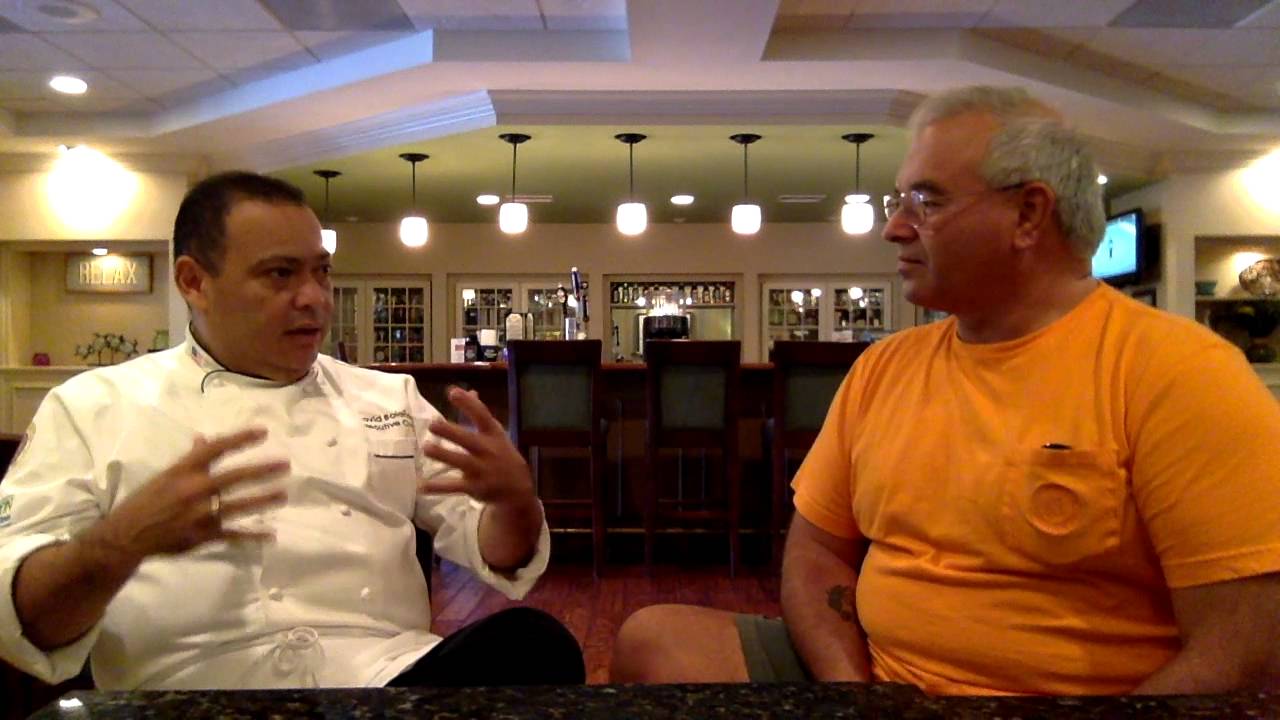
In this on‑location YouTube interview, Chef Dennis Littley visits the Plantation on Crystal River in Citrus County, Florida, and talks with the resort’s Executive Chef David Polanyos. The conversation opens with Dennis describing the resort’s welcoming atmosphere, noting how staff greet guests personally and create memorable experiences. Chef Polanyos shares his personal culinary journey—from growing up in a Nicaraguan restaurant family, training in Europe, working in South Beach, Orlando, and finally joining the Plantation. He explains the resort’s culinary philosophy: seasonal, locally‑sourced ingredients (blueberries, fresh seafood, Florida‑Caribbean influences), a menu that blends French, Greek, Southern, and Caribbean styles, and a unique “catch‑and‑cook” program where guests can harvest scallops or fish and have them prepared immediately. The chefs emphasize rigorous staff training, daily stand‑up meetings, and a culture of pride and love for food that translates into consistently perfect seafood preparation. Both hosts stress that guest satisfaction, reflected in smiles and thank‑you notes, is the ultimate reward and the driver of a happy, high‑performing kitchen and service team.
Chapters
Alright, hi, I'm Chef Dennis Littley and I am here at the Plantation on Crystal River for a stay in beautiful Citrus County, Florida. This is my first time in the area and I am absolutely loving it. I'm here with the chef and the chef, I'm going to let you introduce yourself. Tell them who you are.
Hello, my name is Chef David Polanyos. I'm over here at the beautiful paradise area of Florida. Where we have beautiful settings, beautiful hospitality, and what can I say? I mean, we have all what the nature can offer pretty much to the reach of our hands.
Oh, I'm telling you, and I've been spending— like, I got here late in the day yesterday, so I didn't have a lot of time to explore. But now this morning, well, I woke up, it was about a quarter to 6, and I think my body says, you got to get up, you got to get You got to see what's going on. So I had my coffee, I did some work on the computer, then I went outside with my camera and I started exploring. I'm like, I love to see it, you know, you want to catch it when the sun's coming up. Well, it's coming from the other side, so it's not as dramatic as being on the East Coast. But once it starts to rise and the light starts to spill and all the lawns, the meticulous green lawns, and there's water everywhere. I'm like, oh my God, I turn, this is the water, there's water there, there's water there. I'm like going around, there's water everywhere. And the Cool.
It's the environment, the whole thing, the area. And then we accomplish it with a good morning from someone, whoever you meet in our pathway, or the nice smell of coffee and the beautiful breakfast buffet that we offer for you, all regional food from this area. And we try to make your stay to be remembered for the years to come. Yeah, and we emphasize that very well. I mean, our staff over here has that into their DNA. We need to treat our guests like VIP to everyone.
Well, I can see that, and you know, just, you notice small details, and when I was walking the grounds this morning, everybody that was working said hello to me. That's what you're saying.
That's what I'm saying.
That is not the norm in a lot of places. I've been in some very nice resorts where like you're almost invisible as a guest, and it should almost be the other way around. But here, you know, when people come out, go out of their way to say hello to you, ask you how your day is, and check on you if there's anything you need.
Believe it or not, Dennis, this is not script. Oh, this is in our hospitality world. We try to One more time I say, create a memory so you will remember us. And remember us not only as a plantation, but your stay, your valuable time that you spend with us. So we try to make it remarkable.
Oh, well, it definitely is, and I can see where the work is paying off for you. And, you know, the rooms, the whole property is nice. I visited the dive shop this morning, went over there, and again, and no one really knows what I'm here doing, and I don't let anybody on because I don't want to put any pressure on anyone, you know. And they're still, without knowing anything, they're treating me like a regular person. So then I see that it is the norm here, that it is what really goes on.
That's what it is.
And that's a testament to management, to training, to everyone that works here. Because, you know, you can train them, you can manage them, but if they're not inherently a nice person, then that kind of person is going to happen. And you can do very right through That. So you've cultivated a good quality staff. Now let's talk a little about you. Where did you start cooking and how did you get into it?
Many years ago. My mom was a pastry chef and I'm originally from Bluefields, Nicaragua. This is a formerly British colony in Central America, but in my I was in my early 20s. I mean, at the beginning of the 20s, mom decided to send me over here because we have too much problems back at home. And I think I inherited her talent and all the good things because I grew up in a restaurant over there. I was very fortunate to be trained in one of the best European-trained facility at that time, which is called Vinton's, Craig Abels. And we, at my very school years, we treat personalities such as presidents, like the president of Venezuela, he came to visit us. Paul Bocuse, which, which is a master chef from France. So I was very related with them, and I said the assignment of the hospitality business going through our culinary skills. And that kind of gave me the click. And graduate, I went to the Florida Keys, spent some time over there. Then I was fortunate to see the new era of South Beach growing up, taking off. And that gave me the experience of working in a different establishment that they're very culture, um, different. I mean, so it was like I did a season working in strictly classic French cuisine, and then I moved to another place where they were doing Northern Italian cooking. So that was giving the opportunity to keep practicing my, um, different cuisine of the world. Um, I moved to Orlando area a few years ago, and I went to open a SW Grill that was a formerly yacht club over there, right in the Riviera. And we did an excellent, excellent accomplishment in all the culinary world over there. And After a few times, the offer of looking for someone to come out to this area and bring all that kind of Floridian experience was needed.
So I raised my hand. I guess you did.
And I found out the beautiful people out here, and believe me, it's been a great experience.
Experience.
And my contribution to this is, is that I brought up all the Florida and Caribbean culinary trends and put them up together with some Southern cuisine, and we developed a menu that is, is very successful targeting our guests from everywhere in the world, and mostly the local one with an approach of local, fresh, served. That's pretty much where we wanted to go. My inspiration is seasonal. I go through whatever the ocean gives us, whatever Mother Nature gives us. Blueberries about to come out soon.
I heard, and I was not aware, you know, I asked the first thing I said, this is citrus County. Where's the citrus? And so we went through that whole story about how it got named and what happened. So I'm, you know, I'm looking on the map thinking, I don't think this is citrus country. I'm still new here. But then they told me about the blueberries.
Blueberries about to come out, and you're going to see them everywhere. They even sell you the branches at the supermarket. You go to the supermarket and you buy a branch of blueberries, and that's unique. Yeah, because I've not even seen anywhere else.
I've never seen that.
I guess that the weather has to do a lot. So we'll be doing a blueberry French tart. So we use crème anglaise, or we do a crème pâtissière, put them in a nice cookie dough shell, then smother them with blueberries all over. A little bit glazy, cut it up, nice little sauce on top. It's delicious. So here we go. We're bringing a culinary trend from French cuisine, from other worlds, and apply it to ingredients that we have here at this area. And we do the same with the seafood.
Oh, you got some killer seafood.
Oh my God, the seafood is— every day I see— last night I was cooking some octopus, and today we're gonna feature them in a Greek style because we have some kind of Greek influence. We got a little bit of everything over here. So we have some Greek influence, and we will be serving that charbroiled, you know, in a grill with a nice Greek little salad, and it will be delicious. So those are the type of features that we offer every night over here, whatever the market is offering.
Now I hear you have also a unique approach to seafood, as you're taking me fishing this this afternoon. And if we catch anything, I hear you're going to cook it up.
Yes, we are.
We are.
So you're coming.
Okay, we are. Good. All right.
And it's good that you, that you remind us because during the months of August, I believe, and July, we open a season for scalloping in this area. That is very great. And the unique thing is that Plantation on Crystal River offer a whole package that you stay with us, we'll take you out to pick up your— you dive your own scallop, right? We clean it up for you after. We have to remove it from the shell and clean it up, and we'll cook it for you. So how much more you can offer?
That's pretty cool.
You're gonna have the experience of going out, bring your own catch, the chefs in the kitchen are gonna cook it and eat it the same day. So that's been very, very successful, and it was so good that now we're doing it with every catch. I mean, if you go out fishing, bring fish, we'll cook it for you, and you'll be cooking your catch.
I'm wild about that. I mean, it's so fresh. You can't get fresher seafood than something like that, and just the option to be able to do that, bring it in and and have you cook it up, it's like really taking it over the top. Because you can get a picture of you holding your catch, and then you can get a picture of your dinner. I'm constantly taking pictures of the food, and I don't care what people think anymore. But I'm almost tempted sometimes to go over to other tables and say, "I didn't order that. Would you mind if I take a picture of it real quick?" But I haven't gotten that bad yet. But the quality of food that you put out here, I can tell right now you have a lot of pride a lot in what you do. And you know, it's gotta be not just the pride, it's the love that you instill into your food, and that is taking it up over the edge. And you're talking about food, you're passionate about food, you're passionate about the property.
Yeah, and that vibe I transmitted to my culinary staff, and every day before dinner we do a stand-up meeting between all of us, and we talk and we see where the challenges are. And the rewarding side is that our guests will be sending little notes. They might be thinking I'm there, but maybe my other side of the staff is closing, and they're doing the same things that, you know, all the things consistently we'll be doing. So they're getting the notes and the rewards from the guests saying thank you very much, and that's very rewarding.
I know, as a chef myself, you know, nothing made me happier than pleasing a guest.
Yes.
I mean, if I went to the table and— first of all, I went to the table and no one was talking, I knew I had done my job because they were so busy eating. But then just the smile, and if you— you can change a person's whole outlook on life and they're— and just make them happy. With food. I don't know what else you can do that's legal that you can make them feel that way. I mean, so for me, that's always been like the most— the best part of the job.
It is.
Seeing those smiling, satisfied faces, seeing someone have to unbutton their pants a little bit.
You're completely right.
Sit back, you know.
And I gotta tell you what, one thing that our guests have very appreciated is that we cooking our seafood just to the point where it kind of melts in their mouth. They're not dry, they're not overcooked, they're just the way they like it. They really enjoy that because it's not easy to get it to that point. We manage to be, I would say, almost 100% in all our dishes that they're going to have that type of experience. So that's very rewarding.
There's a fine line with seafood. People don't realize it. It's not like cooking a piece of beef or chicken.
You're completely right.
Seafood is a whole different— I mean, the whole makeup of it. And if you take it just a little too far, you've gone past that sweet spot. It's not like the steak, it's still good, or— it just changes. It just changes how it feels in your mouth, how it eats. So, you know, kudos to you for—
for things.
For doing that and for more importantly teaching the rest of your staff.
Oh yes, that's crucial.
A lot of people forget about that part. So when the chef's not on, the food's not up to standard, you know, and that's— or, you know, I was talking to you about how you show the love and the pride in what you do. You can tell when a chef's not happy because his food's not happy.
Yes, that's very true.
And that's the same thing with the staff. So, you know, keeping a good kitchen where people are enjoying what they're doing is very important.
Yes, indeed. Our staff is very hungry to learn all the time, and I enjoy more because I see how much they want to be learning. I enjoy more time spending time one-on-one, one-on-one with my steak guy, with my fish guy, with my pantry person, making fresh desserts. Our banquets that they're like splendid. I mean, our weddings over here, the brides and grooms, they're so— I mean, they're nerve-wracks before that. Oh, it's gonna be my— they're so grateful. Our catering department, all the time they're getting good letters saying how beautiful it was, including the food and the ambience and the service and staff. So those are the plus. That's when you have, like you say, happy staff.
Well, you know, it all trickles down. When they see the satisfaction, they have more pride in their job. When they get the kudos, they have more— they're happier about their job. And a happy staff is the key to any successful operation. Well, you know, I have enjoyed speaking with you. I'm looking forward to seeing you later today. I hope I catch— what kind of fish should I be looking for today?
Redfish will be nice. Okay, we could do a few ways, and the best thing is that we're not only gonna make it one way, we're gonna make it like 3 different ways, so you're gonna enjoy each one of them. And also we're gonna give you some homegrown vegetables and potatoes and etc. So redfish will be in the target, but any, any species.
Okay.
And if you— hopefully we have good weather and everything, you'll be coming with a lot of good fish from there.









