The Art of Saute - Chicken Picante
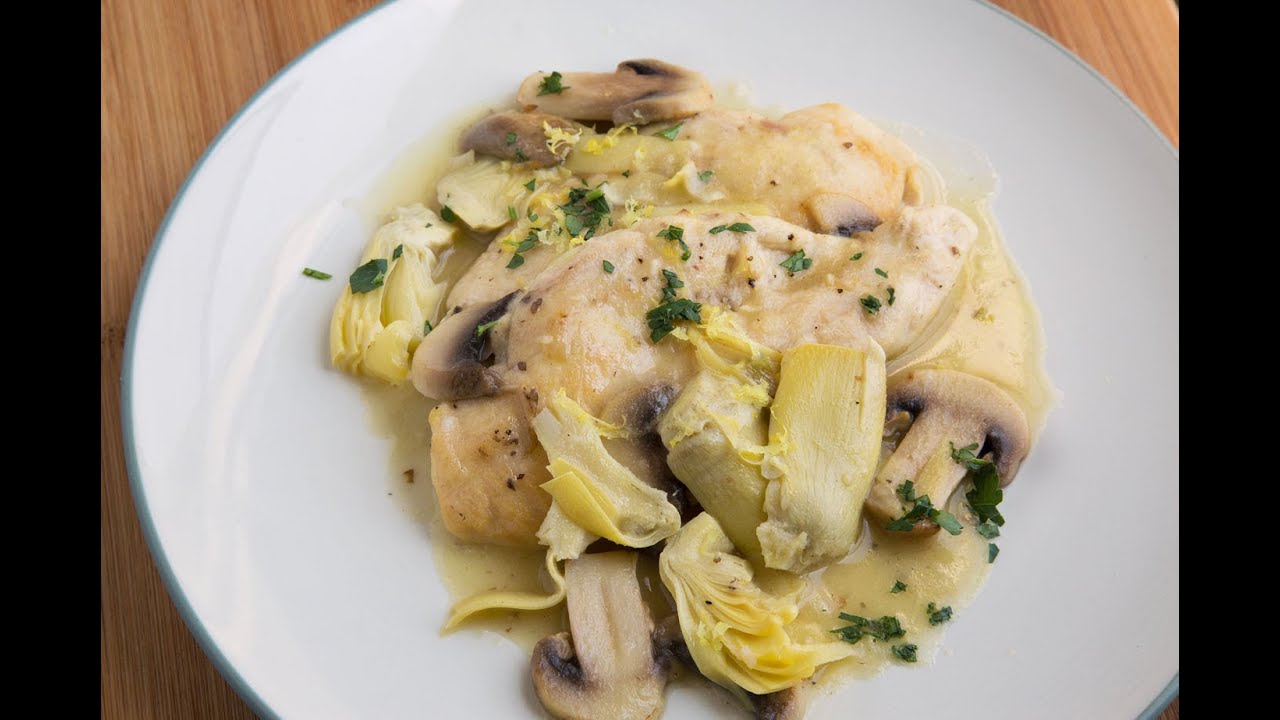
In this YouTube episode, Chef Dennis Littley and co‑host Susan Sarah host a casual, kitchen‑table cooking show. Dennis introduces his background as a sauté chef and demonstrates a one‑pan chicken piccata/picante, emphasizing the flexibility of sauté technique: any protein (chicken breast, thighs, wings, turkey, pork medallions, fish) can be cooked quickly with a simple flour dredge, browning, deglazing (wine or artichoke juice), and finishing the sauce in the same pan with butter, stock, lemon juice, and optional capers. He explains key technical points such as avoiding oil break by controlling heat, using gluten‑free flour, making beurre meunière, and thickening with cornstarch for larger batches. He also discusses equipment choices (stainless steel vs. Le Creuset, oven‑finishing, warming drawers) and offers numerous variations (different vegetables, herbs, citrus, cheeses). Mid‑show, Susan showcases German‑style kitchen storage solutions from Clever Storage and Hafele, including countertop extensions, segmented shelving, pull‑out drawers, and illuminated pantries, linking organization to cooking efficiency. The episode ends with audience Q&A on ingredient substitutions, protein alternatives, and serving ideas, reinforcing the theme that sauté is a versatile, fast, and adaptable cooking method.
Chapters
Hi everyone, I'm Chef Dennis Littley and we're here Around My Kitchen Table. It's a great day in Florida. The sun is shining, the skies are blue, it's about 80 degrees and life is good. I'm ready today to cook something special for you. We're going to say hi to my co-host Susan Sarah. How you doing, Susan?
Hi, I am doing great, Chef. It's also sunny here. I don't know, maybe it's 35, so I'm okay with that for now. But the ice has melted, the snow has mostly melted, so I'll take it. I will take it. It's good.
Yeah, I was reading some tweets yesterday from Boston and on Facebook, and I don't know what was going on, but they're going, you know, what the hell is it going— doing outside? It's snowing, it's sleeting, it's raining. You know, some guy said the frogs are coming next. You know, it's like They must have had a little turn in the weather there.
I know, they must have, they must have. And you know, I think we're getting some rain and maybe a little snow in the next couple of days, but whatever. You know, I mean, it's still a good excuse to make these comfort foods and, you know, still be cozy inside, at least for us, you know, Mid-Atlantic and Northeasterners and wherever. So I'm enjoying that. In fact, on the weekend, We have a store and it's called Mr. Sausage and it's an Italian store where they make their own pastas and they have wonderful butcher-type meats and they have a million different appetizer-type things. And I always forget about that store. So we went there and we got some of the homemade ravioli and clam sauce. So I had clam sauce. And you know what, it's just— it's sometimes it's nice to go to these places and get these wonderful ready-made things.
Oh, absolutely. I mean, there's nothing wrong. And you know, and that beats the heck out of going to a restaurant or going to a fast food place, you know, even some of these, you know, there's still fast food with these upscale places. And I don't want to be throwing names out there. But you know, there's so many of them out there that are chain restaurants. Really, if you can find a place like that and go buy some ready-made foods that all you have to do is heat up, you're really going to be a lot better off.
Yeah, and the guy is behind the counter making the ravioli, and sometimes these little shops are, you know, a lot of character.
Yeah, and you know you're getting something that you can depend upon. He doesn't know which line cook didn't show up for work last night and which dishwasher is cooking on the line, and believe me, those things happen.
Oh, yeah. Do you have any of those, like these little market-type places that you like to go to, any by you?
Being me and what I do, when I go out, if I'm going to buy something out, I'll generally— I would love some fresh pasta, but being gluten-free now has thrown a bug into everything. Before, I would look for somebody that was making some fresh raviolis or cannellini or tortellini or tortelloni, something that I would not make at home, something that I really don't want to take the time to do, which is not that I can't do it, but why reinvent the wheel? Food is not supposed to be that difficult, and it should be easy to get to, easy to eat, and something you enjoy doing.
Yeah, I'm just kind of wondering, you know, you do cook all the time, but even for you, there must be times when, you know, you just want to take out.
Times like that, then we'll either get some Chinese or a pizza. Before I was gluten-free, it was always nice to do. Cheesesteaks. Now, being in Florida, you really have to look for things like that. I try to get simpler foods when I do takeout. I have not found those types of places, although I know they are, that do a little higher-end takeout food. No, even like something like Wegmans used to have, you know, in there where you could pack up some stuff if you just didn't feel like cooking.
Yeah, well, we will sometimes, you know, we'll often take out from restaurants. That's actually very common rather than go out to the restaurant. But it's really funny, I have to just say, tell you this, because over the weekend my husband, like for days, he was craving like the down-and-dirty Chinese food. The General Tso's chicken, the pork fried rice. I don't think we've had that in over several years and he was just craving it. So he got all the stuff and the spare ribs and, you know, we got all that stuff. He said, well, now I know why I haven't done it. It was, you know, greasy and everything. And it was that same taste, but, you know, some things are best to leave.
We forget, and I'm the same way. I'm going— when we do get the urge, like Lisa will eat Chinese more, and generally it's— she'll get fried rice and an egg roll and a soup, and that's it. But I love some of those dishes, and you know, I think I may start doing some of those. Like, one of my favorites was ho fun, or lo fun, but it's those wide rice noodles, and I can have them. So, you know, maybe that's something.
Oh, good. Yeah.
I'm not Chinese, and I've never been trained Chinese cooking, but I used to cook Chinese-style dishes in the restaurant, and people seem to like them. Maybe we'll do that a couple shows too.
Yeah, maybe you have an Asian market nearby that you don't know about.
Yeah, I can see them. I have seen there's a lot of different ethnic places around here, so I just have to start going into them more. But yeah, I could get some nice noodles and do a stir-fry with the noodles. That would be fun. Even fried rice is not hard.
Yeah, true. So today, tell us about today.
Okay, today we're going back. I was a sauté chef. That was what I did. That was who I was. That was when I went into a restaurant, I didn't want to work the grills, you know, the charbroilers or any other stations. But you put me in front of a range, you know, with 6 burners, 8 burners, and give me my pans and my mise en place, and I was a happy camper., and I could cook 300, 400 dinners a night, one at a time. Sauté is— and it's because sauté is not difficult. Sauté is— basically, when we're doing that in a restaurant, that's how they're going to make a good portion of your meals, although a lot of things now go towards grilled or go towards baked. But it's a really quick way to make dinner when you're pressed for time, you're pressed for ideas. You just don't know what you're going to have. It's a good time, I always say, open the refrigerator and see what you have. Let's see what we can make. I mean, that was always one of my things when I would teach my students was let's go walk— go into the walk-in and see what we have that we can use for a dish. Because as long as you have a protein, you know, you can build anything around that protein. Or even vegetables, a nice variety of vegetables. So if you've got chicken in the house, if you've got beef in the house, if you've got pork, seafood. You can pretty much sauté a dish around that.
Now let me ask you this. When you say sauté, does that presume that there will be a sauce accompanied with it?
Yes, there will be. Everything is going to be done in the pan, and that's what makes it fast and easy, too, is that everything you're doing is going to be finished in the pan, and it can either be served plainly if you tighten the sauce up, or you can leave it a little looser and you can serve it over pasta, you can serve it over rice, You can serve it over any of the grains that you like, that you might— quinoa, anything that you enjoy eating, lentils. You can then serve it alongside, over it, or with it, or however you want to do it. That's the beauty of these is that you're going to start and finish right in one pan. Generally, I can make 2 servings in a good-sized sauté pan. This isn't a real big one.
You know what? That always brings to mind— I'm a recent— well, in the past few years anyway, I've decades of cooking behind me, but only in the past 5 years did I begin to collect some Le Creuset. Le Creuset, and then that's the beauty of it, is you sauté it and you bring it to the table and it's just beautiful. Add a few garnishes and then it looks like a company dinner.
Yeah, and you know, and these pans can go in the oven. You know, like a lot of times, you know, if I'm using a good stainless steel pan, I'm going to cook on stovetop. Let's say I finish my dish. Now I want to keep it warm. The only thing you have to worry about is if the oil starts to break, if it starts to get a little greasy from getting too hot. If you're just keeping it warm, you want to keep the oven around 300 to 275°F. Or if you want to melt some cheese, like a lot of times, say I'm making something really nice in the pan and I want to hit it with a little gouda or a little Swiss or just some other kind, even mozzarella, some other kind of cheese just to liven up the meal just a little bit more. Well, I'll just top it off in the pan and I'll take the pan and put it in the oven. The only thing you want to remember is to always have a towel nearby to grab it out of the oven and to remember because I've forgotten on enough occasions that I had it in the oven and then I go to move it.
Right, right. I mean, I do that technique when I'm searing steaks or when I'm searing salmon, then I often finish it in the oven, but I haven't done that for anything else. So maybe, you know—
It depends what you're doing. Like, I used to do some scaloppinis where I'd have a lot of vegetables in there with it, and that might be something good to do next time. Very colorful. You just pop it in the oven. Basically, you're just melting the cheese. You know, if we had a salamander in a restaurant, which is a broiler—
Yes, yes.
In there, boom, and pull it out. We don't have that here, so either I got to get a torch out, which some people use, and just melt it with a little mini torch, or stick it in the oven.
Okay. Let me get back to one thing you said which stuck with me. You said it shouldn't be on too high a heat or else the oil will break.
Yeah. All right. See, we're going to cook in fat. We're going to cook in olive oil, butter, or whatever. So what happens is, as your sauce starts to thicken at the finish of the, of the sauté, which is really what you're planning on doing, because I'm going to generally serve it just as is, so you might have to make an adjustment on the sauce so it's not too thick, because when it goes into high heat, then that's when the grease, the fat part of it, is going to start to separate out of the dish with high heat. So if you're holding in an oven, it's sometimes better that it's a brothier kind of sauce than a butter type of sauce because then you have less chance of it breaking.
Which, you know what reminds me of the appliances, the warming drawer. A warming drawer then essentially will protect, sort of protect the food.
Yes, if you've got a warming drawer, that might be a perfect thing just to drop it in. But again, like, for the most part We would hold dishes in the oven if they were brothy dishes. If it was a soft dish, it would wait on the side until you were ready to pick it up. Then it would go back on the fire and heat it up and finish it. Throw the butter in then, any other seasonings I need then, and finish it. Then if it was still a little too thick, then I could hit it with a little stock or anything like that.
Great. That's great clarification. Thank you. Okay, so what do we do?
Right now, I'm going to start. I'm going to heat up the pan. I just said stock, and I remember I didn't make any stock. I'm going to do that when you do your presentation. For now, the art of sauté all begins with a sauté pan. You want to get a skillet a little warm. While that's heating up, I'm going to come over here. First, I'm going to show you— we talked about doing chicken. This is not a humongous chicken breast, but it's a good-sized chicken breast. Breast. So it needs to be cut down. So all I'm going to do is I'm going to go into the chicken with a sharp knife, and I'm going to hold my hand on top of it, and I'm going to just cut it as best as I can down the center and butterfly it. Okay, now I'm going to open it up and then just cut it. So now I've taken this really thick chicken breast, which would take forever to cook, and I've made it into 2 pieces. If I see anything that needs to be cut off here now, I'll trim it. Any little pieces of gristle, you know, fat's okay because that will cook down. But if you've got any kind of tendons or any cartilage or anything, you want that out of there. So this is perfect for a sauté dish. You don't need to flatten these. This is not too thick. It will cook up very nicely. And also, what works really well in sauté dishes are chicken tenders. So don't ever be afraid to use those. And of course you can use thighs if you want to use thighs. Generally, I would prefer thighs now because they have more flavor, but most people will use breasts because they're less fatty. So here I have flour that I've seasoned with sea salt and pepper. I'm just going to mix it up a little while my pan is heating up. I always dredge meat in flour. Not seafood, but meat. If I'm cooking chicken or beef or pork, it's going to go in flour because this is going to help protect the meat and it's also going to help build my sauce.
Sounds like a good way to both brown it, to protect the meat a little bit, to add a little substance.
Well, it's going to add a little flavor to it too with the seasonings. Like I always say, this is your one opportunity to really season the meat while you're cooking it. Let me grab some tongs too. I actually had to run out and buy a ceiling fan this morning, so I wasn't quite as prepared as I would have liked.
Oh, really? Yeah, I was running this morning too.
Luckily, this is sauté, it's that simple.. And it really doesn't take a lot of preparation. What I cut for this was mushrooms. I got some artichokes, some hearts.
Nice, nice combination.
And this is because Lisa loves artichokes. When we first started going out, it was at the restaurant I worked at, and we used artichokes in a lot of dishes, so she got used to eating them, really enjoyed them. So I mean, this is not a lot of things you have to prepare. That being said, you can add all kinds of things to this dish. Okay, so let me turn this over. So I browned one side, and whenever I brown something, that's when I put mushrooms in, or if there's something else that needs to cook a while, that's when I add them. She likes mushrooms, so I'm going to use a lot of them.
And you get some nice— you get that nice moisture from the mushrooms too.
Now I also have some shallots here. And this is not something you have to use, but I wanted to add a little bit more, and I need a little more oil because mushrooms are going to take it up. I didn't put the shallots in right away because I didn't want them to burn. So now I'm just— see how I just rotate the pan?
I love shallots. Love shallots. I always forget to buy them, but I really— I have some now on my kitchen counter. Like them.
It's a nice— it's nice to use instead of just using garlic or onion. All the time. It makes a really nice flavor into your dish. And then once you start to get adventurous, what you want to do, if you can flip, is you pull everything down to the bottom and then you just flip it.
Oh, I have always wanted to do that, to know how to do it.
Well, the whole trick is—
What's the trick?
The wrist, and you slide everything to the front of the pan and then You pull.
Oh, you pull. You push and then you pull.
You pull back.
Yeah. Ah, okay.
You get it here and then pull. And there's not a lot of liquid in here, so it's not flipping quite as easily, but it's doing pretty good. All right, so see, this is pretty much where I would want it to be ready to sauce it. So I'm going to turn this down. And here, if I had wine, this is where I want to add wine to deglaze it. All right, I don't have any wine, but I have some artichoke juice, so I'm going to deglaze with a little artichoke juice.
What about chicken broth? Perfect.
I'm going to get some chicken broth while you're talking right now because I didn't have it, but you could deglaze with— that's why I chose the artichoke juice, because that's what I had and I wanted to deglaze the pan. But what deglazing the pan does, why I would use wine or a liquid is all the little bits that stuck to the pan while it was sautéing, all the little flour, all the little bits of flavor are stuck to the pan. So by deglazing it, you're kind of stopping the cooking a little bit and you're pulling all those little bits of flavor back into the pan where you're going to use them in your sauce. So that's, that's the magic of sauté. So if you want to go ahead, I'm going to get some stock real quick and we'll finish the dish.
Okay, I sure will. So you take off and I will take it from here. So last week I promised you more cool storage solutions for the kitchen. I was just on a storage kick, and so I want to show you some that I took from Germany some— a little while ago. And let me go to screen share. And here we go. And this should be doing it. Yes, here we go. Okay. So yeah, this doesn't show you much right here, but I will. Okay. So this is interesting. This is a countertop that goes over the cooktop. It'll double the space of your countertop. So you don't always— we're not— a lot of time we're prepping. We don't always use the cooktop. Right away. So this is a sort of interesting solution to adding more counter space. And you'll see the— I took a shot underneath. It's the, you know, it's not as thick as it looks. So it just goes right over the cooktop. And there you have a doubled double prep space, which is cool. And here we have two-tiered shelving and segmented storage spaces, and we have even some little areas for spices there. And, you know, one of the hottest trends in storage for kitchen cabinets has been these segmented solutions. And of course we've had knives slots for knives for many years, but you know, it seems to be getting more and more personalized. And I'll tell you, I said last week, the rack on the backsplash, so useful for so many different things. This is under a sink. Now under the sink, you can, you can use a drawer. It's a pull-out drawer under the sink. Usually we're bending to the floor under our sink. And how about a neon-lit green pantry with, you know, sexy glass and metal shelving. So, you know, there's some beautiful, beautiful high-end— I mean, if you want to put the money into your pantry, you know, and lighting and the whole bit, you know, why not? A lot of this comes from Hafele or Clever Storage. Actually, this is from Clever Storage, which is a wonderful brand. I actually— my daughter owns some Clever Storage pieces and they're so well made. So I would definitely look, look up Clever Storage. This is an area that holds dishes so you can move them around for glasses, dishes, and so on and so forth. Another type of segmented, lots of innovative, clean, easy to clean. This is for more high-end if you want wood inserts. Again, you can find this in Clever Storage, you can find this in Hafele, many high-end So, many high-end kitchen cabinet companies will have this, but you can get it on your own. You can get IKEA cabinets and go to Hafele and order it online. How about a meat slicer? How about a scale? So, you know, some of these German companies have amazing inserts in their cabinetry. And this is actually a great way. You see those rods that that are put on the wood there. Great way to store cookware and, you know, still have a wood countertop. So see, here we're looking at— look at the trash under the sink. Very useful, all in one spot. And the spices, there are so many ways for spices to be added. Here's a scale. How about this, Chef? Here's a kitchen scale.
Oh my God!
I know. Yep, pull it out and there it is and it looks like it pops right out too.
So I drag mine out and I got to put it away and you know, I'd like to have it out there a little more often.
Yeah, yeah, there is— I can look for some other brands too that do these really wonderful, you know, drawer accessories and it's, it's— let me tell you, once you get into the world of kitchen drawer accessories, let me tell you, you can be obsessed. I know you wouldn't think so, but you really can, right?
Oh, it's nice to organize everything. It really does a lot for your kitchen. I mean, if you work a kitchen, if it's, if it's not just a pretty kitchen and you work in that kitchen, having things where they belong is a wonderful thing.
I know. I mean, look at mugs, look at all these mugs and all these glasses and pots, you know, forget looking under 5 pots for the one you want. You know, the best way to store is don't store more than 2 pots one on top of another. You know, really, you know, if your kitchen is planned right, you shouldn't have to dig so much. So lots of ideas I came back with, you know, from Germany, and it's really— now here is vegetables. I'm not sure, you know, you may want to put some kind of liner underneath or make sure you use them quickly because it's always tricky with putting live fruit and vegetables in, but there it is. And oh, this I wanted to show you, the wraps. So you have these stainless steel sections and then they have the teeth on them so you just rip off what you need. Lots of good stuff here. And then you have some, some of these where you have holes for different types of canisters. So you put your things out of the box and into a very organized section like this for all sorts of things. So that's my— that's it. Here we go. I mean, is it pretty too?
Very pretty.
It looks great. You know, obviously you want to use it before things go bad or line it, but there you go.
You know, Europeans are a lot more used to not refrigerating things than we are, and they tend to use things as they buy them, whereas Americans, we buy them, put them in the refrigerator, and forget about them sometimes.
Yeah, so, and that's only partway through, so I'll have to do even more of this another time. Here we go.
I have made my stock and I poured a little stock in here. I'm going to turn this back on. This chicken, this is where I would have stopped if I was in the restaurant. Chicken is not quite done, but it's almost done. I would have stopped there, put it aside, and then finished it when the waitress came in and said, "Table 14 is ready to pick up." They call for it. Then it would be ready to go. I'm just going to season this with just a little bit of sea salt. A little bit of black pepper. Now what I'm going to do is squeeze a little lemon juice in it.
Okay, like the lemon juice.
A picante. That's what a picante or a piccata is, is lemon juice. Now at this point, I said you can make it your own. Some people will put capers in here. Capers are very nice in this dish.
You read my mind. I was just going to say capers.
Now, if I use capers, I probably wouldn't use artichokes. I would keep it plain. I might not even use mushrooms if I was taking it the capers direction. I might just use shallots and capers, keep it very simple, and finish it that way. But since, like I said, this is how I was trained to make it the first time and this is how Lisa enjoys it, I'm going to add some artichoke hearts in here. I sliced them. It's important, don't buy the ones in oil that are already have flavor to them because they just detract from it.
Oh, I wouldn't have known that. Interesting.
Well, they're great for salads, the oiled ones, but if you want to put them in a dish, you get the ones in the juice because the juice is an important part of this. You saw I did pour it in earlier, but this is the point where I would have added a little artichoke juice to it because the artichoke juice softens the flavor just a little bit. It's amazing what it can do for a dish. So this is pretty much done. Dinner's ready. Do we have our sides ready? The only last thing I need to do is I need to take a hunk of butter, roll it in some flour, and I'm going to make a beurre meunier. That's what this is, butter and flour mixed together. Then I'm going to finish my sauce. You can do it with just plain butter. This is gluten-free flour, too. So I'm going to stir it around.
So even though you already have flour from the beginning, you need a little more to just kind of tighten it up?
Yeah, because this is a heavier sauce. See, I've got more volume, not heavier, more volume of sauce here. And you can't really see how nicely it's thickened up, but it's done. Okay, it's thick, it's done. I'm going to put plate it and I'll show you. Now, what I'm going to do, so now to plate it, normally if this was a single dish, I'd have my plate set and I would sometimes just pour it directly on the plate because I would have made just enough. I'm a little out of practice.
Oh my gosh, I want that. I want to eat that right now.
Okay, so here's 2 pieces of chicken. Now we're going to take some of the artichokes and the mushrooms. I'm going to pour just a little bit of this sauce over. Again, this is enough for 2. If you need more sauce, you put a little more sauce in. Put a little more mushroom in, whatever you want. Now I'm going to garnish it with a little of the lemon zest that I used. I have a little parsley because we need to get a little splash of color in here. A little splash of color in there just to brighten it up. Now, if you like other vegetables, sometimes I'll take the same dish.
Oh, that looks great. That looks beautiful. Look at that. That looks— that is applause, applause. Just beautiful.
Very simple, and I made this while we were talking. I mean, that's why sauté is such a wonderful option for cooking. Because chicken is probably going to take the longest of anything to cook, and the thicker it is, like if you were using thighs— I love chicken thighs, and Lisa enjoys them now too because there's so much flavor. Same kind of method. It may not look as pretty because it's the dark meat, but it eats really, really well. But you'd serve this with some rice or some couscous or risotto, anything you want to make. A little over even a little angel hair.
That's exactly what I was thinking too, putting it over pasta. It looks, it looks so good. Now let me ask you this, is there any— I mean, I'm thinking calories, I'm thinking, is there any kind of substitution for the butter?
You can take the butter out. If butter is a stumbling point for you and it's a deal breaker, It'll be a little bit of a runnier sauce. It's not going to really taste that much different. It just won't have that appearance of a sauce. We need butter. You always use what you want to flavor it with, whatever fat. If I was using extra virgin, really good olive oil, I would put it in at the end. I've said this before. If I want the dish to have a little bit more of that richness from butter, it goes in at the end because that's when you're going to taste that last fat that I put in. Like I said, it's not a deal breaker. If you don't want to sauté, say maybe you just want to make the sauce without the chicken, and you might want to throw in some asparagus, you might want to throw in some— There's so much you can do to it to add to the dish. Then you might want to grill your chicken breast. You know how pretty this would be with chicken breasts with grill marks on it, topped with this sauce?
Yeah. That's good.
Or even as a buffet. So you got people coming over and you grill 20 breasts and then you make a nice big batch of sauce, even thickening it with cornstarch if you had to, to keep it thick.
Now what about— I could see that. Could you see that with swordfish?
Oh yeah.
I could see that. Yeah, that's what I thought.
We're talking— this is piccata, piccante, any way you want to roll with it. All right, it's a lemon dish. Seafood, veal, chicken, shrimp, swordfish, tuna, anything like that. And then, you know, you're kind of gonna maybe poach it like we did last week a little bit in the pan if you want to, or grill it. So I mean, I would either grill it, and then top it with this wonderful sauce. Leave it just right at the hair of not being quite done, so it's not too dry if you're using fish. Then make a nice little batch of the sauce. Like I said, although I don't like to thicken a lot of things with cornstarch, when you're making something that's going to sit on a buffet line or if you have to make a lot of the sauce, cornstarch is a really nice way to thicken. Yeah. Always put the cornstarch into a vessel, put the liquid in, stir it up really good with your finger, and then pour it into the liquid.
Yeah, that's what I usually do. And flour freaks me out a lot of times because I'm so afraid of lumps. So I usually—
Well, the gluten-free flour doesn't react quite like, at least the blend I'm using, like regular flour in terms of the lumps. But most of the time with regular flour, if I'm pushing it into the butter, the pan's hot, and I'm putting it in, and I'm stirring it around, you really don't have a lot of lumps. It really is— I don't even really see any in this. Like I said, the gluten-free flour kind of reacts a little differently. Yeah, it came out well.
Yes, it did.
This is dinner. Open a bottle of wine while you're cooking this. Somebody's making a salad, and you have a really nice dinner in an easy amount of time. Like I said, play with it. This is the art of sauté. This gives you— what do I have in my refrigerator? Maybe I'm not going to take it— I'm going to take it to another flavor, and I might want to incorporate some gorgonzola crumbles on top of it. You know, I wouldn't necessarily do that with lemon, but maybe I wanted to have more of a different kind of spice flavor. Maybe I want to cook it with some rosemary or throw some, like I said, some spinach in there, and then just crumble a little gorgonzola cheese, even if you don't melt it. So there's a lot of different variations.
And maybe some lemon slices on top, too. Absolutely.
Or some kale.
Very nice. A lot of things.
Very good. And that's it. So did we— I assume we have some people watching.
Yeah, yeah, yeah, yeah. Let's see. Yeah, what do we have? Okay. Actually, Candy is asking, if there's a substitute for chicken breast and if chicken wings are okay.
Candy, if you like wings, wings are fine. I mean, you could— you can, like I said, grill them, you can bake them, you could cook your chicken any way you want to cook it. Just make the sauce if you want to. The beauty of this is that it's one pan. So, I mean, chicken wings will sauté just as well. Any part of the chicken you like. You can use turkey cutlets if you like. Pork, like you get a little pork loin, a tiny one, pork medallions make a wonderful piccata. People used to use that instead of veal because it was still as white as veal was sometimes, so without the bad feeling of eating little baby cows.
Good. Let's see. Aslan is loving it. She's just loving this dish. Fabulously done, Chef. She's getting hungry. She's loving it.
I'm getting hungry too. I see Michael Thomas is here. Thank you, Michael. And yeah, grill, you know, grill, and it looks pretty too. If you can get some good marks on that product, it really looks pretty and people will tend to go, wow, because this is kind of a flat dish. I mean, here I see a little more color because it's live. But when you look at it, it's kind of a gray dish, but when you get those marks in it, it just really livens it up. And maybe even throw a little orange slice or blood orange slice, or maybe you want to use a little— try a little different citrus. Maybe you want to make a blood orange piccata instead. So just experiment. Now you have that ability to do that.
And look for what's in season too.
Yeah. And that's our first show on the Art of Sauté, and we'll have more of those along the way. Yeah, yeah.
I'm sure there's a million variations. Good ones.
Absolutely. So thank you all for coming. Susan, thank you so much for showing us all those great storage ideas, and we'll see you soon around our kitchen table.
Bye-bye.
Bye-bye.









