The Bloggers Guide to Using Google+ Effectively - Business Law
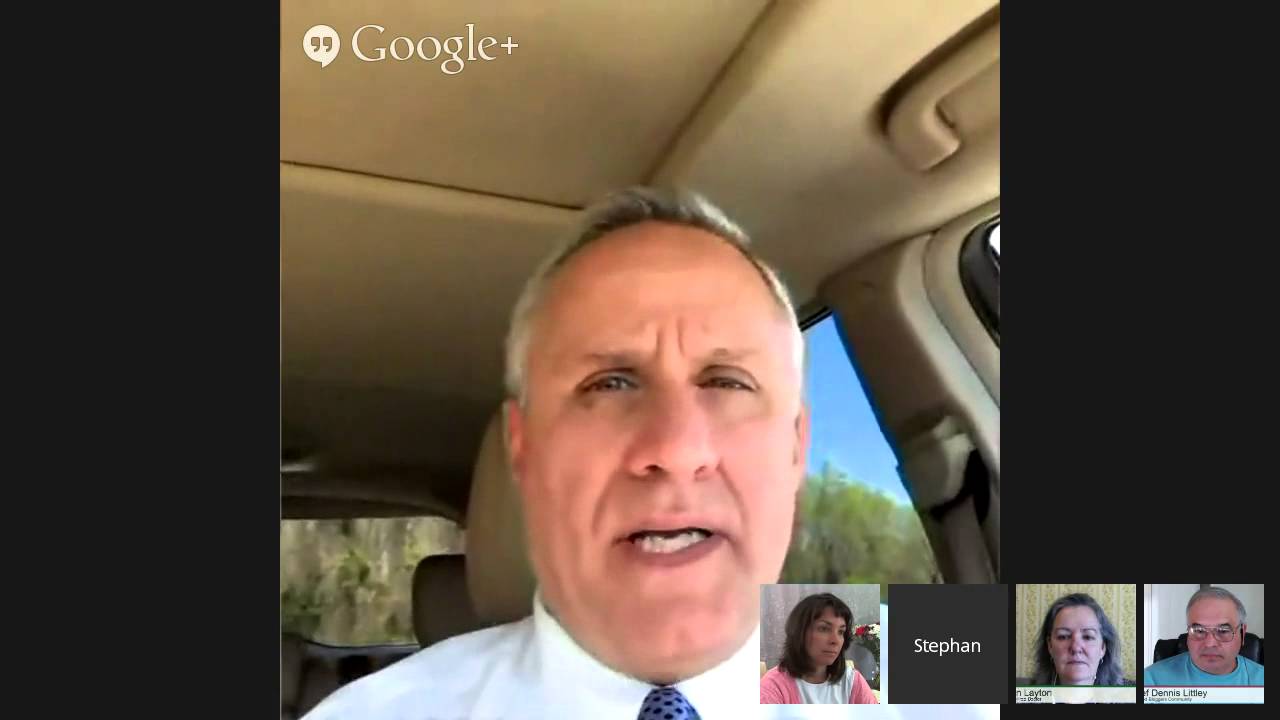
In this YouTube Hangout hosted by Dennis Littley and co‑host Jean Layton, copyright attorney Stephen Futarelle and his partner Tina Willis field questions from food‑bloggers about the legal pitfalls of using images and text online. They begin with a primer on U.S. copyright law, explaining the difference between common‑law and federal protection, the role of registration, and the limited defenses of attribution, fair use, and innocent infringement. The panel debunks common myths—attribution does not shield you, non‑commercial use is not a safe harbor, and there is no "Google defense" for images found via Google Advanced Search. They discuss the threat of automated demand letters from companies like Getty Images, the importance of cost‑benefit analysis before pursuing litigation, and practical steps such as registering works, sending cease‑and‑desist letters, and filing DMCA takedown notices. Technical safeguards (watermarks, disabling right‑click, digital fingerprinting) and the limits of those measures are covered. The conversation moves to developer liability when building platforms that repost content, jurisdictional challenges for cross‑state and international infringement, and the nuances of Creative Commons and purchased stock images (Shutterstock terms). Throughout, the hosts stress obtaining proper permission from the true rights holder, documenting it in writing, and, when possible, creating original content. The session ends with a light‑hearted wrap‑up and an invitation to future legal‑focused shows.
Chapters
—my co-host Gene Layton, and our guests today are Stephen Futarelle, and he's known as the Swiss Army knife of lawyers, at least that's what he tells us. And he's actually been kind enough to come to us. He was in a hearing this morning that went overtime, so he is on his way back to his office and has pulled over, and he's coming to us from Mobile. So you're You're getting a whole other experience here today too besides learning about some business law. And Tina Willis is his partner at Legally Speaking, and she's here to help us also and answer questions. So if you have questions about business law, about copyright law, about anything to do with your blog, you know, now is the time to ask them. Stephen's going to give us a brief overview of things and talk a little bit about copyright law and some things we might need to know. And they just actually did a whole series on this last Monday in their Legally Speaking Hangout, so this would be something you want to go watch after you're done here as well. So I'm gonna turn this over real quick to Jean Layton, and then we're gonna get going. Hey, Jean.
Hey everybody, this is one of those Hangouts that I'm writing the post to recap after our Hangout. I've pulled together the Legally Speaking Hangout from last week and a few other references from around the web But I have this feeling that we're going to be learning so much from Stephen and Tina that the post would radically change. So if you went to my blog and were looking for this week's post, it's not there yet, but it'll be there by the end of the day. And I don't have screen shares because so much of what we're talking about is conceptual and work that would change depending on too many factors. So no screen shares this week. We just get to chat.
That's it. That's always fun. Yeah, we don't do that.
I don't know if you've watched the series much, but we've been doing very matter-of-fact. This is what you do next to get to this goal point.
So it's nice to be able to just talk. It's a little hard to do that with legal, any type of legal issues, as you'll probably find out as you dig into this. That's one of the frustrations lawyers have with actually you know, just trying to give clients advice about where to go, and they get frustrated often when there just aren't clear answers. So a lot of times, not always, but we're in the shade of gray.
I've often gotten advice of where to go, but I don't think we can say that on TV.
You can say it on your show. Yeah, I could. It's harder for lawyers. We have to abide by rules.
Oh well, I've always tried to live by what was the Outback's no rules, no right, I forget what it is, I haven't been there in so long, we won't even go there now, my mind is frazzled. Alright, so I'm going to turn it over to Tina and Stephen, we'll get going, and guys, if you have any questions, please leave them in the comment bar and we'll go from there. So guys, you want to take it away?
Stephen, can you hear what he's— I'm just making sure you hear, look, because you're Oh, oh, I'm here.
I just had a— I pulled over at a diesel truck stop, and I don't know if you could hear the 18-wheeler behind me blaring the horn for me to move my vehicle. The parking lot is absolutely massive. I'm parked to the edge, and yet still somehow I'm in somebody's way. So, oh no, but I can hear everybody and see y'all fine. Just see everyone today.
Well, what do you think? I guess what— so Chef Dennis Littley, what's the main— are you just wanting us to discuss primary legal issues facing bloggers or copyright law in particular? Is that where you wanted to go with it?
Well, let's start with a little copyright law and then go from there, and then some of the legal issues you see facing bloggers would be good to recap with there. So let's start with copyright because that's what we always have questions on, and everybody wants to know, you know, about copyrights. And, you know, our Our posts are always being reposted somewhere else. Our recipes are taken. I know we don't have a lot of recourse with recipes, but I think our images are the biggest thing, you know, when our images get lifted and reposted somewhere else. So that'd be a good place to start.
Dina, you want to—
you want to— well, you're the copyright guy. I mean, I'm just— I'm, I'm here just for— I mean, I know, you know, Getty Images and things like that are— there are a lot of companies sending around demand letters essentially trying to get— some people would say, well, I have to be cautious because I don't want to say anything bad about a company that I can't prove, but they are sending massive numbers of demand letters and people are facing concerns about that. In other words, but other than that, and our copyright guys last week, I mean, this is Steven, you want to go into what do you think about images? I guess he's got the concern of the people who want to protect the images.
So, well, Tina, Chef Jean, you know, one of the biggest things that I think that bloggers face is the use of images. So we'll talk a little bit about what is being written up, but let's, let's focus on the use of imagery because we all know writing an effective blog post, using imagery obviously makes that blog post more attractive, particularly when you're sharing it on social media. So very few posts I see these days I would consider a naked post without some sort of tie-in in imagery. So folks go out to these websites, and I've dealt with this before in my practice as well. You've got websites out there that report to have images that are copyright-free or free to use for commercial use and business use and so on, and the next thing you know, you're getting a letter from a third party, a lawyer, Getty Images, threatening you with suit regarding copyright infringement. So let's, let's take it from the top and just talk about copyright law in general. You've got a body of law that's called common law, which is case law, non-statutory, and there have always been copyright protections for the last, I don't know, 100 or so years. And essentially what its copyright is, is you have a right to protect those things that you create, your intellectual property. It could be music that you write, it could be a painting, it could be a novel, anything that basically you create. It doesn't necessarily have to be artistic in value, but if you created it, it's subject to copyright law. Now, second to that, there is federal copyright law where you basically take whatever work that you've created— let's just say a photograph— and you register it with the Federal Copyright Office, and as a result of that, you get some additional statutory protections. For example, damages that you can claim that are set by statute, an award of attorney's fees for bringing a claim if you do it successfully, and so on. Now, you don't have to register any of your works to be afforded these protections under federal copyright law, but if you know of someone who's infringing on your work, then what you basically have to do is you have to turn around and register it in order to bring suit in federal court to enforce your copyright protection. So that's just sort of a basic overview of copyright law in the United States. So here are some of the common misconceptions I see going out over the web in terms of bloggers and social media. One is that some folks think that if they give attribution to a copyrighted work, that somehow they have defended themselves from a copyright claim. And what I mean by attribution is simply just saying— let's say you use an image and it's from Getty and you write courtesy of Getty Images on the bottom of your post and Getty didn't give you that courtesy, the fact that you gave the creator or the license holder for that image attribution doesn't mean that you have defended yourself legally in any way. Attribution is really just more of a professional courtesy. It's more about business ethics. It's, it's like, for example, when I, when I'm writing something in the law give attribution to other cases and other authors by giving footnotes and citations to the work. It's no different than that. The other misconception that I see is people sort of misunderstanding what fair use is about. Now fair use isn't an— it's not an exception to copyright law. Fair use is a defense, if you will, to a copyright infringement. Oftentimes we see fair use invoked in educational institutions scientific learning, that sort of thing. But one of the fair use exceptions might be basically a claim, hey, I'm not making any money off of using your particular image. I'm a foodie and I'm just blogging and using that image and I'm not deriving anything commercially from its use. That in and of itself doesn't mean you haven't infringed on their copyright laws. The fact that you're a non-commercial entity that's not a defense if your use of that image actually hurts them commercially. For example, if it's Getty Images, they're using licensing fees to profit off of the images that they have. So those are two big misconceptions I see. Attribution, believing it's okay to use somebody else's work by giving it, and also using images for bloggers who say, I'm not involved in any commercial endeavor. One other thing to note, there is no innocent infringer defense under copyright law. You can't say, look, I got that image off a website that got it off of somebody else's website and so on. I didn't know that that photograph actually belonged to somebody else. The fact that you're completely innocent in your knowledge of whether somebody else has copyright to it is no defense whatsoever in a lawsuit brought against you or legal claim for that matter for copyright infringement.
And I can't remember, Stephen, what I think it was Kevin last week was saying about, I guess, and I didn't really understand, but I guess there's something on Google, some type of search. And here's a question that I think relates to that, where Google basically makes it sound like you have permission, but he was saying that's really not true. And, you know, there's no Google defense. Wait, I thought I— shoot.
If you look— Here, do you want it up?
Oh yeah, I guess I can't. Yeah, there's Jennings Penders has the question. He says, when I search for images, I typically use Google Advanced Search and click the option free to use, share, or even modify, even commercially. When I find an image I want to use, I create a link back to that image location. Is that okay to do as long as I use the Google Advanced Search and click the option feel free to use, share, or even modify, even commercially.
And the answer to that, Tina, unless you want to give it—
no, go ahead. No, because like I said, I'm just showing up today as a sidekick. I have not dealt with copyright issues other than the little reading I've done, just making sure I'm safe and listening to you and the copyright guys discuss it. I mean, I've never handled a case related to copyright. I mean, I know a few things here and there, but, um, yeah, so no, but my understanding is there's no Google defense here. Like, this is exactly what you're talking about.
There is no Google defense, and in fact, if you dig down deep enough in Google's terms of services, you'll find basically a statement that says you use these at your own risk. Despite all of that other language out there, Google has not licensed many of these images. They're not owned by Google, so They're images that they're pulling from the web and displaying online as part of an image search, but that doesn't mean that Google owns the copyright privileges to those images. So at the end of the day, if you use Google Images, use them at your own risk. And to further answer that question, the link back to the website is much of what I'm talking about in terms of attribution. The fact that you credit the image with a link back to its source still is not a defense to any copyright infringement. And I know this seems rather confusing. It seems like, well, I should be able to use these images. And one of the things that they talk about is modification of the images, and that brings back some other fair use defense and factors, whether it is a derivative work or it's the original work. But the long and short of it is if you don't know where that source came from, and for example, Google will give you a link back to an image on a blog post as part of its Google image search, but you don't know if that blog poster actually downloaded that image from some other website and then now it's being served up in Google's images as well. And that's a lot of what you see with these— Tina, you mentioned the gay demand letters, and I'm sure at some point we've all heard about those letters if you blog and post and publish enough. And essentially Getty has very sophisticated software that goes out onto the web, looks for images, even images that have been altered in their nature— dimensions, colors, other images added— but can still discern what images belong to them. And then they have a team of lawyers that they contract out for that send you these demand letters asking for thousands and thousands of dollars worth of payment for use of a single image that you got off of somebody else's website that you didn't know belonged to anybody else.
Yeah, and a lot of lawyers just basically will not use even purchased images. They're very conservative, some of them. I use purchased images, but The bottom line is the only safe way is to create your own content or take your own photos. Now in terms of protecting your images, I know Kevin mentioned to me last week, he's a copyright attorney who joined us last week, but he mentioned before the show how they go about searching for images and for text and they literally just type in, I guess they, I'm not I think with the image, I'm not sure with the image. He sent me a link and I probably could find it, but he either searches for the images or just searches for a block of text online. And then, you know, like they found a firm who had copied their entire website, and, you know, and it was actually a copyright firm, and it was the SEO company that this firm had hired copied the entire website in the text. And so they sent them— I mean, what you can do in that situation is contacting a copyright attorney and they can send a cease and desist letter. And the good news is he said that very often they're just— the person who has the copyright is just trying to protect their intellectual property. And so if you get that type of letter, as long as you take it down, at least for some attorneys and some of their clients, some copyright attorneys, they will not pursue. They only pursue if you are unreasonable and you refuse to take down what's clearly copyrighted information. Now, that being said, he also warned us that there are these companies who are, you know, doing mass searches for images, and they are actually trying to get— it's not enough for them if you just take it down. They want money. Um, sure, sure.
Well, Tina, you brought up something, and Jean and Chef, one of the things that I mentioned early on was, I said, let's Let's talk about images, but now let's talk about text as well. And Jeff mentioned, for example, that recipes are not subject to copyright. Facts can't be copyrighted. If you list ingredients, those necessarily can't be copyrighted. But let's take it a step further. And Jeff or Jean, let's say you have written a wonderful blog post that someone out there decides they're going to repost I'll give you a real-world example of this, something that came up during the show. I have some posts of mine that others out on the web have, for example, quoted a few lines from my post and then given attribution back to my website for the post. They copied and pasted a paragraph here or there or a sentence or two. With that being said, I'm flattered that they reference my posts. That's great. And in terms of actual copyright infringement, under the fair use exceptions, we also look at how much did they copy? How substantial is it? And in that particular example I just gave, a few sentences out of a 1,500-word post, it isn't a substantial portion of what they've copied. There isn't likely any infringement there. I appreciate the professional courtesy to give me attribution. I'll give you another example though. There was a law firm out in Arizona that literally took about a 1,600-1,700-word post that I had done and copied it all verbatim. Now they gave an introductory paragraph giving me attribution for having written the post, they put a link back to my website. But they copied the whole entire post onto a page on their website. And I contacted them and I said, as much as I appreciated them giving me credit for it, they completely copied an entire post, and I asked them to take it down, which they did. And so that's clearly copyright infringement. Now, if I wanted to sue them, which I didn't want to do, I would have to register that page and that that get a copyright essentially from the federal government regarding that particular post. But I'm still afforded protection enough to send them a cease and desist letter, which is basically take it down or the next thing you know I might pursue this. Between y'all and the fence post, I am not going to Arizona to sue somebody for a single post, okay? But I just wanted to give you two examples, if you will. So the The takeaway from that is if someone else has posted something, they said something very eloquent or poignant, something that you really like and you want to copy a few sentences or quote them in a paragraph, great. But make sure that it's not a substantial portion of your post. If it adds value and you continue on with the ideas and you make them your own, that's fine. Now there's one other point to be made here, which is As those of us who post very, very frequently, sometimes we find ourselves looking at other people's posts for ideas. Let's face it, post enough, right? See another person's post, it's going to give you an idea. So let's talk about, like, Tina, for us, if I want to post, Chef and Jeanne, about personal injury, I'm not knocking my profession, but there are only so many ways you can make a personal injury post interesting to the reader. There are only so many ways that you can describe—
I haven't discovered what any of those ways are, by the way.
Neither have I. This is far more interesting than me writing about personal injury. Having said that, there are only so many ways to describe the laws that Tina and I and others are so familiar with. Many of them are very similar from state to state, so you start to see that these posts look very, very similar to one another. And my point is, it's not copyright infringement to paraphrase an idea, right? You can take another person's post—
Right, that's a really important point, that you can't copyright an idea. So you don't have copyright— I mean, you literally could summarize an article, paraphrase it, or whatever, as long as it's not an identical copy of the text, then you're safe. And another point was I know you just said this, but basically a short quote is what's acceptable, is considered acceptable. So like you could have a short quote and then have commentary on that quote, and that would be acceptable. And also like you're saying, the idea, but we have quite a few questions coming in.
Steven, can I ask you one though?
Because I've always— You may ask me as many as you like. Many as you like.
I've always understood understood that when you use Google Advanced Search and it says free to use, share, or even modify, even commercially, that the photographer has granted those rights within their upload of the image. And so they gave permission, as far as I've understood, as they uploaded the image. Now you can do that in many ways. I mean, you can do it picture by picture, or you can just grant permission. Like if you have a Flickr account, you can grant permission to the entire account that people can then use as references. And I know when I find an image and I need to use it for whatever reason, I always do the link back so that they know I've used their image. Sure. Because for me, I want the photographer to know, hey, you've got one more copy of your image out there and I actually—
I'm sorry, I can jump in there, Stephen, on that one because there are some horror stories on the web, some of which I read last week researching for our show. The issue is that sometimes there's a false representation by the person who's doing the upload. Exactly. They may have uploaded content that they stole or whatever they did, they didn't have permissions, they uploaded and claimed it was fine, and Google is now saying it's fine. I mean, I don't know how, you know, Google might end up getting—
Well, that's why Google says you kind of do this at your own risk. And Gina hits on the point precisely. When you do an upload, and I haven't uploaded any images, but if you go through that process You're going to click on a certification that you basically are the owner of the material that you're uploading. Well, Google doesn't verify that at all. So if I went to Getty Images and I downloaded a bunch and then tried to clip out their watermark and then just went to Google and started uploading them en masse, now I can assure you if that starts to catch up with me, Google's not going to be very happy with me for that. But if you read the fine print, there's only so much that Google does to verify ownership. And that's why I made up that— made it a point to talk about there is no innocent infringer defense. Now, obviously, if you go in front of a judge, they're going to feel some compassion to say, look, I downloaded this from Google, so on and so forth. But different judges are different. Some are going to say, I didn't write the law, there is no innocent infringer defense, and therefore you've infringed on somebody else's copyright.
Well, one thing is It could help you with the statutory damages you were mentioning. Correct. Because the statutory damages, which you mentioned earlier, but I'll just say again, those are the really scary part of copyright from my perspective, because I think it's like $150,000 potential fine per infringement or something. I'm not sure about that, but it's a lot. It's a lot. But one of the requirements requirements to have those kind of damages is that it must be intentional, and I think that might actually, even though there isn't a Google defense, there might be indirectly in that case because it really wasn't— I don't know if there would be, Stephen, you know, I can't say that for sure. Would you think that would protect you from intentional— You know, I wouldn't say for sure.
I mean, you put the same case in front of 10 different judges, you may get 10 different outcomes.
Yeah, actually, I wouldn't even say for sure because that's where we say issues in the law aren't clear, that's something that I would try to argue, but without researching it, I don't know if even that would get you there. That would help a lot, Tina.
That would help a lot to say, look, I did go to Google, whoever is uploading these images has granted licensing and so on. So I think that would be a fairly good showing that you didn't try and willfully violate somebody else's copyright. Yeah, and then you would have to show—
the person suing you would have the burden of proving actual damages. So they would need to— that would be difficult for them. So, you know, it maybe is a little bit of a safer type of infringement. I don't know if you could say that, but it's still the best way. And someone says it here, Nazim Beltran, saying— oh, I guess I can't share here, but he's saying So at the end of the day, create your own content. Great point. And that's, you know, definitely true. But we're getting some other questions here.
We have a question here from Nazim that he put up early, and it says he has a client, a famous fashion blogger in Italy, who insists on reposting non-original Instagram material on her site. Since we're building the backend and frontend, and Instagram is quite adamant about not using non- original content as a developer, am I legally liable for what she posts on her website? Should I get something signed by her that we are not responsible for the content she will insert on?
So since he's building the website, he's posting it. Well, you know, the answer to this question depends, Nazim, in part on what you mean in terms of development. For example, say you're just developing the framework or you set up a WordPress site for them and installed plugins and said, here's how you post, okay? Beyond that, if you're not doing anything to control the content, the likelihood of you being held responsible for that is not very high. Any more so than the likelihood that if I used copyrighted content on my website, that someone could sue my server or hosting company for me doing that. There's a little bit of a distance there, but if you're facilitating any of those posts, if you're helping to make them happen, then yes, you could be held responsible as well.
So he would need to worry about plugins that he puts in the framework that would draw from Instagram?
No, I— well, again, Jean, I think it depends on precisely what it is he and his company are doing.
Yeah, absolutely. I mean, another— if she's— let's say she's uploading a draft and then he's inserting the title, meta tags, maybe doing a little bit of editing to throw in more keywords. Well, but then you might— it might not be copyright so much because you've changed the— it'd still be a high percentage copying. I mean, in other words, if he were doing that versus installing a plugin and then she were doing all the Instagram posting I would see those two situations as different. Mm-hmm.
Well, Jean, if he was developing some sort of— not to get too tech here, but if he was developing an API to help her pull these posts and images directly from Instagram to put on her site or elsewhere, then sure, he could be held responsible for that as well. So while he's not actually taking— he or his company are not taking those images and putting them, say, on his website or publishing them in print and so on. He's helping to facilitate somebody else who sounds like they may be willfully violating copyright law as well.
Yeah, we had another question from Maggie Unzueta. Everyone gets her last name, I think, confused, but she's saying, I started taking my own pictures because of all this, Stephen and Tina. The million-dollar question: how can I prevent people from using my pictures? All right, well, uh, do you want me to— that I don't know the answer to that. All the only thing I know is, like I said, from Kevin, that he would do a search periodically looking for his images. And I think there are some techie ways. Someone mentioned in here you can disable right-clicking. I am not that— I couldn't do that. So you probably could because you're the tech guy.
So there is Well, to answer the question here, it's Maggie, right? Yes. Okay, Maggie, couple of different things here. I mean, you can put a copyright symbol on your images. Anybody can do that, whether you've registered with the feds or not. I guess the point in putting that copyright out there is at least to give the user of the image or whoever's reading your blog post, etc., some indication that you're you're more serious about protecting your intellectual property. Now the answer to your question is not so much a legal one to me as it is more of a technical one. When you put these photographs out there, there are certain programs out that you can buy and use that will put digital watermarks on your images, also will go and look for those watermarks and tell you whether those digital images are being used elsewhere online. Did you say software?
Did you say software? There is software for this.
There is software for this.
Okay, I wish I had that.
The name of it escapes me. I used to use— there is software that will put copyright specifically on a blog post for you. There's a— I wish I could remember the name. It'll let you copyright 5 posts a it puts a date stamp on there and it'll also allow you to track if somebody else is using that same content. And there's similar software that can be used to place watermarks and information like that in digital media. So to answer the question about original photography, it's more of a technical question and it does become a challenge to track it down. What if somebody crops it or resizes it or or uses only a portion of the image where you put your copyright or your name on it. And that's where these digital solutions or software solutions come in, because oftentimes what they're doing is they're placing small hidden code and images throughout the image itself that can be decoded to show that that was your particular piece of work.
We have another question. Wait, one sec.
Because we're here on Google, we should be explaining some of the benefits of our platform. If you upload your pictures through Google, they are now tagging your pictures as they're uploaded with your name. That helps somebody claim their work as it first comes onto the web. Those connections go with the images. If you take your image and embed it in a blog post Or even if you use BlogPost to host your images and embed them in your WordPress, the connection to your claim to your work exists. Good point, Jean. It gives people, without having to get too techy, it gives you the ability to say it's my work, I uploaded it on this day, this time, and Google can prove it. It helps a lot. I didn't mean to interrupt, but I just wanted people to realize that by using Google as your base you're already creating that track, that timeframe or timeline of this is mine. We did have somebody who asked very specifically about the right-click and I think that may be getting a little bit too techie.
Well, here's the thing, the right-click is a little techie. The software that I was talking about or the plugin for WordPress does prevent you from right-clicking on an image or on text. But if you want to get very technical, you can always view the source code of any page and see what the path is to the image and go straight to it on the web and download it anyway. So it offers a minimal, minimal level of protection. I mean, it's better than nothing.
I think this is another good question. Piggybacking on Maggie Yu's question, this is from Kirsten Madius. Madass, what are my options once I discover someone has taken my image or copied the headnotes, my creative writing, not the ingredient list? I know about DMCA takedown notices, but what if that doesn't work? What next? And I, you know, I meant to ask Kevin this, but I'm almost positive I know the answer. There is absolutely no copyright attorney who's taken a case on contingency. So what you're looking at then, I'm assuming, assuming, would be hiring an attorney at your expense. And, you know, so that actually could get pricey. It's not like you just automatically are going to have an attorney. You're going to have to hire one. That being said, my experience in most practice areas, it's usually worth, if it's really concerning to you, at least a consultation with a copyright attorney in this case to find out your options. So a few hundred dollars explain exactly what's going on, and they can probably give you the most cost-effective way to deal with it. But Steven, I'm thinking the only thing you can do in that situation is hire an attorney, pay them, and start filing a lawsuit.
Is that right or wrong? Yeah, no, you're absolutely right, Tina. And the way I would explain it to a client is we really need to do a cost-benefit analysis. So let's say you're an amateur photographer, you do beautiful photography, you post it out on the web, and somebody's is copying it. In order to pursue a copyright infringement under federal law, the next thing you'd have to do is actually take those images and then register them with the Copyright Office. Once you've accomplished that and gone through that task, which is not difficult, you don't necessarily need a lawyer to do that, to fill out the forms and submit it, but once you have federal copyright protection and you get a registration number for that, then you turn around and you're filing in federal court. Now the answer to the question also depends on the locale of the person you're trying to sue. What if you're in Florida and the person who is copying your images is in Arizona? Is it going to be worth your while financially to pay a lawyer in Arizona to file suit in federal court to ask for an injunction or to have those images removed? If you're a larger business, if they're using copyright at work, that is something that you derive your income from, etc., cost-benefit analysis may say it is very well worth hiring a lawyer to pursue this. The answer to the question really comes down to what is it worth to you because it can be expensive. Now, one last point to make. You take somebody to federal court, you get a judgment against them. Let's assume that you're successful, you get an award. Award of attorney's fees, you get award of statutory damages. They need money. What if they're just some 20-something-year-old deadbeat that lives in their mom's basement?
Yeah, we were just talking about this. How do you satisfy the judgment? Yeah, this actually came up kind of indirectly, Chef Dennis, in our Google Hangout in real life this weekend. Someone who joined us had sued for a problem with a house, and, you know, there was all this mold and there was a problem, and they sued, and the person had just nothing. And people don't really always understand that until they get into a lawsuit or even get a judgment and realize, you know, a judgment isn't worth anything unless the person you have it against actually has the money to pay, because there's not like some magical, you know, government fund or something where you're going to get money. That doesn't happen.
You don't go to jail for not paying civil judgments. I mean, you can sue somebody for court, and each state's laws are different that way. But the bottom line is, if they don't have a pot of gold somewhere, you know, that judgment for money and attorney's fees isn't going to be worth the paper it's written on. And you've now paid a lawyer a bunch of money to pursue a fancy-looking piece of paper that you can frame on your wall. Yeah, I don't want to take away from what we do for a living, but yeah, I mean, I don't always explain that real well.
I mean, the good ones do, you know, but it's important point that if you're going to be paying a lawyer by the hour to handle a lawsuit and get you all the way to judgment, you need to know at the end that you're going to have something. But again, it's got to be worth initially the cost-benefit, and then at the end, right?
So, and this is something we have to do state to state then too if we're going after people. It's— I mean, we can't bring them to where we are, we have to go to where they are.
Well, Chef, this question came up, and this one even between the two copyright lawyers that we were discussing this with Wasn't a clear-cut answer because the digital age starts to sort of— let's say the law is still catching up to this. So it's one thing that if I have an image and let's say I've done a photograph in Charleston, South Carolina where I live and I find out that someone in Key West has taken my photograph and is selling it in Key West. Well, then I would bring suit in Key West jurisdiction. That's where the defendant resides. Now the question becomes different when you say that person is Key West but they're putting it out on a website that's being spread out everywhere.
Yeah, it's a personal jurisdiction. That's kind of a little bit more— it gets very— there's a complex, extremely complex rules about federal personal jurisdiction. Some of the most confusing in law school, but it's basically that the per— the defendant availed themselves of resources in that state. And there are all sorts of cases explaining what that means and doesn't, but it's like if you had typically, like in the older cases, if you had telephone calls and interacted with someone in that state by entering a contract with them or doing different things in the state, you did some things to put yourself in that state, or you're operating a business in that state state. So let's just say it was a company that had nationwide locations or something, but I don't know if just put— I haven't looked at recent case law to see whether just putting something on the internet, which of course is international potentially, but I don't— I'm guessing under the older case law that just that would not be enough to get you to bring them into the state you're in. They would have to have some actual activity in the state, like I said, either business location, deals, dealings with you or something. Don't you think, Stephen?
I, I, Tina, I think you're absolutely correct and I think it also illustrates that it comes back to cost-benefit analysis. You could hire me, for example, or your lawyer to fight over jurisdiction and whether that person should be brought from Key West to Charleston to face a lawsuit and spend thousands and thousands of dollars just being told, okay, you can bring your lawsuit here or you can't. So in all likelihood, Jeff, if I were discussing the circumstances with a client, I would say it's probably going to be faster and in the long run cheaper to just sue them where they reside. Gotcha.
Otherwise you're fighting over it. Now, Nazim Beltran had asked a question about this too, since you talked about international law, and he says he doesn't want to open up a can of worms, but how can we deal with copyright issues in China?
Uh, I don't have an answer for that.
No answer for me. I got no clue.
No, no, that's way outside my wheelhouse. Way outside.
Yeah. I mean, basically I would think just kiss it goodbye pretty much. Yeah.
Well, let me contrast that, if you will. There's a law firm here and a lawyer who passed away last year made famous his, uh, his, uh, what was that, uh, movie with Russell Crowe, the tobacco movie. And the lawyer's name, uh, is not so much material as it is the law firm that brought all of those 9/11 suits and all of the things that they've had to deal with, not only in the court system trying to, uh, you know, do Saudi Arabia and other countries, but the political implications of attempting to do that as well. I can't even imagine what it would be like to try and bring a copyright infringement suit against an individual or even a business in China. Again, I think that's way out my— I am happy to report that is way outside of my realm. Yeah, right.
I mean, if it really, like you were saying, it's the same thing though. If it's really costing you a ton of money, I mean, or somehow affecting your business on a huge scale, then you would need to contact an international attorney, someone familiar with Chinese law, etc. I mean, if it's worth that to you, that's the way to go. I mean, most United States attorneys that I know wouldn't have much of a clue. Maybe some of the copyright guys do, because I've seen this question come up actually before our show, and several people were asking about international issues. So I'm guessing the copyright guys have seen— have heard this question, since I've already seen it several times just in our shows. But, you know, yeah, no answer.
We might ask attorneys in China that advertise for the People's Republic, right? Yeah, right. That's a little inside joke for me and Tina.
For the People's Republic. Oh yeah, right. I've seen a question also quite often about Creative Commons. I don't know if you want to spend time getting into that, but I know from, again, from my research for the show that there are lots of problems with that. But I cannot remember the details. And again, I'm not a— let's say, so Nazim is saying— what does he say?
Oh, that's a different question. Is Creative Commons a viable option to look at or a waste of time in court cases to defend your copyright?
Yeah, so Stephen, can you have a quick answer or a good answer on Creative Commons more than just— I know it isn't a great option from what I read from a few copyright material.
I think this all comes back to the practical aspects as opposed to the legal, which is you've got these websites where people are uploading images saying that they have the rights to the image, okay, or that they're the creator of the image. They're giving Creative Commons licensing to these images, but you don't know exactly what the source is. Here's the thing, I think at the end of the day, if you purchased— or I'm sorry, if you used images that had attached to them or associated with Creative Commons usage rights, you certainly have a defense against any willful claim that you acted willfully in terms of infringement. But really, at the end of the day, consider the source. Consider the source. For example, when I do a blog post I buy my images from Shutterstock, and there are other companies out there as well, and they've got some pretty good deals out there. I realize most folks are on a budget, they don't want to pay a whole lot for their images. Obviously, being a lawyer and posting with images, I don't want to get sued for copyright infringement, so I will buy mine. So if you're going to go the Creative Commons route, then my suggestion would be consider the source. Use those that are most popular and most reputable. And stay away from the outliers.
And another thing, I actually spoke sometime last year with a copyright attorney about images on my site, and I also purchase from Shutterstock and use my own images. But she said, you know, and I— this makes perfect sense— when she purchases images, she also looks at the terms of service, which gets really detailed. But I read through all the Shutterstock terms terms of service and you actually can't upload them after a year. So when I downloaded the image, I actually download the date that I purchased it because what I did was I bought a huge block of them, like a, you know, maybe, I don't know, I think you can do a certain amount per month, like 25 images a day. So I downloaded a whole bunch but I cannot upload those more than a year after I downloaded them. So I— and then what she does is she downloads— she notices the date she downloads the image, and then with that image she downloads the terms of service. And I was just on Shutterstock the other day and noticed they've updated their terms of service, which I didn't have time to read. So it gets really, you know, dicey even with purchased images, but just hope that you're safe. And in general, they allow you to use them as long as you comply with that rule, at least Again, I haven't read their updated terms of service, but it's hard to be safe out there even with, you know, in other words, copyright attorneys are being cautious even with purchased images. I don't think they would ever go to Creative Commons. Is that kind of like the Google thing where you just—
there's some source? Creative Commons, Tina, is just basically a confederation of intellectual property owners who come together and come to— come together and sort of created a different set of rules, and they're trying to allow for some freedom and use of their created images or other materials. And some requires the Creative Commons license, maybe, hey, that's fine, you can use this for non-commercial purposes as long as you give me attribution. Or you can use this for commercial purposes as long as you give attribution.
So again, you'd be relying on the person who's uploading it. You don't know who they are. You know nothing about them. You don't know if they are basically being fraudulent. And so, but it doesn't protect you that you, hey, they said they were good. Well, that doesn't, that's really not a defense. So yeah, it's similar to the Google situation.
Jean and Chef, here's the thing, when you start asking a couple of lawyers what they can and cannot do, if you listen to us long enough, you won't even step outside of your house.
That is so true. It's a big challenge with being a business person. My husband runs into this. We have a separate small business and I can't tell you the number of deals I've said, "Ah, it's not looking good. Here's all the problems." Hey, Stephen, there's another question that's pretty fun. Kirsten Mata says, next question, since you're in Charleston, barbecue sauce, mustard-based vinegar sauce, or tomato-based sauce?
Well, to answer your question, I'm now vegan, but when I wasn't vegan— Hey, tofu!
Can't you like barbecue tofu?
And now you're really talking about— Tina, he's talking about Columbia, South Carolina, which is the barbecue home of the South, really. And I'm a mustard base fan myself. That's just me. Okay, that's a great question though. I miss my barbecue, I do.
Barbecued cauliflower. There you go. Beautifully, the texture is gorgeous. So a question just kind of to wrap it up, since we're talking about bloggers and some bloggers want to be generous and help each other out with things like a recipe roundup. And frequently they will ask permission to use a photo. As long as you give the permission to use the photo, there's no copyright concerns at that point, right? So if you say you may use it, you've given permission.
You can ask, but that assumes that the blogger who got the photo, that that photo belongs to them. So to expand on that, if they downloaded it from Shutterstock, they don't have the legal right to give someone else the right to use. Or if they got it off of Google Advanced and it turns out it belonged to somebody else, the fact that you get it from Blogger A gives it to Blogger B and Blogger A says, hey, sure, feel free to use it, that doesn't provide any defense.
I think at the end of the day— So the baseline is go take your own.
But that is a good point, that that's one of the first pieces of advice that a lot of attorneys will give each other, or have given me even informally, is, you know, ask for permission. As long as you know that the person is the legitimate person to give you this permission, that is a good strategy. It's just that you also, like Stephen said, can run into problems. For example, I wanted to take some stuff from an article that was published in a journal. Well, the author is not the one who can give permission on that. It would actually need to be the journal, so— or both. I mean, in other words, you've got to dig. You've got to actually make sure the original source of the material is the person giving you the permission. But that being said, as long as you're comfortable with that, then getting permission I think is a good way— you know, it's a good place to start. If there's something that you really, really want on your site, start by asking. Asking. Just make sure you're asking the right person, right, Stephen? Absolutely.
The right person is who you need to ask and no other.
And just because it's from a cookbook doesn't mean the author can give permission.
No, it does not.
Because the company owns the book. Correct. I know a lot of people who are like, "Well, I asked the author who created the recipe." And it's like, yeah, but they signed away their rights when they published the book. Correct. Right.
Again, that's another thing that might, might give you an argument that it wasn't intentional and therefore keep you from those statutory damages. It might. That's something I, again, I have to research. But yeah, bottom line is, if you're getting permission, make sure you're getting it from the source of the material, whoever owns it.
And always, as lawyers like to advise, get it in writing.
Definitely. Do emails count? Emails count.
Emails count. Yeah. Okay. Yeah.
Okay.
So I think there's so much with this. I don't— we didn't get into— anyway, it seems like we've covered the basics of what bloggers should— you know, the bottom line is try to be original or get permission, right?
I know you just take your own pictures as your best defense and, you know, not to use others whenever possible.
Yeah, and never use a headnote. Always write a headnote as the writer and never use a headnote as you connect to somebody's recipe. Because I'll connect back to people that I use for inspiration, but it's a link to their original post. So it's telling people, here's where I got my inspiration, and I've changed it out to be gluten-free. And here's, you know, here's how I made that transition. So I'm not linking to the recipe, I'm linking to their writing.
Yeah, and you're not in violation of any copyright laws. You're coming up with your own ideas and making it gluten-free and writing your own content. As we said, ideas and facts are not subject to copyright.
I would just— I was gonna say, Nazim is saying, Stephen and Tina, I need to convince my clients to fork out the bucks for for original photos, and I would say yes, that's true, or go to some place like Shutterstock and just make sure you're within the terms of service. Those are the two.
Oh, I'm sorry, Tina, Nazim, what you can tell your clients is buying the images from Shutterstock, a whole heck of a lot cheaper than paying a lawyer, let me tell you.
Yes, it is. A whole heck of a lot cheaper.
Although they are not cheap. Shutterstock is not cheap. I'm expensive, that's all I'm saying.
Well, and Nazim said, thank you so much, I cannot imagine how much this would have cost as a legal consultation.
I'll send you a bill. You're welcome.
So we really appreciate it. You know, there was a whole line of conversation that I was hoping we would get to, so perhaps we can invite you back because There's also the business aspect of setting up a blog and the structuring of that idea of a small business and what kind of documentation needs to happen, how do you maintain expenses, and there's so much on that end as well. It'd be fun to have you guys back.
That would be awesome.
We love it. I would love to do it. That's definitely in my wheelhouse if you'd like to have us back.
Happy to do it. What do you think, Jeff?
Can we fit it in?
Sounds like a plan to me. Okay. We'll make it happen. And I'll try and be in my office next time. It's getting a little warm in the car here, by the way.
Oh no!
If I turn up the air conditioning, the autofocus is going to be on me the whole entire time, right? So—
Well, it was cool seeing all the trucks drive by.
Yeah, oh yeah, I'm telling you, this This is— at least they haven't been honking at me. Here goes another one.
I was thinking we should send Sunco a bill for the advertising we're doing for them.
Yeah, right. What is the place?
Oh, this is— Jeff, you're always thinking business. You're always thinking.
Yeah, this is called a shout out to Love's Truck Stop in Orangeburg, South Carolina. There you go.
Oh, wow. And I'm guessing they don't serve barbecue tofu.
No, but they have a Waffle House.
Hey, that's all you need is a Waffle House. We got plenty of them in Florida. Although I've never been in one in the light of day, so I, you know, it's probably be an interesting thing to do.
I don't think I've been in one before 2 AM, and that hasn't happened for decades as well. Yes, long time.
So, well, thank you so much for being here today, and we had a great time, and we We had a lot of great questions and we will have to have you back to talk more about business law. I actually have some things to talk to Tina about because I want to incorporate. Woohoo!
Sounds good, chef.
Yeah, need to get some more conversation going here, not just dinner and ice cream, huh? We'll have to talk some business too.
Yeah.
Well, I got to get back on the road because Tina and I have our HOA at 4 o'clock. Yep, and I have—
I'd love everyone to join us to talk about the McDonald's hot coffee case, which even though it's 20 years old, actually has had a huge effect on the American justice system, and it's still affecting— it's just a really— it was a landmark case, and many people don't understand the facts of it. So we would love for anyone to join us for that show today at 4 Eastern Standard, so that's 2 hours from now. That's right, jump on there right after my cooking show.
Yes, I'll be there unless I get pulled over and get a ticket for trying to get back. I'm gonna follow that truck. Follow that truck. Alright guys, thanks so much.
You're gonna be going from truck stop to truck stop. Thanks so much for coming. Thank you.
We'll see you soon. Thanks for stopping by.
Bye-bye. Bye.









