The Bloggers Guide to Using Google+ Effectively - Communities
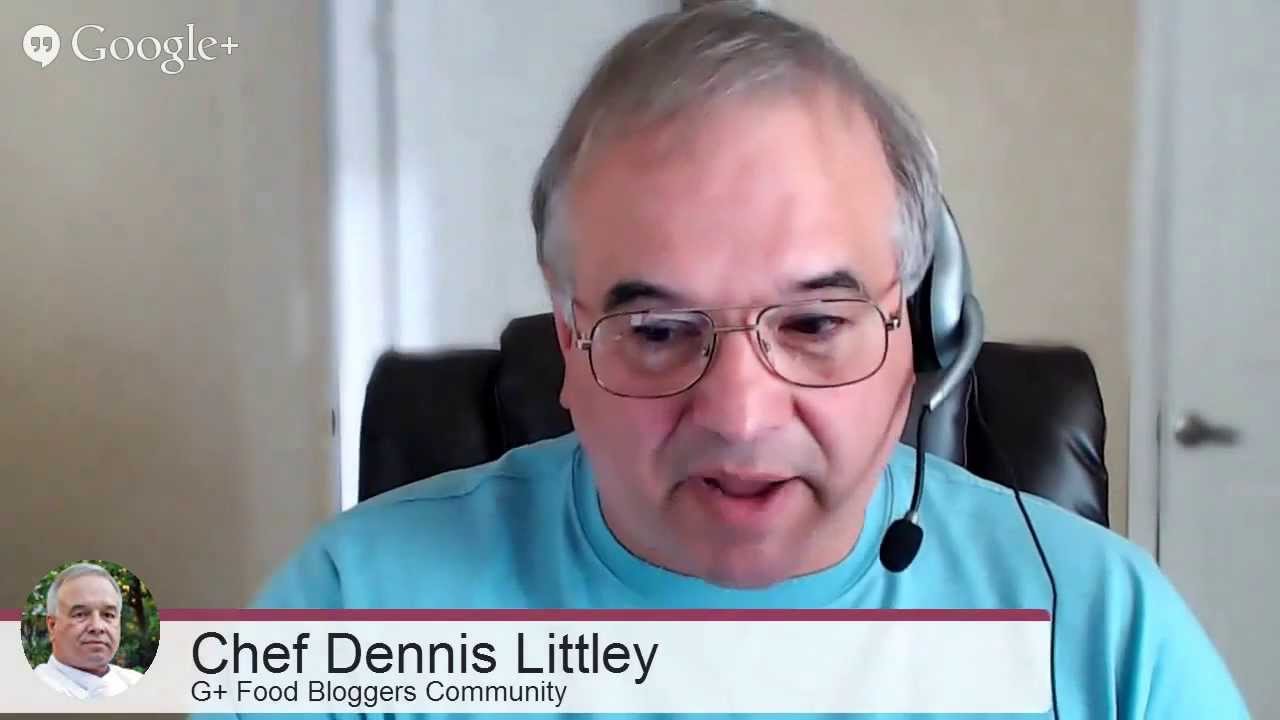
Chef Dennis Littley and Jean Layton teach food bloggers how to use Google+ Communities effectively. Google flags repeated link-dropping as spam after the third post, and being labeled a spammer removes your profile from search. They cover joining and creating Communities, moderation strategies, posting tactics like repurposing full blog posts, and cross-platform tools like Hootsuite to amplify reach without cluttering streams.
Chapters
Hi, I'm Chef Dennis and we're here today for another edition of the Blogger's Guide to Using Google+ Effectively. We're here to help you all learn how to use Google+ to your best advantage so you'll be as happy on it as we are and you'll start making lots of new friends. There is really some method to the madness here and the biggest thing we can tell you right from the get-go is not to think of it as Facebook. As hard as that is to comprehend, it is a completely different animal. We're here to help help you and answer your questions. If you have any questions, please leave them in the comment bar and we will do our best to get to them. If you have any questions on any of the old ones or you want to share some of our old videos, you can find all the videos either on Wingwoman Productions, which my co-host Jean Layton runs, or you can find them on my YouTube channel. So either way, you know, they're out there. Share them, give them to your friends that haven't drank the Kool-Aid yet and get them over here to Google+. So now I'm going to turn it over to my co-host Jean Layton, and as usual, she's going to run you through the dynamics. Today we're on communities, so I think you're going to find a lot of great information today. So here you go, Jean.
Thanks, Dennis Littley. Hi everybody, welcome. Communities are kind of a unique structure here on Google+. People want to make it sound like they're similar to the groups on Facebook, and in some ways they are, but in other ways they really are the heart and soul of Google. It's where I found my first kind souls and people I could listen to, to learn from. And I think for most people, one thing to keep in mind is whatever you say within a community If you're using Friends and Me to move your Google+ posts out to Facebook and Twitter and LinkedIn and all of that, if you're using that tool, what you say in a community doesn't go out. So in some ways it's like the safe place to start talking in Google+. So that's what I think of communities as because there are so many areas within Google+ where it's like, oh, should I say that or should I not say that? Does it make any difference? Because Google+ really wants to get to know us as people, as whole people, and not just us as our brand, they want to see those aspects of us that are unique to our being. For me, that's communities because even though I'm known as the Gluten Free Doctor, I'm a techie geek person. I have joined more communities in that realm because I want to hear what people are talking about in SEO. I want to hear what people are talking about in semantic search. I want to hear all those details and then I can distill it down and use it within my community, big community of gluten-free. But it also gives me all these other places to play with. I'm not just a doctor. I raise chickens, I knit, I have twins. There are lots of aspects of me as a person that I do want to have connections here on Google+. And through the communities I have all those connections but they're not drowning my stream. That's what I think of as Google+ communities. So let's get started with them. Everybody here is, I hope, part of Chef Dennis' Google+ food bloggers. If you are a food blogger, you want to be there. So I don't think in my images I have Chef Dennis Littley's particularly shouted out, but you should join it. And if you're not a food blogger, whatever you consider your keyword is the thing to use. So this is the post I wrote on Wing Woman Productions and it's really simple. When you go to your basic profile and you go to home and then slide down to communities, it opens up this page and for me it's going to be a second because it takes a while. It opens up the page of all communities recommended for you, create a community, search for communities. So I would punch your keywords into that search for communities assuming you have nothing else yet. And get that keyword placed in your group of people you can listen to because those are the ones that are going to be relevant to your business. In Google+. But as you can see, I have quite a few that I moderate, and then I have even more that I've joined. Now, the thing about joining a community, you can join a community and then you cannot listen to it. Basically, you can go and click in when you want to click into a community and be able to listen to it on your terms, and that I'm going to get to in a little bit. But that's by setting the notifications. When you first click through, you get this Discover Communities, and there's a lot of Google ones highlighted first. Use that search box to find the ones you want. For people in the food blogging world, Food Porn is probably one that might be a good one. Food Photography could be a good one. But the other thing to think about is click through and see what's happening there because some of them are what I call link dumps. It's just everybody posting their blog post links. That's not a conversation. That's a, at best, curating of people's work. I find those communities to be incredibly boring. If I needed to see everybody's blog post, I could be following them on their professional page and see it all. So a conversation is what I'm looking for. Your mileage may vary. But to be able to open your own, let's say you have a unique niche and you can't find a community for your unique niche, but you can get through the main search bar, you see there's people who are interested in it. So when I first got here, there was no gluten-free community, or the one that I did find was nothing but a link dumper. And so I wanted a community where people would talk about all the differences between finding different restaurants, finding different products, how do you make it happen. So I actually created Gluten Free Thriving, which is my gluten-free group. I call it mine because I'm the owner. By being the owner, you get to set your own strategy for the community. You can see in this area about this community, it tells my members or future members how to post on the community. It also gives me the criteria that I've used to tell people, no, this isn't an appropriate post. You can see I've got one post flagged as spam, which means that Somebody's posting something that I have either tagged as spam in the past, and so Google helps me enforce that as I moderate, or it looks like spam because it's similar to things I've already marked as spam. It may not be this particular person I've marked as spam in the past.
Can we talk about that point for a minute too? Yeah. You see how that comes up as flagged as spam? From the third post on, if you are dumping links, if you're putting links into various communities, after the second one, on the third post on, everyone, every moderator will get this notification whether they've accepted in the past or not. Google is now considering that spam. If you're, if they think you're link dumping, they're classifying you as a spammer. Now let's say this comes up in enough communities and enough moderators click yes, it is spam. Google will finally view you as a spammer and remove your profile completely and remove you from search. Okay, so that's not something you want to happen.
Which is why I'm going to encourage you, join a community and listen. Do not post unless you have something that is relevant to a conversation. Don't just post to be posting. This is a place where you listen to the conversation first, add to the conversation just like you would, you know, we keep using that idea of a dinner party or a cocktail party. You wouldn't walk in and dump your newest recipe out on the buffet table. It'd be rude. You know, you want to bring something that's appreciated to the party and have everybody enjoy it as well. In this little community, and it's small, I think I've got 300-some-odd members, I don't ask for— I've made it very clear that if people are posting a link, it has got to be their own work. Quite honestly, I'm sick and tired of people taking other people's work and moving it into someplace that curates content and the link never goes back to the original blogger. I've said it's got to be your own work, and I've had to trash and spam people who have posted it through one of the consolidators. I have no problem at all with people posting about restaurants and that kind of thing. So this is what it's coming to now. It's starting to be a real conversation. People are bringing in their own personal recipes, and we're starting to attract more and more people. I did this within the community back in December where I shared within the community the circle of people who are in the community so everybody could follow each other in a one-click situation. And I do that in my communities that are held privately or held within a closed community. I do that about once a month so that people can just circle everyone within the community and build their, their network. Not every moderator does that. Not every owner does that. It's something I tend to do just because it's super simple. Let's see. I'm going to go back up. When you start your community, you get to create either a public or a private group. Once you pick that, you cannot change it. Really think out your goals before you make up your group. Because if you make it a private group, it's private permanently. You'll have to make a new group to be public. And if you make a public group and decide that you want more control, you can't. You'll have to leave that public group, invite the people you want to a private group. So just think out your goals. The public groups, of course, capture more spam. Simply because they're out there. So it gives you the choice between open to the world and only invited members. That's the private. And then within the private, you get to say, can people find it and ask to join, or do they have to be invited completely? Again, depends on your, your goals. I like private, private groups for things like within a company or within a family or within a team or that kind of thing. And then I've made the decision that people can ask to join a private community otherwise, although I have a couple that are not like that. Public community is of course more accessible, always visible in search. So you become a little bit of a target for the spammers. You have to control the moderation. More. You can ask— require that somebody ask to join even if it is a public community. And then of course there's the ones that you can join without permission. Those are— I haven't found a useful use for that. They get to be spam central. And if you give your community a name that is a common name, they're going to pull up other Communities that have a similar name. Take a good look and see if somebody's already invented the wheel and if you can approach the owner and ask to be a moderator. It makes a lot more sense to be a moderator of somebody else's community and be able to bring people you're hoping to bring to a bigger group than to start your own little group for most things. I know with the food world There are thousands of communities, just thousands of them. It's easier to just join and see if the moderator, the owner needs more moderation help than to create your own unless it's really specific like the gluten-free. I think there are a couple of other gluten-free communities at this point. It would probably make sense if we all just joined forces and had one bigger group. Some of them have been running longer. Some of them have different criteria. Take a look, see what you get. Then once you say yes, you get this beautiful little blank setting with the name you've chosen, everything on, no pictures. You'll want pictures. Pictures make people happy. You start to put in things in this column where you have all posts. You can set up your directory in whatever manner you want. It is limited to, I think it's 15 different categories, but you can set it up so that people can talk about whatever it is. And then there's the members area where you start to see all the little profile pics of everybody. And let's see, and then you can invite people from here. But otherwise it's pretty self-explanatory. This is where people might want to— if you join a community and want to be able to check in on your own timeframe, you can turn this from on to off with just a click. Obviously, I'm the owner, so I keep all the notifications on. I want to know when people get here, when they start talking, so I can say hi and reiterate what the goals of the community are. Then this little gear icon gives you the ability to invite people, share the community, edit it, manage members, leave the community, whether or not I want to show posts in my home stream. So if you join a community about chicken raising and you actually talk about Parisian pastry, you probably don't want to see those posts in your home stream. It would confuse people. Just by clicking this, you you can leave it so you don't. If you do want them in the home stream, you can make sure we see all of them, standard, or fewer. Totally up to you. That's assuming you leave your notifications on. Leave your notifications off, you just have to remember to circle back and see for yourself. And then let's see what else. Yeah, so that's, and that's really it. That's communities. Now the moderation side of it gets into a whole lot more interesting conversations because moderation is a challenge in some ways. You're balancing the diplomacy of hosting with conversation and making sure that no one dominates. So it's dinner party cocktail. Time. Can you balance that? And I think Chef Dennis does it beautifully on his community. So maybe we can just have more of a conversation, Chef.
That sounds good. Yeah, it is really difficult, and sometimes at first it's very hard for people to understand the concept or why you're doing it. It's, it's not to be mean, it's not to get people upset or to cast them out, but you have to have some rules on how things are going to be up there, or that you'll see communities turn into just utter chaos way too quickly. We have rules in the Food Bloggers Community that you can't post your blog post, your links. You know, there's been a couple times I've let people post things and then all of a sudden it gets crazy and abuse starts. So there's probably more rules than we need in the community, but it's just kind of to get the feeling right. And new people come in and, you know, they don't always understand. I do send out Anyone that requests to join does get a little notice from me on what our, our rules are, our guidelines are, and they have to actually comment back to me, whether they put me in their circles and let me know that they understand. And I keep everyone in circles because I keep a spreadsheet on everyone. I keep track of everyone who's in the community. So if we needed to draw on everyone, or if I could get them all out to somebody that asked for all of our bloggers, I could do it easily. So that's why I do have everyone they put me in circles and I keep them in circles as well. Makes it easier to communicate. But you know, you need to have some kind of guidelines. Make sure before you go posting in a community, if you join a community, that you check their guidelines first. Some will let you post. There are a few that let you put links in that aren't bad. Okay, for the most part, if you join a food community and all they're doing is link dropping, you know, I would just forget about it and move on to something else. My philosophy on this is that there are— everyone eats, okay? And I always repeat this: everyone that you run into on Google+ eats. So if you've got other interests and you join other communities— gardening, aerospace, knitting, photography, whatever it is— engage, meet new people. This is your perfect opportunity to create brand new readership for your blogs. So if you go in there and engage and talk to people, people will click on your profile. I do it all the time when someone starts engaging with me and I see what they do and then I go, "Mmm, I want to take another look at this, see what they're doing that might interest me." Well, with food, everybody eats. So if you're a food blogger and you're posting in gardening community and people go to see who you are and they say, "Oh, they they do food, you're probably going to gain a new reader out of that, or at least they're going to come by your blog. So that's why it's important to really not limit yourself. Don't pigeonhole yourself into just food. And if you're another kind of a blogger, if you're— I have a good friend, Michael Bennett, who is an aerospace metals blogger. Okay, you think, like, really? But he's posting beautiful pictures all the time. Well, the readership on his blog, even posting about aerospace metals and the number the number of times he comes up in search has increased drastically because he is engaging with tons of other people here that have absolutely nothing to do with Aerospace Metals. It will help your business.
The other thing to keep in mind is you set the tone of your personal communities. If you don't want links, you need to say it up front. And you need to reinforce it. But what that does is it changes the tone of the community. People have to come and actually engage instead of drop and run. So if you want it to be a place where you curate links like my Gluten Free Thriving community, you can drop a link there, but it has to be your work. That's where my criteria falls. Because I want to see the work from individuals. I don't want to see the 95th repost of a recipe that was created on the run by somebody. You know, it happens to be pinned 1,000 times. You know, I can go to Pinterest and see that. So that's my criteria. And yes, there's a comment in the post that yes, there are groups that actually want the links.. And that's wonderful, and if that's what they want to do, great. It's not a community I would be active in, but if that's their choice, great. Wonderful.
Now, in the case of your community, Jean, you want the— it's a niche community.
It's a very niche community.
Right, so you're not getting posts from everybody. I mean, it's a small community, and that's okay because then you can really share. If you have friends and you want to keep in contact contact with, you know, start a niche community for them if it's something that you feel you want to be informed of all the time or share those kind of things. But what I will tell you for the most part is things that are shared in communities very rarely get shared to public or get re-shared to public, okay, unless the community members are doing it. And most communities that just let you post those links in there, the people aren't concerned with re-sharing your stuff to public. They're concerned with their own things. They're standing on those tables we talk about all the time going, "Look at me, look at me, this is what I did today." It's not a good place to go and share your stuff and you're really almost wasting your time by doing it that way.
The other side of it is if you don't know who the owner of that community is, you don't know why they started the community with that proviso. We've all had our work ripped off. In places where they grab their recipe, grab the photo, and republish it in another fashion. Quite honestly, if you're dumping your work into one of these communities and you don't know the motivation of the owner, you may be opening yourself up to being ripped off because they don't have another reason to have a community like that that I can think of. Right. They're curating it, but they're curating it for what reason? Yes, there is a community. If anybody's been involved with the copyright group on Facebook, there is a community for copyright over here as well called PIPPO, P-I-P-P-O, and I believe it's a private community that you can ask to join.
And sometimes those communities— I mean, I know it's probably a terrible thing to say, but with all the problems that we have, a lot of those communities have just been turned into like bitching places, and not a lot of positive things happen there, and it's all negative, and then people fight amongst themselves, and it's just not a good place to be. And you'll also find some communities that have gotten completely out of hand. Communities were started last December past, so they're over a year old, and people started them with the best intentions, and they let everybody come into them. And what happened was they got out of control, and some of these owners of these communities have kind of pretty much just gone and hid in the closet. You know, they don't come out and do anything anymore because it's It's gotten to a point where they can't control it anymore.
I put up a question, if you decline someone from joining your community, do they get informed? I believe they get told, yeah.
In my community, they do not. I get—
More than anything else, it's blank air.
Well, what happens is they request and I honestly get anywhere from 50 to 100 requests a day. You know, some days not quite that many, but a lot of times they do. I will check, and if they have no profile, they pretty much get rejected unless it's a name I happen to recognize, or if I see that they have other food blogger friends, then I might Google them and see if they are a food blogger. Okay, if they are not, if they are not the owner of the food blog, okay, a lot of people will write for a food blog occasionally, or they write for a bunch of food blogs, but they do not own a blog. I don't consider them bloggers, so I don't bring them in. So, you know, we don't— it would be so much extra work for me to notify all those other people that no, they didn't get in, when the ones that are asking to get in that actually have blogs hardly ever respond anyway when I give them the criteria. So I don't do that.
It's not Google's place. Google does not complete the circle. No, they just get blank air.
Yeah.
Maureen Shaughnessy writes, "I agree about the posts of other people's work, particularly quotes that are making the rounds of the internet without links back to the original artist's or creator's website are the bane of communities. That's one reason I can't stand Facebook. I'm glad you're limiting this in the community here." It's our choice though. Not every community does this. I'm trying to encourage people. I'm guessing that everyone here can think of a community that they have on Facebook that they'd like to replicate here. You know, we all have those intimate niche groups that we've talked to for months or years and want to have that conversation. So think about what it is that you don't like about those communities and just put it right up front that that's not allowed in your community over here. Set the criteria early and then you have to enforce it. But I think about groups like for conferences, people who set up the conference groups and you want to be able to chat openly about things. Realize that if you don't set up a group as private here, that will show up in people's public streams. So you have to think very carefully about what information might want to be shared within a community as you set it up. 'Cause I know one of the groups I belong to on Facebook, they took it from a closed group to an open group and everybody had travel plans in the stream of conference information and all of a sudden all their travel plans are open. To me, that's not something I'd want to be involved with and I left the group. For other people, they may not realize that and all of a sudden they're Plane reservations are up.
That's not good. Alright, we have a question here from Tony Rosarcomas. Is there a community that invites you to link drop, like recipe sharing and so on? I assume that Google would not see that as spamming. If you're posting the same exact link in that community and two others, the third one will still be regarded as spam, even if you're invited to do that. So, you know, Google's not going to differentiate that, oh, they're asking for it. They're telling you right now if all you do is link drop, you're a spammer. After the second one, whether it was invited or not, you're going to be regarded as a spammer. That's something you really need to be careful of.
Yeah, and that's the other thing is you can put a link to your work within any community as part of the conversation. I joined a community just recently. Where one of the questions was, "How do I set up Circles?" I pointed them towards my blog post on Circles and said, "You may want to look at this. It's a step-by-step guide." That made sense in the conversation, even in a community that said no linking out. The owner came back to me and said, "That was a perfect way to do it. Thanks." In conversation, in context, It's always appropriate. But I can't do that on 7 different blogs, 7 different groups all in the same day. It wouldn't make sense.
Right, but if you put it in, like you said, as part of the conversation, and I have no problem with that either. Someone will say, "Can I post this?" I say, "Well yeah, you can if you ask about it." The big problem comes in when you include the picture or this humongous link with it too that goes along with it. Then you're taking up too much real estate while we know it's really just about you that you want to talk. But if you want advice on your blog or something, it's okay to put the link in. If you're new, it's okay to put the link in. No, it's, it's not a problem if you're doing something, you know, I don't mind putting links in comments or whatever, but if you're posting a post and it's got, this is my latest blog creation, you know, if it's not about your blog, you know, and then there's people that try to get by on all different kinds of things, so, you know, we do kinda see that. Just be honest about what you're doing and if you really need advice about something, it's okay. Just put it in as a link in the section that you're writing about.
Kathy Chester found, she found a large community that was in her niche. Then I saw an exchange between the owner and one of the followers talking about how sick they are of people migrating to G+ from Facebook. I'm turned off by this comment. Thoughts? We're the ones running the organization, you know, how to get here. So personally, I would be really off-put. If it's that big a group, are there conversations happening that you can participate in, learn from new people, make friends within the community? If none of that's happening, it's not a good place to spend your time.
Yeah, if there's negative things going on in that community that shows through. If that's the owner posting that, I would rethink it. Do we mind having people migrating over? Not at all. Do we like to educate them? Yeah. There's people that— YouTube people were screaming their heads off because now they got to deal with Google people and they didn't want it. Get over it. Learn to adapt. Find someplace else to go privately if that's what you you want to do, but you don't have to be rude about it or obnoxious about it.
The other thing I always remind people, Google houses, stores, categorizes, and curates everything. If you're constantly negative, it's got to be a ding somewhere on your file. If you're always negative or you're coming through as a pushy, it kind of comes back to you, at least in Google land. Mark Seidel, one of my favorite people, "I'm so Facebook lame, I didn't even know they had communities." Obviously, maybe he doesn't have Facebook communities he'd like to bring over.
Mark, you're probably better off not knowing they do.
It's okay, Mark. We love you over here. It's good.
Here's one from Adrian. Urban, and she says, regarding getting flagged for spam by Google, does posting the same link mean just the URL, or does it need to be the words you write and the URL together? I'm assuming it's the latter, right? Otherwise, wouldn't we have to keep track of— and I ran out here— track of the URLs we have shared? Yeah, and you are right. Okay, and I tell people that are so intent on doing this, you know, if it really, really— this is how you're having fun and dropping links in everyone's community, rewrite the beginning of the post, how you're leading it in. Everything you put into Google+ should be built— and there was a thing about the perfect blog post on Google+— it should have an intro. You should introduce what you're doing. So you would just need to change that introduction to the post in each community that you're putting it in. And then it more than likely would not be viewed as spam. I can't guarantee that, but I think you got a better chance of having it just going on.
The other thing to think about is if you have to rewrite your post 3 times, 4 times, 5 times to get it into separate communities, how is that helping you make that post go viral? I mean, it sounds like that's the goal. You want to get more views on your original page. You can do that by putting it into public and letting everyone see it and everyone be able to engage with your gorgeous picture. In one of the prior posts I gave, Peg Fitzpatrick's got a basic recipe for how to share a post and she's really good about it. Huge picture, as big as she can manage, the link to the actual post, a good teaser, and a Pin It for Later button. She actually pins it on Pinterest takes the URL, puts it into her recipe so when it goes out on Google you can pin right from her post back to the original. It's incredibly effective. I think taking the time to do that rather than trying to rewrite, rewrite, rewrite, rewrite for each community, I think you get more push that way. Actually, I was talking with another gentleman over the weekend, Eli Ferrell, he thinks that if we post originally on our blog and then copy the post from our blog and put it out in the public stream on Google, it's actually more effective. It will actually build our traffic more. So Eli's—
I've actually been doing that.
Yeah.
I've been doing it as a test, and I have been taking old posts and putting them up with complete instructions and the complete recipe. Okay, not all the post dialogue because a lot of that is really not content that I would put up here because people aren't going to read through it. But I've been doing it and my hits to my blog have kept increasing, increasing, even when I wasn't blogging. I kind of haven't been blogging a whole lot the past 3 months and my traffic keeps going up in spite of that fact. But I've been posting them and they'll get 100 to 300 pluses. They'll get 50 to 150 reshares because I'm giving people— now these are people, I'm going to tell you right now, you're not going to get a lot of direct traffic from Google+. It's just like Twitter, it's just like Facebook, but you don't know which of them are becoming subscribers or which of them are just going to go to your blog post. Now here's the trick to posting your entire recipe and instructions, and I'll thank Greg Trujillo for this and Carolyn Caperna. They came up with this when we were having lunch. He says, oh, in the link put, here's a link to print the recipe. Now they're going to my blog, so I'm getting a hit from it because most people wouldn't take the time to cut and paste it to try and print it. So now they can just go to the link if they really liked it and print it out there. So I'm gonna get some traffic from it. So that was a great idea.
Yep, yep. We've got another one. Dial M for Moms: I do agree that not all communities are the same. My community allows bloggers to drop links, but this community was also created to be a resource for moms, dads, families, and bloggers. I definitely allow conversations. I also moderate links, but I can say it isn't a large venue at this point. That I think makes a big difference as well. You can moderate as owner, you can moderate a smaller community all by yourself and maintain that container of conversation. It's the way I kind of look at my community. Just like I would make somebody who's trying to overpower a conversation at a dinner table, I would change the subject. That's what I do in my community if there's somebody trying to dominate. But once you get to be big, it gets to be harder. And I, I'm one of the moderators of one of the huge food groups, and I have to be honest, I've talked to the owners a couple times saying, what's your criteria now? You know, because they gave very vague joining information at first and they haven't made it any firmer. And it makes it hard for me as a moderator to say yes or no to people because it's wiggly. But, you know, some communities are like that. Their criteria was if a person's not a blue head In other words, they're not a newbie who hasn't changed their profile photo and they're not a company. They can come in and we're talking about food. It's like, okay, seems odd. It doesn't seem like a conversational group to me, but I'm only a moderator.
Here's one from Laura Williams and it's, uh, Jean Layton, I agree, it depends on context. I have directed people to one or another of my Pinterest boards, not because I'm seeking traffic, but because the information there may help answer the questions.
And that's just it. I mean, we all— we write because we want to answer somebody's question. Really, either we want to answer somebody's question or we want to entertain them. I think that's kind of the two ways I look at blogging. And if you want to answer the information, I would do it as publicly as you possibly can. Because the more you put it into the public stream, then if somebody's doing a search term, your public post will come up. In a private community isn't going to be in that search. You know, that's the other side of it, is if people are searching for something like gluten-free, my gluten-free community will come up, but they can't see what's in it.
We had a couple questions on the same topic. Andy and Nathan here And also Lila Martin said copy the entire blog post. That's not really what I was saying.
It's true though.
Right. What I'm doing in the case of my food blog is I'm taking a paragraph, I'm writing an intro to the post, and then I'm copying my recipe and my instructions. I'm putting hashtags and I'm putting a link back to my blog. So I'm not copying the entire post. I don't think I would do that. And Andy, it depends what kind of a post you're writing too. I don't think I would ever copy the entire post. I might summarize it or take bits of it and maybe the key information and put it in there with maybe some new material, just a little bit, you know, a couple sentences of new material leading into it or telling people where to go to learn more about it. But, you know, I don't think it could hurt you at this point because you're the owner of the content. Google knows that already.
I know Eli Eli Ferrell, he's talking about actually copying everything down to header tags. Is he really?
Yeah.
Okay. Down to header tags and he's copying format, everything.
I would look at his post then, yeah.
Yeah, that's what I'm saying, people. I'll put his name in the thing, in the event. But go look at his conversation. It's one of those things that you're hearing, listen to people. Who are talking about this and he's got it dialed in. So listen, maybe it will resonate for you, maybe it won't, but this is what he's doing. He's got some people who, when I first got here, were people I was listening to every day. He's got them intrigued as well.
I don't think it would hurt.
No, no, you're not going to get a ding, let's put it that way. You're not going to get a ding if it's dropped into Google+.
Here's another thing from Adrienne. Adrienne put up— she hasn't been on G+ near as long. Her traffic does appear to be growing. It's been noticeable the past week. It is going to take you a little while. You know, don't expect, you know, the day you join Google+ that it's just going to start perking up. It took a good 3 months for me before I started seeing any kind of a difference. And actually, the first thing I saw was I started getting— my blog started getting spammed like crazy. I was getting 500 spam hits a day, you know, it was just insane. And then I started noticing my traffic going up about the same time too. But it will go up, but the more you engage, and again, the more you engage with different people— I had one friend just ask me, her following has dropped off, and I didn't want to tell her it's because you only share the same people's work every time, but I did, you know, in a nice way. But there are sometimes you see these little enclaves of bloggers that only share each other's stuff and that kind of stops their growth. You need to get out and meet new people. That's what Google+ is all about. They're going to give you more of that authority and more of that trust factor that you need.
The other thing is even though everyone eats, they don't want to eat 3 different things every day. It's a great way to repurpose your old work. Put out one post of yours a day and then go and share everybody else you know's work. And when I say their work, it doesn't have to be food-related. It's perfectly okay to be talking about the Grammy Awards, you know, be currently relevant, or beautiful photographs of Chicago like Michael Bennett, or, you know, something that comes through Upworthy, or, you know, It's okay to be engaging without it being about food all the time.
Yeah, I would think you want to keep maybe 75% or two-thirds of it food, but you know, yeah, you can go out of your comfort zone and do other things and you'll attract other people.
Yeah. Maureen has a kind of a question, I guess it is. Maureen Shaughnessy, I'm hoping you will talk a bit about the most effective way to get friends who are using Facebook to start using Google+? It's been a struggle to get folks I know and folks who follow my Facebook business page to switch or at least add Google+ because they don't understand it. Yeah, they don't understand it. I think the only way to get people to come over here is to make it comfortable for them. If you're trying to bring over a Facebook page person. Replicate your page here. Make it as relevant as possible. Encourage them to have an auto post to their Google+ and they can just follow your page for that. Just like they followed your page on Facebook. It's changing somebody's habits and that can take some time. Some people don't want to be involved with Google+. At all. And it's their loss, not yours.
Yeah, you know, and it's a whole different set of people too, and I would not worry about it as much. I did a lot at first, and it'll just give you angst and headaches. And people that are on Facebook, you know, if they love Facebook, leave them there. You know, it's not going away, you know, it's going to be there. And you know, it's a good place for you to capture those people. Never walk away from something you already have. Okay, good rule. But you're going to find a whole different type of person on Google+ and you're going to find people that haven't been following you. So this is where I think the future is, but keep that and keep curating that and keep those people in your pocket too. Maybe some of them will come over, maybe they never will. You just can't worry about it though.
That's where I use tools because I've moved my production energy to Google+. That's the top of my social media funnel. By using Friends and Me, I can move my Google+ post out to my Facebook page and my Facebook profile and my Twitter handle and my LinkedIn. I think that's all I've got linked up. I don't have to repost it in all those places. And because I make sure to not post a ton of my blog posting through my Google+, I do at most 1 post a day, but the rest of it is all those conversational things that I've always been doing. I keep it all fresh that way. And yes, you have to check into all those places, but you set up a schedule where 10 minutes in Facebook and 10 minutes in Twitter. 10 minutes on Twitter and 10 minutes on LinkedIn and you're done. That's what I do.
The rest of the time is spent growing on Google+.
Yeah. It's holding those boundaries so that you don't get lost in the stream on Facebook and you don't get lost in the stream on Twitter. I don't go to Twitter directly and haven't gone to Twitter directly in years. I use Hootsuite. I go in, I check my mentions, I check my direct messages, I check The Gluten Free column I keep so I can tag back to people who might want to be involved. I go there for Twitter parties. That's how I use Twitter unless I'm at a conference and then I'm following the conference hashtag. Yeah, I'll live on Twitter at a conference but not regularly. It's just not where I spend my energy.
My friend Sunny Catawalder, she's in the audience, she says she actually watched the Super Bowl on Twitter last year. Last year just to prove it could be done. Each thing has a valuable use. It's not necessarily where we're going to live for us food bloggers now, but there's still a lot of good uses for it.
Dave Williams, if you no longer find that community valuable, how do you unjoin? Do you ask the moderator to delete you? No, it is super, super simple. Hang on, I will re-switch screen share and I will show you because it is one of the nicest things about Google is you don't have to tell the community you're going anywhere. You just go up here to this gear and see where it says Leave Community? You click on that and you're out of the community. It's as simple as that. I As moderator of the community, I don't think that I get a notice that said somebody left. You can follow the stats, of course, but it's not like the moderator gets notified.
Usually the only way I find out someone has left the community is if they stop following me, and then I know.
Yeah, and I have to be honest, I haven't done that in a lot of communities. I just have notifications off. When I start seeing a community that's not moderated well or they're not actually compatible with what I want to learn at that moment, I just turn all the notifications off. I stay in communities and occasionally I'll get somebody in the community pinging me directly because of something.. That's handy. Otherwise, it takes more effort to actually go leave them all because you can't leave a whole crowd at once. You have to actually go into each community and click on that button.
There's some other really good communities for you to consider too. There's a Google Help Community, there's a couple of them actually, and there's an Authorship Community. These are some communities you might think you'll never go in, but when you have that question that can't be answered. These are great resources because there's people sitting around all day just waiting for questions. It's their thing and they love to be helpful, they love to answer them. You can get some fast answers to your questions in some of these other communities.
There are communities based on every tool you might use. There are Friends and Me communities, Hootsuite communities, Scrivener if you use Scrivener to write. Photoshop. Photoshop. The photography communities within Google+ are amazing. The post-processing communities and post-processing in each, you know, the HDR people are different from the Photoshop people, different from the, you know, there's still people talking about silver printing. So they're out there. But yeah, okay, so Adrian says, I can honestly say I can't believe the —fabulous people I've met here. It's inspiring me to revisit areas of my life that have gone dormant—crafting, DIY, kiddie crafts, et cetera—again. Now I just need a clone to get it all done. Case in point, last night shared some fabulous penguin videos with my kids that I found from some G+ guru streams. That's the thing. I'm having fun. In communities talking about knitting. I learned how to knit in medical school, literally. I had a classmate teach me how to knit, and we all knit in the back of classrooms as we were lecturing to keep our monkey minds straight. I only knit now maybe 20 minutes a day if I'm lucky, but I can follow other people's progress and have that same camaraderie of taking a ball a ball of yarn and turning it into a fabulous, beautiful shawl. It's a different way of talking to people. Do you think they ask me about gluten-free food when they think that it might be relevant? Yeah.
It's great fun. You'll be amazed, Jeanne, how many people have asked you when you're on my show about gluten-free food, my guests.
Oh, it's hysterical. I'm on Dennis Littley's show, his other— his Google. I'm not there as a gluten-free blogger. I'm typically there more for my techie side, but every single time, the topic goes off to gluten-free food for at least 5 or 6 minutes of the show, every single time. It's fun. Peg Fitzpatrick asked me the other day, because I joined one of her communities, and she said, "What is the whole thing about gluten-free?" I gave her this 2-minute synopsis in type and she said, "Oh, I finally get it." Okay, now if you don't know who Peg Fitzpatrick is, she's a fabulous woman to follow on Google+. Always incredibly put-together posts and technology-wise she gets it. How to tie everything together to have it all work and she works with Guy Kawasaki.
She knows how to engage. Too. So if you want to learn how to engage, she's the great one to follow.
Adrienne, if I could teach you how to knit, I would. When we get to a conference together, bring your yarn and needles, we'll do it.
Well, you need to put up one of those Google Helpouts teaching people how to knit. Oh, really?
Teach people how to knit? That would be interesting. I'm still working on a Helpout. Yeah, anyway.
Here's one from Daily Forage Gluten Free, how do you send a private message a community member. And that would go just like any way you would send a private message to anyone. You just address it only to them, not to anyone else. I would do it outside of the community. I would not post it in the community. Do it from your profile page.
Yeah, I wouldn't do it either. Is it okay to put my blog on Pinterest from week 1? It's like a diary. Probably on week 15. Then use Pinterest like Eli does. Hmm, sorry, this is Roxanne Davenport. Is it okay to put my blog on Pinterest from week 1? You mean like pin each post? Absolutely. That's what it's there for. It's like a diary. Yep. I'm probably on week 15. Okay. And then use Pinterest like Eli does. I'm not certain what you're asking there. So ask us after. I'm not sure what you're asking. "Thanks Jean-Luc, it's so easy." Ah, well, that's on how to leave. Okay. Oh, Google is up to something. This is Mark. "I had to refresh the page to see new comments." Yeah, I have to admit, when I signed on this morning, I thought we were going to have a recap of Friday with Google going out.
I'm betting they're still working on some of the underlying stuff. Whenever something looks a little hinky, and just like the messages are staying up here sometimes and opaque, Google's doing something in the background. They're working on something. They just don't shut down the whole 3 lanes of the bridge like you do in construction, but it's almost the same thing.
Hi, Kirsten. Now a good point, Jean Layton, about not knowing where your links will go in the place that solicits links. I mean, the Food Bloggers Who Love Recipe Roundups on Facebook want links, but where their roundups will be posted is listed clearly. And this is one group, the Food Bloggers Who Love Recipe Roundups. I haven't seen a similar group over here on Google+. What this group does on Facebook is it solicits people's information for a roundup that people want to host on their blog or on Babel or wherever. They always say, I'll either use your picture or not. Here's where it's going to end up finally. You know when you submit your information to them that you may or may not be chosen. It's very above board. I have to be honest, Kirsten, I want Kim over here on Google and I haven't seen her here much. So I think maybe she's just a little bit busy. Which Kim is that? Billu?
Oh, Billu of Cravings of a Lunatic? Yeah. I love getting emails from her because it says, "From the lunatic." So yeah, she's been really kind of busy.
Ah, okay. "In general, we typically not want our community share to show up in our home stream. I'm thinking likely not." I'm not sure what you mean by community share, Adrian. If you are in a community, should your community share show up on your profile? It depends if the community is relevant to what your brand wants, what you hold your brand to be. If I'm talking to knitting people, It's rarely showing up in my personal profile stream. I keep it so it doesn't. Yeah, because, well, it's not really relevant.
I have mine turned off too because I have so much stuff in there that I generally just don't want the extra clutter. So I mean, that's, that's only the reason I keep mine off.
Yeah. Okay, so yes, we went overtime one more time.
That's good. You know, we got a lot of good questions today.
We did. So like always, if you have questions, throw them in the event. We do both go back and check on it and we'll answer. Absolutely. Yeah. And it'll be fun. And then, what's next week? Next week— That's a good question. I forgot to look.
I did not either. And we will post that soon. We will.
He'll be back.
Yeah, he'll be back. Remember, they're always in archive. Either go to Jeanne's blog on Wingwoman Productions or my YouTube channel and share them. Get people out. If you have friends that aren't sure, start them. A good way to get people used to using Google+, if you have friends that just don't want to commit or don't want to try it, let them remain a little anonymous at first. Tell them they don't have to get crazy putting their picture up or anything to test it out, bring them in a Hangout, talk like we're talking right now to them, let them ask some questions, let them see how easy it is to use. I've also advised people that are bringing groups over from Facebook, I said start a safe haven for them, start a private, private community where no one can find it and no one can see anything. Let them come into that community, get used to it. We used to call it, in the industry, we used to call them sandboxes where we would go and practice doing new paperwork things or things that they're giving us until we got good at it and then we would move on to the real thing. So if you bring them into that kind of community where they can engage, talk, get used to the feel of it, then when they're ready to, you know, like a little baby bird, you put them at the edge of the nest and you push them out. You know, go into the real Google world and make friends.
Yeah, it's, oh, next week is video. Calls. So next week we're going to actually be talking about the step-by-step to get somebody live on screen with you. Not a Hangout, but the first, you know, you want to have a conversation with one person. Yep, that's the baby steps. That's the baby steps. And you know, when I first started over here I just didn't post a darn thing and listened. I searched for my key terms, I followed people, and I listened to what they were saying. I was very, very lucky. I got some really incredible people within that first scoop of folks, and I just listened to them for probably a good month, month and a half before I said a word. It's okay to do that. It's a perfect thing to do at the end of the day, just absorb information instead of trying to put it out.
I think one of the best contacts you made too was Ronnie Binzer, wasn't it, Jeanine?
Absolutely. Absolutely. Yeah, I think I bumped into Ronnie within about 2 days of getting on Google+. Because Ronnie is very much a teacher as well, and he runs Hangout Helpers and now has his own own private group, the Hangout Mastery people. He was intentionally getting people to talk to each other about the problems they had with logistics of a changing platform. That's how I met Jeff because we're both Hangout Mastery members. Would never have met Jeff otherwise. I mean, maybe in the food world but—
We got to be friends, actually. We kind of knew of each other, but because of the mastery and working together, we really got to be friends. So that's how we connected. And that's how you do it. And then now when we do finally meet face-to-face, we know each other. We're like old friends now.
Yeah, and one of these days I'm going to go visit my brother who lives not all that far from Sheff and we'll actually meet. Absolutely. Or maybe we'll get to a conference, I don't know. You never know. Just so people know, the conference world is starting to think about Google+. I'm going to be doing a presentation at IACP and I think a breakout session at Camp Logaway, I believe. I'm doing a breakout session and where else? Oh, I'm pitching it to one of the big conferences down in California. So we'll see. But they are starting to notice that people are talking over here, so you're going to have more coming at you from the conferences as well. Yay! Yep.
It's included. It's going to be included. Conferences that aren't including them, they're missing out. It's just like companies, PR companies, they're not really looking at Google+ as the tool it is. They're really doing their customers a disservice by not using it even though they may stretched to the limit right now. Google+ is where it's going to happen so you need to drink a little of the Kool-Aid. Maybe you'll get the sugar-free Kool-Aid first and drink that before you drink the regular. No, Jeanne Sewell, no.
Go right for the sugar. The sugar-free stuff's just too much.
I think we need some bloggers to make homemade Kool-Aid and teach us to make it with good ingredients.
There you go. Yeah, some fruit juice, a little sparkling water. Sparkling water, we'll be good. Thanks everybody for coming. We've gone to a whole hour. Here we are. One more time. If you have a friend that really doesn't understand Google+, tell them to start at the first video and watch it. Just a trick, if you're like me and have no patience for slow, on YouTube you can dial the sound up to 2 times as fast and listen to it in half the time.
Gotta love it. Does it sound a little like Alvin and the Chipmunks though?
Actually, you and I don't because both of us pause effectively, but you can't do that to Ronnie Denson. He can only go up to 1.5 because he just keeps clicking along. But you can vary it and get it done that much faster. And even if you just listen to it and don't follow along visually, It puts you in a different place.
A lot of good advice on them. Thank you, Gina, as always, great co-host, a lot of good information, and everyone for coming, thank you so much, and we'll see you next week.









