AI + Fashion: Design faster, market smarter, inventory on autopilot
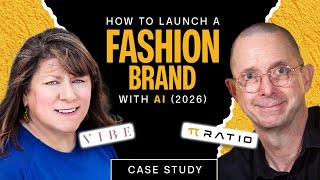
Podcast interview (Ratio) between Dennis H. Lewis and Maria Pessin about launching and scaling fashion businesses. Maria, a fashion executive with 30+ years' experience, describes her role running and growing brands (including launching Sienna Studio to >$20M in sales), and emphasizes rigorous business planning (USP, customer segmentation, budgets) before spending on samples or production. They discuss how technology and AI are changing fashion (inventory management, marketing automation, virtual try-on, design tools), shifting distribution toward DTC, and complicating sourcing decisions (China, India, Vietnam, Dominican Republic, growing African manufacturing). They demo a voice-driven AI business-plan builder available via Maria's site (vibeconsulting.co) with three usage tiers: self-serve, guided, or fully assisted consulting.
Questions this video answers
Over 30 years.
Over $20 million in sales.
vibeconsulting.co (Vibe Consulting website).
Movement from wholesale/store-driven sales to direct-to-consumer (DTC) enabled by the Internet.
Chapters
Hello, everybody. Welcome to another episode of the Ratio podcast. Today, I am really excited. I've got a wonderful guest for you guys to get to know. Her name is Maria Pessin. We've been working together for many moons. As an old geezer like me would say, yeah, she's a real voice in the fashion industry. She works with fashion entrepreneurs big and small to help them start and grow their fashion businesses. And yeah, let's jump in and have a conversation. Maria, welcome.
Thank you. I'm glad to be here. I'm excited to be on your podcast. It's so informative.
Thank you. So, Maria, tell me about Vibe Consulting and tell me about what you do and how you do it.
Well, I've been in the fashion industry for over 30 years, so I've been doing it quite a while. I run two companies from start to building them up to multimillion dollar businesses. I worked with a company called Sienna Studio, which was a division of G3, and I launched that and built it to over $20 million in sales. After that, I ran a company called Jessica Simpson Outerwear, worked with Fleet street, that was the corporate name of the company. And we had the license for coats, and I got additional licenses for the brand for the company, Fleet Street, I got additional licenses for them. So we had Vince Camuto, we had Mac and Jack, we had Kenzie, and I had put that together, those deals together. What I did for them was basically run their businesses. I had staff, of course. I didn't do every single thing. I wasn't a designer or a pattern maker. I was the business head and I ran everything from production to sales to merchandising, marketing, everything. And that's what I do for my clients today. I work with a lot of great people who have an idea. They don't know how to bring it to market or they are in market, they are doing business, but they're not doing enough. They want to scale up. So I'm kind of the rainmaker for them.
That is great. We've talked about this in the past, but the fashion industry is changing a lot. It's really, to me, it's hard for young people or startup founders to find room in the fashion industry, isn't it? Because so many big brands.
Yes. And it's very hard to compete. So you have to really have all your ducks in a row. If you want to compete, you have to be on your game. You have to give it a lot of attention, especially in the beginning when you first have the idea, like, what do you do first? You have to plan your business. Now, the first thing you do is a business plan because you want to map out your business. You want to understand what it's going to look like before you spend a single penny on production, design, or any of that. You. You have to have your budgets. You have to figure out who your customer is, be able to articulate that. You need to have a sense of what your customer would want. And you have to also bring something to the market that's unique and not like everybody else, because it's too many vendors out there. There's too many brands to buy from. Why would they buy from you? You have to have your usp, which is so important. And that's your. Your unique sales proposition. And that's really key if you're doing sportswear for men. Well, what kind of sportswear? What kind of prices? What's the fabric? What makes it stand out from people that you compete with? So a competitive analysis is very important. So you need to do the research and plan it out on paper so that you can follow the guidelines. The business plan will also show you what you need to do first, second, and third, because you have to fulfill each of the things that are in the business plan. So it kind of gives you a list of what you need to do, what your mission statement is, what your vision statement is. It'll ask you those questions, and you have to answer them. So it'll give you a roadmap of what to do. You can make a Time in Action calendar based on that.
I'm gonna. I'm gonna open the. The. The. The lead here just a little bit. In a little while, I, I'll share my screen. We'll show them a little bit about how we work together so that they can kind of leapfrog towards getting that business plan really quickly and well done. But before that, it sounds to me like there's so much more that goes into this than having an ide. A beautiful dress or a beautiful design or, you know, somebody says, I want to start a fashion brand. We kind of have this. This preconceived idea of, you know, a kind of, oh, Chanel was sitting down and sketching a new figure on her paper, and from there, she built an empire.
It's funny that you say that, because a lot of people, they think that they should just run into making samples, and they spend thousands of dollars on making samples when they don't have the first thing about a business. You have to also think like a business owner, not like a designer, only because if you don't set the foundation, then you don't have anything. You're building on mud and you're going to sink. You need to have the. How are you going to do things? Who's the designer that's going to take your ideas and make them into garments? You have to have all that in place before you do anything and see how much it will cost you and see. See if you can afford to do that.
Also having a story to tell, right? I mean, so many people jump in. And this isn't just about fashion. Every business has these problems. But, you know, having a unique story is so important because like you said, there's so many alternatives out there.
That's why you have to have a USP that's part of your story. What makes you unique? Maybe you have a different sensibility than the market and you're going to bring a new look into the market. Or maybe you have something that's specially made so that it doesn't have any faux fibers and it's all organic fabric. You know, different things that could make you stand out. It could be the look of the brand. Maybe you're doing something that no one else is doing in terms of aesthetics, and that could be a differentiation. But you have to have something that speaks to people, and stories really do sell merchandise. So you need to get your story in, in place before you do anything. And that's why you have to plan. I'm a big proponent of planning.
It makes a lot of sense between you and me. Does it still happen where somebody just has this vision and they jump into and they. And they. And they build a fashion company from basically nothing and they succeed? Is that still doable in today's world, or is that something of the past?
No, I think it's still possible. I think what's happening is that it's more possible now than before. Because before we used to sell stores and if they didn't buy us, we didn't sell. Now we sell direct to consumers. Pretty much anyone with the Internet can start a business. You just have to have some money.
So that leads us to technology, right? How is tech changing the fashion industry? How different is it from what it was like 30 years ago when you were just getting going?
Well, first we don't have to do anything by hand. We no longer have to enter our orders by hand. We could do them on the computer and they're in and everybody gets it. So the simple technology that's come out has changed things. People no longer use landlines. They use Cell phones technology is continually expanding in the fashion industry because before it was just kind of old school. Now they're looking at AI as a big help in analyzing businesses and doing things like the chat box on the site. So customer services becoming dehumanized. Whether that's good or bad, I don't know. But it is happening. And some of the things are really good. Like you can use the software for any kind of project that you want to do. You could have designs on it, you could design on the computer and you could have various resources to get colors and fabrics and stuff on there. So you could do this much more quickly and you can change the design much easier. It's not like you have to erase and then draw it again. You just change it on the computer. Computer. It's amazing. It is also great in managing inventory. AIs do that really well. Managing inventory and managing your marketing, they also do that. So that's a big trend. Technology is taking business and taking it to a much more structured business. Where before we kind of went by the seat of our pants, we answered the phone, someone asked us about delivery, run physically back to the warehouse and ask them, are you delivering that today? And now everything's automatic, so automated.
And now people are able to go on online stores and try on the clothes virtually and see their own pictures of themselves wearing a product before they've ever touched it.
Yes. That's pretty amazing. The Internet, when it first started, I thought, what do we need that for? It's just for information. Now we can't live without it is the most amazing thing I have ever seen in my life. AI is good finding more detailed information. It has so many uses.
One of the sort of the things I'm getting from this is that a new fashion entrepreneur can't just be about fashion. They have to understand all of these things that go into running a business nowadays. They have to understand E commerce, they have to understand sourcing the production, they have to understand inventory, they have to understand marketing. You know, you've got to wear a lot of hats to be an entrepreneur. And that's where you know all of that experience you bring in is so important.
Yes, it's helpful because I know what you need to do and what you shouldn't do to waste your money or time so we stay more focused. It's actually a cost saving measure. Having this information and having someone who can talk you through it give you direction.
Right. That's for sure.
I've had people come to me with businesses and I've Totally revamped their business and increased their business because they didn't do the things they should have done before they started. It was like they started at step 11 instead of step 1.
That reminds me of a customer that we had both worked with at one point many years ago that I remember them calling and they wanted a website and they wanted a bunch of stuff and they had no budget because he had his garage full of product. He had like $300,000 worth of product in his garage that he had manufactured before he had a brand and before he had a website and before he had a story and before he had anything. And that's a classic example of putting the cart before the horse, you know.
Yes, that was a funny client. But you're right. You need to put things first. Things first, that's important. That's one of the most important things to do. And you don't have to necessarily know each individual part. I'm not an accountant, so I hire an accountant. I'm not a production person per se, but I work with production people. So you have to bring in the experts that'll help you make clear, good decisions and have contacts that might help you as well. It's really a beneficial thing to have.
I have a question for you. What about when you're talking about production? You know, we all sort of have these ideas now that everything is made in China. And are you seeing fashion companies manufacturing in the States?
I think there will be some that come back, but our prices are too high here to make goods. So it's not really recommended in a lot of situations. I mean, if you're doing very high end, then you have more freedom of who you can work with. But I don't see it. I see other places becoming important like India has over the last 20 years has gotten much more important. I've been saying this for over 10 years. I think Africa is a very important place to produce. And I'm starting to see it. I'm starting to see factories open there. We just paid too much money here for us to be equitable. And after using Chinese labor for so long, our prices have stayed low. Now they're going to raise if we go from China to the United States. That's why everyone's looking for alternatives. India, Dominican Republic. So those are the places that people are going. Vietnam.
So just another level of complexity that entrepreneurs need to understand and they need to get their ducks in the row like you said. So, Maria, let's talk a little bit about the business plan tool that we here at Ratio helped you build. And I'm going to go ahead and share my screen here just a minute so that we can actually see sort of part of what we've built. But tell me, tell me about the business plan tool that we've built.
Well, I wanted to give people a way to plan their business because I believe so much in the planning of the business. And I want to come up with a tool that will help pull the idea out of you and put it on paper and actually be able to articulate it for you so that every step of the way you're doing the right things in the right order and you're doing things properly. It's asks you questions you may not have asked yourself. And you need to think of these things as these things will come up. You're showing market size estimates for scented clothing. That's a company that wants to see how, who they can sell to, where are they, how many are there and will help you come up with a plan for that. Your short term goals, long term goals, really picture your business what it looks like when it's done. And the business plan gives you the tools and the steps that take you to the business plan and take you to the boarding.
And the cool thing about this tool that we've built, and I've been kind of showing the different sections here, is that an entrepreneur can go in and just answer questions by recording their voice talking into their computer. And it will take all of those answers and use some of the most sophisticated AI models and build this entire draft business plan for you. And then you can go in and edit each section to make it. Because AI isn't perfect, you'll want to improve on it, but eliminates staring at a blank piece of paper and not knowing how to, how to build a business plan. So I think that for an entrepreneur who wants to get started, that is a real, you know, a real benefit.
You know, one of the things that's happening with fashion is marketing has changed quite a bit. Sales has changed quite a bit. Before we used to get on the phone call a buyer a million times so that he finally answered and came into the showroom and it was very sales driven. It wasn't brand driven. Branding is so important. People won't buy you if you want to sell wholesale unless you have a good following. You just won't get eyes on your product online if you don't do marketing. Marketing is key now. It is so important and that's why you need to plan your story and plan your product so that you can communicate it to your audience. That's a big change.
So important. And, you know, one of the things I've always said is that you can't be like everyone else. You have to be brave enough to be different. Because if you're trying to sell to everybody and you've got a wishy washy, bland brand, you know, unless you've got millions of dollars in your bank account that you can just pour into marketing, you'll never resonate with anybody. I always say to people, not just in the fashion world, but in all of our customers, if you're small, you have to be brave. You can't be small and timid because you'll just, you'll just disappear.
Yeah, there's a lot of noise out there and you have to cut through that noise. And that's a really important thing to set up the framework for it. On the business plan and marketing many things. Marketing could be ads, it could be social media posts, it could be email marketing. There's a lot of things you can do with marketing now that's available to you without spending $50,000 on an ad in a magazine.
What about sort of the traditional fashion marketing? What about the big fashion shows and models walking the Runway and all of that?
Is that something, something that's continuing? What's happened though, is only a few players can do it. It's a very expensive way of marketing. So their prices are higher so that they can pay for it. They're doing it.
I think the business plan tool we've built is a great starting point, by the way. Anybody who's interested, they should. Where should they go, Maria? To. To. To find the business plan tool and to sign up to use it.
Well, go to my website, vibeconsulting Co, and you'll see my business plan there. And you could just click on it and see if you'd like to do it. It's what I recommend all my clients to do.
I really like the, the, the fact that you give them three alternatives. They can sign up and just use the tool by themselves. They can use the tool with your guidance personally and you'll help them out. Or there's also an option that they can just have conversations with you and you'll help them build the entire business plan for them. I mean, depending on, you know, how knowledgeable or how, you know, tech savvy or how, you know, prepared they are, you've got an option for everybody there.
Yeah, it's really good for some people. They have the idea, but they don't have the money. Yet this is a way to plan it so that you know how much money you need to have. And it's helpful.
Right.
I'd say my guidance will cut through. If you have trouble doing something like a business plan and you need the guidance, I could be there for you. And trust me, it's valuable. I'm going to tell you a secret now. The secret is that I believe that when people sign on with me how lucky they are because I give much more than I take, I give my clients such tension and I'm very invested emotionally in their business. I don't take everyone on. If I think you have a chance, I'll tell you.
That's right. You know, here at ratio, we're the same way. If we don't like the project, if we don't see a future for it, if we don't think that it's a good fit, just personal with the customer, then we say no. Because sometimes things just aren't going to work. And it's much better to say no at the beginning than to get invested in working and not be a good fit. So I totally agree with that, with what you're saying.
You know, yes, it's important to be honest. Sometimes people say I'm honest to a fault, but I do really clearly tell people exactly what they need to do and give them alternatives, of course, give them ideas. I really. If you take those clients, then you become my friends.
So this is Maria's website, Vibe Consulting. As you can see. You can click here and book a discovery call with Maria just right off the bat. And if you go up here to products, I believe you'll see the fashion business plan, both the template and the consulting. And if you go in where you can create your own business plan for your fashion business. Anything else you'd like to share today?
Well, I want. I want you to think about a time when this was your dream. And think about your dream and visualize it. Visualize what it could look like, what it could be. And you can definitely attain your dreams if you're willing to do the work and you're willing to pivot if something's not working and change it so that you get to a point where it really does work. So I recommend that.
Before we finish. This is the Ratio podcast. I'll get in trouble if I don't ask you. How has working with us been for you, building this awesome tool? How's that been? How's the experience been for you?
Amazing. I have to tell you, you are the best person to work with. I've been working with you for years because you deliver, you know your stuff, and you don't charge an excessive amount of money. Prices are very reasonable and very doable for people. And I've recommended you to many of my clients, so obviously I think you're brilliant.
Thank you. Okay. Now that I'm red in the face and blushing. Thank you very much, Maria, for that. It's been a real pleasure.
Me too.
We'll see you on a future episode sometime.
Sounds good. I'll probably be speaking to you soon.
Okay, thanks. Thanks again, Maria, for being with us.
Thank you for having me.
More from Dennis








Is Google Killing Websites? The Future of Search, SEO & Web Design After Google I/O

Something we're still looking forward to in Bubble: richer design experiences! #bubble #nocode #ai

Big mistake companies are making right now: firing employees instead of empowering them. #ai