Design Meets Tech: Building women’s apparel personalization the right way
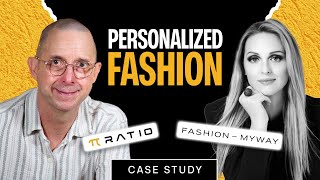
Podcast episode (Ratio.dev) featuring Dennis H. Lewis interviewing Elma Mazar about her experience in women’s fashion retail and the development of Fashion My Way, a digital personalization platform for women’s apparel. They discuss customer pain points in fitting rooms, benefits of mass-customization and digital fashion (conversion, reduced markdowns, data-driven production), the platform’s demo/configurator features, and Fashion My Way’s service-plus-technology, B2B offering.
Chapters
Hello, everybody, and welcome back to the Ratio.dev podcast. Today, I am super excited. We've got Elma Mazar on with us today. She is one of our oldest and most beloved clients from Ratio. Not that she's old. I'm already starting this off wrong. But anyway, a true voice in the fashion industry on the cutting edge of technology and fashion. And today we're going to talk about her story, talk about the business she's building and we'll talk a bit about the application that we helped her build on Bubble as well. And yeah, let's jump in and have fun. Welcome, Melbourne.
Dennis, I appreciate it. I'm excited to be here with you as we are every day. What a journey it has been for us trying to figure out the technology and all the trial and error and sometimes three step forwards and five back. But I am very proud of the product that we have created and honestly, I look forward to really put it out there in the market and have brands really feel empowered to serve their consumers in a way that consumers want to, you know, especially women apparel. As I've told you before, I come from a background where I've worked with women in the fitting room and in the floors of the stores. And it's just as much as we think of this as a tech company, it is really a company that was built with the end consumer in mind. Really inspired to do something for women as they were frustrated in the fitting room with the. Some meaningless, meaningless details. Meaningless to really to the designers because. Important enough to them to really walk away. And I said, hey, something has to be done. And I found you and we got right to earth.
Yeah. So, Elma. Yeah. That you have a fascinating story because you, you really started on the front lines of women's fashion retail. Right. I mean, you were. And, and I know that you, you did some really spectacular stuff with some really big brands. Tell us a little bit about that and tell us about the problem that, that you. That got you so inspired that, that problem that you saw in those faces of women, you know, day after day.
Yes. I've always been in the front line even, you know, as you work your career, you get promoted junior management, then you go into senior management. The nature of the store is that it doesn't matter if you are a senior manager or a sales associate or a vp, everybody's on the floor. That's where the action is. That's where the magic is. That's where the customer is. That's where. So it's really a magical place to Be because there is no other place that you can learn more about the customer than if you're face to face with them. Reports only can tell so much of the true story. Numbers can tell a story, but numbers also can hide a lot of detail. So I worked for really great companies that I learned so much. The biggest experience that I have gained was really from Bloomingdale's, 59th street, what a place to be and to learn. And it's just like amazing the amount of like partnerships that you build there and clients that you see every day and challenges that you're faced to. A lot of those challenges you learn and you grow through. And it's just one of those places where you can really see the thickness of retail. For the Gap. Work for Brooks Brothers. Brooks Brothers open up the store of the future trying to figure out, to do things differently. It's a great company, has been around for so long, but they're also trying to reinvent themselves. I mean everybody's trying to reinvent themselves in retail. You know, there is a lot of, there is a lot of, there is a lot of problems that retail has that with technology Right now they're just trying to figure out how do we tackle overproduction, how do we tackle trend prediction, markdowns, returns and the sizing issue. And there's so much, right? There's so much. And I think that fashion in general right now is going through a tremendous transformation. Nothing is really stable. It's like so much is shifting. Although an innovator, I don't believe that everything has to change in fashion. There is still a lot of value in stores. There is still a lot of value in off the shelf products. But I think the future is of fashion is requiring, is requesting us to shift a little bit, right? To shift where we do things in a much more mindful way and cleaner way and strategic way and try to utilize technology in a way that we can actually help customers without so much waste, without so much stress. And I think like product personalization is one of them that's daunting for brands because it's like what, one at a time, there is no profit there. But really personalization, it's, it's really doing some heavy lifting up from. It still can be scalable. It's called mass customization. We're not talking bespoke here. We're not talking doing one at a time that's specifically tailored to an individual. We're, we're talking just like you go to a restaurant, you have a series of appetizers series of entries and series of desserts and then you pick and choose and you make your own meal. Right. So it's, it's the same concept. And, and if you think about the one problem which is really setting yourself up from a digital perspective, embracing digital assets and digital fashion, figuring out modular design, modular production, there is so much benefits from there. It's just like pure profit in terms of conversion, in terms of customer loyalty, in terms of engagement, in terms of lowering returns. Right. And selling full price. First of all, things that are made on demand, not our, not only are sold full price, but statistically customers are willing to pay 20% more for it. So you're, you're actually selling at a higher prices, never mind marking it down. You don't need to mark down something that's not even produced yet. So it's just that we're so inundated with the problems that we currently have that we call them, that's cost of being in business, you know. Yeah. Markdowns is part of it. I hope that I'm going to sell 500 of this full time. That's going to make up for this other style that's going 80% markdown. But, but it doesn't have to be that way. I think there is a need to embrace it mostly because of consumer demand. Oh, about the consumers, about the consumers. Well, you know, if you, have you ever work, have you ever gone with your wife shopping on stores? How is the fitting room? It's a mess. It's a mess. It's a mess. And for the amount of clothing that's actually being tried in the fitting room and the amount of clothing that's browsed and goes into those shopping carts, e commerce wise, there is a 70% cart abandonment rate still. And the fitting rooms, I'll tell you, I've been there. Most of the women leave with nothing. And the sad part is that as a woman you get disappointed about yourself. Like, oh my God, I love this dress but I need to have straps or sleeves because that's my body type. And it just, you feel you, you're almost psychologically, it's just like you are disappointed with yourself when in fact you shouldn't because you should not be disappointed with the way you look. The brands should be able to make something with a couple of variations so you can purchase it too. Right. So it's good to have stores, it's good to have products in stores. Use it as a showroom when you're trying that black dress, it's great. It fits Me. But you know what, the back is too open. Well then maybe digitally right there and then you can scan the QR code and you can go in to this digital showroom that's going to give you a beautiful lace covering your. So now you're buying it. Instead of going and scattering around and scattering and piling clothes on confusion. You found it right there and then you're 80% sold. It's mind boggling to me that we lose sales in the fitting room because nobody's browsing in the fitting room. People are there to buy, you know. So why are we losing sales in the fitting room? Yes, sizing is an issue. Fashion, my way is not solving the sizing issue, but other companies and innovators I know, some of them are my friends. They're doing a great job. So solving that problem. So that's also a problem. The fit, but design goes right to the fit. Because if I am conscious about my arms and I do need to cover my arms, then giving me that option of that dress with sleeve digitally made, you're not wasting anything. You just in your product development process, you're, you're developing those elements, having the patterns ready to go. You can up your price 20%. You're investing. Investment on digital resources is a fraction. It's meaningless compared to this. The SKUs you're putting out there without any production, just some development and you're converting that customer. Have you noticed the best looking dresses are sleeveless or strapless? So what are those women going to do that have to have sleeves? You know, I know it because I had a customer and I keep saying this, it's getting old, but she bought two dresses just to cut one to make sleeves for the other one. I mean she, her son was getting married, she was committed. You know, again, there is so much.
Benefit that is so interesting because a couple of things that I get from what you're saying. First of all, we may think that fashion is almost frivolous and it's not. It's actually something that has a lot of meaning, especially to women, but to men as well. We all want to look our best. And the thought that 80% of those people are coming into the store, they're picking four or five things off the rack and they're trying them on and they're leaving frustrated just because there's something about each one of those items they tried on that didn't quite fit for them and didn't quite gel. But there was no option, there was no alternative, there wasn't any. There Isn't a way to say, oh, but we could make this just like you want it. And Instead of having 80% leave empty handed, maybe 40% will leave empty handed and the other 40% will buy. And that is an amazing feat. That is something that is a real technological improvement, not just for the company, but for the customer as well. You know, I always like to talk about solving the customer problem because that's really where it all startups, right?
And as I said, we build this with the end consumer in mind. Although B2B. Because really, if you. And I have to say that if I think of other configurators that are out there in the market, there is a huge differentiation with what we have built here, Dennis. Because other configurators in the market, and I've done my research and I've seen it and it's. They're great, but they're standard applications off the shelf that configurate shoes, handbags, furniture. It's imp. Men suiting. Yes, men. Men suiting is basic. There is only four or five ways to change a lapel and there is only three or four different ways of pockets. Right. So you don't even need to use digital fashion. Those configurators, the visuals are not very realistic, but good enough for men. But when you go into women's fashion, there is really nothing out there right now that women designer or women brand to provide this service except us because we build this with women's fashion in mind. Because I am a very passionate fashion professional when it comes to women's fashion and I found you the tech guy. So together we build something that is very much of a niche for women's apparel. Right.
Let's pause just a second and let me just. I'm just going to do this off the fly here. I'm going to share a window on my screen just so people can see the demo of Fashion My Way so that we can actually put it in here a bit. This is the demo site for Elma's company, Fashion My Way. And I think here you can see this dress changing in all of the variations that it has. It's the same product, right, Elma? But it's. The woman can choose each one of these options to make the dress exactly what she wants to wear for that event. Right. Or that special occasion that she, you know, she wants to go to. And I mean, I can jump in here maybe to the virtual showroom on one of these products. And what I think is so special about what you've led us to help you build is that it's fun. It's really fun. I mean, when you're looking at this and you're saying, oh, I think I'd like to see this dress in black. And so we click here on black. Black is not compatible there. Well, let's see if we.
Yeah. Which. It's a great feature to have the compatibility because we built this really, also with a. Because when you give options to our elements to mix and match, some of them might not be aesthetic for the brand. So we don't want to dilute the vision of the aesthetics of the brand and letting the customer do whatever they want. Right. So there are some limitations, and most of it because customers don't always know what's visually aesthetic, and it has to be in alignment with a brand. So that's why, for example, that red diamond would not go with the black because the designer decided that that's not a match. Right. So we.
And so here you're seeing that. It's, you know, you're.
You're.
You're actually able to see the end product. And. And then just, you know, here we are. We. So now we can. I think with this one here, we can pick black. And now it's black. And we could go for long sleeves if we want. Maybe. Maybe. This is a Canadian, and they need. It's really cold. I'm a guy, so I don't remember actually playing very much with these when I was a little kid, but I know my. My cousins did. There were paper dolls, and it was literally, they were made out of paper, and they would. They would pass hours, you know, changing the tops and the bottoms and stuff. And I remember that they had lots of fun. So. And I think this is, you know, just as an example of what we're, you know, what we're able to do with fashion my way. And then I want you to explain a little bit more from the business point of view, not just how fun this is for the customer, but how important it is for the brand. Because this is the magic where those conversions happen when it was almost certainly going to be an abandoned visit. And because they were able to find exactly what they were looking for. Wow. It turns into something that is actually, you know, an actual sale.
Yeah. So I think beside the conversion point, because really, when you think of product personalization or customization in fashion, the very first benefits that comes to mind, which is very easy to come to mind, is conversion. Right. So now you have a chance to convert the sale. You can close the deal because you are giving more opportunity to buy and not so much that they're completely frozen. Like I have to say, for example, when I was shopping at Nike for a pair of personalized sneakers, it was a bit overwhelming. You get thousands of variations and every stripe is changing in a hundred colors. And then I realized each shoe can have different colors. I stopped. Right. So I. So the problem is that you cannot. And who am I to speak about Nike, which I love, such a great company, but you can give so many options that the customer is frozen within those options and they don't know what to do.
I think that makes me laugh. Elma, this week, this silly thing to say, but my dog woke me up in the middle of the night, had to go out sometimes she does that anyway. And I almost took her out with one shoe of each one of each pair of sneakers. I was so sleepy. So I didn't have to Nike anything for that. So. But I noticed in time. So it didn't actually happen, but it almost did.
Yeah. So it's great. But it's. To me, I see personalization, especially for ready to wear apparel. It's something that's done strategically to convert. It's a mindful offering. It's not just let me give you 10 sleeves and you pick. No, it's a mindful offering. Someone that is actually bringing your dress in the fitting room or your coat or in the shopping cart online, they are 80%, 90% sold. So we're losing this. Personalization is to convert these customers that are on the edge. Someone that's not gonna like your design. It doesn't matter how many options you give. That design is not for her and that's it. So we're trying to convert people that are on the edge. As I said, losing people in the fitting room, losing items in the shopping cart online, it's really, it's, it's, it's, it's sad because those people are there to buy. They have already set the money aside. They want to purchase that item. Right. So again, from a business perspective, that's important conversion. But then you have the data. Right? Everyone is working so hard to collect data, to predict trends, to understand their customers, and even, you know, to allocate product in the right regions. Right. So then. Or to move products. And there is so much that's being done in retail and it's amazing. But this is a way where customers are telling you specifically, this is what I want. You will put a hundred variations of a specific product. It's digital. It's really, really doesn't cost you so much to digitally put a hundred variations out there or 25 or 20. Depends on. Every brand has their own vision and capacity. And the customers will tell you, the customers will tell you because they will purchase, you will know, you'll have your dashbo, right, Personal dashboards connected to the digital showroom. They're going to tell you this is the variation that's sold the most. And you will know what your customers want in real time, what type of fabrications, what type of colors, what is the, what are the for them. So you will get raw data. And so when you want to go and produce your next batch, right. Most of the companies do small batch productions now. Then you get, you go into those dashboards and you look and so now you can produce with confidence. There is more opportunity right now to sell what you're making because you are basing those styles and production based on data that you are getting from your customer in real time. You know, survey.
No, it's not just what they're purchasing. It's also every time they decide to save an option, a design that they've made that they, a combination that they like, they save it on your website. That's another reason to come back. But that, that moment of just saving it is an important data point for the brand. If they know that, you know, 75% of the, of the variations that are saved are long sleeved, well, maybe that's a good indication that your next batch should have more long sleeves.
Yes, yes, exactly. And if you don't want to have the long sleeves ready to wear, at least you have to spread them around your digital variations. Also, I have to say that another benefit is really testing design because when you go into the personalization you are, you're gonna have to embrace digital fashion. So I know a lot of brands are not comfortable with that, especially like the couture brands. But there is so much that's been done and improved within the digital twin technology that they're hyper realistic. Really. They really are. And think about like putting out there for testing before you even producing it. Like we have our product availability, the dynamic product availability that we have built where something is buy now or it could be pre order or it could be on a wait list or it could be on a coming soon. So a lot of brands actually have embraced some, not a lot. Some brands have embraced doing this sort of testing by posting on social media and seeing, okay, what are the customers liking? What are the feedbacks that we're getting? Right. It's all digital design, but can you imagine is within the platform, you have this ability to test your own designs. You digital first, right. Then physical. Because you need to be close to the customer. Let them tell you, okay, so I see your digital designs and if you have 70% of your client base on the wait list for a specific one, then you know that's a hit and maybe you produce more, more of that. Right? Because that's your best seller. It's so sad to see best sellers where we sell out the first day. We used to sell out, we didn't have enough. We could have made the whole sales goal for the day just by having more of that. But who'd have predicted that there would have been a bestseller? But now that you're able to digitally produce it, put it out there on the waist list and you see what your best seller is, you know, then you know that you'll produce more of it and less of some other ones. Right. And then you will buffer it with digital personalizations. Even if something goes on 70% markdown, all the digital variation that you sold 20% up made up for what you lost on those markdowns. So again, I'm not saying to completely diminish and demolish ready to wear, but there is a little bit of a shift that has to happen where it will help on demand personalization will help your current model to do better.
You a story you told me that you, when you were at Brooks Brothers, you were a bit of a rebel. You, you, you learned to kind of ask, go for it and ask for permission afterwards or ask for say you're sorry afterwards after making the. And. And that actually worked really well for you in the in, you were able to break a lot of sales records. And here you've taken that same spirit and you've said, you know, why don't we build this and talk to me just a little bit because this is the ratio.dev podcast here. Tell me a little bit about how it was for you working with us and your experience of actually being able to take a vision that you had. Your project took a long time. We went through a lot of iterations. We pivoted a lot. We're still kind of in that. But the ability to do that in a cost effective way, I think that was probably a pretty big advantage for you, wasn't it?
Very. I, I have to say I think it was meant to meet you like this kind of important connections I think are always meant to because when I first came to ratio, I was so you Know when you have just a cloud vision. Right. You know, all I knew was the customer and obviously the retail industry. And I was so green, even when it came to the technology itself. Like, I think just coming with that, with so little understanding, because not all founders are tech founders. Right? And. And, you know, the inspiration could come from something that has nothing to do with the technology. But then along the way, you realize, oh, my God, I need the technology to make this happen for my customer. So I am very lucky that I was able to meet somebody like you and your team because you were able to take this. This clouded vision and, like, bring it down to earth so we could actually materialize it through the technology. And sometimes in my communication, I was super complicated because I am also an overthinker, which I'm trying to work on every day. Trust me, it's. It's in my development plan that overthinking and that confusion was coming across as very convoluted. And I think that you did a great job just. Just simplifying it, first of all, understanding it, seeing where the confusion is, and then just really simplifying it and making this really convoluted idea clear and simple. And I think that your background in math also helped with that. Right. And it was so easy for you to explain it to me. Right. So now I am learning technology, and I'm learning how, like, I could go in and code this digital assets myself so they can work. And it was great. I think the clarity and the simplicity and also reliability. If you think about doing a project like this that has so much bumps in the road, somebody else would have given up. I'm surprised. I'm still standing. I'm really surprised. Seriously. You know, I'm surprised. I must love this project a lot, really. It comes from. From. From love. It does. And I'm very grateful that I had the capability to do this. Somebody else who did have another partner that's being like, I'm out of here. I'm out of here because you're. You're not moving fast enough, and I wasn't moving fast enough, and maybe I'm still not moving fast enough, but I'm still here, and I still believe in this. And there is. We've had some hiccups, and we've had some successes, and that's the path. And finding a partner that also understands that that's the nature of the path. It's important.
I think that's really an important insight because everybody likes to talk about the end result, the success story. At the end, and they gloss over all of the hard work in the months and the weeks and the hours and the late night phone calls that are inevitably part of creating something special. And even when you, you get the perfect mix, sometimes it just doesn't get there, or sometimes it takes a lot longer than what you expected. But that's just part of being an entrepreneur. If you're looking for an easy way to earn a paycheck, then this isn't the path. I mean, to be honest, I mean, we'd all think that that side hustle is going to, you know, bank you millions. And maybe it does sometimes, and that's great. But my experience and here coming back to the beginning, I'm the old one on this call. It's not that way. It takes lots of hours and lots of hard work and lots of dedication and lots of, you know, tearful nights sometimes and to get to that success. And I think that your story is a real inspiration because you really do have a vision that, that this is important for the fashion industry. And that's why we're so happy to have you as a customer of ours.
And, you know, sometimes I feel like being too early is not good. You know, being too late in the market is not good. But being too early sometimes could be also a problem. Right? Because you're seeing something that not everyone sees. And you're doing just sitting and waiting for the light to hit the road so then everybody will see. And so it's on you as a first mover. And you're going to say, well, product personalization, lady, you didn't invent it. It's been out there for years. Yes, but as we said, yes, we are helping brands that do give custom fashion, especially within the bridal market. And you know, it's great. But again, my vision for personalization is bigger than that, is really going into a fitting room where you are, from physical to digital showroom, to really, it's like you buy, you, you, you try physically, you select digitally and then you buy that perfect piece for you, right? So it's, it's this vision that we're not there yet. And you feel alone with this, with this vision, you feel alone. It's a lonely path sometimes when you have something that, that's in an emerging trend. But then at the same time, I do feel responsible to speak about this as much as I can and to share stories from my own experience because there is a way to fix some of those frustrations from, from the customer. But yes, going back to your Point Entrepreneurship, it does require a certain type of creature that not everybody could be it. It really does. Like, like, you know, you have to be able to function outside the box. You should, you, you definitely should be a problem solver. But you know, it's like in corporate problem solving, it's a room full of light. You know, you have to be super smart and strategic to find solutions and, and to make sure that you have partners with you. But entrepreneurship, you're finding solutions in the dark. You don't know next step, if you're going down, if you're dying or you're still alive. Like the uncertain, the uncertainty and the stress level and the darkness that you face to find solutions. It's unreal. So that definitely requires a different type of creature. I didn't even know I was one. I mean, at Brooks Brothers I was showing signs about it, but yeah, it's interesting.
So Elma, let's talk to that fashion. I don't know if they're a startup, if they're a multinational brand, whoever it is out there that happens to listen to this podcast and really gets the vision. How can you at Fashion My Way come in and help them actually put this to work for their brand, for their products, their skus, tell a little bit of the story of what it's going to take and how you plan to leverage the technology we've built to help them.
Yes. First of all, it's important to say that the way that we have built this business model, it's not just a tech company, it's a tech, it's a solution plus service. Which means that since digital fashion is part of this, a lot of brands and this configurators that are out there in the market, they say, okay, go make, go, go prepare your digital assets and come back to me. And I would never tell brands there I would be holding their hands side by side. There are brands that already are, are super innovative and they have their own digital designers and they have their scanners for fabric. They have digital library. Great. But I know a lot of brands out there or designers, smaller emerging brands, they don't. And I would not say go do it, but I would say we will do it. We will scan, we will provide you with all the fabrications and digital library. We will make your digital twins for you. We will oversee the project. We will help you code those projects, those products. Right. We will be their online merchants for personalized goods. If you want to do it yourself, we will train you and show you how you can implement this yourself. But if you want us to do it, and if it's in the budget for you, right, then we will do it for you Also. Another thing is that the way that we serve is, you know very well, it's a, it's a headless platform. It's not a configurator. It has tailored solutions. Some brands are made to measure and within the digital showroom, they also want customers to give their own personal sizing. We can do that. Some brands are standard sizes. We can do that. Some brands is all about custom and the entire shopping journey is about that. From the home page to product pages to check out, we can do that. But some brands are full on ready to wear and they only want a fraction of it to be in the digital showroom. So that's also something that we can do as well. So really the way that product personalization can be implemented is different from brand to brand to brand. And how they envision putting this within their business model or it is their entire business model. And so we are able to do that because our head endless platform, the foundation is there for us to replicate. But the layered features and the way that we execute it is, is, is, is tailored. Really. We are a boutique solution for brands. We're not standardized and really we do concentrate in women's apparel. If I have a brand that has men's sewing with a thousand variations of changing the lapels configurator is better for that. I want to work with people when I can provide real value. Also think about like configurators are standard and we're branded, right. So we take the whole look and feel of the brand. It's there within the digital showroom. It's there within the platform as well. So the way we would help them is really, number one, understanding their vision, understanding what the strategy behind that is, is. And then we would build or you know, we, we already have the tech build, but we would tweak that and make it fully branded so they can offer personalized goods in the way that best fits their vision and their customer. And we would also make sure that all the digital assets are done. Training is in place for the team if they want to do the online merchant themselves. Or we can do it for them.
That is awesome. I can't think of a better ways to round this up. Elma, I'm applauding. You know, I'm with you. I believe in your vision. You know, anybody out there and I think it could, this could appeal to small new startups as well as big established brands. You know, obviously their costs involved. You know, maybe for a smaller company, this is the specific thing that lets them differentiate themselves in the market and actually stand out against their competition. So I think it has a lot of possibilities for a lot of different customers. And thank you very much for being on our podcast today. I really had a good time and I hope you have enjoyed it.
Thank you. I loved it. Thank you so much for having me, Dan.
More from Dennis








Is Google Killing Websites? The Future of Search, SEO & Web Design After Google I/O

Something we're still looking forward to in Bubble: richer design experiences! #bubble #nocode #ai

Big mistake companies are making right now: firing employees instead of empowering them. #ai