Stop Underpricing! How to Charge What You're Worth (and Get It)
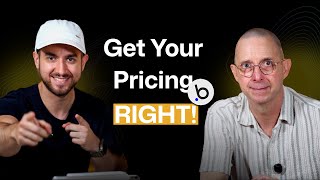
Tony and Dennis H. Lewis discuss why entrepreneurs underprice and how to fix it. Stop offering routine discounts and raise the actual value instead. Use tiered offers and high-ticket anchors to shift what customers think your work is worth.
Chapters
Cool. Well, welcome to a brand new episode of.
No Code Wizard.
I was gonna let you just insert the epic title of the podcast. Today we're gonna be talking about pricing and the psychology behind pricing and how to charge as much as you can.
Without cracking a smile and also how.
To be worth what you want to.
Charge what you want to charge. Because I think those two things go hand in hand.
So I think it's fair to say that most entrepreneurs and even like small, small businesses underprice their, their services or products and services.
Yeah, that's true. The, you know, there's a whole.
Fear factor in, oh my God, if I charge a high price, I'm going to lose my customers. They're all going to go away. Nobody's going to want to buy from me.
I fall victim for this mentality quite often.
And I like to say that if you don't scare people with your prices fairly regularly, you're not charging enough.
Why is that?
Because you don't want cheap ass customers. You want the good ones. You want the ones that value what you do and are willing to pay for it and can pay for it. Because it's not always about willing. Because there are a lot of people that would be willing to buy a Lamborghini, but they can't. Well, you know, if you're selling.
Tiny little economy cars at the budget is lowest price available on the market, well, you're not going to attract the people that can afford a Lamborghini.
That makes sense.
And it's not that that's not necessarily an okay strategy, but it's definitely a, it's a hard strategy to eke out a good living off of because cheap ass customers usually, and I'm old and have a lot of experience, they usually end up being more pain than value. They're just not worth it. And I don't want to come across as being, you know, mean or cruel or anything, but it's just the fact of life that if your customer is trying to squeeze you down to the last penny because they're, they can't, they're afraid of spending more than they should, then you don't want their money. Don't, don't take it, don't let them go somewhere else.
It, it's also the case that when someone only has a thousand dollars to build something, for example, they have to make the most out of every single one of those dollars, which means that they're going to put you in the hot seat of making sure that every single one of those dollars is giving them a 200% return without even taking into consideration any of your needs as the provider of either a product or service.
Well, of course. And I'm all for being cautious with how you spend your money.
Right.
That's just good business practice. But.
If you're not able to afford what you need, you need to step back and think about whether you should do something else. Because, look, you're not going to get Tony and Dennis to work on your project for 500 bucks. Probably not even for 2,500 bucks. It's just not going to happen. Because fortunately, we serve customers that can afford more because we do a really good job. And I think that the real key there is in the value that you provide.
If you provide enough value, then it's not a question of the price. It's the offer has to be so good, it has to be so compelling that the price is worth it. It's a good deal, even if it's a high price.
So the homework for people watching at home is, okay, how do I create.
That sort of value to make sure that my potential leads don't even question the price? How do I make sure that the offer is so good that I'm not going to have people questioning how much I'm charging for?
Exactly. And I think that one of the things you have to think about is if you feel like you can't raise your prices, you feel like it's impossible, like it is business suicide, then most likely you have a value problem. You don't have a price problem. You're not even internally convinced that what you're providing is worth what you need to be charging. And if that's the case.
Stop worrying about the prices and start worrying about the value. Work on your business. Make your offer better. Make what you can provide more enticing, Do a better job, get proof of it. That is how you get to raise your prices.
You've been a strong proponent of not offering discounts.
Yeah.
Why is that?
First of all, they're contagious.
What does that mean?
Once you've done one discount for one customer, it just is a downhill fall from there and you're devaluating yourself. So my thoughts on discounts are if somebody is on the edge and you think they're going to be worthwhile to work with them, increase the value without increasing the price, but don't give them a lower price and stick to your guns. That's, you know, this is my line. It's your business. You're the one who's the only One who can establish the value of what you have to offer. If the market doesn't recognize that value, then you, you should consider what you're doing wrong. But if it's just a case of somebody trying to.
Get a little bit extra out of you, give them a little bit more instead of why is.
It the case then that, well, you can go and a lot of SaaS solutions that I personally know of, for example, they're really good at ongoingly offering discounts. Like it's rare for me to bump into a lot of SaaS solutions that aren't offering like hey, 30% discount on their site. Always, all the time. It's almost impossible for me to come across some of these SaaS solutions that aren't offering a discount.
I mean those types of marketing techniques.
There was a long time ago there was a politician, I don't remember who he said, who it was who said, I promise that every person in the country will have an above average salary. Well, being a mathematician, that makes me laugh because by definition if there's an average, there's certain number above and certain number below. You can't have everybody above the average. There wouldn't be an average that isn't an average. That's just changing the median at the very least.
But mathematics aside, there's always going to be a market for the cheap customers and for the cheap products. It's just a question, do you want to be in that market.
And those cheap customers are the ones that are going to be looking for those discounts. Discounts.
And they're going to be a, there's going to be a race to the bottom.
And you're saying that it's just, it's not a fun game to be in the business to go after those customers.
Those customers are pains in the asses of, or pains in the ass, I guess is the correct way to say that. The correct not.
I got you, yeah. And.
And racing for the bottom is the easiest way to ruin your reputation. If you're just another commodity, if you're just another provider of just another solution, then your whole philosophy of business is wrong. You, you should really be going after the top.
And where does tiered pricing come into play here? Can you offer different tiers to try.
To cater for different needs and for different value propositions?
But that doesn't mean that you, that you want to offer a tier to attract those cheap customers either.
Look, when you have gotten to the point in your business that you are consistently generating profits from great customers, from high end customers, then you can consider what is the value proposition that I can offer to the mid range customers and make sure that the offer has more value than the price. Okay. And when you've satisfied that mid rise, mid tier audience, well then if you want to go after a lower tier audience, do the same thing. Just make sure it doesn't require the kind of value. So if you can offer a product that still is cheap, but it doesn't cost you almost anything to deliver to fulfill, then maybe that's a good, you know, maybe there's a business reason to do that and you can, you can scale that way too. But it's a lot harder game to win and definitely don't start at the bottom.
Usually.
Courses I've seen act as that sort of like anchor product where you want to cater some, some cheaper clients but that they can't afford to spend a lot of money on them.
I think that personally the best philosophy there is not that I'm trying to cater to cheap customers, it's I'm trying to provide a high value product that will allow customers that aren't ready for my real services, my real products to get involved in my way of doing business. And so that is a way that could be a course, it could be a group coaching thing. It could be something that requires far less, less effort on the, from the business point of view, but allows them to start tasting the.
It gets them venting more. Right?
And it, it, it can end up being part of your, your funnel that, okay, there are customers that are too small, that are too early stage, that are too uncommitted to their business to be able to be willing to buy high ticket product. Okay, well maybe having a way of.
Tasting what you actually do without actually causing you pain is a good thing. I mean, look at the biggest luxury brands in the world. Okay. You know, their whole business model is I won't sell you my products, get in line, right. Ask permission to buy.
Right.
Maybe, maybe you'll be lucky enough to get to give me a really high price for something. But all of these luxury brands also sell perfumes.
And you can go into any super, any supermarket, no, but any department store and you can buy.
Well, yeah, a bottle of perfume or Chanel. Okay, they're not cheap but you know, they're, you know, almost anybody could, you know, for Christmas for, for mom, you can afford something like that. Why do they do that? Well, they're doing that because that gives you a way to participate in the Chanel experience. But you still can't buy one of their handbags you still can't afford to dry, you know, go and, you know, buy your next dress from Chanel. That. Those people, they're. They're never going. They almost likely will never be able to do that. And that's part of the mystique. But they do serve that audience enough to at least milk some profit out of them. And I'm sure that perfumes have a very high margin. So.
So if there's someone watching this at home right now and they're thinking about, okay, I think it's time for me to raise prices, what is the best way to do that?
Okay, so you want to be careful not to ruin the goodwill of your customer base.
Okay, what does that mean? How can one ruin the goodwill of your. Of their customer base?
Well, if you treat your customers like they're not important to you, then you won't be important to them either. It's just kind of basic human decency. It's funny how some big companies don't.
Yeah.
Don't get that message. It's. And we're not going to mention any of them, but maybe we'll have another episode later. But if you don't value your customers, then don't expect them to value you. Okay? There could be a transactional business done, and maybe that's okay, and maybe that's all you want. If that's your way of doing business, go for it. But I recommend that you first reach out to all your customers and you let them know, hey, prices are going to go up next month. First of the month. I know. I sent you some proposals for a project. You have until then to buy at that price that I gave you or it's going to be more expensive. You need to understand that. Okay, first of all, you're creating some, some fomo, some scarcity there. You're saying, oh, maybe if that customer was on the fence or they were thinking, I should do this, then maybe that's the nudge that they need to actually start. But it's also just nice because then they can't come back and say, you didn't warn me. You didn't tell me. What do you mean? Like, that project is twice as expensive now as it was a month ago. I told you we're raising our prices.
I gave you the opportunity.
I gave you three weeks notice. But I thought that was just marketing. No, it's the truth. And, well. But you're going to still, you're still going to honor that proposal for me, aren't you? No, I told You. I was going to raise the prices. I told you. Hey, I sent you an email. I said, hey, that proposal is going to expire. It's going to expire. It's not going to be the same proposal. And you didn't pay attention. I'm sorry, what about.
There's this Spanish brand that did something very interesting a couple weeks ago. Their brand is called Minimalism. And they sell minimalistic clothing. No logo, essentially just short sleeves, hoodies, jeans. But they're all very, like, simple. It's like very minimalistic. And one of their mantras is that they never run sales, they never run discounts. They don't even do Black Friday. Like, their clothes are what they are and they're really high quality. Like a regular T shirt is probably like about 30 bucks or something, which is not too expensive either, but.
But it's. Yeah, it's not ten bucks or five.
And one of the things that they did a couple weeks ago is they sent everyone out an email saying that the prices of their backpacks were actually going to go down. And they did that explaining the reason why. Why, like, hey, the manufacturers that we work with in, I think it was, I don't know, in Vietnam or something, they're actually giving us a better rate at the. Putting it all together or whatever it is. And it sort of made me feel good. Like, I actually kind of really like the transparency of them breaking apart. Why they're bringing down the prices of their backpacks down. And also they were really smart at actually telling their customers, we typically let you know when prices are going up. That's how most businesses do it. But we want to tell you why they're going down as well.
Sure.
I thought that was really smart.
Yeah, that's a honest way to do business.
I was going to say, I think like that, that small little email transaction of letting me know how transparency in your company works, I sort of appreciated it.
Especially if you're in the States lately and all you get are emails saying, you know, well, the tariffs are going to make your prices go up. Yeah. Which is, you know, unfortunately the. The truth.
But going back to raising prices.
So of course you want to take care of your customers, treat them well.
But clear out the pipeline in the sense of, you know, hey, these are. This is what's going to happen. Give them fair notice. Don't say, you know, I'm raising prices tomorrow. That would be kind of shitty thing to do.
But, you know, just be open and honest. And, and. And then I think that the. One of the Biggest lessons. And, and, and I have to say I, I, this lesson I learned from Ben Settle. And, and you know, I don't agree with him on a lot of stuff, but stick to your guns. You say that this is your policy. That's your policy. And don't back down. You say that if you stop becoming a subscriber to my newsletter, I'm taking you off my mailing list. Do it. That's, that, that's what he does policy. That's, that's his business. And, and I think that that is in general a really strong way to.
Not come across as needy in the market.
Now, when you're raising prices, it's needless to say that of course, if you're, if your prices for your product or service are going up, that means that there has to be added value added into the product or service as well.
Right?
Or at least people are going to be demanding the explanation or the reason behind prices going up.
Let's be really clear. There's two concepts here. One is actual value and one is perceived value. We've talked about that with performance or bubble applications a lot of times. Both are really important. So you have to actually deliver great value and you need to be able to prove it. And you need to be able to show that you create value, great value for your customers. But you also have to put in the work to make sure they perceive that value, because if you don't, then you know they won't respond well to you raising your prices because they won't understand the why. So you need to work on making sure you actually deliver the value. And if you feel like you can't raise your prices, you're not delivering enough value. But raising your prices doesn't necessarily mean that you have to increase the real value. You just have to make sure that the perceived value justifies the new price.
Hmm. What's an easy way for people to start showing off perceived value?
One thing is to always have a higher value product here that serves as an anchor. So if you're, let's say your core offer is $2,500. I don't know if it's a month or one time deal, whatever it is, you want to have a 10k offer.
Even if a difference.
Yeah. Even if you're not really pushing to make those 10k sales. Okay. Make sure both offers are really great offers. Okay. So the $2,500 offer needs to have a value or perceived value of 5,000, $10,000 for the, for the customer. And the 10K offer needs to be 100K. Value perception. First of all, it has two really cool elements to it. One is that it anchors for those $2,500 customers. It anchors that, hey, these guys, these are top notch. They have, you know, maybe someday I'll be able to afford their top.
I mean, I was going to counter argue that if you're offering a $10,000 product, I feel like I, I'm not getting the most amount of value from you anymore with your core product. With your core $2,500 product. Because there's an even better product that it could be purchasing. I just can't afford it.
Well, I mean, you know, Lamborghini doesn't sell one car, right? There's, you know, there's, there's, there's a couple of them are Ferrari, you know, that. I don't know. I've never, never even thought of buying one. But I mean, you know, there's different models and different value points. So, I mean, that's, that's pretty standard.
I think that by having that. The other really great thing about having that really high ticket offer, there is not just the anchor for the mid level, the core product, the. But it's that you may actually get a whale that wants it. And every once in a while you might sell one.
Right.
And that's good, of course. So, I mean, there's no loss.
So your pricing should probably be aligned with the type of customer you want to attract, right?
Definitely. Yeah. I mean, and let's just face it, we often have the idea that there's like a really limited number of possible customers out there. But there's 7 billion humans on the planet, right?
A lot of people out there.
There are a lot of people out there. A lot of businesses out there. It doesn't matter if you're selling B2 or B2B. There's a lot of them. And, you know.
If you're selling to a higher value market, then don't think that there's not customers for it, because there are.
There's a really nice quote from Alex Hormosi that we stand by, which is that the only thing worse than making a $1,000 offer to someone with a $100 budget is making a $100 offer to someone with a $1,000 budget.
Yeah.
Can you imagine dropping, leaving 900 bucks on the table because you forgot to.
Think that maybe this guy was Will? Hey, I've had that happen to me. I have literally known at times that I've lost sales, because I haven't. I didn't ask enough money. That happens because the perceived value goes down. If you're talking to somebody who's already got the idea that they're going to spend a thousand dollars and you come out and you do a really great sales pitch and you do, you know, you create rapport and you, and you talk and you start creating that feeling and you say, oh yeah, 100 bucks. They're instantly going to think you're cheap. They're instantly going to think you're scamming them. And instead of making a sale for a thousand bucks, they're going to leave thinking, damn, this guy wanted to cheat me out of 100 bucks.
That happened to me. Do you know when, when I went in to buy my motorcycle, my motorcycle helmet, the guy came out with four or five different helmets and the most expensive one was I think like €200. And I told him, well, I came in prepared to spend like 500. I mean it's, it's, this thing is supposed to save my life. I was, I was coming in prepared to spend big money.
Yeah.
And the guy came in with the most expensive helmet being 200 bucks. I was, I was ready to leave because I wanted to spend some, some more money on.
Because you weren't convinced that that $200 helmet was going to protect, that was.
Going to protect my valuable life.
Your head. And that's a perfect example that it, it, you know, you, you, you need to understand who your customer is.
But sometimes it's hard because you see a young man walking in, you don't think that they're going to have the type of money or that they're going to want to spend that money. I mean, how do you measure those things? It's hard. It's not easy.
Well, I mean a good salesperson knows exactly how to do that, right? They, they ask the right questions. They, you know, they what, what motorcycle did you buy? Ah, you know, you know that, that's a, that's a, that could be an indicator. If you just bought a Harley, David, a used, crappy motorcycle, you probably want a cheap helmet. If you just bought a brand new Harley with all the options and you, you know.
Then odds are that you're not looking for a, a cheap ass.
Thing to just get by yam. Well, I think I'm happy with today's episode. Yeah, we touched on quite a few different golden nuggets that people can take away from.
I think it's just really important to say don't be afraid to charge more. Focus on making the offer that you provide your customers so good that they're more than happy to pay that more. That's your responsibility. You can't control what people are going to think. You can't control if they're going to like your offer. That's not under your power. You're not a divine entity. All you can control is what you do. So really make sure that you do enough that it's a no brainer to pay you that high price and I think you'll be gold.
Well, there's a resource center that you can check out down in the in the show notes or in the description depending on where you're watching this this episode. It's going to take you to our website where you can just sign up and we're going to send you access to our resource center. Again, there's a bunch of really cool, useful links to videos, tutorials, podcast episodes, books, plugins, plugins, tools. It's a golden mine of knowledge and information that I think you're going to find valuable and it's completely free.
So you get it updated every week. So there's new stuff going in.
I'm in there every week updating. So yeah, just go ahead and check it out and if you didn't like the episode, just drop in a comment saying, hey, I agreed with this thing that Dennis said or I did not agree with what Tony said and you.
Know, hey, he's full of. Okay, tell me, I'll listen.
Maybe there were some people complaining. Oh, we got a comment on TikTok saying Apple fans be like when we were praising Apple's strategy around the Apple Vision Pro.
Yeah. Anyways, catch you guys next week.
Bye for now.
More from Dennis








Is Google Killing Websites? The Future of Search, SEO & Web Design After Google I/O

Something we're still looking forward to in Bubble: richer design experiences! #bubble #nocode #ai

Big mistake companies are making right now: firing employees instead of empowering them. #ai