MongoDB CEO Dev Ittycheria on great leadership, building winning teams, and more | E1783
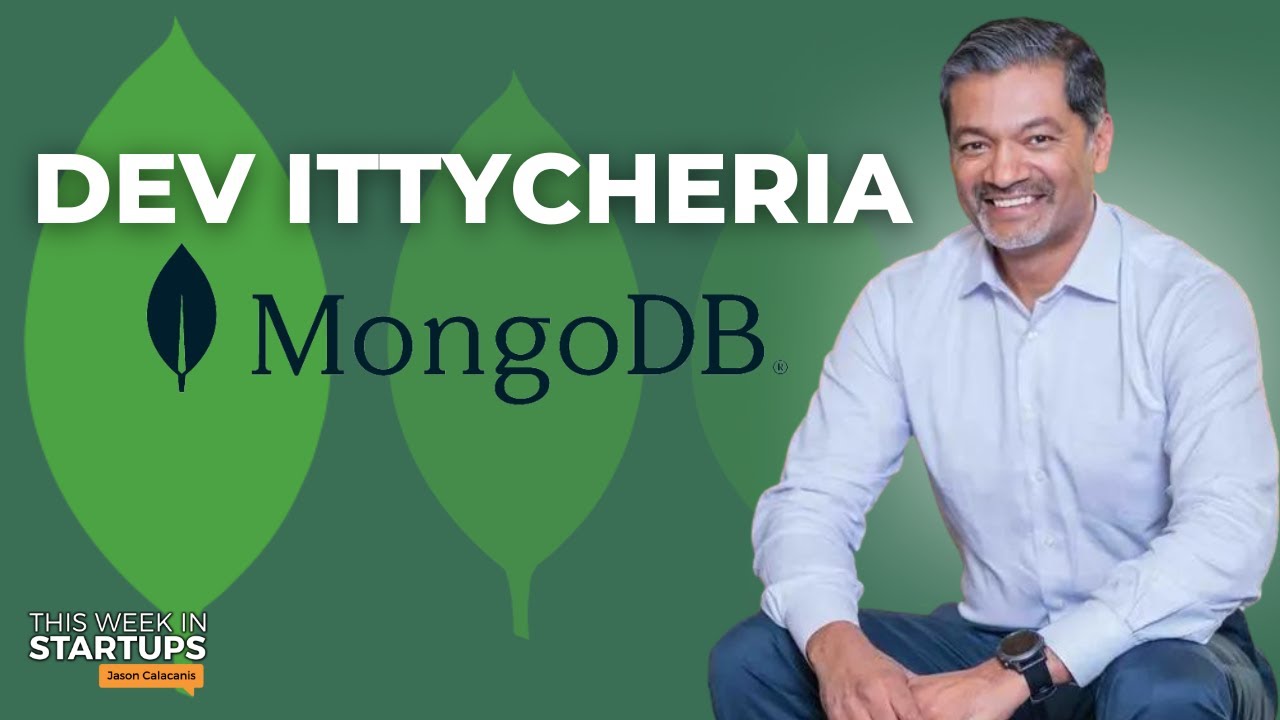
MongoDB CEO Dev Ittycheria discusses leadership, building teams, and scaling the company to $1.5B revenue. He stresses self-awareness as core to effective leadership, shares his hiring and firing philosophy, and explains why he pushes younger employees back to the office for cultural reasons.
Chapters
I had a mentor, a guy named Steve Walsky. One day, you know, we're talking about someone and he says, Dave, I'm going to show you the meaning of life. And he goes to the whiteboard and draws 2 circles, 2 concentric circles. I'm looking at it like a target. I'm like, what's the meaning of life? He goes, the outside circle is what people think who they are. The inner circle is who they actually are. The best leaders are very self-aware. And I've remembered this for so long because when I see a leader failing, invariably It's because they're so self-unaware. Now, they may have good intent, but the way it's coming across is really falling, you know, on deaf ears, or people are just tuning them out and they're losing their team. When you lose your team, you've lost it as a leader. And so many leaders just have no sense of the fact that their team doesn't respect them. This Week in Startups is brought to you by OpenPhone. Brings your team's business calls, texts, and contacts into one delightful app that works anywhere. Get 20% off your first 6 months At openphone.com/twist. Embroker's startup insurance program helps startups secure the most important types of insurance at a lower cost and with less hassle. Save up to 20% off of traditional insurance today at embroker.com/twist. While you're there, get an extra 10% off using offer code TWIST. And Roots— invest in the only real estate investment trust that creates wealth for you and its residents at investwithroots.com/twist.
All right, everybody, welcome back to This Week in Startups. We're having our all-star summer. Turns out a great time to grab a CEO, uh, an all-star CEO, is the summer. They got a little bit of time. And, uh, what an incredible couple weeks we've had. My friend Dharmesh from HubSpot, he came on the pod just the other week. Qualtrics founder Ryan Smith, who now owns the Utah Jazz. And today is no different. Dave Ittycheria is here. He's a serial entrepreneur, currently the CEO of MongoDB. Uh, do you like Dave or you like Dev?
Either is fine. I've been called worse.
What does your mom call you? She calls you Dev, I bet. She—
no, it's actually pronounced Dave, like they've gone to the ball game, like the short form for they have.
Yeah, yeah, got it.
Unfortunately, she's no longer here.
Oh, I'm sorry. Yeah, I always, uh, you know, with the Indian names, I'm always like, Uh, I want to get it right, and it's, you know, it's, uh, typically a little bit hard, so I always try 3 or 4 times with my dyslexia. Uh, so you've been a startup founder before. I remember you founded BladeLogic back in the day, uh, and I guess you were a VC for a hot minute. How long were you a VC for?
Uh, about 2, 2 and a half years. I started— so I wasn't planning to be VC, but as you may remember, um, after I took BladeLogic public and then we ended up selling it to BMC for close to a billion, which in those days actually meant something.
Yeah.
And then I was trying to figure out what to do, took some time off, and I had joined the board of a few companies. And that was when the trend of like VCs hiring operators, either founders or operating executives. And so, I got to know the Greylock guys really well, and then they invited me to join. They wanted me to relocate to the West Coast. I joined as a venture partner But in the middle of that, my wife decided to pull the plug and she decided she didn't want to relocate out west for a variety of personal reasons. And so, Greylock was very gracious, but I ended up staying there for about a year and a half. And then I moved to a smaller venture firm called OpenView. And my notable investment there was I did the second round of Datadog, which ended up doing—
Oh, wow. That worked out too. Yeah.
Yes.
So explain to everybody what MongoDB is and the niche it's carved for itself in the data database space. Yeah.
So we're generally— we view ourselves as a modern general-purpose platform. So essentially how people think about relational databases, we think, and now we know we have proof that customers can use a much more performant, scalable, and easier-to-use platform like MongoDB to essentially build amazing applications. So we today have over 40,000 customers. We're about a $1.5 billion revenue company, and our customers range from almost every bank on Wall Street, every large telecom company, to startups you never heard of. In fact, we have tons of startups, including many AI startups who are building their applications on top of MongoDB. And the reason people use MongoDB is that The relational database was designed— the first white paper came out in 1970, but it was designed in an era where storage was really expensive. So basically, a relational database is essentially a spreadsheet on steroids where you can store a lot of information in rows and columns. The problem with that approach is that it's not very aligned to the way developers actually think and code. And so our founders, who were actually, you know, built a company called DoubleClick that you may remember, they were acquired by Google.
Sure.
They were dealing with massive amounts of data in those days. This is the late '90s where they're serving billions of ads per day, and they were—
Kevin O'Connor and Kevin Ryan.
That's right. And Dwight Merriman was the CTO. So, Dwight and Kevin and a gentleman named Elliot were the founders of MongoDB. And they constantly had to work around the constraints of the relational database. And finally, they said, you know what? Why don't we just build a database that we would wanna use? And that basically MongoDB was the instantiation of that insight. And the key insight there was to organize data in documents versus tables. And it's much more easy to organize data that way. It's much more aligned to the way developers think and code. It's very easy to add and change features and entries into the data model. And also, it's designed to be highly distributed so you can really serve the most demanding and most sophisticated requirements. And that's essentially the way the company started. As you can imagine, we first had to prove that we were more than a toy because there was a lot of excitement of MongoDB, but would people really trust us for mission-critical workloads? Over time, we built tons of features, including the highest form of data guarantees, like ACID transaction support, that gave people confidence to do that. Then we decided to build a cloud service, and we were actually probably the first company to build well-known cloud service that ran across all the hyperscalers. And a lot of people were skeptical saying, how can you both partner and compete with the hyperscalers because they're just going to eat your lunch? Everyone thought we're going to be roadkill for AWS. And essentially, you know, one, we had amazing product-market fit and people just genuinely loved the way MongoDB was designed and essentially was incredibly popular. The one other thing that we had that not many other open-source companies had was that we had a much more restrictive license. So the hyperscalers couldn't take our free version of our product and go compete with us. And so when they saw the popularity of MongoDB, they came out with their own document databases, but they're built on a very different architecture, in fact, built on a relational architecture. So there's severe feature and performance trade-offs. And so our win rates against what we call the clones are very high. And over time, the hyperscalers realized we were so popular and we're driving so much consumption of their cloud and store and compute services. that our relationship has changed. In fact, so much so that we are the only ISV that's on the management consoles of AWS, Azure, and GCP today. And we have incentives for customers to apply their credits towards MongoDB or what we call Atlas, our cloud service. And then their salespeople also get compensated for selling Atlas. So it's a— we still partner and we still compete, but it's a very healthy relationship.
And if I remember correctly, you know, I remember in the early days of startups, Web 2.0-ish coming out of that sort of movement, right after the great financial crisis, a lot of startups were looking for affordable solutions. They're not going to go roll up and do some Oracle database. MongoDB was just a really easy choice for 1 or 2 or 3 development teams at a startup to get up and running and not have to pay a fortune or get it for free in the open source license, or just pay, you know, a very small amount of money, a couple of hundred bucks a month or less to get up and running. This is a pattern that didn't exist before that, getting startups to become your base and then growing with them. So you had a lot of startups grow with the product. Maybe you could talk a little bit about that as a growth strategy.
Yeah. So what you have to realize is for startups, their biggest constraint is how much can their development teams produce? Because by definition, they're small teams. And one of the most attractive things about MongoDB is that the speed of development is so much faster. People can build new features, add new capabilities because developers spend about 80% of their time working with data, right? If you think about any application, One of the biggest problems that developers have to figure out is when to present the right data to the right audience at the right time with the right security constraints, so on and so forth. And so when you can make it very easy to work with data, you can dramatically increase developer productivity. So that's why people gravitated to MongoDB, is that because of the document model, it just becomes so much easier to work, so much easier to work with data, which by definition means developers can move faster. So that's essentially why they decided to go And why MongoDB— what go with MongoDB and why MongoDB is so popular today.
Are you still using your personal phone number for your startup in 2023? Is your sales team really your ops people, customer support? This is a huge mistake. You have your precious customers, your clients, your partners in one of your team members' personal phones. And team members last, what, 1 year to 5 years on average? And then all that knowledge is gone forever. And maybe they go to a competitor. Well, OpenPhone will solve this problem. OpenPhone has rethought every detail of what a modern business phone will look like. It's just magic. You download an app or you log in on your desktop and you're done. It's amazing. My sales team, my ops team, they use it every single day. And we've recently found that it's valuable for when we do conferences. We have a phone number for when we do something like Angel Summit. All of the communications goes through there. If anybody needs to call us, our VIPs, they call that. And then it can do like a round robin kind of thing where it rings multiple phones at once so different employees can field those calls and nobody gets to the 4th, 5th ring. It's the number one rated business phone on G2 for customer satisfaction, and that's really hard to do if you're in the SaaS business. You know how hard it is to beat competitors in the ratings game. OpenPhone is already affordable to you at a starting price of $13 per user per month. But Twist listeners, you always get a better deal. You get 20% off any plan for the first 6 months at openphone.com/twist and If you have an existing number with another service, OpenPhone will port them over at no extra cost. Head to openphone.com/twist to start your free trial and get 20% off. So I guess the big question that every founder, especially ones who have large repositories of data, are thinking about today and their customers are asking about is artificial intelligence and, you know, using different AI models to analyze their data, process their data. Of course, you have this issue, uh, the data. You mentioned privacy, you mentioned security. It's really dangerous to point some model, uh, at a database because they might incorporate it into, uh, the, the language model. It might do some learning based on it, and then obviously, um, you know, you have massive privacy issues. So, uh, as a CEO now, you've been doing this for multiple decades. Tell me about your reaction to Just the last, I guess it's about 9 months now since ChatGPT 3.5 came out and the pace this is all going and what your customers are asking you for.
Yeah, so obviously it's been a profound impact on our industry. I might be stating the blindingly obvious. What we've seen is almost 1,500 customers since that announcement build AI applications on top of MongoDB. And we think AI is gonna be a big driver for our business. One, because it'll increase developer productivity. You know, you could argue the statistics say anywhere from 20% to 50% with code generation tools and automated testing tools. So by definition, there's no development team I know of who doesn't have a backlog of things that they want to accomplish. And now if you increase their productivity, you can just generate more applications. The second thing it does, it basically enables development teams to increase the scale and ambition of what they want to build, like the sophistication of those applications. And by definition, if you are building more and more sophisticated and, and performant applications, you need a platform that can really address and serve those needs. So we feel like we're a beneficiary there. One of the hot things in our space is something called vector databases. And vector is essentially a way for people to prevent hallucinations based on data coming from LLMs and also marry private data with public data because not everyone wants to put all their data in, say, OpenAI or any other LLM out there. And so we just announced a vector capability. Unlike other people who are using point solutions, one of the challenges in our industry is there's almost like a single-function database for every, almost every use case, time series, graph, you know, caching, et cetera. Our belief is that it's much better for developers to have one elegant unified platform to enable them to have a wide— to enable them to do a wide variety of use cases and also have a wide variety of deployment models, whether deploying their own data center in the cloud or say on an edge device. And so we've introduced Vector. It's in public preview right now and interest is very high. And that will just enable development teams to build AI applications even faster using MongoDB.
And how do you look at the uh, staffing of a modern-day tech company? Because we've seen what Elon did over at Twitter, uh, Google, Facebook getting fit, cutting, you know, uh, they kind of got ahead of their skis. I assume you did a riff, I'm not sure, um, during, uh, last year. You can correct me if I'm wrong. And but we're seeing this massive gain. Developers are reporting, you know, depending on the developer, 20%, 50%, uh, more efficiency. So how do you think about scaling technology companies when, uh, especially things like Copilot and, um, writing code seems to be where the greatest lift is right now. So do you think these companies become, you know, one where the writing of a job description is more work than just putting a little bit of AI on, uh, making the existing team faster, and then what that means for profitability of these companies?
So you said a couple of things there. So, you know, I'm old enough where I've seen down cycles. I think anyone 35 or younger has never seen a down cycle before this one. And anyone 40 or younger has never managed through a down cycle. Unfortunately, I'm older than that. So the good news is that, that I've seen some down cycles. So we never, you know, ran the business at, you know, growth at all costs. Now, when we went public, we were trailing $100 million in revenue and a negative 40% operating margins. And today, We're about a $1.5 billion revenue run rate business with 12% operating margin. So we've grown the business very quickly, but also shown a lot of operating leverage. And we've done that by being very disciplined about how we invest and run the business. So we never actually did like a kind of company-wide RIF. We did do some surgical RIFs, say like we had too many recruiters given our growth was slowing down. And then we may have had some excess sales capacity in regions where we didn't see that the market was as big as we originally thought. But we've not done a company-wide RIF. In fact, one of the things we've really forced our leaders to do is real performance management. Because one of the things I think RIFs do is basically that's the easy way out to cut costs, but you don't really develop the muscles and knowing how to have high— define high expectations, you know, hold people accountable, and then reward people who are doing great, but also hold people accountable for maybe not performing. And that's a muscle that I think a lot of younger leaders do not have. And that's something we're very, very focused on. Obviously, in the startup area, we're seeing very lean startups who are, you know, 2, 3, 5-person teams who are building apps. I think the jury's out about how productive developers can be. I think some of these tools are quite nascent. So I wouldn't say that people are declaring victory that, you know, they suddenly found a panacea to their issues. But clearly, people are very, very focused on using some of these AI tools to improve productivity. We see a lot of focus on testing and automated testing. We see a lot of code generation. We think how to get 80% of the way there, but then you need to kind of go in and then look at the code carefully and make sure there's no issues. So there's no question it's gonna be a boon to developer productivity, but I think that it's still early days yet. But we clearly see a lot of startups who are trying to use AI tools to reduce the OpEx costs of building apps. And I think, I think there's a wave that's gonna come. But again, I wanna say most development teams I talk to have a laundry list of things they wanna do that they can do. So I don't see them initially using AI as a way to cut costs, but just using AI to kind of get more out the door faster, just to be able to serve the market and the customers.
Getting through the backlog faster seems to be what this year has been about, right? I mean, people are just getting more done with the same size team, which is amazing, right? Great for customers and great for companies and great for margin. Like you're saying, you've been through this before, I assume. You went remote, you had to during COVID and you're an old school guy like me. We both, we've been through the dot-com bust, we've both been through the great financial crisis, and then this insanity, which was particularly brutal, I think, for everybody. So how do you look at remote work? And are you hybrid, remote? Do you think something's been lost? You know, is your, is your thinking on it dynamic in terms of going back to the office?
Yeah, so I'll say a couple things. One, I think the toothpaste is out of the tube. I don't think you can ever force people to come back to the office 5 days a week, 8, 10 hours a day. I think those days are long gone. We do believe in, in a kind of, uh, the value of getting together on site, and so we have a hybrid approach to, um, how we do work. And I know there's a lot of things— I mean, we're based in New York, and there's a lot of the banks are trying to force people to come back, but you see them kind of trying to do that, but then they're kind of You know, relaxing the rules because it's hard to get people to come back, especially with the friction of commute. You're a New York guy, so you know if you live in the boroughs, it could be anywhere from an hour to hour and a half commute into Manhattan. And that's 3 hours a day for someone. And if you can make them more productive by working from home and then pick and choose when to come in for meetings, for quarterly reviews, for planning sessions, et cetera, that makes more sense to us.
Yeah.
So we're a hybrid culture. Attendance has been quite good this summer. We're seeing Tuesday to Thursdays, 50 to 60% attendance in New York. In other locations, maybe slightly less. But so our offices are actively used. We've not cut back on real estate because, at least in our major offices, because we see a lot of active usage. But obviously we're being cautious about how quickly we expand into, you know, either expanding capacity in our major offices or adding new offices.
Why do you think people are coming back? You think that they miss it, or do you think the management is saying, hey, listen, in order to hit these targets, we need to work as a team better, and it's a culture issue, uh, or an accountability issue? What do you think is driving it?
I, I, I see younger people wanting to be in the office. One, they probably live in smaller apartments and homes where they may not have the space to work comfortably at home. 2, if you're a young person, I mean, a lot of people meet their partners at work or in work surroundings, so there's an incentive to meet meet people. New York is a fun city, so people maybe want to go out afterwards, grab a bite to eat, or go out for drinks or do something else. So a lot of our younger folks actually want to come to the office and work from the office. I would say the more the senior folks, they pick and choose the moments when they come in, again, you know, tied to specific meetings or events or planning sessions that we're having. So I almost joke onsite is like the old offsite for, for more senior people.
Yeah.
And then obviously, if you have a You know, if you're a leader of a team, especially younger people, you need to be onsite to mentor, give guidance, assess how things are going. So I'm— we're not so rigid in terms of like, you have to be in the office 3, 4, 5 days a week depending on your role, but we do encourage people to come to the office. And then it's really up to them, the leader of that team, or say the VP of that department to really determine what the right operating cadence is. But my belief is if someone works hard at work, they're gonna work hard at home. If someone doesn't work hard at work, They're not going to work hard at home. So what we do is to hold our leaders accountable to make sure they're getting the productivity out of their teams. And that seems to have worked for us.
Yeah, that is, I think, every manager's nightmare is you look at some of these subreddits where they have like a subreddit called Overworked and specifically the development community. It's kind of like a joke. Oh yeah, I got 3 jobs. There was— I had somebody who said, I have an ethical question, one of our investments. Um, we have somebody who works at Google, uh, and they want to work for us too. Um, but they said their Google job takes 2 hours a day and they can do it off hours. So is it— and he wants like a, you know, a very modest salary to come work for us full-time. And I was like, that's completely unethical. Like, you can't possibly hire that person.
Yes.
But the founder was like, I don't know. I mean, I needed a developer. It sounds like he's perfect. And I was like, no, you cannot do that.
That person Respect for character matters. Yes.
Yes. And they're breaking every agreement. And on an ethical, moral basis, it's insane.
It is insane. And that would not be tolerated here. Yeah. So, and I think, you know, to me, ethics is what people do when no one's looking. And so this person is doing this. I think what I'd encourage that person to do is instead of working 2 hours and getting a job done, go to your boss and say, what more can I do? Because I'm ambitious and I want to do more. And if they don't want to give you more, then say, maybe I shouldn't be here anymore. So I think that just would not fly here.
Listen, I work with super early-stage companies at launch, like literally year zero, they haven't even incorporated yet. And then we hit the Series A, people have thousands of dollars in MRR, and they maybe they've only raised a couple of hundred thousand before that Series A, and they don't have their insurance set up. And in fact, we recently had a great startup that didn't have D&O. And we had to really stop everything because they were having board meetings, they were making massive decisions, they There were legal issues, and they didn't have the basic D&O insurance that protects directors and officers. So we sent them right to Embroker. Embroker is business insurance built specifically for startups. A single application will help your startup get 4 quotes for 4 lines of coverage in 15 minutes. Think about that— 4 quotes, 4 lines, 15 minutes. And they're going to connect you with one of their expert brokers for unmatched service that goes beyond your policy. We use it at launch. It's easy peasy lemon squeezy. It's easy breezy. What more do I need to tell you? I use it, I love it. A lot of our startups use it, they love it. Try Embroker today with the code TWIST and you'll get 10% off their startup package. embroker.com/twist, that's E-M-B-R-O-K-E-R.com/twist, and use the code TWIST for 10% off. Okay, let's get back to this amazing episode. I just wonder, I don't know what your first job was, your first 5 or 10 years in the industry. But man, it was so formative to be in an office, to be around people with 10, 20, 30 years and see, wow, there's a 50-year-old CEO over here. Here's how they're behaving. Oh, there's the sales team. Here's how they're behaving. This is how the culture works. These are the people who get in early. These are the people who stay late. These are the people who crush it. These are the people who are screwing around and maybe their careers aren't going the way they want them to. I feel like something massive has been lost for young people especially. Maybe you could talk a little bit About that?
Yeah, I completely agree. Like you, I learned a lot by observing other people's behavior, what to do and what not to do. And I think that on-the-job education learning is something you just can't get from a book. You can't like watch a YouTube video to learn. You just gotta be in and watch how people do it. And I learned so much. And my whole philosophy around leadership is you're always a student of the game, not a master of the game, because you're always listening and learning. And if you think you're the master, no matter how senior you are, you're gonna, you know, hit a wall because things are changing so quickly. That— and for young people, there's no better way to kind of learn than seeing, you know, what other people do, both do well and not do well. So I completely agree with you. So we try and encourage our younger employees to come to the office more, or say they're in a sales role where they're more remote, that they get a lot of, you know, inspection of what they're doing. And they, you know, and their leaders or their manager will go with them on sales calls. to help them get their first couple of deals, you know, assess them how they handle meetings, assess them on how they qualify an opportunity. And same with a young, you know, developer, right? Like, you know, really sitting down and, you know, we expect a lot of our leaders to be coaches, right? In terms of coaching them, whether it's doing code reviews, whether it's, you know, planning, whether it's how they, you know, think about a design document, so on and so forth. So that on-the-job learning is so incredibly valuable. I couldn't agree more.
How do you think about hiring today? There's generational differences. You and I, I think, are Gen X, you know, and, uh, millennials and, you know, maybe the generation after them, maybe they value work differently. They may not be as driven. There may be, uh, you know, just differences generally. How do you think about hiring and inspiring, you know, this, these next couple of generations to do their best work and also cutting people who just can't get it done? You know, do you have some thoughts on Just generally talent management?
Yeah. So, I mean, this is, I mean, a question I think every CEO and every leader has to deal with. I mean, we obviously try and hire people who are really ambitious, who want to really make an impact, who bring both a high degree of skills and, you know, competence, whether they're a young person, they have a good academic track record, and you can just tell that they're busting at the seams to make an impact. And as well as hire senior people who still feel like they're very passionate and are very driven. Clearly, we're not perfect in hiring and mistakes are made. And I think this is back to leadership. I believe any organization is— the quality of an organization is directly correlated to the quality of its leadership. I also believe that people perform to what you inspect versus what you expect. So, we have a culture where there's a high degree of inspection of what people are doing, how things are going. And even things, you know, one of the things I think young leaders struggle with is how to give feedback because one of the hardest things that a young leader can do is knowing how to hold people accountable. So, for example, we teach people, hey, first you have to be clear on expectations. And the first time you give someone feedback, you know, you're kind of calibrating on those expectations. You know, Joe, this is what I meant. Here's what I really expect, et cetera. Now, the next time you give feedback, which is which is essentially the second time you give feedback, now you're holding someone accountable. And what I find is that most young managers, one, they're not clear on what the expectations of the role or the project or the initiative is. So that's problem number one. So two, they kind of give some very mealy-mouthed feedback that the person kind of says, I expect more here and that. And then what typically happens is at the end of the year, they give someone a weak review and the person's pissed saying like, well, you didn't tell me that this was above. So it's kind of a a weird dynamic. So we really get our leaders to try and be much better at being clear on expectations, and then you can give feedback relative to those expectations. In terms of more specific on hiring, one of the things I look for, obviously it depends on someone who's a little bit more senior, is I try and understand, you know, what transitions they made from job to job. If you think about it, one of the most important decisions you can make in life is what company or what job you're gonna take, you know, above, beyond, say, choosing your partner. And so what I'm trying to understand is why did they go from company A to company B and from company B to company C? Now, I'm not expecting every company to be a home run, but I'm trying to really understand their thought process because what it's telling me is how careful and deliberate are they in making that decision. And if they're very cavalier or they say, I followed my boss to company B, then I'm saying, how thoughtful are you gonna be about making decisions here at MongoDB? So that's something That's a really great— That I need to retain.
Yeah, that's a really astute one because, yeah, if you don't take your own career and make that decision thoughtfully with, you know, some precision, like, what decision are you going to make here? I also love the, hey, we're going to set expectations, but we're going to inspect your work. And I think, you know, trust but verify is just such an important, you know, operating philosophy. We do this all the time with Due diligence. And we'll have people say to us when we're investing in companies, and you were an investor for a little bit, hey, you're putting only, I don't know, $500K into this seed round. You're asking for more diligence than the lead was putting in $2 million. And I'll say, okay, we still want to talk to 3 customers and we still want to see your IP assignments and we still have to look at bank statements to make sure that this is all here because we have LPs and we want to make sure that if something goes awry, we've at least done And it's uncomfortable, right? Sometimes it's uncomfortable to inspect somebody's work. But if you're doing it with the right intent and it's to make them better, the right person should look at it like coaching. Like, this is amazing. Somebody is looking at my work and telling me how to do it better. If you've got a problem with this, you probably don't want to be exceptional in your career.
I couldn't agree more. And, you know, one of the things I think I heard this quote on a podcast that a guy by the name of Jeremy Giffen made that— who used to be at Tiny, which is kind of a holding company.
Yeah, sure.
And the comment he made was, the only enduring edge in life is psychological, as human nature doesn't change. Things like grit, things like managing your ego, things to be comfortable with low status, being unconventional, having long-term orientation. are so critical to success, but so hard to do because it's so contrary to human nature. And to your point, when someone comes in and says, well, this is the title I want, otherwise I'm not coming. While I understand that you want to be paid fairly for your work, when you get so obsessed by a title or so obsessed about managing your ego or so obsessed about status, I start wondering about that person. And similarly, when you're talking to a startup and they almost take umbrage that you want to do rigorous due diligence, I'm like, you guys are going to be— we're going to be partners for the next 10, potentially 10+ years. Don't we want to start the relationship in the right way? And to build a relationship, you need to be incredibly transparent. So it's always to me a red flag when people behave that way. And I gravitate to people who obviously are more legal and that more low ego and low status. And that's kind of the way I run my life.
Yeah, the ego thing is very interesting to me. I've seen this many times where people want credit for work they haven't done yet. This is the huge pet peeve I have just as a manager, investor in companies, and just when I was working briefly for other people twice in my life. This weird group of people who would like to get the title or the compensation for work that they are going to accomplish in the next year or two. And I was like, well, how about you do the work and then we give you the reward? Maybe you could talk about incentives and how you'd think about incentives, uh, because people do seem to be quite entitled these days. And, you know, we, we did this to ourselves in the '90s. You know, IT and tech, it was just people expected to work 60, 70 hours a week. You were expected to stay till 9 o'clock. You expected to come in on the weekend if you had a project. And then Google started giving people massages and doing their dry cleaning and babying them and Being their, you know, surrogate parent. Uh, and we, we coddled people, let's be honest. So how do you think about entitlement and managing that?
Um, you know, so, um, um, you know, if you saw some of the questions I used to get in some of my old hands, you know, there were people who felt very entitled. Um, um, you know, one question I got recently was, obviously with inflation spiking up, you know, are we going to increase everyone's salary by X percent to match inflation? And, and what I explained to them was I said, I didn't get this question when inflation was essentially zero, that people are saying, well, don't give me a raise. So, what we do is match the market. Now, the market does reflect the cost of living, does reflect inflation into that number, but we're not just going to increase people's salaries because inflation is high for the last 6 months. That makes no sense. And some people took umbrage with that. And what I was trying to explain to them is that You know, we try and be competitive in the market, but we have an obligation to our investors to be able to manage the business as efficiently as possible. Now, luckily, that percentage of people were small, but those are the kind of questions and the quote-unquote entitlement, you know, you're referring to. In general, I think if you explain to people the why, they kind of get what you're trying to do. Now, some people may not want to listen to the why, or some people may not like the why, but if you've really done a good job explaining the why for what you're doing and why you're doing it, Yeah. I mean, on how you're doing it, then that becomes a much easier conversation to have. And we explained to our employees when we started, we had what we call an initiative called Raising the Bar, where we said, hey, investors' expectations are changing. I started seeing the tea leaves change last summer. I got my executive team essentially aligned around like, we have to change how we kind of run the business. We have to drive more efficiency. And one of the things we asked was to have a 5% number of people who did not meet expectations. You thought that I'd ask for someone to give up their firstborn child when I did this, right?
Yeah.
And I—
It's 1 out of 20 people.
Exactly.
Just so we're framing it correctly here. Put 20 people, rank them. Who came in 20th? Do they need to be here or not?
Exactly.
Be thoughtful.
Exactly. But as you can imagine, there was a lot of uproar. And then I explained to them, I showed them the data. I said, we have 8% non-regretted attrition in the company typically every year. So by definition, we're happy to see 8% of our people leave. But the problem is that we're not more proactive about that. We need to be much more proactive about that. And I'm only asking for 5%. And when people started doing it, then I started getting feedback from VPs. Wow, it was surprisingly easy to do the 5%. I said, what does that tell you? It says that we're not doing as good of a job we should be on performance management. So these are the muscles that we're trying to build with our leaders in terms of being much more rigorous. And you're right, you know, in the days when you're competing for talent and Google and Facebook are throwing money and all these perks and we're competing for the same people, it's hard sometimes to, you know, not feel like you've got to bend backwards to acquire these people. But I think the world has changed and now we have to get our leaders to, you know, Hey everybody.
Today I'm joined by Roots CEO, Dan Dorfman. Dan, welcome to the show.
Thanks for having me, Jason.
Tell everybody here in the audience, what is Roots and what makes it different than the other real estate investing platforms? I'm a complete neophyte.
Roots is a REIT with a little twist. Sorry, I had to do it. We are the first real estate portfolio that we know of that builds wealth for both our investors and our residents.
And we've created a unique win-win model that creates partners and not tenants.
We built this model because I've spent my entire career in real estate investment, 13 years, and what you always hear from people is, hey, location, location, location. But location at the end of the day doesn't actually pay your bills, and location doesn't let you know when there's a small leak that will create mold in the future.
The people do, and the people who rent your properties are really the people who generate your profits. And when those people are your partners, it really creates this amazing scenario.
And it's this model that's helped us grow our fund over 36% in the last 2 years.
Fantastic. How can people learn more about this opportunity, both on the tenant side or on the investor side? Check us out at investwithroots.com/twist. All right, everybody go to investwithroots.com/twist to sign up and start investing today. What they all find— this is universal across all companies— when you cut a couple of people who are weak and who aren't getting the job done, the people at the top are like, thank you, finally, because I know I'm busting my ass and I know that that person isn't, and it felt profoundly unfair to me. And the reason why A-players leave is because the B-players or the C-players are allowed to stick around. Steph Curry does not want to see somebody who shows up late for the gym and leaves an hour early, and he's busting his ass and he's the greatest shooter of all time. You've got to be able to keep pace. And inevitably, what we've learned, I think, over the last 2 years with the cuts and the optimization and the austerity is smaller teams that are optimized this way perform better. It's not a matter of throwing bodies at things. It's a matter of efficiency in the team chemistry, right?
Yeah. So I remember my seminal first fire. It was a seminal moment for me when I had to fire my first person. And I was like—
That's always tough.
My hands were shaking, knees shaking. I was sweating bullets. And what got me over the hump was realizing if I don't solve this problem, I'm penalizing all the good people, to your point, who are doing great work. And now when you talk to younger leaders, one of the questions you ask people is like, what do you think people say about you when you leave the room?
Yeah.
Do you think, Joe, that you're a great leader because you're letting that employee get away with coming in late, leaving early, and not doing their job? And what do you think the message is being sent to everyone else on the team? So, when you start framing things that way, all of a sudden you can see the light bulbs popping saying, oh my God. And because people are so nervous about holding people accountable and so nervous about dealing with issues, handling confrontation. And this is one of the other things, like, a lot of people talk about the hard skills, how good of a developer are you? How good of a salesperson are you? How good of a marketer are you? But in some ways, those soft skills, which I don't think are really soft, like knowing how to give and receive feedback, knowing how to deal with confrontation, Knowing how to, you know, set aspirational goals and try and get people to think about doing things that they don't even themselves think is possible. You know, those are skills that are so critical to building a great business that not many people talk about, but it's so important and something that we try and focus on here.
Yeah, I remember the first time I had to fire somebody and there was— everybody was unanimous. This person was just doing a terrible job. And so You always have to have 2 or 3 people in the room. So I got the president of the organization, my friend Carol Martusko. If he hears this, he'll laugh. And we tell the person, I got my knees shaking a little bit under the table. I said, listen, the assignments haven't been on time. We're letting you go. Here's 2 weeks' severance. We wish you well in your career. She goes, I can't believe you're doing this. I'm the hardest working person here. But my president of the organization's standing behind her and he just goes, Like this, she can't see his reaction. He just like rubs his eyes. And what's obvious to me, a lot of times the people who actually don't bring it are completely delusional. They actually don't know. And you're doing them incredible mitzvah. You're doing them the greatest thing in the world, which the HR person who had coached me, Sunny Bates in New York, she had told me, you know, like, you're doing this person a favor. They're going to have a soft landing. They're going to find another job, but they need the feedback in the world. That they're not hitting the notes and that this is not how you can succeed in your career. And after that, I was pretty fine with it. I don't take joy in having to cut somebody. It's a failure of management that you hired them and didn't manage them. But you also can't be a psychologist. You cannot do therapy with people at work or fix whatever happened in their childhood or whatever personal problems they have to make them hit the notes. That's not your job. You can set expectations. They hit it, they hit it. You can do some professional development. But yeah, I think sometimes young managers try to do too much to help a person.
So I had a mentor, a guy named Steve Wolsky. He used to be the chairman and CEO of a company called PTC, which was a killer software company in the '90s. In fact, you know, they were growing at over 100% a year with like 40% operating margins and was a direct sales organization. Um, so he ended up being my mentor when I was building and running BladeLogic and actually ended up recruiting him on the board and I actually asked him to be chairman. And so, he one day, you know, we're talking about someone and he says, Dave, I'm going to show you the meaning of life. And he goes to the whiteboard and draws 2 circles, 2 concentric circles. I'm looking at that and said, like a target? I'm like, what's the meaning of life? He goes, the outside circle is what people think who they are. The inner circle is who they actually are.
Hmm.
And what basically the point he was trying to make was that the best leaders are very self-aware. They're self-aware in terms of how they're coming across, what biases they have, what triggers them in terms of anger or frustration, what makes them happy. But they're also very situationally aware about how their messages are landing with their teams and their organizations and all that. And I've remembered this for so long because when I see a leader failing, invariably it's because they're so self-unaware. Now, they may have good intent. But the way it's coming across is really falling, you know, on deaf ears, or people are just tuning them out and they're losing their team. And some people can react and quickly correct, but a lot of people can't. And it's amazing to me, you know, so a hallmark of great leaders is how self-aware they are. And that's something that I try and pay a lot of attention to because when you lose your team, you've lost it as a leader.
Yeah.
And so many leaders just Just, you know, have no sense of the fact that their team doesn't respect them. And a big reason, one of the big reasons I realized is that bad news travels very slowly up the organization, but good news will find me anywhere. I can be on a freaking island in Bali and they'll call me.
You closed that sale.
You closed that sale. We got that great engineer, that 10x engineer. Right. But bad news will travel very slowly. So, I'll give you an example. We kind of a customer situation. The customer says the product doesn't work. We're throwing you out, blah blah blah. The the account team, the account manager goes holy shit. Tells his boss. The boss tells his boss, and by time it gets to me, hey, we're having a problem with Acme Company, but we're on top of it. And and so, as a senior leader, you can very quickly get inoculated from bad news, and then you get caught flat-footed when that Acme Company sends you you know that they're not renewing or they're basically.
Yeah.
Kicking you out the door. So, whenever I hear bad news, I always assume 2 things. One, it's far worse than what people are telling me. And 2, that I'm the last to know. And so, the joke inside this company is like, when I hear bad news, I'll stop and say, tell me more, and dig in. And invariably, you find out that there's a lot worse stuff going on. And everyone knows this. Like, whenever a bad leader leaves, you always find out there was a lot worse shit that was going on than you even knew. And so, but you need to create a culture, but this is where companies run into problems. They don't create a culture where it's okay to share bad news, right? They only want to hear good news or the people shoot the messenger. So everyone said, what incentive do I have to say what's going on? But conversely, if they see that bad news is quickly corrected, then they say, holy, there's a meritocracy around here. There's a bias to action. People are going to respond to issues So people get more and more comfortable surfacing bad news. And I do this even in my board meetings. Like, I never start with good news. I'm always talking about what's going bad. And I, and I count— and I coach younger CEOs who many of them have a massive imposter syndrome, because I know that because I was there, and say, if you tell an experienced board member that everything is going great, they're either going to think, A, you don't know what you don't know, or B, you're lying, right? Because even the best-run companies, something's blowing up somewhere, right?
Always.
So start with bad news. And the more you share bad news, the more trusting your board becomes. And now they're not saying that. Now they're saying, okay, Dave's not hiding anything from me. How can I help Dave solve these problems? It completely changes the dynamic. But it takes— vulnerability is a skill, is, I would say, a strength, not a weakness. But it takes time to really understand it.
Yeah, I had to create systems for this because it was a blind spot I had. People would not tell me the bad news. Because they didn't want to upset me, which is reasonable. You know, shoot the messenger is a term for a reason. Like, everybody knows that colloquialism. And so what I did was, you know, I had somebody on our team set up a little script that sends any founder we meet with 30 days, 60 days after we meet with them, hey, it was great meeting with you. You met with this person on the team. We just wanted to check in and see how your business is going. And then if you could Rate us on a scale of 1 to 10, how likely you are to recommend us to another founder. This is the people who we passed on investing in. So if you pass on investing, obviously they're like, you're an idiot. You didn't realize my brilliance. And so we set this thing up and the 5s and the 6s start coming in. These are classic detractors on the NPS score. And yeah, you know what the number one result is? I didn't get enough face time with Jason, or Jason didn't understand our business. Literally, this was a blind spot where people just felt like I wasn't giving enough attention to the founders. And so we started rewarding that. And I said, listen, this is going to be scary to get this information. What I want you to do is start off the investment team meeting with 2 or 3 of the negative reviews and then how we could have avoided them. It turned out a lot of times we'll email a founder and tell them, hey, we're not investing, and they don't get the email. It's a stupid thing, but emails go into spam or people miss emails. So now we like to get on the phone with them and email them and make sure that they know, hey, we're not investing, it's not a fit for this reason, uh, but we're very impressed. We'd love to set— you know, these are the things we did like, we'd like to stay in touch. And, you know, you can't fix things that are breaking like that unless you have a systematic feedback loop. And that's what I've tried to do, is just institutionalize the bad news and embrace it, uh, and start every meeting with it.
I think, um, For startups, the cycle time for feedback has to be really, really small, right? Because feedback is essentially what I consider tension, is dynamism in the system. It's kind of essentially, you can literally make the argument that being alive is all about kind of needing feedback. And for a startup, like constantly getting feedback on how things are going. And this contrasts like a small startup versus, say, a large bureaucratic organization like the motor vehicle agency in your state, right? the feedback loops are incredibly long because people there don't care about what you think. They're just gonna do what they're gonna do, which is why government is so dysfunctional. And so the more time and space between feedback, the more problems you create. So—
And faster.
You have to create a system where you can give feedback quickly and you can act on feedback. And one of the challenges I see is the biggest time gap is between seeing a problem and actually acknowledging a problem. Right. People— there's so many people, like, whenever you ask people, why did this project blow up? Or why did this customer leave? Or why didn't we know that this engineer wasn't that great or really hard to work with? The signs were there everywhere, but people just didn't act on it.
Right.
And so, the more you get people to shorten that gap between seeing a problem and acting on a problem, the more effective and more effective an organization you're going to have. Yeah.
Yeah. And so, uh, when you look at the sort of distraction, uh, that's sort of crept into corporate America, um, I don't know if you know Brian Armstrong from Coinbase or watched him have to deal with, you know, I'm assuming you use Slack or some Microsoft Teams or something like that, and then people decide, oh, I'm gonna go in the random channel and I'm gonna talk about, you know, whatever the cause of the moment is or the social issue of the moment or the political issue of the moment. How do you think about corporations staying focused on their mission? And do you believe that companies should be engaging? I mean, we've got tons of examples like this, Bud Light, whatever, but putting those aside and the woke stuff aside, just keeping the team focused on what matters and maybe not these sort of side quests. How do you think about all that that's going on?
Yeah, it's a tricky issue. I will tell you, like, the day after Trump won in 2016, I had actually a scheduled all-hands meeting. It was just timing was coincidental. And I remember walking in, you know, the all-hands meeting was in New York, but we were piping in different offices, and you could hear a pin drop. You could just see everyone's face, people. And as you imagine, you know, most of my employees are in cosmopolitan cities, they're highly educated, they're young. So, you can imagine what part of the political spectrum they gravitate to.
Sure.
And they were You know, there were people crying, like, you people just— and I felt like if I couldn't— if I didn't acknowledge what had happened, I would just, you know, again, being self-aware, you know, no one really listened to what I have to say. So, I said, listen, the learning for me is that I was obviously in a news bubble.
I had no—
I did not believe Trump could win. I thought there was no chance in hell.
Yeah.
But clearly, I was in my bubble. And what it forces me to realize is, you know, what are things that I'm not listening? What are people saying that I'm not hearing? And it's forcing me to say, like, there's a part of this country where I'm just not connected to, and I've got to do a better job of being more grounded about what's actually happening. And I just kind of use that as a teaching moment, and people appreciated that and all that.
Yeah.
But you're right. I mean, we went through George Floyd. Obviously, it was a very tragic incident. We went through a bunch of things. I did put up a— I sent out an email after George Floyd. Like, I didn't fully appreciate what had happened. We had a board meeting that week and I was kind of focused on my board meeting. But then I started seeing the news, I started seeing all the riots and then marches that were going on. And I felt like I had to say something. And I just sent out a note and actually still on LinkedIn because people then asked me, why don't you put it on LinkedIn? Saying, I just want to acknowledge that there's people who are really struggling with this and we should be empathetic about what's happening and not just ignore it. So, For me, I think saying you cannot talk about politics or you cannot talk about what's happening in the world at work is just not realistic. But I think you have to make sure that it doesn't basically become the thing that everyone talks about and everyone forgets about work. So letting people have an outlet without it becoming so destructive to the organization is the balance we're trying to find.
Yeah.
and getting people distracted. And people do care. People do care about like what values do we stand for. People do care about like what is the kind of company. And one of the things I make clear is like, listen, I don't care who you look like, where you're from, what God you pray to, or who you love. We want to make this a place where you feel like MongoDB is home, period, full stop, et cetera. And that's one of our core values. And we want to do everything in our power to do that. But we're not going to like, you know, react to every issue around the world because unfortunately there's a lot of bad stuff that happens and we just can't, you know, take our, you know, keep getting distracted by world events.
Important world event right now is immigration. You're an immigrant.
Yes.
You grew up in India and then other places around the world. And a lot of the great CEOs of our time, a lot of them from India, in fact, uh, And now we've got this weird thing in this country where we want to lock down the borders, we want to stop immigration. H-1B visas are now being, you know, used in such a heavy-handed way, I think, to use a term. You know, you get laid off, you got to be out of the country in 30 days, even if you got a family. It's such a weak spot. It's such an Achilles heel for our country right now that Canada sees it as an attack vector and they are giving people these like 10-year golden visas. I was just in the UAE. They give a 10-year golden visa. They said, hey, listen, if you're H-1B, bring your family up here. We'll never kick you out. We'll give you as many years as you need. This is our way to compete with America. Maybe you could talk a little bit about what America should do in terms of recruiting talent, especially tech talent, entrepreneurial talent. Yeah.
So first of all, I'll tell you, I've lived in Asia, I've lived in Europe. I've lived in Africa and I've lived here in— I've actually lived in Canada for a little while, for a very short period of time, and lived in the US. I still believe firmly that the US is the land of opportunity. It has enabled me to achieve things. There's no way I could achieve what I achieved in any other country. I'm so grateful for the United States for giving me the opportunities they've given me. And I'm so grateful. I mean, I have, being someone of Indian origin, I've dealt with racism and discrimination in other parts of the world. And yes, there's clearly that here, but I would tell you I've never felt more accepted in any country like the United States. So I'm incredibly grateful for the opportunities this country has given me. And I'm really sad that our immigration policy is so dysfunctional because what made this country great was to attract people who want to seek opportunity, who want to say, hey, I want to create a better life for my family. Now, I do agree you got to do it the right way. You can't just like break laws to come into this country. And my parents did the right way. In fact, my dad went back to graduate school in Cornell. He was in his mid-40s, decided to go back to school because he felt, ironically now, that his Indian education would be valued. So he needed to have the pedigree of an American degree. And, you know, they eviscerated their balance sheet, you know, and started over. And I'm really grateful for the, for the, for what they did and the opportunities they gave, gave me. And I'm sad that our immigration policy is so dysfunctional because I think my sense is that Congress is fiddling around with immigration and you have a place like Canada and other countries are seeing this as an opportunity. And I think people are so obsessed by the political drama that's happening at the southern border, they're forgetting that there's so many talented people who are going to either, you know, start companies or build great things, you know, etc. And, and, and frankly, that's a sec— that's, you know, because they're so obsessed about what's happening at the southern border, all immigration has kind of come to a complete stop. And it's really sad. It's really, really sad. And so much so, like, we are now starting to build out development teams in other parts of the world. We're starting to see great traction in Barcelona. You see a lot of Eastern Europeans moving to Barcelona. Berlin is another place. Dublin, obviously, we've always been there for a while. Sydney, Australia, which we have an incredible team down there. And I worry that over time, a lot of immigrants will say, America is no longer the land of opportunity, or America doesn't want me anymore, so I got to go somewhere else. And I worry about what the long-term effects of this on the country will be.
It's been so weaponized and abused by the political parties now. It's so obvious that we can just call these 2 different things. There are people who are illegally coming into the country and then there's talent recruiting. And talent recruiting should be looked at like, you know, this is a small number of people who are going to pay a massive amount of taxes, create a massive number of jobs, and who will, you know, give a competitive advantage to our country and let us punch above our weight.
Yeah.
And then you could have compassionate, you know, the line out the door for people who are non- You know, skilled, non-technical, and you take in as many as you can. And this is where the point-based system in Canada, in Australia, in New Zealand, and countless other countries has been very refined. But these politicians have weaponized it to a point of absurdity. We got 10 million open jobs in this country. We have the lowest unemployment in 50 years. You and I lived through times when I graduated college, '92, '93. Man, nobody could get a job. It was 20, 30% unemployment amongst our contemporaries at that time. This is as good as it gets, folks. Lowest unemployment in 50 years. Listen, this has been a great hour. Congratulations on all your success. And I'd love to have you back on the program again. This has been just such a great, unexpected, delightful management discussion about a great number of issues. And I wish you great success with the AI products as well.
Thank you. Thanks, Jason. Great to chat with you.
All right. And we will see you all next time on our all-star summer here at This Week in Startups. Man, we're getting, we're getting the race leaders.
Can I make one comment? So we do have, we do have for those startups who want maybe to access MongoDB.
Oh yeah, startup program.
Yeah. So please go to mongodb.com/twist and you can get access to up to $5,000 in Atlas credits, which is our cloud service.
Fantastic.
And then we have other credits if you're, you know, an AI company that can build upon that, and you get access to technical advice and partnerships and co-marketing opportunities. So, so there's free money available for startups. So go to mongodb.com/twist.
Oh, I love that. That's amazing. And, uh, yeah, Mongo's got that great history of growing with startups, and so it's great that you're giving all those free credits. Everybody go, uh, and get those free credits now while they last, and we'll see I'll see you all next time on This Week in Startups. Bye-bye, everybody.
More from Dev

MongoDB CEO Dev Ittycheria on Q2 results: The opportunity in front of us is massive

Enterprise slowly adopting AI, in future it will want custom solutions, says MongoDB CEO

MongoDB ft. Dev Ittycheria - How an Early Pivot Catalyzed an Open Source Movement


MongoDB CEO Dev Ittycheria on Q3 results, customer demand and M&A opportunities
