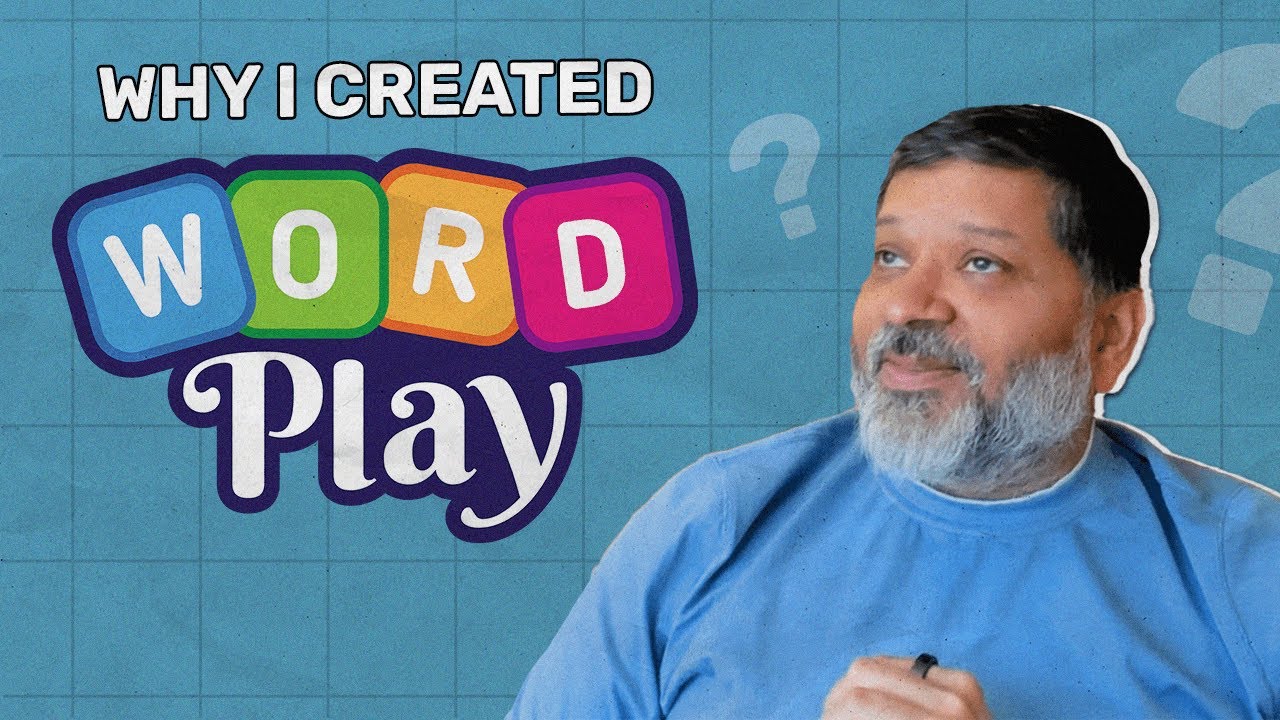
In this talk, Dharmesh Shah recounts how a personal motivation—to keep his 11‑year‑old son engaged while learning Python—led him to create a small web app called First Word, a math‑based tool that evaluates the best opening guess for Wordle. He built and launched the app within a single night, releasing it publicly on a Saturday. After seeing rapid traffic, he realized Wordle’s once‑a‑day limit made practice ineffective, so he expanded the concept into a full‑featured Wordle‑style practice game, Wordplay.com. The game quickly grew to 6.5 million total players and about 3 million weekly active users. Shah frames the project through a Steve Jobs quote about “connecting the dots” backwards, emphasizing that seemingly small, curiosity‑driven experiments can later become significant. He links this mindset to his earlier experiment—a graduate‑school blog, OnStartups—that eventually seeded HubSpot, a $20 billion company. The narrative underscores the value of building for learning, enjoyment, and user value, even when the ultimate impact is uncertain.
Chapters
So this is the story of how my 11-year-old son and a quote from Steve Jobs caused me to build a web-based word game that has now been played by 6.5 million people. So here's the story. Back in January of 2022, there was a really popular game online called Wordle. And I have loved word games since I was little, so I played Wordle a fair amount. As this is happening, my son, who's 11 years old now, is taking a 16-week Python programming course. So he's, you know, cruising along in his Python programming, but I needed a way to kind of further motivate him, to kind of show him what was possible. So I thought I'd build this small app that I called First Word. And the idea behind First Word is if you played Wordle, you could use First Word to come up with the best possible kind of first guess in Wordle. And so I built this kind of math-based tool that you typed a word in and it would tell you how good of a first guess that word was based on letter probabilities and statistics and things like that. And it's Saturday night and I tell myself I'm not going to go to bed until the app is finished and I'm going to give myself 24 hours to launch it to the public. And so I did finish it. I think it was around 3:30 in the morning that night. And on Sunday, you know, showed it to my son. It's like, hey, look, look at what I built in Python. And so it kind of gives them a sense, and we're going to launch it together. And so it was really fun watching all the traffic come in from all over the world on this thing that didn't exist a few hours ago, and now all of a sudden hundreds and then thousands of people played it that first day. And then a couple of things happened. Wordle only lets you play once every 24 hours. And practicing once a day and then trying out the one word is not a particularly effective approach to get good at Wordle. And so I said, okay, I'll build a game inspired by Wordle, which I did. And the more I thought about it, I'm like, okay, well, you know, other people might find this useful. So I paired the first word tool with this game called Wordplay now. So it's wordplay.com. Funny thing is, you know, so I've had ideas around, you know, the Wordle game and things that could be done with it. And I had a mutual friend that I know, another CTO friend of mine, who actually knows Josh Wordle, the creator of Wordle. So I sent an email to my mutual friend saying, hey, could you make an intro? And literally that day, the New York Times had acquired Wordle. So I made the decision to go ahead and continue development efforts on Wordplay, and it took off. Um, so, you know, it gets 3 million weekly active users now. There have been, you know, 6.5 million people that have played it. So why would the CTO co-founder of a $20 billion company you know, build a word game? And the answer comes back to a Steve Jobs quote. And the quote goes something like, you can't really connect the dots looking forward. You have to connect the dots looking backwards. And what Steve is trying to say here is, as you're doing things, you might not always be able to know, well, I'm going to do this, that's going to lend me to that, and then that's going to help me do that. You might have some vague ideas, but you won't really always know for sure. And sometimes you have to just do things because they feel right, and then later you'll be able to kind of connect the dots and things will kind of start falling into place, so to speak. And so Wordplay for me was an opportunity obviously to motivate my son. It was a way to kind of scratch an itch. It was a way to learn some new tech things that I've been wanting to learn for a while now. It gave me an excuse. But most importantly, and this is kind of the real reason, is that is that connecting the dots thing. You know, if I look back at my life, you know, I've been at the software business now for 3+ decades, is that I can kind of trace back these kinds of odd things or odd projects where I have a curiosity or an itch I want to scratch. And I do that, and then that later comes and turns into something much bigger. And so a good example of this is that I started a blog called On Startups. back when I was in grad school as part of a thesis project. And that blog on startups.com became essentially the genesis for what is now HubSpot. Like, if that blog had not been started, my co-founder Brian and I would likely not have come up with the kind of idea for HubSpot, and HubSpot the company likely would not have existed. So that was a weird— it's like, okay, well, you know, a blog about startups ends up leading to a $20 billion software company. I'm not saying Wordplay is going to turn into that, but I am saying that, you know, sometimes you do things that feel right. As long as you're learning something, as long as you're enjoying it, and as long as you're bringing value to people, it's probably worth doing. So that's the story behind how I ended up creating Wordplay.com, a Wordle practice app that's now used by millions of people. Thanks for watching. Thanks for listening.