Developing Leaders from Within: From Great Employees to Great Leaders | Mike Michalowicz
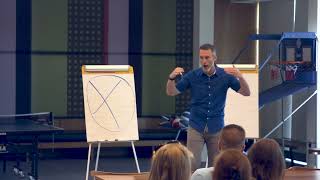
Mike Michalowicz presents the FASO framework for developing leaders from within: Fit, Ability, Safety, and Ownership. He argues that great leaders match talent to tasks rather than titles, and that recruiting through education like workshops and apps acts as self-screening. Safety means physical, relational, and financial security, from onboarding rituals to open-book finances.
Chapters
Alright, so today we have the opportunity to hear from somebody where I believe most of you guys have read at least one, if not two or three of his seven or eight books. The books are over there, so we encourage everybody to grab a copy. We were fortunate enough to get 500 editions of all the different books he has produced. His name is Michael— I knew I was gonna do this. They even broke it out for me. McCallowitz, author of Profit First, Clockwork, The Pumpkin Plan, and his newest book, All In: How Great Leaders Build Unstoppable Teams. He's founded 4 multimillion-dollar businesses, 7 sold, and operating the others. He's a former biz columnist for the Wall Street Journal and business makeover specialist on MSNBC. Today, Mike and his organization Prosper Group is actively investing in and turning around distressed companies. We don't fall in that category, so quick caveat there. He travels the globe speaking with entrepreneurs and is here today to share the best of what he has learned. So please, I will turn it right over to you.
Thanks, Mike.
Appreciate it.
Thank you. So, um, I'm just gonna put the notes here if it's cool. So, uh, I was talking with Samantha and Sherry and, uh, and my speaking coach. Who here is from New Jersey? Just raise your hand. Okay. So I'm like, you gotta start off with something that's, you know, relatable when you come do a presentation. So I'm from New Jersey too. I'm from North Jersey. So I was like, let's talk about Taylor Ham Egg and Cheese. Right? And, oh, thank you for calling me out right away. Because Sherry's like, and this is not HR protocol, she's like, you idiot, it's pork roll, egg and cheese down here. So I learned something about Jersey. Yeah, both of you are like, that's right, damn straight. I, yes, I'm an author today, but an entrepreneur my entire life. And one of the companies I owned was in computer crime investigation. You're probably familiar, or maybe you've heard of the Enron trial at one point. My company was the lead investigator in the Enron trial. Right here at White House Station, New Jersey, we were right north of here, and we were not contacted by the prosecution because that was the FBI, the CIA, the ATF were all involved in prosecuting this case. We were the defense team. So if you remember the names Kenneth Lay or Andrew Fastow, if they ring a bell, those were our clients. And the evidence is no longer sequestered. This is a case that happened in 2003, so it goes way back now. But if you're curious about the case, I can openly talk about it. I will tell you this: they were guilty. They were very— and I was their defense, thank you very much. And we were growing our company. I sat in my office, similar to— I was checking out Mike's office up there, very similar. I had an office that kind of overlooked our facility, but we were small. We had We had 30 employees at the time. And I was sitting in my office for a full day running the numbers, running the calculations. Said, "Oh my gosh. If we simply do X, Y, and Z, this is the year we as a corporation are going to achieve $10 million in revenue and take down our biggest competitor." It was a company named Krull. So, I called a team huddle. I saw your huddle rooms. Sherry took me for a nice tour around your facility which is— This is truly amazing. This facility. I'm jelly, a little bit jelly. And I called my team together in our huddle room. And before calling people in, I wrote on a sticky note very similar to this, $10 million in big bubble letters because that was going to be our goal for this quarter. Only 3 years into business, bootstrapping. We didn't have any venture capital, no funding, no angel funds. I wrote on the board. I called the team together. And before they came in, I covered it up with another piece of paper. So with great flair, I could reveal the numbers that we were going to hit. I also, as a safety measure, cued up the rock anthem of the century that gets a team jazzed back in 2003. It's called "Eye of the Tiger" by— it's the Rocky theme. If you've ever seen the movie Rocky, when he runs up the steps, that's it. I called the team together. There's 30 folks gathered around. I had Patty, my assistant, cue up the cassette player and starts playing the beat. Goes ticka ticka ticka ticka, da, ticka ticka, da, da, da, da, right? It's playing. And I call the team together and I prepared this rehearsal, or rehearse for this speech for endless hours saying, "This is the year. We are going to transform the industry. Nothing will be the same," with all this great flair. And then I say, And this is the year we're gonna achieve $10 million in revenue. And that was the response, "Thank you very much." Total silence from my team. And I'm like, "What? I said the corporate vision." And then I said, "Oh, I didn't do the thing that gets everyone fired up. I didn't do the Guru hand prayer, head bend, and then Jesus move." I'm like, This is the year we achieve $10 million in revenue. Thank you. It was basically that too. One person laughed. One person's like, this guy's insane. And everyone else was silent. And I said, what's going on? I just gave you the corporate goal. My team shuffled back to do their jobs. Patty, my colleague, my assistant, came up to me and said something that profoundly changed me. What I want to share with you today that maybe will give you insights. Because everyone in here is a leader. You may be the leader of your role. You may have a team that you're supporting. You may be leading your family. You are a leader. And Patty says, "Mike, you're setting the corporate vision. But what about our vision?" She goes, "When we achieve that number, you get the bigger house. You get the new car. But why should we care?" Everyone here has their own vision. And that's when I had, for me, the most profound realization of my life. As most corporations set a corporate vision, most leaders set a corporate target, a corporate goal. Great leaders set a collective goal. What is everyone looking to achieve? I guess the best way to explain it is how I was running my business was putting a big X on the map. This is where we're going. If we can do this and that, we We will achieve $10 million in revenue. And that's what most leaders do. And what I want to invite you to consider is here's what the greatest leaders do. We set a collective vision that includes everything. Fast forward, I do own a company now, also small, there's 25 of us there. We do training on leadership and we do other training in the business space. And what I know is, while I have set goals for our organization that satisfies my big fat ego, to be honest. My colleague Amy wants to be cancer-free for the 7th year in a row. My colleague Aaron would like to buy a new house. Kelsey's looking to learn Spanish. Jake is looking to make a job transition. And the dreams and visions go on and on for everyone. We've come to realize, I've come to realize, is great leaders don't say, "This is where the corporation's heading," and setting an X on the map for us to move toward. Instead, we lock arms together and say, "How do we achieve everyone's personal vision on our path together? How do I ensure everyone achieves what they're looking to do?" Think about your own life. You're here to do your job to support a vision you have for your life. and the vision is a mix of many things. We have to be aware that we're here, all here on the human journey together, and great leaders recognize that. There's a story of two museums that I thought you might find interesting. This happened in 2000, right before the COVID pandemic, so maybe it was 1990, not 2000, I'm sorry, 2020, right before the COVID pandemic. There was another one back in 2000, a lot of people don't know about that one. That's a little surprise. Workshop on that one this afternoon. In 2020 with the COVID pandemic, right before that, there was two museums that launched a significant campaign to promote the artwork. But one had an absolute failure and collapse, and another one had an extraordinary success. It was so interesting because it boiled down to the leadership. The first museum was a museum in Russia, in Yekaterinburg. The art museum had hired a guard to guard what they consider one of the most famous pieces in Russia, which is called Three Figures. It's the Mona Lisa, if you will, for Russia, and I'm gonna do a really horrible sketch, but it's three faceless figures standing. It looks roughly like that. They hired a guard, Alexander Vassiliev, and they said to Alexander, "Here is your job responsibilities. Your job is to stand in front of this art to ensure that no one touches it. It's worth millions. You are not to look at it, you're not to engage with it, you are to protect it. Stay standing there for—" actually, he had a long shift, it was a 12-hour shift, but for 12 hours, do not move. There's another museum, actually not too far from here, the Baltimore Museum of Art. Who tried a different approach. They also had a collection of extraordinary art. One piece famously is called the Medusa. It was a door knocker, but in the shape of Medusa's head. And what the curators did at this museum was different than what happened in Russia. The curators walked around the museum and interviewed the guards and said, "Hey, tell me about what you do all day." One particular guard, his name was Michael Jones, said, well, I make sure that no one damages this piece of art, the Medusa door knocker, which was back from the 1500s, this old piece. And he said, what's so interesting is honestly my job really is I'm a glorified bathroom attendant because people just ask me all the time, where's the bathroom? He goes, but I also noticed what people talk about when it comes to Medusa. Some people say she was a victim, and other people say she was a villain. The perspectives are profoundly different. He said, "I know more about this art and what people feel about this art than anyone else in this entire museum. I know what our customers, our guests want." The curator at the Baltimore Museum of Art said, "Hey, Michael Jones, would you want to try to be a curator?" Would you want to help us determine what art we should have? The lesson you're about to discover is this: when we are forced to comply, it's human nature that we seek to defy. Maybe something to remember or even write down. When forced to comply, we seek to defy. When you're given an exact set of rules and there's a punitive consequence if you fail to do it, it's human nature to get elbow room and get back. But when we are nourished we flourish, like what they did with Michael Jones. So back to the Russian Museum. One day after Alexander Vassiliev was hired, 12— less than 12 hours later, he was into the night shift, they returned, the curators, and found that someone mysteriously had drawn eyes on the artwork with a scripto. Someone took a $3 million piece of art and drew eyes on it to improve it. And they caught the person. It was Alexander Vassiliev, the guard himself. And he said, "I thought it would be better." When forced to comply, we seek to defy. Alexander Vassiliev, by pure coincidence, fell out of his 13-story apartment window and passed away the next day. That's not actually a lie. That's a total dark humor. That was a lie. That's a lie. That's dark humor. It's inappropriate. He was poisoned to death. Okay. I'm kidding. I'm kidding. I'm kidding. I'm kidding. I'm kidding. All right. Here's what the Baltimore Museum did. The Baltimore Museum said to Michael Jones, hey, are there other guards that would be interested perhaps in also being curators? They recruited 17 guards to become the curators at the Baltimore Museum of Art. They called it Curating the Art. It went on to be the most successful campaign they have ever done at the Baltimore Museum. More donations, more visitors, more guests. Here's the most powerful part of the story. The retention, those individuals, guards, the retention, if you've ever done guard work, It's not easy. It's a lot of time on your feet. It can be monotonous, and there can be some hairy situations. So the turnover's pretty big. The average guard lasts about 2 years, and the pay ain't so great. These guards have stayed ever since. The retention has skyrocketed. Of the 17 people that went through the experience, 15 are still guards for the Baltimore Museum. Because they're able to express themselves, they're able to participate, they have ownership in the organization. And yes, two of the guards have left to become professional curators at different museums. When you elevate people, when you allow people to express their full potential, we value the organization that supports it, and my gosh, do we run with it. There was a book, and thank you for getting so many copies of the books, and I hope, when I write a book, I hope it delivers values and food for thought, and hopefully this presentation too is a couple seeds you can just take away, but I also hope it entertains you. I don't want it to be this litany of just idea after idea without some entertainment, so thank you for the folks who've read the books, and I hope you got some joy out of the experience. There's another book that perhaps you want to read called Extreme Ownership, It's this interesting, by two guys that are Navy SEALs, and they explain what it's like to be all in on something. And specifically they talk about these things called the boat races. Now, I don't know if you've ever seen a Navy SEAL in the real world. They're pretty insane. Many of them go, there's a station right outside San Diego on an island called Coronado. Has anyone here ever been to Coronado? Okay, you ever been to Coronado? Okay. So you've probably seen the Navy SEALs and these helicopters coming in. And what's interesting about these Navy SEALs is one of the tests you do is called the boat races. They have these heavy rubber boats that are up on the beach and 5 to 10 soldiers will grab the boats as teams, there's probably 10 teams, they carry these ridiculously heavy boats down to the water, they race out into the ocean waves around a buoy and back, and whoever comes back first wins. It is exhausting to do it one time, and they do it 20 times in a row. It's relentless. What was happening during this is the leadership was observing the boats, and they noticed that one boat won over and over again, and one boat consistently was always coming in dead last. What they decided to do was a profound insight into leadership and what we do. They took the leader of the winning boat off that boat and put him on the boat that was consistently losing and vice versa. And maybe this will surprise you, maybe it wouldn't. The next race, the winning boat won again, the losing boat lost even though it had the new leader. But the next race, it started to switch. Within 3 races, the former losing boat with the exact same 9 other soldiers was winning every single race. So the way we bring ourselves to a situation, the way we lead a situation, does determine the outcome. In fact, it's not necessarily the quality of the team, meaning the individual skills and talents, as much as the harmony of the team. Anyone see that movie recently called The Boys in the Boat? Any boys in the boat see that movie? Okay, if you haven't seen it, it's a fascinating movie because it's about the 1936 Olympics. And in 1936, you may not know this, but it was in Germany, in Berlin specifically. This was under the Hitler regime. And Hitler was about to demonstrate the superiority of Germany. There's one particular race which was the boat race. This is a rowing race. And the Germans and the Italians were the dominant teams. These were the odonisses. These people were literally picked, primed, groomed, prepared from kindergarten on to be rowers. That's what you're going to do for your career. The American team wasn't so prepared. In fact, every single person that competed had never rowed before college. They just assembled a team from Washington University out in Washington State. They just assembled a team of people who had never rowed before. Most of this team had rowed for about— together rowed for maybe 2 or 3 years. The person with the most experience had 4 and a half years of experience rowing. And now they're in the Olympics, this hodgepodge team. Maybe you won't be surprised, the American team took the gold. But the question is how. If you watch the movie, you see O'Donnell and all his brothers, that's the European teams, and then you see these lanky, scrawny Americans win. How could that be? They weren't trained, they had inferior strength, and yet they won. Because they achieved a thing called swing state. There's this interesting phenomenon in rowing that when all the paddles move simultaneously at the perfect time, there's an exponential amplitude of strength. And they were able to swing. It was the harmony of the team that brought about the greatest performance. That's what I want us to consider. I know you're doing some workshops after this, is amplifying the harmony even by micro-moments. I mean, I had an opportunity to tour around here. I met with some of you personally. Interestingly, when I walked by the HR department, I don't know if the HR department's here, that was the biggest smile, there they are, biggest smiles. I went into some groups, the finance department said no when I walked in. I said, hey, and they're like, no money. No. I'm like, okay. The HR department said, hey, hey, welcome. The more harmony a team has, the greater the amplitude of impact. That's what I want us to explore together. We're gonna explore a model, and this is where I want you to take the little tidbits and takeaways from. That I call FASO, or it kind of rhymes with lasso, that's an S. And these are the elements it stands for. F stands for fit, A stands for ability, S stands for safety, and O stands for ownership. And I wanna see if we can deploy these elements together. So first let's dig into fit. The traditional structure for an organization is the classic pyramid structure. As I built my companies, I also invest in organizations, this is the most common structure. Now, up top you have the owner. When I owned businesses, I just put the word "me" here. Admittedly, I'd have a long line, like, you know, like a really long line, like really long. And then I'd have my colleagues here. This is my ego talking. And this is the traditional structure of an organization. It's called the pyramid structure. The challenge of a pyramid structure is it's built upon titles. You have me here, I have my, you know, the C-suite, CFO, CMO, C-3PO, I don't know. You have all the, that's a Star Wars joke for the one Star Wars fan, C-3PO. And so forth, you have this structure. This necessitates a concept called matching talent to titles. I remember in my forensics organization I was sharing with you, I was looking at this chart and I hired a woman, her name was Petra. She served a title called receptionist. This was back in 2003 when there was a lot of walk-in customers still answering the phone. I notice you guys don't even have phones here, right? I mean, phones don't even exist anymore, but back then it's what it was. But the title of receptionist had a few things. You had to greet walk-in customers, answer the phones, when there was dead time, invoicing, data entry, and we had a list of the 10 things she needed to do. We had a sales role over here, and there was a guy, Paul, who was leading this for us. So here's Petra, and here's Paul. Paul's job was to close sales, you know, to be the deal closer, and also to be a farmer, maintain the relationships, build the rapport, and so forth. Petra was amazing at building relationships, at handling these phone calls, addressing customers' concerns. When there was a heated moment, she could help them navigate it. She was admittedly not so good at the data entry and the detail components. So in my traditional mindset, the pyramid structure says when the talent doesn't match the title, you have someone that's unfit for the organization. Unfortunately, you know, she's got to go and maybe she can find a better suit— suited opportunity for her elsewhere. I looked at Paul. Paul was a great closer. He loved to crunch the numbers and know exactly when one of our clients needed to take action. He was a data analyzer and that's why he closed so well. He was admittedly not that good at farming and building relationships. He was a little bit on the spectrum and that was a challenge for him was to maintain rapport. So Paul was not a fit for the organization and in a talent-to-title scenario, I should have freed him up. But what we did was we discovered a better model, the modern model. And as I was talking to your team here, it sounds like you guys are deploying this well. What it is is a web-like structure. Instead of a monolithic pyramid, what we started doing is saying, what's a person's list of individual talents, all the abilities they have, and what are all the individual tasks we have within our organization that need to be done? So here's talents and here's tasks and so forth. What I did was I said, listen, Petra's amazing at relationship building. Where do we have needs in our organization for relationship building? Well, Petra could answer phones, greet walking customers, build relationships with existing prospects, do those farming calls and meetings. Paul here was great at closing deals. He could crunch the numbers. He was great at the analytics, but he wasn't necessarily talented at the relationship building. And what you see, if we build this out, it starts building a web-like structure. Here's a lesson I want you guys to take home with me. This is the first big tidbit. Don't match talent to title. Match talent to task. That's what the great organizations do. We become much more morphic, much less siloed. The challenge of titles too is titles can build that silo. It's inherent to the word title. You probably know this. But if you look at the word title, inherent to the word title is entitled. Meaning once we have a title, we say this is my domain and I'll never leave it. Morphic organizations start blurring titles. I know they're necessary as we grow. We start blurring titles and we start talking about roles and responsibilities, capabilities. In my office, you'll go around, we have a much smaller building, but we have similar setup to this. Outside of everyone's office is, we call it a POM, or a Personal Operating Manual. Ever buy electronics? You buy an Apple iPhone or something like that, comes with a little manual. How— in the very first page is the quick start. Well, we do the same thing for all of our colleagues. You walk around our office and you'll see Kelsey, for example, the way she likes to communicate, what her strengths are, the stuff she likes to avoid, how she receives appreciation. Some people like verbal appreciation. Other people like public recognition. Other people don't like that. Some people like rewards, like, hey, take some time off as a result of this great accomplishment. And every person has a personal operating manual. It's the quick start guide for people, and now it starts blurring the lines of talent to title and starts achieving talent to task. That's the first thing I want to talk about when it comes to fit. Let me see if I— we'll skip. OK. So the next thing I want to talk about is The Container Store. Has anyone ever heard of The Container Store here? OK. OK. It was founded by a guy named— it was a couple founders, but Kip Tyndall. If you don't know what The Container Store does, this is shocking. They sell containers. They sell a lot of containers. Now here's the absurdity of this. The Container Store sells containers just like Walmart does and other big box retailers. Now, I don't know if you've ever shopped at a Walmart. Has anyone ever shopped at a Walmart? Okay, right. Everyone, everyone, I just want everyone to know, everyone just did alligator claws. Like, no one's like, I'm a Walmart shopper. It was like this, I'm a Walmart shopper. I got it. I got it. Has anyone shopped at a Container Store here? OK. Just thumbs up or thumbs down. Experience better or worse than Walmart, would you say? Better. Better. Extraordinary? Great. OK. It was good for you? Now, perhaps this is what you experienced when you went to the Container Store. The associates there are super engaged. They know everything about containers. You come in with your problem, like, hey, I have a closet full of junk. They're like, pfft. This is my problem now, right? I am on this. And they're assembling and building and stuff. Go to a Walmart and say you have a problem with your closet. They'll be like, um, aisle 75, I think. Good luck. So the question that comes to me is, how come The Container Store, a smaller dynamic organization just like yours, how do they dominate when Walmart struggles in the customer experience component, even though they're in a similar space. Well, I was meeting with Kip Tyndall, and he shared this formula that blew my mind. He wrote— this was ironically, it was literally on a cocktail napkin. We met after an event, and we were not drinking, we were eating food, but there was a cocktail napkin there, and he writes down this formula: 1A 3B 1B equals 3C. What he said is 1A player— now I want to say something about A players. I believe every single human being on this planet is an A player. Every single person in this room is an A player. That's not a question. An A player, as he defines it, is someone's best potential, their talents are matched up to what they're doing. Talent to task. When we can fully express ourselves, we're an A player. He says one A player performs at the level of 3 B players. An A player is someone who sees the job— I'm writing this small— but job equals their identity. This job is who I am. I am this job. We're one and the same. My job represents who I am as a human being. 3 B players, if you will, so is someone who sees the job as a responsibility. I have an expectation of myself to perform at a certain level. I need to do this, but this is not who I am. I'm disconnected from it. So an A player is someone who's all in. And if you go to The Container Store, these people are all in. A B player is maybe someone, maybe someone that's working at Walmart. A C player is where a job is a necessity. Necessity. It's super small here, and I'm putting the word evil above it. A C player is like, I don't want this work, I have to have this work. It's an evil necessity. By default, the business I'm working for is therefore the evil source. C also can be the word cancerous. And sometimes, I don't think it's happening in our organization here, but some organizations we go into, there's a cancerous component that says, I do this and I hate it, and therefore I'm gonna bring that along to my colleagues. The B players are people who are doing this 'cause it's their responsibility, but the job is the job. And the A players are someone who sees it as their identity. Kip Tindall says, oh, I'll tell you the secret to what we do and why The Container Store crushes Walmart. He goes, we just hire A players. I'm like, Okay, that's easy, but how do you just do that? He says it's all in the recruiting. Now realize, one A player, one person that sees the job as their identity performs at the level of 3 people that see the job as a responsibility, and 3 times 3 is 9 people that see the job as a necessity. He goes, Walmart needs to hire 9 people to get the job done that we do with one person. And here's how we do it. He said, we look for people who are looking to express a talent and not looking for a job. People who are looking for a job are looking for responsibility. People who are looking to express a talent are expressing identity. He goes, we go into retirement communities and we will go to people who want to be socialized more. They want to connect with the community more. And we'll say, hey, You ever think about working in an environment where you can connect with more community, meet your neighbors? That's what we have available here at The Container Store. And so when you went there, you may saw some retirees. They'll go to aspiring actors, thespians, and say, hey, why don't you play your character at The Container Store? You can learn to express yourself. So what they're doing is they're identifying where people's talents are and allowing the platform to be an expression of it. Of it. That's how you get top talent. I called the University of Chicago's medical department. Oh, and by the way, I know there's a handout with some notes. I'll give you all the answers at the end because they're all embedded here. I just don't want to disrupt what we got to accomplish. So just so you know, I'm not ignoring that. It's something we'll talk about. So I called the University of Chicago. I interviewed a woman named Jul Kucera, and what Jul did had a profound impact on the University of Chicago, and this was back in about 2010 is around when they did this. The University of Chicago has a medical department, a hospital, and it's staffed by all these individuals, maybe people just like you and I. And what the union noticed is that they didn't have a community of employees that was representative of the community in that area. It wasn't diverse. And they went to the head of the HR department and said, "We want to change this up." And she responded and said, "I understand that maybe it's not representative of our community, but these are the best candidates. I follow the interviewing process and intuitively, I know when someone's a great fit or not. They said, good, we'd like to try something different though. And she said, okay, what do you want to try? And that's where Jewel Couser came in. She said, what we're gonna do is run skills assessments. So when someone is interested in a job position, before we make a decision based upon interviewing, we're gonna actually have people experience the job. So 50 candidates were coming in for a position as an administrative clerk to check people in. They went through the traditional interviewing process with the HR director, and she made her list but kept it private and said, "Here's the number one candidate by far who crushed in interviews and is a perfect fit for our organization," down to the 50th person who was not qualified according to her. They then went through these skills workshops. In the skills workshops, the same 50 candidates went into a room this size, and they experience what it would be like checking someone in. They experience what it would be like checking someone's pulse and some of these basic things that they'll be responsible to do. Well, the first station was the check-in. Jewel herself decided to man that station, and what she did there is she emulated having cerebral palsy. Now, her roommate at the time had cerebral palsy, so she was very familiar with it, fine motor skills are difficult. Taking out your license out of your purse or wallet would take a good minute. So that's what she emulated, because that's a common scenario in these hospitals. And so the candidate sits down, they start the check-in process, and then she would take about a minute to get the license out. Some candidates would say, "Please, take all the time necessary." Other candidates said, "Hey, I'm here to help you out any way I can." And one candidate said, just give me the damn card, you're taking too long, and ripped out her hand. Guess who they decided not to hire? You know, the hand ripperer. But guess who was the number one interviewer by a long shot? Jack the hand ripper. She was the number one candidate because she had a confident personality. She spoke her mind. She was strong. She knew where the green light was on the traffic light question. She knew this stuff, but she wasn't demonstrating the skill. So, the number one way as we consider teams you're working with, as you assemble teams here and go, is what skills should be tested to see if someone's a fit? But I want to share something that I think will be the profound insight and something I encourage you to consider talking about later. You know, there's another way to find the best talent, or for you to discover where your best talent is. It's always through education. I don't know outside of here what your hobbies are, what you enjoy doing, but maybe someone here likes music and playing music, maybe someone likes art, and someone likes hiking and activities like this. Whatever your interests are, your true interests are, I bet you know a lot about it. I bet you invest time in learning more about it, watching YouTube videos or whatever it may be to get steeped into what you love. That's human nature. And that is the essence of what we got to learn here, is that the best talent, meaning the people who have the most interest in something, always seek to learn more. The honey for the bees here is education. I play guitar marginally, but I do play guitar, so I will do anything to learn more about the guitar and study it. So if you put a YouTube video out, I will watch it. That is the honey for this bee. True story, I just got to share this, because I think we're— I feel like we're family already. Last week I did a performance in New Orleans, Now, I did the performance not just to an open venue. Our company, we had our employees and our immediate associates, so about 100 people were there, and me and some other folks were playing music. The bartender, and it was an open space, so there was about 200 people in the room, the bartender says to one of our guests, doesn't know it's a guest, he goes, "This band sucks." And when I heard that, I instantly said, "We're a band? This is amazing!" The framing of what we hear is very important. So it was kind of funny. I just wanted to share that because we're family now. So apparently I have a band. But imagine you and I decided to start a band. And clearly from my experience, we need a better guitarist than me. So imagine— now, I'm 50 years old, so perhaps you recognize this name, but maybe you don't know the music so well, but there was a great rock band in the '80s that if you didn't listen to Van Halen, my gosh, That's who you need to listen to. The greatest guitarist, at least in the '80s, arguably in the rock genre, was Eddie Van Halen. So imagine you and I decided to do this '80s retro band together, and we're like, we want the best guitarist. And assuming Eddie Van Halen is still alive, we'd be like, Eddie's our guy. And we call Eddie Van Halen and say, hey dude, we started a band, we kind of suck right now, but we're looking to get better, do you want in? What would Eddie say? Are you kidding? I already got a band. I'm making millions of dollars. I'm kind of taken care of. Good luck. So the question here is, how do you get the Eddie Van Halens, the rock stars of the industry, if they're already employed? And it's by discovering that people who are the rock stars always seek to gain knowledge. Where did I put the— oh, I put the pens here. I want to show you, this is what I want you to take home and consider in the workshop together. Do you know our abilities reveal itself in 3 layers? Interestingly, this follows a concept called the Pareto Principle or the 80/20 rule. Maybe you've heard of it before. This is the 80%. What most organizations consider when changing teams, I know you do a lot of hiring within here, what most teams consider is, What is people's experiential talent? What you've done in the past. Is it indicative of the future? It's indicated on your resume. What's the innate talent? Myers-Briggs, Enneagram, DISC, Predictive Index. There's all these tools out there. This is how are you internally wired to perform. But the greatest ability that all of humanity has, that all of us have, is potential. And yet, it's the least analyzed component. So what I want us to start doing in our workshops today is talk about how do we discover each other's potential in this organization? And I'll tell you how you do it. Through learning. If we called Eddie Van Halen when he was 12 years old, that's when Eddie Van Halen first became interested in guitar. If we called anyone that was between 10 and 15, girls and boys, if you're interested in learning thrashing guitar, we're going to put on an educational workshop, he may have showed up. And our job then is to educate all of the students and look for the 3 elements of A-players. It always starts off with the stage of curiosity. I totally bastardized that. I wrote a brief version, but it says curiosity. Curiosity then goes to desire. And ultimately it goes to thirst. I was talking with Mike beside— before this. You— here's a person, you can tell, steeped in thirst. Curiosity is showing up. So if I put on a guitar workshop, anyone here not interested in guitar won't even show. Half the vetting is done. It's an educational event. Then when we put on the educational event, we see who are the people that are showing the most desire. I want to learn more. I had a lot of questions. And then thirst is who's the people who can't quit this thing? If we ran a guitar workshop, anyone interested in playing guitar would show up, some people would have desire, and a few people, Eddie, would reveal thirst. And our job is to seek out the desire and thirst of people because that's the A-players and then insert them into the tasks that match that talent. Now I know this sounds theoretical, so let me give you some practical applications. I played lacrosse back in high school. I went— you may know the town, Boonton. Anyone know Boonton? Boonton, New Jersey. So I'm from Boonton, New Jersey. I went to Boonton High School, and we do swallow the N. It's not Boonton. It's Boonton. I played lacrosse. I was a marginal to poor athlete, admittedly. But there was a camp in New York State called Hobart. They invited students to go up there, and I think my parents wanted me to get out of the house. They're like, Mike, you should go and learn lacrosse. I go up there, there's 500 students. What they're doing as camp is going on, they start tapping certain athletes on the shoulder saying, "Wow, you're really talented and skilled at this. We'd like to bring you to a new field and practice more with these other athletes." And they would tap some of those on the shoulder and, "We'd like to move you to a new field and demonstrate your skills and learn more." Everyone was learning skills and by the end of the 5-day camp, 3 players were invited to play for Hobart, an elite school. I was not one of them. But there was 3 players picked. Here's the interesting thing. Shockingly, I played collegiate lacrosse down in Virginia and I would attribute it to Hobart because what I learned there. What's so interesting about these educational things is everyone gets elevated but you also get to identify who are the best talent for your needs and where is your best talent. Has anyone ever here gone to Home Depot to the build a birdhouse workshop? Anyone? Okay. It's a recruiting ground and no one knows it. Have you heard of these? Home Depot ran ads and said, "Hey, come on down to Home Depot. We're going to build a birdhouse. Bring your kid. Have fun. Have a hot dog." So you go down there. What's Home Depot doing? They're educating you how to build birdhouses. Why? Because they want to ingratiate you with the store. They want to say, "Had an amazing experience at Home Depot. I love this place. I'm going to buy all my supplies here." But here's what people don't know. It's their number 1 recruiting ground. There's employees teaching how to build a birdhouse. You're sitting there and they're looking for the guests, the aunts and uncles, the parents that show up that are curious. And then the ones that ask the most questions. "And how do you do this?" That help the other parents and people there and have the thirst. And they go at the end of that workshop and tap you on the shoulder and say, "Hey, uh..." You show all the skills and abilities of someone that would be great here at Home Depot. Have you ever considered? We'd love to give you an application. It's a recruiting ground. The best recruiting of talent is to not recruit them in the first place. It's simply to educate. Domino's Pizza during the COVID pandemic ran a famous, famous campaign in recruiting. It was their best recruiting of all time. They had Pizza Hero. I don't know if anyone did Pizza Hero as an app. You can make your own pizza. You could make a pepperoni pizza that looked like a smiley face. You could have. A miracle. What they did with the app is you could make your pizza, your smiley face pizza, push create, and the chefs at the Domino's Pizza store would then make your pizza exactly your way and you could pick it up. But what they were doing was they were monitoring how much time people spent assembling pizzas, and there were some Weirdos who spent a lot of time making really wild pizzas. Some people spent hours on the app designing pizzas. Peace signs, swirlies. 500 people were invited to make their pizza themselves at the Domino's store. You spent so much time on the app, would you ever want to make this on your own? They recruited over 250 chefs. Remember, great talent is attracted to great learning. What are the learning workshops that we could put on here that could attract the people who are curious about that? And it becomes this self-vetting process. Okay, we talked about— where's my model here— we talked about fit, task to talent, so forth. We now talked about ability. We want to explore Potential. Now we're going to move on to safety. We all need a safe environment to work on. I don't know if you know the organization called OSHA. It's about occupational safety. It was originally designed for manufacturing. It really doesn't apply to a scenario like here, but, but safety matters. But there's 3 levels of safety that I want us to explore together. Back in 19— 1910, there was a situation that went down. World War I was happening, and there was an organization called the Radium Company that was founded who made watches. And they used a material called radium. It's radioactive material. And they put dots on a watch. If you ever look at an old-fashioned watch, especially military watches, they glow in the dark. Because that's the nature of radium. And in World War I, soldiers needed this stuff. Well, they had a manufacturing plant and they hired— it was mostly— it was actually all female workers to work the manufacturing plant as the males were out to do soldier work, to fight. The women were directed to dip a paintbrush in radium, radioactive material, drop it on the 12 o'clock spot on the watch, sharpen the brush with their lips, kkkk, dip it in the radioactive material, drop the next one at the 3 o'clock, and repeat that process over and over again. They were swallowing radioactive material. They became known as the Ghost Girls. Maybe you want to Google it, maybe you don't, because the consequences were Horrific. Cancer, tumors, it destroys women. They were called the Ghost Girls because they literally started glowing themselves, their skin. When they took x-rays, their teeth were glowing. It effectively killed or destroyed all of them. OSHA was founded because of what those women went through in safety. Now I thought, I said, well, I work with organizations, you know, Is safety even a concern anymore? Like physical safety, we have to worry about that? Yeah, we do. My own company, we ran a survey and said, anonymous, how physically safe do you feel and is there any concerns that we should be aware of? We have outside our building a rear entrance that goes down as an alleyway to the parking lot behind our building. It's not illuminated. My colleague said, I feel really frightened walking down a pitch black alley at night. And you know, in the winter, sun sets here around 5, 6 o'clock in the evening. My colleagues at lunchtime are like, "Oh my gosh, I have to leave the office tonight. I don't want to go down that dark alley." All we had to do is install lighting there and it resolved that. So we should maybe ask ourselves is what concerns do we have that could be so simply resolved and can mitigate that risk? Because if we don't feel physically safe, you can't perform. But the other form of safety is relational safety. How comfortable am I with my colleagues? There's something you can do from day one for any new colleagues that come on board here. Maybe you can set up and brainstorm about ways you can do it with your team now. An organization, I found through surveys and studies, that the number one experience for most new colleagues that we'll bring on board here or anywhere, number day one is usually paperwork, tons of paperwork. Maybe, maybe you kind of sit in your corner and you got to figure out the social network and maybe someone will invite you out to lunch, but usually you better brown bag it because you're kind of on your own. That's not saying what happens here, but it happens at most corporations. You know the number one question, I know you were asked this question too. After your first day of working here, were you asked by someone, a parent, a loved one, a spouse, a friend, did they ask you, how was your first day? Right? See lots of, yeah, that's what you were asked. You know, the number one question when someone starts a position that they will be asked within 24 hours was how was your first day? And for most people, it's like, not so good. I was kind of ignored. I did a lot of paperwork. I got lost in the parking lot. So How do we resolve this? I want to give you one seed of an idea, because this is something we can brainstorm about. Because your company's growing rapidly, and when it comes to the integration, the relationships are everything. When someone joins our company, we just hired Corday 2 years ago, this is a good example. There's a welcome basket. And we have some people that work purely virtually, we're hybrid, some people that come in, some people that do both, you guys, I think, do both. When Corday came in, there was a welcome basket. Now, here's what we do with the welcome basket. It's not like, "Oh, here's our company logo stuff. Here's the mug logo." We got personalized stuff. The mug says, "Best employee—" actually, it says, "Best colleague ever, Corday." Her name's on there. It's like some cool stuff personalized to her. We know she likes incense. She said she's like really into incense, so we had some incense for her. Say, "Hey, here's some cool stuff we found. We thought you'd like it." We had a personal gift for her. We also had a business card for her. No one uses business cards anymore, like, what are they good for? I'll tell you one thing, when I have a business card, it shows significance that I'm important to the organization. So we had a couple hundred cards printed up for her, but one card says Corday, has her information on there, and then every one of our employees wrote on a frame around her card, so it's pretty big, "Welcome to the team, we're proud to have you." And she has that pinned up. Pinned up. But that's not even the impressive thing. During the interview process, we said, hey, there's probably someone back home that's going to ask you, how was your first day? This is when we're interviewing her. Is there someone that's helping you make this decision? She said, yeah, Brian, my husband, is helping me as I consider this position. We said, well, tell us a little bit about Brian, whatever you want to share. Oh, he— Brian likes bourbons. He likes to collect— he's a collector of bourbon. Great. Make a note on the side, continue our process of interviewing but also skills assessments, all the stuff I told you about. When Corday arrived, the basket's there, card is there, but also there's a package gift. It's a box. And there's a card on it and it says, "To Brian." When Corday got, you know, that's her first day, she went home. We said, "Please bring that to Brian." She went home and Brian asked the question we know that's going to be asked. "Ha, how was your first day?" She said, "It was really good. Didn't have to do paperwork. We actually do an icebreaker. The team comes, actually the entire company comes together. There's a walk-in celebration. There's all this stuff. Most people are celebrated when they retire. We celebrate when you're hired. So there's a celebration, all this stuff. Then you work with your team. There's icebreaking for an hour. There's going out to lunch together. We want to show the company and the colleague that we're not panicked to produce. We are excited to welcome you." We'll get to the work in due time, but it's most important that you're part of the team. So she goes home, she goes, first day was different than anything I ever experienced. It was pretty great. He goes, that's amazing. And she goes, and here's the weirdest thing, Brian. You got a gift. He's like, I got a gift? He opens the letter, it says, dear Brian, we know the decision to work for a company is a significant life decision. We are honored, that you supported Corday in making this decision to work with us. Thank you so much. We hope you enjoy this bourbon we found. And he opens up and there's this bourbon that we found, hopefully he never had before, to add to his collection. And that wasn't even the miracle. It happened at 4:00 AM the next morning. Because Corday told us, the next morning at 4:00 AM, Brian is shaking her bed and she goes, he goes, wake up! You work for the best company ever! Go, go produce for them! The number one determinant of how happy we are at work is the person at home that has our ear. And many corporations don't think about them. It's about us, it's about us. And harmony here is critical. But if we don't win over the person at home, if they're not part of the team, the biggest cheerleader is now our biggest detriment. Most companies, like, oh, that company, man. That really sounds like a tough job. They stink. I hope you're getting every dollar out of them. That's what's usually going on at home. We flip it and you have the opportunity to. The relationships matter here and they matter there and we're not thinking about that. Last thing I want to talk about is financial safety. This is part of Maslow's hierarchy of needs. We won't explain it. I do talk about my books but Maslow studied human biology, human needs. And determined that if we don't have financial security, if anyone here has debt or experienced debt, it puts a big hamper on how we go about the day. It's constant worry. One thing that we can do is introduce, to a degree, open books. The more we communicate about financials, the better. Our organization, we've gone pure open books. Everyone knows everything except for salaries. We do respect that confidence, so all salaries, including my own, are buried into one number. If anyone wanted to spend a lot of time figuring out, they probably could. And I think maybe some people do. But everyone knows what's going on with the business. And here's the power we've discovered with financials is this. That we humans feel more secure when we can forecast what's coming our way regardless if it's good or bad. I thought I used to have to say, "Hey, business is great. We're crushing it. Look at the numbers." And when things were tough, just kind of go quiet for a little bit. Now I've discovered is just share the truth, because our team can see, okay, we've been up and we've been down and we've been going through it. Last year we had an unexpected, relatively financially devastating event happen to our company, and our team was aware of it, knew how we navigated stuff similar to this in the past, and rallied around it. What can we do in our groups, our departments, to simply share where we stand now, the good and the bad, openness wins. So that's safety. The last thing I want to talk about is ownership. Anyone here ever rent a car? Any— okay. I rent from Hertz. I think it's actually a perfectly suited name because it hurts. I don't know if you've had a rental experience like this. I rented a car, I get to the Hertz location, you have to go through this crazy line, they check your ID, they You got to buy this insurance or otherwise the world's going to collapse. All this nonsense. You go through this checklist of stuff. Then they give you the key and they say your car's right there in parking spot A1. A1 happens to be at the very end of the line. They do it in reverse order, so you kind of walk out there with your luggage. You get in the car. I then go to the DMZ, the demilitarized zone of the rental car agency. There's a gate. There's spikes coming up. There's a guy there with a gun. It's like, show me your ID one more time. Finally sirens go off, gates rise, and you're allowed to pull out in your Prius. And what do I do? I do donuts in the parking lot, to be honest. It's a rental car. And listen, if there's a red light, I am coming skidding in. And if that light turns green, I'm gonna see what this Prius can do, baby. I'm gonna floor it. I suspect if you've ever rented a car, you probably don't treat it the same way as the car that you own. Is that fair? And that is the concept of ownership. When we own something, when it's mine, I care for it. I tell Mike, I'm about to go down to Chattanooga, Tennessee. My daughter's got a house and my wife and I are helping her move in and I know exactly what I'm gonna do. We have a pickup truck. After I make this 12-hour drive, at the end, I'm gonna pat the dashboard and say, "Good girl." I know it. I treat that car with tender love and care because it's mine. But the rental car, oh my God, what I will do to it. I started off by saying in that museum example we were talking about, wherever it is in this example, when we're forced to comply, we will seek to defy. It's interesting, the rental car agency says, "You gotta return it with a full tank of gas or you'll be penalized." Very no dents, dings, or scratches, you'll be penalized. Very clean interior, you'll be penalized. So what do we do when we're told what to do and the consequences of failure? Elbow room, peel out in the parking lot. But with my car, I have what's called psychological ownership. I get to determine where I park it. I get to determine what radio stations I pre-program in and what window stickers I get to throw on it. It's interesting. That I don't own the rental car. I also don't own my pickup truck. The bank owns it. I'm making my monthly installments. So legally, I don't own it, but my mind does. The final point I wanted you to go home with is the concept of how to invoke ownership. You don't need to own physically, legally a business, this company, but you can psychologically own your role in this company, or even have a sense of ownership over this company. And here's how you do it. First, you need control. Control means that you have some degree of authority of the direction of your path. So what can you do to take more control, to ask for more control? To give, if you run a team, to give your team more control. I determine where I park my car, where I want it. It can have a dent, dent, dent or scratch. It's okay with me. I have control. The next thing is the ability to personalize. The more we can make something relatable to us, the more we value it. I don't program the radio stations on my rental car. I don't slap on my bumper sticker on there. But my car, I do. The more you can bring your own personality to something, the more it feels like ownership. And I have intimate knowledge. I don't know if you ever bought a new car or used car for the first time. I'll sit in my driveway for a good 2 hours going through the manual. What does this button do? What does that— just for hours sitting there in the freezing cold in the middle of winter. Rental car? Does it even have a manual? I don't care. Where's the gas pedal? Maybe I'll use the brake. Psychological ownership is where you have control. You get to determine how to— some degree of control, some degree of personalization, and intimate knowledge. We need to explore that. Do you have that? And if not, talk with your team leader of how to build that, and you'll have a greater sense of ownership and more authority. And if you're a team leader, how does your team get more of that to take control and authority? Last thing I wanted to share, because we're at time, is this. It's a personal story, but I think it's going to relate to you. And maybe you've gone through this. My father passed away 2 and a half years ago. I was there when he died. I didn't want to be, 'cause admittedly I was frightened to lose my father, but I was there, and I will tell you, I hope you never have to experience it, but I think we all do. There is nothing for me more honorable than being there with someone for their final breath. I'm also grateful for it because I asked my dad a question I'd never asked him before. I said, "Hey, Dad." He could barely speak anymore. He had lost his ability to speak. He was immobile. I said, "Who's been the greatest leader in your life?" And he, letter by letter, spells out Helen Fuller, H-E-L-E-N, and I write this down. After my father passed, I did research on Helen Fuller, a person I've never heard of in my life. Helen Fuller worked for an organization called CSS. They're out of New York City. It's the Community Service Center. They work with impoverished communities. My father came— my family's from the Ukraine originally, hence Makalowitz, an impossible to pronounce last name. My parents came from the Ukraine, and my grandparents did, and my father lived in the tenements of New York City. If you ever get a chance to go out there, you should visit this thing. It's really interesting and horrific conditions these people lived in. My father was physically abused by his father horribly, and this community stepped in and said, "Hey, this young kid," my dad, "we gotta get you outta here," and they sent him to a camp in Maine for a week, and it became a transformative moment. He saw that there's potentially a different life scope, something else he could experience. When he came back, Helen Fuller elected to take him under her wing outside the organization. My father was not gonna go to college. He was gonna just work as a carpenter as his father had, and she said, "No, you have potential to learn, to grow." And he said, "I can't afford college." She said, "Well, join the military." My father was in World War II. Just to give you a context, in the very end of World War II, my father was there, and he served in the military and got, called the GI Bill and went on to college. He was an extraordinary human and father to me and never abused me or my sister. He was amazing. And I realized, oh my God, the greatest leader in my life is Helen Fuller and I never met her. Here's a woman who stopped abuse in our family. Here's a woman who set a new trajectory for somebody who had this cascade effect. This is my hope for us today, this morning. I mean, listen, you're here on a Friday going to Memorial Day weekend. Thank you for spending the time here and just thinking about what I have to share. I just want you to recognize you are the greatest freaking leader on the planet, and you may not even know it. Like, maybe it's not going to express itself here, and maybe it will, but maybe it'll be that one person you have an impact out in the world that you never meet again, and there's this cascade effect. I just want you to know you are planting the seeds of great leadership, and it will serve people that you'll never have the opportunity to meet. So thank you for being here. Thank you for being a leader, and I hope these tools are a way to get started on this. Before we wrap up, I want to share one last thing. I did hand out the worksheet. At the very bottom, it's not a disclaimer, all the answers are on there. That's why I didn't even give it to you. Yeah, you're like, "I didn't even have to be here." No, you didn't have to be here. All the answers are here, and enjoy your workshop today. Thank you very much. Thank you. Thank you. Thank you.
Thanks again, Mike. So for the afternoon, we got 100 or so pizzas coming in. They'll get here shortly. Grab it, go to your breakouts. We're gonna do breakouts till about 1:30, and you guys will get an early start on the weekend. So thank you everybody for your attention. Have a great Memorial Day weekend. See everybody next Tuesday.










