Exploring Racial Bias In Business w Kim Peterson
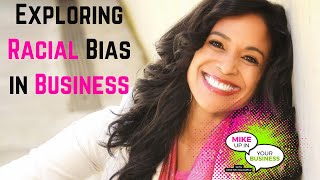
In this interview, host Mike Michalowicz speaks with Kim Peterson, a mixed‑race Black/Asian woman adopted into a white family and a 20‑year veteran personal‑brand and style consultant. The conversation opens with the impact of George Floyd’s murder, which Kim describes as horrifying and a catalyst for her own unresolved pain. She recounts her upbringing as an outcast in a homogenous Washington suburb, experiences of racism, bullying, poverty, domestic violence, and a dehumanizing hotel incident where staff antagonized her despite a reservation. Kim explains how unprocessed hurt can lead to bitterness and how forgiveness work—examining personal trauma, practicing self‑forgiveness, and releasing resentment—has been essential for her peace of mind. The dialogue expands to broader systemic issues: the need for policy reform, DEI education, mindset shifts, and concrete ally actions such as mentorship and upward‑mobility for Black professionals. Kim emphasizes that change starts with individual mindset work, honest conversations, and collective responsibility, while remaining optimistic about a future where authentic identity and healed individuals drive effective leadership and entrepreneurship. She concludes by describing her business, uniquelysavvy.com, which helps entrepreneurs align personal identity, appearance, and leadership to become authentic, impactful leaders.
Chapters
Black lives matter. See me, value me, value my life, value our history, um, acknowledge, you know, that bring equity and equality to the occasion. Do not see me as less than.
First of all, I want to thank you for doing this interview again because we, we spoke What was that, 2 months ago maybe?
No, it was probably just about a month ago.
It was a month ago. It was right before, uh, George Floyd was murdered, I believe.
Yeah, like 3 weeks. Well, yeah, you're right.
What was your impression of that when that— when you heard the news that George Floyd was murdered?
Uh, I— it was really hard for me. My impression was I was incredulous.
It reminded me of, um, I'm— I cannot remember the names in Missouri. I don't remember who was murdered, but same thing, police brutality, and a Black man was murdered. There was protests and unrest Something's different this time. I mean, that's being funny for me saying that something's different. Clearly something's very different this time. What's your— what's your thoughts? Why?
Well, it was horrifying. It was a horrifying act, and one thing I know to be true is we actually saw it. We were all witness to it. We saw it. We saw the callousness. We saw the last breaths leaving. We saw please. We saw a begging for mercy. We saw defenselessness. We saw someone who was no threat. And I saw a man crying out for his mama. That really rocked me. All of it rocked me. But the fact that this is a grown man, you know, your mama is someone who protects you. Your mama's gonna go be mama bear and, and fight your fight for you. His mom wasn't even alive. She died a couple years ago, and he's crying out for his mother. So what makes it different? I think it was, it was so visible and it was so long and it was so callous and nobody could, nobody could help. I mean, you had bystanders who were even pleading for him and, and nobody was going to be able to intervene. I think it also was just on the heels of Ahmaud Arbery, who got shot for running through a neighborhood. I mean, what is that? Regardless of what any of that backstory is, the point is this for me. Whether you have a criminal record, whether you did some crime, you committed some crime, There is never any excuse, especially if you are not a threat and you are unarmed, right, to be shot and killed, right? Or, or in George Floyd's murder, his case, to, to be murdered by the way he was.
Yeah, almost— not almost, torturous. You know, I wanted to bring you on because, uh, You and I met, we were in Seattle. We ended up sitting next to each other during dinner and was just so impressed by, first of all, your entrepreneurial journey. I love entrepreneurs. You're my people.
Thank you.
But also your tactfulness around our conversation that night. Now this goes back even further. And we were talking about race, race relationships. We're talking about racism. And you talked about with such specificity, but also consideration and thoughtfulness. And I thought that was unique. And so when we talked that prior interview, it was a totally different context than it was a day later, you know, that's why I wanted to bring you back on. Since it's a podcast and people can't necessarily see us, we do broadcast a video. Why don't you just tell me a little bit about yourself and your entrepreneurial journey, but also your ethnicity and anything else you think that may be relevant, just to give context.
Sure. So my dog, I'm just telling you, he's about to start—
What was that? His Pyrenees poodle?
No, he's a, he's a Bernadoodle.
A Bernadoodle.
Yeah, but he's laid down. So it's part of the reality of having kids and dogs and COVID and working from home. So thank you to anyone who's watching. But yes, my name is Kim Peterson. I am a personal brand and style consultant, speaker, trainer, and coach. I started my business 20 years ago, uh, homeless. Coming out of a domestic violence marriage. And so I'm in my 20th year of business now, which is a great celebration for me. And as an entrepreneur, I typically work with entrepreneurs and leaders and emerging leaders who are wanting to really embrace their whole authentic selves, to step into their purpose and their potential, to bring their best selves to their work through the way they speak, through the way they look, through the way they engage in alignment with who they are, and in a way that makes, you know, the biggest impact for those folks that they serve.
And you've experienced racism?
Yes, absolutely. In, in, in the marketplace. Yes.
So, and I want to know how you define your ethnicity because I don't even know how it works anymore. Honestly, I don't know if I'm white. I don't know if I'm American, European. Like, I don't even really know, except I think we can give ourselves a label. So I say I'm a white male, 48 years old, even though I look like I'm 44. How do you categorize yourself? Is that even the right word?
Right. So, you know, we have to check boxes from time to time, but I am an African American woman. I am a Black woman, and I'm mixed with Asian as well. So I'm actually 50% Asian, I have a little bit of white and also some black. What's unique for me is I was also adopted into a white family, so that adds a whole nother layer of things.
So let's start there, right? So you're adopted into a white family. Does that already cause I'm just trying to understand the racial divide, and the only thing I've come to conclude about myself is that I'm purely ignorant, or, or maybe worse, maybe I'm in denial. So I'm just, I'm super curious, what does that mean from your experience to be adopted into a white family?
Yeah, it's tricky because the reality is, is that prejudices, whether they're biased or, you know, um, or you know, unconscious bias, they exist. Prejudice exists, racism exists. So it was always tricky. This is about identity in great part. So for me, growing up in a white family, I never belonged, right? I didn't fit into the white community back in the early— I was born in '71, so you know—
You were born in '71? Me too. What month?
July.
September. Oh my gosh, I could be your older brother. Uh, just a second.
Yeah, great. Yes. So, you know, it, you know, being, um, Black in a, in a white family.
But I think about— I'm sorry, younger brother. I just calculated it wrong. Younger brother. I'm sorry.
Yeah, I'm your elder.
Yeah, you're my elder. Okay, sorry, you're saying you're telling a very important story and I interrupted, but I had to correct that. Okay, so You didn't belong.
Right.
Keep going.
Right. So, and I grew up in a very homogenous city, Federal Way, Washington. So I was an outcast. I was a misfit. I was definitely teased and judged for a lot of reasons. Definitely, I was called bush monkey and Nigganese. Those are things that cut to the core of who you are. When you're a child, you don't know how to decipher that or think through that. You don't even have an established real sense of identity and self-esteem. So, so that was tricky. And, you know, in the Black community, I'm not Black enough. So I— it was just really tricky to be me from, from any side.
But I mean, So what do you do? You're just, you're left alone, you're ostracized. You're— what do you do?
Well, it's tricky, you know, and for me, I also grew up in poverty and really condemned housing from grades 4 to 12. My parents were divorced. I had a lot of rejection within the family that moved on anyway. And then I was a latchkey kid. So at this point, Why also that's important is to show that there was sort of a breakdown in family structure as well. I didn't have mentors. I didn't have that kind of a system. So I was really trying to find my way where I fit. And I struggled with it, quite candidly, all the way until, you know, college. I had my first Black boyfriend, and I felt worthy finally that, you know, I was seen as Black enough. I guess, if you will, to have a Black boyfriend. And, um, but I really struggled with identity for many reasons, and racial identity being one, until well into my, into my 20s, late 20s.
So, you know, one thing I observed about you, besides you're born in '71 and awesome, was you have just a beautiful soul. Like you just captivated the room in my opinion, the way you carried yourself and that dinner we're all having together, just magnetic. To come out of that circumstance of rejection, poverty, abandonment by your adopted family, like why don't you just effing hate the world? I did.
I did. And, you know, because what happens is you have, whether it's issues of being judged or ostracized or excluded for the color of your skin or poverty or just not being a cool kid or whatever, that hurts. And undealt with hurt leads to bitterness and anger and Anger left undealt with leads to all kinds of things, by the way. For me, I was, I got bullied, but I was also a bully. I had just a real chip on my shoulder when I was younger and, you know, I had anger within my family and it just, just everywhere. But here's the deal is what I learned is, is that anger or Lack of forgiveness is what happens, is it turns to bitterness, and then you kind of want to get even with people. And what I realized is that was destroying my life. And what I really wanted was peace of mind. What I really wanted was a place to belong. What I really wanted was to be seen and to be heard for who I was, and ultimately loved. That is what we are designed for. We are humans that are designed for relationship. What I recognize is that wasn't getting me there. So, I had to do some inner soul work, and it wasn't easy because in order for me to do forgiveness work, Mike, I had to look at all of the pains and the levels of pain and the people who caused me pain, to include myself, in order to work through that and then forgive self and forgive others. It was a lot of work, and that was into my 30s. And yet it is the thing that has allowed me peace of mind. It is the thing that has allowed me to see people as having value and as of having worth, and also allows me to know that hurt people hurt other people. Hurt people hurt other people. So when I think—
That's what's going on, right? I mean, I shouldn't say that's what's going on. That's going on for some people. Why do hurt people hurt other people?
Why do they—
you were hurt.
You don't have an outlet. You're not choosing an outlet, actually. You're carrying all of this offensive, some of it righteous anger, um, and others of it not. Some of it we bring on ourselves, but you're Your body isn't designed to carry the burden of hurt and rejection and anger. In my case, too, I was sexually assaulted and then I was married into a relationship with domestic violence. You know, I have every reason to be angry and if you don't have all of that, I mean, the science of forgiveness shows us that we have higher stress levels, that it leads to depression. It leads to a breakdown in our emotions, in our, you know, in our mental capacities, our cognitive capacities. So why do we hurt other people? Because we're not designed to store all of that. Yeah, that's why it's absolutely imperative to do that work.
Yeah, I don't know, there's a good analogy. So this is probably a horrible analogy, but it seems like, you know, you walk down the street and you Every time you walk by a certain block, you get punched in the face over and over again. At a certain point, you're never gonna walk down that street. It sounds like you, you were just getting hit, verb— you know, figuratively and, and, uh, also literally hit. I mean, I guess, I guess it's the human wiring that we just don't give up, uh, By the way, you impressed me is, is that you're so willing to explore the hurt that you experienced. And you also are full of forgiveness. I just can't comprehend that shift. How is this an ongoing work? Do you work on it every single morning, every single night? And you're, you know, or did you see some kind of light? I still can't understand how it's wonderful, but how someone can make such a turn and be willing to even talk about it?
Yes. So it is an ongoing work, number one. As a matter of fact, I just had a forgiveness breakthrough yesterday.
You forgave me for interviewing you?
Yeah. No, it's a great joy to be here with you today. But you know, what I learned, one of the things that I learned from the punctuation of George Floyd's murder and all of the unrest that has come from it for the fight of racial justice is, is it was starting to trigger things for me that I thought I had already dealt with. What I realized is there was some residual thing from some offenses that is why I started feeling uncomfortable and feeling all kinds of things, you know, low energy and not able to quite figure out what was, what was going on. So I just had a breakthrough yesterday.
Yeah, so what was it? Can you share?
Well, I'll tell you, part of this, when we— part of this movement, if you will, of Black Lives Matter— by the way, there are different layers of Black Lives Matter and an organization and other people, and I don't know all of this for fact, to be able to articulate it holistically, but there's different breakoffs of all of that. But for me, when I say Black Lives Matter, what I'm talking about is Black Lives Matter, see me, value me, value my life, value our history, acknowledge You know, that bring equity and equality to the occasion. Do not see me as less than, right? We— does this make sense?
It does make sense. You know, it's funny, to your point, the hashtag Black Lives Matter can be— I think one interpretation could be Black lives didn't matter or don't matter and just matter is one step up, but it's not equality, it's not equity, that white lives are the best lives. Like, it didn't feel— this is my interpretation, right? And I'm actually scared that I'm saying this because it's— I just don't know what the right words are. And my goal is not to offend, my goal is to learn and also be integral in my ignorance. And, um, to me, that phrase doesn't sound like equality, but how you just positioned it, it does sound like it. Does that make sense?
I think so. Can I ask you to hold one moment? Yeah, I just need to— what I'm saying is when you find value in something When you find that thing matters, you treat it as such. It starts in the mindset. If you see Black, a Black life mattering, you're not going to shoot it.
Right, right.
Dead. You're not going to create systems and infrastructures to be oppressive and exclusive of. Make sense?
Yeah. Yes. Give me an example because I know you've experienced oppression, suppression, omission, You were sharing a story. You went to a hotel. I couldn't even comprehend it when we were talking. So is that— why don't you share that story again of that experience you had at the hotel? And then is that part of a systemic problem or is that something different? So I just want to get the context first.
Sure. So it is a mindset. I'm going to just say that right there. And this is everything that we do. Brain science shows us that everything we do begins with our thoughts, begins with our attitudes. So it's absolutely imperative that you, that me, that everybody during this time, which I call a moment of truth time in our history, that we sit with ourselves and we examine, like really examine and take inventory of our thoughts, of our narratives, of what we believe and why we believe and who said that to us. All of those things. So it's a mindset. So I headed last August to— and part of this is what was triggering me, by the way. I headed last August to Mount Rainier here in Washington State, and it's, you know, further out south, small town. And I had made a reservation in the morning with my— for myself and my dog and got an email confirmation saying we're all good to go. So I headed out. And when I got there, I was very eager to arrive because I was driving through a mountain pass. It was dark, it was dusk, it was scary. And I was counting down miles and time thinking, I can't wait to get there. Thank God I have a reservation. You know, it's kind of like you're—
I'm gonna be okay.
And so when I pulled up, the sign on the door said vacancy. And the door was open. Well, when I pulled up, the woman looked out and looked right into my car to see me, likely not my dog, because my dog was laying down flat in the back. And she immediately came out and turned the sign to no vacancy and shut the door. I didn't think anything about it though, because I was like, no problem. I have— I have a reservation. But what was different about her immediately is that when I walked in, she was antagonistic from the very beginning. You know, "Don't know what you're gonna do. We don't have a room. We don't have any rooms available. You know, perhaps you can go down the way 30 miles and maybe they have something for you." And I said, "Oh, not to worry. I have a reservation." But she kept antagonizing and antagonizing 0 to 6. So quickly and I was trying to find my reservation and then she was on the phone saying that this woman here is so angry and this dawned on me too. This is part of my connecting the dots in this last week is she was like, this woman is so angry and she's yelling at me.
That's what she's saying about you?
Yeah, to somebody else and if I let her stay here, I'm going to get fired. And I'm not even talking. And I know I'm not talking because I know that it's taking all of my emotional intelligence and self-regulation just be taking in all that she's saying and how she's engaging with me and letting it bounce off. She then said to me, you know, I have the right to refuse service. And I said, "Why?" I mean, really, I said, I did. I said, "Tell me why. I am just simply trying to find this reservation." And then she kept going on and on and called somebody else. And then I actually did tell her, I said, "Could you please just stop talking for the moment because I am trying to find this." And she was just barraging me, you know.
When you asked her why she's why she's going to deny service? Did she just avoid the topic?
At first she just said I didn't have a reservation, and then she said, well, then she said, well, I do have a room, but I don't have any more pet rooms. And I said, well, my pet was on the reservation, the reservation as well. And nonetheless, you know, she kept saying, well, you should just call, you know, call who you made the reservation with, and you should look on the website, and I just don't know what you're going to do. And so Finally, she said, "Well, I'll let you stay here, but I'm charging you an extra $150." And at that point, I just gave her my credit card because she had stirred so much animosity that when I even considered driving down 30 miles to the next hotel, which she called, I thought, I don't know what she's going to tell this lady by the time I get there, and I don't know what my situation is going to be like. But I will tell you this, Mike, that it was so egregious how she was engaging with me that when I got up in the morning, before I even came out of my room, I thought, you know, the wise thing to do is to go find a service station in town and make sure that all my tires are secure. Everything.
Oh really? That's how threatened you felt?
Yes. Make sure everything's good because I'm now going to be driving up, back up through the pass and then down, right? So that's wisdom says get this checked out. That's how bad it was. I noticed, you know, and then in the morning she was still antagonistic. She was trying to bait me again, but I never engaged with her. And I'll tell you why. And this is really important, I think, in this whole conversation is because hurt people hurt other people.
Yeah.
So what I know to be true, Mike, is if I was still holding these offenses from my childhood, from last year, from any of these situations of being discriminated against for the color of my skin, or any of these wounds that I have about my identity or acceptance or belonging, If I didn't have healing around those things, it would have been very easy for me to engage with her and start firing back. And let me tell you, I could see when I went up to my room, I thought about it as the tears rolled. I finally was safe and in a space where I could just be. My tears were rolling and I thought, now I can see how people get into gunfights or fistfights because it takes two people, but if both people are carrying bitterness and resentment and have a sense of revenge for whatever reason, that can escalate really quickly.
The word that's just repeating in my head over and over is dehumanizing. That experience is dehumanizing. Is that What term would you give that experience to yourself?
Well, let me tell you, I would say that George Floyd's death, the way that he died, was dehumanizing. Um, you know, I don't say this generally, but I thought, wow, someone has to be really just evil to choose at every level for every opportunity that he could have chose differently, that's dehumanizing. I think what she was doing to me was she was trying to cut, she was trying to hurt, she was trying to erode my sense of identity. There's no reason why. Listen, I got to show you this hat, by the way. This is the hat I was wearing.
Yeah, yeah, I saw that before.
Peace, love, and faith.
Yeah.
So if my demeanor is showing up calmly, and even the words that I'm wearing are about positivity and faith and love, what are you doing? What are you doing and why?
Yeah. What do you think is the way to go about this healing or resolution or, I don't even know the words to use, is it process? Like, how do we change the global mindset? 'Cause I believe racism is a major problem in the U.S. I now have that at least awareness. I need to go through improvement on myself. I think it may, I know it's also a global problem. I was in Jamaica. I used to do a lot of work in Kingston. And, um, I remember one day I was driving actually with a friend from Kingston over to Ochos Ríos, across the mountains. And she says, in Jamaica, the darker your skin is, the more prejudice against you. And the population is 95% Black population. And she said there's racism among that community itself, again, just on skin color. What do we do to start, what do we do to fix this?
Right. So in order to fix it, there are several things that need to happen, but one is really a, we need policy reform for sure. You know, in all throughout our infrastructure, you know, education, prisons, corporate America. We need to take a look at what is happening, how are we oppressing all people of color and all marginalized people, actually. We have to, we have to take a look at it. We have to take a look at it with honesty and with honesty and a good look at facts. Facts, and now how is this happening, and what do we need to put in place to change this? Number one. But that's not gonna happen, and I gotta go back to the mindset. It's so important, right? Because you're gonna have leaders at the table, you're going to have community leaders, you're gonna have corporate leaders, you're gonna have people in the boardrooms, et cetera. Those are all individual people that are like you and that are like me. And so it is our job individually, our job and our responsibility to challenge, challenge the false narratives or challenge the narratives and champion the truth. What do I really believe? What do I really believe about Kim Peterson? You know? What do I really believe about her story and why, you know, she married an abusive man? Is it because it's Black culture, you know, or why is it that, you know, fill in the blank, right? Get to the truth of it. By the way, who told you any story that you have? Why is it that you have the bias you have? Did your mom teach you? Did your dad? See, racism is also taught, by the way. It's generational. It's generational, Mike. And that's one of the big things is that's why there can be so much trigger, because this is generational. You know, we've carried, you know, systemic racism for a very long time. But who told you and how were you taught. And who— how are you— let me ask you this— how are you willing to access your voice for change, for the cause of racial justice? How are you, Mike McCallowitz, willing to raise your hand and stand in the gap for what you know to be right and true based on facts, if you should be sitting in a place of awareness and honesty. Listen, it is— even myself, I am in this place. I have been researching over this last month, and to look at facts is to acknowledge that this happened to you. You know, this happened. This is real, and I see you, and I hear you, and I am getting a glimpse as to how you might be carrying some pain. And by the way, I'm sorry.
That's huge.
To acknowledge and to say, hey, I'm sorry that you, one, experienced this and that you as a people with this, you know, that goes so far. The science of forgiveness that begins to melt at just to be seen and heard is so powerful. Imagine, and I'll stop with this, imagine if you and I having this conversation walked away with some really great new awareness and some new comfort that we can have this conversation and new accountability, new vision, new ears, new willingness to show up at a table together to change and affect change in policy. Imagine what that could be. It starts with us as individuals, and it doesn't feel good. It's, it's not great because just like with me and my own individual work, you know, I'm facing pain, or where I might have offended someone, where I might owe an apology, or where I might need to, you know, you know, make change within myself. Does that make sense?
Oh my gosh, yeah, it makes tremendous sense. Sense. You know, first of all, let me start— I am sorry for what you experienced. I am really sorry. And anyone who's been marginalized— and I'm embarrassed about my own ignorance. I, I'm not a public figure by any stretch of the imagination, but there's a community of people that read what I write and listen to my, my stuff. And, uh, after the George Floyd murder, I was asked like, what's your stance? What's your stance? And I did not respond immediately because I didn't want to respond flippantly. So it took me about 10, 12 days afterwards to really be able to digest my thoughts. And my final conclusion I wrote and shared was, uh, just the raw ignorance I have. My, my wife was abused, and, um, there was a period of time I actually didn't really believe that happened. I heard the stories and I got it logically. I didn't visually get it because I didn't grow up in abuse. So if I heard your story, you know, when I was a teen, I couldn't compute it. And now, you know, hearing and learning from my wife I've learned about this, this horrible crime that just perpetuates with abuse, all forms, you know.
Sure.
And now I'm like, oh my God, there's this horrible crime that perpetuates that I'm yet again ignorant and blind to. I signed up for a training called DEI, and I didn't even know the term. It was diversity. I thought it was equality. It's equity and inclusion. And we had our first training session, and already it's been like, oh my gosh, the amount I need to learn. And to your point, for me, it starts with me. For anyone listening in, it starts with you. It's— it starts with us individually. I think that— I think that's where the change is going to happen. I'm an eternal optimist. I think this is— this is great change in front of us. It's a horrible way to come about change. Sadly, maybe that was the only way that it could become the forefront of what we need to face as a nation, as a world, as entrepreneurs. But I'm optimistic that this is going to bring about great change. What's your sense of the future?
I'm optimistic. I would say when I look out to— well, stick with me first. When I look at the conversations that are happening within my sphere, people of all different backgrounds, and my white friends and colleagues who are saying, you know, I don't know what to say, and I'm afraid I'm gonna say something wrong, but their hearts, their heart attitude is with the right motive. Hey, I want to be here. I want to learn. And I want to join arms with you. That's beautiful. You know, you and I had talked before about why does the conversation around race need to be so scary and so taboo anyway? Our first interview, we were like, uh.
Right, right.
I know I certainly was. And now it's just really not for a lot of reasons. But so But so in that heart attitude of wanting change, by the way, we can change the whole mindset of it doesn't need to be hard, right? It doesn't need to be hard. But then when you look out and you see, I'm gonna say peaceful, I'm gonna focus on the peaceful protesters. You see white, Black, Asian, Native American, and I've read from articles from many of these different people of color communities to say, hey, you know, when we are allies in this move for racial justice, you know, we all have a shared trauma here. And when we work to end racism and to end white supremacy, we all benefit. You know, This is a time that it's intense. It's intense, and so we all get to choose who we're gonna be in this moment. This is our moment in truth where we get to educate ourselves and we get to access our voice for everything that we've learned as entrepreneurs who wanna make a difference, right? Entrepreneurs, this is our time to, to do our work, to search for facts, to access our voice, to stand in the gap, to link arms for, for making impact that is needed and necessary. It is through this healing and reconciliation that will lead to our overcoming as individuals, as people, as America, that will lead to our possibilities, that will lead to our purpose, and our potential. I am hopeful, and yet I am also aware that it's gonna take some work. Yeah, it's gonna be a journey.
I, you know, it was interesting, I read about the term white supremacy can be perceived like, oh, you're talking extreme. But there is this, in this book I was reading, it says, it's called White Fragility. I'm really trying to understand what I don't understand. And what it said is white is the normal and everything else is less than. And therefore, the opportunity is to lift up as opposed to anyone has to step down. I think that's the fear I had inside. It's like, does that mean I have to be less or I can't be as aspirational or whatever it is? But then my interpretation was, no, no, what this means is I have responsibility for equity, to, to be of service so we all have a shot. Let's lift all of mankind, humankind up. That was my interpretation.
Yeah, absolutely. There is room for all. And yes, I listened to a panel that had, you know, mixed races on there and mixed viewpoints. And one man said, you know, one of the best things for all the white friends that were asking him what they could do, or white colleagues, he said one of the best One of the things that you can do is help Black folks with upward mobility. Make the introductions to conferences or colleagues, or, hey, you might really align with this person. You know, sponsor, mentor. This is a good way, in an immediate way, that folks can support and do so in ways that are meaningful. The conversations, I think, are great. I think we need conversations. I think conversations build trust. I think they build understanding. I think in honest conversations you can say, "Yeah, but wait a minute, and I don't understand that," and no judgment, no shame on either side, but let's, let's get to it. And then from there You have a place of understanding, a place of gathering facts, and then from there you move into action. Right? But I believe there can be no shortcuts. But one of the easiest things is help folks with, you know, become mobile, upward mobility.
And it starts the conversation. I mean, that's what we just did here.
Yeah.
I'm honored that you could come on our show. I know we talked now half dozen times in preparation. This. And this isn't even necessarily what we said we'd be talking about per se, but it was the topic that needed to be tackled. Thank you for having the courage to share your story. Cause I know there's a, you're putting yourself at risk whenever we speak integrally. This is true for all of us. So thank you for that. Um, and thank you for the work you're doing to support entrepreneurs of all types, uh, elevate their business. Before I let you go, I'm sure people listening in want to learn more about the work you do in supporting entrepreneurs. Can you share a little bit about that and maybe a website or two?
Sure. So again, the work that I really do, my work really intersects between identity, leadership, personal branding, wardrobe and appearance. It's all centered on authentic identity, helping you access your voice and bring your unique gifts to the world. You can find me at uniquelysavvy.com. I am very active almost daily on LinkedIn and other social media to, to provide tactical, practical Tips and inspiration that you can put into, into action right now. And what I know to be true, Mike, is, is we are— the more, the more healed and whole and integrated and authentic we are as individuals, the more we are going to be effective as leaders and entrepreneurs in business and beyond, right?
No question about it.
Yeah. So that's, that's So that's what I'm all about. And do you have one moment for me to just share one last thought on this?
Absolutely, absolutely.
Folks, I'm telling you, Mike, when you asked me, you know, hey, how did you, you know, you had every right to be angry and to do this and that. I came across a poem by Frank Outlaw about 15 years ago and it changed my life. It's coming to me. So I just want to share it with you. And again, remember that brain science says that every action, every choice that we take starts with our thinking, our mindset, our thoughts. So he says, "Watch your thoughts, for they become your words. Watch your words, for they become your actions. Watch your actions, for they become your habits. Watch your habits, for it becomes your character. Watch your character, for it becomes your destiny." And what I think is really important to realize is that we are individually empowered to watch our thoughts, to challenge those thoughts, to challenge those false narratives, and to seek after truth. And it's really that truth that will hold the bridge in this area and set us free.
Kim Peterson, Uniquely Savvy. Thank you, my sister, for being here and sharing sharing. Um, I appreciate you tremendously.
Absolutely. Thanks, Mike.










