Speak Like a Pro: Mike Michalowicz's Public Speaking Secrets
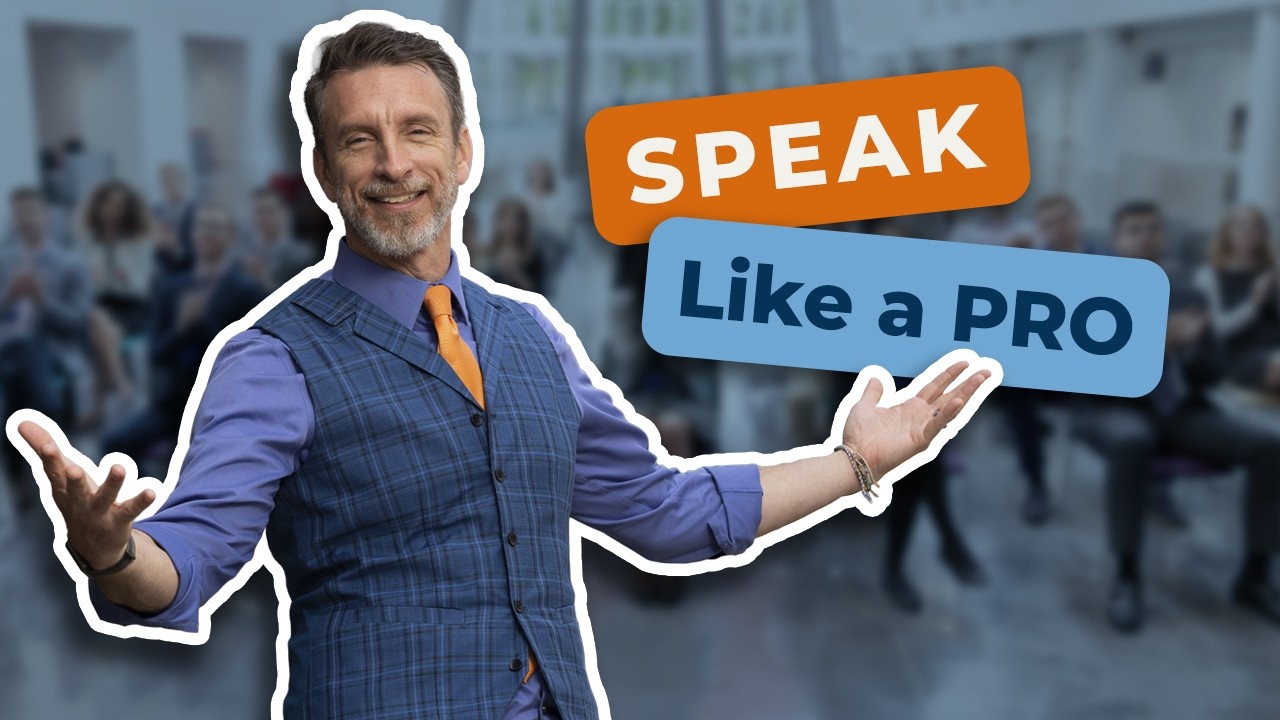
Mike Michalowicz breaks down public speaking as a learnable skill: speak at 92 beats per minute, use pauses, stay authentic. He built his speaking career starting with church readings and college clubs at $5,000 a pop, then scaled to $20k-$50k+ fees by becoming a category authority. His mission is eradicating entrepreneurial poverty through every talk.
Chapters
Entrepreneurship is hard, but the process can be simplified. You can achieve success faster, sooner, and easier. I'm Mike Michalowicz, and I'm on a mission to eradicate entrepreneurial poverty. My goal for this episode and every episode is to serve you on your journey. Let's start right now on Entrepreneurship Simplified. Welcome to our guest to Entrepreneurship Simplified. Today we're going to talk about public speaking.
Yep.
And recording of public speaking that we're doing. So we'll see. I wonder if this is considered public speaking or how would you define it?
Yeah, I don't know. I feel it. I guess it— I guess technically it falls under that heading, but I don't know.
I define people on stage.
Yes.
That's a public speaker.
Yes.
But now with the remote—
Oh, the remote world. Yeah. Yeah. Zoom.
Is that—
Public speaking, I guess it is.
So maybe it's really a one-to-many. Ah, but then the other thing is like, as a DJ, is that public speaking?
That's true.
And if a DJ is public speaking, then this is public speaking.
I guess so, because it's sort of like anything that's performative, anything where all eyes are on you or you're leading the show or you're, you know, you're emceeing, whatever it is. I kind of feel like that, that's it.
I think you said the key variable, that it's a one-to-many as opposed to We're having a dialogue, so this, the consumer is more voyeuristic. It's like, "Oh, I'm just paying attention," or a fly on the wall. But when it's a single performer, then maybe that qualifies as public speaking because there is no dialogue except for you presenting to the audience and the audience having the conversation in their head, but not necessarily responding back to you. I don't know. You want to introduce me? No, I want to introduce you.
I do. I want to introduce you as a public speaker and an author, Mike Michalowicz, author of Profit First, Popcorn Plan. Clockwork, among many others, and with more to come.
I want to introduce you as fashion forward and jewelry oriented. Ever since I knew you in high school, you always wore like cutting-edge stuff, and now you have this wildly beautiful necklace, but it's large rings and it matches your earrings. There are these large rings, almost has like an African—
and that's what Jenna said, she's like, I'm loving your, um, what was that movie with Meryl Streep, was it I'm not out of Africa.
Out of Africa.
She's like, I'm loving your out of Africa.
It has a little bit of an African tonality.
I am a safari girl today.
The muted colors and then the rings aren't perfect circles. They're more oval shape. Really a beautiful piece. But I've always noticed that about you. You always wear—
I do love my jewelry.
Yeah, you love jewelry.
It's cheap jewelry, but I love it.
You don't have to discount it. I mean, cheap doesn't mean anything.
No, no, I know. If you like it, you like it, right?
That's actually bragging. I got this very inexpensively. I know how to shop well.
That's pretty much what I do. And I can't even help myself if somebody compliments it. I'll be like, I got it at Marshall's for $12.
It was nothing. It was nothing, people. You got a little anecdote here for public speaking. It was interesting.
I sure do. Okay, so I saw this TikTok of comedian Jimmy Carr. Are you familiar with Jimmy Carr?
I'm familiar.
And he was on Diary of a CEO podcast. And Steven Bartlett, the host, asked him, how do you become a better public speaker? And I thought his answer was interesting. It was speak 92 beats, per minute. Most great public speakers speak in a rhythm and are hitting 92 beats per minute. And he listens to a playlist of songs prior to speaking at 92 beats per minute to kind of help get him into this cadence. And, um, I thought it was curious, so I got online and I was looking for other information. And there is this book by Lyle, uh, Moyer, Fundamentals of Voice and Articulation. And there are all these different things, like apparently you can, um, A really good speaker speaks 140 to 180 words per minute, but if you're doing like a technical production, you should drop that down to about 100 words per minute. So they're like all these specific variables, and I thought that's sort of impractical information for a person who's just—
Yeah, it's overwhelming.
Yeah, and overwhelming. But I've thought, what is your take on that? What do you think?
I never heard that before, so I do find it fascinating. I do have some experience with music, and you, if you're a performer, will often use a metronome, which puts you on beat. What I think I didn't understand as a layperson is every beat is not a note. You don't play 92 notes on your instrument per minute. A beat is simply the spacing between notes, or you can play a note or play silence. And it actually The more silence you have between notes, the more emphasis it puts on the prior or then the proceeding or preceding the next note.
Right.
So, uh, in speaking, I found that is a significant element, the, the power of the pause in the middle.
Ah.
And I think that's actually where most speakers, uh, slip up because they don't— they think that they are— they're losing the audience if they're not just speaking and keep going.
Right, right.
But you're giving the audience the pause so they can breathe in what they've just heard from you. I love that. So I think the power of the pauses significant. But in my final analysis is the best speakers are the most natural to their true self. They're the most consistent with who they are when you meet them otherwise. I think we were talking on a prior episode about the newscaster voice.
Yes. Yeah, yeah, yeah.
And it'd be funny if that newscaster, she goes home, she's like, "Hey, what's in the microwave this evening?" That would be very peculiar.
Right.
And I think when a speaker transforms themselves and presents differently on stage than who they naturally are, it's unnatural.
Gotcha.
So I just, I invite people when they're doing public speaking, just be you.
Yeah.
How you present to your friends. I'm a very quick speaker.
Mm-hmm.
So that's who I am.
Mm-hmm.
For me to kind of fight that is difficult. I do, as I work on the craft, I do learn how to pause more and enunciate. I enunciate much better on stage than I do in natural conversation. I'm a notorious mumbler. But on stage, I'm very deliberate about that. But my speed and pacing is consistent with who I am.
Right.
Because that's my natural energy.
Right. And then I think the sincerity of you comes across that way, which is always appreciated by the audience.
The greatest compliment I got was a friend of mine saw a speaking event that I was speaking at, and he said, "Gosh, there was a couple hundred people in the audience." He says you had like 100 or 200 best friends the way you presented. It was just, he felt, he said it felt so personal. And I think he said that, and I think it's true because I present the way I present if it was just me and you right now. Like this, this is my keynote effectively.
Yes, I've heard him and you sound just like you're talking. Yeah, yeah, yeah. I've heard him and you do sound like you're talking.
Yeah. So just be natural. But you know, that's so easy to say. There are things you can do. And I think that's what we're going to—
we're going to kind of jump in here. So, yeah. So is it that or is there something else? If you were to be asked, what is your advice to become a better public speaker?
I would go through training for sure.
Okay.
So here's what not to do. Maybe this is a good tip.
Okay.
Some people will say to me, I'm really good off the cuff. Like, I don't prepare. I just show up and go on stage. I've never, I've never seen someone good, let alone great, when they're not prepared. Yeah. And so it's kind of ironic, but I also felt that way, that it does feel most natural when you are just speaking off the cuff. But I find those presentations are often disjointed, confusing. You can see the speaker trying to figure out what the hell they're talking about as they're speaking. 'Cause there is no response.
Right.
There's this interesting dip we go through. My presentations, Profit First being my most popular, but any of them— Pumpkin Plan is actually the— gets the best engagement because it's, it's a very funny presentation, um, and chock-full of good tips, I, I believe. The first time I— so I rehearse and prepare for those. The first time I present it to a live audience, I start gauging the energy. And I'm like, oh, that didn't land.
Ah.
I had this joke that I thought was so dumb. I scratched it off. What it was is I was talking about boarding an airplane. You travel a lot or often enough that you've experienced this. When you get to an airport and the flight attendant says, we're gonna be boarding in 10 minutes, please locate your luggage and sit comfortably. That's actually the call to stand up and run. Everybody stand up. Yeah, run to the gates and you can't get through. So then I explained the only way through is when they make the next announcement where they say anyone that needs additional time to board or is traveling with a child under the age of 2. So here was the joke part that I thought was so stupid. I said, and I'm in New Jersey and some woman brings her 2-year-old child on board who has a full-grown mustache. Yeah, sure, you're laughing. I think that's stupid. Full-grown mustache. And I'm like, you know, we're in Jersey, full-grown mustache, maybe he is 2. But I'm like, people manipulate the system. That's what I'm pointing at. But that mustache thing, I was like, that's just a throwaway stupid thing. But I'm like, I'm going to just try it out once with the audience. And they roared.
Right.
I'm like, what? And I tried again and again. And for whatever reason, it works. That hits a funny bone. I would never expect that. So my point is, I write a speech, I rehearse it in front of the mirror, on video, which is the most difficult thing to watch your own video. Then when I present it, I'm starting to test things out. I would say the first 25 to 50 keynotes on Fix This Next or Pumpkin Plan or Get Different is a process of improving and finding what lands. It's around presentation 50 or more that then I'm starting to get in the flow.
Ah.
First is an example. I've presented that, I would say, 400, 500 times over the last 10 years, maybe more, maybe 1,000, I don't know. It is so fluid now that it's so canned, if you will, that it feels natural. And it's around that 50th time that the canned presentation, you're no longer trying to figure out what works. It just works. And then it becomes actually more natural. So when people hear me present Profit First, like, oh my God, how many times have you presented that? Is that the first? It was amazing, but it was so fluid. Is that your first time presenting it? 'Cause you were so into it. No, it's so canned.
I have a question then. So nowadays you, will come out with a new book, you'll have a new keynote to write and to perform. What do you enjoy more? Is it the familiarity, the absolute, it's in my fingertips, like I'm pruney with this Profit First one, right? Or do you like the newness of the, I mean, are you just done with keynotes on Profit First? Yeah, right.
Yeah, I actually like it at my fingertips because then I get to play. With it. I've delivered Product First and Pumpkin Plan is in parallel so many times, and also Get Different. Those three. So many times that I can remove myself effectively from the presentation and almost be observing myself presenting because I know what the line is. I know the beats.
There you go.
The beat to hit. I know where to put the pause. And then I also allow myself to try new stuff. So I presented um, Profit First, say the 400th time. And every time I present, I'll be adding 1 or 2% new content just to freshen up and see if I can introduce something new. It was around the 400th time I said I'm from a town— this is when I was living in Mountain Lakes— I said I'm from a town in Jersey called Mountain Lakes. And, uh, I asked the audience, I said, who here is familiar with Mountain Lakes? And of course no hands go up. So I said, of course. I said, no one's familiar with Mount Lakes, but you are familiar with New Jersey. We don't have mountains and we don't have lakes. I said, I live in Mount Lakes. The greatest irony, it should be, if we were factually true, it should be called Hilly Puddles. I live in Hilly Puddles.
Hilly Puddles. Yeah, Hilly Puddles.
And so people get a kick out of it. And that worked well enough that I started inserting it. For me, public speaking, we have a few responsibilities. It's to transfer information. But first there's to transfer connection. And I find, at least for me, the greatest way to build connection is self-deprecation, humor, where people say, this person's relatable and they got me. It's actually to take ourselves off this pedestal. When you or I walk on stage, you literally are on a pedestal. You're literally standing above people. They're looking up at you. And I think that's a very difficult position to be in because you have instant authority over the audience. And there's good things to that, that people are more apt to listen to someone they think has authority. But we're also resistant to someone who thinks they're greater than thou. Right. So I got to rip off that bull right away. Gotcha. And clear that out. So I use self-deprecation. So I've been testing as I'm doing public speaking, I test things out and say, oh, that's self-deprecating.
That worked.
Yeah. I'll give you one more. Okay. I noticed that a lot of people comment my outfit. I consistently wear a vest with a tie.
Right.
That is a technique. And any public speaker should do that is you should have a attire, a costume. Take— remember cartoons? You were big into Scooby-Doo, right? You know, Shaggy always wore that same— I think it was an orange shirt. Green. Green shirt. Right, right. I'm thinking of Fred. They all wore the exact same clothes every single episode. If they change the clothes, we have to kind of relearn who this character is because we're only seeing them for 30 minutes on a Monday morning or whatever, 20 minutes, however long it runs. So there's a reason you put on the same outfit for familiarity. Well, I met with Michael Gerber. He's the author of E-Myth, and he wears, admittedly— well, admittedly, I think it's a pimp suit. It's like this white suit with this white fedora. He looks like he's dealing drugs. From— he's coming up to Miami somehow.
Have you told him this?
No, no, no, no, no. He probably punched me in the face. Um, so I didn't say it to him, but now obviously it's very public and I'll probably get crushed for saying this, but he's the He's a unique speaker. And I asked him about that attire. This is years ago. We both keynoted an event. And he goes, "Oh, I always wear this." He goes, "This is my costume." And it's the first time I heard someone use that word costume. But he's like, "I'm recognized for it." I saw some subsequent pictures of him without that fedora on.
Yeah.
Almost unrecognizable at first glance.
Yeah.
I had to go and kind of calculate, "Oh yeah, that's Michael Gerber." Yeah. It's like someone who like has a beard and then they shave it off.
Right.
Who is that person? Unrecognizable. So Realize that people in the audiences, they may have seen you on one or two videos, maybe they saw you in the book cover. The more consistent your look, the faster there's familiarity, and you want fast familiarity. So I always wear the same costume. I go, and people make fun of it now, which is great. That's usually a rapport builder, like, oh, live your vest life, right?
Right, right.
But I'll go on stage, one joke I tried out maybe about 100 presentations ago, I said, "You're supposed to start a speaking event by sharing a really powerful tip. That's what my coach told me." And usually I deliver in the first 60 seconds. So I said, "Here's my most powerful tip. Don't dress like I dress." And people are like, "What?" And I said, "I arrived at this event a little early and I was in the bar area wearing this outfit and someone looks at me and goes, 'Hey, barkeep, can you get me a mojito?'" And I'm like, what? I'm like, I'm dressed like a bartender.
Yeah.
And people get a kick out of it.
Right.
And they tell me, and I actually made them a mojito and came on stage. Right. It's self-deprecation.
Yeah.
And that's an important thing we need to deliver right in the beginning of a speech.
But interesting as an identifier for you. So I didn't even think of that the whole time that you were, I've seen the vests.
Yeah. But you'll see, you know, I think a lot of celebrities use that. Bono, we know his identifier are those yellow glasses, those yellow sunglasses.
Right, right, right.
If you look at, I'm just— I don't know why this comes to mind. Hulk Hogan, the wrestler, is a guy with his ripped shirt, you know, his t-shirt that he rips open.
Yeah.
There's certain identifiers. And if you're a public speaker, choose your thing and lean into it.
Right. And you've been a keynote speaker for a long time. How long actually has it been?
Well, since the first book plus 2 years prior. So I started talking about Toilet Paper Entrepreneur before I had the book out there. I wanted— I knew the importance of it early on, and I went to a class by Dale Carnegie, the organization, on public speaking. I'll tell you, that is an extraordinary resource. It still exists today.
Okay.
Let me actually bullet point a few resources here. Go to Dale Carnegie's public speaking course if you've never spoke before. It really kind of throws you into it. Michael Port's organization, which is Heroic Public Speaking, is unequivocally the highest quality class environment you can go through. It's expensive, and gosh, it's worth every single stinking penny. Uh, get a personal coach. I work with John Bates. Yeah, he's probably taking on customers and clients— clients, I guess, now. Um, but what I'll do with John Bates is I'll work on crafting a new presentation. I'll fly out— he's in Salt Lake City— I'll fly out to Salt Lake City, and we'll spend a day or two crafting a speech. And now I'm performing in front of one person. And he'll even come out to where I'm speaking, observe, and at the end he'll say, Oh, don't do this, do that, and give great tips. You can also join like Toastmasters. So if economics are a concern, if the price is a concern, Toastmasters is very inexpensive and you're doing a speech every single meeting in front of a group. Have you heard of Toastmasters?
No, I haven't. Can you tell me about it? Yeah, yeah.
So Toastmasters are local clubs. There's probably one in the Boonton area where we are, and it's a group of people, 5, 10, or 20 people, and you go out to a dinner together, and each person has to make a 5-minute toast. That's the—
yeah, 5 minutes.
Yeah, yeah. So it's just mini speeches.
Yeah.
And, and maybe it's 2 minutes, and sometimes it's 10, and maybe they feature someone, but everyone speaks every single time.
Wow.
And, uh, and you break some bread together, and then you do it again.
Wow.
Very economical, very powerful way to learn in front of an audience. But I'll give you an even cheaper way, how I got started.
Yeah.
Before— actually, it was after Dale Carnegie, but you can start this way. At our church, that little Rockway Valley Church down here— sweet church, sweet little church— I went to the pastor, uh, Silas was his name. I said, Pastor, uh, do you mind if I do the readings? And he's like, my gosh, we've been looking for someone. He's like, this is divine. I said, oh, great, great, divine, because I feel called to ask to do it because I'm terrified to do it.
Were you at this time?
Were you terrified?
So this is before books.
This was probably 4 books. I was in my early 20s and I just feel I got chills. I was in front of 20 people. Our church was tiny, like literally 20, 30 people on a good day. And I'm up there and I'm reading through it and I'm mispronouncing names.
Of course. Little tip, don't try to read the Bible first time. Yeah.
Oh, live. And that's why I did. I didn't like rehearse it. I just start reading. I'm like, how do you pronounce these names? So it was, it was horrible. Like, I didn't even know how to pronounce Jesus. Like, I came across that, I'm like, who's Jesus? Jesus said— and people are like, oh my gosh, Mike. But on time 10 or time 20, I started getting better. I spoke a little slower. I actually learned to breathe a little bit more. I got more and more comfortable doing it. And I realized at the end of the day that the audience for any group does want you to succeed. They're not sitting there— unless it's your archenemy— they're not sitting there saying die. Right. I hope you suck. They're like, I want to learn something, or you're doing something that I feel nervous to do. You, you have a degree of support behind you that they want you to win.
Right, right.
And then the last thing I noticed is at the end of the day, no one remembers really. No one really cares unless you do something horrific, like you, your pants fall off or something. That may get filmed and go on to Instagram forever. But generally, you can flub, you can mess up, right? You can be great, people really won't remember much about it because life goes on, right? So it ain't that big of a deal.
Makes sense. So, um, you talked a little bit about what you did to prepare, but like, um, do I stand on the microphone?
I'm not trying to be a schmuck.
No, no, you're not.
I forget you can hold your thing right up there if you want.
So my question is like, how did you— how didn't you get started in terms of like keynoting? I mean, that it's different than, you know, offering to do the readings at church on a Sunday. And how closely did that follow authorship or or did that precede authorship?
Yeah. It preceded it. And so I want to build in a strategy here for our listeners, a step-by-step. So if you're listening now, and clearly you're hearing my voice, so you are listening, grab a notepad and write this down because this still works. I started this 15, almost 20 years ago, and it generates revenue. And you don't need to have a book or any form of preordained authority, if that's the right choice of words. You don't have to be a celebrity or known or recognized in some capacity and you can get paid. So how do you do it? I started speaking to colleges. So step 1 is identify the colleges in your community, your area. So we're here in New Jersey. I'm talking about community colleges like County College of Morris. I'm talking about JUCOs, meaning junior colleges that are 2-year programs.
Okay.
I'm talking about, uh, public universities like Rutgers is here, William Paterson— for everything that's private— and I'm talking about private universities too, Princeton and so forth. Write them all down, ones you can drive to. Or get easy access to.
Sure.
Step 2 is then go— once you have the list here, go to the website for each one and find the clubs that are interested in the topic that you speak on. So at all these universities was an entrepreneurs club, but there is probably basket weaving clubs, and there's women's rights clubs, and there is gay rights clubs, and there's all these different clubs. That's what— identify the, the community that you want to speak to and be most interested in your message. Step 3 is contact the president of those clubs. Now, these are all usually students, right? Yeah. Okay, so I email them. Sometimes they have their phone number. And here's what I say in that message. I say, I happen to be in your area. I'm coming through town, um, and I have availability, or I happen, you know, to, to be around for the next month or two. Would you be interested in me presenting to your group? And here's the subject I speak on. That's it. Now, what most people don't know are these clubs have a mandate to have some form of educational training. It's a university after all. There's a thing called the Student Activities Fund, the SAF. Some universities give it a different name, but Student Activities Fund. There's a fund that comes out of the students' tuitions for the entire university and says, we have a club here, the Entrepreneurs Club, and there is a portion of money available to them should they request it to bring in educational opportunities. So I go to this student and say, "Hey, would you be interested in me speaking?" I don't mention fee or anything like that.
Okay.
I first want them to get yes. Now realize the student's circumstances. They're students. They have classes to take care of. They have beer to drink. Right? Like them also organizing their club is a big burden on them. And many volunteer because they want the title, but making the effort is difficult.
Yeah.
So when something falls in their lap, My God, I'll take it. So I would say 20% of the people get back to me. The other 80% never see the message or whatever. But 20% get back and say, "Love that. Would love to have you speak. What's your availability?" And I say, "I can come around such and such times. And by the way," and this is the key. It's got to be the second communication. "I charge normally," and I picked a number I thought would be ridiculous, "$5,000." If I ever made $5,000 for a single speech, I would wet my pants. So I said, "I charge $5,000 for my presentation, but," I realize you're a club. I'm willing to significantly reduce my fee and your club will not have to pay any of it. Simply make a request as a student to Student Activities Fund to offset my fees. And so I gave them— I don't have any more— but I gave them a letter saying, here's the request. And basically said, dear Student Activities Fund Administrator, the SAF, great, uh, dear administrator, we're hosting a lecturer, Mike Michalowicz, who's coming in to speak on this subject, educate our group, We're also going to invite in the greater student body if anyone's interested. His normal fee is $5,000. We've already negotiated him down. He's only charging $3,000. We'd ask that the fund supports that and we, the club, will notify the student body. Well, there, fast forward. I did this with many universities. Drexel in Pennsylvania.
Okay.
In Philadelphia. I go to Drexel. I'll never forget. I arrive. Students say, "We're so excited for you to be speaking on—" entrepreneurship. I didn't have a book or anything. Okay. And they said, oh, here's, here's the envelope. Open the envelope. There's a check for $3,000 from Drexel University to me. I remember my hand shaking like, holy, I'm getting paid to speak. Yeah. And it's this beautiful auditorium. Oh, like, this is amazing. Yeah. Like, I can't wait to go on stage. So I'm sitting there, I put the money in my pocket. It feels great. I go on stage. Two students in this massive— it was the most embarrassing thing. But you got paid. But I got paid, man. I got paid. Oh my God. And I remember just sitting there saying, This is the ultimate test of my commitment to speaking. So yeah, it's humbling or maybe even humiliating that no one is there. Right. But I gotta give my best speech ever. And I just did everything I could to do the best speech. The two kids were texting. They were there out of obligation. But I got paid. Yeah. But there was another kid that came. And this is the next tip. Once you have your gig lined up, tell that student president or whatever, I would love for the journalist from the school paper to be there. Journalist shows up and I tell the club my goal is to meet with this journalist, tell them a little about the event, but really promote your club. So your club's gonna get some exposure. When I meet the journalist, I tell them about the event, the club, and then I say, "By the way, would you backlink to me?" Now student newspapers as of 20 years ago, 15 years ago, they all went online. They used to be printed papers. They're all online. So now Drexel University says, "Speaker Mike Michalowicz comes to Drexel University, talks on so-and-so." here's his link. I'm getting a backlink from Drexel.edu to Mike Michalowicz. I did this at Princeton, I did this at Harvard. I have these Ivy League EDUs who paid me also pointing back to me. Then, and then I'm not done yet, then I would ask, who are the professors on this subject? And that's how I met, do you know Zarek Bahosian from Zarek? We haven't talked to him in a while, but he's from Pepperdine. He's a professor at Pepperdine. I met him this way. He said, I love this subject. Now I had books. He said, we'd love to teach your books. Pepperdine started teaching The Toilet Paper Entrepreneur. So great. Which was absurd. But they teach Profit First, Pumpkin Plan. I think 4 of my books are now at Pepperdine and Colton College and Stanford and Columbia.
Get out.
Yeah, my books are being taught there. That's fantastic. Because the professors were there. So this is an amazing process where you don't have to have books. It'll help when you do. But you can get paid starting immediately. You can build your experience. You can get amazing backlinks and so forth. Boston University. It just goes on and on, the number of universities I spoke to. UCI, University of California.
So what did that transition then to the kind of things you're doing today? How long did that transition take from starting off in colleges, talking to 2 students, to what you do today? Yeah, these are good questions.
The next step is I discovered who my real community was. Now I thought college students would be the entrepreneurs consuming my books. And the reality is they were not it. I got a call from a mother, once I had my books out there, of one of these students who had purchased a Toilet Paper Entrepreneur book but left it at home and never read it. So the mother of this student started flipping through it and was like, "Oh, this is pretty good." She called me and at first I rejected the thought that a mom entrepreneur would want my book. But by the second or third person calling or contacting me via email, and saying, "You wrote your book for me?" I was like, "Oh, my niche has found me." I thought it was college students. It's mom entrepreneurs. I asked them. It was fascinating. I said, "Why?" This book is admittedly a little soft mark. And why would you resonate with this? They said, "This is the first time a male author is not pandering to the female audience." I'm like, "Wow." I'm like, I didn't even really realize. Guys do that. Like, why would anyone pander? An entrepreneur is an entrepreneur. And as I learned, no, a lot of male speakers intentionally or otherwise pander to the audience. Like, oh sweetheart, you can do this. Good luck. You got this. They don't mean it. But I believe in female entrepreneurs. I believe in male. I believe in entrepreneur, period. And I asked also, I said, well, why would you consume books? And the common feedback was, I'm starting a business because my children are in school now, and this has always been my dream. My partner, often a husband, at home is a verbal supporter, like, go for it, but an emotional detractor, like, but you're screwing us. Go for it because it's your dream, sweetie. But there goes our vacation money. You're killing us. I got to fund you. So they're like, the male counterpart is in this weird, duplicitous kind of relationship with me. I just need someone that believes in me and give me support and guidance. And your book's doing it. So to answer your question, that was my big build to it. That was my big keynote. Love it. Love it. There you go. So I wear a vest. I went to female organizations and entrepreneurial events and presented myself or offered myself as a presenter. And I got picked up by a few. What was interesting, this is just, I fell across this, is when you are a minority of one, like the only one person of your type in a community, you're usually embraced. So if I'm the only white male in a female audience, um, they're like, oh, how do you feel being here? And I'm like, I feel like— I feel like this weird perv who just walked in. They're like, you know, help me. And they give you guidance. But the second there was a second male there, now we were the pervs. Like, who are these two guys and what are they doing? So you want to be a minority of one. So I, I started to learn that. I've had the opportunity to speak with Black audiences, and if I'm the only white dude there, received so well. So well. Perhaps my favorite audiences. The second there was a couple white folks, it's like, "Oh, what are you here for? You be some kind of coalition?" You know? So position yourself if you can as a speaker as a minority of one, and the audience will support you, embrace you. But once there's a a little cohort of people just like you, it's not gonna work as well. Interesting. Yeah. So I found that when I started speaking to the female audience, I also catered my presentation more and more to that audience because that's the audience I was speaking to. And they're like, "Wow, you really get us," because I was learning about them. And that elevated my status in that community. So I spoke with some, some very significant events. And it was atypical for female entrepreneurs and women entrepreneur groups to bring in a male speaker. So I was given this really unique opportunity. They in turn carried me on their shoulders to the greater audience. And then I started speaking at different events with a diverse set of entrepreneurs and massive events. Wow.
Wow. And how long have those been going on?
I would say— so let me tell you about speaking fees. And I only share this because, not only, but I know this would have helped me in the path. So this is quasi-confidential, meaning Listen, it's gonna be on a podcast. The world can discover this. Yeah. But I don't publicly state it on my website. So I do have an agent now. Happens to be my sister. She started an agency about 6 years ago. I was working with another agency, which was a bad experience. It was good in the beginning. And then the owner was— yeah, a deviant person. So it gave me an opportunity to move on to something new and started working with my sister who wanted to get into this industry. I was her first client now, and, and her biggest because I was the first. Now I'm not her biggest client. I, I think it's Jesse, uh, Cole from Savannah Bananas. He's amazing. I think he dictates six figures to speak now. Wow. Um, so let me give you the, the journey. I now get $50,000 as the honorarium or speaking fee. That's the request. You may negotiate in certain circumstances. So sometimes there's an exchange for books, maybe I'm already speaking. I was just in Germany, for example. Well, going to London when you're in Munich is like a no-brainer flight, and then going to Amsterdam. So you'll package sometimes speaking events together. Okay. But let me tell you what I believe to be the journey of speaking and the subsequent fees. I think today the lowest level of speaking, if you will, is where you pay to speak. So this, I go to an event and say, oh, you have 1,000 people in the audience. I want to get in front of 1,000 people. I'll give you money so I can get in front of them. It's a pitch. It's a sale. So that's why I say the lowest level, meaning I'm not saying that's necessarily a bad speaker. I would argue that's not their profession. It's not a performance for them. It's a sales pitch. But they're paying to get on stage. The next level is where you are speaking for exposure. Often you get very little or nothing. Maybe your travel compensated. That's about it. But you're hoping just to get some traction, some videotape, and so forth. Be leery of this. Many events will say, "Hey, we want you to speak at our event. We're not gonna pay anything, but imagine all the exposure you're gonna get." Right, right, right. There's very little benefit unless you have something to sell from stage of getting that type of exposure. But you can build a speaking reel and get some speaking practice and experience. Gotcha. So I think it's worth it for that. Okay. Our own event, ProfitCon, we tell people, "We want you to speak here. We don't pay anything. So if you wanna build a reel and get tape, we're gonna give that to you." Right. We get some very high-quality speakers. Because they're doing me a favor. Like, Mike, I'll speak at your event, but you gotta speak at mine. Gotcha. So we'll do a little barter. Yeah. So first level, lowest level is you pay to speak. Next level is nothing, maybe an offset of your speaking fee. The next kind of level is up to about $7,000. What I found is an event will pay up to 7 for a speaker when it is a subject that they're interested in. The speaker has knowledge on the subject, but isn't necessarily an authority. So we wanna learn about, how to improve our, how to read income statements. Well, you can bring in someone that has expertise in accounting and so forth to translate this. And they're willing to pay for someone with those expertise. The next level is 7 to, I found like just under 20, 19, 18. And that is where you are a category authority, but not a celebrity necessarily. So like, oh, you're one of the leading experts. Maybe you have high-end credentials. Oh, this is someone that, went to this elite school for something. Interesting degree. Yeah, interesting degree, and they can translate financial statements and so forth. So now you bring a degree of authority, which positions the event to be a little bit stronger and can be an attraction point. The next level, I'd say 20 to 50, now you are the category authority. You have extraordinary credential, and you are likely to draw a degree of audience. That's the range I'm in. I'm at the higher range now, asking and getting $50,000. But it's because I have Profit First under my belt. So if someone says, "I want my business to be permanently profitable," they can bring in an accountant, $7,000. They can bring in a highly degreed, someone that has some special training, maybe they get $15,000, $20,000. Or they can say, "We got Mike Michalowicz, the guy who wrote the book on this subject and is the category authority." To get there, I find a book is a powerful way to get there. But there's another way to get there. It's an extraordinary story, a story of exception. When, um, who's the dude who landed the plane on the Hudson? Sully? Yeah, Captain Sully.
Captain Sully. Captain Sully.
The day before Captain Sully landed that plane on the Hudson, if he was asked to keynote, he'd probably get $7,000. He was a pilot, right? And a darn good pilot, but he was a pilot, right? If someone wants to talk about safety, What to Do in Safety Circumstances. He could have got maybe $7,000 to speak. The day he landed that plane on the Hudson, he got $50,000 to speak. Right. Or more. Right. Because now he has such an extraordinary story. So you don't have to have necessarily a category-defining book. That's a great way. You can have a category-defining story. So something like that. Or you could be maybe someone that is a celebrity on Instagram or something like that where you're the category authority. Okay. The next level which is $50,000 into the sky's the limit. Jesse Cole, $100,000. Uh, you know, a former president like Barack Obama will get $250,000 to $500,000 for one speech for one hour. Those people are audience draws. So not only are they category authorities, they have something extraordinary— a story, a book, or something about them, something sort of like a celebrity, like a celebrity— yeah, enough that people see that name and say, oh, I'm going to Zafin because of that person. And the bigger the audience you draw, the more you'll make. If Barack Obama says he's speaking at the Mars Theater here, the Marstown Theater, right? Those seats will sell out in a second. Right. So the Marstown Theater says if we— and they have what, 5,000 seats or whatever it is— they say, listen, if we sell a seat for $500 a seat, That's $2.5 million. We'll pay him $1 million or whatever it is to show up. Right. He's guaranteeing seatage. That's the highest level. I assume our listeners are at the starting stage. Right. I assume that they're at the zero stage or maybe even being paid, paying to speak. But now you have a pathway to climb. Gotcha. So helpful, Mike.
So is there anything looking back now from where you are now, is there anything you would have done differently or?
With speaking? Yeah. Yes and no. I think if I wanted to monetize it further, I would lean more into profit first. Okay. I'd be the profit-first-only guy, the money guy. I'd do everything around money if it was all just about generating more income for myself. Right. But the thing is, Amy, I'm on a mission to eradicate entrepreneurial poverty. And entrepreneurial poverty, yes, there's financial poverty and that's critical, but there is time poverty, which is actually worse, where people are sacrificing their family, sacrificing their friends and life just for the business. That is atrocious to me. I gotta fix that. That's why I wrote Clockwork. And there's marketing poverty where people are afraid or don't know how to give themselves exposure. That's why I wrote Get Different. And there's leadership poverty where people are either authoritative leaders where they have disdain from their own colleagues, or they're wishy-washy and their colleagues don't have any direction. That's why I wrote All In. I have a mission to do all of these things. Right. And it brings me such joy. Good. And so do I— I speak on All In. I actually just did a big keynote on that recently. But I'll maybe do 15 or 20 All In speeches this year compared to Prop First where I could have done 70 or 80 if I wanted to. Right. But I'm choosing to do 10 or 15 of those. So I am throttling. So if I do something differently, if it was around the money, I would focus more and more on a category. Got ya. But I'm really freaking happy, so I wouldn't do anything different. Yeah, yeah. I wouldn't do anything different.
Not messing with it. Yeah, yeah. Just one more quick question. Do you have any absolute favorite speakers? And do you get to listen to many? I mean, you're the keynote, or are you ever not the keynote anymore?
For the events I do, that's rarely the circumstance.
So you're not getting, you're not like in the wings watching somebody else?
I am occasionally, but not much anymore. Occasionally. So I'm in the wings in that, Sometimes they'll have like 3 or 4 main stage speakers during a day, and I'll come in a day early, and I love to sit in and watch other speakers. So who do you like?
Who do you really enjoy listening to? Who do you think has absolute nails?
I'll tell you who blew my mind, who I never thought would, was Lou Holtz. Oh really? Yeah. I mumble. That guy atrociously mumbles. He's like, "Lou Holtz." I have no idea what he's saying. He was so freaking good. Wait a minute.
You couldn't understand what he was saying, but he was so freaking good. Exactly.
Because he made the effort to enunciate clearly. His storytelling was remarkable. Every story built a point, and then he ends it with a magic trick. Lou Holtz, who's— if you don't know who he is, he was the former football coach for Notre Dame, among other schools. And it was an empowerment speech of how to be the most of yourself. Great storytelling, funny, some sad, like he mixed it all in. But everyone made a point. Like it moved you forward. And then he ends it with a literal magic trick on stage. And I can't recall what the trick is or was, but it made the final point that put it all together. I was like, that was such a well-polished keynote. Yeah. He, and the thing is he's small in stature. He's maybe 5'7". He's a frail guy. He got to the podium. They had to put like a little booster under him. You see this little guy and he just crushed it. Like, like Yoda kind of crushed. Yeah. A favorite I see on the speaking circuit is a guy named Joey Coleman. He spoke at ProfitCon. Yes. Yeah. The guy follows some of these principles I shared. He's just his authentic self up there. He is really well rehearsed so much that it doesn't feel rehearsed. Right. I don't use slides ever. I don't. It's not for my style. I'm not saying they're wrong. It's just I will never use a PowerPoint. Right. But he does. So he goes to the other extreme. He had like 200 slides and it's just really cool how he moved us through it. I saw Simon Sinek speak and he is I mean, he sounds like that professor who just knows. Yes, exactly. So I saw him on stage and he blew my mind. I'm just thinking of some other speakers that I've seen recently. You know who crushes it is Don Miller. Oh, yeah. I'm a big, huge fan of his. I've literally shared the stage. We've done speaking together. One of my favorite speakers, Bob Burg. All different people. Bob Burg wrote the book called The Go-Giver. Okay. Bob Burg is the consummate gentleman. He wears the three-piece suit, is perfectly primed. If he's sitting and a woman comes in the room, he instantly stands. He opens the door for everybody. The gentleman. But you can play with him. Yeah. So Bob and I are speaking at an event together and he's going to go on right prior to me. And then there's some other speakers going after. And I grab Bob. He's like, it's like they're announcing him on stage. So that means he's got about 5 seconds where he has to walk out. So Bob, Bob, real quick. He goes, yeah, what is it? He goes, The secret word. I'm like, you have to say the secret word on stage. All of us have a secret word. And he goes, what's my secret word? I said, skidmark. You have to say skidmark. And he goes, he fixes his tie. He goes, okay. He walks on stage. He delivers a speech and he throws in skidmark so well, so perfect. And you see him kind of look off stage back at me. He's like, take that, you mofo. I'm like, damn, Bob Burke. Bob Burke just schooled me. I love it. Yeah, he was amazing. Oh, I do want to give him one more. One more tip. You said, kind of contemplating this, is there anything that I wish I did differently? There is one thing. It's around the billing practices. When traveling, I used to ask the event host to cover my hotel and my travel. The problem was I would book events, say, in Kansas City, and the person would book my flight from Newark here where we are—Newark, New Jersey—to Kansas City, book my hotel. Then before the event, another event would call and say, hey, we want Mike speaking in California, Irvine. So now from Kansas City, I'm not going back to Newark. Now I'm going to Irvine. So they call the event host and say, hey, that travel you booked for me, I need to cancel. I need to rebook. It was a nightmare logistically. And secondly, the client says, well, why don't they pay for you going to California? Shouldn't they pay? But I'm like, well, that's kind of the return flight. We got to split it. It was a nightmare. Oh yeah. Do what's called a travel buyout. Travel buyout is where you tell the customer, uh, you hire me to speak, I charge $50,000. Secondly, you also gonna pay $2,500 as a travel buyout. Anywhere in the continental US I go, I fly and I book my own hotel. And the reason we do this is I'm constantly shifting around and we cannot predict my travel even sometimes hours before I get to or leave an event because of other bookings. And this way Everything's taken care of.
Right. And it's not in somebody else's hands if you have to make last-minute plans. Right.
It's in one person's hands. And that's difficult. I call Erin sometimes at like 2 o'clock in the morning. I'm in like Europe and it's 8 in the morning. It's 2 o'clock here. I'm like, Erin, sorry. Yeah, yeah.
We got a problem with—
Little change up in the plans. I'm not going to London. I'm going to Vancouver and then Amsterdam and I'm going to work my way to London. Can you fix that by tomorrow?
Let me tell you, when that woman took vacation this year and I was covering for her— It's tough, right? Oh my gosh. Yeah. You had, I think you were in Europe at one point. And something got changed, and I was like, oh my gosh, it's a nightmare.
Oh my gosh. And you got to get on the phone. It is really difficult.
But better to have it all under our, you know, purview, our domain, than have it in somebody else's hands.
And then we can team up and do things. Smart. It's really helpful once you're speaking and traveling enough to have someone that specifically does your travel bookings for you. I don't do it myself because there, there's so many moving parts, right, to the point where I don't know necessarily where I'm going or how I'm getting there next week. I know Erin will have the itinerary in place, so she's the one point of contact. And if there's a shift or change, she's on top of it. Clients, hosts will reach out and say, hey Mike, uh, can you change this up? Can you arrive a little earlier? I'm like, you have to notify Erin. She'll modify the itinerary. It does require full trust and faith in that person, which I have full trust and faith in Aaron and in you. But gosh, it makes it so much more seamless. And then I can stay focused on what I need to, which is deliver the best speech of my life. And that's another tip. I'm on a rant here. Good. You are not a speaker. You are a performer. And I think the presenters who understand we are performers and have reverence for the stage crush it. Yeah. The people who think they're delivering a speech, it's a different tonality. Yeah. The people that don't have reverence for the stage and they think this is a selling platform or an opportunity for them to pat themselves on the back. Yeah. Stick. But the people who say, I am here to care for this audience, to educate, to entertain, to, to enact, to empower, all those things— those are the people that inevitably crush it regardless of their style. Those are the ones who crush it, right?
I had seen a video of a, a speech, um, coach, basically. I think his name is Vin Zhang, and he said if you want to influence someone, it's through the generosity of energy that you give people. I mean, and there is— it's a generosity of, of of that.
I'll give you a speaker who's that guy, uh, who— good luck getting him to speak. His name is Joseph Wynn. You can look for his book. It's Don't Believe Everything You Think. It is wildly popular. I have it. Okay. Joseph did a presentation in front of 30 authors, and he didn't say this, but he doesn't do public speaking. He's like, I'm not interested. He's like, If the situation mandates it, I'll do it, but not interested. Not his words. Right. He goes up, he delivers a speech. He moved our audience of authors. This was a speaker, author-speaker event. Like everyone there was a pro speaker. Right. Like you could go to any person in that audience and say, give me an impromptu, you got 5 minutes and no problem.
They could do it.
Yeah. Got it. It's in my bag. Yeah. Joseph went up there and blew all of us out of the water. I'm the guy moderating this event and hosting this in front of everyone. Yeah. Knocked me over. I'm falling down the hill. I wet my pants. I think he was so good. And the reason was just pure genuineness. Yeah. He's like, listen, I'm fixing— I'm out on a mission to fix this world and the mental health challenges we have. And I discovered myself with my struggles, things that work and things that didn't. And here's, here's what I found and here's what it is. And I hope it serves you. And he just— all he cared was that this group was moved it and took action on it. He's extraordinarily humble. He's introverted. He didn't even necessarily fit in the way he presents himself. Like he was dressed in like, it was the middle of August in Nashville, 100 degrees. He's wearing a cardigan. It's like, my God, this guy. And he owned it. He owned it. And if at the end of that event, if you did not love Joseph Wynn, you are not a human being. Everyone fell in love with him and his message. I think it was Maya Angelou. I'm going to mess up what she said. She said, people won't remember what you said. They'll remember how you made them feel.
How you made them feel.
Yeah. Yeah. I'll never forget how Joseph made me feel in that moment. And he actually— you asked me who my favorite speaker is. It's now Joseph Wynn. I love that.
Yeah, that's awesome. I have a couple little, couple little tidbits that you may not know.
Oh, rock and roll.
Did you know that Winston Churchill had a speech impediment as a young gentleman? And this, this amazing speaker, this person who is so— did not know— known for these incredible historic speeches. Yeah.
Remember that movie?
Just, just real quick about the King. The King's Speech.
Yeah, yeah, yeah.
The speech impediment. Yeah, yep. I just saw a little something about that recently. That's an incredible story.
And I gotta tell you, Churchill, famous line, "Never, never, never, never give up." Right. Like, I don't know if he's delivered that speech prior or before ever saying that, but when you speak so strongly from your heart, there's an element that will be cut out and will never be forgotten. And so, um, we'll always remember Winston Churchill for that, I think. Yeah, absolutely.
Yeah. Now here's another one. Mahatma Gandhi had a fear of public speaking. He was initially terrified of speaking in front of people. He even froze during his first court case as a young lawyer. And despite that, he went on to deliver countless speeches that changed the course of history, demonstrating that confidence in public speaking can be developed over time. And thank goodness for that, because I am not That gives me chills.
It gives me chills. And I want to affirm that my confidence in public speaking is so much greater than the beginning. I was terrified, shaking, misspeaking. I had this constant urge to go to the bathroom. Like, oh man, it was horrible. And there was a point when Diane Gardner said, my gosh, I don't get nervous in the traditional sense at all anymore. Yeah. I used to get excited. Excited. Yeah. And excitement. And there's an energy flowing. Yeah. But my heart's not racing. I don't turn red. And that only came from doing this hundreds, hundreds, now thousands of times.
Wow. Practice makes perfect. Practice, yeah. I've got some conference statistics here. Speaking of speaking.
Speaking of speaking. That's funny.
So pre-COVID estimates, before the COVID-19 pandemic, it was estimated that around 1.9 million conferences and professional events were held annually worldwide, with many focused on business sectors like technology, finance, and healthcare. Post-COVID growth with the rise of hybrid and virtual events, the number of conferences increased significantly. In 2022, the global event market began bouncing back with over 80% of companies planning to return to hosting in-person events, which means the number of annual conferences again is trending upwards. So all those speakers out there, get ready because they're gonna need more of you.
I was with John Gordon. He's the author of "Energy Bus," "The Coffee Bean." It's motivational books. We were at Don Miller's, So the reason Don Miller is coming up so frequently is, uh, Don and myself host an annual author speaker meetup at his place. I'm with John, we're in the elevator. This is when COVID broke. And, um, we're going down the elevator. Remember, this is like, uh, March 30th, whatever the day was, March 15th, the day before shutdown. So say March 14th or the day of shutdowns. He has a text while we're in elevator. He goes, damn. I go, what's wrong? He goes, I just lost an event. They just canceled on me because of this thing, COVID. I'm like, what? 2 seconds later, bing, he goes, damn, I lost another one. So I look, I'm like, you're losing because of COVID Like, dude, I got like 6 events coming up. Why you? And then I get the bing.
Oh, they started.
I lost all my events.
I'm like, by the time the car ride was over, you guys were both down at least like 6 or 7 events.
The amount of opportunity, speaking opportunities and revenue we all lost collectively was massive at that moment. And I'm like, wow, things are forever changed here. What was interesting, and I knew this wouldn't work, is speakers or aspiring speakers said, no fee speaking, I'm just gonna speak mostly remotely for no cost. And I'm like, why are you diminishing your value just because there's a new format now that's necessitated? Why are you diminishing your value? Like, I am not speaking for nothing, right? Um, I want people to make an investment and see the value in So I said, I, if I can't speak, I can't speak. And we went through that period. And then within 6 months, those speakers said, I can't sustain my career. I don't know why I can't. Because you're not charging for something you're doing. This is a product or a service you're delivering. Right. And so people started charging fees again. Yeah. It was interesting. It introduced us to a new format. We made some serious investments. You know, my, my office is like a studio. It's a 3-camera, 4-camera shot. Right. We can change cameras. Other speakers just did off their little webcam. And they didn't make the investment in it. But it is the new platform. Invest in that. Here's the hack I use. We hired Matt Robinson. He's a photographer, right? But hire a photographer. They understand lighting and all that stuff, right? He came in, he set everything up, and it was an instant studio. And now I do presentations in there. It has a boom mic and everything, so I don't have a microphone on my face. I don't need to hang anything. I just do my, my speech. Great. So great.
All right, we got a little news article. Okay. A viral 9-month world cruise saw plenty of drama, but not the kind you'd expect. So there was a Royal Caribbean Ultimate World world cruise, which lasted 274 nights. Have you heard about this? Because I had not heard about this. And visited over 60 countries. It went viral on social media. So many of the— yeah, the guests put it up there, but a lot of passengers documented the journey on TikTok and Instagram. The cruise was dubbed a TikTok reality show due to its constant sharing of onboard experiences, both dramatic and mundane, by its 650 full-time passengers and online influencers. So there were some expected drama and romance type things, but the actual change, uh, challenges came from external factors like, um, the rerouting of the ship due to a war, uh, volcanic activity, an earthquake near Taiwan, and political divisions on board regarding the U.S. election.
Oh my gosh, I know, it makes sense because that was a divisive election. Uh, yeah, it was. Yeah, it's a shame how divided a country we are.
It is a shame.
And maybe we should dedicate a podcast to that because it affects the entrepreneurial world. Yeah, too. Yeah. Where, where people are asking your political opinion to make a decision if they should do business with you. If they should do business with you. Yeah. Yeah. Yeah. And we're, we're judging people based upon our political positioning. Yeah. It's too bad. But no, I wasn't familiar with that. It's so interesting, the human experience in short stints. Like if, if I was on a cruise ship for a week, I don't care about anyone else. Right. If I'm immersed with someone for a long period of time, You're going to make community. You have to make— yeah, community is going to form. It's like, uh, what was that book we read in high school? Pig—
um, um, yeah, yeah, I know. Lord of the Flies.
Lord of the Flies. Yeah, with—
yeah, very Lord of the Flies. We're going to, we're going to break into two.
It's just interesting. Yeah. Um, and that's how, how community forms. So I'm not surprised by that. Yeah. I don't know if I would choose to insert myself in that situation.
I don't think I would ever want to. Not there.
No, because there's no escape. You know, here in our little town of Buton, we are in that situation. This is a community, but you can You can get the hell out of here. You get the hell out of here. You're on that boat like, like you literally physically can't leave.
I cannot imagine. No. Oh, no, no, no, no. And what if you just don't like the community? What if there are no communities that you like? You're really, really stuck. You're stuck.
And I know Krista, my wife, says we're never going on a cruise. She has no appeal to it. And I'm like, well, why? She's like, first of all, like disease spreads like wildfire. One person gets sick, everyone's sick. Yeah, listeria. And then she pointed out, and Aaron pointed this out too, and now I start feeling this. It's gluttony is what it is.
It really is.
It's just like tons of booze and food. Yeah, that's it. And like, you overeat and you overdrink. To me, I haven't gone on a cruise, so this is so judgy, but that's the elements of life I don't want to participate in. Right. I also understand you're touring, you see things that you wouldn't see otherwise. I would love to go into Alaska and see the icebergs there. So maybe there's a version of cruise where the gluttony is removed.
I do believe there is a ver— I don't know about the gluttony being removed. I have to tell you, we did the Viking River Cruise and in the past as young kids we had done like Carnival Cruise Lines and things like that, or, you know, whatever, larger cruise lines. And, um, yeah, I, I guess it's what you're looking for.
So how's the Viking? That's when you go up the rivers?
Viking was the river, and we, we had, um, we did the Rhine, and it was incredible. So you stopped in a different city in Germany. We, we were between, um, uh, well, it doesn't matter. You stop in a different city every day through Europe, and It's lovely and it's delightful. And you can be on land to have a dinner in some little place that, you know, you wanted, or you can go back to the ship and there is a 4-star restaurant on the ship that is cooking for you. And that was not gluttonous. This was not like food buffets available all day. It wasn't like that. It was very much— that's, that, that was appealing. I will tell you, yeah, that I would say the average age of a guest was 75 years old on that ship. Yeah, I got it. Yeah, my boys were 23 and like 19 at the time, and they were by far the youngest people on the boat.
Yeah, it's a little disorienting, but at the same time, if you're 75 and going, they're usually the best food and best deals. Yeah. When I go to Cracker Barrel, it's always— you know, my 75-year-old relatives told me about Cracker Barrel. I'm like, God, they're right. They're right. Yeah. And so maybe the Viking is the one for There you go. All right, thanks for listening to today's episode of Entrepreneurship Elevated. We appreciate you being here. Do invite you to subscribe. If you're watching on YouTube, hit that notification bell, and please rate and review the show. It's the best way to serve me and Amy. We'd appreciate it.
Thank you, thank you.
Looking forward to seeing you next week. I don't know what the topic's going to be, but I do know this: it's going to be transformative. We'll see you next week.
Bye-bye.










