The Pumpkin Plan: How to Grow Your Business into a Giant Success | Keynote by Mike Michalowicz
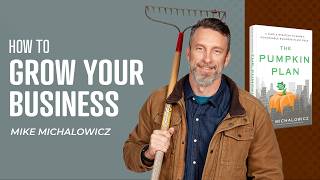
In this keynote, the speaker (Mike) shares a personal transformation story that began with a mid‑90s business‑coach named Frank, who introduced him to a pumpkin‑farm metaphor for scaling a company. The core premise is that most entrepreneurs repeat the same five‑year patterns, so a tiny (≈5%) course‑correction can dramatically change the trajectory. The metaphor breaks down into three stages: (1) Seed selection – choose a "colossal" seed by defining a unique value proposition, identifying a top‑client segment that resonates, and building repeatable systems so the business runs on autopilot. (2) Sprout review – instead of shoring up weak performers, double‑down on the strongest customers or internal strengths, because amplifying strengths yields exponential gains. (3) Watering (quenching) – allocate resources precisely to the strongest sprout rather than saturating the whole field, mirroring targeted marketing and service delivery. The speaker then introduces a practical client‑cloning framework: rank customers by revenue, isolate the top 10%, and ask four "Jedi mind‑trick" questions to replicate their value: (a) What am I doing right? (b) What’s wrong with the industry? (c) Where do you congregate? (d) What other vendors do you use? Answers reveal the true metrics customers judge you on, industry pain points to solve, networking hubs, and partnership opportunities. He also outlines three common traps – the Time‑for‑Money (TFM) trap, Downward Price Pressure (DPP) trap, and the "screwed" scenario where a business has systems and uniqueness but no top clients – and stresses the need to hit the sweet spot of uniqueness + top clients + systematization. Throughout, he peppers the talk with vivid anecdotes (Steve Jobs’ button phobia, Geek Squad’s branding, a Copenhagen conference mishap) to illustrate each principle. The talk concludes with a call to action: apply the pumpkin‑plan steps, focus on the 5% changes, and use the four questions to clone your best customers for explosive growth.
Chapters
So Justin was saying, when you go up on stage, you know, bring a lot of energy. It better be better than the open. I said, what are you gonna do for the open? He's like, we're gonna give everyone 2% cash back. I don't think I'm gonna beat that. I wish I came down to the exhibit outside prior to last night. I got in a little bit late. Late last night, went right to bed. The beds out here are so appealing compared to— I don't know if you're staying in the hotel. I wish I slept down here. Yeah, thank you. Thank you. There you go. My speech was just better than Justin's there. There was 7 words that transformed my life, and maybe these 7 words will do the same for you this morning. The words were, "You don't want to be that guy." And I'm from New Jersey, so it wasn't said exactly that way. It was said more like this, "You don't wanna be that guy." I don't know, anyone else here from Jersey? Okay, no. Yeah, I wonder why. And I had grown my first business. I too, as Justin was sharing, am an entrepreneur. I was in the computer space, setting up computer systems. I was the computer guy, and what I would do is if your computer broke, this was back in the mid-'90s, I would come to your office and usually make it worse and then charge you for it. My business had grown to roughly $1 million in revenue, and I just want to be clear about this, the entrepreneur's definition of $1 million in revenue. We had just surpassed about $500,000, you know, I was rounding things up. And I was struggling. I was not profitable. My business didn't have good sales. I could barely get by. It was constant stress. One day I went to the local Chamber of Commerce and it was a networking event. People knew each other and were greeting each other and talking. And there was one fellow off the side that wasn't talking to anybody. And I didn't know anyone either, so I went up to him And I said, hi, I'm Mike. What's your name? He's like, it's Frank. And New Jersey, New Jersey, Frank and Vinnie. And I go, what do you do? Now, this was back in the mid-'90s. And he said, I'm a business coach. Now, this is before business coaches really existed. So I said, what does a business coach do? He goes, you wouldn't believe this. There's companies out there that say, I don't know, they're doing $1 million in revenue. I'd be surprised if they're even doing $500,000. And I go, really? There's companies like that? And he goes, yeah, and I fix those companies. I invited Frank into my office and he met with myself. I had a few colleagues and he drilled us with questions. He said, I want to see the P&L, the, the cash flow statement, the balance sheet. I got to see the metrics that are happening here, how your business is performing, all these different things. And I just remember sitting there saying, what are these magical words he's saying? I've never heard of half these terms. It was, it was a good hour or two of these questions. And then finally he said, everyone, please get up and just, just leave the room. So I get up along with my 3 employees, and we start walking out the room. And that's when Frank pointed at me and he said, "Not you, Michael. Sit down." Has anyone here ever seen The Godfather? Yeah, okay, okay. So when you hear Michael, you sit down. And if you don't, there will be a horse head in your bed. I sat down. And that's when Frank said those famous words. He said, You don't want to be that guy. And I'm sitting in my chair and I said, I said, what guy? You don't want to be the guy who one day ends up in a rusty lawn chair at the end of his life with a half glass full of lemonade, regretting a life of toil, of just working and working without seeing the results, without making your vision, my vision, become a reality. And I looked, I said, I'm working so hard, how do you know that's gonna be me? And he said, the life of a business leader, an entrepreneur, our lives are very predictable. Where we sit today in our business in this exact moment is a direct result of the actions and decisions that you've made over the last 5 years. It's regardless of the macroeconomy, it's regardless of competition, it's regardless of changes in the economy, it's the decisions that we're making over a 5-year period roll us out to where we are today. And if we continue that pattern, 5 years from now we'll experience the same thing we are today, and 5 years from then, the same thing, and so forth. It's a recurring pattern. He says most entrepreneurs try to resolve their challenges by fixing everything, and that's the grand mistake. He said the opportunity is to fix very few things, usually just fix about 5% of your business. If you think about it, in your business right now, you are doing extraordinary things. You sell clearly a remarkable product. You have great clients. You're generating revenue. Perhaps you're profitable. Perhaps you're sometimes struggling with that. But there's a few things you can do perhaps, and that's what I want to explore today, that may give this another spark of explosive growth. What Frank shared with me is an analogy of an airplane. Like I told you, I live in New Jersey, and if I flew out of Newark, our major airport, and was flying to, say, San Francisco, if that plane was off its path only by 5%, the further it travels, the further it gets from its destination. The course correction isn't spinning around. It's simply making a small 5% correction and you hit where you want to go. So Frank shared this with me and he says, I want you to think about that rusty lawn chair moment. I'll never forget this. He said, can you visualize it? I said, yeah, yeah, I'm sitting there and I'm regretting the life of toil. He goes, no, no, that stuff. Can you see what's going on with your hair? Yeah. And I'm like, I'm losing it. He goes, no, not that hair. This hair. Ha ha. How'd you know? It gets worse. This is an absolutely true story. He gets up, he walks out of the room, and he says, "If you keep doing what you're doing, you're going to be sitting there in that rusty lawn chair. I want you to remember that." He goes, "But whatever you visualize, just don't visualize what's going on down here." And he walks out. I was like you. I was like, "What? Is this a business coach or a sadist? Like, who is this guy?" He came back in a minute later, which seemed like hours later, and said, "Do you want my help?" And I said, "Yes. Yes." I hired him on the spot. What he did transformed that business and the subsequent businesses I've built and sold. And I'm going to share it with you. But I will tell you one thing. If my presentation does not deliver, if I don't serve you in this presentation, I did give you the greatest Sales technique of all time. Just do this move. People buy anything apparently. Alright, let's dig into it. So, I did hire Frank. On the first day, as you can figure this out, he's an atypical business coach. He says, "Hop in my car." We get in his car and he says, "We're heading to a pumpkin field." And I said, "I don't understand this." He says, "We're going to deploy a technique called biomimicry." Something I never heard of before. Where nature has solved a challenge, figured something out, and we can replicate it in our business. And he says, what's interesting with pumpkin farms is there's this certain faction of pumpkin farmers who have grown these colossal pumpkins. You've seen them in the newspaper, someone leaning against this pumpkin as big as a car with a big toothy smile. He goes, they do something that's a little bit different than the ordinary farmer. Now, just to give context, the ordinary pumpkin farmer makes all their revenue, a vast majority, in the fall, Halloween. The fall season is the big time to sell. They are in what's called the quantity game. You want to move volume. But there's a small faction of colossal farmers that grow these colossal pumpkins. And they change the growing process by about 5%. There's that magic number again. They change a few things and the pumpkin starts responding with explosive growth. Well, what I observed here and what Frank taught me were these 5 stages of colossal growth. I do want to put one little asterisk next to the word colossal. I'm not saying massive size alone. I'm saying achievement of your massive vision could be colossal achievement. And that's what I hope we discover together this morning. So here, let's get into it. Let's talk about how to grow a colossal pumpkin and what what Frank and these farmers taught me. Step 1 to growing colossal pumpkin is called seed selection. Now, the ordinary pumpkin farmer is in the quantity game. Halloween, the fall is your season. You want a big field, you want to spread seeds all over the place. The cheaper the seed, the better, because you're in the quantity game. The colossal farmer is not focused on quantity, they're focused on quality. In fact, they'll spend hours at times investigating the right seed to match the soil content and the climate. And you can grow colossal pumpkins in central or southern Florida. You can do it in the northern parts of Canada. You can do it near the equator if you pick the right seed. If we want to have a colossal experience in our business, we need to pick the right seed. Now, the ordinary entrepreneur is in the quantity game. Hey, can we simply run more ads on Facebook? Hey, let's, let's do the cheap, easy seed stuff. Like, let's see what the competition is doing and just do a little bit better. What I found is the colossal entrepreneur exploits a colossal seed, and we're gonna show you— well, I think I see one marker here. I may have lost my other markers, but— oh, there they are up there. I'm sorry, got it. It's like magic. Okay, what we're gonna use is the classic Venn diagram, and I'm gonna read this off because from where you're sitting sitting— wow, that's— from where you're sitting, you may not be able to see this on the camera so well, so I'll read it off too. There are 3 elements that define the colossal seed for business. The first one is uniqueness. We have to do something within our business that is distinct to the customer. And what's interesting I found in my research and my experience is often uniqueness is is an expression of our true selves, who we really are. I'll give you this story. That's a little bit better. There's an example with Apple Computers. Steve Jobs did something that was really odd or unique, and it gave them an opportunity to grow their business explosively. It was maybe one of the defining moves that Apple made. What he did is he exploited his own uniqueness and made Apple an expression of it. What I want us to do is think about our own uniqueness. What makes me different and how do we express it? Now, I'll give you a shortcut. One way to find your uniqueness is typically we express who we are when we're children because we don't know the social norms, the rules. When you're in kindergarten, you dress the way you want to dress, you act the way you want to act until the teacher says, "You gotta color in the lines." Your friends say, you gotta dress the way I dress, 'cause if you don't, you're not gonna fit in. And over time, we comply with the social pressure. But in the beginning, we express ourselves the way we want to. Steve Jobs had a real interesting oddity, uniqueness about him when he was a kid. His parents actually tried to fix this. Teachers disciplined him over this. Friends made fun of him. Does anyone know what that was, by any chance? You can shout it out if you know it. Steve Jobs had a phobia of buttons. These things, they freaked him out. It's true. You can Google it. Steve Jobs had a phobia of buttons. And when he was a kid, he wouldn't wear anything with buttons. And as an adult, he wouldn't wear anything with buttons. He wore that turtleneck shirt and those jeans are not button flies. I will tell you that. But he exploited that. What makes you different is your biggest opportunity to stand out in any market. Apple was competing on the— with the PC on the frontier of PCs. Every PC, you have a computer on everyone's desk, and Microsoft was pursuing that, and IBM, and Apple was there too. But then Steve Jobs saw the new opportunity. It was mobile devices. Did anyone in the back of the day— I want real participation here, so make sure you raise your hand if it's true— Who back in the day had a BlackBerry device? Raise your hand nice and high. Okay, okay, maybe half the audience here. So if you don't remember the BlackBerry, it was alternatively called the CrackBerry, and you would just sit there and it had a keypad for your thumb, through your thumbs, and it was unbelievable what we could do with our thumbs and typing. The traditional mentality is do what the competition is doing but slightly better. What did all the competitors to BlackBerry do? The new phones that were coming out, Samsung and stuff, No key was making them. They made keyboard phones that had more buttons. Do you remember that one phone you could slide up the screen, all of a sudden this keyboard pops out? Steve Jobs said the frontier is mobile devices. His engineering team came back to him, as the story goes, and says, hey Steve, we've been working on the better BlackBerry, the the Apple, which ultimately came to the iPhone. We think we figured it out. They have a lot of buttons. We put more buttons on it. What do you think, Steve? With his phobia, it was like a scene out of The Matrix. He's like, oh, he's like, no, no buttons. He famously threw the iPhone in his fish tank in his office and sent back this mandate: no buttons. If you remember the first iPhone, He acquiesced. They were allowed one little home button which was sunken in so Steve wouldn't freak out about it. You could barely see it. As a result, Apple was the first company to blend technology with art. And they redefined the industry. Just by a show of hands, who here has an iPhone? Raise your hand, I say hi. OK, look at that. Put your hands down. Who here has a BlackBerry now? Okay, good, no one. Yeah, 'cause they're out of business. My question is, we all sell a great product. How do we exploit our own uniqueness, our own personality within the business and express it? Because you'll be so good expressing it, your competition will never touch it. But uniqueness alone is not enough. We need a client that resonates with that. I call it the top client, a client that comes back to you repeatedly and buys it over and over again. With Apple, it was first initially, who wants art blended with technology? Well, it was design companies, marketing agencies consumed them, their product, left and right. Design schools consumed it left and right. Who is the client that resonates with this? And the last component of a colossal business is you have something that truly distinguishes you in the market, there's a client base that resonates with it, and it has to be systematized. Systems. And what I mean by this is that if you can attract prospects, convert them to clients, have them raving about the experience, maybe referring other clients to your location, all while you're sleeping, that's a systematized business. If it doesn't require any conscious effort on your behalf, you have a business that's running on automatic. We need these 3 elements. Now here's the challenge that many business owners run into that I've worked with, and I even experienced this myself. You probably have some of these elements. You probably are already unique. I challenge you to be more unique, more on an extreme. Perhaps you have a client base that's resonating with you, um, but we need to cater more to them. And perhaps you have systems, we need to make it run more on automatic. I fell victim to not mastering this myself. My first business, as I told you, I was doing computer systems. I was a computer guy. And I was competing against my competition, and how I compete is say, well, we're unique because we have more credentials, we have more experience, we are so qualified, we can fix your systems left and right, no problem, we're excellent. And my competition would come in and say, We have all the credentials. We're excellent. We can fix your computers anytime you need it. And it was the same argument. We were punching each other in the proverbial head trying to win business. But one day this company came in and kicked everyone's butt to Sunday. And I think you may even know what company it was. Geek Squad. You ever hear of them? Geek Squad? What was their uniqueness? All they did was wear flood pants. A black tie and they put— they wore glasses with tape on it. They dressed differently. They dressed like geeks. They weren't more qualified. They weren't more certified. If anything, they were less effective at what they did. But who doesn't want a geek fixing their computer? We all do. The founder of the company, Robert Stevens, he had a uniqueness. He liked to wear costumes to school. He liked to wear Batman costumes. Not just in kindergarten, but in high school too. And he said, my gosh, people think that is crazy. I think that's the biggest opportunity to own the market. He had a client that resonated with it— home users, small businesses— and he systematized it. We build an organization that's— we dress a certain way, we act a certain way, we do a certain way. It was so consistent, they dominated. If we don't do these elements— some businesses in here are unique and and we have clients that are in desire of that uniqueness, but we don't have it systematized where you're doing the work. This is what's called the TFM trap. TFM stands for time for money. The only way to grow a business like this, the only way, is to work harder and longer. You have to put more time in to make money because it's not running on automatic. The second trap that happens in this scenario is Perhaps you have top clients, you have a community that resonates with you, they buy over and over again, they love what you do, you have it systematized, but you're not distinct in the market. They see alternatives, they say, "Well, I can go to another store." In that case, you are experiencing what's called DPP, stands for downward price pressure or commoditization of an industry. The only way you can sustain when you're not just seen as distinct, if you're not seen as a one one, that means there's alternatives, that means people are starting to consider your pricing. There is a third scenario. I hope it's not happening in this room, but it could be, where you are unique, very distinct in the market, you're considered a one of one, you have it systematized, you don't have to do the work, your team's doing it, it's being delivered on automatic, you just don't have clients that are buying. No top clients. I don't have an acronym for that, I have a word, and It's screwed. You are royally screwed. Yeah, I hope no one's in that situation. So we want to avoid that. Our goal, our goal is to hit the center. We want to be distinct in the market. We have to be a one-of-one, top client systems. So how do we do it? Back to the pumpkins. We talked about growing a colossal pumpkin. Step 1 is don't be in the corner. Quantity game, volume, cheap, easy seed. We have to pick the colossal seed, the right match for your environment, like expression of yourself, clients who are resonating with that, systematized. The second step to growing a colossal pumpkin is called sprout review. Back to the fields. The ordinary pumpkin farmer again is in the quantity game. So what do they do? They go over their fields with their tractors or vehicles and they are looking for the the weakest sprouts that are coming up. Again, they're in the quantity game. So when they find a weak sprout, that needs to be helped along. They'll loosen the soil. They'll add water to it. They'll do whatever they can to give growth to it. What was fascinating about the Colossal Pumpkin Farmers, they didn't focus on the weakest sprout. They focused on the strongest sprout. They would identify the ones that were really coming up and rooting well. And what they would do is loosen the soil for those and give that extra water. Because they know the golden rule: something that is strong from the start has the most potential to be the strongest. And this is what colossal entrepreneurs know too. Don't focus on what's weak, amplify what's strong. Yes, weaknesses can be improved by inches, strengths can be improved by miles. The ordinary entrepreneur, for example, says, you know, my weakest salesperson, She's really struggling. Really struggling. So what I'm going to do is I'm going to take my best salesperson off the floor, bring in some of my weak salesperson and have them work together. We're trying to improve the weak. The colossal entrepreneur says, "My strongest salesperson, what we're going to do with her is we're going to block and tackle. No administrative work, no data entry. We're going to hire an administrator. We're going to make sure that your job is easy as possible so you can do out— do your gift and to sell more and more and more. Colossal entrepreneurs exploit strengths. Here's the number 1 strength, the number 1 opportunity I think that exists within your business and the businesses I've been working with. And actually, the strengths of your clients, your existing clients. Right now, imagine some of your best clients. Maybe you don't know my name, hopefully you do. There's ones that come back over and over again. There's ones that Price doesn't mean anything. I want the best. And they are loyal to you. Maybe they even tell other people about you. I'm sure you have some of those clients, hopefully a handful. But imagine multiplying them by 1 or 2 or 3 times the volume. If you could just double your top clients, I bet you that'd be transformative for your business. So, how do you leverage that? Let's show you a technique that I've developed in every— I invest in businesses too. And every business that I invest in, we start off with this analysis. This is the very simplified version, but gosh, is this effective. It's 3 columns. The first column is called revenue, the next one is the name of the client, and the third one is called CC. And here's how it works. In column 1, what we want to do is sort your clients out by revenue, most revenue to least revenue. And the reason we want to do this is look at your clients over the last year or 2 is people show their commitment to your company through their actions, not their words. I actually have a saying, trust people's wallets, not their words. You perhaps had someone buy something from you, say, oh, this is a great experience, love it, and then they go on Google Review or whatever and they give you like a 3-star or a 1-star, 'cause people don't speak the truth, we act the truth. A very personal experience about this, with this, as in Copenhagen. This was back in 2019. I was actually doing a presentation on the same subject. It was to mid-cap companies. Mid-cap companies are companies that do half a billion dollars to about a billion dollars in revenue. Similar size audience, about 1,000 people, and I'm speaking. You can kind of tell I have a little bit of energy and I get excited about this subject, and I'm kind of moving around stage and so forth. Forth. Just to give context, um, is anyone, is anyone here European by any chance? Oh, oh good. Okay, we can talk honestly. European speakers are perfect, literally perfect. When they spoke, there was a podium and every speaker stood behind the podium. The suits on these folks were amazing. Men, women, perfectly presenting. They had PowerPoints. I don't make PowerPoints, perfectly pulsing, everything was perfect, taking notes and so forth. It was a 3-day event. I was the closing speaker. When I'm about to go on stage, their host comes up and says, "We're happy to announce all the way from New Jersey, we have a speaker that traveled in from, into Copenhagen to speak to us, and he's gonna talk about this colossal growth of a business, how to amplify things." As a speaker, there's a thing called a rider. A rider is a simple contract that says, you know, if there's music played at an event, please play this walk-up music. If there's this, there's, you know, do this and that. So in my contract, it says if music is used for walk-up, the song to play is "Jukebox Hero" for Mike. This event had no music. No music. It was total silence. It was just, you know, it was all business. And I didn't even know they had a DJ until I was about to go on stage. Like, we like to invite in our speaker from America, Mike McCallis. I hear this crackle on the speakers. I'm offstage, I'm over here, and I'm like, what? What's that crackle? And all of a sudden you hear— do you know the opening note for Jukebox Hero? It's a bass. It goes dum dum boom. The whole audience goes, ah! And I go, kuh-dah! And what do you do in that moment? You're like, ah, what would Anthony Robbins do? Channel Anthony Robbins. I'm like, He would run on stage. So I'm like, hello Copenhagen. And that was the response. Thank you. Yeah. That was thanks for participating. Appreciate it. Yeah. Total silence. Total silence. Sweat comes down. I'm like, oh my God, turn up the heat. What would Anthony Robbins do? Oh, he would do this. I can't hear you Copenhagen. And that was the response. You guys are really good. And it gets worse. It gets worse. So I'm like, oh, just deliver content that they have to do this. I am drawing stuff out. As I'm drawing that colossal C, you may have noticed or not, I always put the cap of the marker back on the marker. And there's a reason behind this. What happened in Copenhagen? I'm doing this presentation, there's a spotlight on me, I'm starting to perspire, sweat's just dripping down, and I'm like, we have to focus on our best clients. We've got to build this class. Do you understand the importance of this, Copenhagen? With the cap off, I rubbed the sweat off my forehead. I drew the most massive unibrow on the planet, and no one said anything. It was total silence. But all of a sudden, the behavior changed. All of a sudden, like, no one could look at me. People start taking notes. One woman's like dry heaving And I think I'm crushing it. I'm like, I'm amazing. They love me here in Copenhagen. Thank you very much. 2 hours. Thank God I'm not subjecting you to 2 hours. 2 hours of this. At the very end, someone in broken English comes up to me after the event and says, "Uni-brow." The moral of that story is people do not speak the truth. We act the truth. When we— they couldn't make eye contact with me, that's when something was wrong. But we don't want to say anything because it— there's social consequence. There could be conflict. Your clients— if we survey our clients and say, you know, how we doing, so forth, you may not be getting the full truth. I'm not discounting surveys. I'm simply saying there's something even more significant. It's their wallets. So that's why we sort our clients out by revenue. The more revenue they spend you spend over a given period, a year, the more they're demonstrating they value you. Those are clients who see you as the best provider of your product. Just to give you context, my first company, the computer company, I had one client that did $50,000 a year for me. That was big. My second biggest client was doing about $25,000. Then I had a few doing $20,000, you know, $10,000. Here, people, I were paying them money to do business with me, you know. But sort your clients out by revenue. Once you sort your clients out by revenue, put their names in. Now I was doing B2B, but this works in B2C. I own some B2C businesses too. Bank was the first one. This was a hedge fund. This was a retail store. This was another bank. This was a professional services and so forth. The final step we need to do in this analysis is the CC, and that does not stand for credit card. What we got over there, but what stands for is crush or cringe. It's a real simple analysis. Imagine the caller ID pops up for this customer. Do you have a crush or cringe when the phone rings? Are you like, oh my gosh, hey, how are you? Good to talk to you, cha-chinga. Or are you like, oh my God, I thought they were dead. Or maybe just hoping that— no, I didn't say that. The iPhone changes constantly. It's had another iOS update. And I remember this one particular time I got that call, someone I didn't want to do business with, and I was trying to hang up, but they switched the hang up and the answer button. And I said, I wish they were dead. And I answered the phone. And I was like, oh, like, hello. And they're like, did you put a death wish on me? Like, no, no, no, no, no, no, no. If you have an experience where you don't want to answer the phone, or worse, that is a cringe. What's interesting is sometimes it doesn't always happen this way, but sometimes in my case, the number one client who valued me the most, I didn't like. This bank They were good people. I'm not saying bad people. They just weren't a good fit. They would order computer equipment and then say, "Oh, I'm sorry, we can't order that. We had another meeting. And even though we just ordered the equipment, we have to have you return it all." And now I had inventory that I couldn't afford sitting in my little stockroom. This hedge fund was kind of the polar opposite. I love them. Larry, the hedge fund owner, when he would call me, he said, "We need to place an order." He was about half the size. They're doing about half the business with me. but he'd say, by the way, we FedExed a check to you because we know you have a small business. We don't want you to be out on cash. They would pre-send cash to me. And as I went through the list, some are smileys, some are frownies, and go through the list like this. At the end of— that one's got murdered, I guess. At the end of the day, what we're looking for is your top 10% of customers and circle those those top 10%. Once you identify your 10%, we're going to go through a client cloning. What I asked you was, could you imagine having your best customer, you know, double the quantity of your best customers? We're about to do that. And we're going to do it with 4 simple questions. If there's anything I want you to remember from today's presentation, it's these 4 questions. Because you ask these 4 questions of your best customers, it will transform you and it will transform your business. And these are Jedi mind trick questions. And just like a Jedi mind trick, it won't feel like it is until you understand what it means. So first question, I went to Larry, the hedge fund owner. I said, hey Larry, I love doing business with you. And I encourage you, get face-to-face time if you can with your best customers. I value you so much. I have a couple questions for you. First question is, what am I doing right? Now write that one down. Don't, or at least never forget it. What am I doing right? What you're about to discover is they don't tell you what you're doing right. That's why it's a Jedi mind trick. Larry said, Mike, you know, your computer company, you respond quickly. That's what you're doing right. The last computer guy we had, when our computer system would go down, they would get on site usually within 8 hours. You know, we're a hedge fund, we're trading stock, we have backup systems, but we want that primary system back up and running. You get on site usually within 4 hours. What you're doing right is responding 'quickly.' Now, here's the key to this question. When you ask your customer, 'What are you doing right?' They won't tell you what you're doing right. They will tell you how they judge you. He was telling me how he judged me. The thing you're doing right is actually the number one thing you need to improve. That's what you have to do better at. He says, 'Mike, you respond quickly.' I said, 'My gosh. Holy cow. I am not responding fast enough.' He is judging my company. I do thousands of things. You do millions of things, but you're judged on very few. When you ask your customer what you're doing right, they will tell you what they're judging you on, and that's the thing you must fix. Starting that day, I dispatched myself and a few of my technicians, always to be within— one person within a 15-mile radius of Larry. We always had someone near Larry's company. When Larry had a problem and called our office, we dispatched our nearest technician. We tell our customer, hey, I'm sorry, but we have to go and take care of another situation. It's an emergency. We'll be back. This is a secondary customer because we're taking care of our primary customer. We were showing up in Larry's office within a half hour every single time, and Larry was blown away. In fact, that's what he said. He called me, he goes, Mike, I don't know what's happened in the last few months, but your company's service quality has exploded. We love it. Thank you for what you're doing. He didn't even know what I was doing, yet he told me exactly what to do. Whatever you're doing right is the thing you actually need to improve upon most. Here's the second question to ask: What's wrong with the industry? If you ask your best customers, hey, you know, what can we do better? There's social consequence. They may not tell you. It's the unibrow. It's very uncomfortable to speak the truth. But if we talk about the guy outside the room, it's very easy. You know, after this event's over and I walk out the door, you can say, oh, that presenter, that outfit, did you get a piece? You look at that guy, was he a bartender, a wannabe? You can speak the truth about me, but you can't say it to my face. We can speak the truth about someone when they're outside the room. So we have to make the conversation about ourselves outside the room, and you do it by saying, what's wrong with my industry? I asked Larry, what's wrong with the computer industry? Oh, the billing practices, the billing practices. He goes, when, when our device, something would break like the Palm Pilot, I get charged these exorbitant fees to fix it. Does anyone, by the way, remember the Palm Pilot? Okay, over 50, over 50, over 50. Okay, good. That's a joke for me. If you don't know what the Palm Pilot is, it's the first smartphone that was neither smart nor a phone. Go figure. And they used to charge $250 or so for a PalmPilot. Larry said, my last computer company would charge me about $500 to repair a broken or disconnected PalmPilot. Just buy me a new one. When you've determined what's wrong with the industry, if you can find the solution to it, you can redefine the industry. Back in the mid-'90s, I moved my business from what they called break-fix. It broke, we charged you hourly for it, to a flat recurring monthly rate. If you work with computer companies, that's probably what they do now in 2020 and beyond, but back then that redefined the industry and our company started to grow explosively. If you ask your best customers what's wrong with the industry and you fix it, you become the industry authority. Third question I asked Larry, I said, hey, where do you congregate? Where do hackers congregate? Where do hedge funds hang out? And Larry told me like, oh, here's the conference we go to. In fact, that's such an important step. I'll share more detail on that in a second. I just want you to write that down if you're writing it down. And the fourth and final question is, what other vendors do you work with? In fact, that is perhaps the most magical question, and we'll go into detail on that. But those are the four questions. What am I doing right? What's the industry doing wrong? Where do other hedge funds congregate? Congregate, and what other vendors to depend on. Okay, let's go on to the third step to growing our colossal pumpkin. So we talked about the seed, which is uniqueness, who's the client that resonated, resonates with it. We talked about client cloning. What we're doing is we're focusing on the strongest sprouts and trying to grow them, right? The ordinary entrepreneur focuses on the weak, those customers that are struggling. I'm saying focus on your best customers, because we can clone them. The third step is the watering process when it comes to growing a Colossal Pumpkin, and, uh, it's only slightly and subtly different, but it's different than the ordinary process. The ordinary pumpkin farmer uses a technique called saturation systems. If you ever drive down a country road out here in Florida or anywhere, you'll see at times these massive systems, these tubes on wheels that go across these fields, and they can go like a half half mile long, this massive distance. And, um, your chances are you don't see them running because they don't typically run during the day. It's too much evaporative effect. They usually run at night. They saturate the ground, and it works if you're in the quantity game. The challenge is, of course, is every plant's getting the exact same amount of water. It's not the optimal amount. Some of them drown. They get too much water and the roots rot and so forth. But you're in the quantity game, it doesn't matter. Make as much as you 10. The colossal entrepreneur has a subtle shift. They do a quenching process. What they do is they go to the plant that's growing the strongest, the strongest sprout, and they give it the optimal amount of water just for that moment. And they come back an hour or two later, check the soil content, and they give the optimal amount of water again. And it's at this phase that a colossal pumpkin can put on about 50 pounds a day. It can grow massively. When you're quenching as opposed to saturating. So how does this translate, of course, to what we're doing as entrepreneurs, business owners? The ordinary entrepreneur focuses on saturation. I, I can talk about marketing saturation because we're all probably familiar with that. Back in the day when it was networking and you were at the Chamber of Commerce or whatever, I remember I'd be sitting there and, uh, You know, people walking in, you have your, your, your mud coffee and your rock croissant, and you're sitting there and you're talking to people. And there would be that one dude who'd come in, the door would open, smoke would roll in, some cowboy music would play, and he'd be walking in and you think he's got like two six-shooters on him and spurs. But those aren't six-shooters, those are his business cards. And you know that guy, he'd come up to you and say, oh, we should do business together. You should buy from me, buy from me, buy from me and go to every single person. You got your coffee and your croissant, you're protected. You know, he'd eye you up and down, jam a card in your mouth and go on. That guy would go back to his office and sit there and say, why isn't everyone calling me? I'm networking. I'm getting the word out. No, that's called saturation. It kills the roots of relationships. It's offensive. Now the nice thing is we don't do that anymore. Anymore. We've modernized it into what's called remarketing. My daughter, this is a little ways back, she was buying her first car. She bought her own, but I thought dad here would do some help, do some research, identify what's the best used vehicle on a price basis. And it's a Corolla, Toyota Corolla. It's a green Toyota Corolla because that green gremlin has chased me for the rest of my life. Every stinking website I go to, there's the Toyota Corolla, always there. It's so blatant. So the one car I said, let's never get, is a Toyota Corolla. I've banned it from our house.










