Cum să-ți depășești limitele: Secretele unui campion | BOABE DE CUNOAȘTERE | cu Dorian Yates
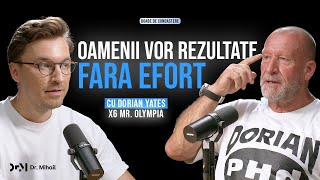
YouTube interview (2024-09-05) hosted by Mihail Pautov featuring six-time Mr. Olympia Dorian Yates. Topics covered: history and judging of Mr. Olympia (first held 1965; Yates debuted 1991, won 1992 and went on to dominate), Yates’s personal origin story and mindset (self-coaching, drive from a difficult youth), his training philosophy (high intensity, low volume, few all‑out sets per muscle, ~3–4 gym sessions/week, 30–60 minute workouts), nutrition and supplementation (protein guideline ~1 gram/lb; creatine ~5 g/day; whey, BCAAs, glutamine, NAC, magnesium, zinc, vitamin C), recovery practices (sleep ~8–10 hours in peak years, sauna 20–25 min at high temp followed by cold shower), and views on steroids/TRT (used during competitive years; now on monitored TRT with regular testing; cautions against casual steroid use). The interview also touches on evolution of gyms and fitness culture and preventative medicine.
Questions this video answers
1965.
Debuted 1991 (placed close second); first won in 1992.
About 3–4 sessions per week, ~1 hour each.
Approximately 1 gram per pound of bodyweight (≈2.2 g/kg). Example: 100 kg → ~200 g/day.
About 5 grams per day.
Chapters
Oh, legend A bodybuilding rimondialo et Mr. Olympia.
People were telling me I was the best bodybuilder in the country. Honestly, like, looking back on my life, it's almost like a movie that played out and I knew I had to put, like, my heart and soul into this. I had to change my life. I had to. I didn't want to. I had to. It was my destiny. How far can I take it? I'm supposed to be something different. I have to be something different. And I'm going to change my life with bodybuilding. I don't want to have a normal job, I don't want to be unemployed. I don't want to get a wife and a kid and a small house and a job and a normal life. Try to find a picture of me smiling when I was Mr. Olympia. It's very difficult. This contest should be the best of the best. And the thing that I loved about bodybuilding was this is an individual thing. I think people now, they don't like hard work. They want to have the results, but they don't want to take the journey because you overcome, you overcome, overcome. You're going to push yourself, you're going be sweating, you're going to be in pain if you want to be successful. Can I create a new. A new level? The main drive was I am not like everybody else. I don't want to be like everybody else. I have something inside which is burning. Deep down, I knew this was going to happen.
Or legend a bodybuilding Dorian Yates. She introduce technician Inclusive Astas Dorian Icon Alculturism. Corp. From was she Sanotos. Hey, Dorian, welcome to our podcast and.
Thank you so much for having me on.
Thank you so much for coming. I'm so honored to have you here and.
My pleasure. Thanks.
I have so many questions. First of all, for. For the people that are watching now, and maybe they don't know exactly what. What is that Mr. Olympia? What is this contest and what does it mean to be Mr. Oly?
Yeah. Okay, so Mr. Olympia started originally. The first Mr. Olympia was in 1965. Yeah. Yeah. Organized by a guy called Joe Weider.
Yeah.
Who's you know, legend in bodybuilding as a promoter, magazine publisher and supplement company and everything like that. He's the guy that kind of brought Arnold Schwarzenegger to America.
Yeah.
And everything like that. The idea was, as you had, and I think back in the. In the 60s, probably the most well known contest was the Mr. Universe. So Joe Weider's idea was like, we have these great Bodybuilders and they go to win the Mr. Universe, maybe, but it's difficult for them to continue to pursue and try to be better and better because there's not a lot of money in the sport. So his idea was to create a contest, a professional contest, and that this contest should be the best of the best.
Yeah.
So you get the best bodybuilders in the world coming to the contest, and there's going to be one person that wins the Mr. Olympia contest, and that person then would be recognized as the undisputed best professional bodybuilder in the world. That was the idea. And I think since maybe there was some competition between the Mr. Olympia and the Mr. Universe because it was decent federations, but by early 70s, I think is accepted in the bodybuilding community. Mr. Olympia is the ultimate. So this is the ultimate prize for bodybuilding, like, I don't know, world heavyweight champion boxing. But even in boxing you have some different federations, but in bodybuilding it's generally accepted. Mr. Olympia is the best professional bodybuilder in the world. So it's not a contest. You can just say, hey, I would like to enter that. You know, you have to go through different stages of. For myself, I had to be national champion, so I had to be the best in my country as an amateur. Yeah. And then when you achieve this, you can then apply for professional status and compete in professional contests and then to get into the Mr. Olympia. It's a little bit different now, the qualifications, but basically it was like you had to place in the top three of a pro contest. Yeah. In order to get an invite for the Mr. Olympia. So we have the several contests through the years, and at the end of the year you have the Mr. Olympia and see who's. Who's number one.
So you've been there and you've been the best bodybuilder in the world for. For six years in a row, year by year, what was you doing different than others? What pushed you there? And how could you stay there for six years in a row?
This is a matter of passion and drive and focus and how much do you want it? That's something. And I wanted to try to be the best that I could be. And then this turns out to be. You want to be the best in the world. But for me it was a bit more than this. It was like, once I got to be the best, I wanted to see, like, how far can I take it as a personal challenge and for the sport as well, can I create a new level? This was a thing. And it's generally accepted that I did because I was not interested in just winning. And I know this is not something I'm going to do all my life. So let me see, really, you know, how far can we take this? Like in running, if you like, Nobody could run a mile in under four minutes. Nobody could do it until one guy, actually, this British guy, Roger Bannister, he broke the four minute barrier for a mile. Once he did it, everybody started doing it because you released a mental. A block, a mental barrier. So when I achieved the level of muscular development and conditioning and set a new standard, then you see the, everyone else's standard start to elevate because they see this as possible and removes a barrier and then they aim for this. So it raises the whole level of the sport, I think, with my unrelenting passion to try to pursue that goal.
Yeah. And you did it in like the first Mr. Olympia you got in 1992.
Yeah, first one was. The first Mr. Olympia I competed in was 91.
91. Okay.
I got a close second.
Okay.
Which was, I think the first time somebody had done that in their, in their debut. So I had a second in my first one to Lee Haney, who was already seven times Mr. Olympia, very dominant champion. And I was able to, at least to push him a bit, you know, I couldn't beat him. But the next year had retired and the title was open. So 92 was my. Yeah, I was my first Mr. Olympia.
Yeah. And how can you explain us just a little bit how, how in Mr. Olympia you have a jury that give you.
You have judges. Yeah, judges, yeah.
And how they decide who's. Who's better? Is it by size, by shape, by.
It's a combination of factors. So it's muscle size, obviously, is bodybuilding, but it should be proportionate. And then there's the conditioning. Of course, professional bodybuilding is very extreme. The conditioning. When I say conditioning, I mean very low body fat, which is combined with the, with the muscle mass, which is very hard to achieve. So there's three rounds. As I say, I don't compete now, so some things have changed a little bit. But when I competed there were three rounds. So you stand in a relaxed position from the front, from the side, from the back, from the side, from the front. So four positions and you're judged on that. So it's like a relaxed or semi relaxed. So they're looking at the shape. Yeah. The flow of the body, the proportion. And then the second round is like seven muscular poses. They're called compulsory poses because it shows every part of your body. So these seven poses really, I think it is the core of the judging. So you have round one, which is relaxed or semi relaxed, really. Round two is seven poses which everybody has to do. And then they compare each other, this guy to this guy and so on, and see who basically wins the majority of the positions, the poses. And then now, I believe in the Mr. Olympia Open class, they don't have this anymore, but they used to have a third round, which is your presentation of your physique to. To music. So, you know.
Okay.
There were three rounds of, of judging. And the one who obviously came with the. Basically how they score it is by placing. So if they think that you're first, they give you a one.
Yeah.
Okay. And if you're second, you get a two. So the guy with the lowest score is the lowest score. So that's how they judge it over three rounds normally. Yeah, that's how they did it. So you're looking at your presentation to music. Sure. Interpretation and it's your. The way that you want to present your physique. And a lot of guys were, before I competed, it was a bit more like artistic, maybe. Yeah. And a bit more Greek statue type, you know, and flowing to the music and everything. But I had a very powerful physique and this was my personality and this was my. The way I trained was like all out intense training. So when I had the presentation, it was always something very dramatic and powerful music. And so I presented my physique another guy may be more flowing and you know, so everyone is an interpretation of my physique.
Yeah.
In the third round, what music did.
You use in your.
I use different music, Some classical music, which is very powerful, and maybe some rock music. But it was music with power. Camino Barano was one that I used a couple of times because it's very, very powerful. Yeah. So I used to mix that with something else at a house. Mix with that and different things. So it was always with, with power, because that's what I wanted to present.
Yeah. So the first Mr. Olympia you wanted is 92. Yeah, yeah, it's about 30. 32 years ago. I was five. I was five years old. I was five years old. And I remember that. But that time we had no Internet.
Yeah.
We had no knowledge about nutrition, about what the protein is, how, how should you mix your food? We had no gyms at all. Or maybe I remember that as five years old. I. My brother had a friend that was doing kayak. My Brother was doing kayak by a lake. By a lake by. By nearby. And he had a colleague that was doing kayak with some weights he lifted in his. In his basement.
Yeah.
So that was the level of fitness industry by then.
Yeah, so many I guess in there. Because it was still a communist.
Yeah, we just, we just switched and I talk about Republic of Moldova. That's where we are from.
Okay.
Yeah. I think in Romania it was almost the same because we came in 95 and there was no, no gyms where you could go. Maybe some sports clubs when you have some weights to live.
Yeah. How was it in Americ? Guess when they were communist countries they're more concerned with the Olympic type sports because this is where you get the kudos. And so maybe they have for those athletes some facilities with weights and so on. But yeah, we had no Internet. So how, how did the information get out and how did it grow, this sport? Yeah, magazines, magazines, magazines, they were like the bible. You know I, when I was young and I started bodybuilding, there was one store in Birmingham, that's where I'm from, one store which had the bodybuilding magazines from America. But you never know when there's magazines coming in. So we used to go like every week to this little store and see if they were there and then it's there. Ah, it's like spend all day reading this magazine. And then later on when I traveled to, to Russia and places like that, they were telling me they were getting the magazines like on the black market. It was very like valuable to get this magazine. Very difficult to get it and read about all the. At this point, really the 80s and into the early 90s, bodybuilding was very much US based sport was not start to get a bit popular in England and some European countries I think. But really all the top bodybuilders and all the gyms that you heard about and everything was in the US at that point. Now bodybuilding is much more international. We have a Mr. Olympia from Egypt, a Mr. Olympia now from Iran, but before actually myself it was always competitors from the U.S. even Schwarzenegger, which everyone knows is Austrian, but he was living in California in the US when he was winning Mr. Olympia. So now it's much more international. Now the whole world knows about bodybuilding. But yeah, for decades it was just magazines. That's how you find out about a read about the, the top guys. That's how you read about training and nutrition and everything like that. It was. Magazine was like the bible. Especially the magazines from America from, from Wida Yeah.
Okay, so I'm curious now. When did you start? How, how did you start? And at which point, I mean, how much, how much of what you did, you did by yourself? And at which point did you get a mentor, a trainer?
Well, I started being interested in, I guess, fitness, you know, fitness and physique and bodybuilding maybe when I was like 14, 15. And also I was big fan of Bruce Lee. Yeah, but Bruce Lee was skinny, but he had a, he was ripped, you know, he had some kind of physique. So I was not doing bodybuilding, but I used to do like push ups and sit ups and squats in my room, just in the home. Just, you know, what was the drive?
I mean, was it like to, to look better, to, to have a better place in competition for. Well, I mean, to attract like other girls? Or maybe it was just for you to look better or what is for you to. To be able to stand up against somebody on the street. What was the main drive?
Well, this was just something, what I did karate.
Yeah.
And when we did karate, we also did conditioning. Yeah. You know, like freehand squats, push ups. Yeah. And I found I was enjoying this more. And then I started doing some weights and I'll really connect with that. But I didn't do bodybuilding properly until I was like 20, 21, because I left home at 16 and I had, you know, sometimes nowhere to stay, stay at friends, houses, job, not a job. And when I was 19, I got into a bit of trouble. I went to a detention center. I was sent there for six months, which is like a youth jail facility. Yeah. And in there they had weights as well.
Okay.
And I realized, like, hey, there's 300 guys in here. Yeah. And I have the best physique and everybody treat me different. The guys, the officers, everybody. And they could see I was very disciplined with any kind of training because that was one of the things we're going to get these kids who's, you know, undisciplined and problem. We're gonna give them military discipline. We're going to give them physical training. We're going to give them. They try to teach us some skill. I learned plastering, you know, for the walls and all that stuff. I never used it, but that was the idea. But in a way was a bad experience. But in a way it was like, let me observe. I'm in a place with 300 guys, same age, between 17 and 21, and I have the best physique and I'm stronger than nearly all these guys. And I really like this. And even the officers were in there saying, you have to, you should do powerlifting. Because it was a powerlifter, the physical training guy. So he said, you should do powerlifting. But I already knew in my mind, I don't want to do powerlifting, I want to do bodybuilding. And what was the main drive? The main drive was, I am not like everybody else. I don't want to be like everybody else. I have something inside which is burning. And I look around and this life and everything I see is not for me. I'm supposed to be something different. I have to be something different. And I'm going to change my life with bodybuilding, I don't know exactly how it's going to change, but I can continue down this road with be a criminal or not. And I have something else. The other guys, maybe they don't have something else. I have something here and I want to do this. And hey, maybe I can be like, I don't know, a British champion one day. Maybe I can have my own gym. This was how I started. And then quickly I got very successful. Within two years, people were telling me I was the best bodybuilder in the country. I did then win the British championship to be. To get the pro status. So it was not something where I wanted to attract the girls or I wanted to be stronger, to protect myself, because I was already okay. This was not the motivation. The motivation was to change my life because what I see around me is not for me. I don't want to have a normal job, I don't want to be unemployed. I don't want to get a wife and a kid and a small house and a job and normal life. Whatever. Whatever is normal. But that's the average existence was not for me. I knew I was going to do something different and I knew I had to put like my heart and soul into this bodybuilding. I had to change my life. I had to. I didn't want to. I had to. It was my destiny. And honestly, like, looking back on my life, it's almost like a movie that played out that was predetermined. Deep down, I knew this was going to happen. I knew that I was destined for something different. And that was the motivation. Change my life, get out of this. Everything what's around me, I don't want it. And for me, this was a huge motivation. Do or die, really, like, this is not for me. So. And this is what I'm supposed to do. This is what I'm good at. And I Love doing it. And I never really had a mentor or a coach. And the thing that I loved about bodybuilding was this is an individual thing. Basically everything's down to me. I have to go to the gym and do the training. At this point, there is no such thing as a coach in bodybuilding. I'm not a big fan of bodybuilding coaches because the reason I did it is because it's an individual soul endeavor. I have to do the training, I have to do the research, I have to find about nutrition, I have to find about supplementation, I have to find about steroids, I have to find about everything. So this was fascinating for me. And as you say, no Internet, you have bodybuilding magazines. Then I went to the bookstore and I bought books on nutrition and, you know, calorie breakdown, macro breakdown. Like really? Yeah. Nobody knew even what that was. I just went and I bought the books and I learned for myself and also from the magazines and articles that other bodybuilders have written. So I planned my training, I planned my diet, I planned everything. And yeah, there was some people along the way that was encouraging and helping, like the guy that ran the British Federation at the time. Yeah, Ron Davis, he was very encouraging and he was a judge at the Mr. Olympia, so I could respect his opinion as he is seen the best bodybuilders in the world. Yeah. And he was like, you can beat these guys. And he was telling me, after two years I've been training, you can beat these guys. You can be Mr. Olympus. So that was good. And I had a guy with a supplement company, one of the very early ones in the uk, and he gave me a little sponsorship, you know, some financial help, was not a lot, but it was. Was helping me out. And I opened my own gym as well. So at that point, the gym, I mean, there was not many gyms in the 80s, even in the UK, in Birmingham, I don't know, 1.5 million people. Yeah. I think when I started training, there was maybe four gyms that I knew about. Now I have no idea, maybe there's 50 gyms, but it's different. Those were like real spit and sawdust, as we call them hardcore gyms now. It's. I don't think they're gyms. They're not gyms. I mean, they're fitness facilities. They're. They're sterile. They're sterile. I can go into one of these gyms where you. I don't know. I have these gyms in England where you pay 20, 15, 20 pounds a month.
Yeah.
There's nothing. And they have 30 treadmills, they have tons of car, they have everything. Yeah, but the people in there don't look like they even go to the gym.
Yeah, that's true.
Because it's a sterile environment. They don't encourage you. Hey, shh. Don't make a noise. Don't sweat on the floor. Like, it's like a clinic. A gym should be a place where you go and you know you can lift. And if you lift weights and you push yourself, you're gonna scream, you're gonna shout, it's gonna be noisy. That's the way it is. And it's all about hard work. And I think people now, they, they don't like hard work. They want to have the result. Yeah, but they don't want to take the journey. And it's the journey which makes you not the result. It's the journey which strengthens you. When you push yourself to the limits and you push yourself to the limits and you find out about yourself and you become stronger because you overcome. You overcome, you overcome and you build strength. I don't see that in a lot of kids these days. Everything's too easy, too accessible, and it's almost too much information where everyone wants the technical information. Yeah, okay, I can give it to you. But you got to work hard. There's no way to go around this. There's no magic tricks. You're going to work hard, you're going to push yourself, you're going to be sweating, you're going to be in pain if you want to be successful. And that's about everything. Not just bodybuilding, everything, life, everything is too, too easy now. People are weak.
I think that the drive you, you've told me about that moment when you sat in detention and you saw this guy and you decided that you, you want to be different, that you are different and you are going to follow a different path. And the fact that you didn't just wanted that, deep inside, you believed in that. That's something you cannot buy from a personal trainer. No, I mean, you can buy, probably. I mean, I know why people take a personal trainer. I some as a doctor, I. To somebody that is not. I see. He has no drive and he has no motivation to study. I recommend to people to take a personal trainer for two, three months for him to say to you what you should eat, what's.
How should you listen? For the average person, I use this analogy. I like my car, I like to drive a car, but I don't have time to study. About something. When my car goes wrong, what do I do? I take it to my friend, he's a mechanic, he knows all about the cars because he studied this.
Yes.
So I give my car to him and I say, okay, fix my car. Yeah, it's the same thing for the average person. But I'm not the average person, I'm a high level competitor. But for the average person. Yes. You have your family, you have your life, you have your business, you have many things going on, you don't have time to study the best way to train, the best way to eat and supplement. So yes, in this case, a personal trainer can be very useful but high level competitor in competitive bodybuilding. This is your profession? I think so in that case, not a big fan of, of coaches and yeah, sure, this was my approach.
Yeah.
But for the average person. Yes. They don't have time or inclination to find out about all this. It takes a lot of time and effort and everything. So the average person. Yes, you have a trainer to help you with your training and the diet, I think is a good thing. But it's a bit of a. How do we, you know there's a lot of bad trainers out there.
Yeah.
And a lot of people who's. I see trainers in it. I don't spend so much time here. But in England you've got some young guy who did a course, you know, he did a course for a few months even I couldn't believe it. There's a coaching company in uk, they do everything online.
Yeah.
I say. So you, you certify your coaches online, you've never even seen him, he's never even been in front of you and lifted away. No, no, it's just videos. So a lot of people with a, with a piece of paper saying they're coaches. I would look at what experience they have.
What is a good trainer for you? I mean, what should we look for when an average person like me looks for a trainer? I mean, what should I look for?
I would look for somebody with some track record, some experience of, you know, helping people and getting the results and, you know, also is a little bit of psychology to get the most out of people to try to keep the motivation going and everything like that. So. And nutrition, of course, the trainer should also know about nutrition. Unless you're going to get a nutritionist as well. But ideally, because if you train correctly but you don't have the nutrition, it won't work. Vice versa, you need both together because when you go to the gym, you're not building Muscles in the gym, you're damaging them, you're breaking them down, you're causing stress afterwards. The compensation process is where the growth takes place. But this takes materials. You don't build a house without bricks and without concrete. So no point to remodel your house. Oh, I want a nicer, bigger house. So I'll knock this wall down and knock this wall down. But you don't have the bricks to rebuild the walls. Yeah. So you have to have the training and the nutrition together goes hand in hand. So preferably somebody that knows about both of those subjects would be ideal.
Yeah. Okay. So you told me you, of course, in your position, you didn't need the trainer. You was your own coach, your own trainer. You studied you. You had that, that drive inside and the belief you had that it will happen.
Plus, I didn't exist. There was no personal trainers.
Yeah, okay.
Yeah, there wasn't any. But, you know, I wouldn't, I'm not very coachable. Yeah. Because, I mean, I, I can learn from people. I used to learn from a lot of people and get all the information and then trial it out and, and see if it works for me. But ultimately I had to make the decision, I do this, I don't do this. And when I win the contest or I don't win the contest is me. I don't say, oh, I had the wrong coach or the. I got the wrong advice. Ultimately, you're the competitor. You're responsible for everything. Yeah. So that's, that's the way I think.
You know, you know what, what I miss? Like when I was young, at 11, 12, my. My father took me to the gym for the first time. And it was kind of the gym, we say de Cartier. It was like average gym will, where the guys were gathering, gathering and train. We had no trainers there, so it was a proper gym as you.
Yeah. You encourage each other and all that stuff.
And that was so cool. I mean, going from, from like one post to another and everybody was giving advices to, to everyone and he was like, hey, that, that move is not good. You have to keep your, you have to stay like that, show your, show your petrols and make the move like that. You know, everybody was, everybody, everybody was sharing knowledge also. Yeah, yeah, you had those, those guys that was like heavy lifting and screaming and stuff like that. So it was raw and real. I kind of miss that now because now when I go to the gym. Yeah, I love that. This is a fitness trainer. Fitness facility. Yeah. We have a nice Spa, we have A.C. we have water. Everybody. Everything is clean, but it's really sterile.
You don't get too comfortable, you know?
Yeah.
And back then as well, it was more like. It was a more male environment. It was like a men's club.
Yeah.
At least my gym was. We had some ladies coming, but rarely. Yeah, it was not a lot, you know. Yeah. Was not a lot. And would have baggy. Baggy sweatpants on, baggy tops. No. You know, you go in the gym now, the girls are half naked. Oh, cool. If you want to look. But not really the best when you're lifting weights. I don't want to see that. It's a different environment now because many more people go to the gym. Mm. But I don't think. I actually think there's less people that are doing bodybuilding than they were doing in the 80s and 90s. Yeah. Bodybuilding per se. Now it's people going to the gym for fitness and, you know, a lot of fashion with the clothes and all this stuff. It's kind of a lifestyle thing now that. That people follow. Yeah. And I think everything changes. Nothing stays the same.
Yeah.
You know, I look back on those days with nostalgia when it was just, you know, hardcore lifting gym and a male environment in a boys place, you know, type of. That's how my club was anyway. We only had like a hundred, 120 members. But serious, everybody came down, even if they were not competing. That was the atmosphere. And this is what I talk about. The. The gym's now a little sterile. Well, you. Where you would go in the gym in the past and you would feel the energy and hear the music and you see people lifting and wow, the energy has hit you as soon as you grab. I'm gonna train. Yeah, let's go. Now you go in the gym and it's nothing. It's. It's like in a doctor's office or something.
Yeah, that's true.
There's no atmosphere.
I didn't notice that until you told me because. Yeah, that. That's how the gym was. Was before. I mean, I'm. I'm so proud that my. My father took me to the gym and I saw that, you know, that was really that energy. I was not in that energy mood because I was like 12. 1112.
I just learned to lift weights properly.
Yeah.
At this age, you know, but right.
Now, yeah, everybody's like on the phone making some moves once in two minutes.
And they're not getting a result. So I really go to a gym and I see people in there. Actually, I was with my wife. About a year ago, we went back to UK in Birmingham, and we wanted to train, do some cardio. So we went to one of these big fitness gyms where you have to get a code online and put it in the thing and there's no human there, you know, and we're in the gym. I don't know, there's like 30, 40 people in there, right? Yeah. I say to my wife, look, have you ever been in a gym where everybody in the gym looks like they don't go to the gym? She's like, yeah, that's what it's like. I mean, what are you doing in there, guys? It's, you know, a bit of cardio or something, maybe. I don't know. But young guys is different from. From my day, you know, it's like, I don't know, you're a young guy. Me and you, we're friends. I want to see if I can lift more weight than. I lift more weight than you. And then you got another friend, and it's like, that is that kind of male competitiveness that we had, you know.
I'm thinking now I have something like that. Like one of my friends, he's also the director of the TV show that I'm the host of. It's medical. It's like the biggest medical TV show and we have in Romania. And the director, his name is Vladimir Deminski. He is one of my friends from the high school and now he's director and he's director of the TV show. This is. Yeah. So we have this medical TV show that we do a lot of research about health and stuff like that. So we are making some competition. But even, like, we are a bit shy to compete on who's. Who can lift more weight. But we are competing like, hey, look what shake I did this morning. Look how many vegetables I have here. Then he's sending me pictures of. Look, I've stood 30 minutes after my. My swimming. I stood 30 minutes on the sun with my feet on the ground. Like, that's.
That's how. Because you're boring each other, you know, I still do it with my friends, but I still love that now I do like, you know, rowing machine or something, you know, how fast can you do 500 meters or 1,000 meters? I still do it with my friends. Hey, what's your time? I got my friend in England. What's your time? Now? He's the same age as me, you know, so we still have that little competitive thing.
That's cool. That's Cool. Yeah. So, okay, let's get back.
Hey, listen, it's great that you're a doctor. Yeah, yeah. And you're concerned with health and diet and all the other things, which. Does it not come with your training? Right. Yeah. I don't know about in Romania, but I know in England. Yeah.
We have no, we train.
I think a doctor does one. One day. One day on nutrition.
Yeah. We have two hours.
This is crazy. Yeah. So it's great that you're looking into, you know, let's say non pharmaceutical means of helping people to be healthy. Not that pharmaceuticals don't have their place, but I mean they, they don't make you healthy. Maybe they help you fix some problem. But let's try to not have the problem in the first place, minimize it.
The doctors don't make you healthy.
Yeah, the pharmaceuticals, the pharmaceutical. Yeah.
Because like doctors, we are trained to, to fix disease or to keep you.
Alive with the disease, but not to prevent it.
No, we, we are not trained to do that. And I think we. I don't. I mean people think. That's what I think. People think that doctors should keep you, keep you healthy. That's not our job. No, I mean like people get sick, then they go and they seek doctor's advice. Then nobody comes to the doctor at year, like 20 years old and say, hook, look, tell me, what should I eat, how should I train, what should I do to stay healthy? Nobody cares.
Preventative medicine.
Yeah, nobody cares. At least now people start to care. And this is what's like Peter is, is calling that medicine 3.0 and probably we gonna have a podcast with him.
In few weeks time.
Really?
Yeah, he's coming on to my podcast.
Tell him, tell him that I salute him. He doesn't know me, but I watch.
I watch his podcast. I'm in the middle of reading his book at the moment. Yeah.
This is so cool. Yeah, this is medicine 3.0. So, so he's a doctor. He. He quits medicine and he actually, he quits his clinical job and right now he's, he is doing medicine 3.0. That means he tries. He. It helps people prevent. But there's no science and no training facilities for that. Probably we're going to have that in, in short time.
Well, there's financial reasons for all this.
You think so?
I know so. Why would you want to prevent somebody from getting a disease that would then mean that they won't use your product later on?
Yeah, that's true. But by the other, like by the other hand, you. Yeah, I Think it's everybody's own drive. You need to understand that. And you want to like you, you need to want that prevention for yourself. And there's, there's an industry for that also. I mean it's growing, it's growing.
Of course pharmaceutical companies make pharmaceuticals, so.
Yeah. And that's what they study.
Like invested in that.
Exactly.
Yeah.
And I mean you, you have diseases you want to treat, you make the studies. They're so, I mean the studies are very expensive. Like if you make a study and that bill doesn't work, nobody's going to give you the money back. I mean you lost the money. So that's why they have to have a return.
Yeah, yeah. But they get. Pharmaceutical businesses have a good return.
Yeah. But in the end, like if you think like if you are a big boss of pharmaceutical company and your, like your main income is from selling a pill that keeps you alive with the disease and then you, you have another pill that cures the disease, will you sell it? Will you keep it for yourself to.
Make a profit as a CEO and is, is the in there to make the maximum profit? So whatever that is. Of course. Yeah. The long term treatment. Yeah, of course. So if you're CEO of a pharmaceutical company, then. Yeah. And understand that. But it's up to us, you know, and that's what's slowly happening. Yeah. That people are becoming aware all this information is getting out there and then people need less pharmaceuticals and then maybe they have to change their approach a little bit. Yeah. I always say to people, look, you know, McDonald's for instance, to use as an example. Yeah. If everybody or the majority of people say, hey, I'm not going to buy that anymore because it's poisonous, it's shit, I'm not going to buy it. And this gets momentum. McDonald's have two choices. Go out of business or change their strategy and give people more healthy food. Which is, which is what they want. I guess. So it's. People will make the difference, you know, by their own, by our choices. Things will change eventually.
Probably we need few more generation of people to, to make that choice.
We do what we can do, man. You know, and the information's coming out. And this is the good thing about the Internet, it can be bad as well. Information, information. But it's out there. Yeah. People are being more motivated yourself talk about it. Pizza Atia Uberman, he's a biologist. A lot of information coming out. So people are taking a different approach once they get the information. And here's the thing, it's about quality of life, not just staying alive, not just being alive. It's about the quality of life. It's about how do you feel, how do you function? I'm in my 60s, but I feel great. I have some little injuries from my sports career, but doesn't really bother me that much. But apart from that, I feel great. I get up in the morning, I feel great. I eat a good diet, I exercise, I keep my body as good as I can. And so I have a quality, a good quality of life. And I'm trying to keep that as long as I can. It's not to live to 120 years or something. If the last 30 years of your life, you can't, you can't move and you can't function and have a good quality of life. So I think that's what people are realizing now is about the quality of life. And yeah, you could, if you have diabetes, you could take insulin, but maybe you could just also stop eating carbs, not take the insulin, which is what used to be recommended in whatever before they made the insulin. Right. Just don't eat carbs.
Yeah, that's true. I'm very curious about what you do now to have a good quality of life. Before that, I would like to like to take it chronologically and talk to ask you about your method of training. And because you was your own coach, you was doing your own research. I think he was not the only one that had the drive, the belief that you can achieve your goals. There was where, like many other guys, probably that had the drive and the belief. But what made the difference that made you Mr. Olympia six times in a row. What was like the different approach or the thing that you discovered that helped you in your training and your, your progress?
Well, as I said, I did a lot of reading, whatever bodybuilding magazine, magazines I could get and people used to donate them. I had a big collection, unfortunately got destroyed in a flood. Had something like last night in Spain one day and came in the basement and I had to throw them all away. So it's, it's a shame, but I came across Mike Mensur, who was a Mr. Universe and controversially didn't win the Mr. Olympia in 1980, where Arnold Schwarzenegger won it. But anyway, I was very impressed with the, the writing of Mike Mensur and about high intensity training and the logic, which came really from. Arthur Jones is a guy that had the Nautilus machines in the early 70s. He's the first guy to really ask a lot of questions and get the Answers about what is it? Muscle growth, what you know, why is it happening? What's causing it? He discovers it's the intensity of the exercise. Yeah. So it's the intensity where you push that muscle within parameters of, you know, bodybuilding training, which is usually whatever, 8 to 12 repetitions over the exercise. It's really how much time is under tension. But we use that as a guide. Repetitions and pushing that to the point maximum in a set. That's the key. So you could do, let's say a set. Well, it's below your capacity. Let's say you could do eight rep. You could do 10 reps with a certain weight. Yeah, but you stop at 7 or 8, you don't go to 10 or 11, you go 7 or 8. It's not enough intensity. Oh, yeah, but I do more volume. It's not enough intensity. You know, you could do this. Mike Mensch used to use an analogy which I like. You know, it's like if you have a stick of dynamite and you hit it with a pencil, it doesn't go off, right? Yeah. Why? The impact is not enough. The intensity is not enough. So if you tap the dynamite with a pencil and it doesn't go off, if you tap it the second time and the third time and the 100th time, will it go off? No, because the intensity is not enough. But you hit it one time with a hammer, boom, message sent, job done. So my training was, when I started, three times a week or an hour. Okay. When I was Mr. Olympia, it was maybe four times a week or an hour. Okay. So I'm Mr. Olympia, the best bodybuilder in the world. And I didn't spend more than four hours a week lifting weights.
Come on. I spent more in the gym lifting weights.
Yeah, but you didn't train with me. After half an hour, you want to go home because it will be that intense and that hard. Trust me. I had guys train with me for half an hour and they feel nauseous, they feel sick, and they want to go home.
What do you do then?
Just go home.
Okay.
Go home, sleep, eat, rest. When you're in the gym, you're just damaging. You're breaking down fibers and then it's like muscle growth is a reaction to stress.
Yeah.
Okay. Why do you get some color when you go in the sun? Because the sun is coming. The rays is stressful for your skin, so it produces melanin to protect itself from this future exposures to the sun.
That's it.
Yeah, same thing in the gym. You're lifting weights, you're putting stress on the muscle. It's not used to. It's got to compensate. It's got to get a bit bigger and a bit stronger. So next time the stress won't be so much and it's continually increasing the stress. So. Okay, I'm taking you to the gym. We're going to do a chest workout. Yeah. Okay. It's nice to do it like this because I can talk about it, but hey.
Yeah.
What does it mean? What are we really doing here? Yeah, it's okay. Let's go. For a chest workout. You do a little warm up in a gym, whatever. Five minutes on a bike or across, just get your body temperature up. Okay. We might do some light movements just for the shoulders, the surrounding areas. We're warming up. Yeah. Okay, let's go to first exercise. Let's do incline pressure. Okay. I'll say to Mikhail, what do you think you can do eight reps with your maximum. Maximum? Oh, I think I can bench press 100 kilos. Okay. So let's start with 50 kilos.
Okay.
Warm up. Set.
Easy.
50% of this estimated maximum. Okay. You do one set rest in it, minute and a half. We do another set now with around 70 to 75% of your projected. So these two sets are warming up. They're getting your, your nervous system used to the movement. They're getting blood in the muscle is warming up. It's preparation. Yeah. Okay, now we're going to take the hundred kilos.
Okay.
On the third rep. On the third set, we take the 100 kilos and we're going to watch you. Yeah. I'm gonna be close to the bar and you're gonna push and I'm gonna shout and you're gonna push. You're gonna put, you're gonna get to the point where you cannot, you can't do anymore. Then I'm gonna help you a little bit to complete that rep. Then we say, Mika, come on, one more, one more. And you're gonna again give your maximum effort. But it's failing. It's failing. But I help you a little bit. So we're going just past failure. Yeah. Then you put the weight down. Okay, we finish with this exercise. Now we go to a second machine press. We already warmed up all the muscles, but it's a different angle. Let's say it's flat now where we've gone from incline to flat. So we do one set to warm up the 70%. The medium one. Yeah, we just do that. There's no Point to do the first one. We do it, we warm up. Same thing, we go to failure. But this time you're on a machine. So it's controlled. Yeah. Unlike the free weight.
Yeah.
So you go to this point again to failure. It can help you a little bit. And then I might even bring it to the top and you lower it down. Because we have three phases of strength in an exercise. At the pushing, we only have two because there's no resistance at the top. But let's say there's a resistance at the top. The lifting of the weight, which everyone is thinking about. This is the weakest part of the movement.
Okay?
Yeah. So even if you failed here, I can't do anymore. Yeah, but you could lower more because the negative.
You can put more weight in to do a negative.
You can. Yes. That's why you should always slow it down when you're doing an exercise. More explosive, slow it down. More explosive. Slow it. Why? Because we're trying to. We're trying to text this part of the movement. Yeah. So you failed here. But I can get the weight and lift it to the top. Okay, Lower it. I lift it to the top, you lower it. So even though you failed positively, we can do a couple of extra reps, maybe negatives.
And, and I love.
So we've gone past failure now. Yeah, we've done two sets.
Yeah.
Move on. Now we're going to do dumbbell flies. Same thing. One warm up set, one set to failure. So also it's one, one.
So it's not four. Usually when I go for the chest, I, I do four. Four, four, four.
Yeah. A lot of time and energy.
Yeah, I lost a lot of time.
Because those warm up sets are warm up sets.
Yeah.
They're within your capacity. If something is within your capacity, it will not change you. Please listen, people, if you can lift whatever, let's say 20 kilos for eight reps, you can go to the gym for the rest of your life and do this weight for 8 reps. And nothing will change. Yeah, nothing will change. Because why? Your body wants to keep status quo. You know, it wants to keep balance. It doesn't want to build excessive amounts of muscle. You've got to. And after the first year in the gym or the year and a half, this is my observation, I see people that go to the gym, they make some progress for the first year because the body's not used to it. Yeah, yeah. So even the training is a bit ineffectual if you've never done a push up. If you do 10 push ups. It will work. Yeah, but pretty soon you're doing 15 and 20 and it's not really working anymore. So you got to be always pushing it and always progressive. And this type of training I would do for about six weeks and then I would do maybe two weeks lighter training like deload. Let the nervous system and the joints relax a bit.
Mentally, how you say? Six weeks.
Six weeks. This is a guideline because you have to listen to your body. But six weeks of all out training, getting one more rep, getting stronger, going up, going up, you get to kind of reach a plateau, you know, and then you go back down. Train light within your capacity. You're resting your nervous system, resting your joints a little bit in your mind even.
So you make like three times a week for one hour. When for the chest, for example, you, you said we've been at this, the third exercise, you just do one to.
Warm up and then one fall out.
Okay.
And you've got to focus, you know, you got to feel it, you got to lift the weight, you got to slow it on the way down. You know, you've got to put everything into this set. And I don't know, guys, please leave your phones at home.
Or at least in the locker.
Yeah, in the locker. Like you shouldn't be looking at. You should be just here. And even for your mind, this is beneficial to leave the electronics and you have this hour in the gym which is just you and your body and your focus. And it's like a meditation. If you're deep into training, you forget about everything else. You forget about your job, your bills, your relationship, whatever. You're just in the workout and this is great for your mind because I need a break from all this information all the time these days. So I see training is a kind of meditation as well that you. So you're training three times a week. What should we do? Chest, shoulders, triceps, take a day off. Back, biceps, take a day off. Wait, chest, shoulders, triceps.
Push chest and shoulders in the same day?
Yeah.
Triceps, chest, shoulder, triceps. You do that in the same, same day?
Yeah, yeah, why not?
Oh, you know why? Why not?
Because.
Like until now it took so much time to do 4, 4, 4.
As I said, you're wasting a lot of time and energy.
Yeah, I mean I can make.
You're doing 4, 4, 4. But the only sets which is really possibly counting is the last set on each exercise. Right. The other ones are in your capacity. So you're just spinning your wheels. Nobody's used to this.
Yeah.
Why you don't need three warm up sets. And if you do incline press and then you do flat press is the same muscles, it just changes the direction a little bit. So, okay, do one warm up set just to get the movement, just to get everything and then go.
It's so cool. I, I hope I'm going to start to grow again like, like I did in the first year.
Let's find out. Let's find out. So one thing I want to address because a lot of people bring this up and it's totally the wrong way around. Yeah. Oh yeah, that's okay. You only train for one hour, four times a week because you're on steroids. Yeah, yeah. It's a competitive bodybuilder, will be on steroids. But steroids, what do they do? Help your recovery ability. Yeah, right. So if you're a natural bodybuilder who's not taking steroids and you train hard, you cannot train more than three or four times a week. You won't recover. So what you have is professional bodybuilders take steroids and they train six times a week. It's not ideal, it's too much. But they can recover because of the help that they get from the steroids to recover. But I was like, I would rather do the most effective training and use the steroids together rather than using the steroids to overcompensate for some ineffective training. That's the way I see it. And if you're not taking steroids, which I don't recommend unless you, you know, have some ambition to really compete at a good level, maybe you're not going to recover. Try to do Ronnie Coleman's training, see what happens. You'll get smaller because you will not recover from the stress. You're breaking down, breaking down, not building up.
That's true.
Yeah. Breaking down, breaking down. So you can't do that. Guys, if you're train three times a week, try this. So try it for a month.
I will try. So the first day is chest, shoulders, triceps.
Yeah. And you can see for chest. We did seven sets total.
Seven sets?
Yeah, we did three sets. Right? Two and two.
Yeah, that's it.
Oh yeah, that's it. Seven.
Okay.
Okay. Shoulders overhead, press two sets, naturals two sets triceps, push down two to three sets. Lying extension. Two sets. Of course, if you write it on a paper, it looks like nothing. Every time I come to the guys and they train with me, I said, what do we do? Six, seven sets. I Say yeah, but if I told you we're going to do six or seven sets and I wrote it on a piece of paper, what is this? This is nothing.
Yeah, it looks easy.
It looks easy, but it's the intensity that you have to put into it, not the volume. If it was the volume, I would be in the gym all day. I was best professional bodybuilder in the world. If it required me to be in the gym 10 hours a day, I would have been in the 10 hours a day. I would eat dog. Whatever it required, I would have done it. But it doesn't require. Bodybuilding is not an endurance sport. It's short, intense training, an overload.
So I, I did this. Sets chest, shoulders, triceps, back, biceps and legs.
Back and biceps is another work.
It's back and by back. Okay, and how many said? Seven. Seven.
I would do for back, one pullover movement, which you try to isolate the lats with. So that's your first movement. You're probably going to do three sets to a couple of warm ups and, and then pull downs with a close grip, reverse grip to the chest, maybe two sets on there. Barbell row, two sets, cable row, two sets. Okay. And biceps, two exercises.
Two exercises, that's it.
How many, how many exercises do you do for calves?
I usually skip the legs day. And that's not a joke, like, I mean, yeah, it's joke, but that's the hardest day.
That's the most productive day. Yeah. Really? Yeah, because you're working the biggest muscles in your body and it has a knock on effect like dropping a stone in a pool. So if you just did legs, squats, let's say your arms would also grow a little bit.
Okay.
Because it's like a systemic effect. Yeah, yeah. So the stress from training the legs is the most beneficial workout you can do. Of course it's the toughest. Yeah. But the reason I asked you how many exercises you do for calves is because I said two exercises for biceps and you seem to be surprised, which is a normal reaction. What? Biceps, the muscle that everyone shows the most. Yeah, but what does it do? It only has two functions. Bend the arm and supinate the wrist.
Yeah.
How many exercises do you need? So I see guys, they want to do four exercises for biceps, but they don't do anything for calves. Or they do one or two. Yeah, but you have two muscles here. Yeah. You have the gastronemis and you have the soleus underneath. You have two muscles. So you need at least two exercises in order to exercise this muscle. Right. At least two. Why don't we do three or four? Because it's calves. People don't think about it. This is the muscle that you associate with. Hey, I've got muscles. Since you're a kid. Right. So yeah, people tend to want to do more for biceps. But why? It's like one of the smallest muscles in the body with a very simple function. Two exercises. If you don't do it, forget it, you know.
Okay. Yeah. Well, three times a week I can do legs also.
Yeah. You do legs once a week.
On the third day I do legs.
And leg extensions, isolation followed by compound movement, leg press or squat. Which one, you know, suits your structure better? Some people don't feel with a squat, they're feeling in the back and things like that. And maybe they're better off with a leg press. Yeah. And then the third one, I would do hack squats.
Okay.
Very deep, isolated. And so three exercises for quads, two for hamstrings, like a leg curl and maybe a stiff legged deadlifts or RDLs as people call them now. And two for calves. You need one with the leg straight.
Okay.
To work the gastronemis, which is the main calf muscle that we see. And underneath this lies the soleus. And this works best when the 45 degrees. So seated calf raises is the only one that really hits that properly. So you need at least two exercises to hit the whole calf.
Okay. And in the legs day, I do only the legs.
Yeah. Yeah.
And what would you say about, about the apps?
I would say if you're lean enough, you'll see them. If you want to do some exercises, fine. But I had abs before I started, so I'm not, I don't, I only did a little bit before competition. Basically, if your body fat's low enough, your abs are engaged in a lot of this stuff. So if you want to do some ab training, crunches and maybe hanging, hanging leg raises.
Okay.
But mainly it's, it's, it's a matter of having low body fat. If you have low body fat, I could take a guy on the street who never trained in his life. If he has low body fat, I will see his abdominals.
That's true.
Yeah. It was just a sign of that you're in shape. You know, I, I never really did that much abdominal training.
Yeah. Okay. So yeah, that's, that's kind of achievable. But you need, you need a partner. Yeah. To help you.
Ideally you would train with a partner or a coach. Yeah, yeah. Because you need somebody there to, to spot you and to make sure that you're doing it correctly. And like, I mean, you do an incline press with a barbell. If you're on your own, can you go to failure? No, because you could get stuck with a bar. It's a safety thing. Yeah. So if you're on your own, I mean, you can go to failure safely on a machine.
Yeah, that's true.
So you could use more machines or you could do, let's say a drop set. You know, you go as many as you can and then reduce the weight maybe 25% and go again. So. Okay, okay, you could do, you could do that. But if you're really focusing and you know, and you're slowing down the negative and you go to failure, for most people it's going to be enough. And if you have a training partner there that can really like, that's great. I always like to train with somebody else and I like the energy as well between two people that we're pushing each other and we had a similar goals. I trained with people when I was bodybuilding that were competitors.
Okay.
Yeah. I mean amateur competitors. I didn't train with another pro because it was not another pro where I lived. And probably if you're a professional, then you have your own, you know, your own agenda and you don't want to train with another professional as your competitors. But I trained with guys that competed on the British level.
Okay, what about, so we talked about weightlifting. What about cardio? Do you do any, anything for, for that?
I, when I was bodybuilding. Yeah. On those days off, I would do like half an hour, half an hour. Moderate, moderate. Cardio is just really working fast, walking fast, stationary bike, stuff like that. Because my idea was like just to do some cardio to get, you know, blood around the system and keep some level of cardio conditioning.
30 minutes.
Yeah, but I didn't do intense cardio. And then when I was getting ready for a competition, I would do like an hour and a half a day.
Why?
To get rid of, to burn body fat. Like 45 minutes in the morning, 45 minutes in the evening. That would be fast walking or bike. Just as a calorie burning exercise. Okay. Not intense, because if you go very intense with the cardio, then you can interfere with your recovery from the weights. And at the end of the day, if you're doing bodybuilding, it's bodybuilding, it's not endurance training.
Yeah.
You know, you have to be specific with the demands that you put on your body. What do you want from it? If you want some strength. Yeah. And some cardio and everything. Yeah. Cool. Mix it up. Probably for the average person that's good, but for me it was specialized training. It was just for muscle mass.
But what, what would you recommend for average person that.
Well, I'll tell you what I do now. So for me, my goal with the weight training is really like more or less to maintain the muscle that I have and not irritate the injuries which I have. So I don't lift that much weight. And I do once a week, upper body, once a week, lower body. So I do twice in the gym.
Okay.
I do twice a week interval audio. Now, this is going to sound like nothing, but trust me, this is a hell on earth.
How is that?
Is that I do the. The most ideal equipment for me is the assault bike. You know the one where it has a handle. So you're pushing and pulling at the same time.
Yeah, yeah.
And you're doing the legs.
It's like the electrical.
Yeah, no, no, it's the airbag. It's called, I think rogue. Make one. They're not even expensive. But the thing is why I like to use this is because you're pushing and pulling, so you're engaging all the upper body. Yeah, yeah. And the lower body. And when you go all out on this. So I would do a little warm up, couple of minutes on there, you know, and then I would do a 20 seconds absolute all out crazy burst on there and then I would do a minute easy and then I'll do a 20 second burst and then I do a minute easy. And so three or four intervals, it takes you like eight minutes. Yeah. But if you do it properly, it's like it feels like leg day when you're going to do it. You're like, oh, no, not that again. You know, even now I feel a little bit nervous if I do that. Because the time you do that fourth interval. In fact, most people I do the first time, they can't make it to the fourth one. And I do three or four intervals. Okay. So the whole thing is like eight minutes. Yeah. And there have been studies on this, on the changes in the VO2 max using this or 45 minutes of regular cardio. Yeah, the same.
Okay. Eight minutes and 45 minutes.
I'd rather do eight minutes.
Okay.
And push the heart rate right at like 160, 165 or something I get up to.
Okay.
So I do that twice a week. Yeah, yeah. And then I do what I'll call two longer Sessions? Yeah. So I go mountain biking. Okay. And I go hiking.
Oh, cool.
So a bit, you know, some walking, some biking. There's beautiful mountains in Spain. Biking is very popular there because it's beautiful outside.
You live in Spain now?
I live in Spain, yeah. So there's good mountain roads there. I can do mountain bikes. So to sum it up, I do some resistance training, although it's not my priority now because I did it all my life. So now it's just to maintain, as I get older, to maintain the muscle. I do high intensity cardio maybe twice a week, and I do lower. Lower intensity maybe twice a week. And I also do lattes or yoga once a week, which is more for the flexibility and mobility. Once a week? Yeah. What?
Okay.
Right now I'm doing Pilates because I have a hip problem and the yoga irritates it. And Pilates is very controlled with the. With the bench. The Reformer bench.
Yes, yes.
This is important because you can increase the resistance where if you're just doing stretching with your body, you just got your body weight. But with the Reformer bench, you've got springs on there. So once it gets easy, you can add the resistance. You.
Would you recommend that? Yeah.
I mean, I'll tell you my attitude towards it. Yeah. You know, I was super hardcore nacho bodybuilder, Right. So I saw Jay Cutler doing Pilates. Yeah, that's gay, man. What are you doing that for? You know, like.
Yeah.
And then later on, I'm doing yoga, I'm doing Pilates because, you know, I'm in a different stage of my life with different requirements. So what do I require? I require not to be too heavy, because as you get older, that's not good. Right. So I brought my body weight down and it required muscle mass and strength, cardiovascular fitness, flexibility and mobility. So I like to tick all. All the boxes.
Would you recommend some Pilates if you could, to the Dorian Gates?
Yes.
30. 30 years ago?
No, definitely. I would do it once a week. Because you're working on keeping your range of motion. Because you lose range of motion when you lift weights. You know, because we're only moving this and this, we don't turn a lot of things. So you get kind of limited. And, you know, you see bodybuilders walk, it's like this. You're very limited with your range of motion. So I wanted to have, you know, to be able to do the splits and everything. Like, I want to be good in all the areas. Not competitively. It's just for me, I compete with myself. And I like to have these little challenges, you know?
Yeah. So cool. Yeah, so, so nice to hear that from you.
I love to get up and do something physical every day. I look forward to go to the gym or go for a hike or ride my bike. I mean, if you don't exercise, I, I don't know how you survive, man. I really don't know how you people function without exercising. I. It makes you feel so much better physically and mentally. I'm like, how do people go through life and they don't. I can't imagine it. Not training and being overweight and feeling. Most people feel, but they don't know they feel because they never felt good. Now they get used to it.
You know, the problem is that you have to like you, you get used to the feeling of your body without exercise. And then when you start to exercise, you feel even worse. At the first like two or three months, you get your tired mask, muscle sore and stuff like that. So you, you have to sleep more, you start to eat more, you start.
To eat better because your body starts asking what is requiring?
So you need to go through a shittier period. Then you start to feel better and better and better and your body starts to ask for exercise.
Exactly. As for ex, your brain is asking for exercise.
Yeah.
You know, we live in this world which is great. We have all this technology and everything, which is. We don't want to go back to the dark ages. Yeah, right. But we miss something somehow with all that. We miss, you know, the human body functions optimally. The human body, the human mind functions optimally under stress. Okay. We were, we were designed to function best under stress. You know, we had to hunt for food. We had to. So now we don't really have this stress of, you know, exercises is a beneficial stress. Hormetic stress is a stress which optimizes your body. Some things I do as well is like heat. Sauna, sauna is very beneficial. Stressful, right? Yeah. Cold is beneficial. Why? It's stressful. So in order for you to feel really good mentally and to function at your highest level with your mind and your body and everything, you have to go through stress and the stress has been removed from life. You know, you get an Uber, you go here, you, you go online. People don't have to exercise and they're not naturally under stress. We're not going outside now and it's cold all the time. We have aircon, we have heating. So you need to be under some stress to really feel good. It's like free drugs. You can go buy some cocaine and it will put your dopamine up and then it will crash down and you'll feel like shit and you've paid money for it. Or you can go to the gym and exercise your dopamine or go in the cold, your dopamine will go up and we'll be like this all day and it's free. You just need to make some efforts, you know, so it's a way to change your brain chemistry, it's a way to relieve depression, it's a way to make the body optimize itself. And we don't have all these diseases that we're getting now. Diabetes, type 2 diabetes shouldn't exist. Yeah, it shouldn't exist. It's just a bad diet and a lack of exercise.
Yeah. It could not exist.
Yeah. If you follow, a lot of things shouldn't, you know, and that's the thing that I'm talking about, quality of life. Especially as you're getting older now, you can have a much better quality of life. When I was a kid, a guy of 60 is finished. Man with a stick, it's finished.
Yeah, that's true.
You know. Yeah. I'm hoping that I'll still be doing what I'm doing when I'm in my 70s. That's my goal, to be able to function and very well into a later age. And if you've got muscle mass and you've got cardio and you're not sick, you're going to enjoy your life a lot more. And I'm going to be able to spend more time with my grandson and all these things. Which is more important now?
You're 62 now, right?
Yeah, yeah, yeah.
You look amazing.
Yeah.
And, yeah, actually, you know, I was talking with a friend lately, like, if you try to remember how people were, were looking like or how you were related to them. When we were young, you know, when I was in a kindergarten and a father of 35 years old were coming to pick up my colleague from the kindergarten, he was looking like a proper adult with problems with, like, with like, unhealthy looking, you know, old. He was looking old, like. And I. I'm looking now to my friends, which are 35 years, 40 years old, and we kind of, I don't know, we look like kids still. Yeah. And, yeah, like people, different lifestyle and.
Things that we, you know, knowledge that we have that people didn't, you know, my. My father died at 42 years old.
Yeah.
Because he didn't sleep very much. He smoked 40 cigarettes a day.
Yeah.
And then I had a stepfather. He died 44. Okay. So you know, but people didn't know then about vitamin D3, like supplements that could enhance your immune system and so on. Yeah. And exercise was kind of a bit. Wasn't really popular. Yeah, yeah. To do exercise and knowledge of nutrition and all this. We didn't have it then and now it's easily available at the click of fingers. You can google anything you want. Well, you want to find out about something, click. If I wanted to find out about something when I was starting bodybuilding, I have to go to the bookstore.
Yeah, exactly.
Or the library. Yeah.
Now you have this.
I can't go online and order a book even. I'm gonna go there on the bus to the center of town and go to the bookstore and look in there and see what they have.
And you cannot even check if what you read in the magazine is true because you don't have this all.
No, there's no reference. There's nobody counter claiming or anything like that.
Yeah. You said about sauna and about the stress. You have to like this positive stress you have to deliver to your, to your body. So we have a material, a vlog about sauna. And I was researching that and like my only reason to make that research is was because people were asking me if you really detox in the sauna or not. And I took some like maybe four or five meta analysis analysis and I started to read them.
Yeah.
And I was, oh my God, this is amazing how many things are changing. Like your blood pressure in the first session goes down by 10 millimeter. Then your, your arteries start to open to make like. Yeah, your, your heart starts to pumping more, more blood in the same way it's, it works when you exercise. So basically in the studies, like just sauna have almost the same benefits of sports. And then when you think and you add the sauna to the sport, like I was before that vlog, I was like going to the sauna just to relax from time to time. Now I got many benefits now even like if I'm in the recovery day and I want to ask you about the rest and recovery. When I'm in recovery day, I go to the gym, like especially to, to enter the sauna and I feel how good it is.
Perfect. Yeah. I go four or five times a week.
Really?
How much time? I have a sauna at home.
Oh my God.
So I get the temperature up around 90 plus.
Yeah.
20, 25 minutes is like pretty tough.
20 minutes in one sit.
Yeah. I go up high High as I can. So in the hot.
Yeah. But you say for 30 minutes, like from the beginning to the end.
Yeah, like one session.
One.
Normally I do one session, 20 to 25 minutes. I try to sit for like five to 10 minutes. Where it's getting really uncomfortable. Yeah. To feel uncomfortable.
Yeah, that, yeah.
Okay. And then I get, then I get out and take the cold shower.
Yeah, that's cool. That's so cool. I mean, you like that? That's. In the studies I've read, that was the target like to say to have like four to five session.
Ideally.
Yeah.
We're reading the same information, I guess. Yeah. But also the, the effects for depression is very encouraging.
It affects everything like depression, Alzheimer's disease risk, how long you live, the, the stroke risk.
It's all about blood flow. You know, if you can get blood around the body, it's healing and bringing nutrition and this is, is dilating all the vascular system. You get more blood flow, as you say. And something I read very interesting recently is about the microplastics, which is a big problem now. I mean we're surrounded by plastics, Right. You know that the 18 year old man, now 18 year old, has something like 50% of the testosterone from 40 years ago.
Yeah, I've read about that.
I think microplastics is a lot to do with this.
It can be, yeah.
Anyway, apparently it's pretty much the only way to like detox yourself from microplastics is really. Yeah, yeah. This recently, I read about that. Yeah. So you might want to look into that.
That's cool.
Yeah, yeah.
One more reason to go to the sauna and about, I was saying about resting and recovery. So we've talked about let's say three days of going to the gym.
Yeah.
Pushing to the max. Then you said you have to rest to recover. What was the best way to recover and to rest?
Well, you've got to get sufficient nutrition. This is the building blocks that we're talking about. Yeah.
Okay.
So that's one thing. You need to have sufficient protein.
How much is sufficient?
I always have to convert to kilos because I still.
Okay.
Work in pounds. But generally like 1 gram per pound is a good guideline. So what's that, 2.2 per kilo?
Yeah.
That's a lot. So if you're 100 kilos, you try to get 200 grams a day.
200 grams a day. And what, what's the best sources for that?
Best sources? First class protein, eggs. Number one, beef, chicken, fish, you know, dairy, cheeses, things like that and of course supplementation, whey protein. Obviously I have a nutrition company. I'm not saying it just because of that. You can go back, you can find the earliest articles written about me from the 80s and I've always been a supplement user. And from day one I use a protein supplement because when I started training I was working. Yeah. I had one very heavy industrial job where we were going to a factory and clean it and the boss said it's an eight hour shift officially. But I don't care if you were guys who just want to work your ass off and get out of here in five hours. You can do it. I just. You just do the job. Yeah, yeah. Okay. So you know, doing that, I'm a young guy, I can't really say to the other guys, hey do you mind while I take a break and eat my chicken breast? And I don't think they would be so happy, you know. So I used to have a protein shake and it became like for me to get that protein every day was difficult to eat eggs, beef, chicken. So I always use the protein supplement. Okay. Alongside it. So yeah, to get that amount of protein from solid food. Can you do it? You can, but it's difficult. So high quality protein supplement is another good source. You can. You know, I used to have two shakes a day pretty much when I was.
How many grams?
Like 50 grams of protein.
50 grams on each shake. Okay. And you since then you take your protein shake daily, right?
Yeah, I still do take like one way protein a day because I only normally eat twice.
Okay.
So I might eat twice with 50 grams of protein, so that's 100 and then have a shake, it's like 150. So. So it's a bit below that level, but I'm not trying to build more, I'm just kind of maintaining.
What about sleep? How much do you sleep or how. What's, what's your sleep?
Well, as a competitor. Yeah, I was religious about this.
Really?
Yeah, Yeah. I used to sleep eight hours at night and yeah, I had the luxury of all day because I was professional bodybuilder is what I did. So I used to sleep two hours in the afternoon as well. Like every day, 10 hours. 10 hours. You know, it was. It's like a baby, right? What does a baby do? Eat and sleep, you know, because it's growing. Right. So yeah, it's a little bit like that, you know, six meals a day.
Six meals a day.
Non negotiable.
How many eggs could you.
I used to have 24 a day. Really? Yeah, 24. And those days we had the wrong information that the fat was bad.
Yeah.
So we'd throw away most of the yolks. Like I'd have 12 egg whites with two or three yellows twice a day. So 24 egg whites, maybe six yolks. Yeah. But now I would say no, don't do that. Have the fat, it's good. Have the cholesterol, it's good, you need it. So yeah, whole eggs. Whole eggs is the. There's several ways to measure protein efficiency like per protein efficiency ratio.
Yeah.
AAU amino acid utilization. Doesn't matter. Eggs are number one. Yeah, eggs are number one. And then after that maybe beef. I would say chicken, Whey protein, cottage cheese. Fish. I'm a big fan of fish. But good first class protein. If you like it, it.
Yeah. What about carbs?
Carbs, that's your energy source. Yeah. So depends on your goal, what you're trying to do. Of course if you're bodybuilding you need carbs. If you're bodybuilding. I would you was big on oatmeal. Don't know what you call it here. Porridge. Oats we call it in England.
Yeah, we call it over. As I'm a big fan of.
Yeah. This I like rice, sweet potato, some vegetables and fruits but mainly it was rice and oatmeal. Those are the two things that I used a lot for my carbs. Sweet potatoes I liked as well.
Okay, what about supplements? What, what did you use in the competition days? What are you using?
I was probably one of the pioneers that had like on the cutting edge of supplements. I had early 90s was one company from Australia called Musashi and they made powdered amino acids branch chains, eaas some different things like nobody had powdered amino acids. They used to send me so I used to use their BCA and then creatine came on the market. Made mid-90s I think. Yeah, yeah. So I was using that. One of the first ones to use that actually I think the first people to use creatine in the UK was horse racing owners. Yeah. Before athletes they were using in horses. I mean, you know how much money is in horse racing. Right. So and then a lot of the studies came from England as well, from the university in Loughborough I think think on creatine A lot of the studies came from there and now, you know, we're 30 years on. It's the most studied and most effective supplement you can take for bodybuilding. And more and more information coming out on brain health and different Things like that. So literally everybody should take creatine.
Yeah, we have.
Especially if you go to the gym, you should take creatine.
And even if you don't go.
Yeah, we have a don't go. There's benefits. Yeah, but you should go.
I mean. Yeah, yeah, exactly.
You should go.
I had this the same way I did the research about creating it. And I was like shocked about how many goods, how, how many good results you can have with creatine in so many fields. I mean, if you watch that movie or if you studied the literature, you can find like, you, you, you won't find one reason or one type of people that should not take creatine. Only maybe if you have, I don't know, kidney damage, let's say. Or if you have, like there are some people that have gastrointernal intestinal symptoms and signs after creating otherwise there's like.
No reason to not take it, you know, very. Considering the amount of time it's been around and the amount of people has taken, the amount of studies that's on it, that's positive. Yeah. This is like such a small negative. Yeah. But still, people have misconceptions. For instance, I was in the hotel last night and the guy, you know, he said my. Started asking me about training and this and that and what to take. I say protein and creatine to start with and then you can move on to other things without the basics. You know, it's like, ah, but I don't take creatine because I heard it can damage your liver. Yeah. I said no, that's nonsense. Like, I don't know where you heard that, but it's not correct. Doesn't damage, doesn't, you know, like you said kidneys, like you have an existing kidney disease. There'll be quite a few things that you, you can't even eat a lot of protein and so on.
Yeah.
So in that case, yeah, a lot of things are not good, but it wouldn't create the problem.
Yeah.
If you have this problem, then there's certain things you have to avoid. But it's been around so long and so many studies done. It's, it's just a great supplement, the most beneficial single one.
Actually. Your, your liver is producing creatine.
Yeah.
It makes creatine. Yeah. And you, so you said protein, creatine. What, what else did you take that time? And I, I'm curious.
I took amino acids and primitive pre workouts. There was no pre workout in those days, so we just made our own with ephedrine. And caffeine, which was illegal in those days. Ephedrine, caffeine and low dose aspirin.
Okay. Why aspirin?
It potentiates the effects of the ephedrine and small fat burning. So people used to use it as a pre workout stimulant, but also as a fat burner, elevate the metabolism for a period of time. So it was very raw, you know, like they're just stimulants.
Yeah.
Which is also overuse of stimulants is not good because you could burn out your nervous system. Yeah. So now it's much more sophisticated because I have compounds now in my pre workout blood and guts. We have a really high dose of citrulline which also has.
Is the one you got me.
Yeah, yeah, yeah. So we have citrulline malate, which is. Has also great health effects for blood flow. You know, blood flow and nitric oxide production is very important for your health. But also for the gym, for a muscle.
Yeah.
Blood pump and everything like that we have. So we have that in there which helps your blood flow good. For everything we have bitter alanine, which delays fatigue and you get that little itchy thing sometimes. Some people don't like it. It. And of course, you know, green tea and caffeine and the stimulant base as well. So there's a stimulant in there, but it's not solely stimulant and it's not very powerful harsh stimulus. So it's blood flow, fatigue, delay, focus and so on. So I mean we didn't have anything like that back in my day. So we just made our own kind of pre workout. Yeah.
And what, what are you using now?
I'm curious, like what I'm using now. How long do you have, man? You know, I use a lot of protein. Yeah. Creatine. I take 5 grams a day daily. Yeah, yeah, Glutamine. I use glutamine.
Okay.
Not so much for the recovery and muscle protective. I had a little gastro problem like a reflux with acid and everything. And it helps. Actually I was with a doctor in the States who's like yourself, you know, he's a doctor, but he's was more into like supplementation and hormones and everything like that. And he recommend I take the glutamine for that, which I wasn't aware of then I read about it was like, wow, this is great for your stomach lining. So I take that glutamine for that. So maybe you want to look into that. The glutamine effect on the digestive system and repair. So creatine and glutamine. I take N acetylcysteine nac. This is, this is another amazing supplement, nac because it raises your glutathione level, which is your master antioxidant. So that's all around good for everything. Detox your liver, detox your lungs. 600 milligrams twice a day. I also take magnesium in a tablet. It and I take, when I have a bath once a week I put liquid magnesium oil in the bath and it goes transdermal.
Really?
Yeah, yeah. And you get some magnesium sulfate oil or you get the flakes. You put it in your bath, you're sitting there for 20 minutes, man. You'll like.
Really?
Yeah, yeah.
So what is that? What kind of magnesium?
Magnesium chloride, I think it is. All right. And it goes through your skin? Yeah, it's oil or, you know, flakes.
Okay.
And you put it in the water because magnesium is not great absorption through your digestive system. And this goes through your skin.
It's Saturday. Magnesium, it's called in Romania. It's magnesium salt. Yeah.
There's two times you have sulfates and another one, there's two types of magnesium. But the point is it goes through your skin and it gets absorbed that way.
And you rest better after that.
Yeah, you feel better. And for some reason, because I have regular blood tests, like three months, everything, I have a tendency for my magnesium to go low, maybe from stress or something, I don't know. So I'm careful with that supplement. So that's one. I take zinc.
Okay.
I take zinc. Vitamin C. Vitamin C for 12. General antioxidant? No, I take to 500mg liposomal twice a day. Okay. If you take liposomal C, you're going to absorb about 90. If you take regular, it's maybe 20, 25.
Okay.
Because it get destroyed in the digestive system. And vitamin C has many, many benefits. Collagen production, stress, immune system. Okay. What else? I take various B vitamins as well. Oh yeah, I take quite a lot. But it's more, you know, not solely for muscle building. It's more for general health.
Yeah. Okay. You also, you told, told me about steroids. You use them back days. Are you like doing any testosterone replacement therapy nowadays?
I do TRT because I have done TRT since I was, was 40 years old because of the bodybuilding and using the steroids. It suppressed my own level and I tried for a couple of years to get it, but it was not Getting up below the very low level. And, you know, testosterone supplementation is, as you get older, it's very beneficial for your health and for your quality of life.
And you have a doctor that follows your.
Yeah, I have anti aging longevity doctor in Spain. He keeps an eye on things. So every three months I do the tests. Okay. So it's just to keep it in the normal.
That's very important.
Towards the last quadrant of the normal range. So high inside the normal range, but on the higher level. And then you feel better, you have a better quality of life. I recommend anybody that's over 40, any guy that's over 40, go check your testosterone and not your overall testosterone, your free testosterone. That's. That's the important reading. Because overall testosterone can look normal. But if you have a high. SG H. Sorry, I forgot the term. But basically it takes it out of circulation. Yeah. So the relevant thing is how much free testosterone you have. That's the test. And normally, I don't know here, but a lot of places they just give you overall testosterone. Oh, you're okay. But they didn't test your free testosterone, which is in your bloodstream. Available.
Yeah.
For use. So this is the important level that you should check.
And yeah, it's very important for.
And it's getting to be an epidemic of low testosterone. As we were saying earlier. Now younger guys have low testosterone.
Yeah.
Well, definitely if you're over 40, if you're in a good range. Hey, leave it alone.
Yeah, exactly.
But if it's slow and it's suppressed, then you might want to think about supplementing it. And if you've got low testosterone and you put it to normal, you're gonna feel like a new man. Like, you know, much better quality of life. Mentally, you're gonna feel better. Your sex drive is gonna be up, the energy is gonna be up, you're gonna be leaner, you're gonna put on muscle easier. All these things with very little negative. I mean, what's negative is to have a low testosterone all your life.
Yeah.
This increases your chance of many diseases, including heart disease, if you have low testosterone. Of course, if you have testosterone 20 times higher than it should be because you're a professional bodybuilder, that's not necessarily healthy. But I'm talking about a normal range.
I want to ask, are there like, beside this? I mean, you can speculate that. Yeah, maybe your testosterone is lower than normal because you used terrace.
I suppressed it for a long time.
Yeah, you suppress it.
You do.
You don't know how it would Be. If you did not, maybe it would be low as well. I mean, you don't know. It may be. But are there, like, any other side effects that you can feel now from using the steroids in your competing days?
Fortunately not. I mean, what negatives I did have that I didn't address at the time? Because. Yeah, I don't know. I mean, I had a. I think I was the only guy that I know in England that even had a doctor that would do a blood test because they were like, no, I'm not doing. I'm not helping you. That was their attitude. Yeah, I'm not helping you to do that because it's bad and you shouldn't do it.
Yeah, yeah, okay.
Yeah, this was the attitude. But fortunately, I had a doctor that was. At least. Didn't prescribe anything for me, but he said, I'm happy to do your blood tests. And, you know, so I had. My blood pressure was too high. Okay. You know, and now if somebody was taking steroids and their blood pressure was too high, I would say you need to medicate and bring it down. But I was not advised to do that. And I didn't think to do that or want to take another medicine on top of the ones I'm already taking. So it was high while I was, like, competing was too high. Yeah.
Okay.
And now it has a little tendency, but it's like 130. You want to 85, so it's okay. But that was one thing that I noticed. And some of my readings was out of the normal range, but not, you know, liver enzymes were up a little bit, kidney readings were up a little bit. But, yeah, it's all normal. Back to normal. And, you know, I did an amateur career, but I didn't take, like, a lot of stuff during that time. Okay. In the 80s. So it was just really six, seven years that I was Mr. Olympia, that I was pushing it. Maybe not like the way the guys push it now, push it even more, but I was pushing it a bit then when I was. But, hey, it was a calculated risk on my part because I was, you know, I was earning quite a lot of money and being the best at what I did, so I could justify the risk, too. For me, it was a calculated risk, which I justified. And here I am, fortunately, at 62, feeling very healthy and good. And, yeah, you know, nobody knows the future, but. And. And here's the thing. When I was bodybuilding, I was bodybuilding, only I was not drinking any alcohol. I was not, you know, doing anything else that was maybe bad for me. I was not smoking cigarettes or not doing anything. So my lifestyle was very healthy. Apart from the possible negatives of having a very high hormone level for five or six years.
Yeah, there should be a balance.
Yeah, yeah.
And I mean, would you, like today, would you recommend against using testosterone or steroids or like, average guys that go to the gym and they just want to be bigger?
That's what my advice is if they ask me, you know, because it's like a merry go round. Does that make sense in Romanian? A merry go round? No, it's a English expression. When. When you're in, you know, the fun fair and they have all these rides. Yeah. But they have the one that goes round and round with the little horses or whatever for the kids and it just goes round and round, round. I say if you take steroids, you get on the merry go round because you're going to take steroids, you're going to feel good, you're going to progress, you're going to get bigger, you're going to get stronger. But what's going to happen when you stop taking them?
Yeah.
You're going to lose all that. Oh, no. If I keep trip. No. I had so many guys, I'm going to do a course, but then I'm going to stop and afterwards I'm going to train hard and we're going to keep it. I'm like, no, you're not. You're going to lose all of it.
Yeah.
Because you're in this high hormone status and then you're going to drop back down and slowly, over three or four months, you'll lose what you gained. So what happens here? The guys go back on and then they don't want to come off because they don't want to now face this crash of physical, mental, you know, they're gonna crash down. So once you start using it, it's like. And this goes times 10 for the women. A lot of women using steroids now. A lot.
Really?
A lot of women use steroids that don't even compete, man. I mean, it's crazy. Girls come to me and, ah, I want to lose a bit of weight. You know, somebody tell me to take Anavar or Winstrol. You know what that is to lose weight. Right. Like some derivative of male hormone is a steroid and it could have side effects. Oh, I didn't know that. Like, you know, steroids is, like mainstream now. When I was competing, it was competitive people that took steroids. Competitive, powerless. There's competitive bodybuilders.
Yeah.
So on. It was not in the general public. Now it's like you can see musicians, you can see actors. You know, all sports people use steroids now. So if you're an average guy who is not going to compete, I would advise you not to take steroids because it's a temporary gain and you come off and you're going to lose it and also you're not going to feel good and so on. So that's why I say once you get on the merry go round, be careful because you don't want to get off and you stay on it.
Yeah. Don't get there.
And I'm concerned about women's mental health that use steroids because men have depression when they stop using because your levels are so low. How's it going to be for women that don't even really produce hard, you know, very little testosterone. So when they take anabolics, this is a big change. The big change. And what's going to happen when you stop eventually when you get tired of doing bikini competitions or whatever it is, because that's how it. They designed bikini competitions for women in bodybuilding because the women were getting too muscular in the bodybuilding and it was losing popularity. So they made smaller classes. I mean the bikini with the idea was like it's a lady and you have a nice young girl with a nice beach body. And then, you know, one girl starts taking some stuff and she gets harder and she gets rewarded.
Yeah.
Now it's like everyone, you know, so I don't know what they're going to do next, you know, bikini minus bikini light or something.
Okay. How does it affect the sexual life and male and female?
Yeah. You know, you're an animal, man. Of course your sex drive goes up. Your drive for everything goes up. Your aggression, your positivity all goes up. So, yeah, that's why there's a lot of divorces and separations in bodybuilding, I guess. Yeah. Really?
That's one of.
One of the reasons is a hazard. Yeah, yeah, yeah. So I try to keep myself, you know, when I was competing, just gym, home gym and you know, I was a professional. But yeah, it's of course it has a positive effect on your sex life. Yeah.
Does it have negative effect when you quit?
Yep. What goes up comes down. Right. This is the nature. Yeah. So if you're gonna super physiological levels of hormones from outside, your body shuts down its own production. Why I'm gonna make hormones now. It's coming from outside. Right. Then you take the outside source away and Nothing's happening. Will your production come back? Yeah, possibly. Will your fertility be affected? Possibly. Will it come back? Possibly. I mean, I had my, well, I didn't have my wife. My ex wife had our daughter. Yeah. Was like, I think she conceived around two years after I finished with everything. So, you know, my fertility bounced back, but my actual testosterone level was like right on the bottom, you know, so that's when I decided to, you know, I'm going to look into replacing it. Yeah, good. Yeah.
That was such a nice talk. I really love your sincerity and your, like, you're very pragmatic and like, I feel what you, you, you're saying and your message is so, so real and so, so true.
So that's the only way I can be man and like. And it's the only way to be helpful with people. It's not helpful if you, if you're not honest and just. This is what it is. Yeah, that's what it is. You know, tell people the truth and it's the best, the best medicine.
What would you have? What would be a like, message? This is my last question. Would be your, your recommendation to today's fitness and bodybuilding community.
Fitness, bodybuilding, anything, doesn't matter. The key is here. The key is your mind. Yeah. And we're much more powerful than we think or that we've been led to believe. Yeah. Our mind is the key. And what you put the focus on, you're bringing it to your reality, you know, like magnets. I only thought about bodybuilding 24 hours a day. I used to sleep and dream about workouts. So, yeah, I had the, you know, you can say I had a good genetics for the sport, but who, maybe many guys had that, you know, but no one was thinking about it like me. No one was focusing. Unlike me. I was in Birmingham sitting on the bus because I didn't have a car. Even when I was British champion, I had no money, I didn't have a car. I sit on the bus and read the magazines and read about bodybuilding in America and in California and guys that were making a living from being professional bodybuilders by just going to the gym and training, which I love to do. Are you kidding me? You can make a living at doing that. And I just focused on this all the time. And throughout my life, whatever I focus on, it comes more to me. And also on the negative side as well. You have to be careful with your, what you're thinking about and be aware of what you're thinking about. Because if you think Negative things. You're also going to increase the possibility of this being your reality. So to get some control over your mind and over your thoughts, I would recommend some meditation. Very important to be aware of what you want. Do you know what you want? And if you know what you want, then you need to start really focusing on that, thinking about it, doing the actions of course as well and putting your energy into it. Is life is you get the energy. What you give out is kind of what comes back to you as well. So that's what I would like to say. Nothing really specifically, because this can apply to anything. It applied to bodybuilding for me because that's what I wanted to do and I focused on it and I give all my energy and it came back to me. So it's pretty much like that with anything, a business, a relationship, anything. Be aware that you're powerful and use it because you're powerful. You can make your life shit if you think about it or you can make it good. Depends what you're thinking about and putting your energy into. So. So that's the message really that I would like to leave with whoever's listening to this. You can be much better than you are now and your life can be different if you want it to be. You have the power, you can do it.
This is a very powerful message. But I'm curious, what does the 62 years old Dorian Yates put his energy on now? What's important for you now?
What's important for me now is being grateful and appreciating life and everything that I have in it and everything around me and enjoying it and every day getting up and looking and thankful for another day. Thanks for the sun. I live in the sun. So thanks for that and trying to be the best version of myself and by being that, hopefully that I'm inspiring other people to do the same thing. So that's what I'm doing. And just the benefit of like what I've learned in my life, I talk about it, just talk about it honestly and that that will help somebody. Somebody will listen to this and they listen to this and it will have a positive effect on their life. That's the main reason to sit here and talk to you somebody. Hopefully it's more than one person. Maybe that would be great. But even if it's one, then we did a good job today.
Yeah.
Yeah, that's.
That's so powerful. Powerful. Thank you. Thank you so much for taking your time.
Thanks for having me on, man.
And yeah, sharing this information here, we.
Can always do it another time because adopted Romanian now. Yeah, I'm sure quite a lot because we have the company here.
Yeah, exactly, you have the company here.
So we have a company in Bucharest, DY Nutrition, that's my company. And we now have a big, a big change in the business, a big advancement. Now we have our own manufacturing facility, Vitema in Seville. So yeah, when we Finish this, I'm 5 hour drive to Seville.
Okay.
Yeah, so I'm going down there to visit the factory and see, you know, how things progressing. And we have a lot more new supplements going to be coming out in the next few months. All the kind of supplements that I use now, you know, because bodybuilding is somewhat, of course, huge. It's part of me during ACE. I'm Mr. Olympia. But is it actually my past? It's not what I do now. Now I, I, everything I do is for anti. Aging is a silly term because you don't and you know, yeah, you age better. You age with a, you know, quality. Because we're all going to age and we're all going to die. That's the reality. But I would like to be functional mentally and physically and to have a good quality of life. So that's really, that's the focus now and enjoying the life, you know, try, try to find a picture of me smiling when I was Mr. Olympia. It's very difficult because I was so intense, so engrossed in what I was doing. I was not really enjoying it, but I had to do that. I had to do that and for me to be sitting here now and be the man I am now. So I'm very grateful to the younger Dorian to just have that like single minded drive to go from having nothing with no family, with no nothing, to being the best at what I did and that what I did when I was younger is laid the foundation of my life now. So I'm much freer now and on a enjoy life, you know, without having a particular goal. It's more a general goal.
Yeah, that's true.
Yeah.
Thank you again so much for, for what you do and yeah, I'm gonna switch to Romania now, to our.
More from Mihail

Tu știai care sunt situațiile în care copiii au nevoie de un transplant de ficat?
Faci sport constant? Ți-ai măsurat vreodată VO2Max? Scrie-mi în comentarii ce valoare ai. 👍🏻
Tu cât de des consumi gustări dulci? Știi cât zahăr rafinat se ascunde în alimentația ta zilnică? 🍬

Uitându-te doar la încheietura unui pacient afli deja ce trebuie să știi despre el.
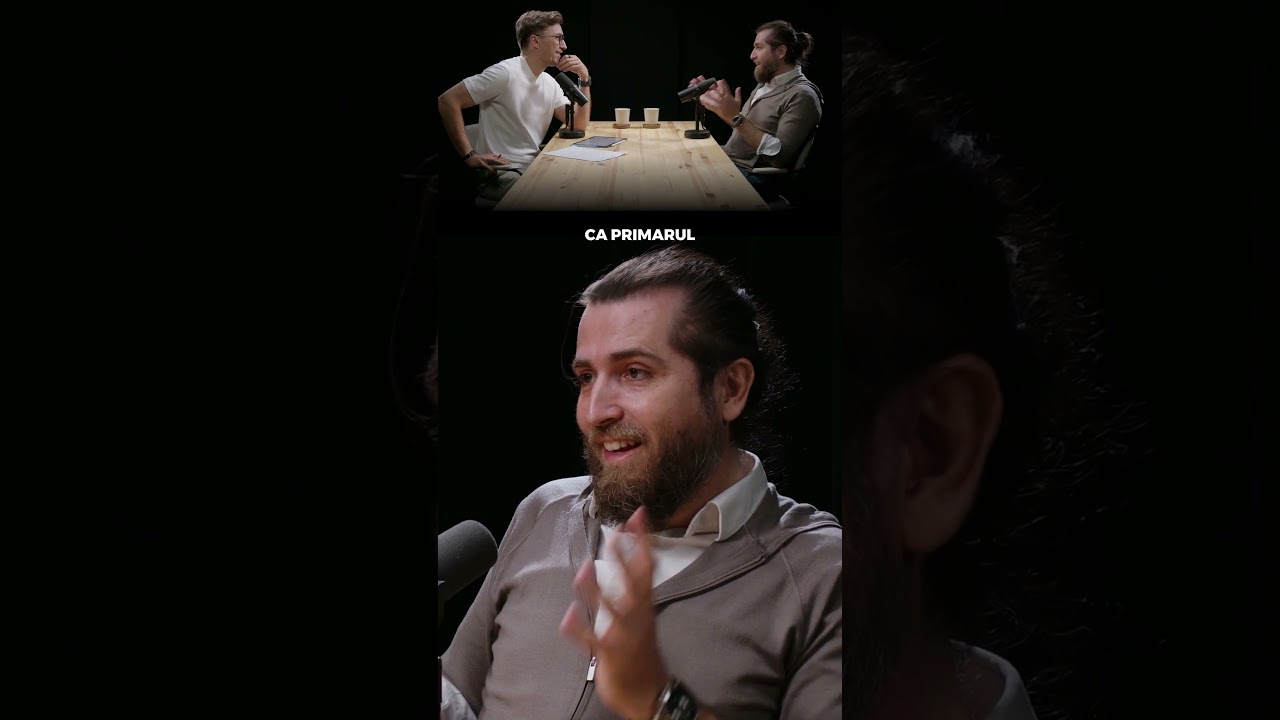
Tu ce crezi despre asta? Cum ar putea să te susțină partenerul în timpul nașterii? 🧑🏻🍼



Ai făcut vreodată o spermogramă? Orice bărbat care vrea să fie tată, ar trebui să o facă.