Bitter Taste Receptors in Your Gut Can Instantly Kill Food Cravings | Ep. 339
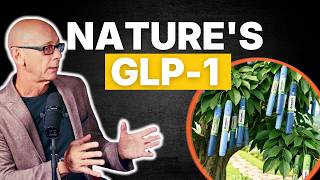
Sarah Kennedy discusses Calocurb, a hop-derived molecule that activates bitter taste receptors in your gut to trigger appetite-suppressing hormones. An acute study showed a 600% rise in CCK and GLP-1 with an 18% reduction in calorie intake; a 6-month trial in 150 people reported significant weight loss, mostly fat.
Chapters
The GLP-1s, as we know, will suppress appetite. They also tend to lower metabolic rate, which is part of the reason people gain weight when they stop them. And it also suppresses ghrelin, which is the driver for appetite. And then you take away the GLP-1, the ghrelin rebounds. So now you have a higher ghrelin, but you have a lower metabolic rate. Hey everyone, welcome to the Gladden Longevity Podcast. I'm your host, Dr. Jeffrey Gladden. And today I'm here with Sarah Kennedy. She's a New Zealander. She's the CEO and founder of a company that's discovered a natural molecule called Ameristate that's being marketed now as Calocurb, as in curb your appetite, calorie curb, Calocurb. And the interesting thing about this is it's probably the best weight loss molecule on the planet. It's better than the injectables. We're going to walk you through. I think you're going to be very excited to hear about this.
He went from saving hearts as a cardiologist to rewriting the entire aging playbook. Dr. Jeffrey Gladden believes 100 is the new 30, and he's got the science to back it up. This is the Gladden Longevity Podcast.
Sarah, welcome to the podcast. It's great to see you.
Thanks very much, Jeff. It's great to be here.
Yeah. So tell us a little bit about how you got involved with Calocurb. Are you from New Zealand originally? Or—
Yeah, born and bred New Zealander. Originally, actually graduated as a veterinarian and graduated as a veterinarian, practiced for 5 years as a veterinarian and then just got more and more into nutrition. Interesting, most people don't really think about it, but as a veterinarian, you do a lot, a lot of training on nutrition because obviously people are, you know, if they're an animal, they're, they're a performance animal either for a horse or something like that, or performance for milking and so on like that. So a huge amount of your training is in nutrition. So how I got involved in Kelleherb. Was just about all primary research in New Zealand is done by the government. And in 2010, a group of very talented government scientists had a hypothesis that they would find a natural plant-based extract that suppressed appetite. Now they had that for a couple of reasons, a couple of historical reasons. In times of famine in the Scottish Highlands, they chewed very, very bitter berries called heathberries. To suppress her appetite. In the Kalahari Desert, when the tribesmen went out hunting, they would chew before hunting or going out very, very bitter cactus. And that was actually the basis of hoodia. So they had this hypothesis and how that came was bitter would suppress appetite. And where that came from, they believed that we not only have bitter taste buds on our tongue, they're right down through our gastrointestinal tract. Which is an evolutionary protective mechanism for our ancestors. So bitter could mean toxic.
How would that be protective from the standpoint of suppressing appetite? So when people were hungry, they wouldn't feel as hungry. Is that what you're talking about?
Or no, a protective and evolutionary protective mechanism because bitter was often associated with toxic. And if you put it on your tongue, you'll spit it out. If it goes to your stomach, you'll usually vomit it up. Or you'll feel nauseous, so you won't carry on eating. But if it gets to your upper gastrointestinal tract, it will stimulate the release of your appetite-suppressing hormones, which will tell the brain to stop eating. And this was a very secondary protective mechanism. So this was their hypothesis. So they took 300 human biopsies right down from the gastrointestinal tract. And showed that we had not only these 25 bitter taste receptors on our tongue, but we have them right down through our gastrointestinal tract. And they're different intensities, but they do go down from the stomach right down to the upper colon. And when stimulated, these release different hormones.
Right. So that's interesting. I think the concentration, where's the concentration the highest? Is it the stomach or the small bowel or?
It's actually in the fundus. No, it's in the fundus of the stomach, the bottom in the the, uh, fundus of the— between the ileum and the duodenum. So just a different density, which is just another protective mechanism in that. But interesting enough, out of the 30 people where these biopsies were taken, 5% of them had between 1 and 25 taste receptors, and the 95% had between 1 and 19.
Some people just had 1?
No, no, 95% had between 1 and 19, and 5% had between 1 and 25. So just more. So we call them the supertasters.
Yeah. When you say between 1 and 19, it sounds like somebody had 1 and somebody had 2 and somebody had 3. Is that what you're trying to say? Or are you trying to say something else? You're trying to say that there were 19 different taste receptors in some groups and 25 different ones in another group. Is that what we're saying?
There are 25 bitter taste receptors. We all have 25 bitter taste receptors, but 19% of people express 19 of those. 5% express 25 of them. So we would call them supertasters.
Okay. Got it. All right. So everybody has 25, but not everybody expresses them is what you're saying. Okay. Got it.
All right. So then these expressed at different places down through our gastrointestinal tract. So they then built an enteroendothelial model. So they literally cultivated these human cells and then they tested 1,000 different extracts or natural extracts across these cells to see when they— to get them to express. To remember, these are very secondary mechanisms.
So let me just clarify that for a minute. So were they looking for molecules that would cause the receptors to be expressed as in upregulated, or they were looking for molecules that would actually interact with the receptor and activate it.
Uh, to upregulate them, to interact with them, and to get them to express. These are bitter taste receptors lining our gastrointestinal tract. So they wanted a bitter molecule to interact to get them to express.
Okay. So then they upregulated their expression, but then of course, once they're upregulated, and expressing themselves, then they've got to be interacting with something to activate them, right? A receptor has to be activated. So what was activating them? Was the molecule activating them also, or just changing the genetic?
It was activating them.
Activating. Okay. Got it. All right. Because there's a difference between upregulating genetic expression, which we do a lot with different, different supplements, as you know. And then there's, so there's upregulation of expression, but then there's also the activation on the actual receptor that's there.
It's activating the receptor.
Okay, got it. So they were looking for molecules that would activate those receptors. And when those receptors were activated, what hormones were being released that suppressed appetite?
So in the upper gut, so in the duodenum, you get CCK, so cholecystokinin. But further down, you get GLP-1. And then in the lower, lower down, you get PYY. These were the three expressions from the L cells, the bitter taste receptors. On the L-cells.
Do you want to talk— GLP-1s are very popular now. GLP-1s, GLP-2s, GLP-3s, right? So GLP-1 combined with GIF and then GLP-1 combined with GIF and glucagon and the retatrutide. Do you want to talk a little bit about the interplay of that with the brain? How CKK and PYY interplay with that? Is that something you'd like to talk about or?
Sure. So as I said, they tested 1,000 different extracts and really only one, only one worked.
Mm-hmm.
And it was because this is a very protective mechanism. It is a secondary mechanism, secondary protective. So if every time we ate something bitter, we stopped eating, it wouldn't be good. So it needs to be quite bitter and, and keep lasting to have a behavioral change. So they found a, an extract of hops. So hops, bitter beer did this.
Yeah.
And because they were the research agency that did all of the hops in New Zealand, they went and tested another 50 different hop varieties to find the one that was the most, that, that released the most amount of these hormones.
Highest concentration of that molecule. Okay. So they found a molecule that would activate these bitter receptors that people have, and they activated at different levels in the intestinal tract. And in response to that, these 3 different hormones are released: CCK, PYY, GLP-1. And the GLP-1s, as we know, will suppress appetite. They also tend to lower metabolic rate, which is part of the reason people gain weight when they stop them because they have a lower metabolic rate. And it also suppresses ghrelin, which is the driver for appetite. So when you suppress ghrelin, And then you take away the GLP-1, the ghrelin rebounds. So now you have a higher ghrelin, but you have a lower metabolic rate. So that's why everybody gains weight when they stop their GLP-1, right? And, and the other thing with GLP-1s is that what we've seen in our own practice is that many people will lose not fat mass, but actually muscle mass. And the reason for that is that fat is, is a storage of calories. But of course the body needs more than calories to operate. It needs minerals and amino acids and other things to actually function. So it breaks down the muscle. Preferentially over the fat when you're in starvation mode. We've seen people on 14-day water fasts that come in and they haven't lost any fat at all, and it's all they've lost is muscle because they're just pulling from the muscle. So the interesting thing with GLP-1s is that in and of themselves alone, they can have an impact, but it's not all that great. What I understand is that the CKK and PYY are working sort of acutely to suppress appetite, and the GLP-1 is there kind of in the background doing what it does. But in studies that I'm aware of, when people took callocurb, they actually lost weight, but it was predominantly fat mass as opposed to muscle, which is very encouraging. It seems like a much healthier way to lose weight than to just be losing muscle mass. So I don't know if you want to comment on that, but—
Uh, so we've done 4 human clinical studies. The one that I talked about, um, the first one was the mode of action. Which we knew it worked in the laboratory, but would it work in practice? So they gave, which wasn't even named then, they gave Kalicurbora marisate, which is the active ingredient, an hour before an ad libitum lunch or an etchily full lunch and snack. They showed the 600% increase above baseline in CCK and GLP-1, probably a twofold in PYY, and got an 18% reduction in calorie intake. Why that's important, we know that both GLP-1 and CCK need to be above 400% to make any behavioral change. If they go 300%, you'll get a drop in blood glucose, but you won't get any behavioral change. So this was 600%, and we got an 18% calorie reduction. We then went on and did two more clinical trials in men and women, and that was measuring hunger and craving. And in women especially, we gave Kalakubut 16 hours and 20 hours in a 24-hour water-only fast, and we got 100% decrease in increased hunger in women. We got 120% decrease in craving and a 14%— that we gave them an ad libitum, an eat till you're full at the end of the 24-hour fast, and we got a 14.5% reduction. In calorie intake. That was 4 hours after the last dose.
Sorry, that was 4 hours after the last dose of the Mirastat, the Calicur? Okay, got it. So it does have a— so what you're pointing out is it does have a duration of action, right? So if you take it an hour before a meal, you'll get an effect on that next meal. But if you took it at 3 in the afternoon, it would still impact your dinner that night at 6 is what you're saying.
Yes, it lasts for 4 to 6 hours. And what's actually happening is it's a, it's a, um, extract. It's like a thick extract. It goes down through the gastrointestinal tract and it's sort of coming off these receptors and activating it as it goes down. So it's 4 to 6 hours as it passes through the gastrointestinal tract. We also know from bioavailability, 1.2% is absorbed in the bloodstream, so very low absorption in the bloodstream. And of that, 0.1% is metabolized in the liver. But you are correct, we have gone on and done— these were great acute studies which showed reduction in hunger, craving, and calorie intake. But would it go to long-term weight loss? So we have just unblinded our— we did a 6-month trial over 150 patients. Men and women with a BMI between 25 and 35. And we just unblinded that late last year. And that paper has just gone in for publication. So I can't talk about it till it's published. But the results are fantastic.
The results are positive though, right? The results are— showed an impact is what I don't— you can't talk about specifics, but anyway, I'll share with the audience that it showed an impact.
So yeah, amazing. It was, it was, we are absolutely thrilled. It was, it was brilliant. Now this is all randomized. Double-blind and run by the government.
Right. So the question I have is, in the study, what was the protocol that was used? Was it taking one of the capsules twice a day, once a day, an hour before the first meal, you know, and then 4 hours later? How was it actually done?
Exactly the same as it is on the bottle. Exactly the same capsules onboarding for a week.
Just so the audience understands what's on the bottle, what is the What is the dosing?
2 capsules an hour to an hour and a half before lunch and before dinner. If it's a little bit earlier, it doesn't matter. All you want to do is make sure it's on an empty stomach so you give that capsule a chance to get through to your upper gut where it disperses and starts to activate those bitter taste receptors.
Okay, so that's important. So if you're thinking about using this, you want to take it on an empty stomach and take it an hour, an hour and a half before you're going to have your meal. What kind of side What side effects were there, were reported?
In 5% of people, which is why we talked about that 5% having more betabetastrecept, you will get a laxative effect, so a softening of the stool.
Okay.
We're very clear about that, and that's why we have an onboarding of a week, just so your body gets used to that super stimulation.
Okay. So in that 5%, they get a laxative effect, so they could end up with loose stools or potentially diarrhea, I suppose. So do you have them, do you have people start off with one capsule and then one capsule twice a day and then, you know, kind of build up slowly? Is that the idea? Okay.
Over 5 days. It happens in an hour, an hour or two after you've taken a capsule. Remember, it is on 5% of people. It'll happen an hour or so just after you've taken it and it's a one-off event and it's actually, in some ways it's, you know, you know your body is responding to it very well.
Yeah. And that's an interesting thing. Okay. And is there something that, do people adapt to it over time to where the loose stools diminish? Was that reported?
You know, in very, very occasional and rare cases, you know, a person, even if they stay on a low dose, won't adapt to it. And we say, hey, you're just a super taster. It's not for you, but it is a biologically active product, but that's in very rare cases.
Okay. Got it. All right. So that's the primary side effect. Are there other side effects with these receptor activations? Like you had mentioned, when people are taking in a poison that might be bitter, it'll create nausea and things like that. So was there any, any of that reported in the study?
It's very rare. The only way is if, you know, they don't take it, if it opens in the stomach. So that's why we're always saying take an hour before food or take at least on an empty stomach with a large glass. Of water to allow it to get through to the upper duodenum, but very rare.
Okay. So you're trying to get the intact capsule through the stomach so that it opens up in the small intestine. Is that?
It's a delayed release.
Got it. All right, great. So this is, I mean, it's very exciting news. I mean, you must be kind of thrilled with this, I would think, because, you know, right now people are injecting the peptides. I think what's nice about this is that you're getting kind of a more physiologic response with the combination of CKK, PYY, GLP-1. Which we could talk a little bit about how those work with regards to appetite suppression and how they work relative to leptin, which is another interesting conversation, and leptin resistance. But at the end of the day, those hormones actually kind of slot in under leptin. And leptin is a hormone that gives you the signal to stop eating. And since they kind of— and people can develop leptin resistance, but these kind of come in below leptin, so to speak, and they can trigger satiety or lack of appetite, even if you have leptin resistance, is my understanding. So yeah, so that's pretty interesting.
I think the other thing is you talked about people gaining weight after they come off their injectables. And what most people don't realize, but, you know, is understandable, is that when you're taking a synthetic hormone, you actually reduce your own endogenous or natural hormone down to zero. And there are papers on that. So, so when you come off, you know, this is why people get an insatiable hunger because they've reduced their natural hormones down to zero. So with Kalicurbe, to your point, they do stimulate the release, but they also upregulate. So we're actually improving your gut-brain axis. So when they come, we say when you're coming off your injectables, it's not an if. It's a must to take something or to take Calicurb to make sure to restimulate that gut-brain axis.
Yeah, no, that's a good point too. We've started incorporating it into a tapering protocol for people that are coming off a GLP-1 or an injectable GLP-2, GLP-3 even. So yeah, that's interesting also. And I think what was also interesting to me was the preferential fat loss over muscle loss. I think you'll probably end up talking about that in the study. I don't think Maybe you can't talk about it, but I saw some data at a conference I attended where they were talking about it and it seemed pretty, pretty exciting, right? Because if you're losing weight, you want to be losing fat and not muscle. And so that's a super important thing. I think the other interesting thing is that when you're producing your own GLP-1, the GLP-1 has more to do. It has to do with insulin secretion, insulin resistance, and it also, the GLP-1s, if you're making more of your own, which go down with aging, you're actually stimulating the brain, you're stimulating the blood vessels, you're stimulating the kidneys, all in very healthy ways. So it's kind of a, I'm not going to call it a perfect drug, but it's kind of a perfect approach to getting the body to do more of what it, what it should be doing. Right. And that's, I think that's, that's better medicine than trying to supplant what the body's doing with something else. So yeah, very cool.
And when you watch it, when you look at the bloods, when they were measured, you know, it versus placebo, it follows the body's own natural rhythm. We're just super stimulating that release. And I think, as you said, as we get older, these, our gut-brain access is often, it just, it just reduces.
That's right.
So what we're doing is stimulating it and upregulating those receptors.
Did they happen to look at any impact this might have had on, let's say, things like stomach acidity, which also can decline with age, or the composition of the gut biome, which also can you know, undergo changes with aging? Did they, did they look at stool samples or stomach acidity? Was that part of the study or not?
No, they looked at weight, body compositions, bloods, uh, all of those. So we've got the top line back on the weight and the body composition, which is very exciting. The other thing they did that will be the next paper is after the 6 months, they took all groups off either Kalicurbe or placebo, and they measured them for the next 3 months. And that's, that's pretty exciting work as well, which shows we have upregulated in the treatment those receptors. So they weren't on anything. And I think the important thing with that is, you know, people say, hey, well, I have to take Kalicurbe for life. And the answer is no. It's a great tool that you can come in and out of. And that, that's what a lot of people do. They get to their ideal weight and they use it, you know, if they're going on holiday, if they're going into, I mean, I take it every day in the morning because I intermittent fast. So I take mine at about 9 in the morning and then I won't eat till, you know, 12 or 1. And that's great for me. The other thing, if I'm going to eat late at night, you know, if I'm going out and I know it's going to be, you know, it's going to be late, I'll take it at about maybe 4 or 5 in the afternoon, just so I won't be ravenous. So I'm kind of working with my body and I know those cues. Yeah. You know, I said to you tonight, we're flying to the US. You know what it's like at airports. You know what the food's like and on planes. So we often use it. We use it all the time for travel.
Yeah, that's a great tip. It's really interesting that people come off of it and there isn't a rebound. In appetite or weight gain. That's super exciting. And it also sounds like what I was hearing there, and you can correct me if I'm wrong, but that when you're increasing the stimulation of these receptors, you're also sort of upregulating their expression, as we talked about earlier, to the point where when you take it away, you're still making more GLP-1, CKK, PYY, than you would've been prior to taking it. And so you get sort of prolonged benefits even when it's not in your system. Is that, is that true? That's what we're saying.
That's, that's what we believe. I kind of like to think about it is that we've, and this may be too simplistic, but we've kind of exercised these little receptors. And so when you take the Kalakub away, they're still upregulated. But yeah, that, that paper will be published as well. And it was, it was great results.
Okay. So you, I don't, you. Probably don't have data on this, but the question would come up, do they downregulate over time? Do those receptors downregulate over time to the point where you'd like to, you know, reintroduce the Callocurb, the Ameristate, say 6 months in or 5 months in or 4 months in? We don't know this yet, I suppose.
Right. Okay. We've got to get people that are willing to give us— it's a good point, but you've got to get, you know, you've got to do it in a controlled environment and get people willing to give bloods and all of that. Just, I raised $4 million 3 years ago for this 6-month trial. And, um, just, you know, they are randomized double-blind clinical trials, as you know, are extremely expensive.
Yeah, they're expensive and cumbersome for sure. Yeah. So I get that. Okay. Well, cool. Congratulations on all that.
Thank you.
What's next for the, for you and the company? What's the plan?
Well, we, 90% of our sales are in the US. We manufacture in the US. We grow the hops here in New Zealand. We extract them in New Zealand, and then they're sent to the US where they're made in these delayed release light caps. And it's just to continue to grow this awareness. But the other thing is we continue to do a lot of science around it. So we are looking to do a study in adolescents. We know adolescents are, you know, adolescent obesity is also an issue. Some people would like to use something less invasive, so we're looking at adolescent. We also know, and we're just doing that at the moment, that when you express with these bitter taste receptors on the L-cells, we release GLP-2. So we're just doing that. So GLP-2, as you know, is very important for gut integrity. So that will be another thing. So we continue to do a lot of work in the spice.
Yeah, I would think you'd want to eventually look at the gut biome also and see if you're having a positive impact there. You may, and also on stomach acidity, it may have, may have some impact there. I don't know, but you'd have to be upregulating parietal cell activity there. So yeah, interesting.
I think the important thing with CCK, remember CCK, and that's why gastroenterologists love it, squeeze the gallbladder. So you are producing more bile with it. And you know, with the injectables, you often get a stasis of the gallbladder or the gallbladder doesn't squeeze. So certainly with these, with the CCK, it's not only a very potent appetite suppressor, but it also does express the gallbladder.
Yeah, no, that's great. And that's really important because you need the gallbladder in conjunction with the pancreas, but you need the gallbladder to emulsify the healthy fats that you want to absorb, whether it's the fish oil or the vitamin E or, you know, whatever it is you're trying to take in, vitamin D for that matter. Vitamin A, vitamin K. So it's very important that the gallbladder is working. It's really part of the whole nutritional cycle. Yeah, very exciting.
Cool. Thank you.
All right. Well, congratulations on what you've done. So where can people, people can find this now? I think you can just find it on the internet, can't you, CalaCurb? I know it's in our store.
You can read all the science. Remember, it's 15 years and 30 million of research, the technology. The government still part owns it. So everything we have to do has to be absolutely correct. And you can find it on Calocurb, which is C-A-L-O-C-U-R-B.com. And you'll find all the science and everything behind it. They are two small capsules. They're 100% natural. The tiny capsules only got three ingredients and Interesting. You said, you know, what are the side effects? Well, it's not a side effect, but if you get a slight reflux when you've taken them, like fish oil, it tastes, it would taste a bit like a beer burp. So guys don't really like it because they're getting that hoppy, that hoppy with it. So, yeah.
So I'm sure somebody's going to ask, well, can I just drink beer and get it? But the answer is, the answer is no.
Unfortunately, we get asked that the whole time. The thing is with beer, you actually, I summarize, So when you take a hop and put it into beer, you heat it and you isomerize it. This is unisomerized and you'll actually change the activity if you do that.
Yeah. You change the chemical structure of it, which is what she means by isomerize it. So yeah. So anyway, this is, this is great. Really great. It's exciting stuff. We're very excited about it. When I first heard about it, I was very excited because, you know, GLP-1s have a lot of downsides, even GLP-2, GLP-3s, but if you can get something that has a sustained benefit, even after you've stopped taking it, at least for some period of time, you know, that's a real win. Very, very cool.
All right. Thank you very much.
Yeah. Thanks for, thanks for coming on the show.
Great. Thanks, Jeff.
How do we live young for a lifetime? How do we make 100 the new 30? The answers are out there and we're bringing them to you every episode. Make sure you're subscribed. Check out more more episodes right here and follow us on social media so you never miss a breakthrough. Thanks for listening.









