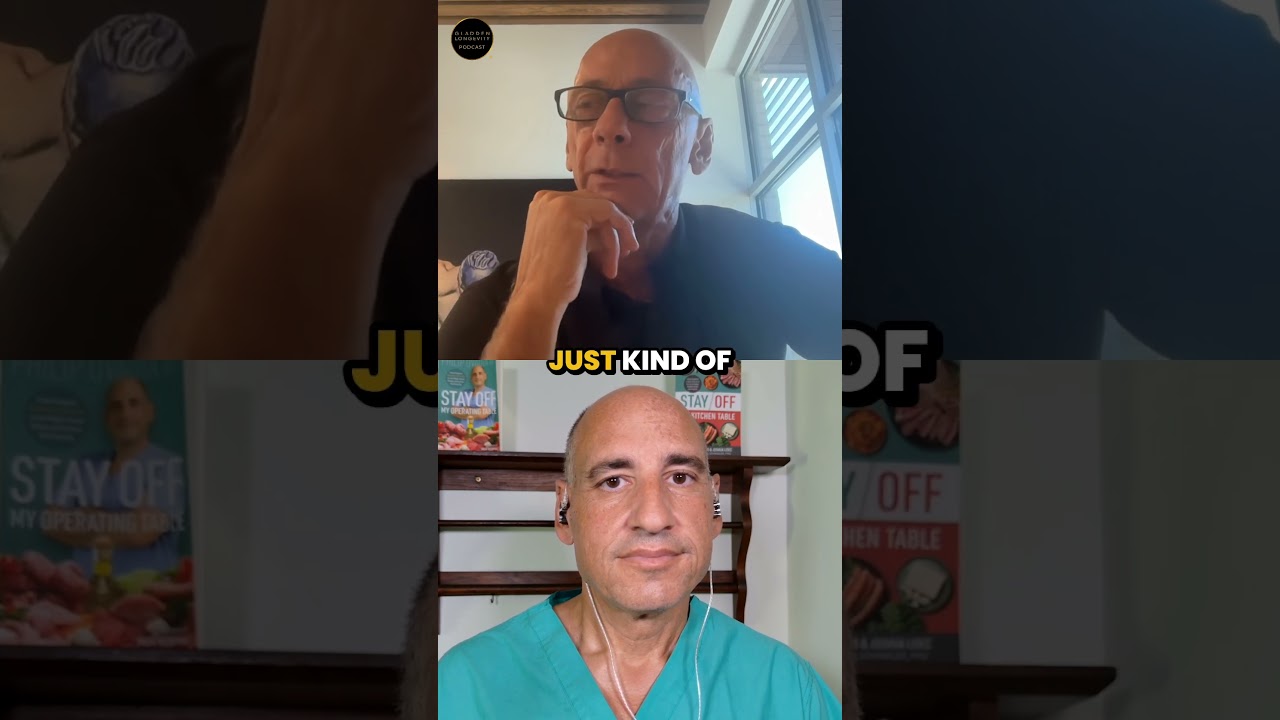
Dr. Jeffrey Gladden says cardiologists can now reverse heart disease with personalized plans based on genetics and family history. He points to plaque regression in arteries and measurable improvements like increased VO2 max and restored nitric oxide function as proof that prevention can go beyond managing risk to actually making patients healthier.
Chapters
I think we're in an age, quite honestly, where if somebody is actually willing to, despite their genetics or family history, deconstruct who they are and understand how they're built and where they are in the process, that we can actually create a plan. And it's an individualized plan because it's not a one-size-fits-all, but to actually steer clear of heart disease virtually altogether. I mean, we were able to show plaque regression in carotid arteries and things like that, right? I'm sure you've seen this as well. So the therapies we're talking about, the interventions we're talking about, are not not just kind of niceties. They're actually— they're really having an impact for people. VO2 max goes up. We can measure stroke volume increase as workload increases, and we see it taper off in people that have endothelial dysfunction. We see it restored when we get the endothelium and the glycocalyx and the nitric oxide systems working again. So I think it's the most exciting kind of cardiology to practice when you're actually making somebody better as opposed to fixing a problem.