Peptides and Compounding: The FDA's New Rules Explained | Ep. 355
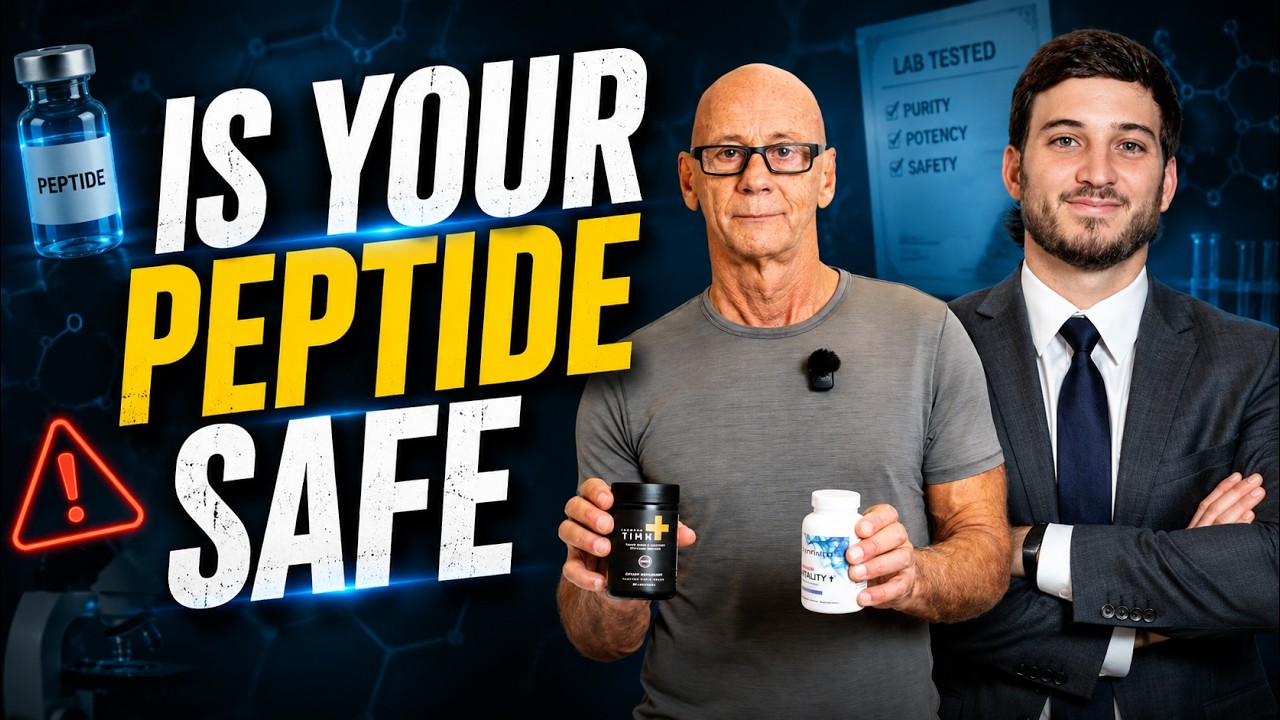
Josh Fritzer and Nicole from Olympia and Wesley Pharmacies explain FDA rules for compounding pharmacies. Seven peptides were recommended for the 503B bulk list, with an FDA decision expected in early fall 2026. They discuss quality controls, how compounders filled GLP-1 shortages, and what clinicians should look for when choosing a pharmacy.
Chapters
A couple weeks ago, the FDA had a pharmacy compounding committee come together and look at 8 different peptides. Out of the 8, if I'm not mistaken, 7 of them were approved, or the committee said to the FDA, these are ones that we feel need to be added to the 503 bulk list.
Hey everyone, Dr. Gladden here. I just got off a podcast with Joshua and Nicole from Olympia and Wesley Pharmacies in Orlando, Florida. They're a compounding conglomerate there, and it's an interesting podcast because we We break down the whole 503, 503 compounding, what they can do, what they can't do. We get into the whole peptide story about what's happening with the FDA with the peptides that have been suggested for approval and things like that. So, I think you're going to find this very interesting and clarifying. If you have any questions about compounding pharmacies, this will be a good one to listen to.
He went from saving hearts as a cardiologist to rewriting the entire aging playbook. Dr. Jeffrey Gladden believes 100 is the new 30, and he's got the science to back it up. This is the Gladden Longevity Podcast.
Well, welcome Josh and Nicole to the Gladden Longevity Podcast. It's good to see you. Glad you're joining us today. It should be an interesting conversation here. We're gonna talk about compounding pharmacies, which I think is a big part of what we do in the regenerative functional medicine space, et cetera, longevity medicine space. So welcome to the show. Yeah, thanks for having us. So Josh, let's, let's start with you. You're the CFO of a pharmacy in Florida. And, you know, there's been a lot of, I think, confusion for people around compounding pharmacies. I think people have heard, you know, things thrown around 503, 503. I'm not sure people really understand the difference there. I know that probably what the audience is most familiar with, however, is, you know, the use of peptides. And people have gotten comfortable using peptides. I got certified in peptide use with A4M back in 2017 with Dr. Seeds, and we started using them back then. So, they've been around for a long time and we've had a lot of great experience with them, but there's a lot going on there with the FDA and things like that. But, let's start off with maybe just sort of defining whoever wants to jump in on this, what a compounding pharmacy is, why you came into existence, what was the need.
Yeah, I can lead us off and Nicole, feel free to jump in. Josh Fritzer, President of Olympian Westview Pharmaceuticals, So, just for what we're familiar with, Olympia Pharmaceuticals is a 503. We also have Olympia Pharmacy, which is a 503. And then, we have Wesley Pharmaceuticals, another 503. That is the umbrella of companies and pharmacies we have.
So, what's a 503? What's a 503?
Yeah. So, 503 is more of a community pharmacy that could have compounding in its facility. Our facility does sterile 503 compounding for testosterone. which is a hazardous compounding, and then we do non-sterile. 503 follows USP guidelines set by the state regulators. It has specific ways of dispensing. You have to dispense with a prescription, has to have a patient label before it leaves your facility. Where in very layman's terms, a 503 is an outsourcing facility. We have larger batch sizes of 10,000 to 15,000 vials, where a 503 has 250 vials per batch.
So the way, the way I understand it is a 503 Basically is a pharmacy that's making a particular compounded, and we'll talk about what compounded actually means, pharmaceutical for an individual.
Correct.
And a 503 is actually making large quantities of a particular compounded thing that can be used otherwise. Let's talk about compounding. What is it to be compounding something, Nicole?
So when you compound something, you are actually making something that's not commercially available. So for us, we're in the health and wellness, so we do a lot of vitamins, minerals, things like that. There is sterile, which goes through a process that means it's going to be injected somehow or IV. And then there's non-sterile, which is what we see typically in your community pharmacies, these your creams, tablets, capsules, anything that doesn't actually have to be injected.
So you can make things sterilely and non-sterilely. And why would somebody want something compounded? Why would, why would somebody want that?
Great question. Because when you get something compounded, you can make it directly for that patient. Some patients might not be able to handle the doses that are out there from a commercial standpoint, or some of the fillers that they have if they have an intolerance to say lactose or soy, or it's just maybe not available commercially, the dosing that they need to in order to service them.
So you're a pharmacy that basically has all of the access to all of the medications that somebody would find at Walgreens or CVS. And what you can do is you can actually make those in different concentrations or different doses or things like that, that somebody couldn't just walk into CVS and get it off the shelf in the doses that the manufacturer made.
Correct. Combine certain products. So like creams, like put 2 to 3 creams together or solutions that you're not going to find, you're right, at the local pharmacy.
Right. So this can be of value to a client because all of a sudden, maybe there's a hormone combination that they want to have that is not available. And they know from testing or whatever else that they need this amount of estrogen and this amount of progesterone and, you know, whatever else, testosterone. And all of a sudden, they can get that into a compounded product that they couldn't find anywhere else, right? So there's, there's a convenience element, but then there's also Kind of a precision element to all this where what you're really doing is getting the individual exactly what they need.
Right.
Right, in conjunction with these particular drugs, one drug or could it be several drugs. And that's, that's really why compounding pharmacies came into existence was to meet the need of people that, you know, couldn't get along with just the standard dosing. Is that how we should understand it? Exactly.
Or the standard products. They needed something that was specifically made for them and their condition or what they were looking to treat, something like that. And so that's where compounding comes in. It offers you that à la carte, make it for this patient and get what they truly need.
So with the 503s, they're going to function— if you haven't ever walked into a compounding pharmacy and you're listening to this, if you walk into a 503, it's going to look kind of like a pharmacy. I mean, you're gonna see, you know, shelves with stuff on it and different creams and things like that. But then there's a counter where you can actually submit a prescription from a physician and they can make an actual product just for you. And again, it functions a lot like a regular pharmacy. Now, it's interesting to note that these are not, even though let's say the drug off the shelf is FDA approved, the compounded formulation is not FDA approved. Right.
Correct.
And it's interesting that it's not approved. And the reason the FDA doesn't approve it is, I suppose, because they can't really cover all the different potential, you know, combinations and doses and all of that sort of thing, right? So it's important to understand that if you're getting something from a confounded pharmacy, even though it's an FDA-approved drug, the form in which you're getting it in and of itself is not FDA-approved.
Yeah, or it's a combination of FDA-approved ingredients.
Correct. That's an interesting thing. So, from a safety and efficacy standpoint, I can tell you that functional physicians and longevity physicians, regenerative physicians, have gotten very, very comfortable with pharmacies that are very meticulous in the way they put things together. For example, combining T3 thyroid with T4 thyroid, things like that. There's skill that's involved with this, and all— not all compounding pharmacies are the same. But you can go in and you can actually think about it this way, that I'm getting exactly what I need. And even though it's an FDA-approved drug, it may not be FDA-approved in this format, but the safety profile that we've experienced for people is that it's, it's actually very safe. So I don't know what your, what your rate of complaints might be in terms of, you know, reactions or something like that, but I suspect it's not very high at all.
It's not. And most of the time it's usually patients more of a sensitivity or didn't follow directions, something along those lines. Lines is what we see. As far as the product itself, no.
So many times what people are reacting to also, either in an over-the-counter CVS, Walgreens kind of scenario, or even in a compounding pharmacy, is that they may— there may be a carrier molecule, there may be something else that's, that's not the active ingredient that they're reacting to. And, you know, if all you had available to you was a traditional pharmacy, you'd Kind of be stuck because that's how it comes. But you can then go to a compounding pharmacy, say, I like, I need this, but I can't get along with the carrier. Can you put it with a different carrier? Right now, all of a sudden, now they can tolerate it. Now they can actually get what it is they came to get. Right. So that's kind of the beauty of it.
Absolutely. That's what we see in our line at our 503 is we do have patients that they just can't tolerate what's available commercially, whether it be a carrier or stabilizer. preservative, whatever it is. And so they're like, this is my last chance, can you help me? And of course, you know, we'll do everything we can to help our patients. And that's why, you know, we're able to compound it for them so that they're able to get the treatment they need.
And the pharmacies themselves are regulated by the state pharmacy boards and also by the FDA, if I'm not mistaken, right? So even though the actual compounded drug may not be FDA approved in that particular configuration, The pharmacy itself has to be FDA approved and comply with all the state pharmacy laws and all this kind of thing. So there are many, many different safeguards, if you will, from the consumer's perspective to make sure that they're getting what they say they're getting, that the pharmacy says they're getting, and that things are being handled in a very safe manner.
So yeah, that's where like the states will have label requirements. The FDA will have label requirements, testing requirements. And then there's obviously a list. That the FDA puts together of ingredients we can even use.
Yeah, exactly. So that kind of covers a little bit of the 503. So it's going to look kind of like a pharmacy you've always, always seen. And then compounding pharmacies sometimes will mail things to your home or that kind of thing, which is kind of an added convenience. You'll still need a physician to prescribe it for you, somebody that's facile with how to write that prescription, what goes into it, et cetera. So you have that. And then there's the 503, which is a little bit of a different animal. And you talked about, Josh, that you've got a couple of those and they can make larger quantities of things and why have a 503 in contrast to a 503?
Sure. There's a couple main large-scale differences. USP governs 503s. The FDA covers 503s. What's the USP?
Define the USP.
The US Pharmacology Standards, I would say, that kind of set the regulatory compliance for compounding. Whereas CGMP, which is Current Good Manufacturing Processes, is what governs a 503's ability to compound. And those are the, those are the rules we have to follow to make sure anything compounded at a B Is CGMP versus a little bit lower of a requirement.
Which is the same requirements that pharmaceutical companies have to, have to go through. 503 is like a pharmaceutical company in a sense. They have to follow the same guidelines that the FDA sets for those companies as well. Whereas on the 503 side, you're governed more by the states. FDA does have oversight and they follow, most states are adopting compounding regulations, especially with the big GLP-1 compounding. So. We're starting to see kind of a shift in regulatory to ensure patient safety.
Yeah, and it's US Pharmacopeia, I think, is what USP stands for, but that's a state regulation essentially of how they govern 503s. So 503 is FDA-governed, FDA-licensed, frequent FDA audits, where an , it's less frequent FDA audits. Um, so as a , we do state and FDA audits, larger batch sizes because we are able to sell Without a prescription directly to a clinic. That's where the CGMP guidelines for manufacturing comes in. We also have a different set of ingredients we can compound with than a 503, and then that's our larger batch sizes. It's, it's much more large-scale manufacturing. And then our report card essentially from the FDA is public.
So when you say, when you say that from, from a 503 that you can sell directly to the public without a prescription, does that mean that you're bypassing A prescription or people can just walk in and say, hey, I want testosterone or what is that? How does that—
Yeah, it'd have to be a licensed clinic with a licensed medical director on file. We would be able to ship to a clinic for use in the office.
You're purchasing it for office use. And then from there, the clinic can determine if they're going to administer it in the office or dispense it to the patient via prescription from their office.
And that's, that's also where we're allowed to sell directly to a pharmacy. Outsourcing and that pharmacy can hold our product as inventory like they would a generic drug and then fill scripts with our inventory. Um, and then the second big difference between a 503 would be the shortage list of products that are on FDA shortage, meaning a branded manufacturer, generic manufacturer can't keep up with the demand. You can then fill the gap by making those products as a 503.
Yeah.
And this became very evident with the whole GLP-1 story, right? Things got exceeded demand or demand exceeded capacity. And so then all of a sudden, the compounding pharmacies were able to manufacture the 503s, and the 503s were able to dispense. So, and then the interesting thing is that's a little bit of an elastic situation, right? Because you can have a shortage, it can last for 3 months, and then the shortage goes away. And now the pharmacy is no longer able to make that exact same drug. That is one thing to understand is that a compounding pharmacy Can't make exactly what the manufacturer is making, right? And I believe that's true for both the As and the Bs.
Correct. You can't make a commercial copy.
Yeah, probably over or under a 10% difference for it to be considered non-commercially available.
Okay. So, it has to be non-commercially available, which means it's going to differ by 10% up or down.
At least, yeah, yeah.
Exactly. Basically, yeah. Okay. Just so the audience understands how this all works a little bit, because I think it's Everybody's heard about this, but I think it's been confusing for people at the same time. Yeah.
And then a lot of what you see too with big pharma is they group compounding together, which they both serve such a unique purpose from customized medication from a 503 to large-scale manufacturing shortage and/or clinic use, office use. And like they are 2 different facilities licensed differently, but it is very common for them to be branded the same. So I appreciate you kind of letting us explain that.
Yeah. And then what about research molecules and things like that? So if there are research trials and things, and you don't have an FDA-approved medication, pharma could basically supply a not-yet FDA-approved drug into a clinical trial. And then it's also possible for compounding pharmacies to get involved in clinical trials where somebody has devised a particular combination of medications that could be FDA-approved or maybe not FDA approved, and then bring those forward inside of a clinical trial. Is that part of what you do as well?
Um, so we don't actively do that. What I believe you're referring to is an ANDA. So it's an abbreviated new drug application where we'd be able to help either a branded manufacturer or big pharma kind of create that drug for trials. We are not involved in that currently, but there's definitely manufacturers that do aid in that. It's just a different approval process and different drug. Application. We're only making drugs that are on a list of ingredients for bulk list or shortage list.
Okay, fair enough. And then talk to us a little bit about licensure and interstate commerce and things like that, right? Because this is a big deal. You're licensed. Let's say you're licensed in Florida. I don't really know where your licensures extend to, but let's say you're only licensed in Florida just as a matter of illustration. Then if a doctor saw a person from Georgia in Florida and wrote a prescription, they went back to Georgia and wanted to get that filled. Is that possible? You can send it to them in Georgia? Explain to people how that works, right?
Yeah. So depending on the states that the pharmacy is licensed in is the states they can ship to. You're right. Interstate commerce is a big thing in the pharmacy world, whether it's compounding specialty. So the pharmacies have to be licensed in that state and there are certain requirements for the pharmacies, again, depending on their specialty in order to ship to those states. So for us, we're able to ship to 49 states, including Puerto Rico, and then we're able to service patients in all of those states and providers.
Okay. Which state did you leave out?
California. Yeah, for now. We do have them scheduled to come to our Wesley 503 at the end of this year, Q4. Right. As much information as they kind of give you. Um, but so the easy way to think of it as well is licensure, like our state licensure, our medication needs to only be in those states.
Got it. Okay, so that's helpful for people to hear about that because sometimes people get caught out with, you know, I got this prescription when I was in Florida, you know, I got it filled there by the doctor, but now I want to get more of it. And now I can't get it because I'm in Georgia. Right. And so yeah, important for you to understand the restrictions that are around that. So typically, if somebody— and you're licensed in 49 states, but not in California. So let's say you had a client that saw you in Florida, a Florida doctor, They got the prescription there, but they went home to California. They want to get more of it. Now the, the pickle that they're in, so to speak, is to find a compounding pharmacy in California or one that's licensed in California that can actually provide that to them. Correct.
And we run into that quite often just because, you know, the way people travel, they have multiple homes. Obviously a lot of patients come to Florida for vacation. They might see someone here and get the meds. So yeah, we tried to do our best to kind of navigate through that to see what options they might have.
Yeah. And then let's talk a little bit about peptides because, you know, everybody's been aware that, you know, the peptide world kind of got clamped down on by the FDA and, and then they started going after some of the research-only use peptide manufacturers, which is a little bit of a mixed bag, right? I mean, there are people out there that are selling garbage and there are people out there that probably selling high quality stuff. And then with the peptides now, the FDA has I think recommended— nobody's approved anything, but what I understand, they've recommended, I think, about 8 different peptides for consideration for some sort of approval. Do you want to walk us through kind of where, where the FDA is with that?
Yeah, absolutely. So a couple weeks ago, the FDA had a pharmacy compounding committee come together and look at 8 different peptides. Out of the 8, if I'm not mistaken, 7 of them were approved, or the committee said to the FDA, these are ones that we feel need to be added to the 503 bulks list. Now, from there, the FDA still has to make their determination on if they want to approve them and put them on the list for pharmacies, 503 pharmacies, the compound, or not. Really, nothing has been decided by the FDA. We are just moving, in a sense, one step closer, and the conversation is obviously opening up. to allow these to be compounded. So we're getting there, but we're about halfway there. We're not to the finish line yet.
And what's the timeline on that for people to just, I mean, people are curious, right? Because some people are very adamant. I don't want to get it from just, you know, offshore or research place or something like that. I'm really waiting for a compounding pharmacy. Do we have any sense of the timing on this when the FDA is going to meet?
Well, we're talking about the FDA. So, uh, they still have to go through a comment period, which is typically anywhere from 30 to 60 days. And then from there they could have 30 to 60 days to determine. So we are hopeful early fall we might hear something. But again, a lot of things get pushed back, plans change, meetings change. So we don't have a definite, this is when they're supposed to make the decision. Yeah.
Uh, the rule of thumb right now is there's open comment period. So I think at the earliest it would be 60 days from the recommendation, but we're hopeful. We're kind of keeping our ear to the wall to hear what happens. And then honestly, more intriguing for us is if this goes on an A list, do they also put it on a 503 list?
Sure.
Um, we don't have any clarification there either. But I will say though, just for the PCAC committee, if anyone didn't listen, there were 3 things that were constantly brought up by the FDA. One was lack of FDA oversight on 503s, which a 503 has direct FDA oversight. Lack of adverse event reporting from an , which a 503 is required. And then also cGMP manufacturing these products, which is a requirement from a 503. So a lot of the statements that the FDA made did kind of steer us into more 503 compounding of these. But again, we have to kind of wait and see.
Got it. So for the, uh, for the consumer here, we're kind of in a holding pattern. It sounds like we may learn something about access to these 7 different peptides through compounding pharmacies, you know, maybe later this year. It sounds like we're going to know something by 2026. So if you're kind of sitting on the fence about whether or not to use peptides, these particular ones, you can think about it that way. What are some of the other issues that you think people need to understand about compounding pharmacies and kind Maybe you think even distinguish you from, from other compounding pharmacies?
Yeah, I can answer that in 2 parts. Do you want to speak directly to the peptides first and kind of what is in the market for that? And, and then I'll go and just generically, um, what I think is important for picking a compounding pharmacy, whether A or B. When it comes to these peptides as well, so there's no USP monograph. That was a common topic brought up of what is BPC, what is MOTS-c. So from, from our perspective, we have to vet and audit every supplier of our raw ingredients. They're called active pharmaceutical ingredients, which is API for short, and they're powder forms of these ingredients. We have to audit that supplier and vet that supplier. So, and those suppliers that we use have to be FDA registered but also FDA audited. So we have found a lot of peptides and just overall ingredients that we make through these manufacturers, and I think it starts there. It starts where you get your raw ingredients. Because then from there, the pharmacies can compound those products aseptically in a sterile environment and have a finished good that is sterile. I think that's really important to note is, is with these peptides or just in products, in raw ingredients in general, is where are these ingredients coming from? And from a 503 perspective, there's a lot of hoops, I would say, or regulatory compliance checks that we go through to make sure that raw ingredients are safe to use. And we do a lot of raw ingredient testing before using. And then I would say with these peptides specifically, what a compounding pharmacy is required to do is test for potency amongst other things. We test for assay pH color. So from a 503, you as a prescriber will feel more confident in your prescription because you'll know that that finished product is on between 90 and 110% potency. So they're not over-injecting a highly potent product or under-injecting where it's not effective on a, uh, a lower potency product. So I think that's really relevant when it comes to picking your compounder. 503s, their report card is published online. You can go to the FDA registry and see their last audit. I think that's really relevant. And as a prescriber or even a patient of where your product's coming from, I think that'd be really, really beneficial to know. Those are a few things. I mean, I can dive into more if you'd like, but I don't want to get too, too granular.
Yeah, no, I think that's helpful. I think it's helpful for people to know that They can go look at a public disclosure report card really on what's, how the 503 is doing, right? And whether they're being compliant. I do know that compounding pharmacies, not all are equal, right? In terms of their rigor and precision and things like that. And so it's very important if you're listening to this, that you work with a pharmacy that maybe your physician's vetted or you vetted, or, you know, you've, you figure out who's really providing the high quality things in your area. So you can access those.
That's one of the biggest things is, at least from what we hear on the phone, and we talked to patients and providers, is they just really don't know what to look for. So yes, being able to see the 503s, their report card, understanding what infractions they might have or not have is very important. And then just calling the pharmacy just to see if their staff knows, like, hey, we do have a quality team, we do do testing. We do have a pharmacist available to talk if needed to either providers or patients. I think is a big thing that a lot of people need to understand. If you're going to get that product from that pharmacy, you should be able to talk to someone about it at that pharmacy.
Yeah, we found it to be, you know, extremely helpful. I mean, we use compounding pharmacies all the time for various things. And I think if you're in this space of, or stepping into this space of functional medicine or longevity medicine, regenerative medicine, and you're not familiar with compounding pharmacies, this is a very important thing for you to get familiar with because you're going to want to access that to get things that you just can't get off the shelf, quite honestly.
Absolutely.
Okay, well, I appreciate you guys coming on. Was there anything else that you wanted to cover for the audience?
I don't have anything off the top of my head. If there's any questions or follow-ups, you can always email us and we can answer those questions as well. If you are interested in Olympia Pharmaceuticals or Wesley Pharmaceuticals, we have askthepharmacist@olympiapharmacy.com for any dosing questions, Product questions, anything you can think of, and then all of our phones ring. So we are very proud that we'll answer any call that comes in, whether sales, accounting, clinical pharmacy. So we'd be happy to help and steer you in the right direction. We don't make everything, but we have such great connections in this industry, and we definitely will steer you in the right way because at the end of the day, we want to help patients, and we definitely want to help prescribers help their patients.
Yeah, and you're located in Orlando, Florida, just so everybody knows. So when they go by Disney. world or whatever they can.
Yeah, we can see Harry Potter's castle from our office.
It's a lot of fireworks going on.
So, oh yeah, for sure.
Great. Well, thanks so much for joining us. Really, uh, I think it's been clarifying for the people listening. So thank you for that.
Thank you, Doctor, for having us.
Absolutely. Thank you, guys.
How do we live young for a lifetime? How do we make 100 the new 30? The answers are out there, and we're bringing them to you every episode. Make sure you're subscribed, check out more episodes right here, and follow us on social media so you never miss a breakthrough. Thanks for listening.









