The Dangerous Reality of the New Lyme Vaccine | Ep. 344
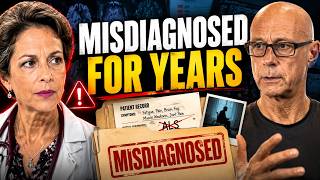
In this episode of the Gladden Longevity Podcast, Dr. Jeffrey Gladden interviews Pamela Cipriano, a nurse practitioner with a doctorate who runs a functional‑medicine practice in Thomaston, Connecticut specializing in tick‑borne illnesses. Cipriano recounts her journey from ICU nursing to independent practice, describing the regulatory and insurance hurdles she overcame. The conversation delves into the complexity of diagnosing and treating Lyme disease and co‑infections such as Bartonella, Babesiosis, and Ehrlichiosis, emphasizing the limitations of standard labs and the superiority of specialty labs like IGeneX and Galaxy. She outlines her holistic protocol: aggressive hydration (half body‑weight in ounces of water, distilled water), anti‑inflammatory nutrition (fasting, low‑glycemic foods, avoidance of dairy, sugar, non‑organic meat, and conventional flour; preference for Manny’s Choice flour), targeted supplementation (high‑dose IV glutathione, liposomal glutathione, up to 70 g IV vitamin C, CoQ10, methylene blue, B12 drops), and physical modalities (infrared/red‑light sauna, ozone sauna, halo salt therapy). Cipriano discusses mitochondrial dysfunction and oxidative stress, referencing the Mitome test, NAD⁺ precursors, and hydrogen therapy. She shares her skeptical stance on COVID‑19 vaccines, citing personal observations and a WHO‑affiliated Long COVID study linking diet and lifestyle to recovery. The episode also covers the upcoming Lyme vaccine, warning that it may give a false sense of security while other tick‑borne diseases remain dangerous. Finally, Cipriano highlights the frequent misdiagnosis of Bartonella as ALS, describing case studies where delayed testing led to severe disability, and urges clinicians to use specialized labs and iLADS.org for proper referral. Contact information for her practice (thepracticeofhealthandwellness.com, 860‑880‑2525) is provided.
Chapters
I've had an influx of people with Bartonella and they're misdiagnosed with ALS, and that is a death sentence because if Bartonella is caught at an earlier stage, we can definitely get rid of it.
Hey everyone, Dr. Gladden here. I just finished a conversation with Pamela Cipriano. She's a nurse practitioner that's— has a doctorate also, and she has an interesting practice in Connecticut focused on things that happen in the Northeast with tick-borne illnesses and Lyme, etc. We have an interesting conversation around tick-borne illnesses, mitochondrial function, oxidative stress, how reboot people, some of the presentations that come up with some of the other tick-borne illnesses like babesiosis, Bartonella, in addition to Lyme. I think you're gonna enjoy this podcast.
He went from saving hearts as a cardiologist to rewriting the entire aging playbook. Dr. Jeffrey Gladden believes 100 is the new 30, and he's got the science to back it up. This is the Gladden Longevity Podcast.
So Pamela, welcome to the Gladden Longevity Podcast. It's good to have you here.
Thank you so much for having me. I appreciate it.
Yeah, our pleasure. So tell the audience a little bit about yourself. You've done a lot of things in the health space. It's kind of interesting. You started out as a nurse practitioner, but then you pushed into having your own solo practice in Connecticut. So you're kind of a trailblazer, I think, in a lot of ways.
I am. Wasn't planned, but that's how it turned out.
Okay. So how did it unfold?
So I was an ICU nurse first. I went back to school to be a nurse practitioner. I went back for my doctorate degree. And then went back to school for functional medicine. And, uh, the law had been passed in 2014 that nurse practitioners, after so many years, can practice independently. And so I did my due diligence and did all my research and found that 119 nurse practitioners were listed on the state website that they were practicing independently. So I felt if they could do it, I could do it. So I was just trying to get people healthy instead of getting— taking medications from, uh, being in the hospital. I was working as an intensivist in the ER, as a hospitalist, department of surgery. Mm-hmm. I was just trying to get people not to end up there. And what I found out was it was on paper only. They never actually took the next step to open up a practice.
Oh, wow.
So it was a lot of grueling hours trying to get insurance companies to credential me. I had to hire an attorney to go after Connecticut of all insurance companies because they never updated their bylaws. And it was being first in anything sounds wonderful, but it's probably the hardest thing that you can do.
Yeah, for sure. How long ago was that?
10 years ago, 10 years in November this year.
Okay, well, congratulations.
Thank you.
Yeah, good for you. So, you know, with that, you've actually kind of honed in on helping particular kinds of people with particular kinds of issues, it seems like. Do you want to talk to us a little bit about that? Some of the things that you like to focus on?
Sure. So it started for me with Lyme disease. My son, who's now 38, God bless him, was 19 when his symptoms first started. He had gotten bitten by a tick when he was 6, had the bullseye rash. If I had to guess, the doctor put him on 10 to 14 days of antibiotics and honestly had no symptoms whatsoever. 13 years later, we went scuba diving and he had a lot of pain and pressure in the pelvic area. And, uh, during the surgery, the surgeon left him on the table to come out and talk to me to ask me if he had a connective tissue disorder because they found his entire abdominal wall to look like Swiss cheese. And he was a healthy kid. There was no— nothing going on at all. Yeah. But that's when all of his symptoms started. So whenever you have a chronic form of, of Lyme disease or other chronic forms of other diseases, there's always a trigger that starts the process. And for him, it was a surgery. And so right after the surgery, it was, you know, bladder inflammation, difficulty having bowel movements, joint pain, brain fog, and like nobody knew what was going on with him. About 5 years later, the inflammation was so severe, he had to learn how to self-catheterize himself because he could no longer urinate. It was an absolute nightmare. And nobody could figure out what it was. He went to at least 8 or 9 doctors. Eventually he got the, it's all in your head diagnosis. Mm-hmm. And at 29, I found— finally found one research article in the Journal of Urology that had his exact symptoms. It was a case study. And I contacted the urologist who referred me to the International Lyme and Associated Disease Society, where I became a member. I found Dr. Richard Horowitz, who's a Lyme expert. He's recently retired, so he trained me. I did all my preceptorships through him. He's been my right-hand person ever since then.
Mm-hmm.
And since then, it's really expanded into all the tick-borne diseases. So one tick can carry up to 18 different infections, but then there's also mold and mycotoxins. There's MCAS, there's chronic inflammation, there's parasites. A lot of patients with parasites that they don't even realize that they have. So my goal was to just get people healthy, not realizing that I opened up Pandora's box and found a way to not only correct the disease process, but how to really get them healthy, like really get rid of the inflammation, really get rid of this. You know, the mold and mycotoxins, the MCAS and everything that causes the disease process and increases the rapid phase for aging.
Yeah. So, you know, Lyme can be difficult to deal with. All these diseases can be difficult to deal with. It sounds like you've developed a very effective system for kind of making the diagnosis and then some of the therapeutic interventions. Maybe you could walk us through some of that. And in the time we have together, we probably can't cover all of it, of course, but it would be interesting to know, you know, where do you start with somebody? What kind of testing do you do? Because people can present with, you know, a myriad of issues, right, with these disorders. And yet it comes down to, we don't have an infinite number of tests. So you've got to start somewhere. So how do you, how do you actually break it down and start to think about it?
It really depends on how sick they come to me. So, you know, I've had patients that are literally a hot mess. I can't identify one specific thing that's bothering them. It is literally everything. And so, you know, we go, we go back to their childhood. You know, what kind of a childhood do they have? What kind of a household do they live in? Same thing as every other functional medicine doctor, just trying to figure out the root cause of what is going on right now. Did they have tick bites when they were younger? You know, were they exposed to heavy metals? What kind of water do they drink? What kind of a household did they live in? Was it a sick home? Was it filled with mold? Was it built in the 1700s? So it kind of depends on that. It also depends on what their adult life has been like. You know, one patient of mine comes to mind. She's had a number of doctors who are not talking to one another and she ended up on— Oh, on 20+ medications, and every medication was interacting with one another, and every one of her medications was causing dry mouth. So by the time she came to me, her mouth was so dry, she wasn't making any saliva. I honestly thought that there might have been capsules in the salivary areas, so I had sent her for some ultrasounds. They were completely clear. And what I found was she had the worst case of Candida that I think I've ever seen. Wow. She had a doctor who was prescribing her dexamethasone mouthwashes to try and get rid of the canker sores in her mouth, which was actually increasing the sugar and worsening the Candida. So she has Candida throughout her entire GI system. So she was probably my hardest one to really get better. She also had tick-borne diseases, but those were the— that was minimal next to what everything else that she was, she was going through.
And so how did you actually get her better?
So we took— I got her off the vast majority of her medications. You know, it's unfortunate, but the mainstream doctor will start you on a medicine and you will stay on that medication until the day you die. There is no taking you off that medicine. And there's a lot of reasons for that. You know, the, the big reason I know for me was insurance. You know, when I started taking people off and off of their medications while I was accepting insurance, I was getting these horrible letters from the insurance companies berating me for taking too many people off their meds. And I love the line, not prescribing enough meds. So I called my attorney and I explained, They're not talking about me doing anything, any harm to my patients. They're talking about me taking money out of their pocket. And so he had said to me, you either have to start playing the game and keep people on their medication or stop taking insurance. And so that's when I went concierge because I realized I couldn't get people healthy and still take insurance.
That's a, that's a really unbelievable statement, isn't it?
It's terrible.
Yeah. It's really amazing that you had to actually stop taking insurance so you could get somebody healthy. What a messed up system. Well, I, you know, I was an interventional cardiologist for 25 years, so I know the insurance industry very well, and I left as well back in 2012. But yeah, I'm, I'm intrigued. You've developed, you know, this root cause approach that you have, which is keystone to functional medicine. But there's also what we've come to understand in our practice is that there has to be a fairly meticulous deconstruction of the situation to actually understand what's actually contributing to what. And where you can get leverage on the situation to kind of move things forward. So I'm curious to understand a little bit better, you know, what your deconstruction process is. And I know it's, it's, it's individualized for, for different things, but maybe you could just give us an example, pick one or two examples or something, kind of walk us through that.
The most important thing is the amount of water that you drink. The second most important thing is what types of foods that you eat.
So talk to us about water. Talk to us about water and how much people drink and where they get it and what's, what you see happen.
So the type of water, that's up for negotiation. Everybody has their own opinion on the type of water that you drink, but the amount of water is more important. You know, we have the 60-ounce rule. Well, if you weigh 350 pounds, 60 ounces is not gonna be enough. But if you weigh 120 pounds, it's gonna be a perfect amount of water for you to drink. So I tell people to drink half their body weight in ounces of water. If they're drinking caffeinated beverages or if they're working out really hard or they're sweating or anything like that, they have to increase the amount of water that they're drinking. And water is going to help to stave off a number of disease processes. Something as simple as just drinking water every single day. This is my water bottle right here. I drink this every single day. Okay.
How tall are you?
I'm 5'4". Okay.
5'4". You look like you weigh 115 pounds or 120.
Yeah, 120.
Yeah. 120. Okay. So, and you held up a jug that was the size of a keg of beer. No, I'm just teasing.
It's 65 ounces. 55 ounces. Okay. 65.
Okay, 65. So water, so just drinking lots of water and just talk us through that. I mean, obviously it's, it's one of the ways that you detox. You never want to see your urine concentrated. It's possible for people to overdrink water though, and you can get— Yes, for sure.
Right?
Not a doubt. And you know, too much of a good thing is a bad thing. So there is no just more is better kind of scenario in biology. And yet you, you really stress the water probably because you find that people are underdrinking chronically and it's water and it's not liquids in general. Is that kind of what I'm hearing?
Yep, absolutely. You know, when I was in nursing school, we were taught that any liquid is good, and I remember thinking to myself— I had worked for a chiropractor when I was 18 years old, and he taught me probably the best education I've ever had in my entire life because he really taught me how the body works. And it's not just any liquid, it really is water. Water is what's going to be able to flush everything through. So a really quick story about me: I had had a thermography done after one of my patients had it done, and I saw how easy it was to read the slides and everything. So I had them come out and do program for my patients, I figured, let me get it done just so people know what the procedure is like. And I've had, had my, my regular annual mammograms for how many years and never had to go back for a second view. And what they found was greater, greater heat, greater vascular congestion, greater lymphatic congestion in one breast over the other, which was putting me at risk for cancer. And it was the water I was drinking. I was drinking well water. And so we have a filter on the house. It was my older son, the one that had Lyme disease, who said you can't filter out all the heavy metals. And so So when he was sick with Lyme, he had done a lot of research on the type of water to drink and he found distilled water was the best to really pull everything outta your body that doesn't belong there. And so he and my younger son and their girlfriends got me a water distiller and within 3 months of drinking that water, my breast tissue returned to normal. So you cannot purchase distilled water from a grocery store because it comes in plastic. Anything that distilled water sits in is gonna pull into it. And so you'll literally be drinking cancer. But if you buy a water distiller to sit on the countertop, that's what we do. It makes a gallon at a time and then we, constantly going in our house because we drink so much water.
That's interesting. Yeah, I've heard that distilled water can actually pull out too much stuff for some people and that it's sometimes it's better to add some electrolytes to it to kind of balance it back out. I can imagine in certain situations where people are full of toxins, maybe because the distilled water will really leach a lot of things out, so to speak, right?
It really does. After I felt like I was really detoxed, I did start putting in more electrolytes.
Okay.
So that I've definitely done, and mostly because my urine was coming out like water, literally clear, like there was no color to it whatsoever. So I realized that my body wasn't really holding on to anything. So like the gray Celtic salt, the larger granules, I really love those. It has not only the sodium, but it has a magnesium and other chloride and things like that in it. But I also have an electrolyte packet that I drink daily too.
Okay. Yeah, that makes sense to me. So drinking water, that was number one. And what was, what was number two?
The food you eat. So fasting is an enormous part of keeping healthy. Like, people don't realize we really don't need the amount of food that we eat at all. We need more water and less food. But the food that you do eat should decrease inflammation while you're eating it. Nothing you eat should be increasing the inflammation. And the diet in this country and the lack of knowledge about food is astronomical. It is so sad what I see when people are eating or when they're trying to cook for a big family and they're just throwing anything on the table just to satisfy the hunger, but not realizing the damage that they're doing to their children. Right. Because they're, first of all, they're not being taught proper eating habits. And second of all, they're gonna carry this on throughout their entire life. You're destroying the mitochondria at such a young age because you're causing all this inflammatory process. You have foods that are overprocessed, they're preserved, they're not from nature. So the body doesn't really know how to absorb them or what to do with them. And so you end up with this, like I call it fluffy fat. Like somebody who's really overweight and has absolutely no muscle tone whatsoever. You can, you can identify them immediately, how unhealthy they look.
Mm-hmm. So what are your, what are your favorite anti-inflammatory foods that you recommend to people? And I know it's probably seasonal to some extent, but—
I have a— I couldn't even go— I couldn't even tell you my favorite because I have a list of foods that people get from me when they come here. They get a whole packet of all the foods that are low in glycemic index, all the foods that are going to decrease inflammation. The foods to avoid are going to be easier for me to say.
Yeah.
So I tell people to avoid dairy because it's going to cause a lot of inflammation. Avoid sugar. There's nothing good about sugar. We use monk fruit in our house instead. Again, the water. Meat should only be organic meat. I know vegetables and fruits are very important for organic, but when you're eating an animal that was raised in a commercial farm, this animal is treated like the cash cow. It wasn't treated with love and respect. And so all the stress this animal went through is going to cause inflammatory markers, and then the person that's eating those inflammatory markers. So in addition to their health disparities, now they're taking on the health disparities of the animal that they're eating. So there's a lot of things that, you know, really it's, it's really what to avoid more than what to eat. It's really, you know, get rid of the packaged foods, the, the precooked foods, all the things that make life so much easier for us. Mm-hmm. Don't do anything for our health at all. If anything, it's increasing our, our time to the Right.
So what about organ meats? Do you do much with organ meats? There's a lot of people that heavily subscribe to eating, you know, even raw organ meats and raw things like that. What's your take on that?
So I'm Italian, so we ate everything growing up. We ate— our diet was exceptionally healthy, very organic and things like that, but very high in meat, high in organ meat and things like that. It always bothered me because I love animals so much. And so about 20 years ago, I stopped eating meat just because of my love for animals. So that's, that's a conversation I I have with my patients. I never tell them not to eat meat, but if they're going to, make sure it's an org— it's organic.
Okay, got it. And tell us about the monk fruit. Are there any other sweeteners that you like?
Stevia, organic honey is good. There's a lot of different— there's coconut sugar. There's a lot of different ways to sweeten something that's not going to increase your blood sugar, not going to cause diabetes, and not going to cause inflammation. And so my husband, just from him loving sweets, became diabetic. He's 6 feet tall, weighs 170 pounds, wiry. I mean, so much energy, you know, very physical job. You— somebody you'd never think would become diabetic, and he did, just because even though we had a very healthy diet during the day, at night it was the jelly beans and the devil dogs, and which I never even knew that they still made. I see that. So he— we changed everything. So now I make homemade bread. We only use flour from Italy. We don't buy any flour from this country. And I make cookies every week for him so that he has something nice and healthy to eat.
Yeah, you make what for them?
Homemade cookies. Yeah, so I use the flour from Italy and then I use monk fruit instead of sugar.
Okay, so where do you get your flour from Italy? I know it comes from Italy, but is there a website that you go to for that?
I use Manny's Choice flour.
Manny's Choice?
Yep, Manny's Choice flour. The distributor is in Oregon. It was designed by a woman who's a dietitian and ended up with breast cancer. So she put— she took a deep dive into the diet in this country to figure out how did she get breast cancer, and she found it was the flour. So the foods in this country are loaded with glyphosate which is the active ingredient in Roundup. You know, there, there's so many pesticides and insecticides that are really causing issues with our body. And like that, those forever chemicals are all associated with these types of things. And so the big thing was just trying to eat as healthy as possible. So that's where, you know, I— when I saw Manny's Choice flour, I purchased, I think, a 5-pound bag at first. Now I'm up to 60 pounds. I buy 60 pounds every— probably like every 2 months or so because we use it quite a bit. And you're talking to somebody who gave up on anything with flour in it because it did nothing but cause bloating and joint pain and headaches and brain fog, and it was just because of all of the garbage in it.
Interesting. That's really interesting. You want to talk just a little bit about COVID and what you've seen with COVID and COVID vaccines and things like that?
Yes. So I'm actually part of the World Health Organization. We were doing a research study on Long COVID, and what we found was that the vast majority of people with Long COVID it was a lot of it was their diet, not drinking enough water, not eating the proper foods, not getting off the couch, not like really getting their body to start working again. And like anything else, if you push through it, usually you'll get to the other side. I can't say that for every disease process, but COVID in general can cause some chronic inflammation, but it really does depend on your exercise habits and your food intake. And again, how much water that you're drinking. The vaccine, I was never a fan of. I told pretty much anybody who would listen to me not to get the vaccination. As far as I knew, there was no testing on it. I didn't know anything about the mRNA. The person who designed it was completely against the vaccination, you know. And when, when the government is bribing you and then coercing you and like— Oh yeah. There's an endgame here, which I'm not really sure what it is, but it was too frightening for me to even think about. And so luckily, my family listened to me, my, my two sons, my husband, but my, my two stepdaughters, they ended up getting every vaccine I think that was out there, and they both ended up with health problems. And their mom called me frantic, you know, asking me to talk to them. And I had talked to them ad nauseam at that point. But it's like religion and politics. Everybody has an opinion. But when you're listening to the same spiel over and over and over, and they were literally brainwashing people into fear if they didn't get this vaccination, literally brainwashing them. I don't listen to the news. I'm not that person. But you know, I had to go to my sister's house for something and she had CNN on and it was, it was just fearmongering over and over and over. Then I go to my aunt's house, the exact same channel. Same news over and over. And I've looked at all of them. I'm like, you have to shut the TV off.
Yeah. No, it's a shame. It's really interesting. We're seeing people that have persistent spike protein even years after the vaccination. Right. So I don't know if you've come across that as well, but some of the spike protein is really problematic. We've seen people with neuropathy and other issues that can be really quite debilitating. We've come across a therapy now. It's a it's a peptide-mediated therapy, but it's a custom-built peptide, not one that people are used to hearing about, through a company called Neo7 that can go in and turn off the production of the spike protein. So that's pretty useful in certain people. It's not a cheap fix, but if you're suffering with it and there's, I mean, how are you going to turn it off, right?
So it becomes— Exactly. One thing I did find from the COVID vaccine itself, and it's not necessarily from the vaccination. So generally, if you eat meat, your B12 levels are going to be nice and high. If you don't eat meat, you need just B12 supplement. I have so many people who are carnivores and their B12s are in the 200s and 300s. So I like B12 around 2,000.
Sure.
My son is one of them. He— talk about a carnivore. My goodness. As much meat that I don't eat, he eats all. He eats that plus more. And his B12 was so low. And when I did some research, they're finding that the receptors in the GI tract are becoming malformed from the COVID virus itself. Interesting. And so that the B12 molecule from meat and from supplements that you're swallowing can no longer attach to it. So essentially what it's creating is pernicious anemia. And so you either have to get the B12 shots, or I'll tell people to get the B12 drops to go under your tongue, hold it there for 30 seconds before swallowing. Mm-hmm. Because the research shows that that's as effective as, as the shots are. But that's something that was really interesting to find and very dangerous. Like, I don't think people realize how important B12 is. It's exceptionally important for your nervous system and even your heart.
Oh, absolutely. Well, I mean, yeah, it's critical for energy production. So talk to us a little bit about mitochondria. I know this is an area that you focus on, and I think most of the people listening are familiar with the mitochondria. I mean, they have many, many functions, quite honestly. We tend to think of them as the energy engines, if you will, of the cell, and they do make ATP. They're not the only thing that makes ATP though, because there's the anaerobic glycolytic pathway that— will also make ATP, but they do many, many other things. They can actually signal a cell to die. They can actually— they function as a sentinel to know whether or not the cell's about to be infected, and they interact with the cell's nucleus. There's a lot of transfer of information. Mitochondria now actually have been found to be floating free in the blood, and they transfer between different cell types, which is really quite fascinating. There's some really interesting research being done now with mitochondrial transplants to help with different disease states where mitochondrial function is diminished. And we know that mitochondria are really important for brain function, heart function, muscle function, you know, but really for everything. I'm just curious, do you have some ways in which you assess mitochondria, or how do you go about it?
Generally, the vast majority of my patients are going to be coming to see me are going to have a mitochondrial dysfunction. You know, it's going to become from the chronic infections, the mold, the heavy metals, the chronic inflammation. All of those things are going to affect the mitochondria. And so Again, you know, supplementation. I'm big in supplements. Supplementation is going to be so important to correct these mitochondria. You know, getting back to everything I just said about drinking water, eating the right types of foods, really trying to help your body to create the best part of yourselves. Because that mitochondria is the workhorse of every single cell. And if that mitochondria is not working properly, that cell is going to die. Yeah. And that's going to cause premature death, which is really frightening. You know, sometimes fatigue is, you know, it's not so much of a lack of energy production, but it's actually the body's decision to conserve energy because it it detects the danger that's going on within that mitochondria.
Yeah, we've started using a test called Mitome, which can look at the respiratory transport chain and give us an idea of how each component of the respiratory transport chain is working. And then that gives us some insight into where to supplement, not supplement. It's not that everybody needs more CoQ10, right? That kind of thing. So, and the other thing that jumps out at us is, in a lot of these people is there's a real inability to genetically, actually an inability to manage oxidative stress. And then we find that there are a lot of oxidative stress markers where people are actually doing a lot of damage to cell membranes, to DNA, to actually messenger RNA, other proteins and things like that. So it seems like inflammation for us, the common denominator with inflammation is that it raises oxidative stress, which of course is to your point, is aging people more quickly, et cetera. It's not just a lack of energy, it's actually an accelerated breaking down of the structure, right, of the body. Do you have some technologies you'd like to use to mitigate oxidative stress? We're big fans of hydrogen, for one thing. We know that hydrogen is a really good way to modulate oxidative stress. Not the entire solution, of course, you need more glutathione and other things, but how do you start to think about this?
So we have an IV hydration lounge. I have a medical spa in addition to the medical practice, and we do a lot of high doses of glutathione intravenously. We also do liposomal glutathione. We do everything possible to try and get rid of the inflammation that it's causing the oxidative stress. We do a lot of high doses of vitamin C as well, ascorbic acid, up to 70 grams a sitting in a liter bag. It kind of depends on what you're here for. So I do get some cancer patients as well who are referred to me by naturopaths in the state of Connecticut. They can't administer IVs, even vitamin IVs.
Mm-hmm.
And so when my son was really sick with Lyme disease, I had done some research on ascorbic acid and found that 60 grams of vitamin C actually helps to boost the immune system significantly, which decreases that oxidative stress and gets a person much better, much faster. And that's true too, even with cancer, where the ascorbic acid not only helps with the immune system, but actually attacks the outer core of the cancer cell, exposing the cancer cell itself. And then it actually just shrivels up and dies. So there's a lot of information about just, just IV vitamins, but then we also have an infrared sauna, which penetrates down to the cellular level to help with oxidative stress, help to get the patient better a lot quicker. I usually have them only go in for 10 to 20 minutes at only 120 degrees to make sure that we're not gonna cause more harm because, you know, we don't want to increase stress while we're trying to decrease stress. And that will happen if we're doing something too high at a, at a time. And then we have, um, halo therapy as well. So we have what looks like about the size of a phone booth with a generator that would actually go into a salt cave. So you get a really high amount of inhaled Himalayan salt that's dispersed into the air and then it gets absorbed through your skin. Mm-hmm. Through your hair follicles, and then through your respiratory system. That I see, I mean, it's almost instant how much better a person feels after a 10 to 15 minute time in there. That's been amazing to see.
Interesting. Yeah, that's really interesting. Yeah, we know that high-dose vitamin C can actually cause ox— excess oxidative stress inside of cancer cells. It's one of the ways that it causes cancer cell death. So that's interesting too. It's interesting about the Himalayan sea salt. We have a salt wall in one of our rooms, but we don't have a phone booth. That's intriguing. What about, do you use anything with methylene blue or red light or those kinds of things?
Yeah, so the infrared sauna that we have has red light therapy in it as well. We don't have anything other than that for the red light therapy. What was the rest of your question? I'm sorry.
Methylene blue.
Oh, methylene blue, I use a lot of. So I have some patients that are really sensitive to it, so I'll put them on CoQ10 first. You know, I try and get them up to CoQ10 to about 200 milligrams, and as long as they can tolerate that, then I'll switch them over to methylene blue. I use, I use a compounding pharmacy, but we'll use 50 milligrams just a starting dose. And then we also give vitamin C. We tell them to take the vitamin C too because it actually helps to prevent the porcelain toilet from turning blue from the urine that comes out the other end.
Right. I just found out that there's a reduced form of methylene blue that is colorless and doesn't turn things blue.
Oh, did not know about that one.
Yeah, I just found out about it yesterday, as a matter of fact. So you might check that out.
Yeah, thank you.
Yeah, just look up reduced methylene blue. Something called Luciano methylene or something like that. It's interesting. Amazing. So what are you most excited about at the moment with regards to your, to your practice?
Well, I just published a peer-reviewed article on two patients I had with Lyme disease that ended up with seizures from Lyme disease. I have two problems with this. One is a good problem, one is a bad problem. There's a Lyme vaccine that's going to be coming to market in the next year or so. Right now, the animal studies don't— they aren't as promising as what they're hoping for. So right now, I saw between 60 and 70 80% is what they're saying for efficacy. I don't know about any side effects yet. I haven't seen the human trials yet. My concern with it is that people are going to have a false sense of security because they'll feel like they got the shot. If they give it by a tick, they have nothing to worry about. Lyme disease is bad, but it's not as bad as many of the other tick-borne diseases like Ehrlichiosis will kill you. Bartonella will leave you completely disabled and kill you eventually. Babesiosis can cause DIC, ITP, hemolytic anemia. Lyme disease doesn't usually kill people per se like those do. It's very debilitating, Lyme disease. So that's, that's one of my complaints about this whole thing is that I think that the vaccine is a good idea, but I think that the public needs to know that they're still going to be exposed to other tick-borne diseases. The happy side of it is that mainstream doctors are going to be forced to talk about this vaccination that they have really for the past 30 years say that Lyme disease doesn't even exist anymore, like we have nothing to worry about with Lyme disease. So I'm ready to get the salt and shake it on their hat.
So they can— Yeah, interesting, interesting.
That's what I'm really looking forward to because this is, you know, this has been a real problem for, for those of us who do treat tick-borne diseases. I remember when I got trained by Dr. Horowitz, he said to find specialists tests that I can refer a patient to that won't undo everything I've done.
Yeah.
Just out of lack of knowledge.
Sure, sure. No, it's a very specialized field, quite honestly. We've had some good success with ozone sauna also and rebooting mitochondria and Lyme, getting people back online. So either like EBOO seems to work well also for mold. The ozonation is interesting because it basically will oxidize NADH back to NAD. So you change the NAD to NADH ratio, which of course we lose over time as we age. And then of course NAD gets beat up. We don't use NAD IVs. We like to use the precursors and, um, use things like Nutrito Time where you're basically improving the recycling and also blocking CD38, which siphons off NAD. So if you get all that kind of right and use the ozone sauna, all of a sudden you can really boost mitochondrial energy levels dramatically. Like you feel like you're 16 again for about the next 4 days. It's pretty Pretty cool.
I love that. Now, how is the ozone given in the sauna? Because I know that it's also given intravenously, and I'm not a fan of that. I know there's been a lot of doctors who've lost their licenses for complications associated with that.
Yeah, we never, we never give it intravenously. We think that that's malpractice, quite honestly. So the way that goes up is, if you're going to ozonate the blood, you pull the blood out of the body and ozonate it and put it back in. That's different than just injecting a bolus of gas, right?
Right.
The ozone sauna works because your head is out because you can't breathe ozone. Of course, it's toxic to the lungs. And then you absorb the ozonoids through your skin.
That's really interesting.
Yeah. You get the oxidative stress that way. So it's kind of like it's— you want to modulate it. You don't want to do it every day. It's kind of like— one of the nice things about it is kind of like exercise. You know, when you exercise, you increase oxidative stress and then your body adapts by increasing the enzymes to manage that oxidative stress. Ozone's kind of the same way. It'll upregulate your ability to manage oxidative stress. And then it has this nice effect on NAD+. So one of the combinations we like here is to use a red light bed with a little bit of methylene blue and then jump in the ozone sauna with some of the NAD+ precursors. And then it's like, okay, where is Mount Everest? I think I'm going to go climb it.
Right? I love that. I love that.
Yeah. So that's kind of fun. Well, it sounds like you have a thriving practice there. Are there other things that, uh, you'd like to share with the audience here? Insights that you'd like to share for people to understand or know?
I do. The main reason why I like to do these podcasts is so I can get the word out. Like I said, Lyme disease is terrible, but there's other things that are much worse. I've had an influx of people with Bartonella and they're misdiagnosed with ALS. And that is a death sentence. Because if Bartonella is caught at an earlier stage, we can definitely get rid of it. I've been very successful.
How do you diagnose it? How do you get rid of the Bartonella?
Bartonella? So Bartonella, so any of the tick-borne diseases, I usually go through IGeneX first. They're superior for Lyme disease specifically. Babesiosis is a, it's kind of a crapshoot. You can get it positive through a local lab. You might get a positive through IGeneX. It kind of depends on the drop of blood that they're looking at. Bartonella though, sometimes I'll get positive through IGeneX. If I don't, I send the blood work off to Galaxy because they're superior for Bartonella testing. If the Bartonella has been in the patient's body for a prolonged period of time, meaning There's many times where it's seeded into the nervous system, so I'm not going to get a positive blood test. So a lot of it's a clinical diagnosis.
Mm-hmm.
So, but the, you know, I have a 44-year-old patient who went to her primary care doctor and she had a drop foot. So he sent her to neurology who ran her through some tests. And, you know, ALS is a diagnosis of exclusion. So if it's not A, B, C, D, and E, it has to be ALS. That's unfortunate because a test, local testing for any of the tick-borne diseases is so antiquated. It's almost 40 years old. I have never gotten a positive Bartonella from LabCorp request in 10 years. Never. A colleague of mine has been doing this for 30 years. She's never gotten a positive Bartonella. So if you're using local testing to rule out other diseases that this could possibly be, you're doing such a disservice to your patient.
Yeah.
Because once, once this Bartonella takes control of your nervous system, it does present like ALS. And so, you know, by the time I got this 44-year-old woman, she was already in a wheelchair and completely paralyzed from the neck down. You know, in a, in a week she was going in for a trach because she couldn't breathe any longer. You know, she comes to me, I got a PICC line placed, we started her on antibiotics, but it was, it was just too late. I had another patient who came to me, she was seeing another Lyme doctor, didn't realize that I treated Lyme disease. And, you know, it happens in offices where somebody drops the ball, somehow the the, the ceftriaxone and the PICC line just weren't— the orders weren't placed. So she came to see me, but in that 6-week period of time that she was waiting, she really failed severely. So now she's in a wheelchair. So my point is, I haven't been very successful in getting people out of wheelchairs. So if you feel like you have a neurological disorder that is outside of your normal everyday kind of way you feel, really get tested properly through iGenics and Galaxy Labs and make sure you don't have a tick-borne disease because they're very treatable. If you go to the right person. And, you know, if you wanted to go on ilads.org, you can find a doctor near you. We've all been trained, we've all gone through the training programs. Some of us have just gone above and beyond, like for myself, I did because I needed to save my son's life.
Got it. The second lab you measured was called Galcium, is that right?
Galaxy.
Oh, Galaxy Lab, yeah.
Galaxy Labs, yep.
Yeah, we like Galaxy. Got it. Yeah, we think they, that's a very cool, I had a conversation with them not too long ago. Yeah, that's a really interesting test.
They're extremely helpful. I had even sent them pictures of two of my patients who had severe Bartonella striae. I mean severe. And what I wanted to do was biopsy the striae and send it out to them because there used to be labs that were able to identify it was Bartonella because a lot of times, like I said, the blood work doesn't come back positive. I can't find a lab that does it any longer. I have this one patient, the poor kid, he's gotten biopsied probably 4 different times because I had labs telling me that they do this test. And when I send it out to them, they don't do it. It's, it's been very stressful and frustrating to say the least. But Bartonella is probably the hardest one to get a positive diagnosis for. And so as long as your notes are really clean and you're treating them clinically and they're getting better, you know, you're okay. So it's, it's all about really education.
Okay. Very good. Well, you're located in Connecticut. Is that correct?
That's right.
Yep.
I'm in Thomaston, Connecticut.
How do people get ahold of you or find out more about you?
So if you go to my website, everything is like a one-stop shop for you there. It's thepracticeofhealthandwellness.com. And our phone number, our address, all my YouTube videos, podcasts, anything I've published is going to be there. And then our phone number is 860-880-2525.
Okay. The Practice of Health and Wellness. Pamela, it's been a pleasure chatting with you. Appreciate you taking the time.
Thank you so much for having me. This has been really fun. I really appreciate it.
Yeah, good stuff.
How do we live young for a lifetime? How do we make 100 the new 30? The answers are out there and we're bringing them to you every episode. Make sure you're subscribed. Check out more episodes right here and follow us on social media so you never miss a breakthrough. Thanks for listening.









