The Peptide Protocol That Changes Everything About Recovery... | Ep. 333
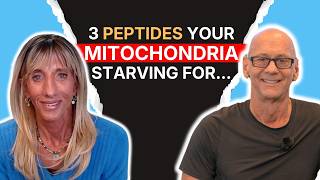
Dr. Jeffrey Gladden and Elizabeth from Boulder Longevity Institute discuss peptides like BPC-157 and TB-500 that repair tissue and decline with age. They explain how to combine peptides with hormones and lifestyle changes, cover mitochondrial peptides and the 8 Pillars of Regeneration, and stress the importance of sourcing pure peptides and tailoring protocols to individual biology.
Chapters
If we're in this constant sympathetic overdrive where our bodies really can't heal, can't recover, can't function, you've really got to get people to learn, you know, what else can I be using? Be that meditation, vagal nerve stimulators, sympathetic nerve blocks, whatever you want to do. But we've gotta get that sympathetic overdrive under control. 'Cause it really is going to be at the basis of screwing up everything. He went from saving hearts as a cardiologist to rewriting the entire aging playbook. Dr. Jeffrey Gladden believes 100 is the new 30, and he's got the science to back it up. This is the Gladden Longevity Podcast.
Elizabeth, welcome to the Gladden Longevity Podcast. It's good to have you here.
Thanks, Jeff. It's good to be here. Thank you.
Yeah, exactly. So tell us, um, a little bit about how you got to where you are. You know, when you were 5 years old, I'm not sure that you were thinking you were gonna grow up and learn, know a lot about peptides. So tell us a little bit about how you kind of got into this space.
So much like you, this longevity space I've been in a long time now. In fact, we opened our longevity clinic 20 years ago, so it might be one of the oldest running longevity clinics. But I actually started out from a weird space of, of orthopedics. Okay. And so a little bit odder way to get into this, but really about 25 years ago now, after practicing orthopedics for a while, I was sort of frustrated with the way it just felt like all we did was patch people back together. Mm-hmm. And not really get them better. Yeah. So I went back and, you know, back at that time it was 500 of us at the A4M Academy, you know, and so went back and retrained anti-aging regenerative medicine. Peptides weren't even in existence back then, but learned how to use hormones and nutrients and supplements and exercise to help my patients heal better. And after a few years of doing that and trying to combine it to my orthopedic practice, realized that it was very hard to do in 15 minutes. So we opened Boulder Longevity Institute now 20 years ago. We celebrate our 20-year anniversary this year.
Okay.
I ran both clinics for a long time and then really only about 6 years ago brought them both together. So I do a lot of regenerative orthopedics. Along with just a lot of longevity medicine, taking care of people who want to be high performers or sick people who can't get better. So that really is where probably in that, a little bit in that regenerative space is where I sort of started my peptide journey. But I've been using peptides now for about 10 years. So, you know, peptides all of a sudden are everywhere. Back then there was a few of us. I remember there was a group of us who sat around a little table with the one pharmacy that would make peptides at that time, which was TaylorMade Pharmacy. And we sat around a little tiny table with about 10 people and figured out how to get this process going. And subsequently now it's blown up to huge proportions and everybody, including my son's frat brothers, know about peptides.
Yeah, that's right. No, it's true. Yeah. I went through the A4M certification program. I think it was back in 2017 now or something like that.
Yeah. So like 10 years ago.
Yeah. With Seeds and yeah, it was great. I mean, it was completely eye-opening and we, you know, we went in with, with two feet really. I mean, it was like, oh my gosh, this is really revolutionary. It's interesting to see that it took another, what, 8, 9 years or 10 years for it to get into the vernacular where now every, There's a peptide company on every corner.
And exactly right. And everybody knows about peptides, right? Or at least think they do, huh?
Yeah. Which is kind of cool. So tell us a little bit about on the regenerative side, you probably have some interesting perspectives on the use of peptides in terms of how, when, where to use them, how to combine them with other regenerative technologies and things like that. Do you want to walk us through a little bit about how you're—
I think that's probably still where they kind of— I think most people a little bit focus, right? Is in the regenerative and probably when we look even a few years back, things like BPC and TB4 or TB500, depending on what school you come from, were sort of starting to make their mainstream along the athletes. Like the athletes were starting to hear about these. I work a lot with bodybuilders. Bodybuilders would have injuries, start using these, what's called the Wolverine stack. And, you know, and so those two peptides, BPC and the thymosin beta, were really kind of revolutionary in their ability to help heal from injuries. And so it was kind of an easy step in to say, okay, well, we found these two peptides that do a whole lot from kind of two perspectives, from bringing in new cells to help heal. So like, for instance, TB4 will call in new stem cells to help do an injury. It will help with new collagen formation, new vascular formation, all things you need to heal an injury, whereas BPC has this incredible anti-inflammatory effect and also sort of promotes all these healing effects. So those are kind of the two that got their starts. I think that when people think about peptides though, maybe we're thinking about them a little bit wrong in that these were some, you know, big discovery. Because they honestly, I like to think about peptides a little bit more in the same way you might think about hormones. What am I losing as I age? Right? So if I look at a little kid, they heal really fast. You know, if you break your arm and you're 12, you get better. If you break your arm and you're my age, it takes a long time to heal. And if you look at the way we change, that's kind of the explanation for why we don't heal as well, right? We start losing our hormones, but the other thing we lose is peptide formation. So a lot of these peptides we're using are not some weird foreign drug that just came into existence.
I think that's a really interesting point that most people probably don't realize is that the body makes a lot of these peptides.
A lot of these peptides that we use, right? They're what we call endogenous peptides. They're made by our body.
Yeah, BPC-157, LL-37. There's a bunch of them that are made endogenously. In fact, you know, we just, you probably are familiar with pulse shockwave therapy as well, but pulse shockwave therapy will induce stem cell activity as well as endogenous peptide production. That's kind of how it works, if you will.
Right. Yeah. And it will actually, and it's one of the things it does is it actually recruits the stem cells, you know, to the injury site. So if you do shockwave, one place it's gonna recruit those stem cells to the site. And we've seen, we've been able to target stem cells and actually both either shockwave or soundwaves. We have a Stemwave, which uses soundwaves, kind of same thing, bringing these cells to the site and bringing these peptides that, that are contained within the, some of the, the cells along with them. But if you think about, so for instance, BPC stands for body protective compound. It's actually a gastric peptide. It's made by the gut. If you think about the gut is always being injured, so this is a protective mechanism, right? There's constant injuries going on to the gut, even from foods we eat, bacteria that we're exposed to, exogenous things that we're exposed to in the air and, and foods and water. So basically we have this great protective mechanism that's made by the gut to protect the gut, but it also will circulate outta circulation when the need is elsewhere, to the brain, to a shoulder, to your knee, whatever it might be. But as we age, that doesn't happen nearly to the degree it happened when we were young. So when you look at BPC levels, just like you look at hormone levels, right? Testosterone or estrogen, progesterone, they decline with age and really starting about the same time the hormones start to decline. So around your 30s, everything starts to drop. So why would we think that you need hormones to repair? Like, we know if you have no testosterone, you can't repair, right? If you have no estrogen, you can't repair. Why would we not think that these were necessary repair mechanisms as well? So I think we've kind of not thought about it that way. So I like to think about— I know you had, um, Ashley Koff on your show a while ago, and, and she, she just gave a lecture on GLPs I was listening to, and she called GLP-1s a hormone replacement therapy in a sense, right? It's it's something that we should have in us that drops in certain people or drops with age. And why wouldn't we replace in those people? And I would say the same thing I think about peptides.
Yeah, I think that's right. I think what's fascinating is to see how quickly people can heal at advanced ages or certainly at older ages, right? So our experience is that healing is cut in half almost, you know, traditionally with almost any peptide stack we put together for for folks, which is kind of fun, right?
So, right. But you have patients too who you've optimized in other ways as well, correct?
Well, this is another thing I want to, I want to bring up because I think one of the things to understand, and I, I'm actually going to give a talk on this. I call it the 8 Pillars of Regeneration actually. And you know, there's more to it than just peptides.
Exactly.
So some of the things that I'm going to discuss in that talk are basically number 1, excluding that malignant cells may be in the in the picture. Because if there's cancer, just like with hormones, you don't want to be fanning the flames of cancer cells. You don't want to be fanning the flames with, you know, TB-500 or—
Right, right.
Growth hormone-releasing peptides. Exactly. Growth hormone-releasing peptides. So, I think it's a safety-first mentality. And I don't think this is done most places, making sure that, to the best of our ability, that there's no malignant cells available. And then, there was an interesting paper that came out on the fact that people regenerate much better when they have parasympathetic nervous system activity as opposed to being in fight or flight. I don't know if you saw that too, but it's—
Yeah, I did. I did see that. And it's— I actually just did a little YouTube about that, that if we're in this constant sympathetic drive, you know, you see this all the time. Oh, I took those peptides. They didn't do anything for me. If we're in this constant sympathetic overdrive where our bodies really can't heal, can't recover, can't function, really nothing is going to work well. Now we can help some of that parasympathetic overdrive by correcting things, right? Correcting nutrients, correcting hormones, and even to some extent using peptides, but you've really got to get people to learn, you know, what else can I be using? Be that meditation, vagal nerve stimulators, sympathetic nerve blocks, whatever you want, stellate ganglion blocks, whatever you want to do. But we've gotta get that sympathetic overdrive under control. 'Cause it really is going to be at the basis of screwing up everything.
Yeah.
If my body's in this, I, you know, needs nothing to, it has to just be in survival mode, then I can't heal.
That's right. Yeah. And then the next one is toxin elimination, right? So understanding, you know, what your toxic burden is and getting those things out. It's harder, harder to heal, right? You've got metals and plastics and other things going on in your system. And then the idea of inflammation and oxidative stress. So this is an interesting one because we need some inflammation at the site to actually pull in the stem cells, right? Which is kind of the way pulse shockwave therapy works, right? It creates some local inflammation. And yet if you have systemic inflammation, if you're just generally inflamed, you know, if you take stem cells and put those in a Petri dish with inflamed plasma, they don't do anything. They just die out, right? So actually controlling that becomes a piece of the puzzle as well. And then hormone optimization, to your point, thyroid is, is absolutely critical. Sex hormones are absolutely critical. And klotho optimization can be important here. Then mitochondria, you were going to talk about mitochondria also. So talk to us about mitochondria and energy production, because that's also another critical piece here.
I just want to backtrack a little bit on what you're saying in that when we look at oxidative stress burden, and you're right, you know, people who are in horrible oxidative stress, but I can use peptides to help with that as well, right? You know, when you look at peptides, one of the nice things about them is they tend to be a little homeostatic. They're not going to push people. If people take a bunch of antioxidants, you know, it's going to quell oxidative stress. I just gave a lecture at Integrative Health Center or a symposium talking about like healing from injuries, right? You need that, that you need some inflammatory state at least for a few days. You don't want to quell the inflammatory state. We know the anti-inflammatory drugs can actually be a detriment to healing if they're taken early on because we need that inflammation. So, but peptides, because they are more homeostatic, they don't really quell inflammation, they stabilize it so it doesn't go into overdrive. They can be used a little more safely even in cases where there is ongoing inflammatory stress. For instance, the thymic peptides, and, and I agree with you that TB 500, TB 4, because it can increase vascularization, that could potentially be bad for cancer cells, right? But there are peptides that are useful in cancers as well, like thymosin alpha 1. So the other thymic peptides, you have to know what the peptide's doing, what pathway it's working on, and where to use it. So in general, it's not just that oxidative stress or even toxic load is, don't use peptides here, they're not gonna help. They can. In fact, I got kind of, I did a post very similar to what you're saying, where I said these are the reasons your peptides aren't working and went through some of the same things you were talking about here. Yeah, I actually got a lot of kickback in the comments saying, you know, but you can actually use peptides to help with that. And that is true, you can. You just have to know when, how, and what doses to bring them in, right?
Yeah, it is, it is true.
It is true that it can be helpful, and you just have to know which peptides, but you have to know when to bring them in and how to cycle them.
Yeah, that's it, right? Yeah. Even to your point about the parasympathetic nervous system, things like C-Lanc can be helpful there, right?
Exactly, hugely beneficial, right? So just, you guys, C-Lanc is a nasal spray peptide that's really anti-inflammatory to the brain, and it can be really helpful to just settle people down who have neuroinflammation, which a lot of times stress induces neuroinflammation and vice versa, neuroinflammation induces stress. So I do think we have to kind of keep that in mind, that the big problem with where we've gone with some of these things is, is in how they're being used and not really what we're doing with them. To bring to your point, mitochondria, mitochondria really might you know, favorite thing. I love talking about mitochondria because people sort of think of mitochondria as just our energy source, but it's not, right? It's calcium balance, it's energy balance, our hormones are made in mitochondria. Mitochondria are kind of everything. They really are our life. And the function of mitochondria decline as we age. And, you know, the best way to help them is things like exercise, right? Exercise really helps with mitochondrial function. But when we have people now who, you know, just— you— I look at myself in my 60s and go, why don't I have the energy I had when I was 18, right? Well, A lot of that does have to do with just more and more dysfunctional mitochondria. We just don't have as healthy mitochondria. So when you look at mitochondria, the whole mitochondrial biogenesis is a little bit of myth. We don't actually make new mitochondria. What we do is we take healthy mitochondria and they undergo fission. So they actually make— one goes into two, two goes into four. So we can actually make, by division, make more mitochondria. But if we don't have functional mitochondria, I don't have healthy mitochondria, that can't happen. So one of the first things when you look at a lot of disease states or even aging states, One of the things that happens inside the mitochondria is the whole membrane of the mitochondria is disrupted. So mitochondria is this very cool structure inside. It looks like a little flower. You guys have seen pictures of it. And that allows these electron gradient to occur. So we basically get these electrons that collect in these little folds and then we create what's called proton motive force. And that's what makes energy.
It's a battery, essentially. It's a battery. So, so people can understand it, right? It's a battery. So it has current that can flow and the current, when the current flows, it can make the ATP. Just if you're listening to this.
But if we can't, if that current can't flow because the structure of that inner mitochondrial membrane is disrupted, which happens after COVID or after viruses or after you ran a marathon or you work too much, then I can't really get that electron gradient to go. So one of the things that we need to think about are these peptides that are produced by the mitochondria as well, if we're looking at aging.
Yeah. So I agree with you. And I think you've got to have ATP. You've got to have energy for the rest. You know, if you're going to heal your hip, if you're going to heal your knee, if you're going to heal your skin, whatever, you got to have ATP in order. You can't just drop in stem cells and peptides if they don't have any, you know, energy in the system, right? They're not going to be able to do it. Right.
You kind of forget that for cartilage to grow or, you know, chondrocytes to divide, they need energy. They are also ATP-dependent cells. So is our immune system, very ATP-dependent, right? So if you look at the structures that need the most ATP, it's our brain, our heart, and our muscles. But if our immune system is struggling because I have long COVID or, you know, I haven't slept for 3 nights, then those immune cells are taking the energy. It's not useful for anything else. So we'd like to get a lot of those, you know, we have to, if you say you have only a certain amount of energy, where's it gonna be divided? I need to make sure that I, or I'm addressing every piece, right?
Yeah.
But we also can do things to kind of help our ATP production even when our mitochondria are dysfunctional. For instance, ketones. Ketones are a way to kind of bypass that whole electron gradient, right? Cuz they're gonna feed a little bit more directly into ATP. So one thing I'll do is while I'm repairing mitochondria using things like some of the mitochondrial peptides, I'm at the same time making sure my patient has energy by giving ketones so they can actually, so exogenous ketones, giving yourself, just drinking ketones can actually keep that ATP flow going while I'm working on repairing the mitochondria using peptides and, and things like urolithin A and supplements that help with mitochondrial repair.
Yeah. So urolithin A is a supplement that you just talked about that's helpful for mitophagy, which is basically where mitochondria can split and kind of form more of themselves, clean themselves up, so to speak. And then talk to us about some of the mitochondrial peptides, SS31, SS31 and Humulin and MOTC and things like this.
Yeah, there's, so mitochondria, remember, are their own little beings. They actually make their own, so they have their own DNA separate from our DNA. So they are designed to make their own peptides. Those peptides then can get out of the mitochondria and signal our nucleus of our own cells to make certain genes upregulated or things. So it goes back and can sort of get our, our bodies working better. So mitochondria make really, they make a lot of peptides, but there's, there's 4 that we use the most. One is called SS31, and to me, this is probably at the base of everybody needs at some point to help repair mitochondria. Because what the SS31 does is repairs the mitochondrial membrane. It has to have this infolded structure, and that's made of a substance called cardiolipin. So you need something to repair that cardiolipin. If I try and rev up your mitochondria and get them working harder and they're just dysfunctional, appearing mitochondria, it's not going to work. So SS31, which is actually now an approved drug called elamprootide for treating ALS, is actually really good to repair those mitochondria. So in an ideal world, that's kind of a first step is repair the mitochondria before I try and rev them up or make them divide or do all these things. Then you think about MOTSC, it's a little bit more of the rev the cytochromes that make the mitochondria now work faster and harder so I can make more energy. But you can imagine if I'm trying to make more energy in the face of a mitochondria that's not functional, all I do is is make more reactive oxygen species and nothing good. Think about it like you've got this old jalopy car and you put really good gas in it and step on the gas pedal and you think, oh, everything's gonna be fine cuz I put good gas in it. It's not. So basically you have to have the repair in place first and then you can rev things up with things like SS31. I mean, like Mod SC, right? Mm-hmm. And then the other peptide we use a lot is humanin. And humanin, actually think about it more as a neural regenerative. So it's working more on the neural mitochondria. It's probably the first peptide that becomes deplete in people when they're getting cognitive decline.
Mm-hmm.
In fact, the discoverer of it, who unfortunately passed away a little too young, he named it Humanin because he said, I'm going to bring the human back to dementia and make people human again. So that's why he actually named it when it, when it was discovered, Humanin. And so, so Humanin is one of our first go-tos when people have cognitive decline or any neurologic dysfunction, neuropathies, things like that. Hitting with humanin to try and repair those mitochondrial membranes more in the neurons is really important. There's an interesting study that showed that humanin was one of the first in COVID, one of the first peptides that declines, that there seems to be, which is why maybe we see so much neurologic complications with COVID right? We see the loss of smell, we see tinnitus, we see, you know, a lot of neurologic issues, people who have had, you know, even ocular problems from nerve damage. So we do see that and we kind of, you know, discounted it a little bit, but the, the key is those peptides probably need to be replaced very early on in people who have things like long COVID symptoms or who have any kind of neurologic symptoms. So I usually start with humanin in those cases. If somebody's more just a horrible fatigue person, I can't get energy, then I'll go with SS31. And then somebody like, you know, like you or I who are maybe a little bit, you know, healthier or better, and I just want to rev up the energy a little bit more, then I can use things like ModaC. Those are the three that we use most.
Yeah, those are the ones that we use as well. Yeah. So mitochondrial function is really important, particularly if you're going to regenerate.
And to everything, there's nothing that does not depend on mitochondrial function. So when, again, if I go back to my replace what's lost, right, my theory of, okay, why do we think of peptides not the same way we would be look at hormones? If, you know, you or I would not do well if we didn't have hormone replacement, right? So why do we think we would do well if we didn't do peptide replacement? Because the same things happen. My mitochondria aren't making SS31 or Mod SC as much. My gut is not making BPC. Right? My, I don't have a thymus gland anymore. My thymus gland is a fatty little nub. Remember, your thymus gland is this huge gland when you're a baby. It sits in your chest. So if you do baby X-ray, they have a huge mass in their chest. That's their thymus gland. By puberty, it's at its sort of best. So at puberty, our immune systems are really robust. And then it starts getting just re— what we call fatty replacement. And by the time you're in your 60s, even earlier than that, really by the time you're in your 50s, it's really just fat with very little function. But the thymus gland is a really key piece. To our immune regulation. So not just for healing, like the thymus, thymosin beta-4, thymosin beta-500 that we talked about, but for immune modulation. So that's what thymosin alpha-1, which if we, again, people always say, well, peptides have no, they have no double-blind placebo-controlled studies. Thymosin alpha-1 does, has numerous human studies on it. It's a drug in other countries known as Zidaxin. So it's widely used in Asia, uh, in India for people with cancer, for people who have immune dysregulation, for people who are viruses. So it's well-tested. Peptide, it's also an essential peptide to tell our immune system, oh, attack this, don't attack this, right? So it's a really critical player in immune function. And one of the reasons we get more autoimmune disease as we age is because of this lack of thymic function. At this stage, I'm sure, you know, you've read about people trying to do thymic regeneration or trying to do thymus replacements. But at this stage, the best that we really have is to replace what the thymus gland does. And that's the thymic peptides, thymosin alpha 1 and thymosin beta 4. So those two peptides are gonna now kind of replace the fact that I don't have a thymus gland anymore. Just like my ovaries aren't working well anymore, neither is my thymus gland. So why wouldn't we think about replacing those in the same way? So when I look at replacing what's lost, I'm gonna replace BPC. I'm gonna replace the thymic peptides and I'm gonna replace some of the, the mitochondrial peptides. And you don't have to be doing them constantly, right? But you want to be at least through time trying to kind of bring them back into existence periodically. So not just when I'm trying to heal, I might wanna keep these on and off board, you know, throughout my aging with utilization higher when I need to do go into repair mode or I'm sick or I've developed an autoimmune disease, then I want to pull those in higher.
Yeah. No, I think, I think that's right. I think that's important for people to understand that there is kind of an ongoing need. There's also a cycling on and off. There's kind of a rhythm to some of this. And when I think about cycling on and off, I think about growth hormone releasing peptides and growth hormone releasing hormones in the way that we think about that. We don't want to be on the mTOR gas pedal all the time.
Right, exactly.
Right. So actually, the way that we've been doing it is to inject CJC-1295 with ipamorelin the day we inject testosterone that night, because now we're going to go anabolic repair and we'll add in the BPC and the TB-500. And we also added some GHK-Cu because we found that that really—
that's another peptide that declines as we age. It's a really think about GHQ copper, copper as a great for collagen formation, but it modifies over 500 genes positively in our body. So it is an epigenetic modifier that's really important as well, beyond just collagen and skin repair and things like that that we started. That's right.
So we use, we use that, and then we'll use that for a couple of nights, then we'll take a couple nights off, then we'll inject again and do it again, kind of cycling in and out a little bit.
Yeah, there's also different ways of cycling. I mean, if you're kind of like, you know, if you're really like, you just had a procedure done for your need, then you're probably going to want to do those daily for a while, like a 6-week period, right? Otherwise, using them periodically— or what we do a lot is I kind of think about peptides sort of seasonally, and I'll go through these rotations with the seasons. For instance, during winter is not a time that we really want to push up anabolism. It's really not what our body is designed to do. Winter is kind of a rest reset time for our bodies. If you look at them from a genetic perspective, our body goes into a natural rhythm of kind of not being as anabolic, right? Whereas spring, we're much more anabolic. So we're gonna get more bang for our buck by cycling these peptides seasonally for when our body was designed. We kind of forget that there's a circadian rhythm to the day. There's also circadian rhythm to the year. So we can actually sort of look at what's supposed to happen in all mammals. As you know, spring, summer, winter, fall happen, we can actually kind of cycle these peptides along with what should be happening to the body at those periods of time.
Yeah, that's an interesting perspective. I tend to, I'm getting ready to go snowboarding next week, and so I'm pushing them up because I'm going to be physically active. Right.
So, so, and preparing, right. Or, or before somebody has surgery, we'll prep them with a little bit and then afterwards hit them hard. Right. So there's times when you do really want to hit these hard, like doing them every day.
That's right.
I tend to cycle the growth hormone secretagogues. I do 5 days on, 2 days off. So I do a little, and, but it does depend. I follow IGF levels. It does depend on what the IGF levels and what I'm trying to accomplish. So, you know, if I have a woman who is very, very osteoporotic, and they have very low— so IGF is a great way to kind of monitor what growth hormone is doing, right? And we know there's this sort of sweet spot for IGF, insulin-like growth factor. Basically, too high, as you talked about, we're in this just always, you know, kind of going, going, going mode, and we're going to wear out. But too low, we can't repair and heal at all. So it's kind of the sweet spot that somewhere, depending on if you're male, female, or man or woman, somewhere between probably 150 and 190, maybe 200. So if I have women who are osteoporotic and they IGF of 75, I may keep them on CJC, ipamorelin, or tesamorelin, ipamorelin, 5 out of 7 days and do that ongoing for, you know, for at least 12, 16 weeks at a time.
No, I think, I think that's exactly right. If you've got somebody you're trying to rebuild, you, and you know that it's safe, number 1, they don't have malignant cells. Number 2, you know that you're replacing their hormones, you're getting their mitochondria rebuilt and functioning. You're really setting the stage. I really, I think it's so important for people listening to understand that that it's not just about the peptide, it's really about the environment you put the peptide into if you want to get the best result, right?
And then, and then it's like, yeah, what you and I, you know, the problem we're seeing, right, is that we're seeing these now pop up everywhere. You can buy them. One of my friends just sent me at his gym, at the cafe in his gym, there was a cabinet of peptides, right, you know, that you could buy. Number one, you, you have no idea where those are coming from, right? You don't really know what the source is. You don't know they have what they say in them. You don't know they don't have contaminants in them. And number two, you're trying to use them off these protocols that, you know, are sort of standardized by your best— your, you know, your main Instagram influencer. And that's not personal to what's going on with you and what state your body is in. So at best case, it's just a waste of your money. But at worst case, you actually are causing problems. Like I said, if you— you're right, we all have malignancies growing all the time. But if those start getting out of hand and I'm doing something that's stimulating blood flow, you know, neogenesis of cells, then I potentially am going to have problems. So I understand that there's kind of people like, well, I can do this on my own. I don't really need somebody who's knowledgeable in peptides to help me with it. And I would disagree because I really do think you really need somebody who's, you know, I mean, you and I have studied peptides for a long, long, long time. And, you know, the nuances are really, it's tough, right? It's tough to learn. We've gone through a lot of trial and error on both ourselves and our patients through time, right? Wow. Well, that wasn't really the right answer. So it's taken a long time and a lot of education. To really get to where you understand these and to be able to just say, I'm gonna read online and say, okay, the Wolverine stack is BPC and, you know, thymosin beta-4 or TB500 and not know, you know, exactly dosing that's best for you and make sure that your hormones are all okay and make sure that you have nutrients on board that you need to heal. You know, you don't have zinc, you don't have magnesium, you don't have vitamin D, all the peptides in the world aren't gonna make you better.
That's right. Yeah. This, it's really important for people to understand that. And God bless everybody. You know, we, we want an easy fix, right? If we can.
Right.
If we can eat an apple and that's it, well, we're happy to do that, right? But it's the way I explain it to people is that the body's kind of like a rainforest. It's a complex ecosystem. And it's really about bringing that back into balance. And so, you know, the complexities that go on there kind of have to be understood if you're going to get the best results and the safest results. So, but when you do, they're amazing. They're crazy. They're good. They're awesome.
We love it. You're right. I can heal somebody you know, post-surgery, I can heal somebody twice as fast, right? Pulling in the right peptides if they have the hormones on board, if they have the nutrients on board, if they have all the other things in place. But it really is, you do have to think about these that, you know, icing on the cake for the most part, they can be used a little icing in the middle to help. But in general, we have to start, stop looking at these as sort of a panacea in and of themselves. And again, some of these peptides are really, really safe, like BPC. It's pretty hard to do anything bad with BPC. But some of them not so much, right? And, you know, like you talked about TB500, TB500, definitely. If you have, you know, if you have somebody who has open growth plates, you didn't want, you wouldn't want them on that. Cause you know, so if I have a young kid now who's 16, a young male who's 16 and he is at the gym and his friend tells him to take this, you know, it actually can be really bad for growth plate development. So if I have somebody who's still growing, you have to be really careful too. And that was, that's what worries me about the sort of gym bro mentality that's happening with these is that now they're getting in the hands of, you know, like my son's 18, you know, and he's got every frat bro is taking redotrutide. I don't know why they decided redotrutide is the drug, but everyone's doing retatrutide, right? I mean, it's funny, it's like, you know, everybody's like, are you on the 2, dude? You know, um, right? And, and I'm like, Jason, why are they taking retatrutide? I mean, you know, retatrutide's not really a muscle-building peptide. It could be muscle-preserving if you're losing fat. It could be somewhat muscle-repairing, but it's not really a muscle-building peptide. And they have no idea, right?
No, I know. I think they're probably trying to cut weight or do something.
Yeah, I mean, trying to lean out. Yeah, I get that. But most of these kids, like at 18, they don't really need to lean out. They're trying put on, you know, they're trying to bulk out the bodybuilder side. We get into some of these older guys who are really trying to keep lean. It's, it could be utilized there if you, if you can actually find a safe source of it. But most of these 18-year-old kids are like my son who's 6'3", you know, 150 pounds. You know what I mean? Most of them are not these, you know, big fat kids. They're not. I don't think they're using it as much to lean out except that they've heard the bodybuilder crowd doing that. And so now they're like, oh, that must be a great bodybuilding drug. And they take it and it's not really, you know, the right thing for them.
Yeah. It's really interesting. Yeah. The whole GLP story is a, is a really fascinating one. I did a talk on a webinar on that not too long ago, talking about the GLP-1, 2s, and 3s, right? Basically the differences and then also the drawbacks. It's interesting, you know, with the peptides we're talking about, if you stop BPC, if you stop TB500, if you stop whatever, there's, there's really no consequences to stopping except you don't have it in your system.
Right, right.
But with the GLP-1s, for sure, they're slowing metabolism and they're also you know, basically slowing down or basically suppressing ghrelin, which is, you know, drives your appetite. And then when you stop it, you have a rebound in ghrelin to where it's much higher than it was before. And now you've got a slow metabolism. So unless you've got a really concerted strategy on how to taper off those things, you're gonna gain all the weight back again. Right. And then there are other complications potentially from those. So the idea that there's a quick fix, if you're listening to this, there definitely are fixes. And these peptides, all of them, including the GLP-1, 2s, and 3s are part of the fix, but they have to be used in a very knowledgeable way. Kind of like, how are you going to balance the ecosystem? Not, oh, I'm going to drop 20 pounds and everything's going to be fine. Because what we see is people lose muscle mass preferentially on a lot of these, you know, it's, it's pretty, pretty shocking. So yeah.
Yeah. I love the GLPs. I use them a lot. They're great immune system modulators. They're actually really helpful for arthritis. They're very helpful for pain. You'll use that kind of a low steady dose. You don't need these massive doses of them. I think the big problem that's happened, and I'd argue with you a little bit, that I don't think the GLP-1s or 2s really cause muscle loss. I think the problem is that people are underhydrated and undernourished when they're taking these, and that's what causes the muscle loss. And then the problem is that you are right, that you've got to slowly wean off of these and readapt to a new set point. But I will also argue that there are a lot of people who ongoing just need GLPs ongoing that shouldn't be taking them off. Because they just— the reason they were fat to begin with, or, you know, overweight to begin with, because they had low GLP activity. You know, people have FTO genetics, you know, so they have FTO gene mutations that, that now they just are not satiated easily. These are an amazing drug for those people. Well, that's 40% of the population, you know, just have a much harder time keeping weight off. And GLPs will change that. They'll genetically, epigenetically modify that. So my, my bias is that these are something that you may just have to stay on, at least at a low dose for a while, and that we shouldn't really be overly pushing, oh, everybody needs to get off of these at some point. I think there are people who their set point is going to go back to where it was, even, even if you wean off slowly, which is why I think there's a lot of people who just need to stay on a low dose. Once they've hit their set weight, they stay on a maintenance dose for a long time. But, you know, I like the low doses for everything else. They are actually really, if you look at the studies on osteoarthritis, if you look at the studies in pain, it's pretty dramatic what they could do. I mean, studies for migraines, the studies for neuropathic pain, even irritable bowel syndrome. These drugs have been really helpful used, you know, dosed appropriately.
Yeah, no, I, I think that's right.
I'm talking more about people that are kind of using it for a quick fix and then those, yeah, high dose, fast weight loss, and they stop it, right? That's, that's not going to work for anybody. It's a dumb thing because you're going to create a lot of side effects by doing this rapid weight loss because as you talked about toxins, where do, where do toxins store? In the fat cells, right? So as soon as you drop all these fat cells, you actually have this huge toxic burden as well. So now you have that to deal with, which is why all this stuff has to be really done with somebody who really is knowledgeable about what they're doing. And it worries me even all these, you know, and, and, and, you know, I understand democratizing what we do. Uh, you know, it's expensive medicine. I do understand trying to democratize it with all these different online companies that are just trying to get GLPs out to the market. I, I do understand that. But I think that they're not really doing good for people's health.
Yeah, no, I agree with that. So talk to us a little bit about the microdosing on the GLPs. What, which ones do you like? What doses do you like?
You know, so I don't use retutide yet because I can't get it from a compounding pharmacy and I will only as a physician use compounded medications. So I can't get it from a legitimate compounder at this point in time. We did for a while and then it kind of got shut down. So I love retutide. You know, as you said, it's a GLP-1, a GIP, and glucagon. So it's, you know, a triple agonist. And I did like it. The reason it's so good for weight is, as you said, we can maintain muscle more easily with the glucagon agonists on board. So for weight loss, I could preferentially lose fat over muscle and maintain muscle more easily. So it is great for kind of that lean muscle look.
Yeah, it also increases metabolic rate as a process, right?
Exactly. But when you look at the effects what we're looking for, for immune function and for neurologic function, it probably is more the GLP-1 that's probably most important there. So I don't know that we need to go to the more expensive ones. I think we can stay with simple. I, I, I still, I still like Tirzepatide just because it has a little bit more GLP activity with a few less side effects. But I think it's whichever you can sort of affect, you know, get at a reasonable cost, cuz we are gonna be using those at dose now that is is not a dose where you're gonna be getting a lot of side effects anyway. But the, the key is what is that dose? And I think that's the problem is we honestly don't have a great sense. What dose does it actually take to help my brain function? We know from the, you know, the study that just came out that the GLPs, which were being pushed for a treatment of Alzheimer's, sort of, they said it doesn't work. Well, it doesn't work to fix Alzheimer's once it started. All of the biomarkers show that we are actually improving neurologic health. It's just that they need to be carried out as a preemptive looking to see are we preventing cognitive decline, not are we reversing cognitive decline. So that's why unfortunately they were sort of putting, you know, thrown out with the bathwater in terms of neurologic health because the study was, was not done to what we really want, which is preventative medicine. So what is a dose that's good for that? What is my dose for orthopedic? What is my dose for, you know, neuropathic pain? I think we don't have all the answers to that. So my tendency is to dose it up to a point where people are like, okay, I just don't feel like eating or, you know, my, my appetite's all suppressed or I'm getting a little nausea. And back it down a notch from there. I want somebody to have zero symptoms. They have no idea they're even on this drug, right? They feel completely normal. Their appetite is good, their thirst is good, they're not losing weight. It may maintain weight if they had trouble losing it. So you want to find that dose for that person who has tendency to be fat. But for people who are thin like me, it's finding a dose where I have no, you know, no zero side effects. I want to eat, I want to drink, and, you know, or drink water, and I, I'm getting maintenance. So because I think probably We, we could even back down more from that, but I don't have the studies to say that this is the dose. We've been following things like that, you know, what's called a Siri ratio or, you know, a neutrophil lymphocyte ratio, things like that to see what is the dose that really will help modify some of that immune function. And it does appear to be that you can't go too low and see any results. So that's been my kind of, and I, I'd be curious what you're doing with it, but the, you know, my bias is kind of dose it up and then back it down from there.
Yeah, I think that's right. I think we, we think about it in a similar way. You know, one of the other things that's come across also is kellekur amerisate, if you're familiar with that in New Zealand, basically comes from hops. It's a bitters and it's, uh, yeah. And it activates—
I just heard a lecture on that. And it was about the whole bitter extract with the, you know, right.
It activates GLP-1.
Right.
And it also activates PYY and I think it's FCC, which is kind of a more physiologic response to appetite control, if you will. But the thing about it was that people were losing weight on the recommended doses when they take it about an hour before meals, but they weren't losing muscle mass, at least in the data that they, that they showed. So that's another interesting way. So if people are looking to taper down or taper off and they're worried about gaining weight, one thing they can do is think about Calocurb as a way to—
Yeah.
Yeah.
And Calocurb does work. I mean, you know, I've found it to be a little nauseating to people. But, but it does, it does work. I do think these, you know, that there are these GLP-1 agonists basically that are probably effective, not going to be, I think, really effective if you have a lot of weight to lose, but definitely for maintenance or definitely for, for people who have smaller amounts to lose.
Yeah. For tapering off.
For tapering off. Right.
Exactly. That's right. Yeah. Very cool. Well, what are you excited about that's coming down the, coming down the pike here?
I think that, and you've kind of been, you know, in, in some of this world of sort of more the designer drug or designer peptide world. As we get more and more, you know, what AI can do for us, right?
Mm-hmm.
We can actually now look at people from where I can look at all of their metabolomics, proteomics, kind of put all this information together using AI, feed that into a system and say, okay, these are my pathways that are messed up based by, based on all my metabolomics and figure out peptide sequences that would really be helpful here to intervene. Right. And I think that AI is making that so much more legitimate. And there's, you know, Lee Hood, uh, was just talking about his company is kind of doing this, you know, where they're, they're looking at how can we more personalize designer drugs or designer peptides to people, because that's going to be huge, right? When we can really target very, very specifically what you need based on your metabolomics. I mean, genetics are one thing, right? But, you know, genetics go into epigenetics, go into proteomics, go into metabolomics, and, and, you know, and So we have to put a lot of information together to figure it out. And we really have been incapable of doing this until now, where the advent of AI now getting into the quantum world, even where we have even more scenarios that can be fed in, we can learn so much more. And I will also say, I think that we're learning more and more about how energy fields, I mean, just, it's why socialization, it's why nature, it's why love, all these things that, that we know are so important for health. Well, a lot of that's just changing our energies. I mean, you know, you and I've been, I don't know, like if you think back to HeartMath, where they could see that somebody was in a different room stressing and the person next to them, you know, was stressed. So there's so much we can do with energy fields and things like that that I think are really cool. Light. I think that we'll be entering a lot more into that domain with a lot more knowledge too.
Yeah, I agree. No, it's very cool. Yeah, we love the energy field stuff. The HeartMath stuff is really interesting. We do a lot of BrainTap stuff here as well.
Yeah, BrainTap's amazing, right? And you can, so you can use BrainTap and this way you can use BrainTap along with some of these things like, like sea light you talked about, some of the, the the peptides that we know are neural peptides, see, like CMAX, and you can use the BrainTap along with those. So by combining all these modalities, that's what you really need, people who know, you know, I think even in our world of sort of a cellular medicine, functional medicine, that people still get into little niches, right? Where they, they're like, oh, this is what, this is how I treat everything was with this. And we really have to keep open-minded that, you know, go learn about this, go learn about this, go, you have to go to a lot of different sort of conferences that are introducing different things to stay on top of this because it really putting all this together that ultimately is going to change our long-term health.
Yeah, I agree. I agree. It's about stacking and sequencing and basically, you know, the periodicity of it all as well. But I love the AI field. We're all over it here as well as the ability to optimize, right? That's such a super cool—
Right. Like we can do— we can figure out things we could never figure out before, right? You take massive amounts of data and, you know, and I think the concern You know, I'll tell you, like, AI still is only as good as your prompts to it, right? And, um, and so when people feed in a lot of their data and they get, you know, a massive amount— and I'm sure you get this now— people come in with their massive amounts of data fed into ChatGPT, and they show me what Chat said, and I said, that's great, are you gonna do these, you know, 1,000 things that Chat just recommended you do? Uh, let's figure out, you know, what's best. And when you look at it, if you would just fed that prompt in a little differently, if you would have known you know, so you have to kind of know the direction you need to be focusing on to really use AI effectively. So I'm not really afraid. I, I welcome my patients to run everything through chat and come talk to me about it because I don't— I'm not really afraid of chat taking over or AI taking over our jobs. We still need a lot of interpretation. That's where you need doctors who, who understand putting— how am I gonna put BrainTap together with this and peptides together with this and, and medications together? And still not quite there with, with AI.
Yeah, no, I agree. That's exciting times though. Super fun.
It is exciting times. It's, it's way, I mean, you and I even 2 years ago never would've imagined what we could do now.
Oh, I could imagine it. I couldn't wait for it, quite honestly. So you probably could too. Anyway, good talking with you, Elizabeth. I appreciate you coming on the show. So thank you. Yeah.
How do we live young for a lifetime? How do we make 100 the new 30? The answers are out there and we're bringing them to you every episode. Make sure you're subscribed. Subscribed. Check out more episodes right here and follow us on social media so you never miss a breakthrough. Thanks for listening.









