The Truth About Heart Disease That Your Doctor Won't Tell You | Ep. 354
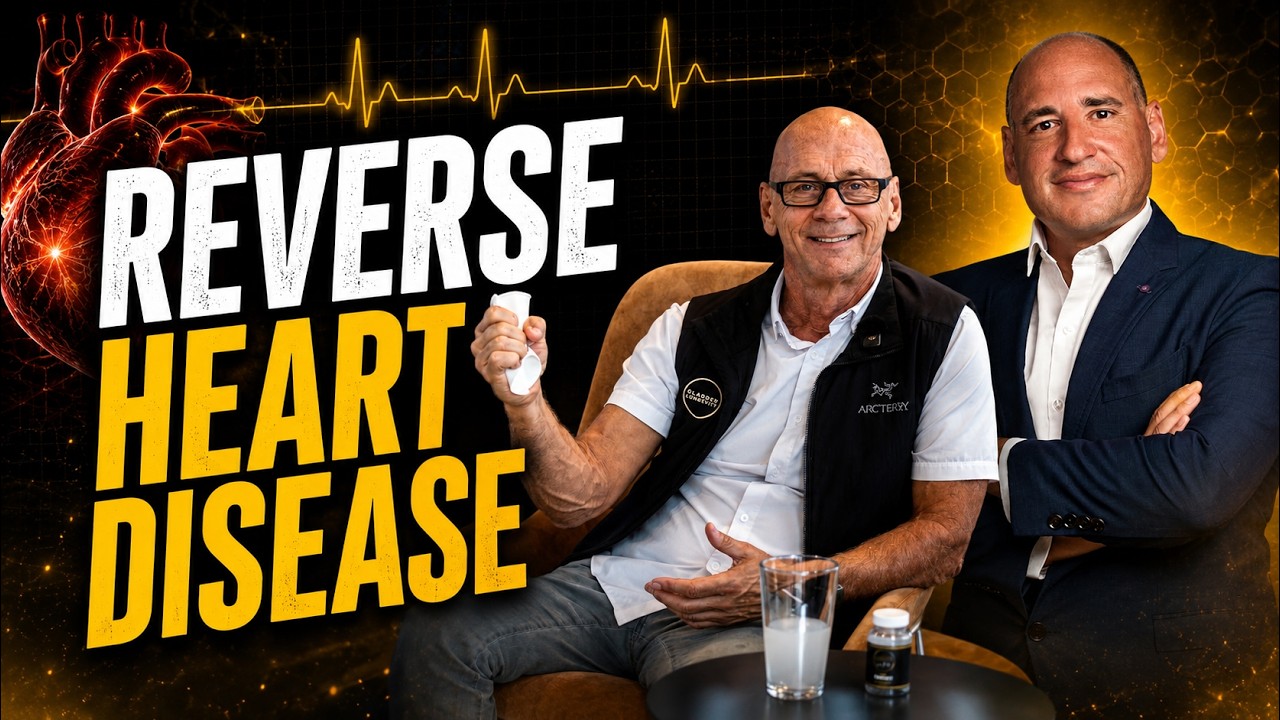
In this episode of the Gladden Longevity Podcast, host Dr. Jeffrey Gladden interviews cardiothoracic surgeon Dr. Philip Ovadia about his personal health crisis, professional transformation, and emerging approaches to preventing and reversing heart disease. Dr. Ovadia recounts how, as a morbidly obese, pre‑diabetic surgeon, he realized the conventional advice he gave patients was insufficient for himself, prompting a decade‑long journey of weight loss, reversal of pre‑diabetes, and a shift toward low‑carbohydrate and eventually carnivore nutrition. He argues that insulin resistance is the primary driver of atherosclerosis, more fundamental than cholesterol levels, and explains how it damages the endothelial glycocalyx, impairs nitric oxide production, and creates small dense oxidized LDL particles. The conversation explores the limitations of the traditional diet‑heart hypothesis, the importance of reverse cholesterol transport, and the role of genetics (e.g., ApoE variants). Both doctors discuss modern diagnostic tools—2‑hour oral glucose tolerance tests, hemoglobin A1c, and high‑resolution CT angiography with AI (Cleerly CTA)—that allow direct visualization of plaque composition and arterial health. Therapeutic options mentioned include metformin, SGLT2 inhibitors, GLP‑1 agonists, berberine, curcumin, resveratrol, hydroxytyrosol, and dietary nitrate from vegetables. They critique current cardiac rehab models, advocate for integrating insulin‑resistance management, and describe a telemedicine practice that delivers personalized preventive programs. Dr. Ovadia’s books, Stay Off My Operating Table and Stay Off My Kitchen Table, aim to educate patients and clinicians about root‑cause strategies, gut health, nutrient density, and anti‑nutrients. The episode ends with a shared vision of building a parallel preventive‑focused healthcare system to reduce heart disease, the leading cause of death, and make “100 the new 30.”
Chapters
I was a morbidly obese, pre-diabetic heart surgeon for most of my career, and I came to a realization that I was headed for my own operating table. And more important realization was I didn't know what to do about it. The advice that I had been trained to give the patients wasn't working for me. It wasn't working for them. And that's what really got me asking some different questions.
Welcome everybody to the Gladden Longevity Podcast. Dr. Gladden here. I just finished a conversation with Dr. Philip Oviedo, and he's a cardiothoracic surgeon that has had some real epiphanies and insights around the role of insulin resistance in cardiovascular disease. He's written a couple of books, Stay Off My Operating Table and Stay Off My Kitchen Table. We're going to go down the rabbit hole a little bit on how to prevent heart disease, how to treat heart disease, and if you have it, how to help reverse it. So you're going to find this a really interesting conversation. It was Very fun. He's a very like-minded colleague.
He went from saving hearts as a cardiologist to rewriting the entire aging playbook. Dr. Jeffrey Gladden believes 100 is the new 30, and he's got the science to back it up. This is the Gladden Longevity Podcast.
Hey, Philip. Welcome to the Gladden Longevity Podcast. It's good to see another cardiovascular physician here. It's kind of few and far between, quite honestly.
So, always good. Yeah. For some reason, the cardiac space doesn't seem to have the focus on longevity that I Yeah.
You know, what's interesting is I just— I had co-founded a heart hospital here in Dallas with people at Baylor and another cardiologist that's grown up into quite an institution. But I left all that in 2012, and I just got an invitation to go back and give a lecture on longevity to some of the staff there this month, as a matter of fact. And I thought, wow, that's really a full circle moment to think about the fact that the cardiology staff is now starting to think about longevity. It's, you know, You know, when I left, everybody was like, you know, what are you doing? I mean, you know, how can you leave what you built and are doing and all this other stuff? And it's like, well, you know, I am asking different set of questions now, and I've got to follow my heart here. So. Yeah.
And I think that's a lot of my journey as well. You know, it's interesting. Obviously, if you want to think about longevity, right, I always say the first piece of longevity is not dying.
Sure.
And the number one thing we die from is heart disease. So there should be a lot of consideration there. And unfortunately, I think our, you know, sort of healthcare system, you know, has been overly focused on taking care, right, of the people with heart disease and trying to keep them alive longer once they have the heart disease. But we've completely missed the opportunity for preventing the heart disease in the first place. And that's where the real longevity comes from. Because as a cardiac surgeon, what I've come to understand is doesn't matter how good I might be as a heart surgeon, that patient is never as good after they had the surgery as they would've been if they didn't need the surgery in the first place.
Yeah.
And that's what's led to the refocusing of my career.
Yeah. Well, that's an interest— I mean, it's an interesting perspective that you came to that perspective. I think a lot of physicians intuitively know that, but they're so caught up in what they're doing. And, uh, you know, I mean, I loved what I did for a number of years, right? I mean, I thought we were doing good work and helping people and all that sort of thing. And it was, you know, it was a very innovative time. It was kind of pre-stent when I actually started my practice. So, you know, we went through a lot of different iterations of therapies and things, and I found all that very intriguing. But it's interesting to me that you kind of came to this realization, and you're still practicing surgery if I'm not mistaken, but Walk us through a little bit, where was the transition point for you? What kind of led to your epiphany here, and then the implementation of that insight?
Yeah, so the transition was really a personal one at first.
Okay.
Because I was a morbidly obese, pre-diabetic heart surgeon for most of my, the first part of my career. And I came to a realization, you know, and this is now going back well over a decade, that I was headed for my own operating table. So to speak, right? I was following that path that so many of my patients and the patients that you would've been seeing, you know, had gone down. And more important realization was I didn't know what to do about it. I didn't know how to fix it, right? The advice that I had been trained to give the patients wasn't working. It wasn't working for me. It wasn't working for them. And that's what really got me asking some different questions.
Yeah.
And ultimately, you know, I was able to first improve my own health. I lost 100 pounds, I reversed my prediabetes. And then I came to realize that, you know, that what I had done to do that really challenged some of the fundamental beliefs, right, the fundamental things that I was told to be true about heart disease.
So walk us through that. How did you actually diagnose yourself as being pre-diabetic? I mean, the obesity, I can understand, you stand on a scale, Did you just intuit that, hey, I have insulin resistance, or you did some testing, or just walk us through a little bit of the mechanics of that? And then, you know, the standard, you know, calories in, calories out, exercise more doesn't always work, right? And so you obviously pressed beyond that. So walk us through that as well.
Yeah, so, you know, like you said, the obesity was obvious and something I had struggled with since, you know, childhood, essentially. And then, you know, it was getting My annual blood work one year, and my hemoglobin A1C was you know 5.9.
Okay.
I realized you know I was headed down a bad pathway. I fortuitously started to come across some information on things like low carb diets. This all actually started indirectly. My wife had seen a practitioner who suggested to her that eliminating gluten. Might help with some of the symptoms she was having at the time, real bad heartburn and stuff after she had had our daughters. And being the supportive husband I am, I said, oh, you know, sure, I'll do this with you. Now, in the back of my mind, as the cardiac surgeon I was, I was thinking, well, this makes no sense. You know, you don't have celiac disease, but, you know, so we went gluten-free and this was, you know, 2013-ish. They didn't have all the gluten-free stuff, so we sort of unintentionally went low carb. We stopped eating bread and pasta, right? And we went kind of low carb, and I started to feel better. And you know, honestly, even at that point, I didn't really think much about it. And then fast forward a few months, and I'm at the Society of Thoracic Surgeons annual meeting. You know, two thousand heart surgeons, and it's the big meeting for cardiac surgeons. And there happened to be a guest speaker that year by the name of Gary Taubes. He had written a book, *The Case Against Sugar*, and he was up there talking about how it's not how much you eat; it's what you eat and the hormonal influences. And really, you know, yes, of course, I had heard somewhere in my medical school, you know, training about insulin resistance, right? But it's not something we were talking about. You know, it's not something that was. looked at commonly, as you know, in patients with heart disease. But, you know, he started talking about it, it made sense, it kind of explained what I had already started to experience from, you know, gluten-free. And that's when I really intentionally went on a low-carbohydrate diet. And then, as I got more and more into the understanding of the role that insulin resistance does play in heart disease, in most of the chronic disease that we face. And that was really, you know, what has refocused me both professionally and personally. The good news is, is I've been able to maintain the weight loss, which is not something I had ever been able to do in the past. And I am much healthier today, you know, at 52 than I was at 32.
Yeah, no, that's wonderful.
That has become my passion.
Yeah, that's great. So it sounds like you've stayed on this low-carb diet. You know, permutations on that are of course intermittent fasting, 5-day fast-mimicking diets, people going ketogenic, people measuring ketones, take— people taking exogenous ketones. I'm just curious, in your own trajectory here, were any of those dabbled with or tried or become part of the routine or not felt to be necessary, or how did you navigate that landscape?
Yeah, I would say all of the above and more. So I have landed on a largely, you know, carnivore diet, a meat-based diet, which of course, you know, very much flies in the face of, again, what I had been told to believe, that red meat is bad for the heart and bad for our health. And I've settled on a point where I have achieved the best health of my life eating almost nothing but red meat. Now, I don't think that's the only way to do it. Like you said, there's lots of flavors of this. I think at a high level, what we need to help patients to understand is eat real food, right? That's where it starts. We are in an environment where 90% of what is put forth as food is not really food, right? It's chemically manipulated. It's highly processed. It's got carbohydrates and fats that our bodies just don't recognize because they did not exist. Yeah. For the vast majority of our existence as human beings, and then I think once you get within that, right, there's some latitude to understand the relative balance between plant products and animal products. And you know, my bias is towards animal products. Animal products are the most nutrient-dense, bioavailable foods, and I think the reasons that we have demonized them in the past, we need to acknowledge. Are not really, you know, solidly grounded in science. Right. Fearing saturated fat and fearing dietary cholesterol. I think we now have an understanding that that is not the primary driver of heart disease. Does cholesterol as a, you know, particle, as a molecule, play a role in the development of heart disease? Yes, it does. And we need to understand that, but we need to understand the nuance of it. And, you know, again, what was put forth as the diet-heart hypothesis— you eat cholesterol and saturated fat, your blood cholesterol level goes up, and then that cholesterol gets stuck to your artery walls, and that's what causes heart disease. We know it's more complex than that. We know it is not as simple as that. And that's what we need to, I think, really start to acknowledge more in the world of cardiology If we're going to truly start to make some progress against this disease that quite frankly we've been failing to make progress against for the past 40 or 50 years that we've been operating under that hypothesis.
Yeah, yeah, 1,000%. I think it is interesting. We've kind of come to understand in our view here that it's not about cholesterol numbers per se. It's really about reverse cholesterol transport. What's the body's ability to move it around, right? And some of that's genetically influence. Let's say ApoE4 people have a more difficult time doing reverse cholesterol transport than ApoE2 people. And so understanding people's genetics— and there are other genes that actually point towards HDL capacity for reverse cholesterol transport, which is considered the good cholesterol, the HDL cholesterol, because it's associated with reverse cholesterol transport. So we know that ApoA-1, for example, that SNP is very, very important. So understanding some of the genetic underpinnings for reverse cholesterol transport is important, and then trying to manipulate that and improve it with, you know, different supplements and things like that. So we know that, you know, we can, we can move that around. And it's not just using statins or lipid-lowering drugs. You can actually use other things. And I'll mention some of those in a minute. The other thing that we found is that the glycocalyx that lines the arteries is critical to arterial health. And really on some level is kind of the holy grail of arterial health. And the problem with the high-carb diets is that sugar destroys that glycocalyx very quickly, in a matter of minutes, quite honestly. And then processed foods will do it as well. So, you know, being able to— we can now measure in the clinic the glycocalyx. We can actually look at it directly, and which is pretty interesting, with a scope that we put at the base of the tongue. And then from there, there are supplements we can use to actually rebuild the glycocalyx also, particularly if they're taken with meals and things like that. So there's a lot that goes, that goes into the whole cycle of it, from genetics to healthy fats actually like plasmalogens that improve reverse cholesterol transport to, you know, I think certain plant-based foods also are very helpful, right? Because they're anti-inflammatory, etc. We know inflammation is a big driver. We know insulin resistance is a big driver. And so there's lots of different things there. Insulin, what we've seen is it increases senescent cell formation in the vascular wall, which stiffens it up and, you know, thickens up the cells and the vascular wall. It's sort of hardening of the arteries to some extent, which leads to hypertension. hypertension and things like that. So, we're kind of more on the side of a plant-based diet with healthy meat kind of thing. It's kind of more where we've settled, but there are different ways to kind of skin a cat, if you will. But, it's much more complex than statins, that's for sure.
Yeah, definitely so. And, I love what you were just talking about, the glycocalyx, the endothelium. That's where the disease is. And, understanding What leads to the breakdown of that, right? That's what really leads you to you know what causes this disease. And again, it's not cholesterol that does that, right? Cholesterol is the secondary player that comes in after the glycocalyx and the endothelium is damaged. And what's so interesting about insulin resistance is there are so many pathways by which it contributes to the atherosclerosis ultimately, right? You mentioned the effects that it has on the endothelium, and then we can look at. things like how it inhibits nitric oxide production.
Totally.
How it changes the nature of our cholesterol, right? It shifts you towards more of these small dense oxidized particles that are so problematic. And ultimately, we go back to the great work of Dr. Joseph Kraft, right? And, in the 1970s, him demonstrating that essentially every patient with heart disease had insulin resistance if you knew how to test for it properly.
Yeah.
And unfortunately, that message got lost, right? It got overwhelmed by the lipid-lowering, uh, messaging. And here we are 50 years later, and again, lipid lowering has not really gotten us much in terms of improving this You know, preventing the disease. And that's what I think we need to talk more about. Again, because my vision, my goal is by the time, you know, I leave this earth, I don't want heart disease to still be the number one killer, right?
Yeah.
It's been that way for 100 years, and I'm sure you feel the same. It shouldn't be. And as I— as we started off by discussing, right, if you want to improve longevity, You have to not die. And the number one thing we do— we die from remains heart disease. So we gotta take that one down if we're really going to make meaningful improvements.
Yeah. And I, I think to your point, we can actually— I like that you brought up nitric oxide. We also know that as we age, that eating plants that are high in dietary nitrate actually give us a substrate to be able to make nitric oxide. So that's, that's super useful to understand also. Things like kale and arugula and beets and spinach and things like that if you're not oxalate sensitive. Those things, some of those things, arugula you can get away with no matter what. But having those things in your diet and then the Mediterranean herbs, really the magic in the Mediterranean diet is not so much the red wine or it is to some extent the olive oil for sure, but it's the fresh herbs that they use. The basil, the tarragon, the summer savory. Those have properties that basically neutralize oxidative stress inside the The arteries as well, which decreases senescence. So again, we're kind of— we like plants for the dietary nitrate. We like it for the antioxidant effects from the fresh herbs. And then there's a molecule in olive oil called hydroxytyrosol, which actually is very important for reverse cholesterol transport. So we like that as well. And berberine, curcumin, resveratrol all can be important. Bergamot, EGCG, polyphenols from pomegranate are also good, and cocoa flavonoids. So getting those things that are— I mean, all these things are coming from plants. Quercetin for that matter, omega-3s. All these things will help keep the arteries healthy in our in our book. So yeah, it's cool. I'll tell you this: We do two-hour glucose tolerance tests on everybody that comes into the clinic, and it's stunning to see how many people have insulin resistance that don't know they have it. Hemoglobin A1c 5.3, fasting blood sugar 89. You do a stress test on the pancreas, and the next thing you know, boom! Right? Insulin goes up to 60, and at two hours instead of coming back down, it's now at 80. You know, I mean, it's really phenomenal to see. To look behind the curtain, so to speak, and actually see what's going on. And it helps us, I think, help people understand how to manage what's going on.
So exactly, because the earlier you pick up on that, right, that's where the huge opportunity lies to prevent the damage. Because we know by the time that you show up with the prediabetes, right, you've already had decades of this insulin resistance. And in many cases, you have The damage to the arteries, the plaque has already built. And yes, we can still make some headway. We can try and slow that down and maybe get some reversal in that. But if we pick this up earlier, right, we have a much better chance of not letting it get to those advanced stages. And so I aggressively screen for insulin resistance as well. And again, I think it is Really the, the key to effective prevention of heart disease is going to come from that early diagnosis of insulin resistance and then knowing what to do to change it. And the good news is, is that you can reverse it, right?
Yeah. And there's some medicines out there that help too, right? Like, I mean, metformin can be helpful in addition to berberine or hydroxyberberine. SGLT2s have shown a nice impact for cardiovascular events, and even the GLP-1s, 1s and 2s, have been Helpful. So yeah, I think, I think we're in an age, quite honestly, Philip, where, you know, if somebody is actually willing to, despite their genetics or family history, if someone is willing to actually deconstruct who they are and understand how they're built and where they are in the process, that we can actually create a plan. And it's an individualized plan cuz it's not a one-size-fits-all, but to actually steer clear of heart disease. Virtually altogether. I mean, we were able to show plaque regression in carotid arteries and things like that, right? I'm sure you've seen this as well. So the therapies we're talking about, the interventions we're talking about are not just kind of niceties. They're actually, they're really having an impact for people. VO2 max goes up. You know, we can measure stroke volume increase as workload increases and we see it taper off in people that have endothelial dysfunction. We see it restored when we get the endothelium and the glycocalyx and the nitric oxide systems working again. So I think it's the most exciting kind of cardiology to practice. Yeah, I agree.
And I think the other exciting thing we have available to us today is the fidelity with which we can actually measure the disease, right?
That's right. Yeah.
The advanced CT angiographies with the AI technologies now. And so we don't have to guess, right? You know, we don't have to sit here and argue about this blood marker versus that blood marker. We can actually measure it. None of which actually measure the disease itself.
That's right.
We can now measure the disease. We can do this on a repeated basis, and then we can see, you know, whatever it is, right? Whatever you've been recommended, whether you've been told to go on those statins and the, you know, PCSK9 inhibitors, or you've been told to eat a plant-based diet, or you've been told to eat a carnivore diet, right? We can measure Is it working? And that's something that I think is vastly underutilized these days. We can see the disease early and we can follow its progression over time. And I think that's something else that we're on the precipice of it really revolutionizing how we approach heart disease.
Yeah, no, I agree. I think you're referring to the Clearly CTA for the audience listening to this. I think a lot of people have heard about the Clearly CTA. You know, when I was doing the interventional work, the first intracoronary ultrasound catheters came out in the early '90s and I I was an early adopter of those because all of a sudden, even though it was kind of like putting a garden hose down a coronary artery, all of a sudden you could see things that you couldn't see on an angiogram. And I'm like, oh my gosh, this 2-dimensional, you know, image of a 3-dimensional structure is really limited, right? And so it's really interesting. It was— we used ultrasound to guide all kinds of procedures and ended up starting STEMI programs in hospitals with backup surgery and all kinds of things because we could actually see what was going on. And what's beautiful about the Cleerly CTA is that they basically, you know, their, their strategy was to emulate intracoronary ultrasound. And so they, they would take a CT angiogram and then construct it and get it back to where they could actually correlate it to what we would see with an ultrasound. So I'm saying that to tell people that if you get a Cleerly CTA done, you're getting a really To Dr. Ovadia's point, you're getting a really high-fidelity look at your coronary arteries. You're not only seeing, you know, the opening, but you're seeing the walls of the arteries and you're seeing what's comprised the walls. Is it soft plaque, hard plaque, calcified plaque, you know, things like that. So it is a very, very good test.
Yeah, and there are some even more exciting things coming, right? Being able to actually see the inflammation in the blood vessels.
Yeah.
There's another company working on that and has demonstrated good data and good ability to do that. And this is all, like I said, I think the more that this gets used, the more it points us towards who really, you know, is at risk and what can we do to start to lower that risk and intervene at those earlier time points.
Mm-hmm.
Because again, you know, patients ending up on my operating table these days, I consider that to be a total failure. And it's not the patient's failure, right? It's the healthcare system that has failed them because there's really no reason for that to happen. We have these tools. We understand the root cause, you know, true root cause factors that lead to the disease. And so we just need to do a better job at, you know, now utilizing these and getting this information out to the patients. And quite frankly, getting this information out to our colleagues, the physicians who were still just locked in the old paradigm of if their cholesterol level is X, you know, we're doing okay. And it just doesn't work. And it just isn't the standard by which we should be holding ourselves as physicians to and trying to deliver to our patients.
You know, I'm thinking as I'm listening to you talk about this and understanding that you're still you know, performing surgery for people, that it must really change your concept of what adequate cardiac rehab looks like for an individual that's gone through surgery, right? Because it's not just the exercise program and taking the meds. You must have worked with the people in the hospital or whatever where you're working to really push on the whole insulin resistance piece, get cardiologists involved with that, the dietitians involved with that. I would think that, that the rehab elements of this— I found when I, when I stopped doing the interventional work, I still sort of stayed on and directed the cardiac rehab at the hospital for a couple of years before I left that altogether. But I found that in lecturing to the cardiac rehab people as they came in, that it's a very receptive audience, right? I mean, they've just come through something they don't ever want to go through again, and they became very receptive. We didn't have as much success orchestrating, even at the heart hospital, all the different elements that I would have liked to have orchestrated for them. But I wonder if in your situation, if you've had an opportunity to orchestrate that better than we were able to, or whether or not it's still sort of stuck in its old ways.
Yeah, it is the frustrating part of still sort of, you know, having to function within the hospital and therefore within the traditional system, because even running up against the simple thing of, you know, I walk in the morning after surgery The patient has the insulin drip going in one arm, and they're using their other arm to eat their you know pancakes, right? Which are heart healthy, low fat, right? And is obviously you know driving their glucose up that the insulin is required. And challenges like that are still you know we need to work on. The patients themselves, I find, are very receptive, right? When I can now explain to them we did the surgery, right, to deal with the blockage, the problem that was in front of us, the problem that was maybe, you know, life-threatening or at least causing you symptoms, right? And so we've taken care of that, but if we don't now address the reason you got the blockage, the underlying problem, you know, you're gonna be back. And we know the, again, the data, right? The vast majority of patients that have bypass surgery or they have a stent placed, they're gonna die of heart disease. That's right. They're gonna die years later than they would've without the surgery or without the stent. But we've done absolutely nothing to address the underlying root cause by doing the surgery or putting the stent in. And that's where, again, the opportunity is. You know, my, my, my first book is called Stay Off My Operating Table, right? But I still give it to all the patients that I've operated on and I tell 'em, you know, I don't want you back on the operating table. And this is what we need to do to accomplish that.
Yeah, no, I think that's really genius on your part to give them the book because they are going to be very receptive at that point. It does, it does help though if they can step into a system that can support them. It would be, be great to be able to create that system either virtually or, you know, it's hard to do it inside the confines of the hospital because it's so married to the way it goes about things. But if there was a virtual cardiac rehab, I've thought about this frequently, it would be very interesting where people could actually get really good information and, you know, stay, stay off your operating table essentially. So, yeah. So what are you, what are you most excited about these days in terms of where this is leading you now? You wrote another book about Stay Off My Kitchen Table. Tell us a little bit about that.
Yeah, so the, uh, the new book, Stay Off My Kitchen Table, very proud that it, uh, made the New York Times bestseller list recently. And, you know, it goes a little deeper, right? I, I understood that there was still this gap of some patients do the right stuff and don't get the results we're expecting. And then, you know, why some patients respond differently, right? And as I started to think about more about things like gut health, right, and again, as a cardiac surgeon, I never thought I would be talking about gut health and leaky gut and things like nutrient density, bioavailability, talking about anti-nutrients that are in certain foods that can cause Yeah. Even though, you know, those might be thought of as healthy foods. And so, that's what we really go into more in Stay Off My Kitchen Table. We kind of wanted to give people the understanding of what should stay and what should come off their kitchen tables, you know, of course, playing on the title of the first book. And, that's what, you know, we do these days. So, along the lines of what you were talking about, I've established a nationwide telemedicine practice where we can help people do this and practices like yours, and thankfully there is more and more opportunity for this. But you know, as you mentioned, you sort of have to get out of the mainstream system. The mainstream system still doesn't understand this, and just you know what I really say is the average doctor out there is too busy taking care of. Sick people to really think about how do I keep people from getting sick in the first place.
That's right. Well, great. Well, I really congratulate you on all your insights, you know, your personal progress, but then all the impact that you're having on all the people that you come in contact with, right? All the patients that you see. So it's an unusual journey, right? There's very few surgeons or cardiologists for that matter that, that make that transition or start to see it through that set of lenses. And it's It's very, very powerful. So congratulations on all that.
Yeah, thank you. And hopefully, you know, you and I can be 2 examples to our colleagues that there is a way to do this and that, again, these goals are achievable at a high level. Like I said, there's no reason that heart disease still needs to be the number one killer. And if we reshape our focus a little bit, if we think more about how do we prevent this rather than just what can we do to manage it and make it a little better once patients are already sick. As physicians, I think it really gets us close. It really gets more to the heart of why most of us became physicians. You know, we really didn't go into this to maybe make people a little bit better. You know, we went into it to really change people's lives.
That's right.
This is how we can do that. And hopefully, you know, again, what I'm doing, what you're doing, right? This can all be examples to our colleagues that they can do it as well. And that's how we're really going to change the whole nature of the medical system.
Yeah, I agree. I think our strategy is to build a parallel system and then let the success speak for itself. And then all of a sudden people, you know, because things get so ingrained, right? And it, there's so much financial incentive now built around, you know, particular payment structures and things like this. It's everything gets kind of, it's incestuous in a way, and it's very difficult for people to break out of that model, particularly when it's financially reinforced. So yeah, interesting stuff. Well, Philip, thanks for taking the time to chat with us. Really enjoyed the conversation. Thank you.
Yeah, it's great being here with you. How do we live young for a lifetime? How do we make 100 the new 30? The answers are out there, and we're bringing them to you every episode. Make sure you're subscribed, check out more episodes right here, and follow us on social media so you never miss a breakthrough. Thanks for listening.









