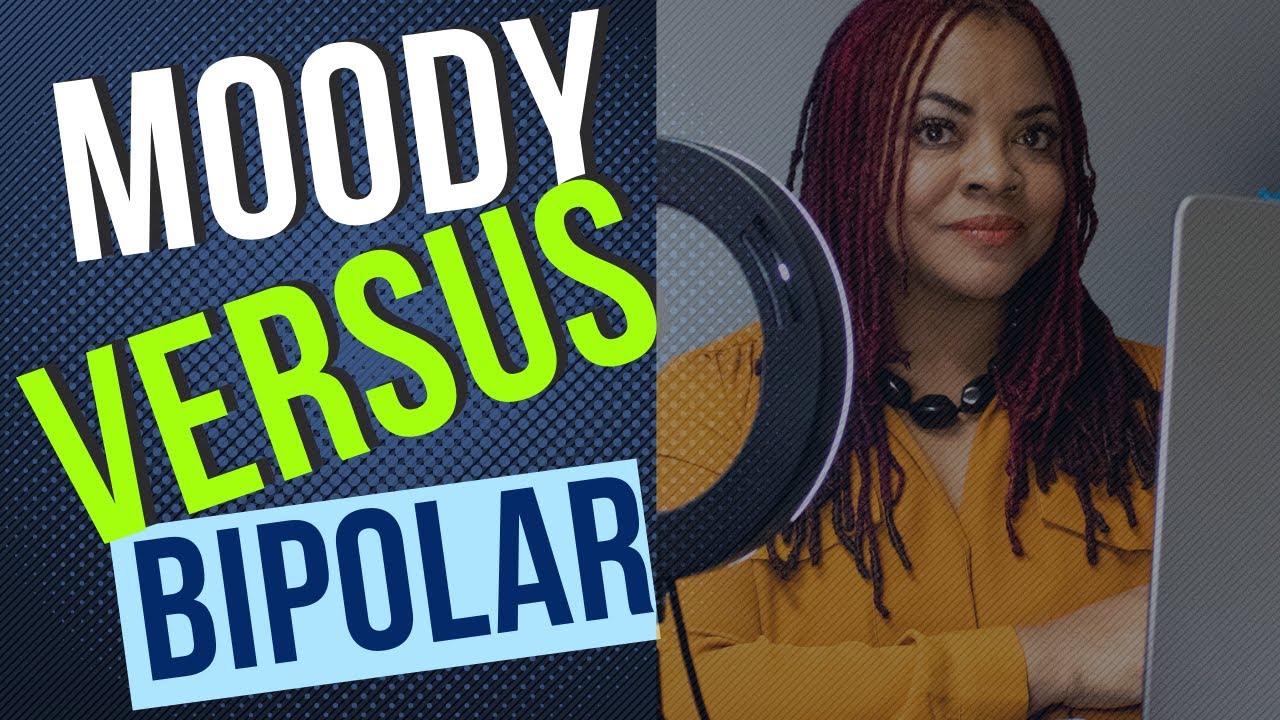
In this educational video Dr. Jameca Cooper explains why everyday moodiness should not be confused with bipolar disorder. She defines a "moody" person as someone whose mood fluctuates day‑to‑day—happy one day, sad the next, talkative then withdrawn—without the clinical pattern required for a bipolar diagnosis. The core of bipolar disorder is mania, which involves markedly reduced need for sleep, excessive talkativeness, and reckless behaviors (e.g., extreme spending, substance abuse, risky sex) that persist for at least seven consecutive days for a Bipolar I diagnosis. Bipolar disorder also requires the presence of major depressive episodes that are severe enough to impair functioning. Dr. Cooper stresses that a single manic episode or brief mood swings do not meet diagnostic criteria, and that other mental illnesses can present with mania‑like symptoms. The video’s purpose is to clarify diagnostic boundaries, correct common misconceptions, and encourage viewers to seek accurate mental‑health information.
Chapters
This is Dr. Jameca Cooper, and today we're going to talk about bipolar disorder. First, make sure you subscribe to this channel for more information on mental health, reality TV, and a little bit of everything. So, are they moody or is it bipolar disorder? I hear that a lot. People who are around friends and family that are moody always think that they suffer from bipolar disorder, or what we used to call it in psychology, manic depression. Um, that's not the term anymore in the DSM. It is now called bipolar disorder, and there are different types of bipolar. But everyone that you think is moody does not have bipolar disorder. I know you think they do, but they don't. Sometimes they're simply just moody. So what is a moody person? Describe a person that is moody. So they might be happy one day, they might be sad the next day. They might be really, really talkative one day, and the next day they might detach and be isolated and not want to talk at all. That's definitely a moody person. But just because they're moody doesn't mean that they have bipolar disorder. I know people think that they are the same, but they're very, very different. So what are some of the things to look for if a person really suffers from bipolar disorder? They're going to have something that we call mania. They're going to experience what we call mania. And what is mania? Mania includes these periods of usually no sleep or very, very little sleep. Um, usually a person who's experienced mania has engaged in behavior such as maybe extreme spending, reckless behavior— could be reckless driving, it could be really, really intense drug or substance use, could be sexual addictions, could be shopping. Could be just talking, buying things, could be doing whatever it is they might normally do times 10 over a longer period of time. And again, there's usually no sleep or very little sleep during this time. But maybe what you don't know is that in order to be diagnosed with bipolar disorder, especially bipolar I disorder, you have to experience mania. And the mania that I just described, these behaviors has to last for a certain period of time. That period of time is a minimum of 7 days. So another thing that you would need to experience in order to be diagnosed with bipolar disorder is the bouts of depression. So you can't have those highs like I just described— the mania, the highs, the spinning, the, the moving, the talking, the no sleeping— without the lows. So you would also have to experience the lows that come with bipolar because Bipolar, meaning two poles, you have one high and one low, so you have to have both. So the depression would also have to be really significant clinical depression that maybe would involve the person not being able to function, work, or get out of bed. So again, a moody person can simply be a moody person, but a person who is bipolar has to experience mania, and they have to experience the depression that also goes with it. And mania for one day would not be bipolar disorder. Mania could be some other type of mental illness. It could fit into lots of other things. But remember, everyone that is moody and difficult is not bipolar. So hopefully you've learned what the difference is between moody and bipolar, and make sure you stay tuned for more videos on mental health, personality disorders, um, reality TV, and a little bit of everything else. Thanks for tuning in. Make sure you subscribe to this channel and thank you. I'm Dr. Jameca Cooper.