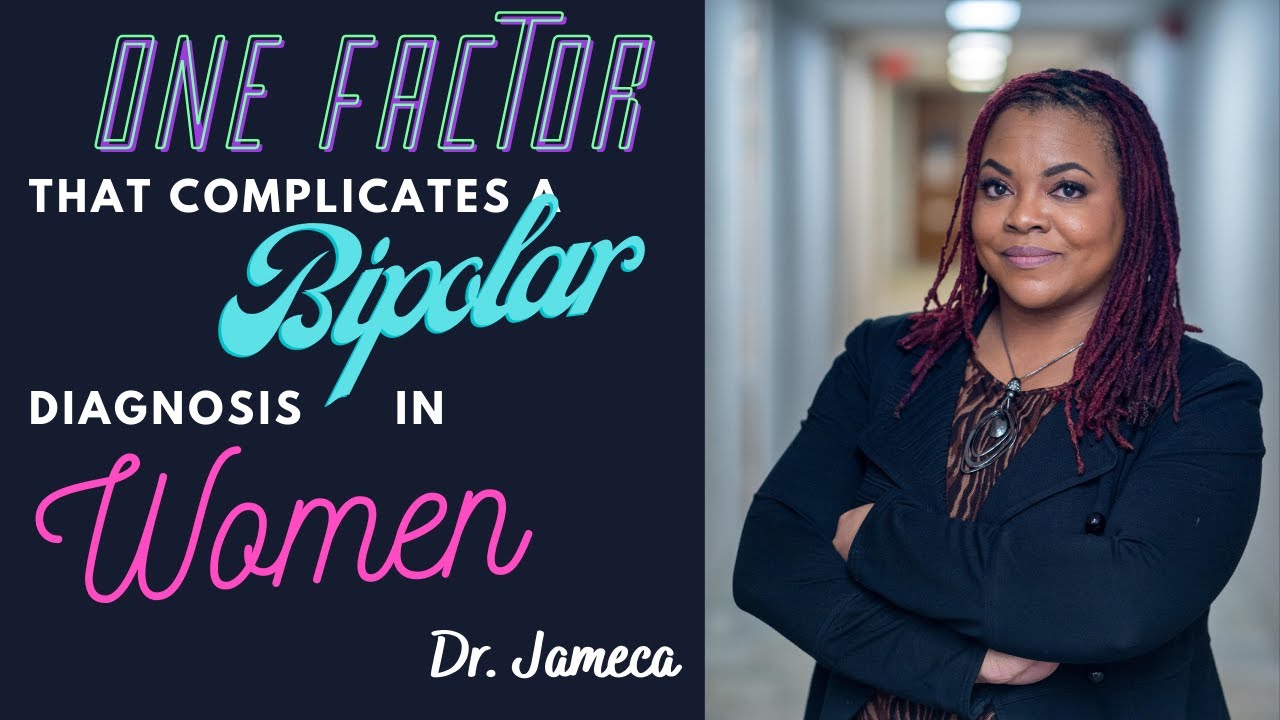
Dr. Jameca Cooper explains why bipolar disorder is harder to diagnose in women: hormonal fluctuations during the menstrual cycle, postpartum period, and menopause can mimic mood swings, masking the underlying condition.
Chapters
Hi, this is Dr. Jameca Cooper Cooper. Make sure you subscribe to my channel for more information on mental health, reality TV, personality disorders, and a little bit of everything. So today I want to talk specifically about bipolar disorder. What makes bipolar disorder different from some of the other mental illnesses that you may be familiar with? Is that this one can be a little bit difficult to diagnose among women. There is one big reason why bipolar disorder is difficult to diagnose among women, and not sure if you thought about it, but what do you think that is? Hormones. Hormones is the one factor that makes it very difficult to diagnose bipolar disorder among women. What is it about hormones? Hormones is that thing that, as women, we all have. We all deal with it in some way or the next, right? So whether you're dealing with every month and having a menstrual cycle, or whether you just gave birth to a child and your hormones have taken a spin out of control during postpartum, then there's just so many different ways that hormones are involved for women. But usually when we're looking at hormonal fluctuations for women, we can look at things that may be a consequence of those hormonal fluctuations. So sometimes what we see as mental health practitioners is an increase in depression among women, usually around a certain time of the month, definitely around postpartum times. And we also see that same thing when we're looking at hormonal changes that occur over time as women get older, like perimenopause is one of those phases that you would see hormonal fluctuations, and also menopause. So during those times, you are likely to see more depression. And why do you see more depression? You see more depression because there's usually a dip in the levels of estrogen. And anytime for women you have a dip in the levels of estrogen, you're going to see some mood changes, you're going to see likely some depression, and for some women, you're going to see an extreme and significant amount of depression. So anytime you're a practitioner that sees a lot of women, um, or you see women, um, more often than maybe you see men, you're going to be more familiar with some of these hormonal changes. So what that means for women and being diagnosed with bipolar disorder is that it could make it difficult because when women come in to be assessed for treatment, maybe what the doctor will see is that, okay, this woman just had a child and now their hormones are all over the place and that explains their mood differences. Or if you're dealing with a woman, say, in her 50s or late 40s that could be approaching menopause, you could easily explain the depression and the other mood issues, um, as hormonal changes that occur because of perimenopause or menopause. So there are lots of different hormonal reasons why women have mood changes, and that can easily impact what practitioners see when they're going into offices and trying to determine if they have bipolar. And if they're trying look for treatment. So my one big takeaway today is that women often have a difficult time being diagnosed with bipolar because of their hormones. Women, we all have it. It's something we deal with. But now you can add another thing to the list and what makes it difficult for being diagnosed with bipolar. Hopefully you remember that. Make sure you watch other videos that have to do with mental health and other mental health issues and diagnoses. Stay tuned, subscribe to this channel, and thank you. This is Dr. Jameca Cooper.