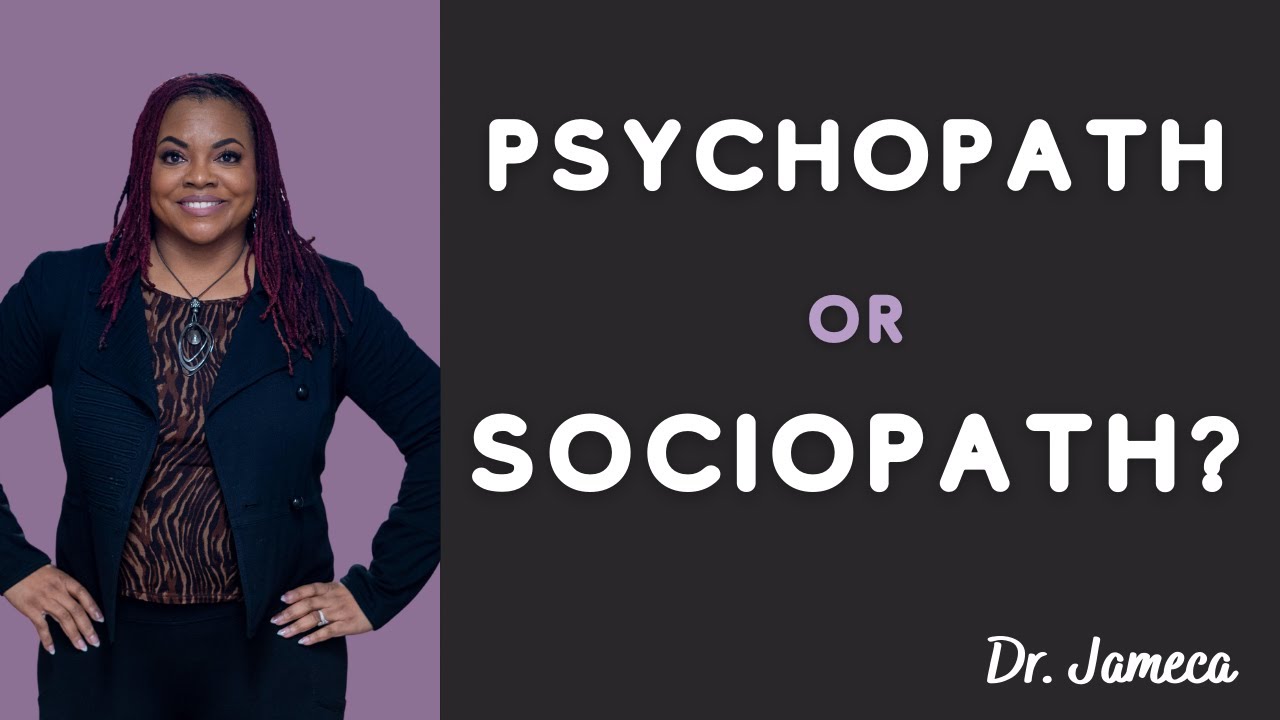
In this YouTube video, Dr. Jameca Cooper explains the distinction between the terms "sociopath" and "psychopath," clarifying common misconceptions. She describes how "sociopath" is often used interchangeably with Antisocial Personality Disorder (ASPD) as defined in the DSM‑5, outlining its diagnostic criteria: repeated violation of others' rights, lack of empathy, disregard for rules and authority, and a generally present conscience that may generate occasional remorse. She then contrasts this with the popular, non‑clinical label "psychopath," which is not found in professional diagnostic manuals. While psychopaths also lack empathy, the key differentiator she highlights is the complete absence of a conscience, resulting in no remorse or moral reflection, making their behavior more severe and less amenable to treatment. Dr. Cooper discusses the implications of these differences for criminal behavior, noting that psychopaths are considered especially dangerous and difficult to rehabilitate, often requiring intensive chemical or neurological interventions—if any exist—whereas sociopaths may retain some capacity for remorse. The video concludes with a brief call to subscribe for more mental‑health content.
Chapters
Hi, I'm Dr. Jameca Cooper Cooper. Make sure you subscribe to my channel for more information on interesting things. I'll just say it that way. Today I'm going to talk about the difference between a psychopath and a sociopath. So how many times have you heard people use these terms a lot and interchangeably? So sometimes if you think of someone you know that's trying to describe a person that they consider to be crazy, they might often use the term psychopath or sociopath, and I don't really think people understand the difference. So I thought it was important to do this video today so that you understand what you're saying when you use these terms. So first, I want to talk about the term sociopath. So this one I think is probably used a little bit more, and this is the term that I think even professionals. So people in my own field, like psychologists, use the term sociopath. Now, the difference is they use this term interchangeably to describe antisocial personality disorder. Make sure you subscribe to my other video talking about the difference in antisocial personality disorder. But oftentimes people use sociopath to describe someone that suffers from antisocial personality disorder, or ASPD. You might see it called as an acronym online somewhere. So this one is used to describe that. So what is a person with antisocial personality disorder? It's a personality disorder that's defined and described in the DSM-5, which is the book that psychologists use to diagnose individuals with mental health issues. So it is in the DSM, antisocial personality disorder. Sometimes people use sociopath to describe someone with that. A person that has antisocial personality disorder typically has a lack of respect for other people and their rights. They typically violate other people's boundaries and rights many, many times. That, that is just typically their normal pattern of behavior. They usually don't follow rules, they don't like rules, and they typically don't follow authority very well. So again, a person who has a consistent pattern of this would be a person who might be defined or diagnosed with antisocial personality disorder. One criteria of a person with antisocial personality disorder— or remember, the same term could be used, sociopath— is that they lack empathy. So they could harm someone or injure or assault someone and not feel an ounce of empathy about the act that they committed. Now, one of the hallmarks This is what scientists think, and of course nothing is exactly 100% certain or proven, but we think that individuals who are sociopaths or who suffer from ASPD, antisocial personality disorder, these people tend to have a conscience. And I'll talk about later how that is a defining factor. Now let's shift gears a little bit and talk about psychopaths, because again, this is another term that people use. What is the difference? A person that would be described as a psychopath would also lack empathy. So just like a sociopath that also lacks empathy, they both lack empathy, could commit a crime, could harm someone, injure or assault someone, not feel an ounce of empathy or remorse about the incident. Now, the difference in sociopath and psychopath— the psychopath label or term is not an official word. You won't see this connected to antisocial personality disorder in the same ways that you'll see sociopath connected to it. So that's a key difference. You won't see this in any professional literature unless they're referring to it as the ways that people use it in popular culture. Um, people think that psychopath, that term and that description of what you're talking about, is more severe. So if we think of a sociopath as violating the rights and boundaries of other people, then we would think of a psychopath as being even more severe than that. So what makes it more severe? The key indicator here, and it's what people have been thinking in research for years, is that a person who is considered a psychopath has no conscience. That's a huge factor when you think about deviant acts, because you could have a person that let's say, rapes 2 to 3 people over the course of 1 year. A sociopath would actually do the act and maybe think, "Hmm, I don't think I should have done that," at some point, or, "Ugh, do I feel like a tinge of this wasn't right?" Later, maybe not immediate, but maybe later down the line. So that would be a sociopath's reaction, whereas a psychopath, again, more severe, No conscience, never any empathy, no remorse, never a thought about whether or not I should have done this or what I did to this person and what this person suffered. And when you look at that in a criminal and psychological sense, that's a problem because these are people that cannot be reformed. These are people that cannot be treated because these are things that chemically they just don't have. When you don't have a conscious, no one can give you a conscious, in other words. I'm not sure if people are born with this or not, or if this is something that can develop over a lifetime. But when you look at different groups of individuals, especially those that are criminals, considered criminals, maybe those that are incarcerated or have committed crimes, when you look at those within that population of those that are considered psychopaths, those are the ones that are scarier for law enforcement, for people who are in the field of rehabilitation, and for people like me who are psychologists, because there's not a lot we we can do with those unless we think about chemical treatments, things that can actually change the way that the brain operates, and those are a lot more intense, of course. So I want to make sure you understand the key differences between sociopaths and psychopaths, and just know that psychopaths are considered to be a lot more deviant, a lot more severe, and of course they lack a conscience. Um, hopefully you learned something. Hopefully you understand the difference. Thank you for tuning in. Make sure you tune in and subscribe to other videos on mental health and other things. And I'm Dr. Jameca Cooper.