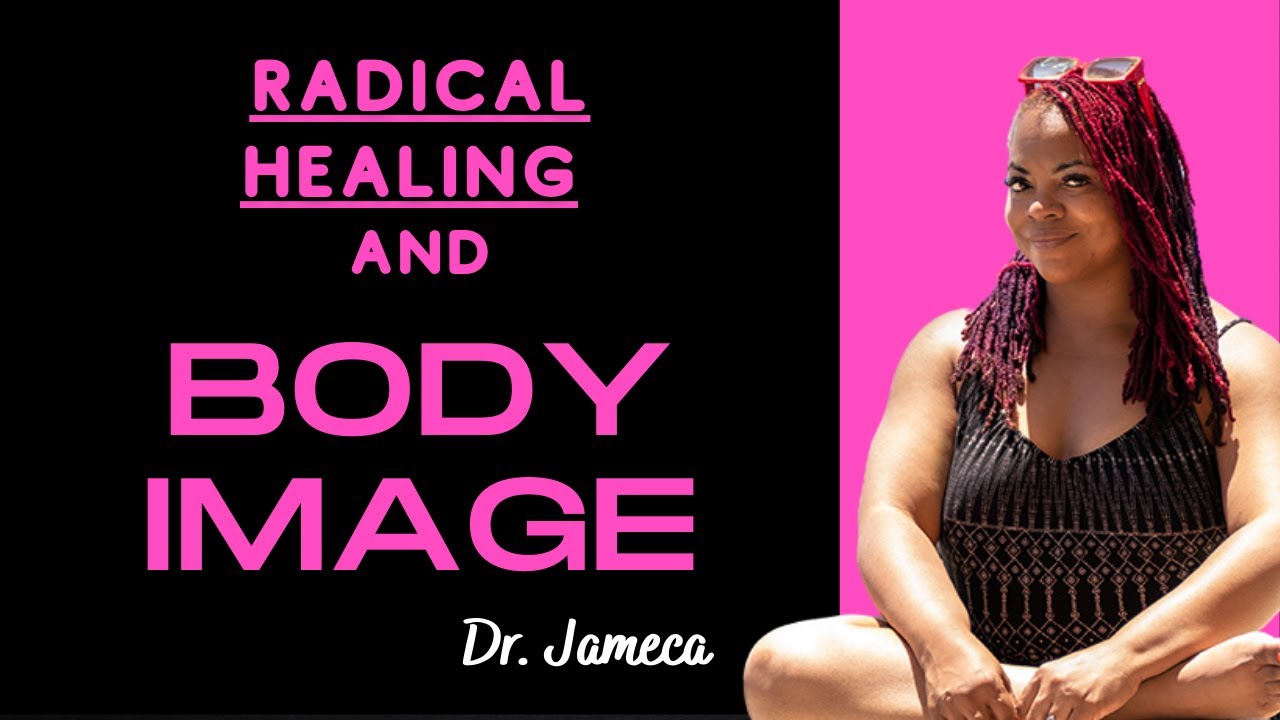
In this video, Dr. Jameca Cooper introduces the first installment of her "30 Days of Radical Healing" series, focusing on radical healing from body‑image issues that disproportionately affect women of color. She explains how pervasive societal messages about appearance—skin tone, body size, hair, and overall aesthetics—create toxic internalized standards. Dr. Cooper offers three concrete, actionable steps: (1) identify and distance yourself from toxic images, media, and people that reinforce harmful ideals; (2) ban negative self‑talk by recognizing harmful scripts, seeking therapeutic help when needed, and actively interrupting those thoughts; and (3) practice positive body affirmations that highlight what the body can do, its strength, and its uniqueness, using daily repetition and visual reminders. Throughout, she emphasizes self‑acceptance, the importance of focusing on what the body can achieve rather than its perceived flaws, and encourages viewers to engage with the rest of the 30‑day series for continued growth. The video concludes with a call to like, subscribe, comment, and share topics for future radical‑healing videos.
Chapters
Hi, this is Dr. Jameca Cooper. I want to thank you for tuning in. Make sure you like this video and subscribe to this channel. You are joining us in our wonderful, wonderful 30 Days of Radical Healing. We're doing this series because we want you to end this year with some clarity, and we want you to start the next year with even more clarity and some steps, some concrete steps that you can take to get to a new you. So today we're talking about radical healing from body image issues. And if you're a woman of color or an indigenous woman, hell, if you're any kind of woman in this country, you've been bombarded with messages and images about how you're supposed to look. Usually that means you should look white or lighter skin, or you're supposed to be thin, or at least a certain body size and body type. Don't forget that. And also your hair should be a certain way, right? I know I have this natural hairstyle, but I've had mine for about 20 years, way before natural hair was in for African American women. So I'm thrilled to see that it's really come across more in mainstream. Totally different idea, but just to say, all women, regardless of who you are, you've been bombarded with images and stereotypes and expectations about what you should look like. So today we're focusing on radical healing from body image. The first thing you have to do, my first step today, I'm giving you 3 different tips on what you could do to really kind of deal with and focus on for a while, at least your body image issues. First step again is removing yourself from toxic images. What does that look like? What is a toxic image? What is a toxic message? It can be the people around you who are constantly telling you, you're too big, you're too tall, you're too short, you're too whatever. That's a toxic message because if it doesn't sit right within your soul and it doesn't fit with who you are and who you think you are supposed to be in this universe, then It's toxic. So sometimes the people around you can give you those messages. Sometimes it can be the books you read, the magazines that you read. If you open up a page of certain magazines, who are you going to see in those magazines? Chances are it's going to be a thinner, lighter, or white woman. And if you're not any of those qualities, it can easily make you feel like you're— something is wrong with you, you're dysfunctional, you're impaired. And sometimes it's the TV shows you watch. Whether it's reality TV, scripted TV, or movies, constantly as a woman, especially as a woman of color, we're bombarded with images and stereotypes of something or someone telling us, you have to look this way. So remove yourself, distance yourself from those type of toxic messages. Or let me put it to you a different way. Remove yourself, separate yourself, give yourself some space from toxic people as well. If there are people around you that are constantly telling you, oh, you need to look this way. Why isn't your hair this way? You should have your hair this way. Why don't you wear this? Why doesn't your body look like this? Then it's going to constantly put that type of pressure on you that is going to really kind of seep into your soul and your spirit to make you feel that you're dysfunctional, that you're deficient. And you're not. You're perfectly fine the way you are, the way that you are in this universe, as long as you're healthy.. And as long as you're doing things that make you feel good, you don't have to look a certain way. So you have to get away from those messages. That was my first tip. My second tip is next you're going to start to ban the negative self-talk that you have in here. Now we all have that. Um, what does it sound like? What is negative self-talk? It is talk that is not conducive to you feeling good about yourself and talk that is not conducive to you getting better. So it could be these scripts, or these kind of like— think of them as recordings. Think of recordings that might be playing in your head all day long is, oh, you're too big, you're too big, or you're not shapely enough, or you're too shapely, or your boobs are too big, or your boobs are too small. Any of those things, those will be scripts that are telling you that something is wrong. And these are things that play in our heads all day long. Where they come from could come from parents, families, friends, media that we really take a part in. But you have to start to change those scripts and that dysfunctional thinking and talking that is going on in your brain. So cut it off. How do you cut it off? One, you go back to number one. That's where you start to cut off the negative self-talk. And sometimes you need to really work with a therapist or a counselor who can help you cut it off, who could really pinpoint first what that negative self-talk is and then walk with you, give you some tips about how to cut it off, some things you can do. And I don't really want to say what those things are now because for every person it's going to be different. Because first you have to decide and identify when you're having the negative self-talk more. Let's say every day you wake up in the morning and then you hear these ideas and thoughts in your head, then it would be a different strategy about how to stop the negative. Thoughts. Maybe it's what you watched before you went to bed the night before. Maybe it's social media that you partake in soon as you wake up in the morning when you look at your phone. And so maybe those images are what's triggering these— this negative self-talk that is telling you you don't look the way that you, um, are supposed to look. So it really depends on what the negative self-talk is, um, that will really kind of go into how you should change it. But you have to ban the talk. You have to do something that's going to start the process of stopping that negative self-talk, because anytime those thoughts and those scripts are going to pop up in your head, it's going to just make you feel bad about yourself. So my third thing, my third tip for you is that you have to start to practice body affirmations, positive body affirmations. So what is an affirmation? I talk about this in some of my other videos, and I give you examples of what they are and the benefit of them, but For this particular purpose in body image, I want you to focus just on one. I can give you one body affirmation that you have to practice. An affirmation is something that you will say to yourself every day to increase the positive self-thinking, the positive thought that you have in your brain, to really rule out the negative self-talk that I talked about a few minutes ago. So an affirmation is something that you say it to yourself. For some people, it's helpful to write it on a Post-it note and maybe post it somewhere in your home, maybe your bathroom mirror or whatever. Where you're going to look at the most. So one example of a body affirmation that you could really focus on, and it's going to help you change the way that you think about your body, is, my body can do some really amazing things. It's really that simple. And if you're a mother, if you've given birth to a child, you know your body can do some really amazing things. That's almost a miracle in, in and of itself that you can give birth, that your body goes through all these changes and stretches, and it really kind of morphs into something that is making a human. That's something really amazing. The whole process of childbirth, that's also something very amazing. Everyone can't do that. So it is something that you could focus on that really could start to help you change the way you think about your body. Your body is not a bad thing. Your body is not something that's holding you down, but As a woman, especially a woman of color in this country, you can be made to feel that way easily. So start to change all of these things. And then lastly, you're going to practice affirmations. That's just one example of a positive body affirmation. There are others. One other example that you could use is, my body is strong, or my legs are strong. If you're an athlete, these are things that are likely very true. If you're not an athlete, if you're someone just practicing daily fitness habits or weekly fitness habits. If you ride a bike, if you run, you know that your body is strong, your legs are strong, and they carry you through these different activities. So it's a different way for you to really reframe and refocus the way that you see your body. And instead of focusing on what your body cannot do or what your body isn't— because let's face it, genetically, some things we just don't have. Now surgically, can you get them? Is it risky? Yes. But when you think about what your body is and what it looks like without anything, that's really what you have to focus on. So let's start to focus on what your body is and what it can do. What it isn't is not very relevant. It's not important. If you're not shapely, what are you? Because even if you're not shapely, there are some things that you have and some qualities that you have that someone else does not have. So start to focus your body, your daily body affirmations on what is great, what is positive about your body. And then make sure that you repeat those affirmations throughout the day, every day. So maybe for you it's important that you say those affirmations or you see those affirmations when you first wake up in the morning. And then it may also help you if you can see it during the day, especially if you're going to be exposed to any type of social media. And then lastly, I would say if you can expose yourself or make sure that you kind of focus on repeat, think about these body affirmations at night before you go to bed, they can start to over time change the way that you think about your body and start to appreciate things that are really wonderful about our bodies. All of us have something wonderful about our bodies. It's just that we have to identify it and focus on it instead of the other things. So this is our 30 Days of Radical Healing. We are going to end this year and start the brand new year with something great, and then we're going to go from there. So make sure you join us for the other videos on 30 Days of Radical Healing. Subscribe to this channel, like this video. I hope to see you around. Drop some comments, tell me about some other things that you're interested in seeing Radical Healing about. I'm Dr. Jameca Cooper.