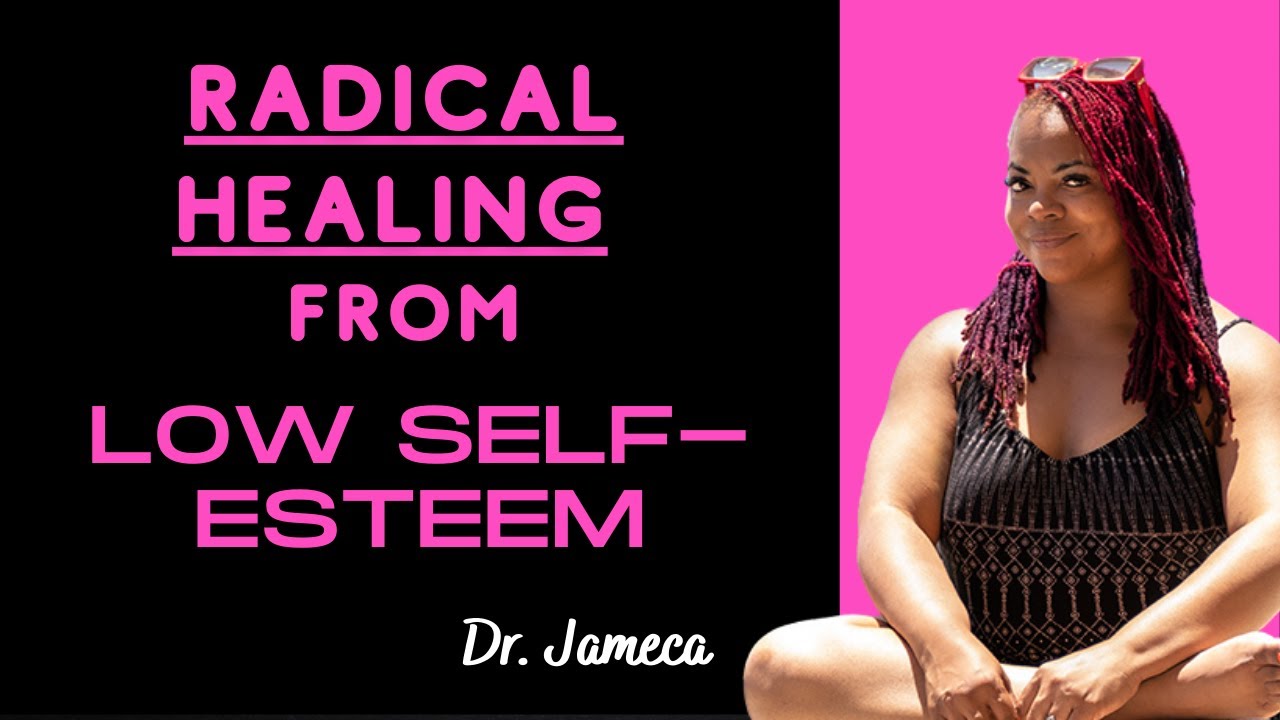
In this solo talk, Dr. Jameca Cooper, a therapist with nearly 20 years of experience, explains why chronic low self‑esteem is pervasive—shaped by early environments, family messages, and societal standards that especially affect women of color. She outlines a three‑step framework for "radical healing": 1. Distance yourself from toxic messages – recognize and limit exposure to demeaning beliefs from family, media, and cultural norms that equate worth with appearance, skin tone, or body type. 2. Develop new, empowering messages – replace harmful inputs with uplifting media, books, and supportive friendships; consciously reshape daily habits and surrounding influences. 3. Identify and log personal strengths – use journaling, feedback from trusted people, and reflection on past successes to build a concrete inventory of abilities, counteracting the habit of focusing only on perceived flaws. Dr. Cooper emphasizes that these steps require intentional change and may feel overwhelming, but they are essential for improving all life domains—work, relationships, parenting, and overall well‑being. She concludes with an encouraging call to adopt a "I’m the shit" mindset as part of the 30‑Day Radical Healing series.
Chapters
Hi, I'm Dr. Jameca Cooper. Make sure you like this video and subscribe to this channel. Thanks so much for joining me. We are doing 30 Days of Radical Healing because I'm so excited on finishing up this year and moving on to the next year. It is so, so, so important for us to focus on each area in our life so that we can give it the time and energy it needs deal with it, and then move on to the next area. So today we are talking about radical healing from low self-esteem. And I wish I could tell you how many times I see women in therapy that suffer from chronic low self-esteem. Now, of course, if you look at the research, it tells you that it develops early on in life. Lots of times it is not just genetic, but it really has to do with the environments that we're born into, that we are raised into, that really kind of creates this culmination of what we consider to be our self-worth, our self-value, and how we feel about ourselves. So low self-esteem is everywhere. I deal with a lot of women who suffer from it, and it impacts everything they do. It impacts their jobs, their productivity, their work. It impacts their friendships. It impacts their romantic relationships, and it impacts their parenting. It impacts their relationships with their immediate and extended family. That impacts how they see the world. So for that reason and for those reasons, it is necessary to address it so that we can really see improvements in all areas of our lives, right? So I want to give you 3 different things to focus on if you want to heal, not just heal, but radical healing from low self-esteem. And the first thing that I'm going to talk about is you have to have distance between the toxicity. Because usually when we're looking at a person who suffers from low self-esteem, there is some foundation of toxic messages. So maybe that comes from their parents. Maybe they learned growing up that they're worthless or they are only valuable if they look a certain way. How many of us women of color can think about how society plays a role in how we see ourselves, right? Because society, This country that we live in tells us that in order to be seen as beautiful, you have to look a certain way. Usually that way is white or with lighter skin. Usually that way is also thinner. Usually there are certain standards about how our hair should look, right, in order to be considered beautiful. So we have to think about where those messages come from and then try to distance yourself from that toxicity. Now, if that toxicity is a result of your parents, your family, your immediate or extended family, siblings, grandparents, then it's definitely helpful to put some distance and some space there as much as you can. Of course, if you live with these people, you can't put much space there, but if you don't, then you can. You can do a little bit better about minimizing how much or how often you hear these messages from these people, because just because it is what they think and maybe how you were raised doesn't mean you have to adopt that in your own life. As an adult. You don't have to continue to really think about those things. You can do your own thing, change your own narrative, right, your own story. So put some distance between you and where those toxic messages are. Now, I did mention a minute ago about how women of color in this country have messages from all around— TV, magazines, music videos, music— about how we should look, what we should do, and what that takes for us to be beautiful. We can have our own ideas about what that beauty is. And that can come from within, and that can come from you replacing those toxic messages, those sources of the toxic messages, with new sources, right? Read new books, different books by different authors. Watch shows that don't continue to perpetuate some of those same norms. So distance, that's my big step, my first step. My first step, number one, is distancing. Yourself from the toxic messages. My next thing— and I'm going to say it as if it's easy, but I know wholeheartedly that it is not easy— and that is developing new messages. So again, instead of watching maybe those same television shows that made you feel bad about yourself or poorly about who you are, what you look like, and your worth, then replacing that with television shows that are going to be more uplifting, that are going to be more central to you developing a new foundation of who you are. Reading books by different authors, sometimes it takes more time for you to think about what your family is and how much of those irrational or dysfunctional messages that contribute to your low self-esteem is wrapped up in your family. So again, that space from your family of origin and then maybe creating a new circle or a new family of individuals that are more positive and that fit into this new place and this new worth that you're, you're going to have about yourself. So friends, sometimes that involves you having a new circle of friends because maybe that old group of friends were playing into that low self-esteem that you have. So sometimes it requires that you change your circle. Sometimes it requires that you change your, your patterns, your habits, and everything that you do. Um, I know it's a lot, but it's necessary if you really want to feel better. And what I've learned over doing therapy for almost 20 years is sometimes when I suggest things for their— for my patients, I tell them, I know it's not easy because what I'm telling you is you're going to have to change up everything about how you live your life in order to feel better. And that can sometimes be overwhelming, but often that's what it requires. So that is my number 2. My number 3 thing is once you do steps 1 and 2, Then you can move into— now let's look at this new version of you and starting to identify your strengths. We all have strengths, right? Some people's strengths are not another person's strength. Like, I have two sons. One of my sons is really good at music. My other son is really good at sports. So everyone has different strengths. We can't have this one page, this one way of being so that everyone needs to fit into the same box because we can't. We all have different strengths. Some people are going to be good at interpersonal skills, whereas other people are going to be good at computer skills, and that's okay. So I need for you to take the time and sit and really kind of journal about, jot down, brainstorm some ideas about what you think you're good at. What are your strengths? What is it that people over the years have told you that you're good at? You have to really Tap into your experience and think about comments you've heard over your life. Think about teachers maybe that have commented or written things down in your records or your papers about things that you do well. Maybe you're a good writer. Maybe you are a good storyteller, right? Think about those type of things. And it may be helpful and useful for you to sit down with your closest group of friends or family and share that question with them. So ask them, hey, what do you think I'm good at? What are some qualities that you see in me that are really big strengths for me? These are things I do well, things that I am gifted at. These are things you want to really start to keep a log of because many times with individuals who suffer from low self-esteem, they don't have that. They don't have a log of things that they're good at and things that they've been great at in life. And many times they end up focusing on the things they're not good at and the things they're not great at. And many times the people around them that have helped to develop those feelings of low self-esteem have played into that so much by constantly focusing on, you're not good at this. You don't do this well. Look at this. You don't do this well. Why don't you do this well? What's wrong with you? So many times it keeps people in this rut of only being able to think about what they're bad at or what they don't have. So spend some time thinking about your strengths and what you do have. What are good qualities? What are things that you are blessed to have and do in your life? Everyone has some. Them. It's just a matter of identifying what they are for you. So that was my third thing. And for me, that step is going to be one of the crucial steps in you moving on to develop this new you that we want you to have after 30 Days of Radical Healing. So I hope you learned something today. We've talked about how to heal, and not just heal, but radically heal from low self-esteem, because we want you to be a better version of yourself in the new year. And we want everyone to be better and to feel better about themselves. We want you to walk around with this, you know what, I'm the shit kind of thing, right? We want you to feel like you're worthy, you're valuable. And if that means overcoming everything that you've learned up until now, that's what we're gonna do. So I hope you learned something. Thanks for joining me today. Stay tuned for more videos on 30 Days of Radical Healing. I'm Dr. Jameca Cooper.