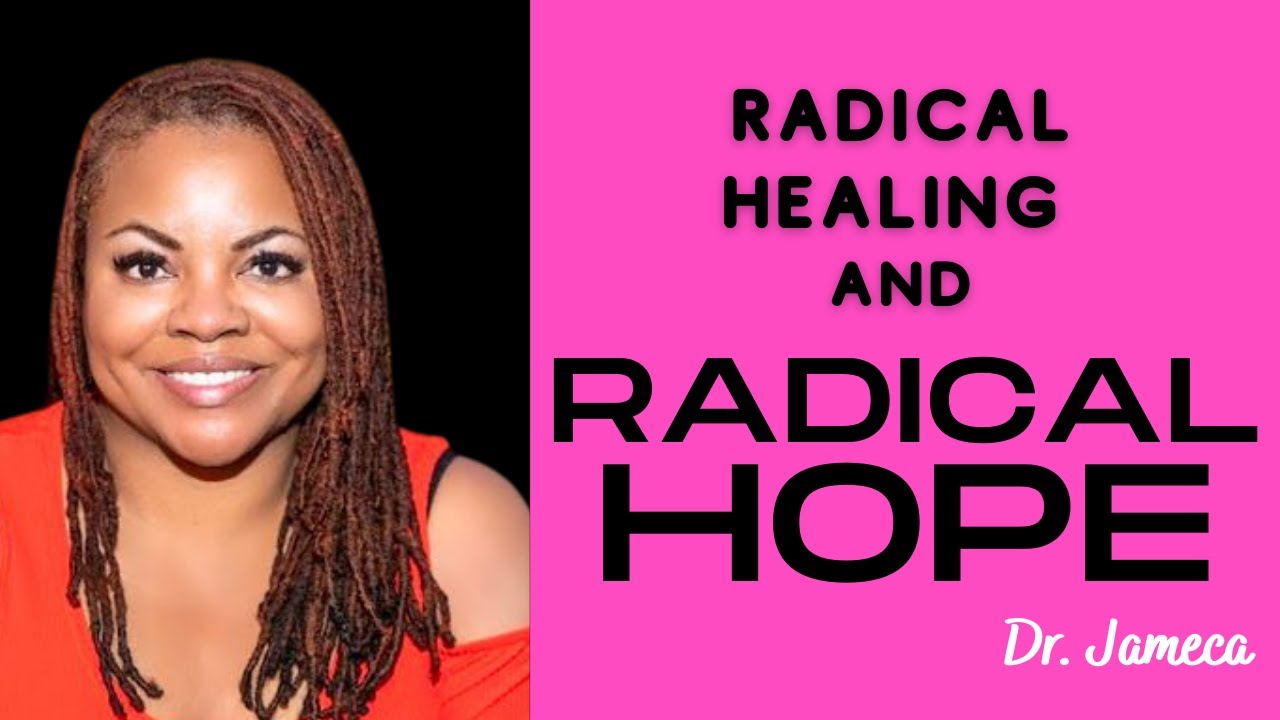
Dr. Jameca Cooper defines radical hope as the extreme form of hope that helps women of color survive systemic oppression, drawing on ancestral resilience and protest songs like "We Shall Overcome." She offers three practices: focus on existing strengths, celebrate small wins, and discover your personal purpose through journaling or therapy.
Chapters
Hi, I'm Dr. Jameca Cooper Cooper. Thanks for joining us. Make sure you like this video and subscribe to this channel. We are still in our 30 Days of Radical Healing because we are going to get everybody on point for the new year. So what we're talking about today is radical healing for hope, or radical hope. If you might want to put it that way. Radical hope is a very important part of the whole radical healing process. And my book, I Am My Sister's Keeper: The Brown Girl's Guide to Radical Healing— I'm always talking about radical healing because I know it's so important. You can find the book on Amazon. Bam! Um, we're talking about radical hope today because it's a part of the puzzle that we know to be radical healing. It's crucial because when you think about women of color in this country, We've all survived on radical hope. Now, we didn't call it that, but that's what it is. And let me define for you what radical hope is, then I'm gonna talk about 3 different pieces, 3 different tips that I want you to keep in mind as you strive to achieve radical hope. So, first I wanna define what is hope? Hope is really the desire to be in a different situation in the future. Now, what we also know scientifically is that hope in and of itself means that also you have the motivation and agency to move toward that situation that you want to be in in the future. So in other words, just sitting around daydreaming is not really hope, it's really dreaming. Hope is really the belief and the desire that you want to be and will be in a different situation later, and that all of your energy then goes into what that looks like. So that's hope. Radical hope is of course the extreme version of hoping, which is busting through the wall type of hope and getting in where you fit in type of hope. It's the type of hope that you need in order to achieve the goals. It's the type of hope that we all need really as women of color to really burst through the glass ceilings, right? So tip number 1 in radical hope is focus on resources and strengths. Why? Because we all have resources, even if we don't define them as resources. They're still resources. Strengths. As women of color in this country, we all have strengths. How do we know we have strengths? Because we made it to here. We've gotten this far. We've made it through all the things that we've had to go through. We've made it through certain politicians. We've made it through most of the pandemic and everything that's come with it. We've made it through civil rights. We've made it through the summer of police killings, which we all saw last year in 2020. We've made it through so much. If we look at your individual families, you can even find different examples, but I want to point out some of those examples just for you here. Looking at the stories of our ancestors, they've been phenomenal. When we think about some of the things our ancestors have gone through, we're like, "I don't know if I could have gone through that," but yet they did, and they still survived those things to be able to tell the stories of what they survived. Examples of things like slavery, living through slavery and what that entailed, living through the years of sharecropping and Jim Crow laws, civil rights, sitting in the back of the bus. Those type of things we can look at as examples in our lives of how people put energy into a much larger picture and a much larger outcome because they had hope. They had the belief and the desire that things would be better. Other examples of this, you can think of the role of the Bible in slavery, slavery and how people really focused on the Bible and scriptures in the Bible as a way of giving them hope that their situations that they were living in would be better. So think about also the Black church, the role of the Black church and ways that the Black church has given us all hope. I grew up in a Southern Baptist Black church and I can think about the morning devotion and the testimony in church and the scriptures and the sermon that the preacher was saying and the hollering and the yelling and the songs, the Easter speeches, everything was all geared toward giving us hope that things will be better. Look at this scripture, this scripture says that things will get better. So we've all kind of resonated on those things, and these are habits and practices that we've all engaged in because hope, because we all have some hope at some level. Other things you can look at, the NAACP, we formed that many, many years ago because it gave us hope as African Americans that our situation could be better and one day would be better. Think about the song "We Shall Overcome." We've all heard it before, and we know that that was a song that was typically used during civil rights and protests, because what that song means is that whatever we're going through and engaged in right now, we shall overcome. We will beat it. We will get better. In and of itself, that is a song about radical hope, right? So just lots of examples of things we can think of that have really instilled hope in us So these are all resources that we have at our fingertips. Our family histories, our community histories, our ethnic and cultural histories, such as the things I just said, these are all resources, and it shows our strength as a community that we can and we will overcome. So that is a really good component, very important component of hope. Number 2, we have to really focus more on what I call baby wins. I think a lot of times when I see people in therapy, they're like, "You know what? I want to lose weight and I want to lose 50 pounds in 2 months." Okay, that's a good goal. Not knocking the goal, it could be done. But what I don't see people do enough of is to focus on the smaller, more tangible goals that might not sound as good, but they can be more feasible. So instead of, "I want to lose 50 pounds in 2 months," how about, "I really want to make sure I progressively lose weight." and if I can lose 1 to 2 pounds every couple of weeks, I'm good. That's a baby win. So I haven't hit the big win yet, but I have made some progress along the way. So how about instead of, I need to get a job in 2 weeks, how about, I was able to or managed to apply for 20 jobs this week, or 20 jobs this month. Those are baby wins. These are things you have been able to accomplish toward the big goals that you want to achieve later. I think when people can focus more on those baby wins and how that can inspire them and make them proud, that can really put them on a better path to what they need to do for the big picture later. And that— the baby wins and what you feel when you win the baby wins— they're not always baby, but when you feel that, that's hope. If I can lose 1 or 2 pounds over a few weeks, then yes, I can. Lose 50 pounds in a few months, right? That's the hope that you need to keep you going, to keep your momentum going. So number 3 is discover your purpose. And I know it almost kind of sounds cliché, but it's not. It's real. I think everyone strives in this life for a sense of purpose, a sense of belonging, uh, feeling of knowing that they made a difference in their life, in someone else's life, sometimes in the lives of their family members and community. We all want that, right? So discovering your purpose, how do you do that? Lots of different ways. One way is to get with a counselor or therapist to help you discover what that is. Another way is journaling, kind of writing out your own thoughts about things that you have gone through, things that you want to go through or get into. Those type of things can bring you clarity as far as your feelings and your desires really going forward. But I always tell people that one way to really think about your purpose in life is to think about what would you do for a job if you did not get paid for it? If money was not an issue, you would do this thing for free. Because you love to do it so much. It's so important for you, you think it's necessary, and you could expend lots of hours, lots of energy every day doing this one thing even if you didn't get paid for it. What would that thing be? That's one way to really hint to what your purpose might be, because if you're willing to do something for free over and over again, it's a good chance that that's something that you're really invested in. It's something that really matters to you. Like I said, there are lots of other ways to discover your purpose, but get with a really good counselor or therapist that can help you find what your purpose is, because through your purpose, that is how you feel and feel as though you achieve this hope that we all want. And maybe on your journey of achieving what your purpose is, you can also start to feel the hope, especially if you can think about these number 1 and number 2 things that I told you today. Remember, we all have resources and strengths. It's just a matter of you identifying what your resources are or who your resources are, and it's a matter of tapping into the strengths that I know that we all have as women of color. Because like I said before, we're here, we made it here, we made it through all of that crap, and we're still here and we're still going strong. So that means something. Actually, that means a lot. So, I challenge all of you to discover and get in touch with this radical hope. Find it, get in tune with it, because it's going to be one of the factors that pushes you to the healing that I know that you deserve and the healing that I know that you can achieve. So, thanks for joining me today. I'm Dr. Jameca Cooper. Stay tuned for our more of our 30 Days of Radical Healing. Drop in some comments to me about ways that you have achieved radical hope or are searching for your radical hope. I want to hear from you. Thank you. Thanks for joining.